Introducing This Year's Community Clay Fellows
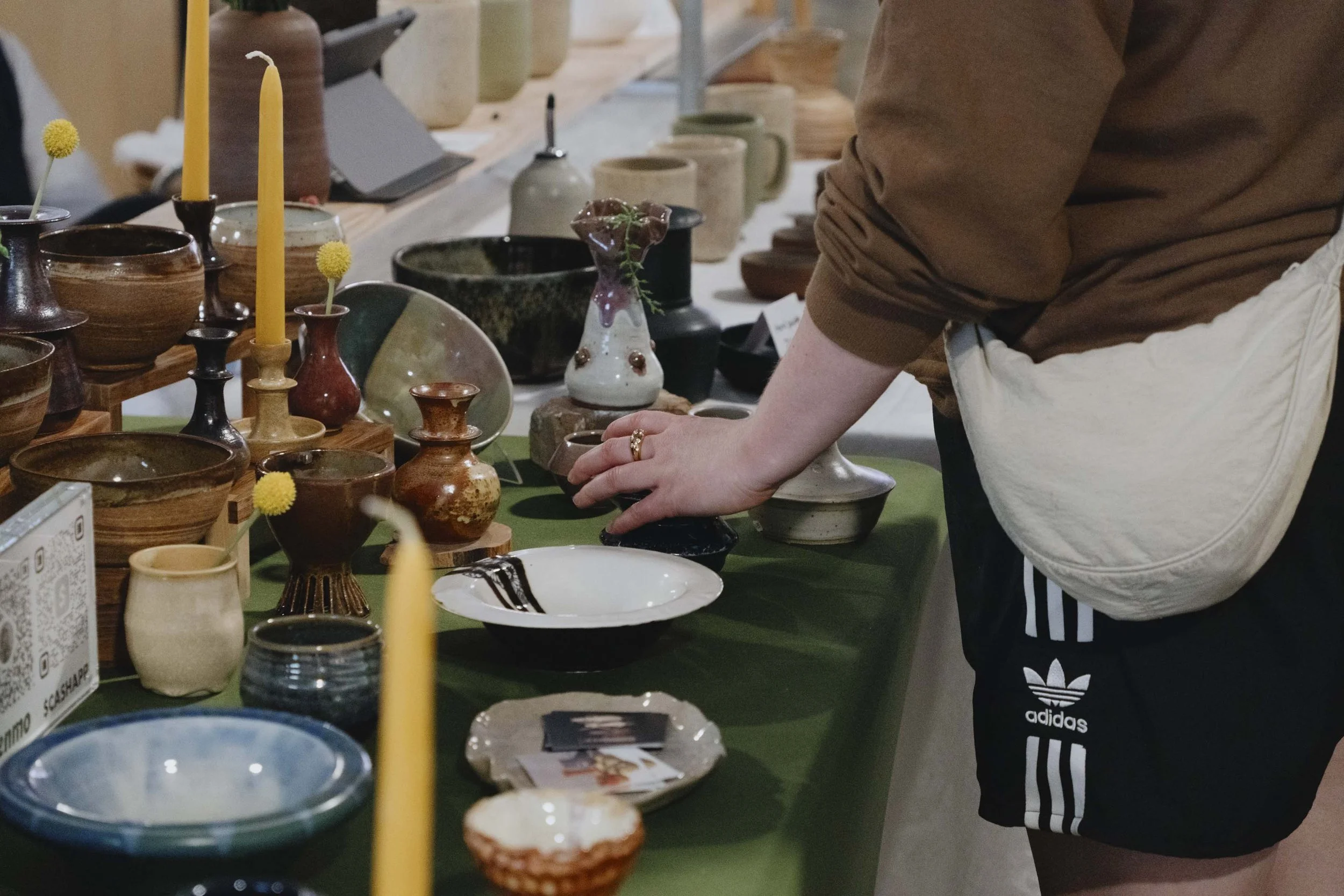
The Broad Studios Club House x Future Front Community Clay Fellowship awards 12 students with six free weeks of ceramic classes every year.
We're back for another year of clay, community and creative growth—welcoming a new class of fellows to The Broad Studios Club House x Future Front Community Clay Fellowship.
This fellowship emerged last year as a pay-it-forward project—generously funded by the independent artists behind the women-owned Broad Studios Club House—to make ceramics more financially accessible as an artistic practice and form of creative entrepreneurship.
The response was overwhelming: 170+ applications, 12 funded six-week classes, and a community-led, ranked-choice selection process that helped us build the foundation for what this program has become.
We're thrilled to introduce this year's cohort of Community Clay Fellows.
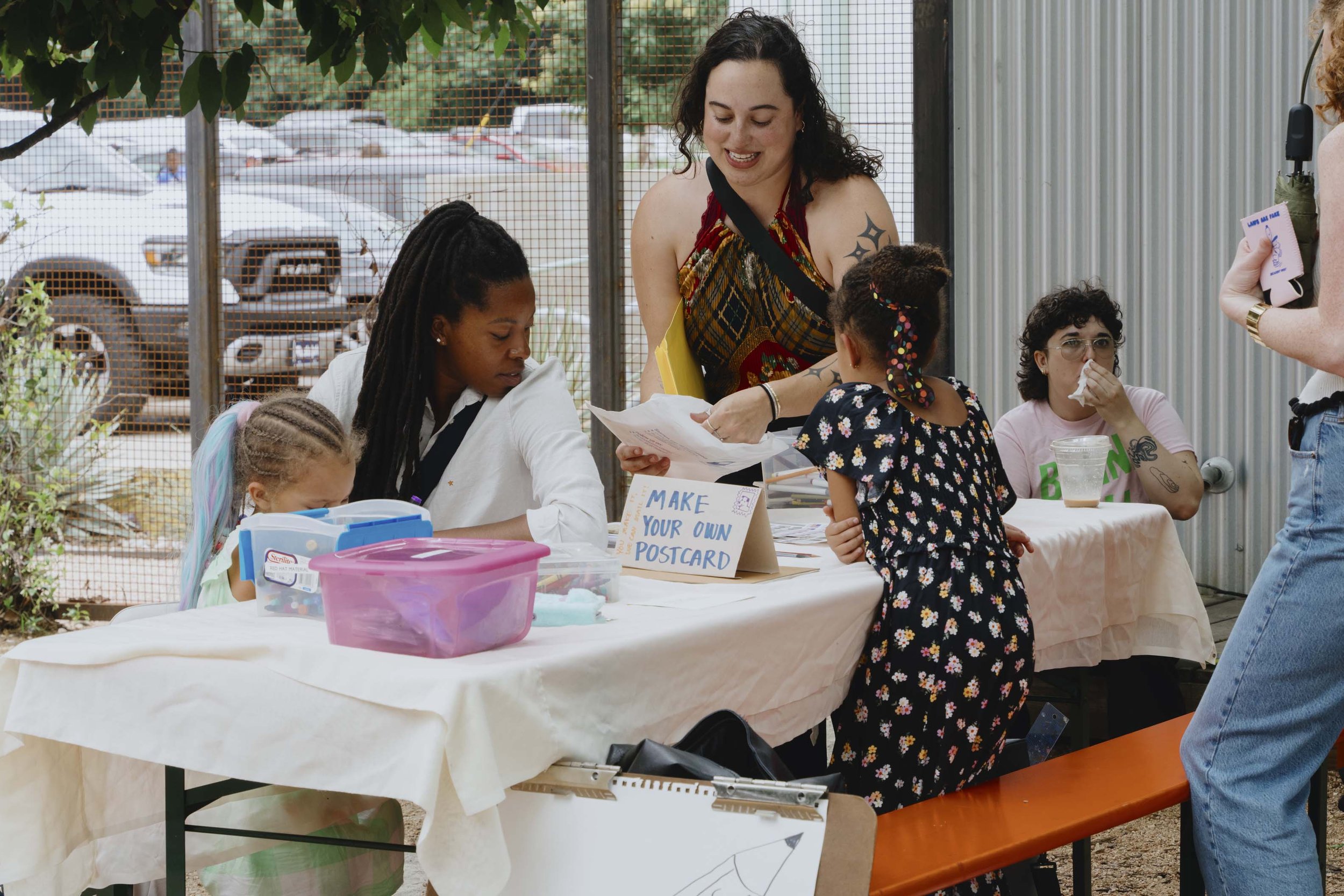
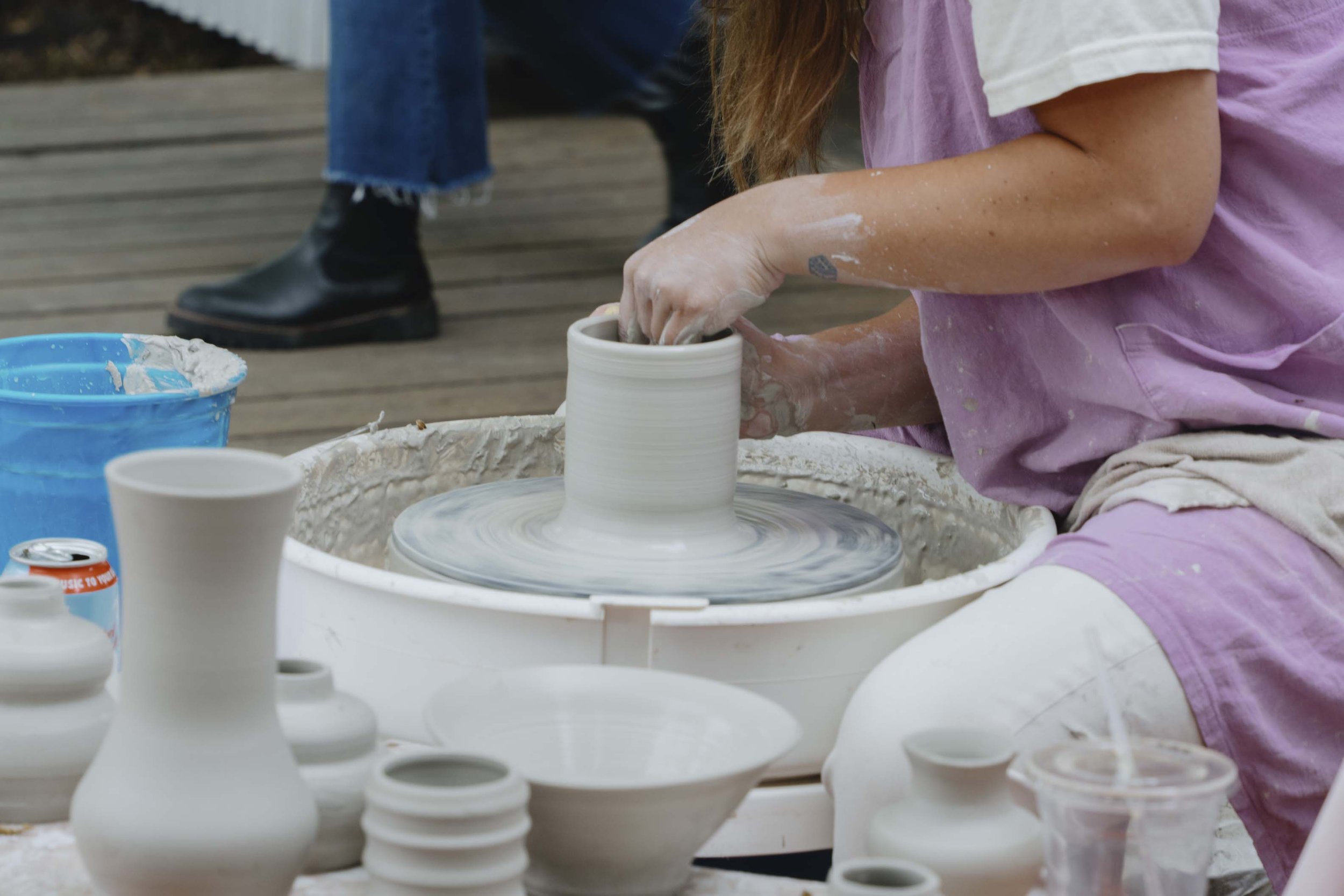
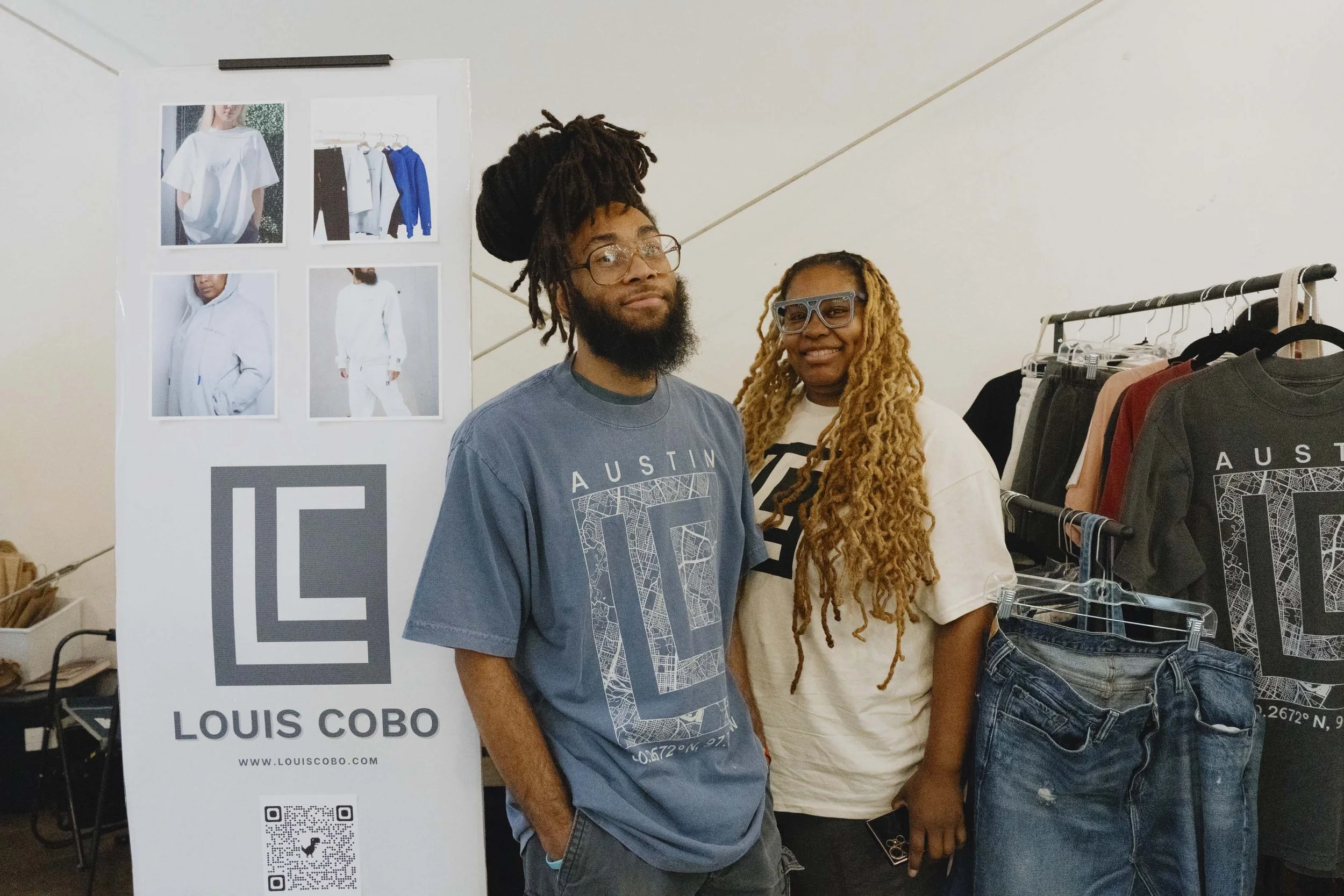
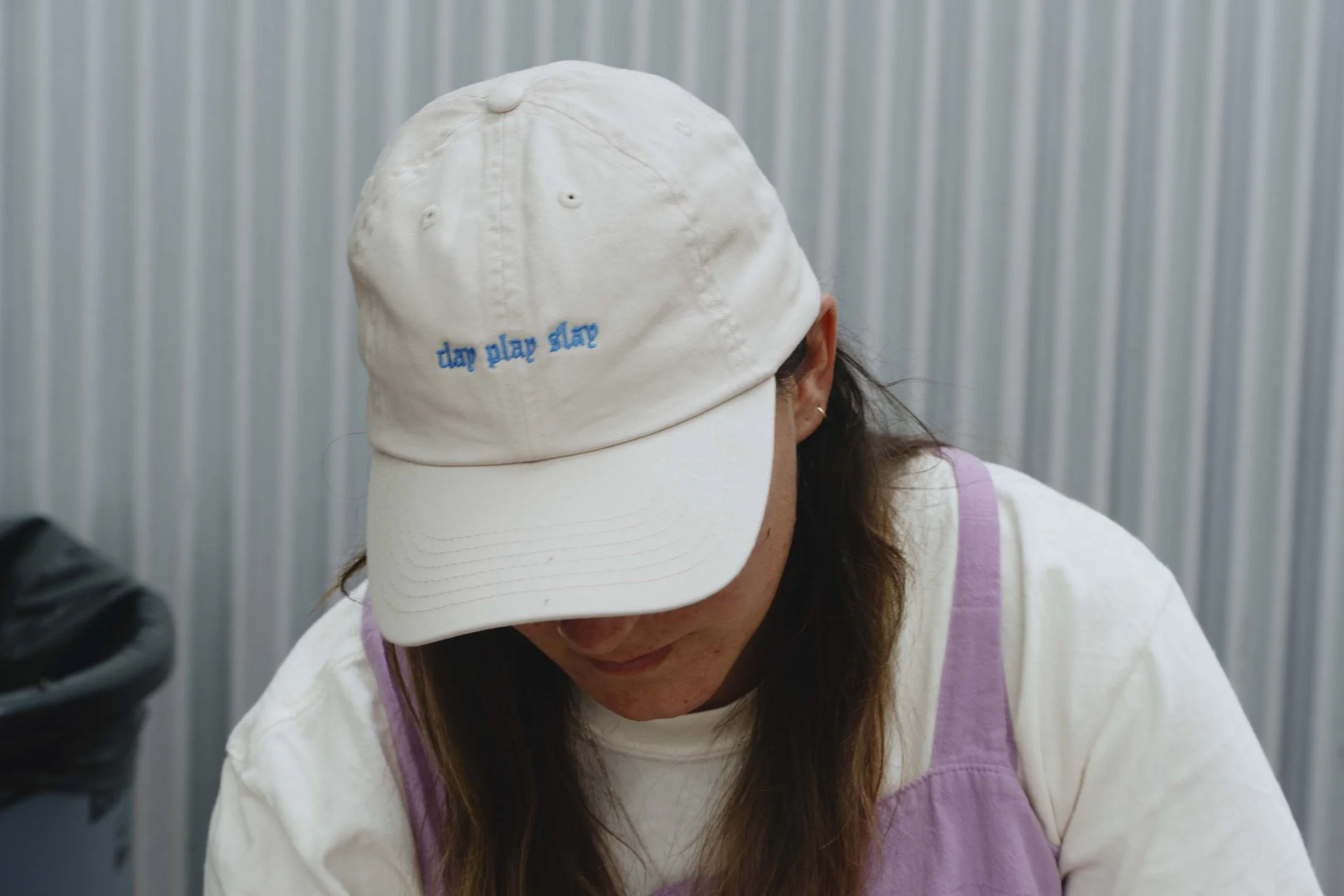
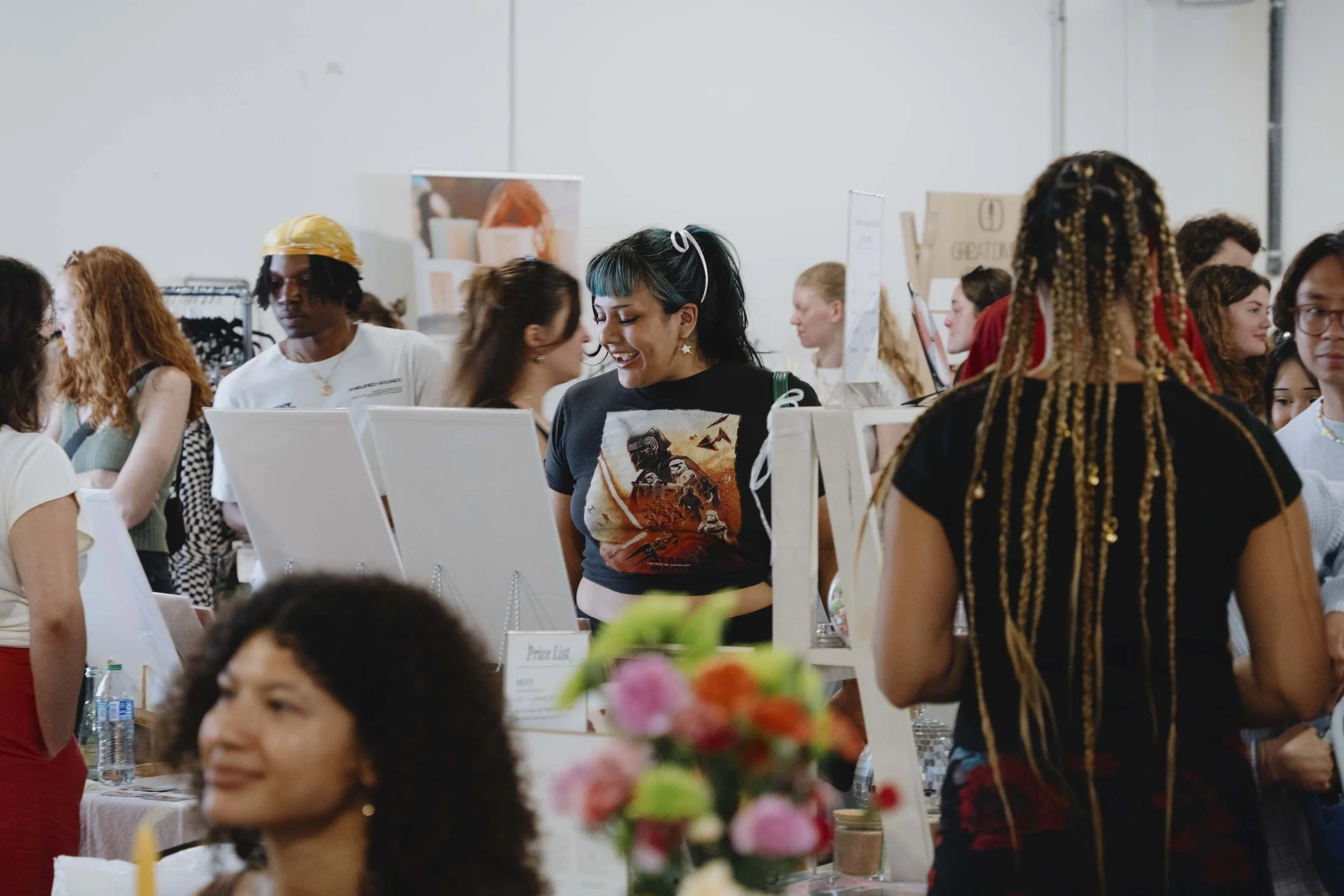
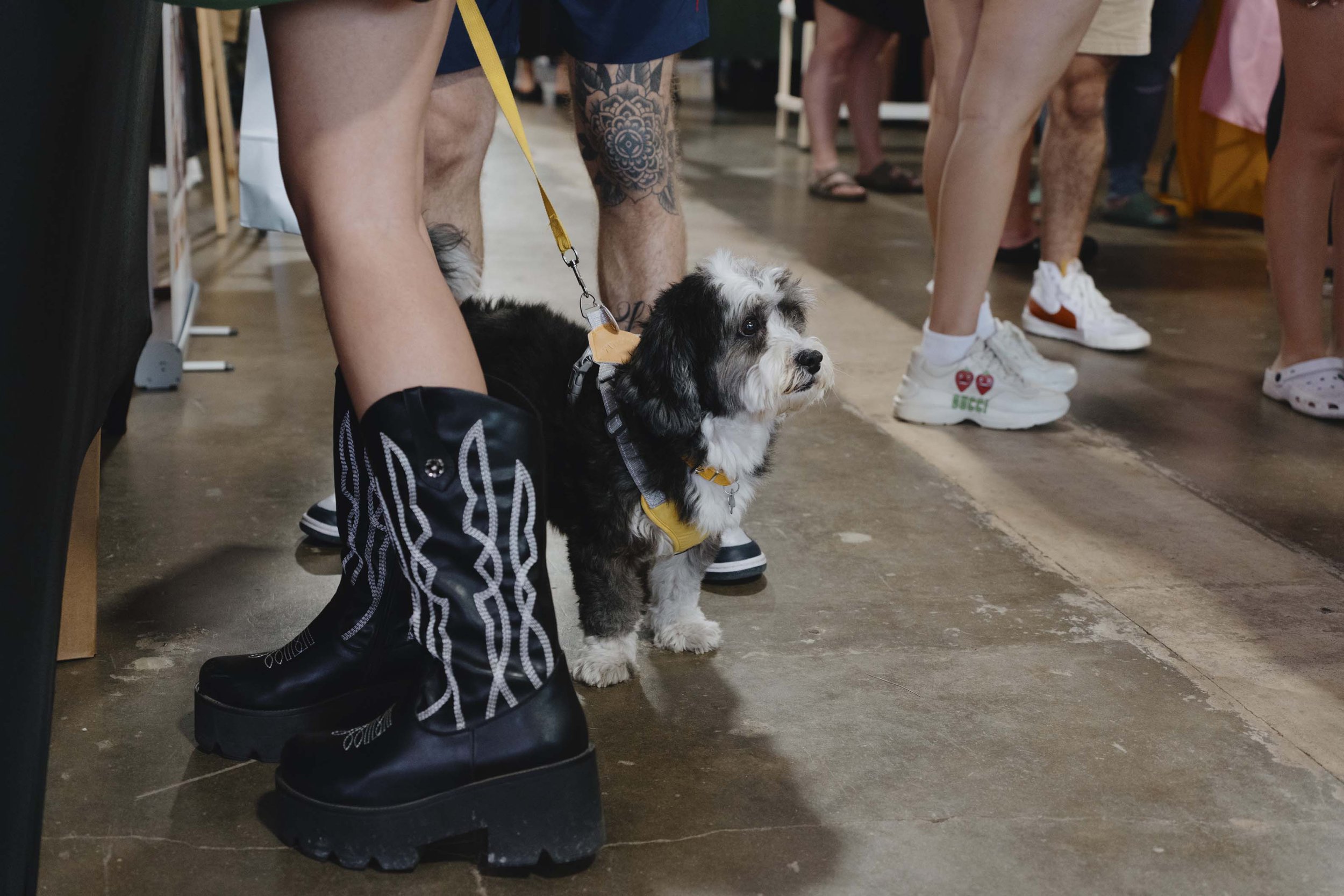
Photos by Yvonne Uwah of Broad Studios Club House x Future Front Clay Fellowship Pop-Up
MEET OUR 2025 COMMUNITY CLAY FELLOWSHIP RECIPIENTS:

Broad Studios Club House x Future Front Community Clay Fellows
Ripley Healy
Venus Davis
Laura Clay Robson
Nina Q. Ho
Veronica Sanchez
Jennifer Steverson
Arthur Moss
Noor Z.K.
Sophia Gonzalez
Cecilia Bates
Daniela Berny
Brandy Dance
ABOUT BROAD STUDIOS CLUB HOUSE:
Broad Studios Club House is a team of ceramic/multidisciplinary artists who opened up a ceramics studio and learning space to create a community where artists at every level can feel welcomed, empowered, and inspired.
Learn more here.
ABOUT FUTURE FRONT:
Homegrown in Austin, Future Front is a community space and exhibition series — with women and LGBTQ+ creatives at the front.
As an arts and culture nonprofit, we’re mother to The Front Market, The Front Festival and The Work Conference. Beyond our flagship exhibitions, we host year-round shows, gatherings and workshops at our creative community space in historic East Austin. Everybody and every body are welcome. You can learn more about how it all works, our team and what we do: futurefronttexas.org.
P.S. WANT TO GET INVOLVED IN FUTURE UPCOMING CALLS?
Check back year-round.

Meet 6 Of This Year's Fiscally Sponsored Cultural Projects
Future Front provides ongoing fiscal sponsorship, mentorship and capacity-building support to independent cultural producers’ public creative projects in Austin.
Future Front provides ongoing fiscal sponsorship, mentorship and capacity-building support to independent cultural producers’ public creative projects in Austin.
In 2025, we’ve welcomed a number of new Austin-based projects by independent artists and creatives.
Keep reading to get familiar with their work and support.
Meet 6 Of This Year's Fiscal Sponsorees:

Photo courtesy of Drunkluck
① THE CARNE ASADA
Produced by Drunkluck in collaboration with Cantina Siete Seis and Nixta Taqueria, “The Carne Asada” was a fiesta de comida, música y comunidad bringing together Austin and Mexico City behind a giant “parilla on wheels.”
To keep up with more cultural events and projects by Drunkluck, head here.

Photo courtesy of Sunday Sessions ATX
② SUNDAY SESSIONS
Sunday Sessions is about relaxation, good music, and connection with each other & nature. It started in April of 2023 when Wyldflower would play music at the park for her friends- barefoot, eating mangos, carefree. 2 months later there were 400+ people of color picnicking together at one of Austin's biggest, most notable parks.
Founded by DJ Wyldflower, Sunday Sessions is ultimately a monthly wellness ritual. An opportunity to relax, connect with your people, while listening to music that feeds the soul in a scenic Austin greenspace. All are welcome—Black and Brown people are centered.
Sunday Sessions pops up year-round and operates off of community donations. To make a donation, head here.


③ HOUSE HUNTING
House Hunting was a one-night experiential dinner in Austin that merged art, food, and connection through immersion. Inspired by Todd Hido’s photographs of homes at night, the evening explored themes of nostalgia, belonging, and memory—inviting guests into a glowing, thoughtfully curated environment that felt both intimate and expansive. Hosted at The Loren and Paggi House, the event brought together artists, creatives, and community members for a night of thoughtful dialogue and sensory experience.
Building on its success, we hope to grow House Hunting into an ongoing series that continues to foster meaningful connection and creative exchange within the community.
To keep up with future iterations of the project, follow multidisciplinary creative Megan T. Baker (@megantbaker) and independent curator Taylor Danielle Davis (@tayxday).

④ BLOODBATH STUDIO COMMUNITY FASHION SHOWS
Bloodbath Studio has produced 3 immersive fashion, film, and art exhibitions spotlighting queer and BIPOC creatives. Blending runway and visual storytelling, their shows uplift underrepresented artists through a transformative public event celebrating authenticity, artistry, and community resilience.
Their next December ceremony will shine a spotlight on even more designers, inviting the public to further engage with the creative process behind their productions.
You can make a donation to Bloodbath Studio here.

⑤ BROAD STUDIOS CLUB HOUSE COMMUNITY CLAY FELLOWSHIP
Through Future Front’s fiscal sponsorship program, Broad Studios Club House presents an annual Community Clay Fellowship.
The program’s fellows receive full funding for a six week ceramics course, and have the opportunity to learn from experienced instructors. Broad Studios Club House believes that having access to creative resources is vital to the community—and financial means should never be a barrier to high-quality arts education.
You can find out more about us at broadstudiosclubhouse.com or @bsclubhouse on Instagram and TikTok! You can also make a donation to the fellowship here.


⑥ LISTENING SESSIONS FOR LA
Listening Sessions For LA was a live music salon and mutual aid fundraiser benefiting Los Angeles’ Wildfire Recovery efforts. Organized by Austin-based artists and creative industry professionals Cassandra Shankman, Anita Schipper, Jane Hervey, Kaitlyn Dineen, Alyssa Hart, Rachel Saporito, Emily Whetstone, Jeff Holmes, Kendall Milo, Will Krause, Madilyn Biscoe, Reese Cisneros, Sierra Gutierrez, Whitney Tocco, Arielle Olfers, Meghan Rossi, and many more.
Get details here: https://bit.ly/m/livemusicforla
P.S. WANT TO GET INVOLVED?

On Art, Healing and Cultures of Care: Ceremony
From November 2024 to February 2025, we hosted Ceremony, a collaborative group show celebrating independent visual artists in our 2024/25 Artist Residency.
From November 2024 to February 2025, we hosted Ceremony, a collaborative group show celebrating independent visual artists in our 2024/25 Artist Residency.
Opening during East Austin Studio Tour (EAST) in November 2024 and running through March 2025, the program welcomed a cumulative 2,670 visitors and 27 individual artists across weekly daily visiting hours and 12 public gatherings.
Continue reading to learn more.


✹ ABOUT THE SHOW, CEREMONY
Centering ritual and craft, "Ceremony" was an exploration of the personal and communal routines that return us to ourselves.
Engaging 15 emerging artists based in Austin, Texas, the multidisciplinary and interactive exhibit explored themes of mental health, connection, collaboration, as well as the role art plays in self-soothing and community-building. Exhibiting artists included Iris Kwon (Child Appetite), Jeffrey Jin, Emily Lawson (Emsbrynart), Liz Moskowitz, Damino, Rewon Shimray, Leah Bury, Victoria Cardeñas (Wavy Roller), Elena Marcozzi, Maria Kanevskaya, Yvonne Uwah, Christopher Rodriguez (Wilted Nurture), Kedreonia Freeman (Kei Dycor) and Kayla Kennedy.
Featured works included installations, like:
a dynamic photo mosaic of 20+ prints by artist Jeffrey Jin, which presented a constellation of community portraits celebrating intimate moments of intergenerational connection
an interactive flipbook by artist Leah Bury, providing guided prompts for arts healing, self-discovery and self-image
a series of paintings by felt artist and oil painter Elena Marcozzi, expanding on the vitality of cultivating a safe inner world
Complementing the exhibit, we hosted 12 public workshops and interactive sessions that provided guided and facilitated moments for visitors to explore various wellness modalities, like sound healing, meditation and creative expression rooted in arts healing.
Within the show, visitors learned techniques like somatic stretching and self-guided meditation, as well as explored their own perspectives on mental health, connection and creative self-expression through facilitated workshops utilizing disciplines like collage, clay-making, poetry and more.
MEET ALL PARTICIPATING ARTISTS BELOW:

Iris works as an artist under the name Child Appetite because holding onto her childhood memories keeps her grounded through experiences of not fitting into any cultures. Over the past few years, she has studied and explored her memories, transforming rather dark moments into whimsical pieces using vibrant colors and humorous characterized animals. Her art is a continuous journey of turning personal history into visual narratives that invite viewers to rediscover the magic and resilience of childhood. She aims to evoke a sense of nostalgia and curiosity in strangers, believing that even though everyone’s experiences and memories are different, there is always an overlap.

Jeffrey Jin (b. 2003) is a photographer with roots in Houston working across a variety of genres—primarily documentary and fine art—to explore themes of togetherness and belonging. Through their images, they hope to unravel and reimagine narratives behind family, heritage, and land. Their process often urges them to think about their identity as an Asian American (as both its own entity and in the context of diaspora) queerness, sexuality, corporeality, and their deep affection for the South.

Emily Bryn (she/her) was raised in a multigenerational Mexican household in Austin, Texas and has lived here ever since. Being Mexicana, Tejana, and a queer person shapes the entirety of her work, which stretches from oil painting to screen printing and every little thing in between. Though she devotes her time to learning and expanding her creativity in freelance opportunities around the city, she also runs Emsbrynart, LLC full-time. Emily Bryn is the owner of her company where she screen prints playful drawings and slogans about queer and immigration rights onto up-cycled vintage clothing, reallocating a percentage of sales back into her two communities. Being a full-time artist at the age of 23, she can be found at markets around town, in literally any coffee shop trying to refuel herself, or taking a break to read and cool off at Deep Eddy Pool.

Liz Moskowitz (she/her) is a documentary photographer and filmmaker. Born and raised in Brooklyn, New York she has lived in Austin, Texas for over fifteen years. Her work aims to honor the dignity and nuance of people, places, and issues. She approaches each individual and community that she photographs with intentionality and an open-mind. Her films have won the Judge’s Choice Winner at the SXSW Faces of Austin Film Premiere, been a Vimeo Staff Pick, broadcast on the PBS "Frame of Mind" series, and shown at Woodstock Film Festival, AFI Fest, Dallas International Film Festival, and Sedona International Film Festival. She has been awarded grants from the Dallas Museum of Art, Henry Luce Foundation, and Austin Film Society, has several photos in The Wittliff Collections at Texas State University, and is a member of Women Photograph.

Damino is an interdisciplinary artist based out of ATX. Their love of music, art and wellness informs the work they create. They are currently focusing on releasing their first official EP, but are known for performing energizing hybrid live DJ sets. They also run their company Day by Day Wellness and curate events with @enter.chakana, @babeatx & @artislandatx. They are passionate about uplifting marginalized voices in the entertainment industry.

Rewon Shimray is a native Austinite and biethnic Asian American who processes her cultural and queer identity through autobiographical paintings. Her compositions blend childhood photographs, popular iconography, and cultural artifacts to narrate her upbringing in white dominant and Christian fundamentalist spaces. Rewon’s paintings offer a site of contemplation, recognition and connection. She earned a BA in Journalism from Baylor University with minors in religion and studio art. Rewon has exhibited work in over a dozen Austin galleries, including her debut solo exhibition in May 2023, titled “SPLIT: Portraits of the AAPI Diaspora.”

Leah Bury is a multimedia artist whose work spans photography, collage, writing, and music, with a focus on shining a spotlight on emotions and experiences that exist in the shadows. Through her art, Leah explores the liminal spaces between different ideas, identities, and emotions—those vulnerable, complex moments that are difficult to put into words. Her goal is to create work that others can see themselves reflected in, offering a tangible jumping-off point for connection. This theme runs through her photography, including her Dear Body series, where she worked with over two dozen individuals to celebrate the body and encourage participants to write letters of love to areas they once felt shame around, and her Projections series, which explored the complexity of multifaceted identities. Recently, Leah has expanded her practice by releasing music under the name Liminalia. In addition to her artistic pursuits, she is a curator, and the co-founder of the Slow Fashion Festival, dedicated to fostering spaces for other creatives to share their work and build community.

Victoria Cardenas (she/her), aka Wavy Roller, was raised in Buda, Texas and now currently resides in Austin. She is a self-taught artist that primarily works with acrylic on canvas but is constantly exploring other creative methods such as murals, screen printing, block printing, and more! Her love for sharing art began with vending and meeting others that can relate to her art, as it gave her the courage to keep going creatively. Her art explores connection (and lack of connection) that is all around her; with herself & her own trauma, others, and nature. She explores these feelings through fun calming colors and shape. She believes it's important to find her relation to everything in existence no matter how big or small!
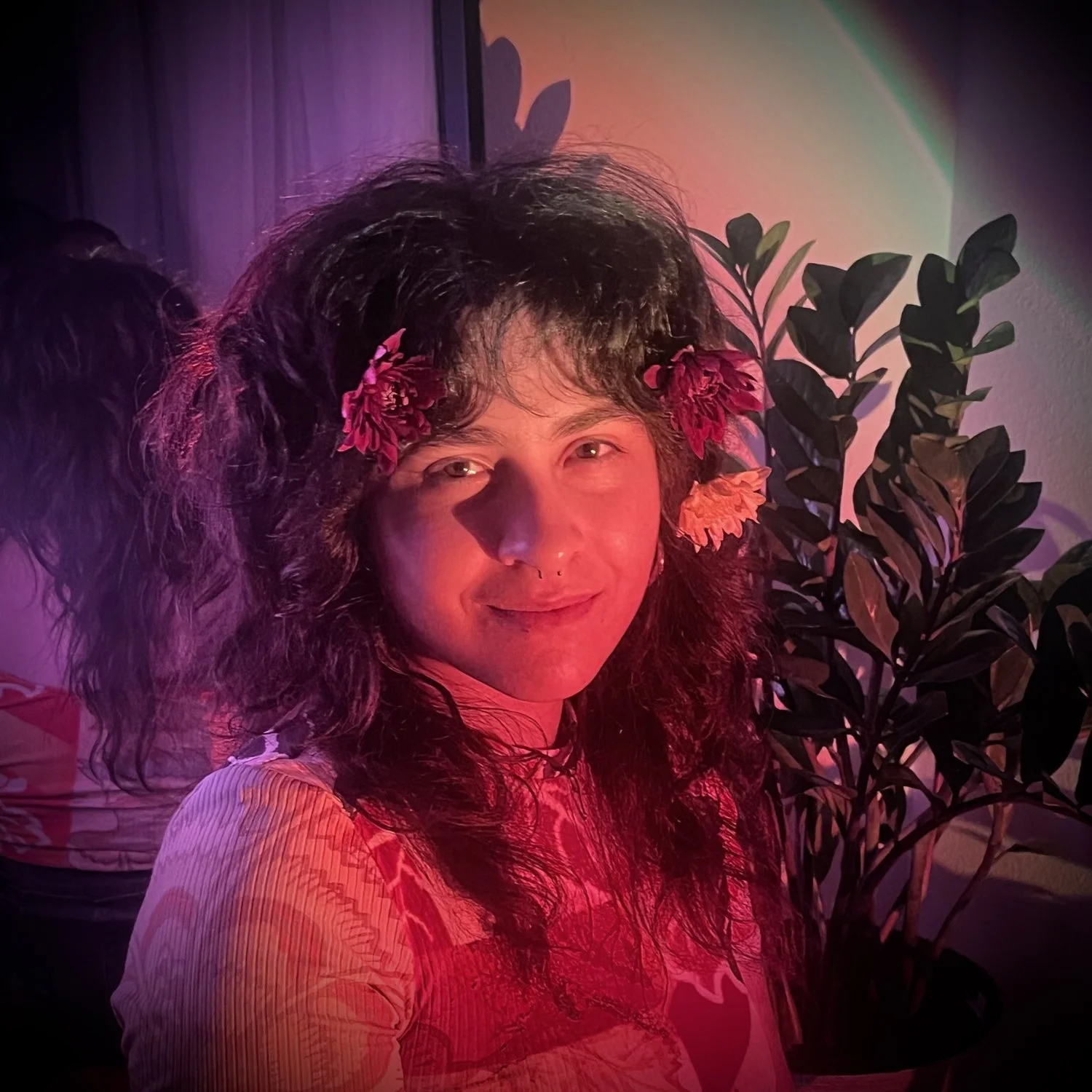
Elena Marcozzi is an oil painter and fiber artist who beckons viewers into a dreamlike world of texture and color through her wool felt paintings, adorned with whimsical beaded and embroidered embellishments. In her daily life, Elena finds meaning and creative inspiration working alongside artists with disabilities at Imagine Art, a studio collective that furthers her belief in using art to empower and heal.

Yvonne Uwah is a self-taught photographer living in Austin, Texas. She began using photography out of a deep desire to connect with and acknowledge other people. Because of this, her work primarily focuses on portraiture and what emerges when investing time into relationships.

Kedreonia Freeman (aka Kei Dycor) is a macrame and crochet fiber artist born and raised in Austin, Texas. Her work reflects themes of cultural roots, spirituality, and transformation. Her distinctive approach to color invites viewers into a vivid world of texture and contrast by blending traditional techniques with abstract concepts. In her work, Kedreonia seeks to communicate emotion and welcome viewers to connect with her journey of healing, motivation, and artistic exploration.

Maria Kanevskaya (she/her) is a Russian-born photographer currently living and working in Austin, Texas. Her focus in photography is to capture human emotions, mostly exploring female subjects and their internal reality.

Austin-based, Kayla Kennedy (she/her) is a self-taught abstraction artist. Born in Long Beach and raised in Portland, Kayla’s inspiration stems from all those she has encountered on her life’s journey. While pursuing a career in interior design, Kayla was inspired to begin creating art, birthing a new way of self-expression. While most of her art involves acrylic on canvas, she enjoys exploring all mediums creating texture and depth. Kayla hopes to inspire creativity and impact those in her community.

Wilted Nurture is the mental health of artist and business owner, Christopher (they/them), brought to life. They began their pottery journey back in 2021, when their childhood traumas resurfaced, as a way to channel the emotions and emptiness they felt all throughout life. It is mainly through pottery that they were able to begin healing and find solace within their past. Christopher is fully self taught, creates with intent and hand builds every piece with no mechanical wheels. They create not only for the wellness of their mental health, but to publicly share their experiences and advocate for those who may also struggle with their mental health as a reminder that it’s okay to not always feel okay.
DID YOU MISS CEREMONY?
Keep up with what we’re up to at Future Front—from events to membership—here.
FUTURE FRONT IS SUPPORTED IN PART BY The City of Austin Economic Development Department, ArtsHERE, Tito’s Handmade Vodka, Texas Commission on the Arts, The LINE Hotel Austin, Pease Park Conservancy, the Red River Cultural District, Downtown Austin Alliance Foundation, Topo Chico, as well as Future Front’s donors and members.

Women’s History Month x SXSW: A Week of Global Collaboration
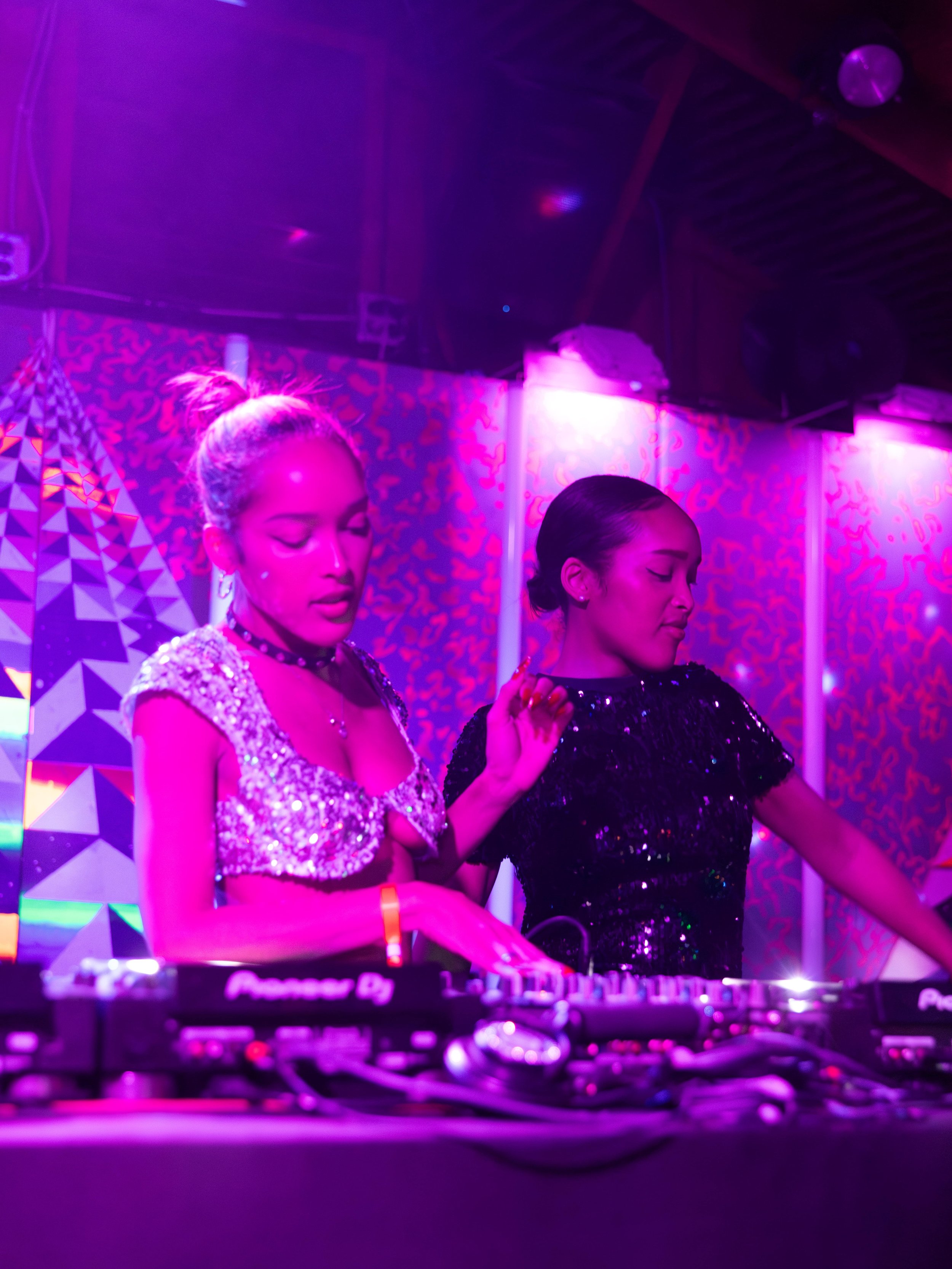
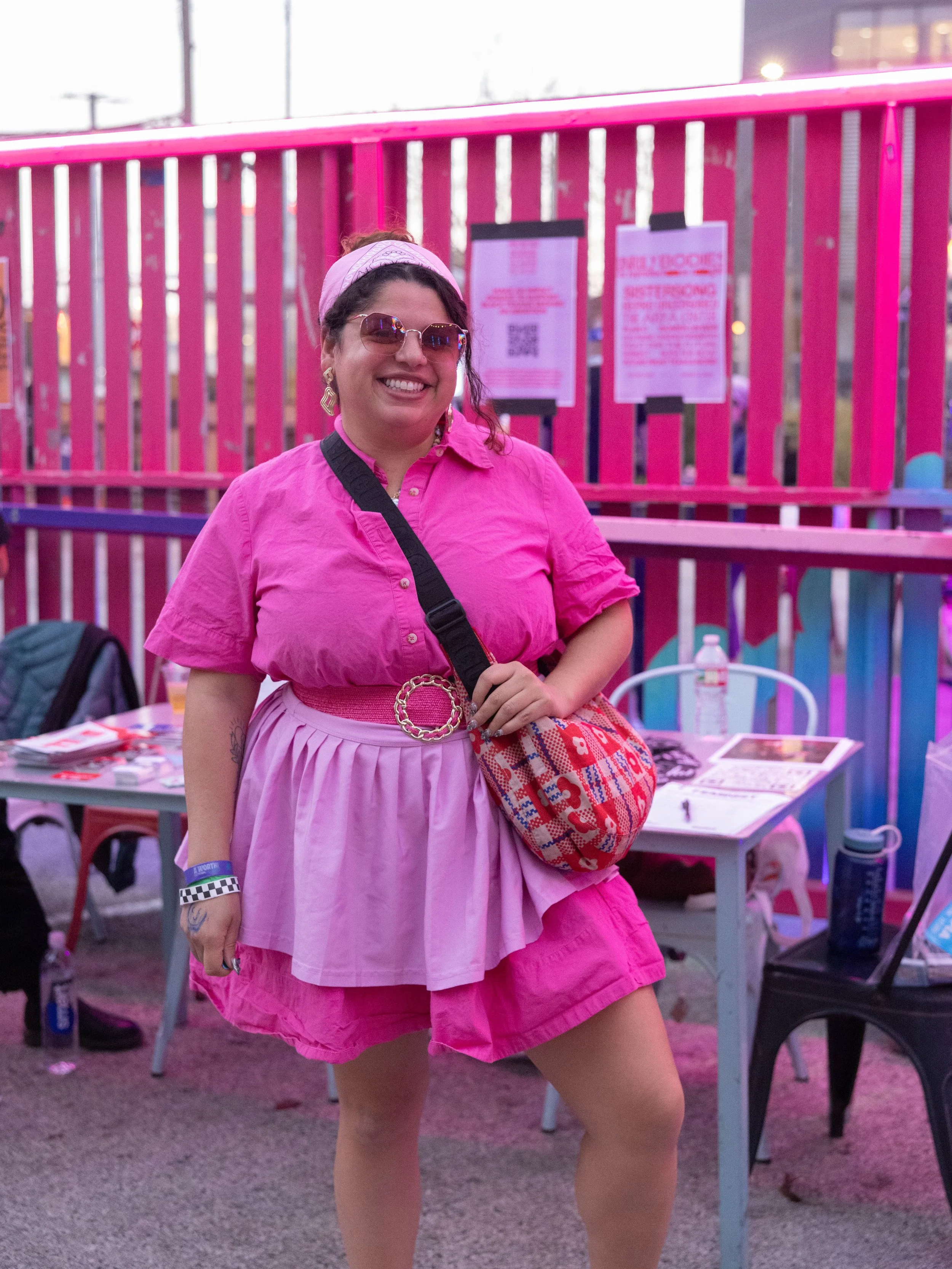
Every year during SXSW, Future Front hosts artists, creatives, cultural workers and activists across the U.S. for International Women's Day and Women's History Month.
Every year during SXSW, Future Front hosts artists, creatives, cultural workers and activists across the U.S. for International Women's Day and Women's History Month.
This year, we welcomed dynamic collaborations with local and national organizations, including Jane's Due Process, Highlander Center, SisterSong, Repro Uncensored, The National Latina Institute, FEMINIST, The Afiya Center and more.
Thank you to Monica Raye Simpson, Madame Gandhi, Jasmine Solano, Zyah Belle, Jasmine Zelaya, SM Sanz, RaeCola, DJ Bad Apple, Aisha Becker-Burrowes, Austin Zine Friends, Essentials Creative, DJ Ella Ella, Highlander Center, SisterSong, Repro Uncensored, Jane's Due Process, The Gallery ATX and more for making the week possible.
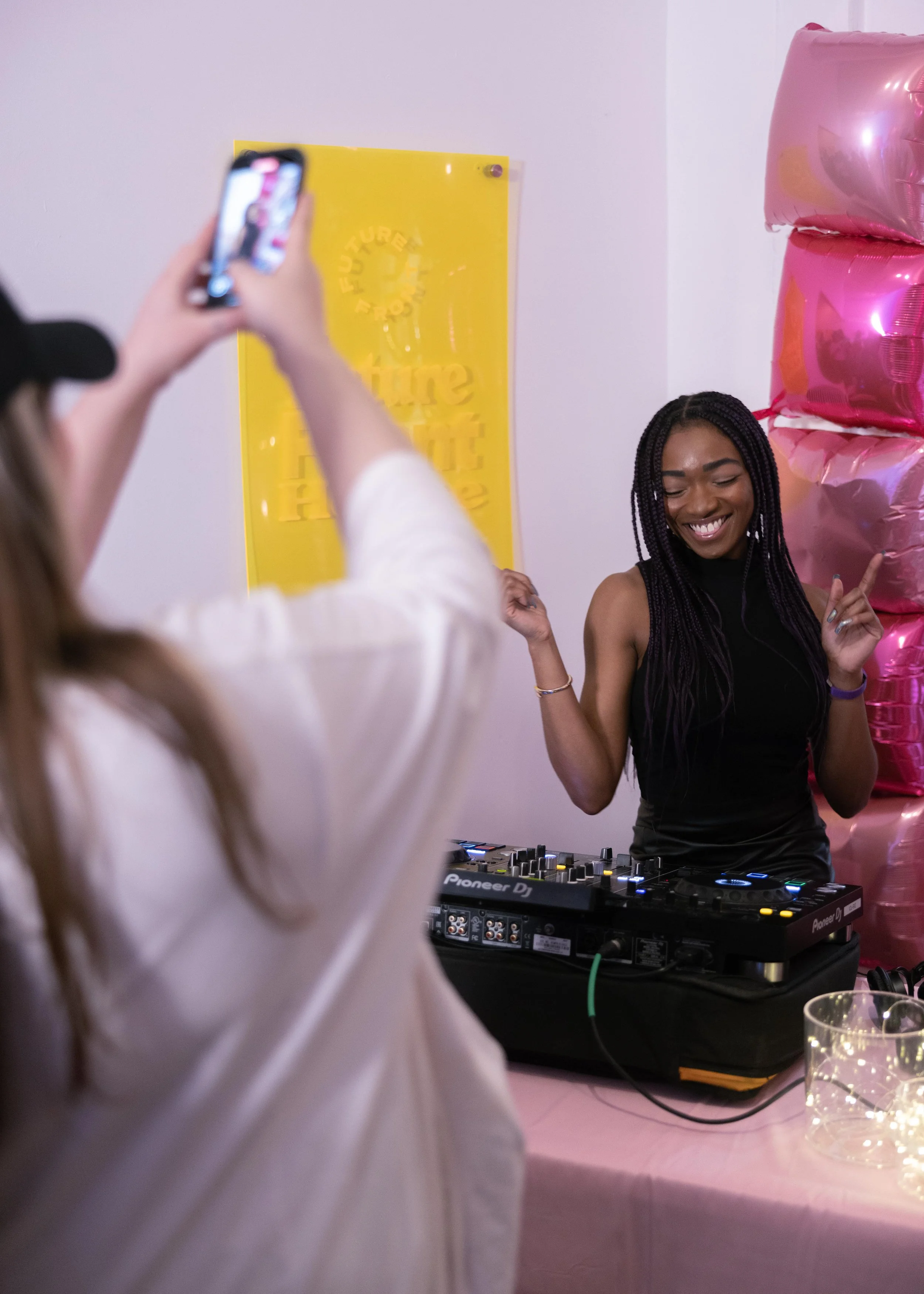
*All photos by Future Front resident artist Jeffrey Jin
Scroll for a visual recap.





Want to get involved?
Keep an eye out for open calls and upcoming events at futurefronttexas.org.
PS — We are fundraising for our future. Find ways to support below:

When A City Changes, What Does Investing In Artists, Creatives And Homegrown Culture Look Like?
In 2024, our leadership team worked with the Downtown Austin Alliance Foundation to publish its first Artists and Creatives Thrive report, exploring cultural relationships to downtown Austin.
In 2024, our team worked with the Downtown Austin Alliance Foundation to publish its first Artists and Creatives Thrive Report, exploring cultural investment in downtown Austin.
Continue reading for the report's findings and key insights.
Austin has a long and well-documented creative history.
As the city rapidly grows, centering Austin’s diverse creative communities in cultural planning continues to drive belonging, economic growth & long-lasting culture.
Simultaneously, this growth has posed many questions and barriers for cross-community traditions, arts access, ongoing public engagement in culture and impactful creative empowerment in austin’s built environment.
So, how can we rise to these challenges?
Downtown Austin Alliance’s Active Urbanism team engaged with Future Front Texas to use the 501c3 arts and culture organization’s community design frameworks & public engagement approaches to identify new responses, programmatic designs and impact metrics toward this question.
Project Goals
IMPACT
Identify the desired impact of “Artists & Creatives Thrive” initiatives facilitated in downtown Austin by the Downtown Austin Alliance and Downtown Austin Alliance Foundation
FLAGSHIP VIBE
Inform programmatic options for new cultural initiatives that meet the desired impact metrics established by the report
ALIGNMENT
Recommend planning, engagement and programming efforts that expand downtown Austin’s creative community partnership & involvement
When artists and creatives thrive, culture thrives, too. So, when a city’s built environment rapidly changes, what should investing in culture — aka the vibe — look like? We asked independent creatives, artists and cultural producers themselves.
HOW PUBLIC ENGAGEMENT OCCURRED
3 Downtown Field Trips
with 50+ participants at DAA cultural programs & partner events
25+ Creative Community Chats
with 50+ participants at DAA cultural programs & partner events
4 Active Urbanism Committee Meetings
with 15 public servants and 12+ AU Staff Meetings
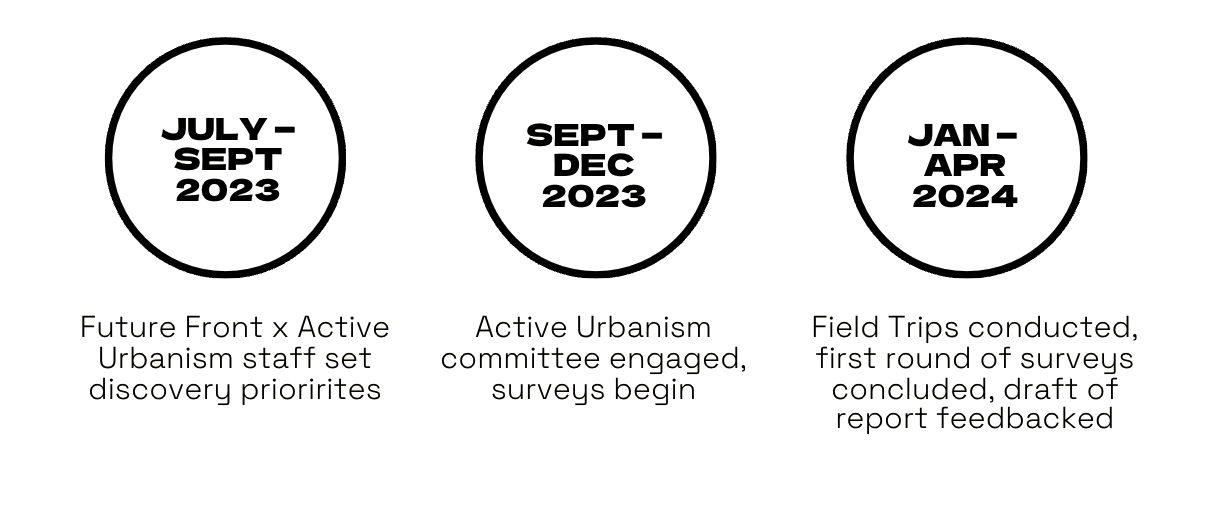
PUBLIC ENGAGEMENT TIMELINE
Research Included Downtown Voices, Like:

What We Heard From Artists & Creatives
On what’s missing from downtown Austin’s built environment:
“Public art experiences and creative activities that speak to the human experience, conviviality beyond art on the walls... opportunities that engage the muscle memory of physically moving through urban spaces with curiosity.”
Artists and creatives want to see sustained opportunities that model cross-community collaboration and open invitations to the public.

Ultimately, when it comes to the culture of our communities, the vibe must be more than visible art on our walls.
It must be modeled. It must be experienced.
Why Are Creatives Important To The Culture of Public Spaces, like Downtown Austin?
Local Economy
Supports opportunities for emergence of hyperlocal small businesses and ongoing cultural tourism
Strong Brand
Encourages memory-building & organic storytelling
Belonging
Includes stakeholders beyond development & business
What Kind of Creatives Make Culture?

& How Can Homegrown Culture Grow?

① How can you apply these findings to your own cultural programming and community engagement?
② Where can you make space for local art and creativity in your daily life—and plans for the future?
③ What does it look like to invest in the experience of community?
HERE’S HOW THESE FINDINGS WILL BE APPLIED IN DOWNTOWN AUSTIN:
Introducing $30K in micro-grants to fund local cultural experiences, establishing an application process and promoting grants through community channels
Fostering continuous engagement with local artists and creatives by hosting town hall meetings, forming partnerships with arts organizations and organizing networking events
Activating downtown public spaces to boost community interaction by organizing public art installations, as well as interactive events that include collaboration between urban planners and the local creative community
Creating arts and culture programs tailored to community needs by conducting surveys and focus groups, studying successful national programs and piloting new initiatives
Ensuring the availability of creative spaces and continuous funding by repurposing vacant buildings, establishing long-term funding sources and offering affordable studio spaces


BEHIND THIS REPORT
This report reflects a year-long community design effort for Downtown Austin Alliance and Downtown Austin Alliance Foundation, facilitated by executive leaders from 501c3 arts and culture organization Future Front Texas.
Future Front Leadership Team
Jane Hervey, Lead
Xochi Solis, Lead
Downtown Austin Alliance Staff
Raasin McIntosh, Lead
Emily Risinger, Co-Lead
Amanda Baez
Jenell Moffett
Leta Harrison
Marilyn Willson
Downtown Austin Alliance Foundation Board of Directors
Dewitt Peart, Secretary, Downtown Austin
Jennifer Wiebrand, Gables Residential
Kevin Brown, DuBois Bryant & Campbell
Nick Moulinet, Chair, DPR Construction
SaulPaul, SaulPaul Productions, Foundation
Xavier Pena, St. David’s Foundation
Participating Active Urbanism Committee Members (DAA)
Nick Moulinet, Chair
Adrienne Brown
Albi Hasku
Andy Austin
Ashley Kegley-Whitehead
Dan Jefferson
Eric Schultz
Heather Hart Potts
Janis Daemmrich
Kevin Brown
Lindsay Palmer
Marissa Rivera
Martin Nembhard
Michael Girard
Rachel Blair
Rebecca Senchak
Sania Shifferd
SaulPaul
Xavier Peña
Presenting Organizations
The Downtown Austin Alliance (DAA) is the steward of a collective vision for downtown Austin and enhances every aspect of the downtown experience. DAA is on a mission to create, preserve and enhance the vibe, vitality and value of downtown Austin for everyone. Currently, the organization supports multiple programs for artists, creatives and cultural producers in Downtown Austin. Learn more about DAA at downtownaustin.com. Learn more about DAA’s programs for artists and creatives at downtownaustin.com/foundation/dasa.
The Downtown Austin Alliance Foundation is the 501(c)(3) non-profit charitable foundation of the Downtown Austin Alliance that serves underserved and underrepresented populations downtown, using art and cultural placemaking to cultivate a welcoming, safe and vibrant Downtown Austin by and for everyone. Foundation programs are made possible through the support of charitable contributions. The Downtown Austin Alliance absorbs all overhead and administrative expenses of the Foundation, ensuring 100% of donations go directly back to the community. Learn more at downtownaustin.com/foundation.
Homegrown in Austin, Future Front is an award-winning cultural space and public exhibition series—with women and LGBTQ+ creatives at the front. As a 501c3 arts and culture nonprofit, we produce two annual community-led exhibitions, The Front Market and The Front Festival, platforming independent artists and creatives across disciplines in Texas. Beyond our flagship exhibitions, we host seasonal shows and workshops at our creative space in East Austin, welcoming 20,000+ visitors per year. Through these programs and a diverse network of partnerships, we invite the public (including you) to dream of a future where local art and creativity thrive in Texas—where we see ourselves and our cultures reflected in our communities.
Do you want to get involved?
Introducing Our 2025 Calendar And Open Calls
It’s time for a close read. Bookmark Future Front’s big event and open calls dates for 2025.
It’s time for a close read.
As we open for the 2025 Season, bookmark Future Front’s big event and open calls dates for 2025.

✰ 2025 BIG EVENT DATES:
FUTURE FRONT CURATES AND PRODUCES THE FRONT MARKET and THE FRONT FESTIVAL EVERY YEAR.
Beyond our exhibitions, we host seasonal art shows, gatherings and workshops nurturing creative community at our flagship space in historic East Austin.
Event registration opens on a weekly basis at futurefronttexas.org/comethrough (all of these events will be up there soon).
SPRING 2025 SEASON
JANUARY 26, 2025 — Future Front’s Annual Open Creative Learning Series Returns!
FEBRUARY 15, 2025 — "History In The Making" Opens at the Future Front House
MARCH 8 — 16, 2025 — SXSW Week @ The Future Front House
MAY 3 & 4, 2025 — The Front Market’s Spring 2025 Season @ Distribution Hall
SUMMER 2025 SEASON
JUNE 26, 2025 — Swim Sessions Return!
JUNE 28, 2025 — Pride Picnic at Pease Park
JULY 17 TO 19, 2025 — Future Front’s Fourth Birthday
JULY 30, 2025 — Community Clubs 2025 Season Begins!
LABOR DAY WEEKEND 2025 — The Front Festival
FALL/WINTER 2025 SEASON
NOVEMBER 2025 — The Front Market’s Fall 2025 Season
Mark your calendar now. Make plans to visit or get involved!
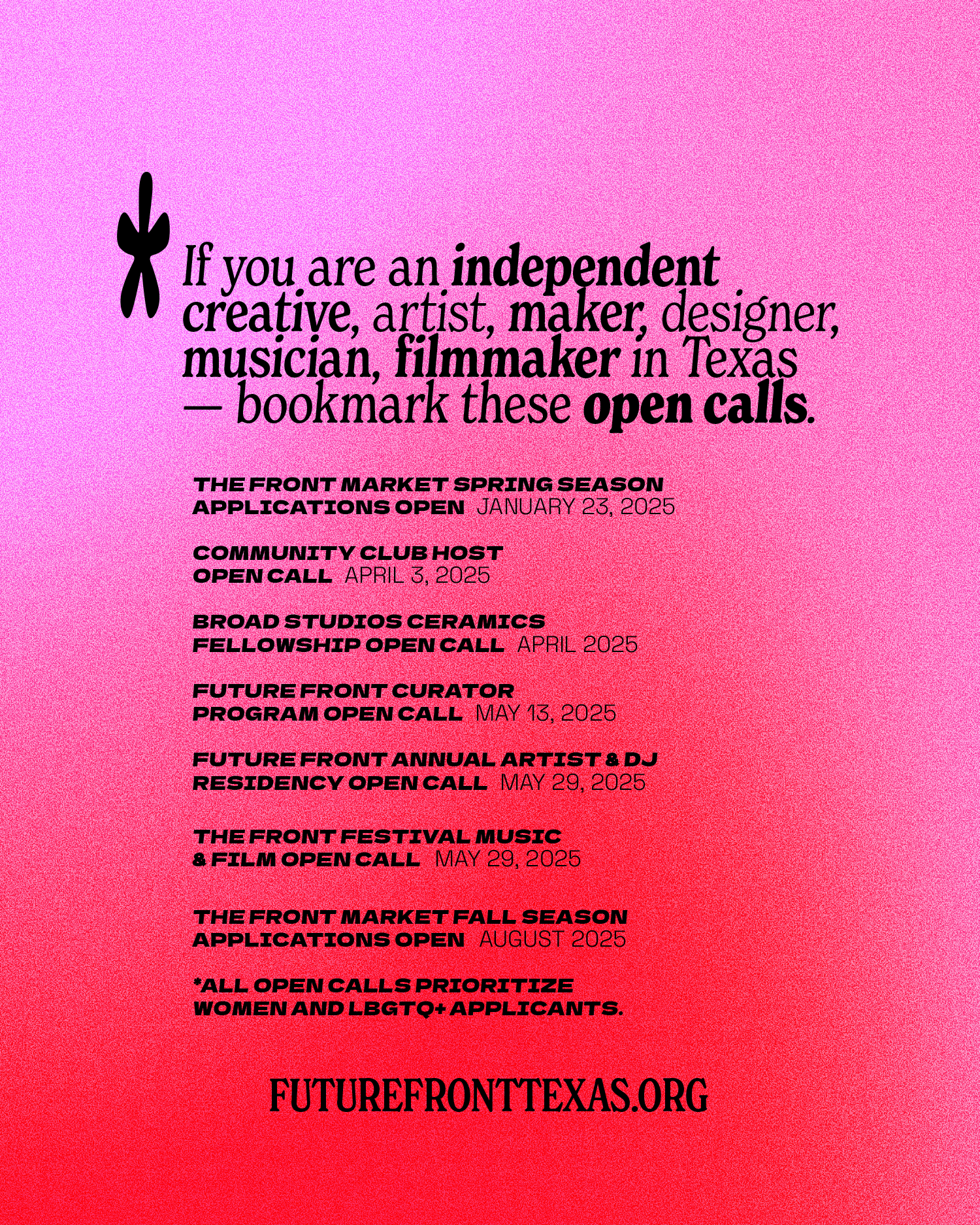
✰ 2025 OPEN CALLS:
IF YOU’RE LOOKING FOR A PLACE TO SHARE YOUR CREATIVE WORK, GET INTO OUR OPEN CALLS.
From these open calls, we platform 500+ independent artists, creatives, makers, designers, filmmakers, musicians and community leaders in Texas per year.
SPRING 2025 SEASON
JANUARY 23, 2025 — The Front Market Spring 2025 Season Applications Open
APRIL 3, 2025 — Community Club Host Open Call
APRIL 2025 — Broad Studios x Future Front Ceramics Fellowship Open Call
SUMMER 2025 SEASON
MAY 13, 2025 — Future Front Curator Program Open Call
MAY 29, 2025 — Future Front’s Annual Resident Artist & DJ Open Call
MAY 29, 2025 —The Front Festival's Independent Music and Film Open Call
AUGUST 2025 — The Front Market Fall 2025 Season Applications Open
You can also join membership for complimentary access to all of our events, workshops and learning spaces year-round.
All open calls will be listed as they are made available at futurefronttexas.org/apply.
✰ THIS YEAR’S ANNUALl THEME: CLOSE READ
IN 2024, WE GATHERED AROUND RITUAL.
Inspired by the Texas cosmos and the little-big cycles of our lives (from election seasons to daily routines), our 2024 theme reminded us to zoom in and out. To reimagine, reexamine or simply remember the rituals connecting us to ourselves, our communities and our cultures.
IN 2025, WE’RE CONDUCTING A CLOSE READ.
It’s been one decade since we hosted the first creative meet-up that led to Future Front. So, it’s time for a close read.
This year’s shows, public exhibitions, workshops, resource guides (and more) will ask you to pay close attention, to ask questions and consider big ideas, to make notes in the proverbial margins. To connect how something came to be to what it feels like now—the ultimate creative process.
Do you want to get involved in 2025?
Our programs model the value of local art and creativity in our everyday lives and dreams for the future.
Become a member or donate to our fundraiser.
You can also explore all of the other ways to join us here.

Meet The Artist Behind Future Front's "Mom" Merch
Last season, we collaborated with artist Lola Budimir (a featured creative within The Front Market) to design a fresh take on the Future Front logo, inspired by vintage I <3 Mom tats—and the goods are finally here.
Last season, we collaborated with artist Lola Budimir (a featured creative within The Front Market) to design a fresh take on the Future Front logo, inspired by vintage I <3 Mom tats—and the goods are finally here.
If you stop by an event this season, make your way to the future front information station and grab some mementos of your own.
Scroll to meet this season’s merch designer and explore what’s new in the shop.

✰ Introducing this season’s merch designer, Austin-based artist and tattooist Lola Budimir.
Lola (she/her) is a DIY artist and printmaker from Serbia living in Austin, Texas. She does flyers, merch designs, album covers, tattoos, and other personal commissions for friends, musicians, and artists in Texas! She has recently expanded her endeavors into DIY screenprinting and recycled apparel making under the name of Milk Maiden. When she isn’t making art, she loves to play the piano, sing, watch ghost shows, and hang out with her dog (and son), Toad.
You can find her at @milkmaidenatx on Instagram for all of your design needs— any budgets, any thing, anyone!
Grab a tote or trucker hat at Future Front events or from our store below:

This tan trucker hat was hand-embroidered by independent design outfit Goody Bag. Can be worn as a snapback or baseball cap (flexible brim).
Click here or on the image to purchase.
Photo by Yvonne Uwah
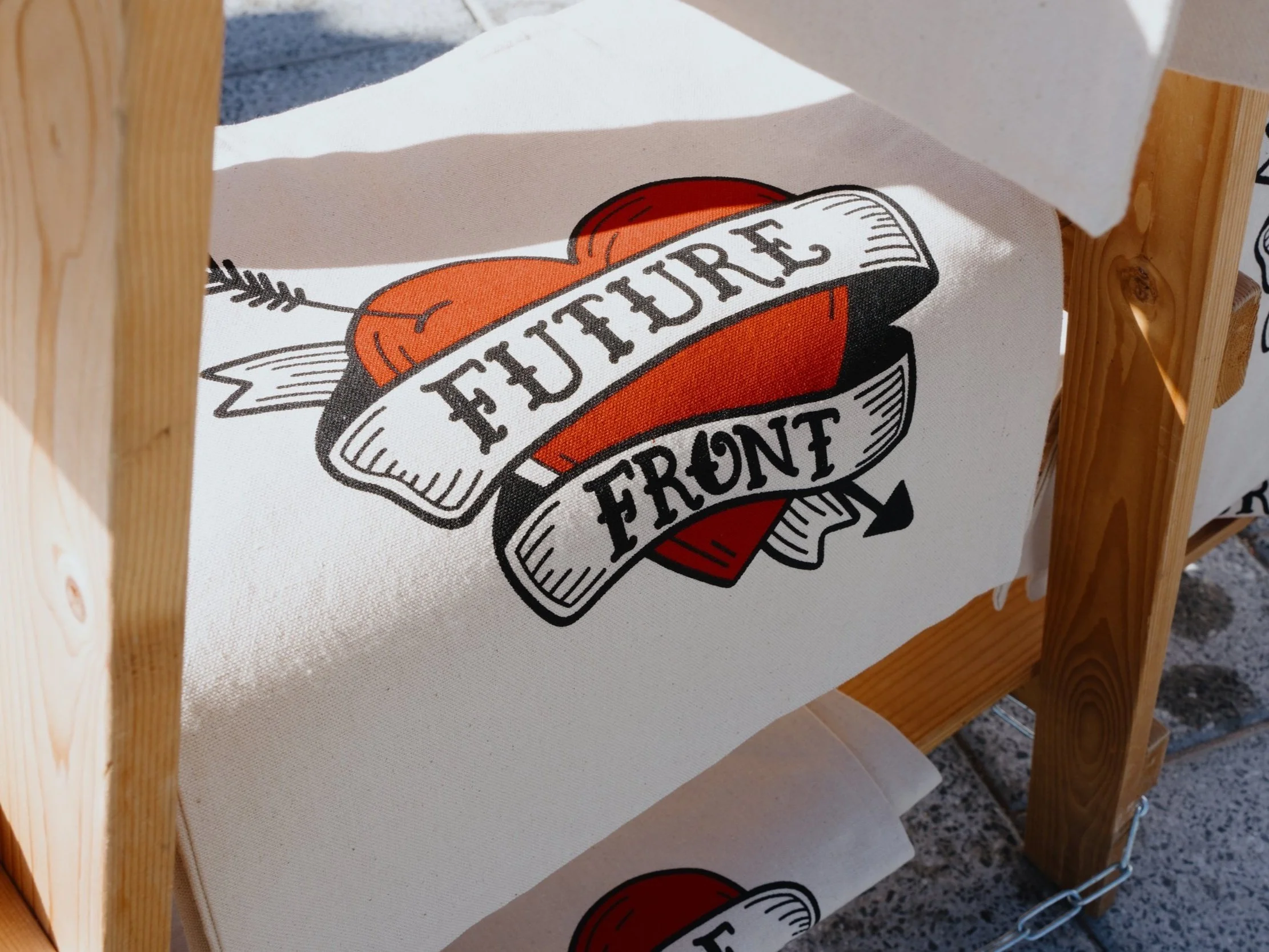
This sturdy, natural canvas tote was hand-screen-printed on canvas in Austin, Texas by Goody Bag. Click here or on the image to purchase.
Photo by Yvonne Uwah
PS — We are fundraising for our future. Find ways to support below:

The Collective-Care Guide: Building Self-Care and Sustainability into Creative Community Work
Written by Texas-based licensed therapists, this step-by-step guide explores realigning values, boundaries and frameworks toward both self-care and collective-care within your community work.
In 2023, alongside licensed therapists Sandra Olarte-Hayes and Manuel Cantu, Future Front facilitated its first-ever Collective-Care Club.
Monthly, a group of psychotherapists and community members in justice-based creative and/or cultural work gathered to explore their personal and professional relationships to collective-care, self-care and sustainability.
We explored important themes such as trauma and the body, how shame and trauma impact how we treat one another in conflict, personal and collective transformation and why so many social justice-focused spaces cause so much harm. This guide reflects back what the group learned.
Keep reading for a step-by-step guide on realigning your values, boundaries and frameworks toward embodied self-care and collective-care within your community work.
WRITTEN BY TEXAS-BASED LICENSED THERAPISTS SANDRA OLARTE-HAYES AND MANUEL CANTU, WITH ILLUSTRATIONS BY KAI ARNN (UNLESS OTHERWISE INDICATED)
STEP 1 —
Finding Your Narrative
THE PERSONAL IS POLITICAL

BEFORE WE DISCUSS COLLECTIVE-CARE, LET’S IDENTIFY YOUR JUSTICE NARRATIVE.
There is a point in our lives when we widen our worldview and the panorama becomes nuanced and complicated. Seemingly benign systems we thought were supposed to heal us and protect us start to feel oppressive and exclusionary. The innocent “colorblindness” and heteronormativity some of us were taught as children gives way to realities of privilege and histories of harm.
For those of us engaged in justice-oriented creative work, there was a point at which all of this awareness became too much to bear. We could no longer sit back and allow the status quo to replicate itself. Whether for our own self-healing, the healing of generational trauma, or an attempt to leave behind a better world, we took up a cause.
But what happens when traumatized and wounded people all find themselves in the same spaces? With similarly primed triggers? As we examine our personal “why,” we can understand how our experiences and narratives inform our work, what moves us, and our lenses.
*What brought you to justice-oriented creative work? WHAT’S YOUR WHY? HOW ARE YOUR EXPERIENCES AND NARRATIVES INFORMING YOUR WORK?
CLEARLY UNDERSTANDING YOUR “WHY” HELPS YOU FIND CLARITY—AND STAY MOTIVATED WHEN THE WORK IS CHALLENGING.
For many of us, our pain brought us to this work and yet our pain and our stories also imbue our work with triggers and pain points. Our personal narratives lead us to invest ourselves deeply. Setbacks have a big impact on us and losses are hard on us because we care. Conflict and harm in spaces where we thought we would be seen feels disheartening.
So how do we find the motivation to keep going when things get hard? In our Collective Care Club series, we heard stories of disappointment followed by a re-grounding in one’s values and in the strengths of one’s communities. Doing this work with others has its challenges, but it also leaves us with ways to bolster one another when we need to. We find ways to have fun together and to relish the successes, even if they feel small. Many of us need time to step back from our work temporarily to get re-grounded in our own personal “why,” only to come back to the work and step back in when we are ready to.
SOMETIMES, WE KNOW OUR WHY—BUT NOT OUR “WHAT.” WHAT ROLE DOES YOUR WORK PLAY WITHIN MOVEMENT-BUILDING?
When figuring out how to help (or how your work helps), it’s always best to start with a few simple questions:
What are you naturally good at?
Maybe your skillset is creativity, you’re going to design a stellar social media campaign or flyers to get the word out. Perhaps you’re a social butterfly whose charisma and connections can help attract donors or get the right pair of eyes on your content. Lean into your innate abilities, and you can’t go wrong.
What feels safe for you?
When fighting “isms” and other foes, it’s important to not re-traumatize yourself in the process. Listen to what feels overwhelming and what you have the capacity to do. Perhaps being on the frontlines in a protest is a level of public-facing attention you aren’t naturally comfortable with. Maybe as an abuse survivor, you don’t cope well with raised voices or passionate debate. Be patient with yourself. You are so powerful and can show up for yourself and your community in a myriad other ways.
How do you show up for others?
We as social creatures often serve a specific role in our groups and offer unique ways to support others. Here are a few different ways you might support your community:
Being a good listener
Giving people space to debrief and process
Leading people
Delegating, transportation, etc.

All rights reserved. Visit www.socialchangemap.com for more information and usage guidelines.

Illustration by Kai Arnn
How do your experiences help your in your work? And in what ways do they make your work difficult?
When we look at the ways we show up for others and what feels safe and comfortable for us, it may become clear that we gravitate towards certain roles and that some ways of working towards change may come more naturally than others. To create real and lasting change, our movement ecosystems require a variety of different roles and forces. It is okay to be drawn to some roles more than others.
We also recommend asking yourself if the roles you inhabit and the patterns you embody in your work and personal life are still working for you.
How are these roles influenced by your history?
Is trauma a part of that story and are there ways in which your trauma narratives are showing up again or impacting where you feel most comfortable?
Are there ways in which the roles you are drawn into are harmful to you?
Are there other ways in which you would like to try to show up?
Sometimes the roles we are comfortable in and good at are the ones we had to step into when we were younger.
STEP 2 —
Identifying Systems
THE SYSTEMS WE LIVE IN
Where can you find cultures of harm within your work?
When one lives as a minoritized individual, it is easy to externalize some of the problems and barriers we face toward achieving justice and representation within our creative and cultural work. However, cultures of harm are often the same cultures we “live in,” making harm difficult to address within ourselves.
Harm happens even within marginalized and oppressed communities and identities. Because harmful ideologies and practices are often culturally encouraged and even celebrated by the social norms and practices of the systems we navigate daily.
For example, hustle culture, perfectionism and individualism (“pulling yourself by your bootstraps”) are all personality traits or practices that are lauded in capitalist societies, especially in the United States. And these traits and practices can be affirmed for an individual or group of people, even when they’re causing harm.
Once we can acknowledge the systems we live within, it becomes easier to fight against the harmful mindsets holding us back and rededicate ourselves to communal healing.
What does centering self-care and collective-care look like?
Leadership
Transparency
Connected communication
Trauma-informed
Non-punitive
Accountability
Attention to process
Affirmation of the whole self
Congruence between written values/mission and experienced values/mission

Art by Melanie G. S. Walby

Can you dismantle systems of harm, while working with them?
If access gives us a way into dismantling a system, but we only get access through privilege and power, it’s important to acknowledge the internal conflict which may arise. Guilt and imposter syndrome are prevalent among minorities who inhabit places of wealth or predominantly heteronormative, White-dominant spaces (like creative industries and arts and culture industries). Others will reinforce this by telling BIPOC, LGBTQIA+ individuals and women they don’t belong there; this happens often enough that you start to believe it.
Collectivist values tell minoritized people they should feel bad about succeeding and making it out of communities that are still struggling. Still, choosing how to work within or without a system comes with its contradictions and questions:
When does “playing the game” further marginalize our causes?
When does refusing to “play the game” further marginalize our causes?
How do we spend our valuable time and energy on combating what we disagree with, as well as uplifting what we do?
How do we design our lives for more ease, joy and abundance?
How do we ensure our choices don’t solely make our lives more difficult (leaving no dent in the broken system, policy or discriminatory cultural attitude we’re hoping to change)?
Are we trying to solve a problem without the necessary resources, support, self-care or community-care solutions?
What are your options when your work is contributing to systems misaligned with your values or goals?
If you can’t change the harmful environment you’re working within—but also can’t leave—it’s of the utmost importance to figure out how to adapt and protect yourself within it. You do not need to re-traumatize yourself. Decide on your ultimate goal and what you’re willing to risk or lose to achieve it.
Example: You’re observing or experiencing racism within a community space. Calling it out might feel necessary and urgent, but if it ends up in retaliation that leaves you ostracized or jobless, are you better off? Are the consequences things you can live with? Or will the lack of a paycheck further marginalize you and your family? For some, speaking up is the only option. For others, professional blacklisting or temporary unemployment could have devastating consequences.
It therefore becomes paramount to determine your disruption strategy. How can you challenge the status quo in a way that doesn’t endanger your standard of living or ability to feel safe in your professional, communal or creative spaces?
Ways to do this:
Solidify your emotional boundaries
Build a safety network or conduct a care mapping exercise to visualize safe connections around you
Seek mentorship and guidance outside of the workplace
Also important to note—even seemingly affirming community spaces, values-driven creative organization and mission-driven artistic work can be marginalizing and/or unsafe, depending on the lived experience, expertise and embodied values of your peers. Be cognizant of how your peers are carrying their own trauma into the work.

STEP 3 —
Addressing Trauma
THE SCIENCE OF OPPRESSION

SELF-CARE AND COLLECTIVE-CARE LIVE IN THE BODY—AND SO DOES TRAUMA.
Where does trauma influence your work?
Trauma is the body's response to an event it perceives as life-threatening or terrifying. Essentially, anything that is too much, too fast, too soon, too long or too little can lead to trauma.
Trauma is not just the event itself but also the person’s experience and emotional response to the event that lead to a post-traumatic stress response. Two people might experience the same event and respond very differently, to the point where one might experience post-traumatic stress and the other might not based on each one’s protective and risk factors, experience of and emotional response after the event.
The body plays a key role in a person’s response to trauma. Trauma is at its core an experience of powerlessness—of not having the power to keep oneself safe.
The body did not have the experience of being able to protect itself and when this happens, trauma responses become stored in the body’s tendons, sinews, muscles, nervous system and organs.
You may experience inflammation, digestive issues, recurring illness, muscle stiffness, or pain (among other ailments). It may feel hard to trust your body and your body might activate from zero to one hundred in the blink of an eye. It may feel hard to trust your body, as though it betrayed you.
The brain is also actively involved in a person’s trauma response. When a person experiences something profoundly scary, the brain and body reacts by:
Activating the amygdala (the brain’s fear center)
Inhibiting the prefrontal cortex (which is responsible for executive functioning including attention, judgment and impulse control)
Inhibiting the hippocampus (the brain structure that encodes and stores memory)
Stress hormones like adrenaline, noradrenaline, and norepinephrine are secreted
Heart rate increases and intensifies
Blood pressure, blood sugar, and inflammatory protein levels increase
The protective mobilization of nutrients occurs and blood flow patterns to the brain change
These reactions happen so quickly to mobilize the body to keep itself safe that most of the time, they have occurred and we have responded before we are even consciously aware of what happened.
Below are just some of the longer-term impacts that trauma has on the nervous system and the brain:
Trauma causes epigenetic changes via gene methylation. These changes don’t necessarily change a person’s genes but change how those genes are expressed, particularly those involved in the stress response and physical health. These epigenetic changes can be passed down to one’s children as an intergenerational footprint of trauma,
The hippocampus (the brain’s memory center) shrinks.
Reduced gray matter in key areas of the brain such as the prefrontal cortex and the amygdala (the brain’s fear processing center).
Overactivation of the microglial cells which then release neurochemicals that lead to neuroinflammation and destroy neurons as well as leading to chronic inflammation.
Trauma ages people at a cellular level by eroding telomeres (the protective caps which sit at the end of DNA strands and keep the genome healthy and intact). Their erosion increases the likelihood of diseases.
Decreased GABA (Gaba-Aminobutyric Acid). GABA helps people feel relaxed and calm.
Weaker connections between the pre-frontal cortex and the hippocampus and amygdala which can lead to an increased likelihood of mental health challenges.
What is important here is that trauma has long-standing and pervasive impacts on the body and the brain. It transforms us and puts us in a constant state of fear and reactivity that is outside of our awareness and our control.
Trauma also comes in many forms. It can be acute (one event that happens once), chronic (a similar type of trauma that reoccurs over a period of time), or complex (exposure to varied and multiple traumatic events that continue to occur over a prolonged period of time). Complex trauma can happen interpersonally, but many marginalized people experience it systemically. Threats to one's life doesn't have to be physical or happen all at once, and systemic oppression and discrimination such as racism, patriarchy, homophobia, and transphobia are examples of threats to one's life that are legislated into society as well occurring interpersonally.
Your personal traumas may have been the spark that called you into movement work or creative cultural art-making.
It may be what keeps you going when the work is frustrating and feels hopeless. It may be deeply healing to transform your trauma into action, and yet we cannot ignore the profound impacts that it has on our spirits, bodies, and ways of being and feeling safe with others.
Some forms of trauma may be personal—while others may present in a community due to shared experiences of a system.
Adverse childhood experiences (ACEs) are childhood experiences of trauma (emotional/physical/sexual abuse, neglect, witnessing domestic violence, etc) that are directly linked with long-term health impacts in adulthood, both mental and physical. More recently, research has added to the list of risk factors—it now includes racism, bullying, community violence and growing up in foster care. This underlines how ACEs play a huge role in maintaining systemic oppression, particularly in the way they sustain ableist power dynamics and disproportionately affect marginalized communities.
Groups who are more likely to experience ACEs are ethnic minorities, LGBTQIA+ individuals and people living with less access to education or below the poverty line.
We can’t talk about disability justice without talking about trauma. ACEs are also connected to social outcomes like unemployment, socioeconomic status, and other markers of privilege and access to systemic power. Therefore, we also can’t talk about capitalism or poverty without talking about trauma.
What can trauma responses look like?
Many of us have likely heard of “fight or flight,” but did you know there are three more common stress responses? Here they are, defined:
Fight – Just how it sounds, this response to trauma is active, reactionary, and may even be aggressive.
Flight – Folks responding in this way are trying to find the exit and get as far away from the scary thing as possible. They may choose not to engage and remove themselves from a situation until they are regulated enough for resolution.
Fawn – As the name suggests, this stress response is akin to becoming as sweet as a baby deer, doing your best to calm everyone down and reach a sense of safety again. This could manifest as people pleasing, physical affection, and flattery.
Freeze – Have you ever been in an argument and found that you weren’t able to articulate yourself as clearly as you want to? For some reason, you’re so overwhelmed and flooded by adrenalin that you’re unable to respond. This is one way we can freeze under stress. Sometimes it looks like shutting down, becoming unresponsive, or even dissociating and forgetting where we are.
Dissociate – Sometimes stressful situations are so intense that our brains literally force us out of our body to avoid having to experience all of the emotional or physical pain. Afterward, this could lead to us being unable to remember entire events in extreme instances, or for things to feel like they happened to someone else or in a dream.

Why do we need to be mindful of when/where/how trauma responses show up within our work?
The personal is political. For many of us, we are called into justice work because of our personal experiences with injustice. We tell our stories, amplify those of others, and fight to impact policies that could reduce human suffering so that other people and families don’t have to endure what we have survived.
But when we are in the work because of our pain, it also means that our somatic reactions to the traumas that brought us here are woven into the sinews, tendons, muscles and nerves in our bodies. In our social justice work, we find ourselves continually confronting the same topics, themes, images and stories that have hurt us.
Taking power over these stories and using our voices for change can be deeply healing, but continually leaning into confronting these narratives means that the work itself can be wrought with triggers. A meeting can be deeply activating when it hits too close to home. Public experiences when faced with possibilities of violence or lack of social safety can cause huge amounts of re-traumatization to our nervous systems.
Additionally, when individuals come together to work towards a common goal, they are not always going to agree on how to achieve it. Disagreements and conflicts will arise. Brains and bodies regularly respond to conflicts and threats of social rejection with fight, flight, freeze or dissociate responses (as though they were life-threatening events).
It’s important to be mindful of trauma when designing or facilitating community work in creative and cultural spaces.
When you add previous trauma into the mix, conflicts are likely to escalate more quickly and become explosive. Sometimes the damage is irreparable and can lead to conflict in movement spaces within groups of people who re-traumatize, activate, ostracize and push people to leave the community.
*IS ANGER A TRAUMA RESPONSE?
Anger is an emotion that has become taboo and vilified, but when we break it down, anger is simply a funnel emotion for sorrow. When one experiences anger, they are really experiencing a more activated and raw version of sadness and hurt. Often we are told to temper ourselves, silence ourselves and ignore our anger.
Societal narratives take this further and tell us that people of color are dangerous when angry (think of culturally analyzed stereotypes like the “angry Black man” and “angry Black woman,” for example).
White supremacy culture and other cultures of harm often teach us that only certain people are allowed to be angry. (For example, in the Collective-Care Club that led to this guide, someone shared their personal observation that a White person in a certain space was able to raise their voice and complain and still be seen as a go-getter, while a person of color showing the same behaviors was labeled threatening and aggressive.)
Examining our relationship to our own anger is important because at the end of the day, anyone engaged in social justice work is doing so out of some kind of anger at viewing the injustice in the world. Anger has a place and a vital role in justice work—it motivates us, spurs us to act instead of remaining apathetic, and helps us enforce important boundaries for ourselves and others.
The task is knowing when anger feels appropriate and valid, then figuring out how to channel it to prevent further harm and even self re-traumatization.
STEP 4 —
Finding Your Approach To Action
MANY PATHS, ONE GOAL
WHERE DO YOUR VALUES AND GOALS FOR CHANGE SHOW UP WITHIN YOUR WORK?
Let’s take a bird’s eye view for a second. You’ve decided now that you have a mission, a goal and a cause to lift up. How do you want to do that? Are you more inclined towards individual activism or are you ready to join or start a group? Here are some examples of what action looks like:
Individual Activism Examples
Donating to causes you care about
Interpersonal and community advocacy
Civic action like letter writing, voting and sharing your personal story
Creating art (music, visual art, film, etc) about the causes and viewpoints you care about
Discontinuing support of problematic brands
Supporting businesses owned by minoritized populations
Self-education
Group Activism Examples
Community art-making and cultural affirmation
Organizing and strategizing with an existing group for better policies or processes
Mutual aid and pooling resources toward the causes you support (whether that’s money, connections, knowledge, or otherwise)
Community and public education
Community fundraising
Political action like lobbying or canvassing
WHICH ACTIONS ARE YOU TAKING?
Storytelling, community work and art have always had a relationship toward justice and movement-building.
Dr. Martin Luther King, Jr. famously said, “The arc of the moral universe is long, but it bends toward justice.”
Throughout history, there are examples of movements taking off that created ripple effects and shifted world paradigms. The civil rights movement throughout the 50s and 60s which worked to dismantle systemic racism, the gender equality fight of the 70s, the Chicano movement, the response to the AIDS crisis, to mention only a small few.
These movements were not only driven by political players, but by disruptive artists, cultural workers and icons who went from anonymity to becoming the face of an entire movement, the way Sylvia Mendez at 9 years old helped pave the way for Brown vs. the Board of Education.
Storytelling is one of the most powerful actions we can engage in. Across centuries, propaganda, art and even folktales have all conspired to create dangerous stereotypes and promote fear of the “other.”
As we slowly transition into a mediascape and literary landscape where more diverse artists, creatives, cultural workers and storytellers have room to tell their own stories, we do work to humanize ourselves.


So, how can you find power and joy in your story?
Telling the world about how our communities have been hurt is important, but a side effect of always ingesting stories about our pain is that we start to feel hopeless. We suddenly get flooded by our own suffering, whether it’s through the news or the stories we consume through television and film.
The minoritized individual is equated to a tragic figure, therefore “joy” becomes a radical act for these communities. Not only as a beacon of hope to tell others they too can overcome their tribulations (even if it’s only momentarily), but to scream to the oppressor that their scare tactics will not defeat us.
People in power count on their own systemic control (and our own self-oppression) to render us powerless, demotivated, and stripped of all ability to rally. When we allow ourselves moments of joy in between the fighting and advocacy, we allow ourselves to be fully human. We are able to celebrate the beauty in our cultures, our neighborhoods and those we hold dear.
So, the next time you feel guilty for laughing at a joke or smiling while there is so much going on in the world, remind yourself that moments of joy are as integral to your work as anything else.
STEP 5 —
Embracing Resilience
RESTORATIVE AND TRANSFORMATIVE APPROACHES
Pursuing values-driven community work within creative industry, as well as arts and culture spaces, comes with conflict.
How we respond to disagreements, as well as harm and violence, matters when we are trying to do community work in a trauma-informed way, prevent burnout for ourselves and others, s well as practice the very values we advocate for. Let’s identify some of the difficult things that can happen within community-driven work:
Conflict occurs when there is disagreement over ideas, issues, or values. This is a normal part of humans’ social interactions, often requiring facilitation to resolve.
Harm happens when a significant negative impact or injury happens to someone. It can be emotional, physical, sexual, financial, or spiritual and oftentimes results when one party has systemic power over another or privilege and that power is abused.
Violence occurs when the harm is intentional and causes significant disruptions in a person’s life. While there is a distinct difference we have seen how easily conflict can escalate to harm and violence when our traumas get activated, especially in social justice spaces.
When engaging in community work, it’s important to distinguish between conflict, harm and violence. By distinguishing between these different types of exchanges, we can work to prevent further conflict, harm and violence within our communities and community work.

How can we address harm and conflict when it arises in our community work?
Restorative Justice
Restorative Justice is an approach to violence and harm that draws from indigenous principles of interconnection, mutuality, inclusion, and shared decision-making. This approach focuses on repairing interpersonal relationships at the micro-level after harm by meeting the needs of people who have been harmed. Important principles underlying restorative approaches are:
Harms are violations of people and interpersonal relationships
Violations create obligations
The central obligation is to “make things right,” not to punish or make the person who caused the harm suffer
These principles lead to questions:
Who has been harmed?
What do they need to heal?
Whose obligation is it to meet those needs?
Exploring the answers to these questions can help us take a restorative approach to conflict and harm, bringing people together to repair relationships, listen deeply, and repair what has been broken.
There is a strong focus on people who have caused harm taking accountability, whether this means restoring the person who was hurt to wellness or giving a meaningful apology and taking accountability.
Transformative Justice
Relationships, however, don’t occur in a vacuum and are impacted by the context of systems of oppression we live in. Transformative Justice-based approaches to harm go one step further by trying to repair the harm while also acknowledging the role of both interpersonal and systems-based trauma in creating the conditions for harm to occur and perpetuating more violence.
For example, if someone steals breaks into someone’s home in order to steal so that they can feed their children: yes, there is value in bringing together the person whose home was broken into and the person who stole from them so they can share the impacts the incident has had on them (financial impacts not feeling safe anymore, feelings of violation etc.), but a Transformative Justice response would also look to improve the societal and systemic conditions impacted their ability to meet their family’s needs.
Because transformative justice-based approaches acknowledge that the violence caused by oppressive systems are root causes for harm and that state policing systems reproduce violence and create trauma primarily in minoritized communities, Transformative Justice-based responses to harm do not involve state systems that have the potential to cause more harm and instead involve community members and resources in the response.
This often involves creating support teams called “pods” around different community members involved in the harm. Each pod might have a specific focus, such as supporting the person who caused the harm in their personal transformation and healing while also holding them accountable, or supporting the person who has been harmed emotionally while also connecting them to needed resources.
*Additional Reading and Resources on Transformative Justice —

BALANCING A RELATIONSHIP BETWEEN SELF-CARE AND COLLECTIVE-CARE IN COMMUNITY WORK CAN BE HARD. IT’S NORMAL TO EXPERIENCE ROADBLOCKS. IT’S NORMAL TO MAKE MISTAKES.
Transforming our communities and the systems in which we create and organize involves transforming how we create justice and our responses to harm. How we are with one another and the values we embody when things get hard really matters.
But it is incredibly difficult to work through conflict and respond to harm in a way that is restorative, non-punitive, and transforms everyone involved, because we are deeply embedded in cultural narratives of retribution where we are told that punishment teaches us a lesson and that experiencing pain will reduce the likelihood of further wrongdoing.
Fear of “getting it wrong” and being rejected socially makes us tighten up and revert to old fear-based responses, and our trauma responses and shame showing up when triggered make it that much harder to stay grounded in our values.
Remember—trauma lives in the body, and so does healing and justice.
SO, WHAT DOES IT LOOK LIKE TO BRING SOME OF THESE EMBODIED QUALITIES INTO YOUR APPROACH TO SELF-CARE, COLLECTIVE-CARE AND COMMUNITY WORK NOW?
Leadership
Transparency
Connected communication
Trauma-informed
Non-punitive
Accountability
Attention to process
Affirmation of the whole self
Congruence between written values/mission and experienced values/mission
This resource guide was developed in collaboration with collective-care club, a project of Future Front’s Community Clubs.
To learn more about upcoming Community Clubs, click here.

A Letter From The Director: On Federal Programs & Funding Freezes
In response to recent rollbacks and bans on federal diversity and grants programs, Future Front (and many arts organizations like ours) will continue to be discriminately affected without cause. As familiar as the challenges are, nothing has changed at Future Front—and we will let you know if anything does.
In response to recent rollbacks and bans on federal diversity programs and federally funded grant opportunities across the country, we recognize that our communities are yet again facing unprovoked and unsettling harassment around cultural expression and identity.
Unfortunately, these federal bans are all too familiar, borrowing from Texas’ adoption of similar policies. Future Front has a few funding sources impacted by these changes, and we will, as always, let you know if anything escalates into a space of emergency.
In the meantime, nothing has changed at Future Front.
Continue reading for a note from our Executive Director, Jane Hervey.

“In 2016, our independent local film program was temporarily blocked from The Bullock Museum’s public cinema by Governor Abbott on the accusation that our work insulted stay-at-home mothers.
As bizarre and unthinkable the claim, that was not the first or last time that this love letter of an arts and culture project was irrationally (or dangerously) politicized due to bias.
The experience, however, remains sticky in my memory for its lessons.
When I’m confused, it’s been strong evidence that the brain can be soft-wired for misplaced hate over curiosity. When I feel intimidated or done, it reminds me that community love letters are still worth writing, especially for those who need to read them.
As artists and creatives, we are often tasked with reflecting our communities, our culture, our histories and the future. It is not—and has never been—an inconsequential or easy time to do so.
We will continue writing our proverbial love letters around here. Thank you for writing yours.”
LOOKING FOR RESOURCES?
Here are a few suggestions from our blog:

The 2024 Impact Report: A Year of Ritual
From welcoming 18,000 visitors to hosting more than 200 community events, we reached every milestone on our list. Continue reading for some of 2024’s highlights and takeaways.
2024 has been Future Front’s biggest year yet. Let’s get into it.
From welcoming 18,000 visitors to hosting more than 200 community events, we reached every milestone on our list.
Continue reading for some of 2024’s highlights and takeaways.
OUR 5 BIG WINS:


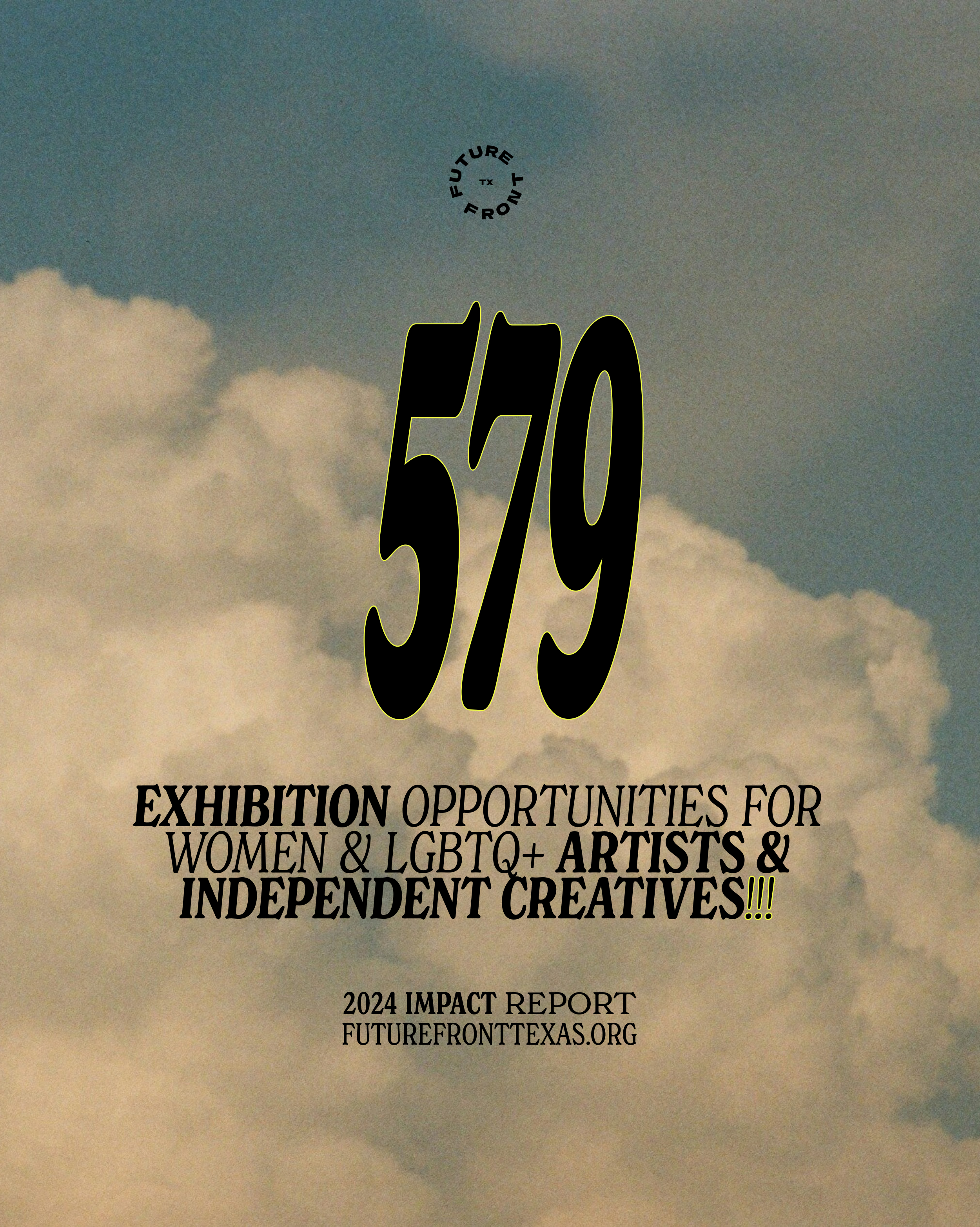

OUR TOP 10 GROWTH MOMENTS:
No. 1 — Across 50 public markets, festivals, shows & community programs in 2024, we welcomed 18,000 visitors, opening up $122,000 in commissions and contracts for 1,550+ independent creatives and artists in Texas.
No. 2— We hosted 100+ free creative community gatherings atThe Future Front House—from craft workshops and art shows (including Madly Involved, A Path of Impermanence and Bring It From The Back) to panels and performances. We were also able to waive our sliding scale rental fees for Austin residents nearly 75% of the time. This is something we’ve been working toward for 10 years!
No. 3 — Across The Front Market’s Spring and Fall Seasons, we exhibited 437 independent creatives, designers, makers, artists, small business owners and chefs from Texas. We also took The Front Market to our largest public venue yet—Waterloo Greenway—in Downtown Austin. This was a landmark moment for our team and the future of the program.
No. 4 — The Front Festival had another record-breaking year, supporting 65 women and LGBTQ+ artists and 1300 visitors across four days of independent music, film and art.
No. 5 — 112 volunteers, board members, community curators and collaborators joined us throughout the year to contribute 1500+ hours of support Future Front’s programs. (This is the largest number of active volunteers in Future Front’s 9-year history.)
No. 6 — We doubled this summer’s Community Clubs, which saw 23 different Future Front members curate and host free creative sessions for 500+ community members.
No. 7 — We presented 25+ community partnerships for free arts healing and creative education workshops, like Broad Studios’ Clubhouse’s Ceramics Fellowship (which provided 16 Austin residents with free six-week ceramics programs) and Black Girls In Art Spaces x Anga Haus Palette to Pixel Workshop (which provided free Augmented Reality training).
No. 8 — We worked with Highlander Center, Plan C, Mutual Love Rest Fest, WATER Lit and Project for Empty Space to host interactive art exhibits and community teach-ins on the artistic, cultural and creative impact of southern people’s struggles for justice and democracy. This year’s themes centered Community-Care, Reproductive Justice and Trans Joy.
No. 9 — Through the The WORK Conference, we brought together 300+ creative leaders in Austin to skill-build and resource-share around community-building, small business education, storytelling and adaptive leadership.
No. 10 — We were recognized for our work by a number of partners, sponsors and grant-makers, including the Texas Commission for the Arts and the National Endowment for the Arts (for the first time). We also received the City of Austin’s Cultural Arts Division and Economic Development Department Elevate Grant for a second year. We continued creative community design projects with Downtown Austin Alliance Foundation, The Contemporary Austin, The LINE Hotel Austin, Pease Park, Red River Cultural District, Waymo, Waterloo Greenway and more, too.
For a closer look at this year, head to Future Front’s blog & Instagram (@futurefronttexas).
Your attention made this possible.
THANK YOU TO OUR SPONSORS, GRANT-MAKERS, DONORS, VOLUNTEERS AND MEMBERS FOR THEIR SUPPORT.
Future Front’s 2024 Season was supported in part by The City of Austin Economic Development Department, the National Endowment for the Arts (ArtsHERE), Tito’s Handmade Vodka, Texas Commission on the Arts, Waymo, Waterloo Greenway, The LINE Hotel Austin, Pease Park Conservancy, Liquid Death, Distribution Hall, the Red River Cultural District, Moontower Rentals, the Downtown Austin Alliance Foundation, Topo Chico, as well as Future Front’s donors, volunteers, members and you!
THANK YOU TO OUR MAGNIFICENT STAFF, BOARD AND ADVISORS, TOO.