
On The Mycelium Of Cultural Movements: Highlander Center x Future Front
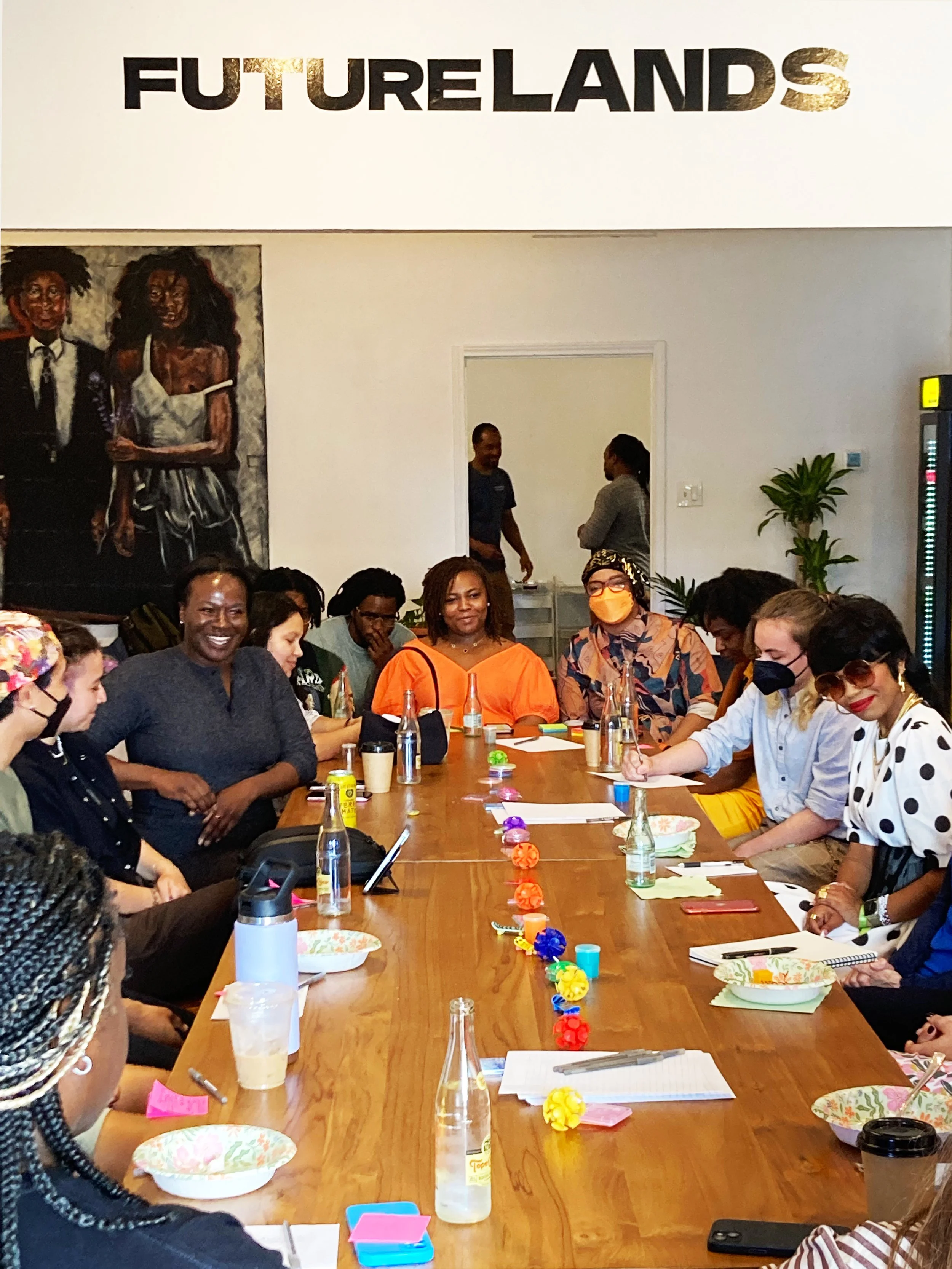
While Austin celebrated SXSW during Spring 2024, Highlander Center popped up at The Future Front House for all-day sessions, exploring the intersections of storytelling, movement-building and the artistic, cultural and creative mycelium of southern people’s struggles for justice and democracy.
While Austin celebrated SXSW during Spring 2024, Highlander Center popped up at The Future Front House for all-day sessions, exploring the intersections of storytelling, movement-building and the artistic, cultural and creative mycelium of southern people’s struggles for justice and democracy.
From an experiential pop-up library (straight from Highlander’s archives in Tennessee) to an evening film screening and panel discussion, the day reflected conversations among artists, organizers and friends inviting us all to imagine the future.
a few highlights:
✰ NO. 1 — RESONANT cultural strategy starts with our stories.
Throughout the day, Highlander Center’s youth team created space for us all to voice the strength of our stories and the storytellers who have shaped us. Our favorite storytellers were often our caretakers, our mothers, our movement-builders—the people who remind us that we are alive and here and now. Many of us touched on the power of truthful, supportive gossip in an oppressive South, too, and the healing that comes when a quiet story gets the chance to be loud.
✰ NO. 2 — we are the mycelium we want to see in the world.
Throughout the day, we explored the somatics of movement-building. We broke bread with Highlander Center’s culinary team, we clapped hands and improvised with Jenae Taylor. Like the mushrooms in our meals, we were a tiny but mighty network of energy all day long—witnessing and testifying.
✰ NO. 3 — our personal & public movements DESERVE OUR BEAUTY and our honestY.
To close the day, we reflected on “A Place of Rage,” with Futurelands organizer Emma Robinson and guest speakers Eden Hakimzadeh and Breya Monae. Together, they invited the audience to encourage emergence, integrity and beauty in our movement work, modeling in real-time the art of a welcoming and safe conversation among organizers.
Through their shared dialogue, we witnessed grief, disappointment, gratitude and hope for the justice principles that shape culture today. Their conversation was a reminder that our movements deserve more than our apathy—they deserve honesty, brilliance and beauty, too.
FUTURELANDS’ VISUAL RECAP:


Did you miss Futurelands?
You can learn more about all of the LGBTQ+ artists, makers, creatives and organizations who joined us in 2024 here. For details on future events, stay tuned on Future Front’s calendar.

Information Is Care: An Evening With Artist Autumn Breon
For one day only during SXSW Spring 2024, we were the official tour Texas stop for Care Machine, Los Angeles-based artist Autumn Breon’s latest installation, a traveling beauty and sexual health vending machine. To celebrate, Future Front became The Care House: a literal and figurative community salon, in collaboration with Plan C.
For one day only during SXSW Spring 2024, we were the official tour Texas stop for Care Machine, Los Angeles-based artist Autumn Breon’s latest installation, a traveling beauty and sexual health vending machine.
to celebrate, Future Front became The Care House: a literal and figurative community salon, in collaboration with Plan C.
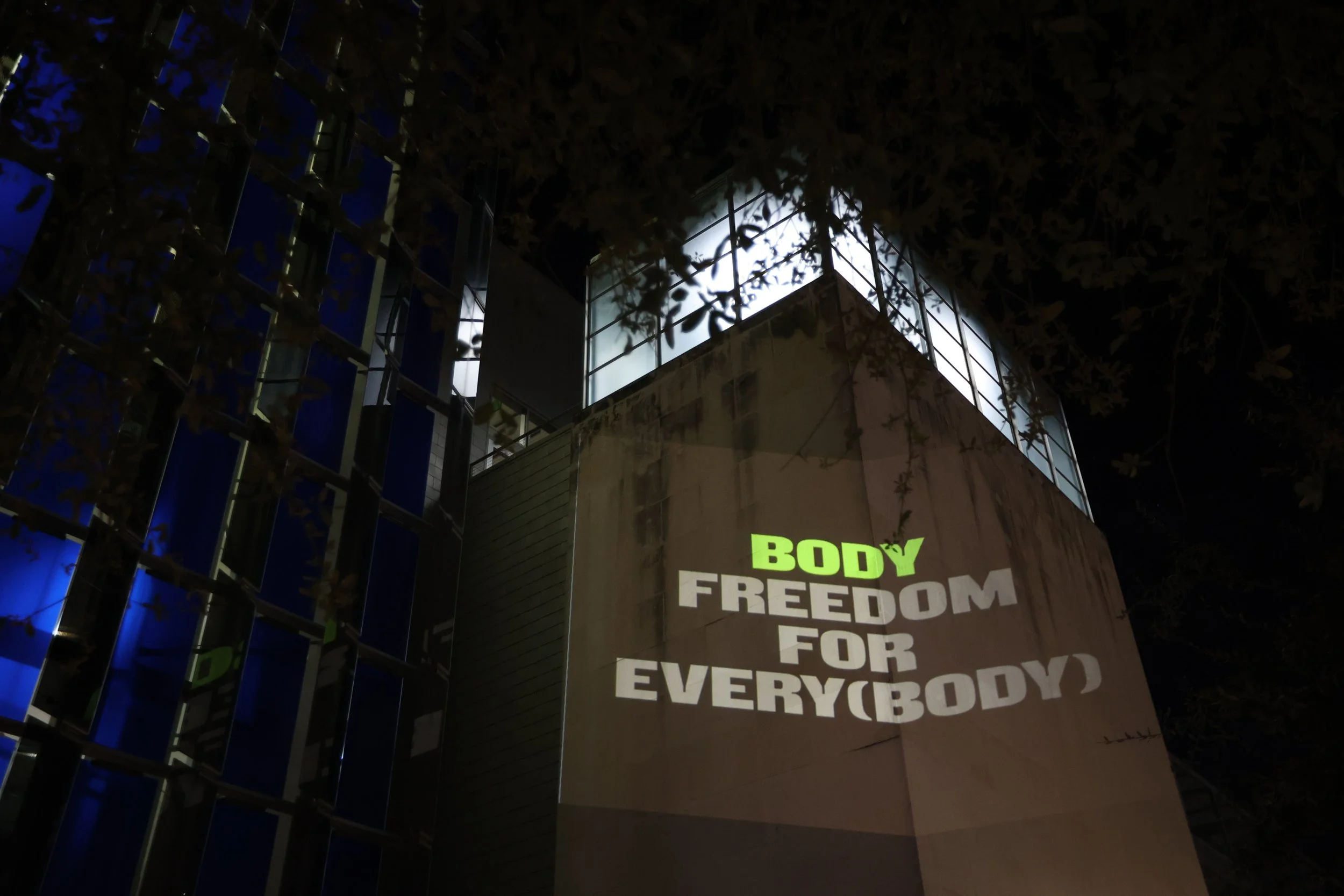
Together, we hosted the community for an evening of art (and adornment), exploring reproductive justice, featuring a talk with Autumn Breon herself, community-care panels, an art show, mini-facial stations, tooth gems and more! (You can learn more about Autumn and everyone involved here.)
CARE HOUSE’S VISUAL RECAP


INFORMATION IS CARE.
did you miss the care house?
You can learn more about all of the artists, makers, creatives and organizations who joined us in 2024 here. For details on future events, stay tuned on Future Front’s calendar.
The Work Conference 2024: A Curiosity Tradition
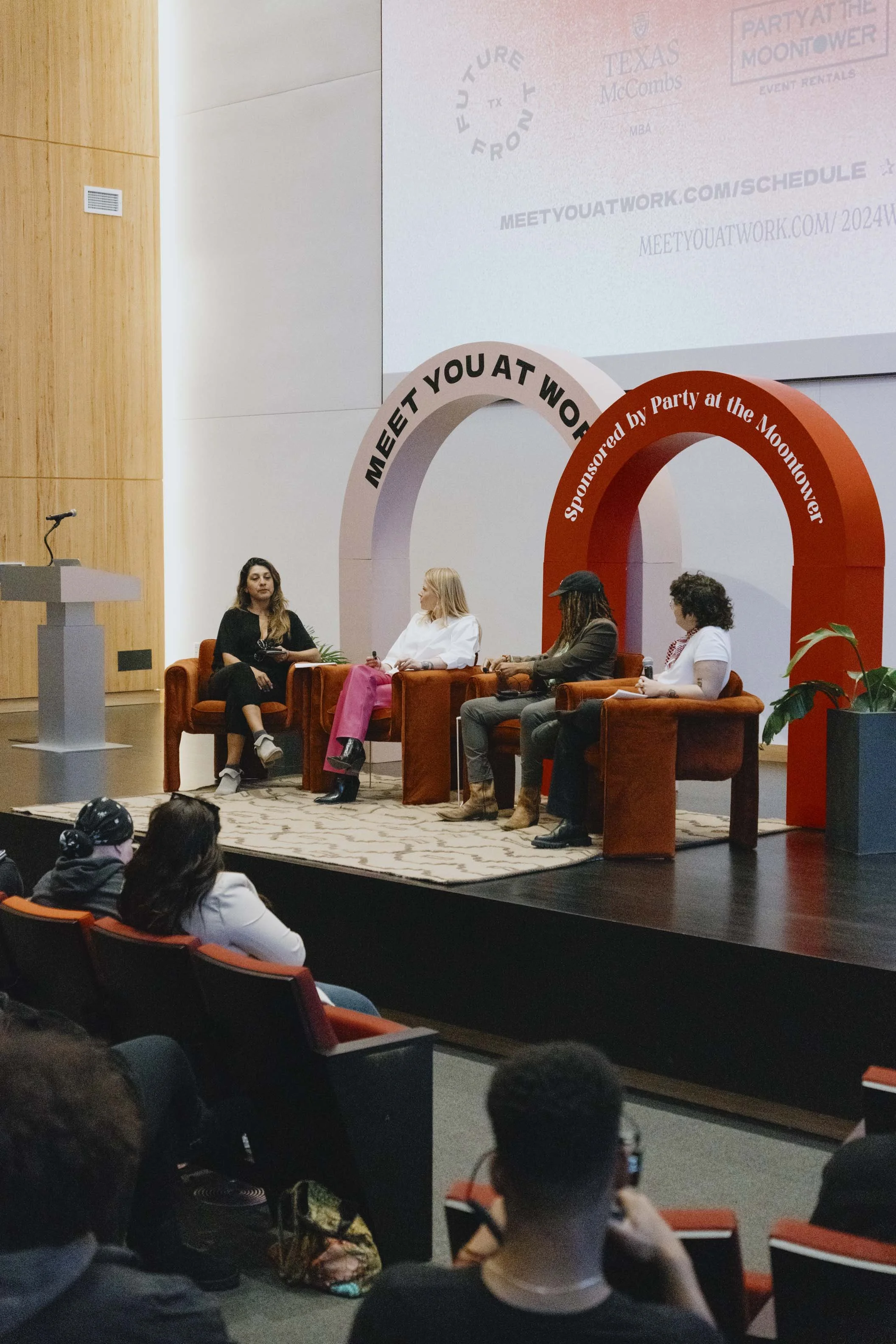
On February 17, 2024, we hosted our annual WORK Conference with 200 of y’all at Robert B. Rowling Hall on UT Campus.
⭑ ✺ ✰ ✹ This is a space to explore your work. ⭑ ✺ ✰ ✹
On February 17, 2024, we hosted our annual WORK Conference with 200 of y’all at Robert B. Rowling Hall on UT Campus. Through hands-on workshops, talks and sounding board sessions, we explored community, entrepreneurship, storytelling and wellness in creative industries and the arts.
Keep reading for a look at the Work Conference 2024.
All photos by Yvonne Uwah
BASK IN THE VISUAL RECAP.


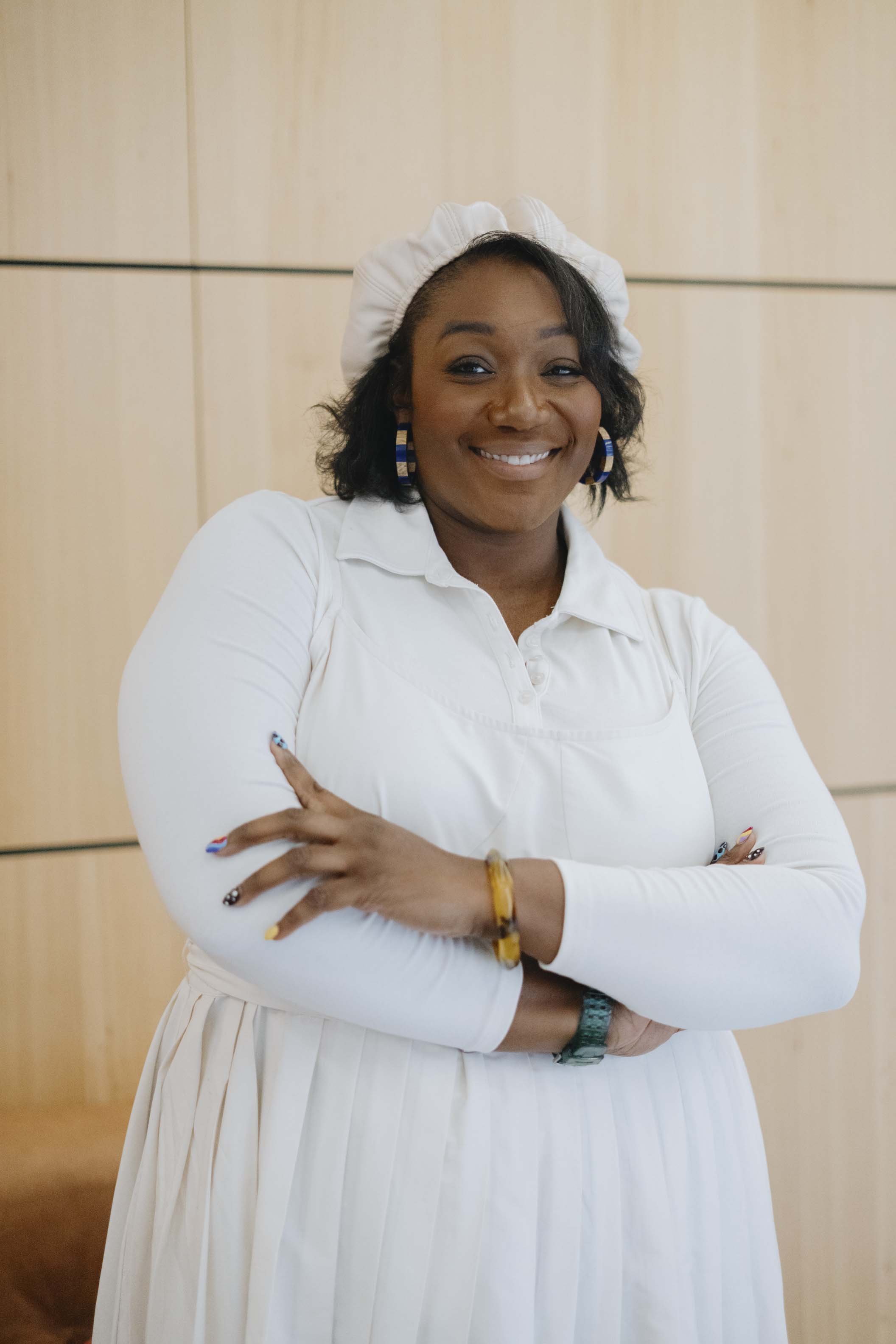





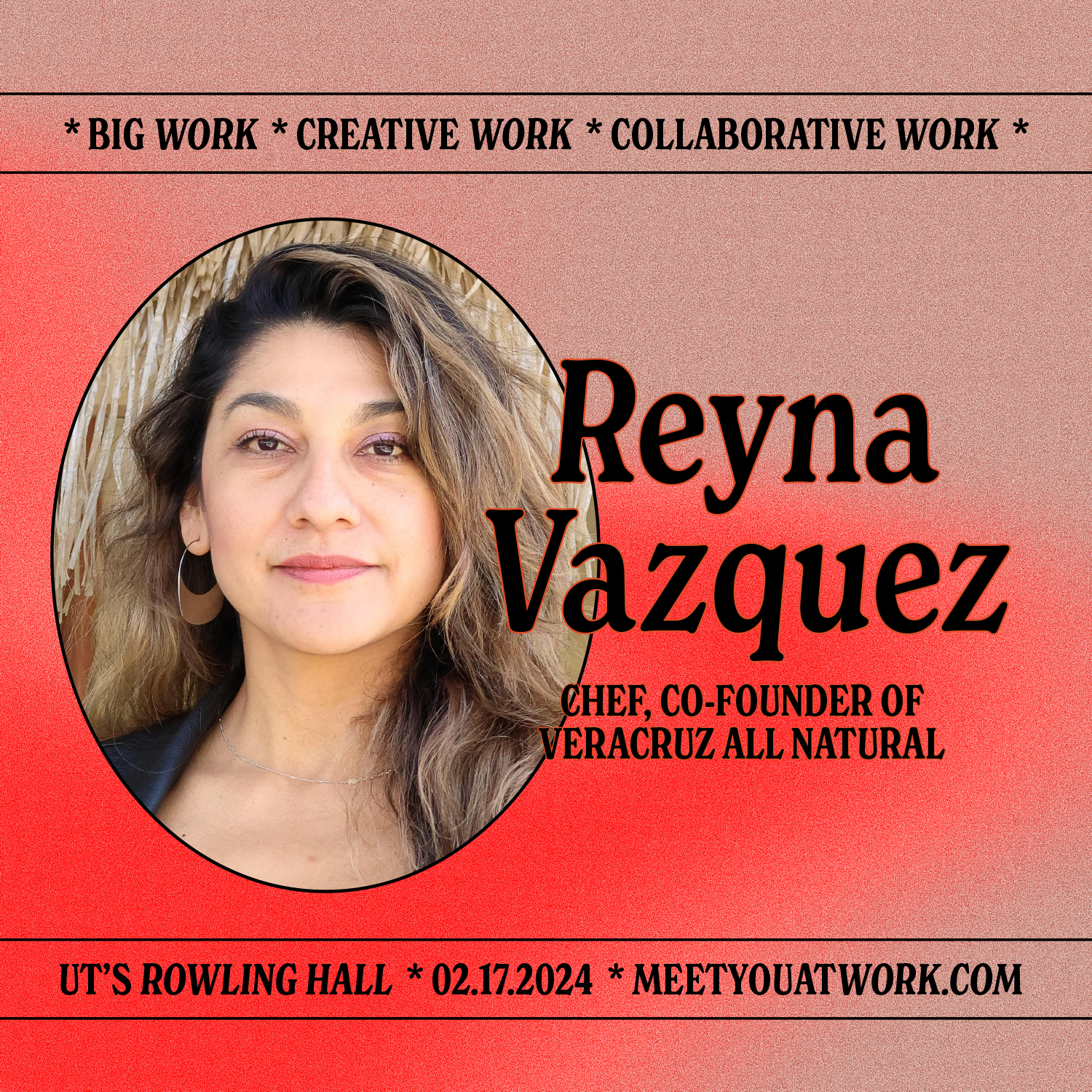
Meet our 2024 speakers.


Thank you to our sponsors, partners and friends.
✰
Thank you to our sponsors, partners and friends. ✰
Launched by Future Front in collaboration with TEXAS McCombs in January 2018,Work emerged from conversations between women and LGBTQ+ leaders in creative industries, tech, nonprofit communities, small business & the arts.
Now, this one-day annual gathering serves as a moment to share stories, community-source inspiration and get real about the frameworks required to do big work. We would not be able to produce WORK without support from our sponsors, members, staff, volunteers, friends and you. Thank you.




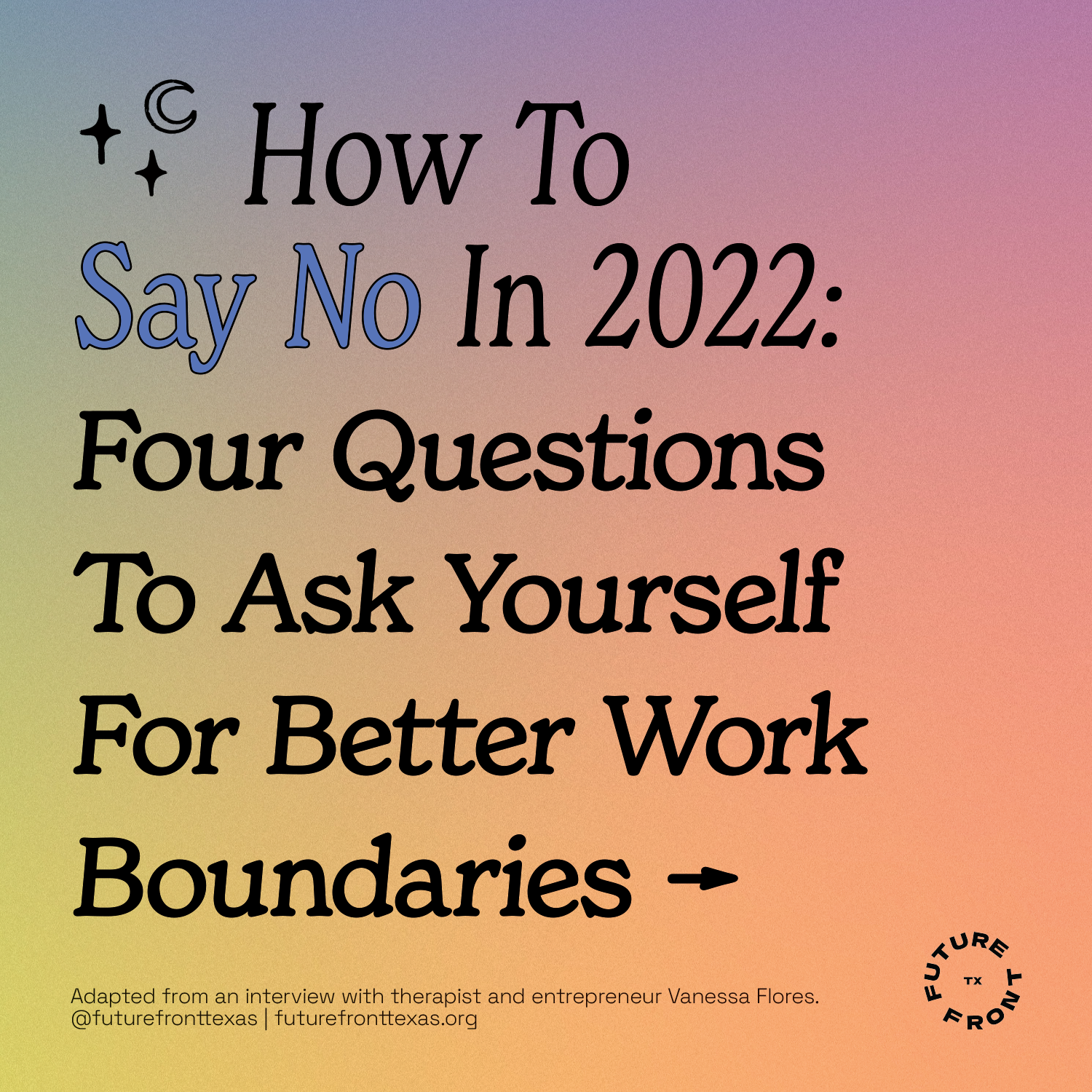
How To Say No: Four Questions To Ask Yourself When Setting Work Boundaries
Here are four of the questions Flores asks herself before making a work decision that will impact her time and available energy.
On Saturday, August 22, we hosted WORK, our biannual conference examining creative and entrepreneurial approaches to work. That summer, our theme was reset—so we explored everything from leadership in times of renewal to reevaluating the values present within our work.
In recapping the conference’s discussions, we chatted with Vanessa Flores, principal at Colors of Austin Counseling and Brave and Well, about her session on boundary-setting. Flores has joined us for a few of our virtual events and talks in the last few months, and today we’d like to share some of her talks’ takeaways.
Editor’s Note — This blog post was written and compiled by Future Front Executive Director Jane Hervey and reflects takeaways from talks and interviews with Vanessa Flores. It was originally published in August 2020.


Photo courtesy of Vanessa Flores
Here are four questions to ask yourself FOR better boundaries at work:
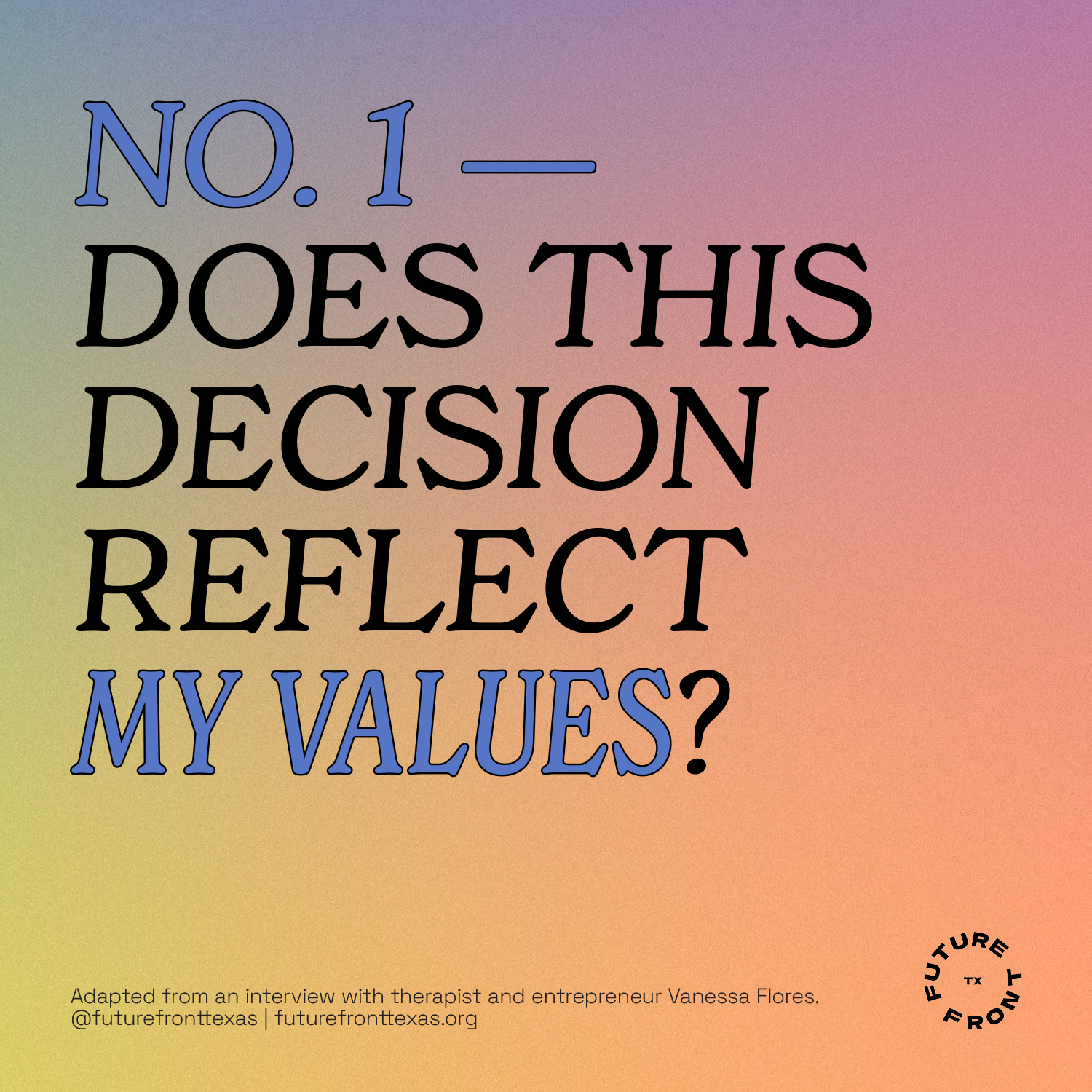
1.) Does this decision reflect my values?
Understanding our boundaries and priorities takes a bit of self-reflection and examination, too. It can be difficult to understand what kind of work is best suited for our needs and goals, as well as our values. To better clarify what’s a yes and no for you, Flores recommends reflecting on your values.
“I can’t be the yes person in all things. I am going to engage in work and collaborate with people who I feel passionate about and align with my values as a person and with my business. I’ve also decided I'm not doing anything for free anymore, and that’s been something really hard to sit with because access is a value I hold. My hope is that the tables I am a part of honor all parts of my identity and value what I can bring. Declaring that has been really freeing,” Flores said.
2.) Does this decision infringe on my sacred time—or protect it?
We all need space to rest and recharge, and our boundaries around work time and personal time will always be in flux. Sometimes, we need more rest. Sometimes, we need more time for family. Sometimes, we need to take time away from work to handle a crisis or heal. For example, right now, many of us are grappling with the day-to-day nuances of living (and working) through a pandemic. Flores recommends taking your own capacity and environmental factors into account before saying yes to things. Does this decision infringe on your sacred time—or protect it?
“As a country, we’re experiencing collective grief and trauma. The spaces we are confined to right now have become the space for all life. There is no space for separation. We are teaching, grieving, experiencing trauma, working, eating all in the same space everyday. It’s important to be kind to yourself and to take time and take space and create a degree of separation between work and life in order to keep moving,” Flores said. “I have to understand that my capacity is lower, and I have to take care of my team. I restructured my schedule. I only work Tuesday through Thursday because that’s when we have childcare. I have to be really protective of my time. I create buckets in my schedule that are categorized for supporting others and supporting myself.”
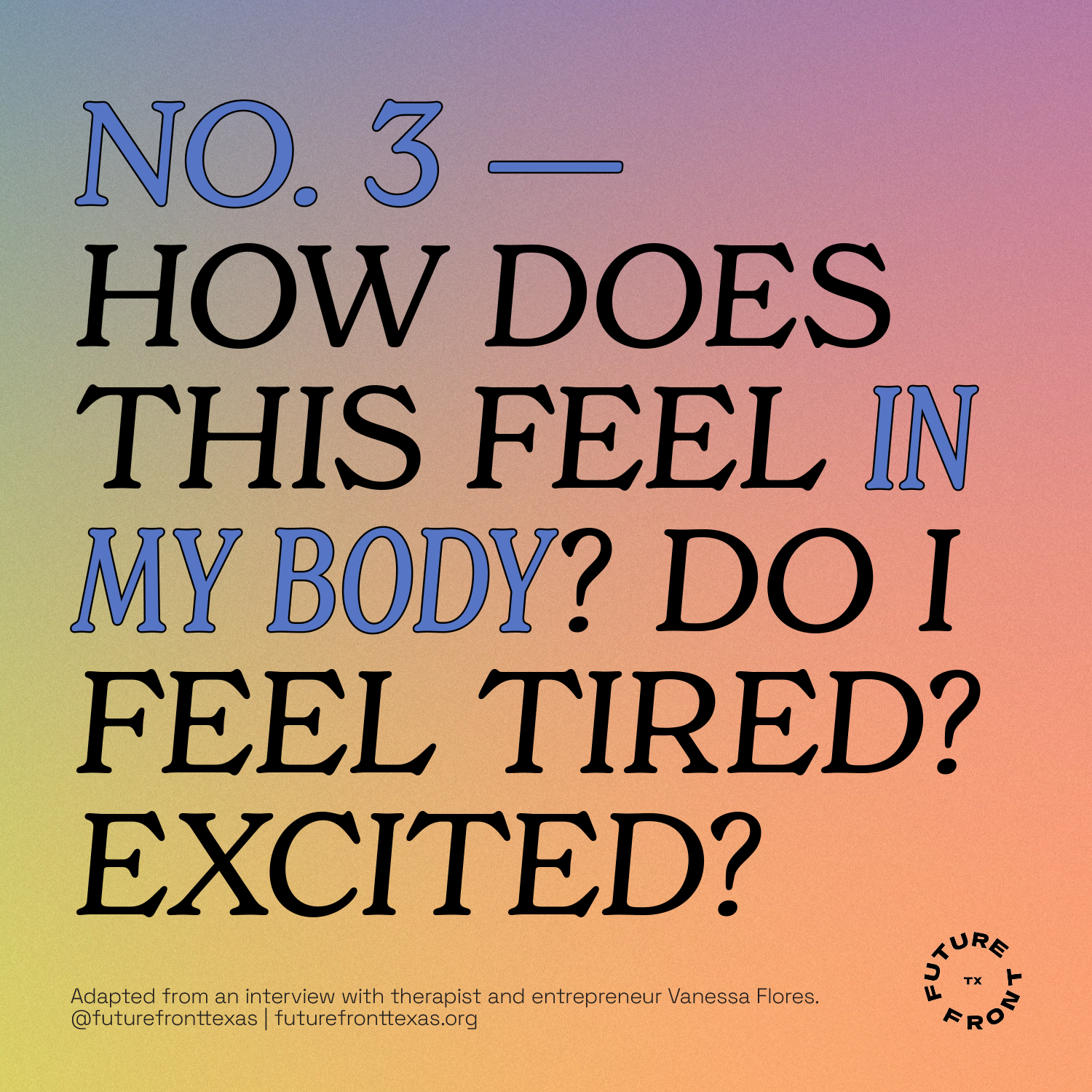
3.) How does this decision feel in my body? Do I feel tired? Excited? Anxious?
When it comes to making decisions, our bodies often have a lot to tell us. Tracking the way a decision feels can be a helpful tool for deciding what to do, too. By tuning into our emotions, we are better able to discern between what feels like excitement versus anxiety or burnout versus disinterest.
”You’ve got to listen to your body. If you’ve slept 10 hours and you’re still tired, that’s your body telling you something,” Flores said.
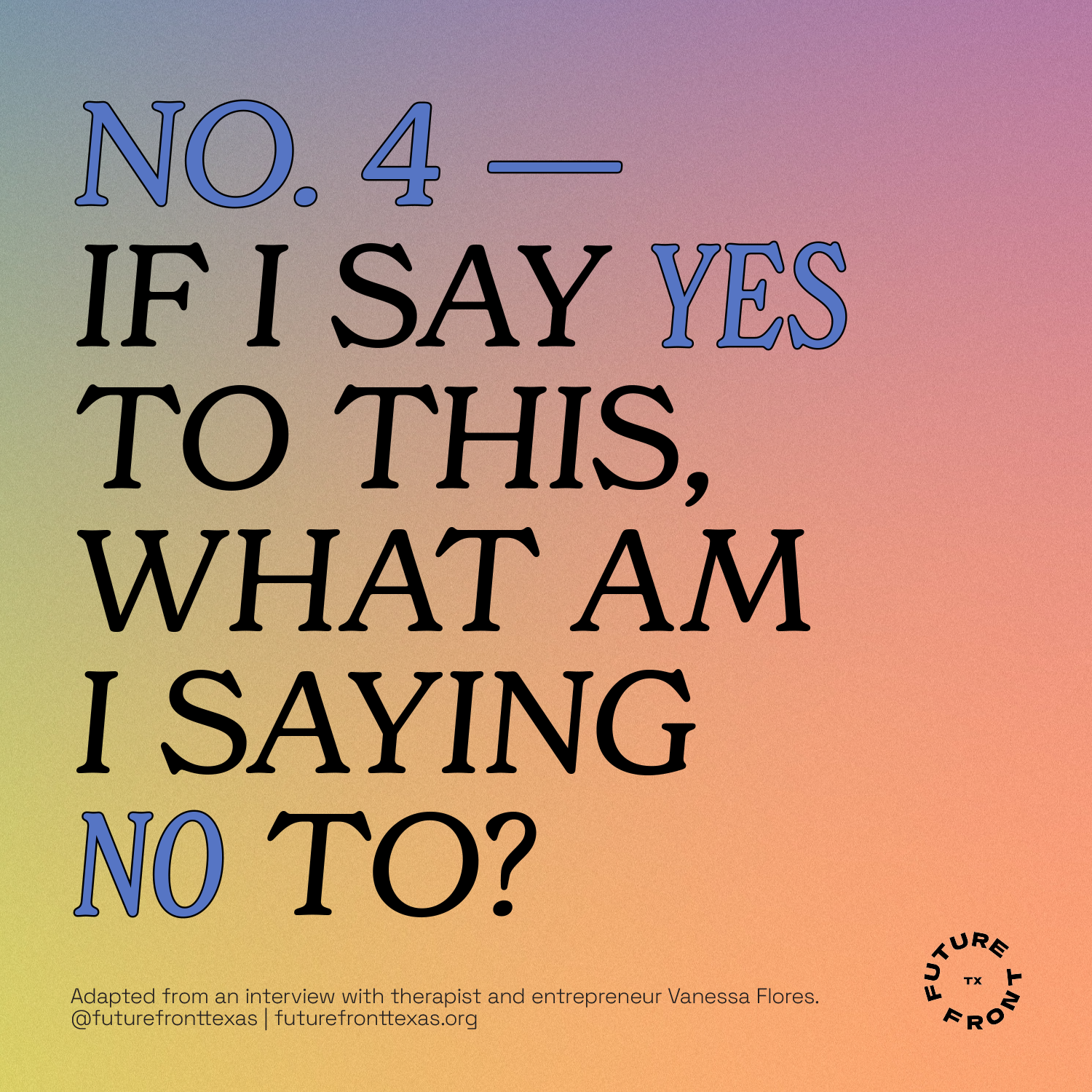
4.) If I say yes to this, what am I saying no to?
At work, it can be easy to say yes to everything. In many cases, saying yes feels good—or simply easier than saying no. We may also say yes, because we feel pressured to please or we feel like a yes is what’s expected of us. If you can, Flores recommends taking a minute to pause and unpack before you take something new on. Ask yourself: If I say yes to this, what am I saying no to? Is this a priority for me?
“I am a recovering perfectionist,” Flores said. “I have a tendency to over-book myself when I feel like I’m not good enough or I need validation or I don’t think I’m busy enough.”

LOOKING FOR MORE?
ABOUT VANESSA FLORES — Vanessa Flores is the founder of and principal therapist at Colors of Austin Counseling. Colors of Austin Counseling is an intentionally diverse multidisciplinary group practice that provides counseling services in person and online within the state of Texas. They are social-justice oriented in their practice and inclusive in our work within the community. Their goal is to reduce the barriers that exist when it comes to mental health support and to provide high quality clinical services to all regardless of race, gender, and/or socioeconomic status. (They currently partner with Future Front on our Community Leaders of Color Mental Health Fund Initiative.)
ABOUT FUTURE FRONT’S WORK CONFERENCE — WORK is a a day of workshops and talks curated by Future Front. Join us annually to hear creatives and founders explore the messy nuances of growth, collaboration, leadership, identity, storytelling, equity, wellness—and all the other things we need to do our best work. Click here to learn more.

How To Nurture Abundance And Prevent Burnout: A Guide For Independent Creative Business Owners
In this Future Front guide, licensed therapist and creative founder Davia Roberts guides us through three journaling questions that’ll put you on a better path to burnout prevention and work-life boundaries.
This summer, we’re checking in with our members and friends on the meaning of abundance.
In this journaling guide, licensed therapist and work healing specialist Davia Roberts (our featured Minding Your Business speaker this season) takes us through daily practices for preventing and recovering from burnout as independent creatives and small business owners.
About Davia:
Davia Roberts (she/her) is a licensed therapist with a focus on racial equity, mental health, and well-being. She is a lifelong introvert who managed to make an entire career centered around talking to people. Despite the introvert stereotypes, she comes alive when she gets to engage in meaningful conversations about racial equity, mental health, and well-being. The thing she is most proud of doing was a 12-month sabbatical that prioritized her own well-being. Her sabbatical motivated her to build a business that helps other professionals break through burnout and shame. This work has expanded to therapeutic programming for non-profit organizations, universities, and companies so that mental health and wellness are embedded into the culture of each organization.
Below, Davia shares her top 3 tips on nurturing your mental health—as an independent creative or small business owner.
According to the World Health Organization (WHO), burnout is a syndrome caused by chronic work stress that has gone unmanaged. Typically, there are three main characteristics:
exhaustion
difficulty to perform at a particular level
feeling checked out/pessimistic about your work
Usually, we associate burnout with 9-to-5 jobs. Due to this association, it’s not a surprise that some people look to self-employment as an escape from unending fatigue. Unfortunately, it’s important to know that creative careers and entrepreneurship aren’t the magical solutions to avoiding burnout. If not careful, creatives and small business owners can recreate the same toxic environments that initially led to their burnout.
Instead, I encourage self-employed professionals to reimagine a career that fits their personal and professional needs with intentional practices and boundary setting.
Here are 3 questions I suggest to every creative and entrepreneur to ponder.
No. 1 — What beliefs do you need to unlearn about your work/career?
Set a timer for two minutes and write down all the beliefs you’ve held about work and your career. Don’t worry about them “making sense.” Just write what comes to mind.
After the two minutes are completed, review your beliefs and identify which ones need to be reshaped so they can benefit your good. It’s possible that some of the beliefs can’t be redeemed and need to be completely replaced. (Ex: My income dictates my worth.)
It’s important to be clear on the beliefs you hold. Our beliefs greatly influence our actions and impact how we see ourselves in relation to work. When we can recognize that we’re making decisions based on unhealthy beliefs, we can make non-judgmental and compassionate choices that better serve us.
Here are some examples on how to revise the beliefs you arrive at within this exercise:
Example No. 1
Original Belief: I’ll know I’m successful when I’ve earned 6 figures and I’m featured on the Forbes 30 Under 30 List.
Revision: My definition of success is the only one that matters. Each day, I get to define success for myself.
Example No. 2
Original Belief: The only way to be successful is to work 24/7.
Revision: I can be successful without working around the clock.
Example No. 3
Original Belief: If I want to make it big, I have to accept any opportunity that comes my way.
I will not operate from scarcity. I can discern the opportunities that are aligned for me.
No. 2 — What boundaries allow you to show up as your best self?
Boundaries aren’t just for friends, family and romantic relationships. They’re for every element of our lives and they’re especially important when it comes to our career. Here are a few areas to consider, if you’re an independent creative, founder or small business owner.
✰ Personal Boundaries:
How many hours do you want to work per week?
What work hours are the best for your energy levels or lifestyle? You don’t have to work traditional business hours, if that’s not ideal for you.
How will you incorporate breaks into your day? How often will you take vacation time? It’s easy to skip lunch and spend the entire day staring at your screen as you answer emails, complete projects, or research business plans. It’s important to build schedules that prioritize genuine breaks, whether it’s a lunch break or holiday break. Put them on the calendar and honor them.
What are realistic project turnaround times? Word of advice: Consider how much time it would typically take to complete a project and add a week or two to your timeline. Why? In the event you run into a personal or professional issue (illness, late delivery, supply delays, etc), you’ve built in a cushion that allows you to still meet your deadline with little to no delay. Plus, you can always complete the project early and receive kudos from your client.
✰ Client Boundaries:
What type of work are you unwilling to provide to prospective clients?
What are possible boundaries to address payment delays, last minute project changes, or ghosting? It’s always helpful to have solid contracts in place with contingency plans to address late payments or last minute requests that don’t leave you feeling overwhelmed.
How often will I communicate with clients? Booking a client doesn’t mean they have 24/7 access to you. You have the right to format your onboarding process to define the parameters of communication via email, phone, or video.
No. 3 — What practices pour into your cup?
There’s no shame in experiencing burnout. It happens to the most well-intentioned creatives. Once you notice signs of burnout, it’s time to slow down and take stock of what needs to change. Evaluate the decisions that may have led to burnout. Are you skipping meals and not getting enough sleep? Have you taken on a lot of new projects without hiring any assistance? Consider ways you could make shifts that could better support you and lessen the possibility of burnout in the near future.
More importantly, think about the last time you experienced deep rest and joy in your life.
For some of us, it’s easy to think of people and practices that bring us joy. You may experience joy as you build living room forts with your children (or roommate—no judgment). You may experience joy during game night with friends or at your altar as you pray. No matter how you cultivate joy, prioritize more moments in your life.
Rest is not merely mid-day naps and seven hours of sleep. Rest can be found in quiet walks during your lunch break. Rest can be found in conversations with friends that don’t center work and labor. Rest can be found in saying, “no” to personal or professional requests as you protect your energy.
We pour into our cup by centering joy and rest with a fierceness.
While you may not be able to prevent all moments of work-related burnout, you can learn tools and practices that minimize burnout’s duration and intensity so that you never hit rock bottom.
To work with Davia, please head to carrierbradley.com.
Want to stay involved through Future Front?
Keep up with what we’re up to—from virtual events to membership—here.

What Do You Know About Your Community's Black History?
In this mini-guide, you’ll find a few journaling questions from Black Freedom Communities’ Director Funmi Ogunro and producer Tamar Price, as well as a recording from one of their talks with Future Front in 2020.
This Black History Month, we’ve reconnected with one of our partners, Black Freedom Communities, a project by Art Is Cool.
Here, you’ll find a few journaling questions from the project’s Director Funmi Ogunro and Producer Tamar Price, as well as a recording from one of their talks with Future Front in 2020.
Use this a mini-guide and solo exercise for examining your own relationship with history. Enjoy!
First, take thirty minutes to journal.
1. What do you know about your own family history?
Write down a few things to get your brain going—like where you’re from, where your family lives, etc.
2. What do you know about your Texas community’s history?
When you think of the community you live in right now, what histories are you familiar with? What iconography, stories or culture do you associate with your community?
3. What do you know about your community and its Black History?
Are you familiar with cultural centers, creators or history museums that explore Black History? Do you know who used to live in your neighborhood?
4. Based on your answers to the three questions above, what would you like to learn about your community and its Black History today?
Journal out three next steps (or questions you’d like to answer) over the next month.
Next, set time aside to start learning.
You can start with this 2-hour talk about Black Freedom Communities through Art Is Cool.
Behind this talk:
Funmi Ogunro has been a regular exhibiting filmmaker with Future Front and The Front Fest. In 2020, we became one of the community partners around her upcoming film, Black Freedom Communities. The film is currently fundraising $100,000 to connect the histories of Black people in Austin to the future. You can learn more here: http://www.artiscool.co/
This recording from the Future Front archives features a talk with filmmaker Funmi Ogunro and the documentary team behind their upcoming film Black Freedom Communities.
Austin Black Freedom Communities are communities built by former enslaved African Americans after the Civil War ended in 1865. These communities were built with little resources from the ground up and included churches, schools, and stores.
This talk is free and available to all.
GET ACCESS TO THE FULL RECORDING:
Behind Black Freedom Communities:
Austin Black Freedom Communities is a feature-length film detailing the many rich history of Black people and Black Freedom Communities in Austin, Texas.
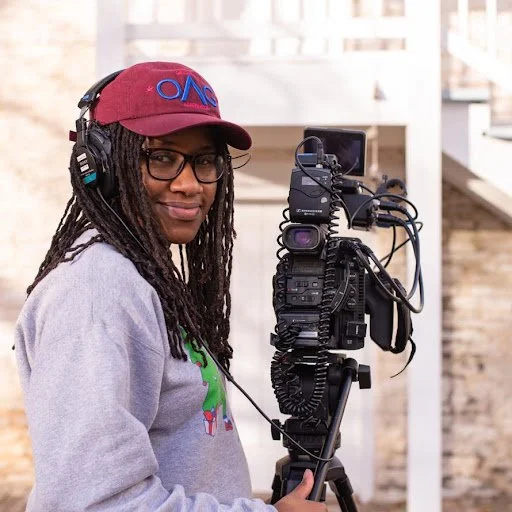
FUNMI OGUNRO:
Funmi Ogunro (she/her/hers) is a native Austinite and filmmaker, launching the production of her first feature-length documentary about Austin Black Freedom Communities. She decided to make this film because many people are unaware of the rich history of Black people in Austin—and it’s time for these stories to be told.
TAMAR PRICE:
Tamar (she/her/hers) is a creative producer with a background in film, events, and art. Her film work has garnered almost half a million views via Issa Rae’s Presents YouTube channel, and been screened at SXSW, Palm Springs Short Fest, Indy Shorts Fest, and more. She currently produces work with award-winning ad agency Material.
LOOKING FOR MORE?
Learn more about what we do at Future Front and how to connect with creators through our programs here.

On Collaboration: How Can We Start And Sustain Healthy Professional Relationships?
How do we reject cultures of comparison and approach collaboration? How do we protect our own energy, and respect others’, as we navigate opportunities, success and failures?
How do we reject cultures of comparison and approach collaboration? How do we protect our own energy as we navigate opportunities, success and failures? What emotional and practical tools are necessary to start and sustain a successful collaboration?
In this guide, we share some key questions and takeaways on collaboration that have been shared at Future Front events and workshops over the years.
Here are a few things to consider when co-creating a community project or arts collaboration:
1.) Do you share the same goals and values?
You want your collaborator to complement your skills (and vice versa), but you want to work around a common goal. When starting a collaboration, sit down to talk through your mission for the project and values. This will help you both understand why you’re working on this project and what will motivate your decision-making.
2.) Do you have a plan and/or a schedule of responsibilities?
It’s easy to start a collaboration if you don’t have anything written down—then there’s no way for you (or your collaborator) to hold each other accountable.
When starting a collaboration, make sure you and your collaborator sit down to talk through your shared goals and values. You’ll also want to identify the scope of each other’s roles and ensure each party is clear on their responsibilities. It helps to have these things written down in a place where both parties can revisit (like a Google Doc), and it never hurts to draw up a contract defining your working relationship (one that includes an exit strategy if things go wrong, etc.).
3.) Do you have a budget? And do both sides know what’s financially at stake for the other?
We’ve all got limited resources and lives to live, so every collaboration needs a budget—whether you’re looking at money, time, energy or working hours. Writing out a budget is also a good time to identify risks. A collaboration can easily go sour if one party’s got a lot on the line and the other doesn’t.
4.) Who will move the ideas from conversation to paper to reality?
Communication is difficult! That’s why taking notes at meetings and ensuring that conversations become recaps and/or next steps is important. By writing things down, you’re giving your collaborator the opportunity to check your work and vocalize whether or not you’re on the same page. Within your collaboration, make sure someone (or both parties) are responsible for turning conversations into deadline-oriented action items. We suggest keeping all of your action items S.M.A.R.T. (Specific, Measurable, Achievable, Relevant and Time-bound).
5.) Who will ensure deadlines are met?
It’s difficult to hold each other accountable to deadlines, but pointing out when something was not turned in or completed on-time helps keep the project moving. Make sure both parties are comfortable communicating about deadlines and taking responsibility when things are late or don’t go as planned.
6.) Who will update your shared roles and responsibilities as things change and how are these updates communicated?
As your project grows and shifts, your collaboration may grow and shift as well. When projects scale, roles can completely change, too.
This is normal. Carve out time to reassess roles as necessary and update your timelines and schedules of responsibility accordingly. Make sure that these changes are communicated in a way that works for both parties.
7.) Does your collaboration require externally communicating with clients, customers and/or other team members? If so, who is responsible for communicating what you accomplish to the rest of the team or to your audience?
Telling the story of your collaboration is important. You want to be prepared to answer external questions and give credit where credit is due. Chat this over with your collaborator, so you’re both ready to communicate about the work with others.
8.) And last but not least—do you trust your collaborator to do the work, communicate with you and be honest?
If the answer’s no, then you need to hit the drawing board. Why do you want to work with this person? Are you in a position to collaborate?
Are you already in a collaboration that may be headed in an unhealthy direction? Use these questions as an exercise to determine your next steps.
1.) Where are you currently struggling and why might that be?
2.) Where are things running smoothly and why might that be?
3.) Is there mutual trust?
4.) Does the project have any written notes, contracts, a plan, a schedule of responsibilities?
5.) Are there skills required for this collaboration that you are still developing?
6.) Are you upholding your end of the collaboration?
7.) What do you want/need to make the collaboration better?
8.) Does the collaboration still align with your goals?
9.) Considering your needs, your resources and the state of the collaboration, what can you reasonably do next?
This blog post was written and compiled by Jane Hervey, thanks to notes by Deeksha Srinath and Hannah-Nisha Haggerty from our Alone, Together: A Workshop on Collaboration event on May 4, 2019.

Introducing Our 2024 Calendar: A Year of Big Rituals
It’s time to mark your calendar. Read for a visual guide to this year’s big event and application dates. Plus, we’ve got a few notes on Future Front’s inspirations and themes for 2024.
Welcome to 2024. It’s time to mark your calendar.
As we re-open for a new season, we’ve got your back with a visual guide to this year’s big event and application dates. Plus, we’ve got a few notes on Future Front’s inspirations and themes for this year.

✰ 2024 BIG EVENT DATES:
FUTURE FRONT CURATES AND PRODUCES THE FRONT MARKET, THE FRONT FESTIVAL AND THE WORK CONFERENCE EVERY YEAR.
Beyond our exhibitions, we host year-round shows, gatherings and workshops nurturing creative community at our flagship space in Downtown East Austin. Event registration opens on a weekly basis at futurefronttexas.org/comethrough (all of these events will be up there soon).
So, mark your calendar now & make plans to visit or get involved!
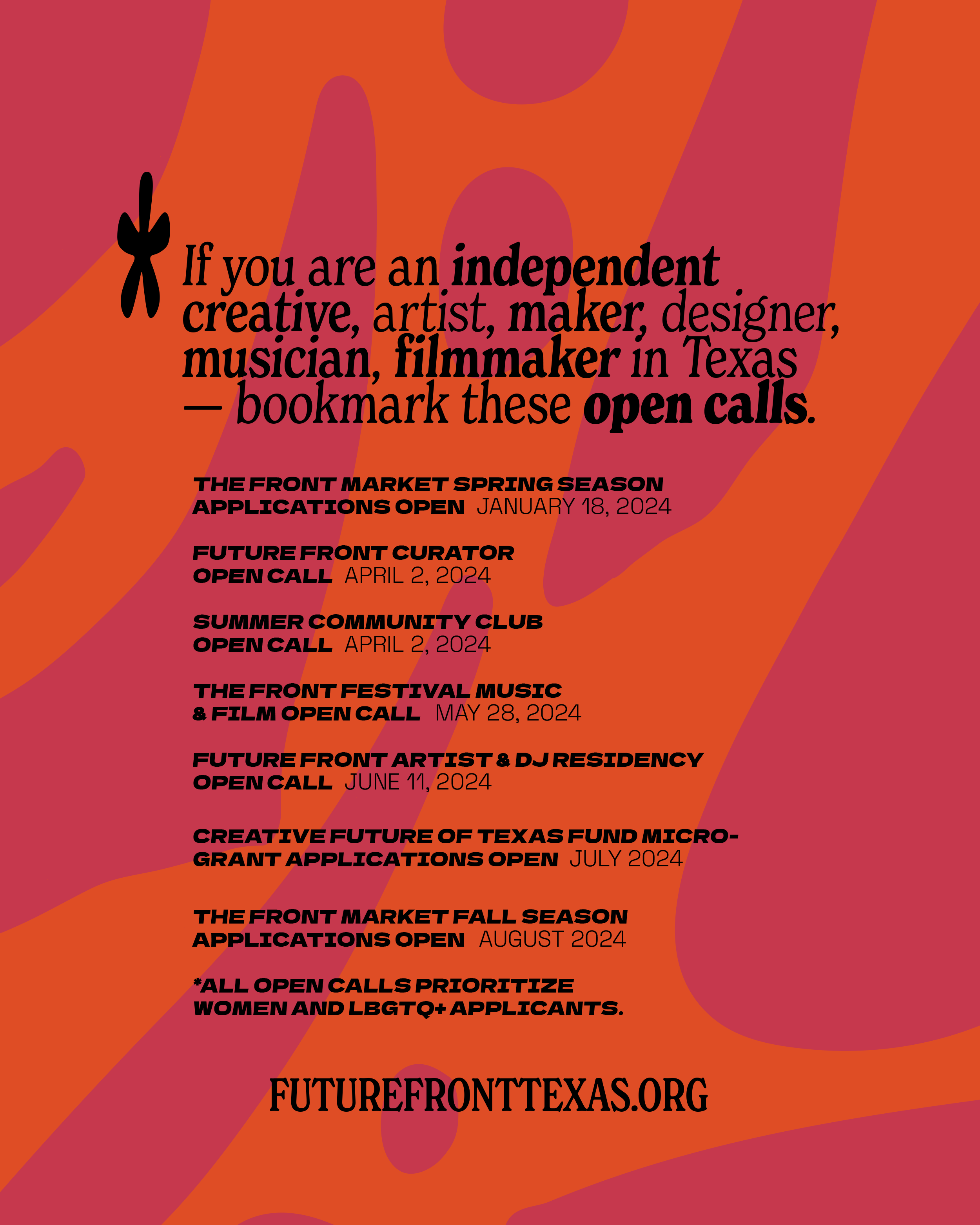
✰ 2024 OPEN CALLS:
IF YOU’RE LOOKING FOR A PLACE TO SHARE YOUR CREATIVE WORK, GET INTO OUR OPEN CALLS.
Every season, we feature work by different women and LGBTQ+ artists, makers, designers, creative leaders, small business owners, musicians, filmmakers.
You can also join membership for complimentary access to all of our events, workshops and learning spaces year-round. All open calls will be listed as they are made available at futurefronttexas.org/apply.
✰ THIS YEAR’S annual THEME:
Last year, our annual theme was homegrown, so throughout 2023, we explored seasons of homecoming. From our creative workshops to our curatorial exhibitions, every space reflected back stories of how we’ve grown, as well as where we started.
In 2024, we’ll be stepping into ritual.
Rituals of creativity. Rituals of care. Rituals of curiosity. Rituals of community.
Inspired by the Texas cosmos (that eclipse is coming) and the little-big cycles of our lives (from election seasons to daily routines), expect stories throughout our programs that remind you to zoom in and out. To reimagine, reexamine or simply remember the rituals connecting us to ourselves, our communities and our cultures. As always, no matter what you attend, we invite you to explore this prompt for yourself along the way. More to come!
Do you want to get involved in 2024?
WE’RE HERE FOR A WORLD THAT WELCOMES CULTURES OF CREATIVITY, CURIOSITY AND INTERSECTIONAL DESIGN.
Become a member or donate to our fundraiser. You can also explore all of the other ways to join us here.

How To Find A Financial Self-Care Routine
Financial expert and Bravely Go founder Kara Perez recently partnered with us to discuss what it looks like to set up an emergency fund and recover from a crisis.
The tumultuous nature of the last three years have impacted us all, from individuals to small business owners to large corporations.
We’ve all had big-picture questions around what the future holds and what it means for stability in our lives moving forward—like how to make smart financial decisions.
To help answer these questions, we teamed up with Kara Perez to host What The Hell Does Financial Self-Care Look Like Right Now? Perez took over our Instagram stories to break down all things money and how to build a flexible financial plan for yourself.

ABOUT KARA PEREZ
Kara Perez is a financial expert and the founder of Bravely, an Austin-based intersectional feminist financial education company. Kara discovered her love of finances courtesy of her quarter-life crisis. Broke, underemployed and saddled with student loan debt, she realized that her lack of financial education was crippling her adulthood. After becoming debt free in June 2015, Kara created Bravely to help other women take control of their financial lives.
Kara believes in the power of Oprah, loves the color green, and can most often be found with her curls up in a bun, drinking her 80 oz of water every day.
Kara speaks at events across the US, including FinCon and the Lola Retreat. You can find Bravely on Forbes, Glamour Magazine, US News and World Report, Austin CultureMap, Austin Woman Magazine, and Lifehacker.
Here are Kara’s top five tips for starting (and sustaining) a financial self-care routine:
1.) Get real about your budget.
When getting yourself together financially, the first thing Kara recommends is to look at the numbers. The best way to gain knowledge about your own financial life is to review your own spending. Look at your credit cards and bank statements. Don’t throw these out to avoid stress. Figure out what you’re spending, where your money is coming from and where you want it to go.
*You can use this budgeting guide from our 2019 Money Mindsets series to get started, too.
2.) Practice financial flexibility.
Whether you’re an independent creative, working a full-time job or managing a small business, one thing’s for certain—the last few years haven’t quite gone the way any of us anticipated. So, if you’re just now looking at your numbers, try not to assign shame or negative narratives to your spending or your income. It’s likely fluctuated a ton.
Figure out what your budget needs to look like now to make it through. Set some expectations and adapt if those expectations aren’t met or exceeded.
*Kara has more tips and resources around this topic on her website.
3.) MAKE AN “oh, shit” EMERGENCY FUND.
If you want to change your habits and be better prepared for financial crises in the future, Kara recommends making what she calls an “oh shit” budget.
You can figure out what an emergency fund may need to look like for you by identifying and reviewing your normal spending habits, then factoring in a 50% of your income.
Decide what you can sacrifice if you did end up experiencing a 50% loss, and think through other ways you can earn income. Once you know what you’d do in this scenario, you’ve got it—this is your “oh shit” budget plan!
4.) ASSEMBLE YOUR MONEY TOOL-KIT.
Once you know your budget and have established some goals (whether that’s spending less or saving more for an emergency fund), it’s time to sharpen up your financial literacy. If you’re ready to make financial awareness part of your routine, Kara recommends equipping yourself with the tools necessary to change that.
Struggle with spending? Then you need a budget.
Don’t have a clue about what an investment is? Then, get a book on investing.
From there, you can build your confidence and figure out what your next money moves are. Kara suggests the following tools to help increase your financial knowledge and better track of your spending habits:
Mint Budget Tracker and Planner
PocketGuard Money Management Tool
5.) RESIST THE ANXIETY SPIRAL—and repeat.
So many of us have negative relationships with money, but it doesn’t have to be that way.
Take a deep breath, light a candle, and take a peek at your finances without judgment—get yourself to a place where you can look at your numbers and problem-solve. Like anything, your relationship to (and understanding of) money can change with a bit of practice.
Looking for more?
Be sure to follow Bravely to find out about events, tools and community resources at the intersection of finance and feminism, too
For more information on what we’re up to at Future Front and how to get involved, head here.

How To Care For Your Mental (And Creative) Health In A Crisis
“I want to say out loud, and normalize, that this is scary… Physical health and mental health go hand in hand and it’s important we preserve our mental health the best we can during this time.”

In mitigating the spread of coronavirus, our communities and country at-large have made rapid changes regarding the use of public spaces, social interactions and local businesses. We know these changes have left many of us grappling with financial fears, navigating abrupt interruptions to our lifestyles and work, while also disrupting access to the things we need.
So, today, we’re republishing a guide by former Future Front committee member and Licensed Professional Counselor Ilyse Kennedy. Written in 2020, she shares her thoughts on caring for our mental health while in a crisis.
As a mental health professional, my anxiety has been heightened as the COVID-19 pandemic escalates.
I keep hearing the phrase “this is a time of uncertainty,” and it’s easy to get swept away in the uncertainty and unknowns. Our nervous systems are in survival mode, jumping into action to protect us. Our senses are heightened, worried we—or a loved one—could get sick at any moment. Jobs are being lost, social connections cut off, and the sense of normalcy diminished.
I want to say out loud, and normalize, that this is scary.
I am scared and it’s okay if you are, too. It’s not my job to push my anxiety away or completely diminish my fears because my job requires me to be human, too. Instead, I’m staying a few steps ahead of the folks I serve so I can best support their own fears and anxieties during this time but also name, that yes, this is scary. This is a trauma the world is experiencing together. Physical health and mental health go hand in hand and it’s important we preserve our mental health the best we can during this time.
So, caring for your mental health is essential right now.
For those of us with past trauma, we might notice triggers being activated due to feeling “stuck” or “trapped” at home. Depression might become activated due to feelings of hopelessness and isolation. Your anxiety may also be heightened to the grim state of the world and sense of uncertainty.
The four things we need most during times of anxiety and trauma are:
Turning Inward
Social connection.
Mobilization/Movement
Consistency
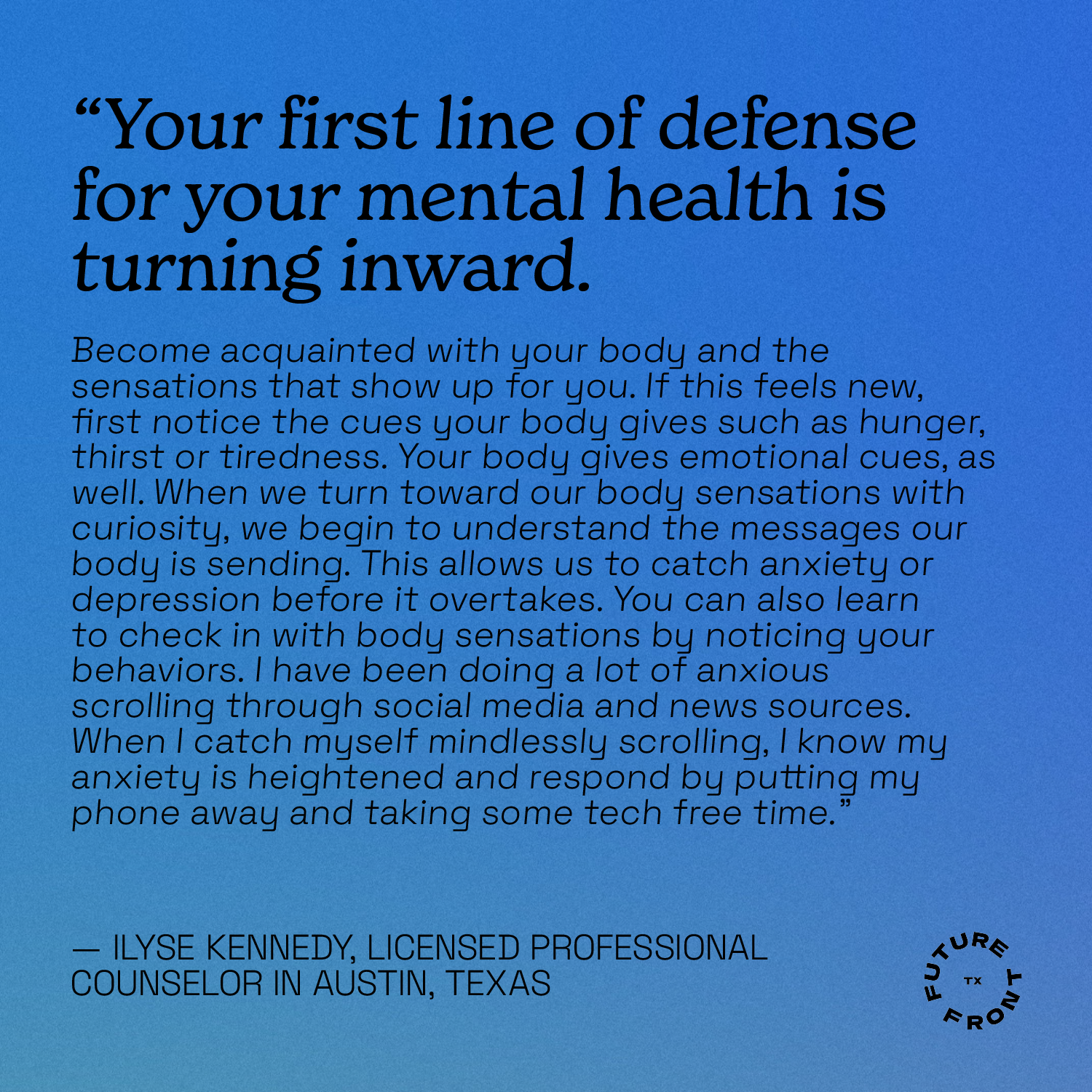


Your first line of defense for your mental health is turning inward.
Become acquainted with your body and the sensations that show up for you. If this feels new, first notice the cues your body gives such as hunger, thirst or tiredness. Your body gives emotional cues, as well. When we turn toward our body sensations with curiosity, we begin to understand the messages our body is sending. This allows us to catch anxiety or depression before it overtakes. You can also learn to check in with body sensations by noticing your behaviors. I have been doing a lot of anxious scrolling through social media and news sources. When I catch myself mindlessly scrolling, I know my anxiety is heightened and respond by putting my phone away and taking some tech free time.
Your second line of defense is social connection.
While we need to physically isolate, it is essential we don’t emotionally isolate. As humans, we are primed to seek connection. From birth, the first thing we look for is the warmth and connection of a caregiver. This seeking of connection never stops. While we are each experiencing the pandemic differently, we are all in this together. Sharing those feelings out loud with others helps to normalize this. There may be some grief in thinking about not seeing friends and family in person for some time, that’s okay. We are lucky to live in a time of advanced technology where we can find creative ways to connect. We can watch TV shows with each other over FaceTime, play games online, have large Google Hangouts. In the past week, I’ve spent more time watching reality television with friends than I have ever before and it feels amazing to revisit LuAnn De Lesseps recording “Money Can’t Buy You Class” while laughing about that iconic moment with a friend. This is a time where we need to lean in to community.
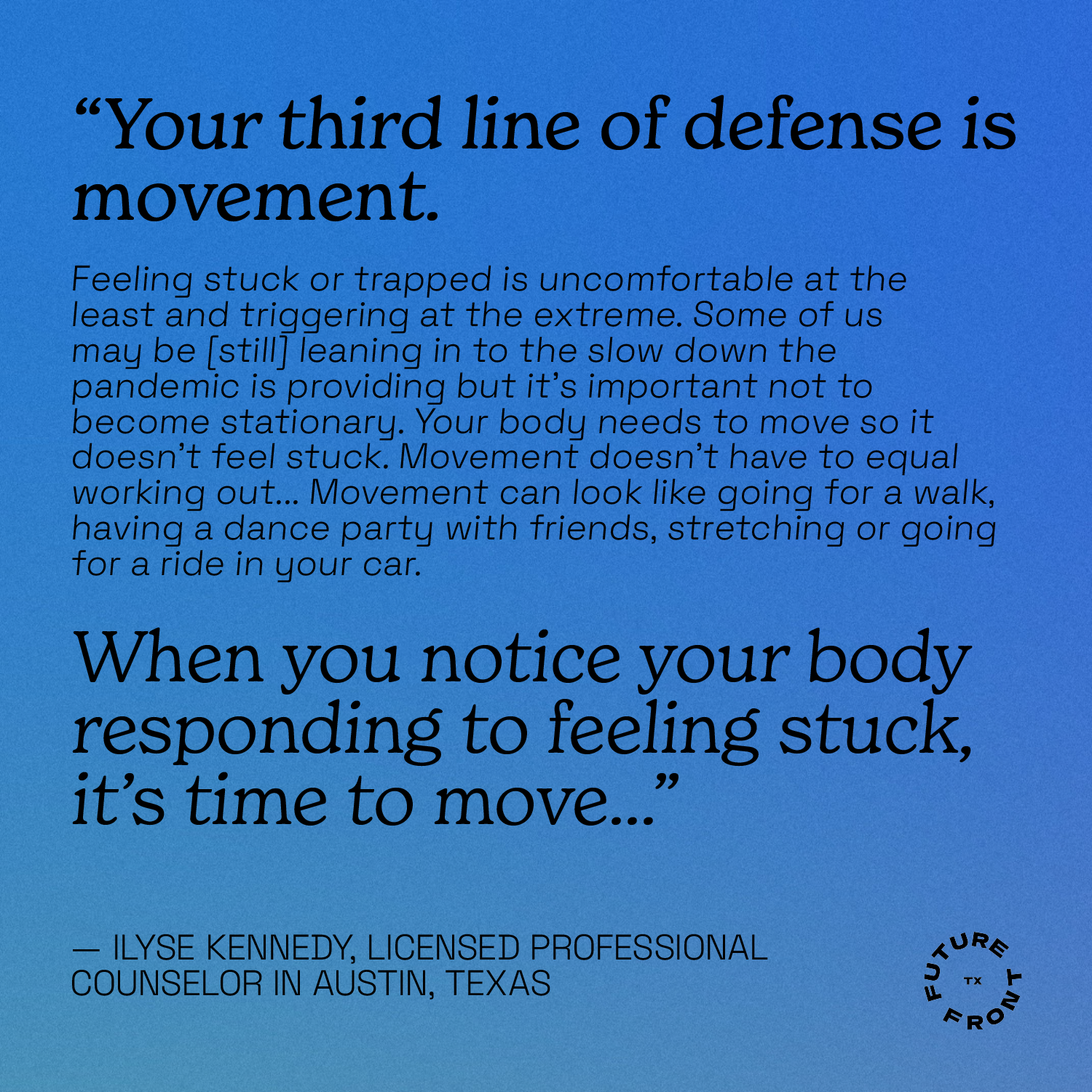
Your third line of defense is mobilization and movement.
Feeling stuck or trapped is uncomfortable at the least and triggering at the extreme. Some of us may be leaning in to the slow down the pandemic is providing but it’s important not to become stationary. Your body needs to move so it doesn’t feel stuck. Movement doesn’t have to equal working out, though many classes are available virtually at the moment. Movement can look like going for a walk, having a virtual dance party with friends, stretching or going for a ride in your car. When you notice your body responding to feeling stuck, it’s time to move to remind your body you are able to mobilize.
Your fourth line of defense is consistency.
When everything is chaos, look for the things you can control and the things that stay the same. If you feel yourself getting swept up in the chaos, make a list of everything you can control. Create a daily schedule. Re-watch a familiar TV show or movie. Try new recipes with the ingredients you have available to you. Pick a consistent scent to have on hand to help ground you. Pick a small goal you can achieve each day.
Know that mental healthcare is available even through social distancing, too.
Most therapists have transitioned to tele-health so if you need extra support during this time, don’t hesitate to ask your therapist of choice if they are offering tele-health. Many therapists are also offering reduced rate sessions at this time. The following are sliding scale therapy options for those in need:
LOOKING FOR MORE?
ABOUT THE AUTHOR, Ilyse Kennedy: Ilyse (she/her) is a Licensed Professional Counselor and Licensed Marriage and Family Therapist who is the owner and practices out of Moving Parts Psychotherapy in South Austin, TX. Following a stint in the music industry of Los Angeles, she recognized she wanted to help marginalized communities heal from trauma rather than getting coffee for cranky white men. She specializes in working with trauma, perinatal mental health, children, and adolescents. She began her therapy career working with girls and their incarcerated mothers at Girl Scouts Beyond Bars, where she began her interest in intergenerational trauma healing. She still loves music and especially enjoys supporting the Austin music community. When not therapizing, she can be found on adventures trailing behind two wild toddlers.