

On Seeking Liberation Through Art: Paloma Mayorga
In conversation with interdisciplinary creative Vera Claeys, bbatx resident artist Paloma Mayorga shares the way her creative process has positively affected her identity and self-image.
As part of our ongoing digital residency, we’re spotlighting an interview with artist and curator Paloma Mayorga. In conversation with interdisciplinary creative and writer Vera Claeys, Paloma talks about transitioning from painting to photography, the first time she ever exhibited her scans and how her creative process has changed her idea of self-image.
Interview conducted and written by Vera Claeys, April 2020.


ABOUT PALOMA MAYORGA:
Paloma Mayorga is an interdisciplinary artist and independent curator based in Austin, Texas. She uses unconventional forms of photography to document the body and other natural objects, creating intricate self-portraits that beg the viewer to consider the subtleties of touch.
A note from Vera Claeys: I was introduced to Paloma Mayorga’s work in the Spring of 2010. I was visiting Southwestern University for admitted students day and had the pleasure of seeing her senior art show at the Sarofim School of Fine Arts. For an 18-year-old kid visiting from Mission, Texas, I felt like I was floating. Liberated and confused. Comforted, yet weary. Her work was like taking an ice bath I didn’t know I needed. Since then, I’ve had the pleasure of seeing her repertoire evolve in a riveting dance between still life and lucid scans.
Vera Claeys: I want to start by thanking you for taking the time to share your ideas with us today. I also would like to mention that when I first met you and saw your work, you were focusing on an entirely different medium, and that was painting. What was the precedent for that shift?
Paloma Mayorga: Thank you, Vera, for taking the time to interview me and letting me share a little more about what I do! Indeed, I had been working on oil paintings when we first met right after I finished university, where I studied painting. After graduation, I spent a lot of time with myself and became fascinated by self portraits, specifically the idea of people creating an image in their likeness, subtly revealing their innerworkings, experiences, emotions.
Around that time, I began getting to know the work of contemporary photographers who focused on photographing people, many of whom I actually met through you. I feel like I became emotionally invested in their aesthetics, and I began experimenting with a camera myself -- creating more self portraits because I was too shy to photograph others. My mind was constantly racing with images and ideas, and photography seemed to be the only medium that could keep up.


Vera: I imagine you were eager to present your scans to the public after a generous time of introspection and developing your new works. What was the first exhibit you had that was centered on your scans, and when did you decide to present them after being a painter for so many years?
Paloma: I believe it was about a year after I started creating in that medium that I showed them publicly for the first time. I was working on a portrait-based exhibit at the Women’s Community Center of Central Texas in 2014 titled Cruelty Free that dealt with the negative self-talk that too-often is in our vocabulary as young women. I included the first six portraits I ever took of other people, along with three 8 x 10 inch prints from my scan series. Up until that point, I had been painting on large canvases, so printing these works small-scale just didn’t cut it. I wanted for people to get lost in the details that captivated me so much and made these works worth seeing. Emotions.
Two years later, I was invited to have a solo exhibit at the Emma S. Barrientos Mexican American Cultural Center composed almost entirely of my scans. I had to fill a vast space in a short period, and the open layout of the gallery and tall ceilings allowed me to show these works the way I had always envisioned—giant! The textures and colors of the plants become more intricate and nonrepresentational when you enlarge the photos. It’s almost painterly. This was precisely what made me feel comfortable with making the transition between exhibiting paintings to focusing mostly on the scans.
Vera: Since then, has your identity as a woman evolved moving from painting self portraits to putting your physical self on display via scans? I assume with painting there’s a lot more time and space to alter the state you’re in versus taking a scan of your natural form.
Paloma: There is definitely an aspect of time in the works that changed once I shifted from one medium to another. When painting self portraits, I capture different moments in time, each filled with their own state of being, that all conclude in one comprehensive image. In some ways, painting forced me to look at myself a lot more, allowing for both experimentation and criticism of my physical body. In comparison, the act of scanning is instantaneous, and doesn’t allow my eye to linger in the creative process. The size of the scanner bed also makes it so that I can’t observe or capture my full body in one image. I’m limited to seeing my body as isolated parts—hands, lips, ear, breast, etc—making it a much more controlled way of documenting the body. I think this has made me interpret my body and self as another component of nature, much like the flowers and plants I work with in my scans. There is a wonderful sense of liberation that comes with learning to recognize my body in this way. It’s not something that has to be altered to conform to societal standards of beauty, it’s simply something that just is. Because of this, I look at my body in a much more tender way and value my individual identity as a woman.

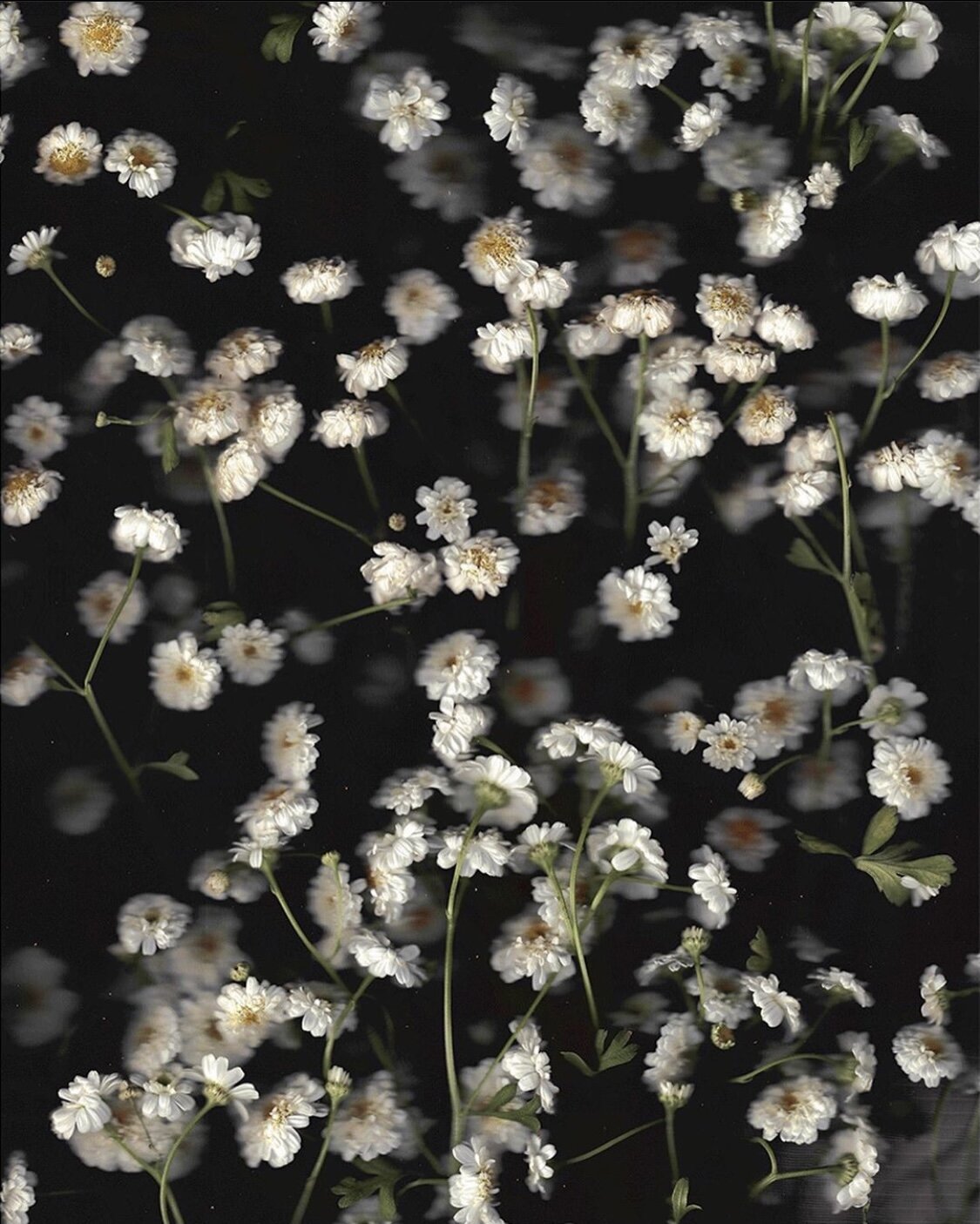
Vera: I appreciate that through the lack of distortion, your scans allow clarity of your self image. I know that you have some upcoming projects in the works. I’m curious to know how COVID-19 along with shelter in place restrictions have altered the work you’re creating and future collaborations.
Paloma: It’s certainly pushed back many of the projects I had planned for this summer, including my [in-person] bbatx residency, and a group exhibition at Artpace curated by Annette Carlozzi that I am really looking forward to. The shelter-in-place restrictions, and more so people’s resistance to comply, has made me look at some of my most recent works in a new light. In the gelatin series that I created during my Crit Group residency at The Contemporary Austin last year, I play with the idea of boundaries and our desire to touch. It’s interesting to see how some people struggle with the restrictions, while others accept and work hard to respect them, knowing that our individual actions affect others. This concept is definitely something that I want to explore further and will remain in the forefront of my mind with any future collaborations.
Vera: The first time I saw your gelatin pieces, I definitely wanted to try one. That’s what I enjoyed the most, having to find the balance between desire and restraint.
Paloma, thank you again for looking inward and sharing your ideas and future plans with us. I hope we get to do this again sooner than later. I’m looking forward to seeing your new projects this year!


ABOUT THE WRITER: Vera Claeys is an interdisciplinary creative, currently based in Berkeley, California. Her work has been published in Nasty Magazine and The Normal School Magazine, and her recently published zine, Cool, Calm, and Rejected has been distributed internationally. To learn more about Vera’s work, visit veraclaeys.com.
A Texan Feminist's Guide To First-Time Voting
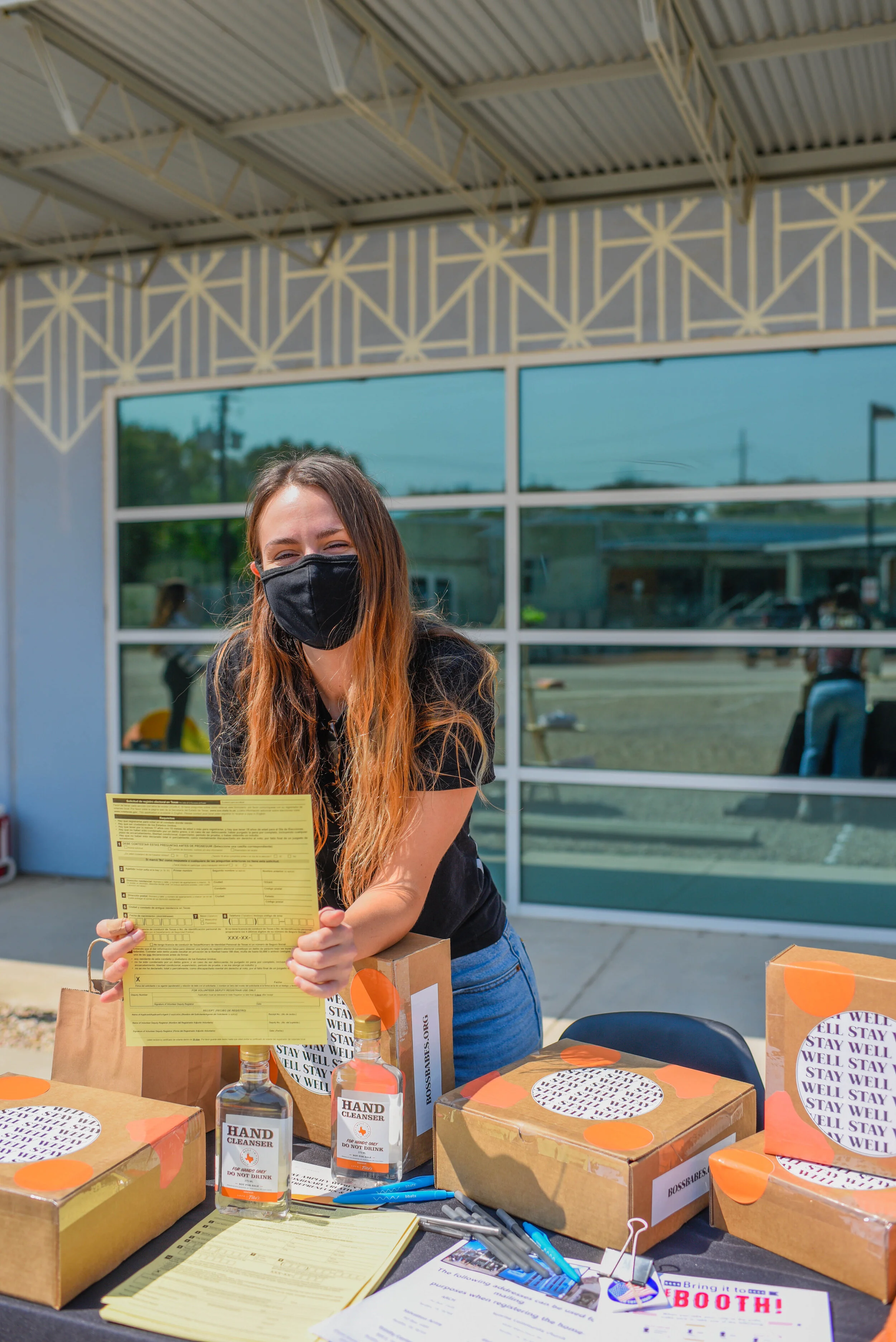
There’s a lot at stake with this upcoming Presidential election. So, in order to make sure our voices get heard (and our votes get counted), we've pulled together three of the most reputable and credible voter education resources in our network to make sure we (and you!) get informed, involved and properly prepped for the polls.

Mural created by Nathan "SLOKE" Nordstrom as part of the Austin Common’s collaboration with the HOPE Campaign.
Election Day is less than a month away—and on November 3, the future of our country will quite literally be in our collective hands.
Although we can’t tell you how to vote, we can help you stay informed, involved and properly prepped for the polls.
So, in order to make sure our voices get heard (and our votes get counted), we've pulled together three of the most reputable and credible voter education resources in our network. If you have yet to craft your November 3 voting plan, read up!
the three foundations for a solid voting plan:
1.) Figure out when and where you’re voting on November 3.
Once you’re registered to vote (you can check your registration status here), you’ll want to figure out your day-of voting plan. Which poll booth is nearest your home? Or workplace? Are you prepared to vote in a way that’s COVID-safe? How much time do you need to set aside in your schedule to vote?
You can start making your plan for Election Day by entering your address here. Also, if you’re busy on November 3 or can’t make it physically to the polls, we recommend learning about early and absentee voting options (click here to see what your state allows).
2.) Fill out your ballot in confidence. The League of Women Voters can help you determine which candidates to vote for.
There are quite a few races for this election (you’ll be voting for more than the presidency), so it’s important to know who’s who on the ballot—and which issues matter most to you.
You won’t be able to bring your phone into the voting booth with you, either, so we recommend setting aside time to create your ballot cheat sheet. On The League of Women Voters’ website (which is available in both English and Spanish), you can find non-partisan election information, candidate statements, as well as a personalized sample ballot based on your address to help you get started.
In Texas, voter guide translations of State and Federal elections will be made available in English, Spanish, Chinese and Vietnamese, with online versions of the Chinese and Vietnamese translations becoming available online this Friday, October 16. If you live in Travis, Williamson or Harris County, the state will be offering language translations of local city and county races, too.
If you live in the Austin area, you can pick up a free copy of their Voters Guide featured in the October 16 issue of the Austin Chronicle.
Never heard of The League of Women Voters? They encourage informed and active participation in government, work to increase understanding of major public policy issues and influence public policy through education and advocacy. You can learn more here.
You can also follow the steps in this series of graphics from our friends at missfits fest:
Graphics designed by Ivy Phan for missfits productions’ #FreshOffTheVoteTX campaign.
3.) Do more than vote. Stay involved at the local level. If you’re in Austin, we recommend The Austin Common.
Beyond voting, there are many ways for you to show up for the issues and causes that matter to you most. No matter what form of activism resonates with you, we recommend finding your long-game strategy. If you’re not sure where to begin, you can start by staying informed, not overwhelmed.
In Austin, we recommend keeping up with The Austin Common. As a nonpartisan news site, they regularly publish coverage surrounding civic engagement and sustainability. They’re also well-known for their easy-to-understand, how-to graphics.
For example, here’s their latest on HOW TO VOTE by mail in Texas.
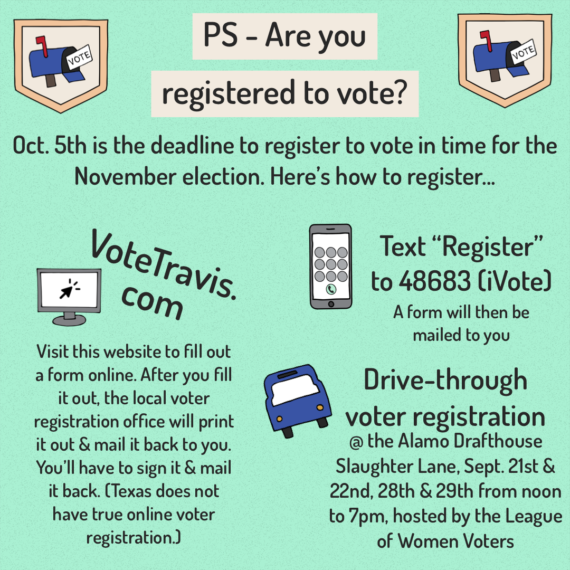
Above graphics designed by Kourtney Elaine for The Austin Common.
YOU NOW HAVE EVERYTHING YOU NEED TO create a VOTING PLAN. SEE YOU ON NOVEMBER 3!
This blog post has been made possible in collaboration with our community partners, missfits productions and the League of Women Voters. To find out more about missfits’ #FreshOffTheVoteTX campaign (which supplied many of the graphics used within this guide), head to their campaign website.

On Claiming Space with Sound: Mireydi
In conversation with bbatx committee member Amanda Vaughn, bbatx resident artist Mireydi aka Pos Guau talks about how she got her start DJing with Chulita Vinyl Club, the story behind her DJ name, and some of her favorite records.
Every year, bbatx curates a monthly residency highlighting the work of 10 to 15, Texas-based women and nonbinary visual and musical artists that create work and perform in our programs. As we move to take our programs online, we’ve partnered with Bumble to launch a digital version of The Residency. From now through November 1, 2020, you can tune in for weekly mixes, visuals and workshops from 16 women and nonbinary artists and DJs.
Today, as part of the series, we’ve got an interview with Austin-based DJ and artist Mireydi, also known as DJ Pos Guau. In conversation with bbatx committee member Amanda Vaughn, Mireydi chatted with us about how she got her start DJing with Chulita Vinyl Club, the story behind her DJ name, and some of her favorite records.

ABOUT MIREYDI:
Mireydi aka Pos Guau is a Mexican-Austinite producer, DJ and artist. Pos Guau’s rowdy, deeply rooted live sets reflect her experience of attending too many quinceañeras & bodas and her recent influences of disco, house, pop and anything in between.
How did you start DJing? We’d love to hear about your first gig, what inspired your name, at what point you branched out more… whatever you’d like to share. :)
Individuals who I was surrounded by were DJing, and I was intrigued but never felt like I had the guts to actually do it. I moved to Mexico City and started compiling mixes out of heartache, or more like an outlet. Then, I was accepted into Chulita Vinyl Club—that was the moment where I felt like I could come back to Austin. CVC offered a place of being welcomed, and honestly, they were the ones (along with bossbabesATX) who made me feel welcome back into Austin all over again. CVC truly taught me how to DJ with vinyl. Then, I transitioned to a controller in trying to play a bit more recent music. I remembered being so nervous at my first live DJ event, but I had a kind gentle fellow Chulita, Simone, who taught me how to transition and how to feel the song rhythm and BPM. Simone was there for me. When I was nervous letting that record go, she encouraged me to continue transitioning. Even when I messed up and drew an awkward pause, she was like, “It’s okay. Move on.” DJing has always been in that fashion—let's continue growing, recording and moving on in a sense. So my DJ name is derived from that. “Pos Guau” is a Spanish form dictated unenthusiastically—Pos Wow. This phrase is essentially after someone is not impressed but wants to make you feel better. I started branching out after spending time in Mexico City and wanting to expand in a digital format with no vinyl, but in a way capturing the rush of going next after someone who has dropped a tremenda cumbia and you have to follow that.
Why do you DJ?
The simple answer is to take up space with the tracks I play. Perhaps it’s not something that people are used to, but I’m in a way attempting to fuse my Austinite heritage (my father’s) along with a very rooted Mexican culture (my mother’s) of who I am in spaces that perhaps take either or blend them. I’m attempting to blend what I grew up dancing to and listening to and seeing the bigger picture of what the masses accept. I DJ to introduce songs that my Mexican village has danced to in a Baile and see the interaction with the same song at Cheer Up’s. I DJ to rebel and to see what people sway their bodies to or not.

Where do you buy records? What is your favorite record and why?
OOF that’s hard. I inherited my records from my grandfather, and that was my original introduction. I buy records everywhere, but I love buying them while traveling throughout Mexico. My favorite thing is to buy a record with a great cover art and not play it—just purchase it. Here are some of my favorite records:
Future Sounds of Buenos Aires
Captain Planet - Mystery Trip Vol. 2
La Sonora Dinamita - 16 Exitos
Beyoncé - Lemonade
Fleetwood Mac - Rumours
Classixx - Hanging Gardens
Xandao - ¡Un Saludo! Mexican Soundsystem Cumbia in LA
How do you build your crates? How do you transport all that vinyl?
It definitely depends on the mood and length of the event. When building a set with CVC, I feel most welcome to bring in records that inspire me or that I wanted to experiment with on the dance floor. As I've been branching out, it's nerve-wracking knowing you are responsible for someone's X amount of time. I’ve kept the same attitude in bringing about new tunes that perhaps people haven’t listened to and adjusting to the set time.


Last season at bbatx, we explored the theme of RISE. What does that mean to you, and how do you find rise in your DJ practice?
I rise in my DJ practice in learning along the way. With the struggles comes tranquility in perfecting the craft of DJing little by little.
What are you listening to now?
During these trying times, I’ve been listening to A LOT of 90s pop music, Third Eye Blind, Dolly Parton and Dua Lipa.
LISTEN TO DJ POS GUAU’S BABES FEST RADIO MIX. :)
About This Mix:
This mix by DJ Pos Guau (@soymireydi on SoundCloud) includes some of the songs that blast from her neighbors techo (rooftop) while quarantining in Querétaro, Mexico. Constantly being inspired by the gentleness of everyone she's met during this time, DJ Pos Guau wanted to create an uplifting dance mix after five months of businesses being shut down and the city finally opening up.
TRACKLIST:
1. Amalucan - Orihuela M.S.S. (Yelram Selectah Remix)
2. Mister Cumbia - Pinche Cumbión Bien Loco
3. Super Grupo G - La Inconforme
4. El Combo Loco De Mike Rodriguez - Baila Conmigo
5. Karol G, Nicki Minaj - Tusa
6. ROSALÍA, J Balvin - Con Altura (ft. El Guincho)
7. DJ Caution - Donna Summer (ft. Fito Olivares)
8. Selena - On the Radio
9. Dua Lipa - Don’t Start Now (LA Live)
10. The Sacados - Ritmo De la Noche
11. Robyn - Love is Free
12. Joswa In Da house - Ella Quiere Cualto
13. Sergio Mendes - Magalenha
14. MULA - Nunca paran
15. Bad Bunny - Si veo a Tu Mamá

Meet The Artists Behind Come To Your Census, Texas
We’re partnering with Art+Action this month to call on our community to fill out the 2020 Census.

Image courtesy of featured artist Sarah Bork.
Texas, it’s time to come to your Census.
We’re partnering with Art+Action this month to call on our community to fill out the 2020 Census. Completing the Census this year is a big deal, as the data will determine how our government invests in our communities over the next ten years. And when you fill it out, you play a direct part in bringing resources, political power and potentially $20,000 in funding to your community.
To spread the word about the Census, Art+Action commissioned six Texas artist to erect billboards across the state. In this post, you can meet them all, and if you’re here to fill out your Census, please click here.
MEET THE TEXAS ARTISTS BEHIND COME TO YOUR CENSUS:

WHO: Sarah Bork
Sarah Bork lives in Austin, TX, with her husband and two daughters. Her ongoing projects include: Liquid Love – a photographic study of reflections on the surfaces of swimming pools, Legacy – an examination of silverware, Heritage & The Hereafter – a series of quilts constructed from post consumer fused plastic and GIRLS GOTTA EAT – an exploration of the grocery shopping and eating habits of drag queens.

WHO: Armando Aguirre
Armando Aguirre received his Bachelors Degree in Visual Arts from the University of Texas at Dallas. Armando’s artwork is informed by his Mexican American background and reflects his interests in Mexican Muralist, Chicano culture, graffiti colors, and Aztec Mythology.

WHO: Andy Benavides
Andy Benavides is a native of San Antonio, TX. As an active contemporary artist, and entrepeneur he utilizes his knowledge of art mediums to explore, discover and translate his personal feelings into responsive art. His intention is to engage his viewer. He and his wife (Yvette) and son (Agusto) together run their arts complex which is also their home. The location is where they operate their two creative service businesses (Benavides Picture framing and Benavides Studio Inc.). Their warehouse also functions as an arts incubator in San Antonio where they house 15 professional art studios as well as their arts education non-profit (smartsa.org). Collectively, their ventures have been building community through the arts for 30 years to date.

WHO: Kim Bishop
While Kim Bishop is currently a San Antonio-based artist, her roots are in Austin, Texas, where she was raised and graduated from High School. She received her BFA in Commercial Art from Southwest Texas State University and her MA in Gifted and Talented Curriculum and Instruction from Texas State University in San Marcos. After thirty years of working in the Art Education field she is currently working on completing her MFA from the University of Texas at San Antonio. Bishop has maintained a full time studio practice in San Antonio for over fifteen years. Her extensive nationally recognized exhibition record reflects her focus on community engagement through the arts. She is co-founder of Art to the Third Power, a large-scale industrial street print press, Bishop & Valderas LLC, a creative group and 3rd Space Art Gallery. She is a part of several permanent collections like the City of San Antonio Library, the University of Texas San Antonio and A&M Kingsville along with many private collections. At present she instructs drawing at Southwest School of Art.

WHO: Caroline Ryan
Caroline Ryan was born and raised in Houston, Texas. She graduated from the University of Houston with a BFA in Painting, a BS in Psychology, and a minor in Art History. Her work consists of mainly figurative work done using acrylic paint, gouache and watercolor. Ryan uses photographs as the references for her paintings; these photographs are a mix of photos she has taken and old family photos, along with found photographs. Ryan references these photos to reflect on the relationship between photography and painting, and the ways that the two capture memories. Her work has shown in a variety of galleries including the Asian American Resource Center in Austin, Texas, Beeville Art Museum in Beeville, Texas, the Lawndale Art Center in Houston, Texas, and Project Row Houses in Houston, Texas, among others.

WHO: Xavier Schipani
Xavier Schipani born in Washington DC, lives and works in Austin. He got his BFA from Maryland Institute College of Art in 2009, with a concentration in Illustration and Painting. He has continued his painting practice participating in exhibitions all over the country, as well as abroad and created several public works as well. His work is heavily influenced by his identity as a member of the LGBTQIA+ community using his personal as a political intersection between art and activism. The subject of the trans masculine body and its portrayal are essential to him, the goal being to represent them and their undeniable existence. He believes that Art can be used as a tool for agitation, to keep reminding people that there are several ways to look at something without defining it, to keep seeing it as it evolves.
LOOKING FOR MORE?
To find out more about bbatx, check out everything we’re doing virtually for women and nonbinary creatives and leaders (plus the people who support them) here.
To fill out the Census, head to 2020census.gov to complete the nine question, ten-minute survey—you have until September 30!

On Rising Above Conformity: Natalia Rocafuerte
In conversation with bbatx committee member Amanda Vaughn, bbatx resident artist Natalia Rocafuerte discusses how she got her start DJing, what she’s been listening to lately, and how she commits to being her authentic self through her art.
Every year, bbatx curates a monthly residency highlighting the work of 10 to 15, Texas-based women and nonbinary visual and musical artists that create work and perform in our programs. As we move to take our programs online, we’ve partnered with Bumble to launch a digital version of The Residency. From now through November 1, 2020, you can tune in for weekly mixes, visuals and workshops from 16 women and nonbinary artists and DJs.
Today, as part of the series, we’ve got an interview with new media artist, DJ, and filmmaker Natalia Rocafuerte. In conversation with bbatx committee member Amanda Vaughn, Natalia talked with us about how she started DJing through Chulita Vinyl Club, her greatest influences and inspirations, and how she commits to being her authentic self through her art and DJ practice.

ABOUT NATALIA ROCAFUERTE:
Natalia Rocafuerte is a Mexican-American new media artist, filmmaker and community organizer creating work on perception, analog technology and spatial identity. Encouraging a phenomenological experience by using unconventional technologies, Rocafuerte views her work as a broadcast of alternative narratives and self perceptions. She is also a recent fellow for the New York Foundation for the Arts Immigrant Mentorship program and has work currently exhibiting in San Antonio for Xicanx.
How did you start DJing? We’d love to hear about your first gig, what inspired your name, at what point you branched out more… whatever you’d like to share. :)
I always made mixtapes for my friends and would even mail out CD’s to friends across the world. It wasn't until I joined Chulita Vinyl Club that I was encouraged to share my vast library of records and DJ outside my bedroom. My first gig was through Chulita Vinyl Club during a West Side Studio tour in Austin. I can still feel my heart hiccup when I played my first track publicly. It was a thrill to see people dance and be filled with curiosity as to what the song I played was. I got a lot of support from the Austin queer community and started getting gigs at lesbian wedding parties, Thee Gay Agenda as well as some independent galleries like Sala Diaz and Mass Gallery. I incorporate sound into my installation pieces as a way to explore mood setting through sound as well.
Why do you DJ?
I like exploring sound, and music has always been a source of inspiration. I think a lot of people find it to be the most influential kind of art. It comes in many languages, but you don't really have to know a language to understand sound. I feel really lucky to be alive in a time where we have access to global archives of music. I DJ to explore what everyone is experiencing through sound.


Natalia with Chulita Vinyl Club.
Where do you buy records? What is your favorite record and why?
I love shopping at Bluebonnet Records in Lockhart because they have such an eclectic collection (and the largest Yoko Ono collection in the area). It's also owned by some rad punk rockers who always stock up on weird music from around the world and local bands. I also research a lot of music by labels to support independent labels. I kind of started doing that after going to SXSW parties in high school.
I think a favorite record is hard to pick. It would probably be The Ramones' self titled record or Los Shapis' Los Auténticos.
How do you build your crates? How do you transport all that vinyl?
I like to add what I am currently listening to my crate, and that includes new records I buy and ear worms I keep on repeat. It's kind of an excuse to get to hear my favorite song over and over again. Sometimes I think about records I listened to growing up in Mexico and what comfort they bring and I like to bring those along, too. I like when someone comes up to my turntable and shares their memory of their grandmother who played that exact same song in Mexico. I buy vintage cases for my records (for 45's and 78's) and decorate them with stickers from friends. I also DJ in digital formats which allows me to bring music from friends who upload their music to Soundcloud.


What are your greatest influences? Faces? Places?
I think Honey Dijon is an amazing queer icon and DJ. I also really like Alaska from Alaska y Dinarama and Fangoria. I love Prince, Claude Cahun, Erykah Badu and Yoko Ono. I'm also really inspired by sound artists working to explore sound as medium in installation and sculpture. I'm currently in Detroit and listening to a lot of "classic” techno from here—music for the Motor City.
This season at bbatx, we're exploring the theme of RISE. What does that mean to you, and how do you find rise in your DJ practice?
I feel connected to a greater calling through my art and want to rise above conformity to oppressive ideas of art and gender expression. Decolonize your mind and heart. Rise above tyranny of our people through class and racism. Allow ourselves to dream and be original. I want to be my authentic self and not to operate on conspicuous consumption.
What are you listening to now?
My mix is a collection of music I have been listening to in my room and studio during the pandemic. It's everything twee and everything that reminds me of being calm in my own space. I've been reading The Bluest Eye by Toni Morrison and wanted to include her voice in my mix as something I am listening to. I listen to a lot of artists from Austin—TC Superstar has been on my stereo lately.


LISTEN TO NATALIA’S BABES FEST RADIO MIX. :)
ABOUT THIS MIX:
This mix is a twee and eclectic collection of soothing femme singer-songwriters and multi-instrumentalists. So sweet it can be sour, this collection explores the self through sound and lyrics. This mix is tender—not for the cynical.
TRACKLIST:
Oprah interview with Toni Morrison
Code - The Tuna Helpers (*ATX-based)
Green Eyes - Erykah Badu
Synthesize Me - The Space Lady
Just Another Diamond Day - Vashti Bunyan
Honey - Marine Girls
Blank Girl - Dum Dum Girls
Moving On, Getting On - Christelle Bofale (*ATX-based)
Leave All Your Old Loves - The Liverbirds
Drown - Black Tambourine
Together Forever in Love - Go Sailor
Not Too Soon - Throwing Muses
Dream Phone - Peach Kelli Pop
Cet air-là - April March
Sed de amor - Esther Suarez
Kiss Kiss Kiss - Yoko Ono
Why Do You - Jane Claire (*ATX-based)
I Been Livin - Liv.e
I Miss That Feeling - Tennis
What You Want - Sheer Mag
Together Forever in Love - Go Sailor
Pista - Los Bitchos
Aventurera - Natalia Lafourcade
Knock Out - Air Waves
Comment Te Dire Adieu - Françoise Hardy
Modern Girl - Sleater Kinney
Party Boots - Murdertits!
In Dreams - Little Marzarn (*ATX-based)
Forget about - Sibylle Baier
On Pushing Yourself And Painting What You Know: Catie Lewis
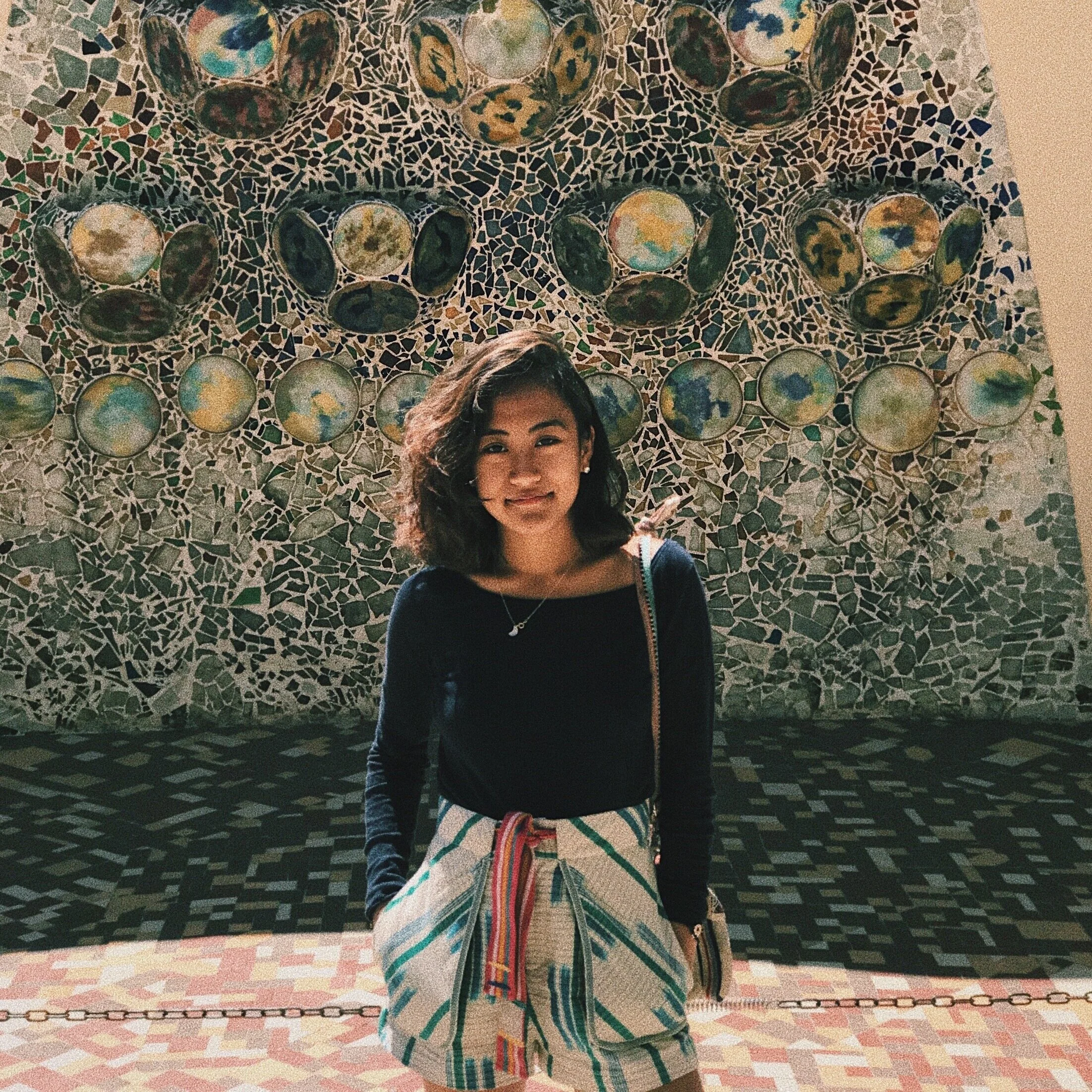
In conversation with bbatx committee member Liz Whitington, Catie chats with us about the inspiration she draws from the creative community in Austin, how she expresses her connection to Filipino culture in her art, and how she creates stories behind her work.
Every year, bbatx curates a monthly residency highlighting the work of 10 to 15, Texas-based women and nonbinary visual and musical artists that create work and perform in our programs. As we move to take our programs online, we’ve partnered with Bumble to launch a digital version of The Residency. From now through November 1, 2020, you can tune in for weekly mixes, visuals and workshops from 16 women and nonbinary artists and DJs.
Today, as part of the series, we’ve got an interview with Austin-based visual artist and muralist Catie Lewis. In conversation with bbatx committee member Liz Whitington, Catie chats with us about the inspiration she draws from the creative community in Austin, how she expresses her connection to Filipino culture in her art, and how she creates stories behind her work.

ABOUT CATIE LEWIS:
Catie Lewis is a self taught artist + muralist living in Austin, TX. She fills her pieces with bold colors and intricate lines, shaping compositions around chaos and simplicity. Her lifelong dreams include beautifying walls worldwide, opening a bright yellow cafe in Siargao and helping other young womxn to be fearless in pursuing their passions.
Tell us a little bit about how you came to be in Austin and how you got into creating artwork. :) How did you get to this path?
After living in Charleston, South Carolina, for a few years, I was looking for a change of pace after graduating from community college. Charleston was a beautiful city but lacked the diversity and opportunities I was looking for at the time. Everyone I knew there raved about Austin and said I would absolutely love it! So after a week of convincing, I found an apartment and signed a lease!
Once I got to Austin, I was immediately inspired by the colorful murals and weekly art markets around the city. A few of my coworkers vended their own art and encouraged me to get back into painting and sign up for a market! I started off with the Frida Fridays ATX market, and I’ve been doing way more art ever since!
Out of all the cities you could have chosen, what made you pick Austin?
Austin feels like a small town but is a larger city. One day I googled the best city to live in for a millennial, and Austin came up as one of the best cities. After doing more research, I found that this city had great food, a creative community and it was priced comparable to Charleston, SC. I felt like I needed a change, and Austin just called out to me. Prior to moving here, I kept getting signs that I needed to be here, so I felt like it was the city that I needed to be in for this chapter.


You mentioned that there was a brief time in your life when you completely lost touch with your creative side. How did you find your way back to your creativity?
It was very important for me to get back to creating and my creativity. When I was in South Carolina, I was in school full-time, had a full-time job and a part-time job—which left no room for anything else in my life. I didn’t have any time to be creative, so I left it on the back burner to focus on things that I thought were important at the time. After moving to Austin, I felt like I got a fresh start. The city has such a rich colorful creative scene with markets, murals, spaces and artists. It inspired me to get back to creating. The community also encouraged me to pick it up again and supported me to succeed as an artist. The creative scene is so diverse while also giving you your own space to create and experiment.
You have a wonderful wide range in your work—from complex paintings, murals, one line drawings, portraits, gouache, as well as textiles such as bags and shirts. What inspires you to create these various disciplines? Are they all inspired by similar concepts that are different interpretations, or does each medium come from different inspiration?
Being self-taught, I really have to try all the mediums and techniques to find the ones that I connect with. I find it easy to paint botanical things, and I am still learning to paint people, so I am practicing working digitally to enhance my ability with portrait painting. For me, my inspiration depends on how I would like to see my inspirations in my work within the various different mediums I use. My work can take me ten minutes to ten hours to make—from minimalistic to complex—both which I love doing and feel are beautiful. This year, I am working on combining portraits and stories to create things that tell more of a story. I am really excited about this new focus and vision for my work.
You are looking to build upon your practice and experience with more meaningful projects and explore the stories of people who make up this community. What community are you interested in exploring, and why does it speak to you?
This year, my goal is to research and do deeper dives into the process of creating the story behind the pieces. Also, my goal (good thing about quarantine!) is to dive deeper into the process of creating. I want to focus on making portraits and scenes of going to the Philippines from three years ago. I was adopted and went back during my senior year of high school. I will always carry that experience of visiting my birth family on this lush jungle island. Visiting my family was a huge turning point in my life and developing a love for them and developing a connection with the Philippines. I was the most comfortable I felt when I was in the Philippines and want this to be more reflective in my work. It was always something I wanted to explore deeper—expressing these feelings about the culture of the Philippines with my art and painting—so I am exploring that medium and concept. It is also a way to challenge myself mentally while I am painting, and I am excited to explore this side.
My end goal is to move back there and live because the lifestyle is different. You do not take anything for granted. I yearn for that life, and the only way I can communicate these feelings is through my art and painting. This was always something I wanted to explore deeper. Exploring that medium and concept—and challenging myself mentally while I am painting.


You recently completed a residency at Deeds Not Words, a community that focuses on calling young people to action for issues regarding gender equity such as reproductive rights, sexual assault, equal pay and so much more. What was this experience like? How did that impact your creative process or work?
Deeds Not Words is a wonderful community whose mission statement resonated with me and inspired me to do more meaningful projects. That group of women blew me away. Being with a group of women that are driven and all focused on their role in the community while still working together as a team had a tremendously positive impact on me and my work. Their passion inspired me. It made me realize that I can try to make a ripple effect with my work and I can change to push a conversation about whatever I think needs to be talked about through my art.
As an artist, how important is it to also be an entrepreneur and maintain the business of your art?
It is a very important balance, but it can be very hard to balance the business side and the artistic practice. You need the business side to sustain your artistic work. Everything costs money, so you need to be able to do bookkeeping, taxes, your website, etc. so that you can sustain yourself. I had to shift how I talked and interacted with people and clients so that I could maintain business relationships and keep everything organized. I am self-taught, so I have to fight the imposter syndrome as I am always learning both the artistic and business side. It is very important that I am always learning and pushing myself. It has taught me to be confident to go for things that I want or need, even if I do not get it. Sometimes it is about going through that process, because it is all a part of the learning process.
What impact has this time of crisis had on you and your practice?
COVID quarantine has definitely put a huge question mark on what it means to have a business during a super challenging time for everyone! It’s hard to push sales, products or commissions as someone who has slowed down financially to others—knowing how crazy this all is in everyone’s lives. On the art side, though, quarantine is a lifesaver. I’m definitely fighting anxiety and lack of motivation half of every day, but the other half I’m just going at my new project and experimenting with my paints! I feel like I kind of wished this sort of free time into existence back when life was normal and I was too busy to make personal art. :)


On Starting a Podcast: An Interview with Kristina Gonzalez Sander
We recently spoke with in bold company founder Kristina Gonzalez Sander about the creative inspirations, obstacles, and stories behind the launch of in bold company’s podcast.
While spending the majority of our time indoors, we’ve all seemed to pick up new hobbies—baking, gardening, rollerskating, and maybe even finally starting that podcast you’ve always thought about. But we’re no strangers when it comes to recognizing the anxious feelings and mental roadblocks that can come when taking on a new project or embarking on a new creative journey.
Speaking with someone who has recent experience with this, we chatted with our friend and community partner, Kristina Gonzalez Sander. As the founder of in bold company, an online journal exploring the raw stories of womxn of color, Kristina recently launched the first season of in bold company’s podcast where she talked with womxn of color in her community about their experiences.
In conversation with bbatx committee member A'nysha Aileen, Kristina discussed the motives behind the creation of in bold company, the barriers she faced when starting her podcast, and how she learned to just do it.

MEET KRISTINA GONZALEZ SANDER
Kristina Gonzalez Sander is the Founder of in bold company, a digital platform and community for womxn of color sparking curiosity, growth, and real connection. By day she's the Director of Sales and Ops at Party at the Moontower Event Rentals. In addition, Kristina is the Co-Founder of missfits productions and an Austin PBS Ambassador.
We’d love to know more about in bold company. :) What is it, and where can people learn more about it?
‘in bold company’ is a community and digital platform created specifically for WoC (womxn of color). We help our audience grow, expand, and shift their perspectives through diverse storytelling, digital content, and experiences. Visit our website for all of our podcast episodes and to sign up for WoC Weekly, a weekly roundup of work and words by other WoC. You can also connect with us (@inboldcompany) on Instagram and Facebook. (:

When did you know that you wanted to start a podcast?
I can’t remember exactly why I knew podcasting was the right medium, but I knew instantly that it was the right choice. I’ve always had conversations with other WoC about the intersections of our identities without even knowing it and definitely before I knew of the term intersectionality. It just felt right, especially since I went to school for journalism and creative writing. I felt like it came full circle.
WhAT inspired you to start ‘in bold company’?
I always wanted to have more of a community and space where I could explore my identity. I’m a first-generation Filipina; both of my parents immigrated to the U.S. and I grew up in a predominantly white neighborhood. I always felt like something was missing a little bit growing up and even into college then after. I feel like I was always going through a low-key identity crisis, but it was hard for me to describe without having the language or anyone else who understood. I sat on this idea for a long time feeling like I wasn’t enough of a WoC… until finally, I said, fuck it. Can I swear? Lol.
As far as what catapulted me to really start? I have to give a big thank you to Nina and Regine from Collective Blue. When we teamed up to produce missfits fest, a one-day festival celebrating self-identifying Asian-American womxn in entrepreneurship and the arts, they really helped me see it was possible and that I was enough to start a community for WoC. The main barrier to starting was my mind.
I was worried about what other people would think. Honestly, you just have do it and get over it. If you sit there and self-sabotage, you’re never gonna do it. I sat on the idea for over a year.
How has your community supported you through the process of creating something new?
The community has been amazing, truly. I couldn’t ask for more supportive people. Everyone’s been really engaged and my hype womxn, haha. I’ve had a lot of people reach out to me and say how ‘in bold company’ has sparked their own self-discovery journeys. It’s really incredible and I’m like… shit, when is someone gonna get mad at me LOL. I hope no one does, but that’s the people-pleaser in me. I want everyone to find belonging and inspiration.
The number of listeners I got were what made me feel most supported. I didn’t think we would have that many listeners. We’ve had over 3,000 downloads. The people that message us and say that they like what I’m doing also make me feel supported.

Photo at Miranda Bennett Studio by Ailin Hyde.

Kristina on her honeymoon in South Africa, wearing Tribe and Sol.
Can you tell us about some unexpected challenges you’ve faced as a podcast producer?
OH SO MANY, to be totally honest. Well first, I launched during COVID, at a time when everyone was like “terrible time to start a podcast!” And I was like welp, fuck it, I have to do it anyway. I knew I was competing against a LOT of content and people’s brains. COVID seriously has put us all through the wringer. There is not one person who I feel like hasn’t been impacted by the pandemic in some type of way—burnout, financial stress, job stress, etc.
Then with the start of the current civil rights movement, I wanted to flow with what my community needed at the time. I didn’t feel like it was right to continue promoting my podcast. Right at the start of the movement, there were other voices that needed to be heard and amplified. In addition, I wanted to learn from many of the Black folx who were speaking and advocating for Black lives. I’m always learning and I wanted to be intentional by really listening, absorbing, and processing information.
I’m never going to say I know it all, because I don’t. I put the pod on pause so I could take a step back. Moving forward into season two of the podcast, I will continue highlighting those folx in our community who are doing amazing work and who I know our community can learn from, too.
What advice do you have for others interested in starting a podcast?
Omg, I got this advice and I didn’t do it, lol. Record as many episodes as you can before you launch, truly easier. I didn’t do it. But hey, now I know why! Mistakes are good. I advise talking to someone with experience. Myrriah Gossett is a great podcast consultant.
I also took a podcast course, to be honest with you. I like learning, I like homework, and it was way easier for me to learn that way. You don’t have to, there’s a lot of free content out there, but my mind needs structure! Definitely listen to a lot of podcasts to see what you like in them. Some of my favorites are Food Heaven, Woke Beauty, Let it Out, 1619, and Code Switch.
Lastly, just do it! You don’t have to spend a lot of money. There’s lots of free information out there to help you.
What are your goals for the podcast?
Looking ahead to season two, I’d like to dig a little bit deeper with the stories that I tell and explore. I would also like to interview more diverse people outside of my immediate network. It’s really easy to interview friends, but I want to challenge myself to interview new people, with unique experiences.
My ultimate goal is to get funding for the podcast. I could interview so many more people, and expand the podcast more.
LOOKING FOR MORE?
Keep up with what we’re up to at bbatx—from virtual events to membership—here. You can also learn more about in bold company and listen to Kristina’s podcast here.

On Making Art For Yourself (Not Instagram): Megan Baker
Megan talks with us about her background in architecture, resisting the urge to over-value social media and her advice for up and coming photographers.
Every year, bbatx curates a monthly residency highlighting the work of 10 to 15, Texas-based women and nonbinary visual and musical artists that create work and perform in our programs. As we move to take our programs online, we’ve partnered with Bumble to launch a digital version of The Residency. From now through November 1, 2020, you can tune in for weekly mixes, visuals and workshops from 16 women and nonbinary artists and DJs.
Today, as part of the series, we’ve got an interview with photographer Megan Baker. In conversation with bbatx committee member A'nysha Aileen, Megan talks talks with us about her background in architecture, resisting the urge to over-value social media and her advice for up and coming photographers.

ABOUT MEGAN BAKER:
Born in Denver and raised in Seattle, Megan has always been surrounded by and involved in art, design and other creative outlets. After starting her degrees in architecture, she became interested in photography and its ability to capture and tell a story through light. For Megan, her excitement in both art and design stem from observing the beautiful intricacies of the human condition, and revealing them to others through whatever medium fits best.
Tell us a little bit about yourself and your background. :)
So, I grew up in Seattle, and I think that really gave me exposure to a lot of arts and creativity at a very young age. My parents were always very supportive of me pursuing art, so when I did show an interest in something, they always let me spread my wings in that field. By the time I got to college, I decided to go into architecture. I have a Bachelor’s and a Master’s in architectural design—which has nothing to do with photography, which is funny when I think about why I picked up a camera to begin with.
When did you know that you wanted to explore photography, and what prompted this decision?
I was always into painting at a younger age. Then with architecture school and being in the studio, it just took so much time that I didn’t have time to paint. I was doing so much drawing and painting for school, I didn’t want to anymore. Then I thought, “Well, I have this camera to take photos of my architectural models. Why don’t I just start taking photos? It’s a faster creative outlet for me.” I started picking up a camera my freshman year. My film professor told me that I had “no real photographic talent or eye” and I said, “F*ck that, I’m gonna keep doing it because I wanna do it. It makes me feel good.”
I just started asking people, “Can I take a photo of you?” and it kind of just took off from there. That’s my interest in design, too—the people. Having that human element in a photo carries across the message more than if it’s just a landscape photo sometimes. It’s the soul of an image. Even if it is a landscape, if you have a tiny person in the frame somewhere, that human interaction pulls people into a story rather than an image.
How have your projects grown and changed since you started?
At first, I was more interested in taking a pretty picture, which is all well and good, I still love doing that, but I have been privileged to experience a lot of different things at a young age—hear different people’s experiences and stories, travel—that kind of popped my perspective bubble of how big the world really is. After a while, creating a pretty picture that would just get me some likes didn’t fulfill me; I wanted to know the people I was photographing, past just their face.
I started trying to use photography to digest the conversations I was having with people, whether it was religion, society, honestly any topic worth discussing. Figuring out a way to visualize what I was thinking, or what I had heard, helps me understand more, and maybe (I hope) helps others understand themselves more, too.


What do you want people to take away from your photos?
I don't have a direct answer for that. I get that question a lot, especially with the projects that I have started doing. That's a heavy question, and I'm not really sure. I want whatever you feel to be how you feel about my art. There’s this quote, “Art should comfort the disturbed and disturb the comfortable.” So whatever you take away from what my art is it, that’s the goal. For me, there's no set rule for what people need to be experiencing from art. And I never want it to be that way. I think that’s the beauty of it. It’s so big that you can let it be what it is for everyone. I used to get really upset about not being able to control what people saw in my art, that they didn’t understand me, but then my friend told me that once you put it out there, you cease to have ownership of it anymore, and that’s always really stuck with me. As long as you like your work, that’s all that matters. If other people like it, that’s just an added bonus.
Do you have any advice for up and coming photographers?
To move away from our current standard of social media fame as a definition of success and talent. And yeah, OK, having a lot of followers can help with business, don’t get me wrong. I'm very active on Instagram as I'm saying this, but being able to detach from that and do the things that really speak to you is important. It doesn't really matter if that’s what’s trending. If you don’t really connect with it, your work isn’t really going to speak as much, and then what’s the point?
I would also say to really put yourself out there. I'm a very shy person, or at least I was. When I moved here for grad school two and a half years ago, I was kind of like, “No, we're going to meet people. We’re going to do the extrovert thing.” I’m still not a great extrovert, but not closing myself off helped a lot. Really being yourself in your art, regardless of likes, is the best advice I could give. From a business standpoint, you really need to be annoying to get the jobs you want. It requires a lot of emailing and a lot of drive.
If you don't want to have to do that, don't do freelance. And you don't have to do freelance. A lot of people think freelance is so fun, and it's not. I'm so thankful that I graduated in December and got a traditional job. Job security is an amazing thing to have. Knowing where your checks are coming from can free you from the weight and anxiety freelance can give you, and then you have more energy to focus on your craft. Don't put freelance on a pedestal, but do what you want to do and be willing to fight for it. You'll send a ton of emails. So many emails. You just really need to bug people. The universe will not let you fail if it was meant for you. If you fail [at freelance] it’s either because you’re not ready for it or it’s not meant for you.
Who (or what) inspires and informs your work?
Friends and the community inspire me. A lot of my inspiration is based on conversations I have. I guess I’m lucky to have friends in this community who are all actively doing such cool things, growing. They say you are the product of the people around you. When everyone is constantly killing the game, it pushes you to do more. They are also ethically killing the game. They're all doing it the right way and that kind of pushes me to do the best I can and to push everyone else to do the same. If everyone around you isn't successful, are you really successful? As much as the famous artists are amazing, I almost can't connect with their work as much because I don't know them. I am more inspired by the people I know.
Can you describe your creative process? What is the first thing you do when you start a project?
I really write a lot down. It's not usually comprehendible. I'm not writing a story. It's usually chicken scratch, a piece of a magazine ripped out and glued in my sketchbook, anything that will remind me of that specific thought from a conversation or an experience. Like, see here on this page I literally just wrote “dancing light, projection profiles, butterfly,” like... what? But reading that, somewhere in my mind, it makes complete sense. I'll be walking and I see something and I’m like, “Huh, interesting, let’s explore that.” I guess I’m trying to physically see that feeling I had, and once I kind of get that little bit figured out, I start researching how I can actually visualize it in 3D. I guess that’s where the architecture has helped me, causing me to be detail-oriented and dive deep into things.

9 LGBTQ+ Orgs to Support (From Home) in Texas
In celebration of Austin Pride, we’ve profiled nine of our favorite LGBTQ+ organizations working to keep Texas queer.

In case you’re new around here, Austin celebrates PRIDE in August. And although our celebrations were a bit different due to the pandemic this summer, Texas’ queer communities are still very much here. :)
We believe celebrating and amplifying LGBTQ+ voices in our community is a continued stay-at-home necessity. So, today, we’re highlighting nine Central Texas LGBTQ+ organizations that you can continue to support (from home) during COVID-19. Read on to learn more about their work and plug in.
MEET NINE LGBTQ+ ORGANIZATIONS AMPLIFYING QUEER VOICES IN TEXAS:
1.) allgo QPOC (@allgoqpoc): allgo celebrates and nurtures vibrant queer POC communities in Texas and beyond. They do this through cultural arts, wellness and social justice programming by: supporting artists and artistic expression, promoting health within a wellness model, and mobilizing and building coalitions in order to enact change.
HOW TO SUPPORT ALLGO RIGHT NOW: You can fill out their Sex & COVID anonymous survey, volunteer, and donate directly to allgo via their website.
2.) House of Rebirth (@houseofrebirth): The House of Rebirth is a transformative initiative and community safe space led by Black Trans Women to assist Black Trans Women affected by oppression. They provide avenues for housing, job placement, counseling and other lifesaving resources in the North Texas area.
HOW TO SUPPORT HOUSE OF REBIRTH RIGHT NOW: You can donate directly to House of Rebirth via their website.
3.) Montrose Grace Place (@montrosegraceplace): Montrose Grace Place provides a safe, welcoming environment for vulnerable homeless youth of all sexualities and genders, providing nourishment, healthy relationships, and hope for the future.
HOW TO SUPPORT MONTROSE GRACE PLACE RIGHT NOW: Montrose Grace Place is currently in need of masculine athletic shorts in all sizes, feminine shorts in all sizes, medium and small leggings and stretch pants, and small feminine t-shirts. They are currently also in need of masculine interview clothes in all sizes. You can volunteer, contact them and donate directly at montrosegraceplace.org.
4.) Kind Clinic (@kindclinic): Kind Clinic was founded in 2015 with the vision of providing sexual wellness and health for all. Since then, they have become a leader in providing Central Texans access to PrEP, PEP, STI Testing and Treatment, HIV Testing and Care, Gender Care, and Telekind, their Telehealth service. Kind Clinic strives to deliver measurable impact for its community by providing state-of-the-art sexual health services to all people, regardless of race, creed, gender or sexual orientation, without judgment or stigma.
HOW TO SUPPORT KIND CLINIC RIGHT NOW: You can show your support for Kind Clinic by volunteering with them or donating here.
5.) Project BAE (@bae_yourself): A program of AIDS Services of Austin (now Vivient Health), Project BAE is an individualized opportunity for young adults (18-24) to have a conversation with a mentor about their substance use, mental and sexual health.
HOW TO SUPPORT PROJECT BAE RIGHT NOW: You can contact Project BAE directly by shooting them a message via Instagram or Facebook to see how you can best get involved with them right now. :)
6.) Transform Houston (@transformhou): Transform Houston is a grassroots campaign led by a diverse coalition of Houstonians committed to making a city where people live free from discrimination. They are committed to improve the lives and legal protections for transgender and gender nonconforming people, and LGBTQ+ people of color.
HOW TO SUPPORT TRANSFORM HOUSTON RIGHT NOW: You can sign their pledge to show your support for transgender and gender nonconforming people, sign up to volunteer to canvass, share your story with them, or donate directly to their organization via their website.
7.) Queerbomb Austin (@queerbombaustin): Erupting every year on the first Saturday in June in downtown Austin, Queerbomb is a radically inclusive Pride march and rally organized by and for Austin’s Queer community in order to celebrate the beauty and diversity of our varied genders and sexualities.
HOW TO SUPPORT QUEERBOMB AUSTIN RIGHT NOW: You can donate to Queerbomb directly to keep the event free in the future. :)
8.) Austin Black Pride (@atxblackpride): Austin Black Pride was recreated in 2016 with queer POC in mind. The founders of Austin Black Pride (ABP) saw that Austin was lacking in spaces and programming that catered to the unique needs of its Black LGBTQ+ community. Austin Black Pride was not created to further divide, bash, or belittle non-Black LGBTQ+ communities; but to instead preserve the culture and history, while also celebrating the evolution of Black LGBTQ+ folk. Their mission is to transform the living and social environments of Lesbian, Gay, Bisexual, Transgender, and Queer (LGBTQ) people of color with a focus on Black LGBTQ+ individuals. They aim to create multicultural opportunities that educate, celebrate, and empower LGBTQ+ individuals of color through the creation and/or facilitation of culturally specific programs, policy, advocacy, partnerships, and relationship building.
HOW TO SUPPORT AUSTIN BLACK PRIDE RIGHT NOW: You can show your support and donate directly to Austin Black Pride via their website or by donating to their Venmo or CashApp (both AtxBlackPride).
9.) Thee Gay Agenda (@thee.gay.agenda): Thee Gay Agenda exists to create a platform for queer artists to be discovered, seen, & connect with other like-minded creatives to make space for otherness everywhere.
HOW TO SUPPORT THEE GAY AGENDA RIGHT NOW: With the help of Austin Black Pride, Thee Gay Agenda has launched Thee Learning Factory Fund: a set of funds that are allocated to subsidize the cost of materials and their series of online workshops for Black and queer individuals who wish to participate. This includes journals, tarot decks, jump rings, stained glass materials, and more. Attendance to Thee Learning Factory is free for all Black and Indigenous folks. To inquire about writing for their blog, becoming a member, attending Thee Learning Factory, or donating, shoot them an email at hello@theegayagenda.com or DM them on Instagram.
LOOKING TO GET INVOLVED?
Check out everything we’re doing virtually for women and nonbinary creatives and leaders (plus the people who support them) here.
On Knowing the Worth of Your Work: An Interview with Whitney Batres
Enjoy our interview with bbatx resident artist Whitney Batres.
Every year, bbatx curates a monthly residency highlighting the work of 10 to 15, Texas-based women and nonbinary visual and musical artists that create work and perform in our programs. As we move to take our programs online, we’ve partnered with Bumble to launch a digital version of The Residency. From now through November 1, 2020, you can tune in for weekly mixes, visuals and workshops from 16 women and nonbinary artists and DJs.
Today, we’ve got an interview with Austin-based visual artist Whitney Batres. In conversation with bbatx staff member Margeaux Labat, Whitney talks about how she learned to develop her artistic voice in college, book recommendations, and how she’s still figuring it all out.

ABOUT WHITNEY BATRES:
Whitney Batres is a visual artist who currently resides in Austin, Texas, with her husband and their cat, Karen. In 2015, she graduated with a BFA in Studio Art from the University of Texas at Austin and stuck around for the people and the food. Her inspiration comes from family and cultural traditions of domestic craft, and she aims to bridge the gap between craft and fine art in her work.
Tell us a little bit about yourself and how you got into making your art. :)
My name is Whitney and I’m from the Houston suburbs, but Austin has been my home for nearly ten years now. Things that bring me joy are food, horrible (but wonderful) movies, and exchanging memes. My husband let me adopt a cat upon the condition he got to name her, and the two of us plus Karen have been a happy little family ever since.
I hate to be a total cliché, but I’ve been making art for as long as I can remember. There’s a spiral notebook somewhere in my parents’ garage full of four-year-old Whitney’s drawings, and quite a few pieces of Rodeo Art. By my freshman year of high school, I knew I’d go to school for art and be a working artist. Once I got into college is when I really started to figure myself out, though, and what I enjoyed doing the most. My middle-school dream of being a professional illustrator didn’t work out, but I definitely prefer what I’m creating now.

You graduated with a BFA in Studio Art from the University of Texas at Austin. What would you say are the most valuable takeaways or lessons you learned from your educational career?
Critiques were simultaneously the worst and best parts of school, for me. Worst, because there were so many times when I felt like I was doing a horrible job, and that no one was liking anything I did. But, the best because those were failures I learned from, and I grew a thicker skin because of it. By the end of university, critiques were my favorite part of any studio class. I don’t know if I would have grown or pushed myself out of my comfort zone had it not been for professors and peers giving me a different point of view. I also don’t know if I would have learned to stand up for myself and my work in the same way.

On the oTHER HAND, do you believe there are certain aspects of being an artist that are best learned outside of a formal education? If so, what?
It may be different now, but when I was a student, there were very few classes about how to be a working artist. We honed our technical skills, we learned all the jargon and lingo, and how to think critically about our work, but when it came down to how to make money and “get yourself out there,” there weren’t many resources for that. I’m still learning what it looks like to be a working artist and it’s definitely not easy, but most of that has come from real-life experience and research. Most artists aren’t represented by galleries, or have mysteriously rich benefactors, and school didn’t really prepare me for that. I’m still trying to figure out how to price my work appropriately, but I’m getting there.
Some book recommendations that have helped me a lot: Art/Work by Heather Darcy Bhandari and Jonathan Melber, and The Graphic Artists Guild Handbook: Pricing & Ethical Guidelines.
From what or whom do you draw the most inspiration from?
Textiles and craft, hands down. The women of Bauhaus are huge inspirations for me, especially Otti Berger and Gunta Stölzl, but I love any and all textile patterns and design. A modern influence for me is a textile artist named Karen Barbé. It’s been really cool to have actual conversations with her through Instagram, and even get permission to use some of her patterns in my work. It’s maybe too long a story to share here, but handicrafts have been important to me since I was a kid for a lot of reasons, and as an adult I have an even greater appreciation for them. My hope is to honor them, in a way, with my work.

You work with many different mediums when creating. Do you have a favorite? How does your art change in respect to the medium?
That’s a hard one! I go through seasons where one medium is more used than others, but I think gouache + fiber paste are my ride-or-die. I always come back and find new ways of using them.
The more tactile the material, the more important it is for me to create an illusion of sorts. I’m not as concerned with representational forms or figures. It’s all about the process of it, and making someone question what they’re looking at - is this a painting or a piece of fabric? Are these stitches or something else entirely? But if I’m working on paper, it’s about the design, and making something that just sings to me in a visual sense. I like creating work with deeper meaning and all, but I like making something that’s just nice to look at, too.

What do you find to be the most difficult aspect of your creative process? How do you work to overcome this obstacle?
Most recently, my biggest struggle has been comparing myself to other artists. Instagram is a great tool for connecting to artists and finding inspiration, but it can also be a big hindrance when you spend too much on it, I think. I’ll be hard on myself for not accomplishing the same things I see other artists do, like selling my work constantly, or being in some gallery or other, or just having a lot of engagement, and that just makes it harder to focus on my own shit. And logically I know social media is just everyone putting their best foot forward, but I still get sucked into a comparison trap. Whenever that happens, I delete Instagram off my phone for a couple weeks and give myself time to find my equilibrium again. Usually it helps, and I feel more like myself afterwards.
If you could give your younger artist self a piece of advice, what would you tell her?
I’d tell her not to be afraid of going after what she wants and valuing her work appropriately. Pricing artwork can be hard if you’re not confident in yourself; young artists want to make a sale so badly they won’t charge what they’re worth, and it’s difficult to unlearn that strategy. Standing up for yourself and believing in what you’re making is a big part of it.