
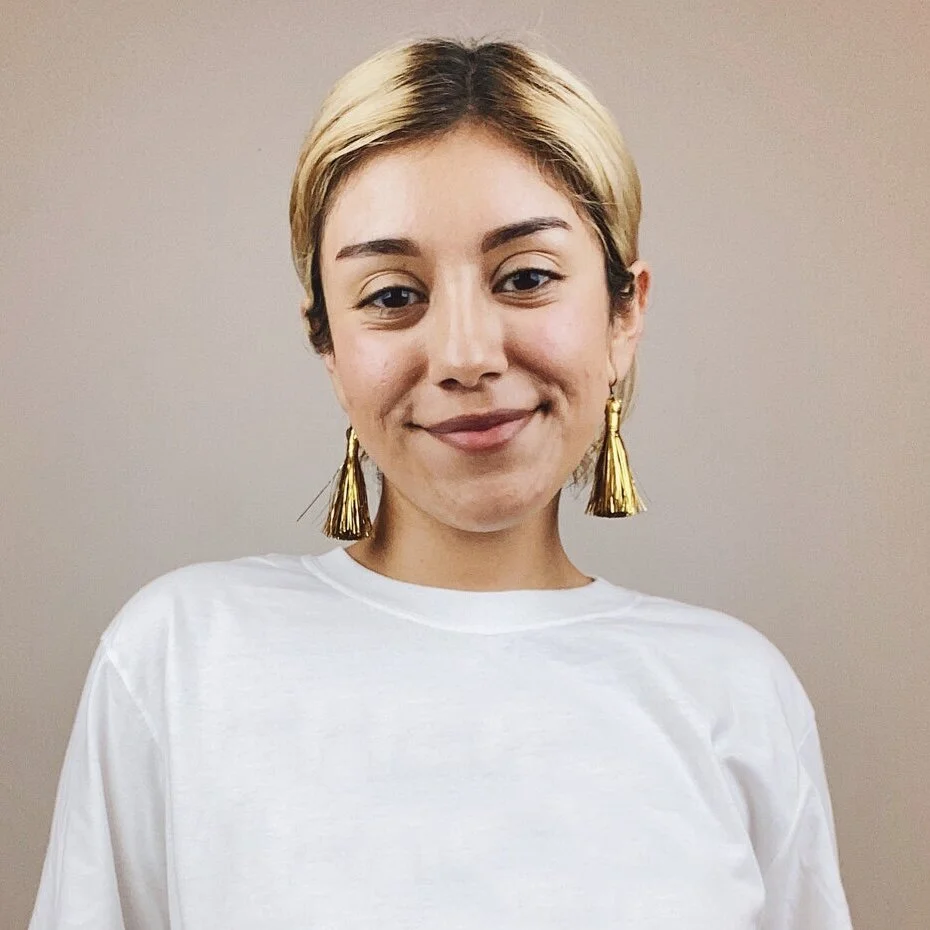
On Standing Up for Yourself and Your Work: An Interview with Juanita Segovia
Enjoy our interview with bbatx resident artist Juanita Segovia.
Every year, bbatx curates a monthly residency highlighting the work of 10 to 15, Texas-based women and nonbinary visual and musical artists that create work and perform in our programs. As we move to take our programs online, we’ve partnered with Bumble to launch a digital version of The Residency. From now through November 1, 2020, you can tune in for weekly mixes, visuals and workshops from 16 women and nonbinary artists and DJs.
Today, we’ve got an interview with Juanita Segovia, the Austin-based designer and illustrator behind Shop Suerte. In conversation with bbatx staff member Margeaux Labat, Juanita talks about their artistic roots, how they remain connected to their younger self through their art, and prioritizing mental health during quarantine.


ABOUT JUANITA SEGOVIA:
Juanita Segovia (they/them) is an Austin-based creative specializing in design, illustration, and screen printing. Utilizing a stream of consciousness method of creating, Juanita’s drawings are often an unpredictable combination of reappropriated popular imagery and original designs and writing. Their work comes to life as limited edition zines, prints, apparel and other art objects— emphasizing a fun, accessible, and DIY approach to creating. You can keep up with Juanita at @suerte.universe and @goodluckjuanita on Instagram.
Can you tell us a bit about your background and how you got into making art?
I am a designer and illustrator in Austin, Texas originally from Tulsa, Oklahoma. Tulsa is a really small town and there wasn't a lot to do there when I was growing up, so my parents really wanted us to have hobbies so we wouldn't get into trouble. I was a really energetic kid so I wanted to try everything from dance to music to sports, but art was the only thing that really captured my attention. My parents signed me up for "urban" fine art outreach programs, and it was one of the few times growing up that I had access to art classes and art in museums. It taught me that art could be fun, accessible, and anyone was capable of doing it!
Going to a fine arts college in Missouri and studying graphic design really tested me in terms of finding out what I was passionate about, and even made me question my ability and commitment to my craft. My design program was quite rigid and didn't allow a lot of room for exploration, to be honest it was also discouraged. Everything felt so boring and sterile after a while. As one of the few people of color at my school, who also happened to be a non-binary lesbian, I didn't always fit into these boxes other people wanted me to fit in for their own comfort. I had to learn how to stand up for myself and my work. Reflecting on my experience there now, I found it really difficult to go from growing up in a small town where I knew everyone and seeing people that looked like me to going to a predominantly white institution. It was kind of a culture shock. While there wasn't a lot of support from my peers or professors, the few friends I made there really inspired me to keep pursuing art. When I left school and moved to Austin, the ability to do whatever I wanted was so liberating. I was surrounded by other queer artists of color. I really enjoyed the freedom to be able to try everything at once without pressure or fear of critique. I love feeling connected to my younger self who enjoys creating just because it's fun.
From whom or what do you draw the most inspiration from?
I draw inspiration from literally anything and everything! Pop culture, having fun, being happy, feeling sad, and the promise that there are always better days ahead. I'm really interested in tarot, astrology, and numerology, so those things have also found their way into my work. I'm a big believer in signs from the universe and the power of manifesting. It might sound silly or naive but I really try to keep my work positive and happy, even when it's about something difficult or unsettling. Some artists I really love are Sonya Sombreuil, Jeffrey Cheung, Emma Kohlmann, Rachel Howe, Isa Beniston and Yumi Sakugawa.


How has your art evolved over time?
My art is constantly evolving because I like to try new things or else I will get bored. I am always coming up with new ideas, and I'm really fortunate to be surrounded by people who help bring those ideas to fruition!
Right before the lockdown, I got into screen printing on denim. I'm always trying to think of ways to make my practice more sustainable, and I really enjoyed the process of getting to make something new out of something that was already worn and loved by someone else. I'm hoping to work on screen printing and sewing original pieces once I'm able to get into the studio and print again. It's something I've never tried before and took a lot of trial and error. Trying lots of new things means some work and some don't. Most don't. I really enjoy that process.


Has your relationship to your art changed at all during this time of quarantine? If so, how?
When we were first put on lockdown, I had this idea that I was going to be productive and create something every day and post it on Instagram. But I was so burnt out after a few weeks adjusting to working from home, managing all of my side hustles, while navigating the pandemic and my personal life that creating began to feel like a chore for me. I really try to take time to honor my feelings and prioritize my mental health, and remind myself that it's okay to create just for me sometimes.
What is your ideal environment and headspace to be in when making your art?
Ideally, I would like to have my own studio or space to just create and explore. Right now my studio is everywhere (my kitchen, my sofa, my front porch) but I'm making the best of it. The most important thing is that I want my work to make me and other people happy.

On Creation, Stability and Refining Your Voice: An Interview with Aimée Everett
Enjoy an interview and virtual tour from bbatx resident artist Aimée Everett.
Every year, bbatx curates a monthly residency highlighting the work of 10 to 15, Texas-based women and nonbinary visual and musical artists that create work and perform in our programs. As we move to take our programs online, we’ve partnered with Bumble to launch a digital version of The Residency. From now through November 1, 2020, you can tune in for weekly mixes, visuals and workshops from 16 women and nonbinary artists and DJs.
Today, we’ve got an interview with Austin-based contemporary painter and artist Aimée Everett. In conversation with bbatx committee member A’nysha Aileen, Aimée talks about her adaptability to her respective medium, finding and refining one’s voice, and her advice for up and coming artists.

ABOUT Aimée Everett:
Originally from New Orleans, Louisiana, Aimée is a visual artist whose work employs abstraction and figurative work to explore communication, gender, race, psychology, and social commentary. Aimée M. Everett lives and works in Austin, Texas.
Aimée is interested in exploring and asking the question, “What lingers in the silences we hold between each spoken word?” She believes this is where our true emotions live. She aims to examine these silences, the ones that have been handed down generation after generation and the ones acquired as we maneuver through the world. As women we have been conditioned to bear and grin the challenges we face. As a woman of color, that silence is compounded and extends beyond misogyny. To explore these issues, Aimée attempts a new way to interpret the unsaid, attempting to reach viewers in ways words cannot.
Aimée has been refining this style and language since 2012. The exploration of this nonverbal language begins with her confronting and questioning her silences in writing. Aimée confronts experiences, feelings, and thoughts from life and those that have been shared from other people’s perspectives. Employing expressive minimalism as her vehicle; line making, atmospheric color, and texture, Aimée invites the viewer to investigate the unspoken silence that lingers between words.
Can you tell me about your background, and how it impacts your art?
I am originally from New Orleans, Louisiana. I think the vibrancy of the city impacts the way I see color and texture, which in turn influences the way I approach my work.
What do you want people to take away from your work?
I think that’s a question that should be answered by the viewer. I want the viewer to make a connection that is personal to them.
Do you have any favorite mediums? And are there any mediums you have yet to explore?
I don’t approach work that way. I create with the medium that I believe is going to help me deliver the message. Right now I am working with wood, oil, acrylic, and watercolor because it’s working for me at the moment. So, I guess I will evolve to another art form when I’ve exhausted all the possibilities with these materials. When I first began painting, I strictly painted with oil on canvas. I had a commission a few years ago that was last minute. Once I finished, the piece would need to be shipped out to New York. I was like “Well, I can’t do that in oil, it takes too long to dry”. That was when I made the decision to start using acrylic paint in my practice.
Let’s talk commissions. Beyond your own personal bodies of work, what have been some of your favorite client pieces?
I created a piece for a group show honoring the Little Rock Nine at the Sheen Center in New York. This was the show that introduced me to acrylic paint. This piece was important to me because I was asked to honor one of the nine Black students that integrated Little Rock Central High School in Arkansas in 1957. Segregation is something that my Mom and other family members have gone through. So for me, it was a way to connect to her and them. It was a way to connect to the people that allowed me to move about the world freely, and it was something that I could not pass up. The piece is called The Pursuit of Equality.


Do you have any advice for up and coming artists?
I would say, first and foremost you should just create. Create without looking for any awards or accolades, just create—and you will find your voice. Secondly, I am an artist that works in the “real world.” (I call it my civilian job.) I think that helps to keep the balance. I would say to keep your feet in both worlds. Have that stability, and then also have your art life. The art world can be a very strange world to navigate. Having a regular job gives me a reprieve from the art world, so it’s good to transition between both. It’s also good to have a steady paycheck.
Who/what inspires and informs your work?
Everyday people inspire my work. My work is the translation of words because I feel like words only measure so much of our emotions and our communication, which is why it’s great to have verbal and nonverbal communication. I am attempting to find and examine the residual feelings or emotions that our verbal communication cannot capture. For example, If we can only offer words as a measurement of our emotions, and find that there are still feelings that are left unsaid due to the lack of vocabulary, I am examining a way to bridge the gap by employing line, color, and texture. All of my work is derived from thinking “What do those words actually look like? Or what is left after all has been said?” How can you impact that statement even more? My visual representations are my way of attempting to answer that question.
How have your projects grown and changed since you started?
I think I am refining my voice. I have realized that less is more in my practice. The painting doesn’t have to be this bombastic thing that has a multitude of lines and colors. It can be one color and one line and one form. It doesn’t have to be so much, and sometimes it does. So I am learning how to turn my voice up and down when I need to.
Can you describe your creative process? What is the first thing you do when you start a piece?
The first thing I do is look at words and our use of language. I write a lot. So, I write out what I want to say, and then I go into creating the composition. Everything comes to me in words first. From there I start working on the piece.
What comes to mind when you read about our current themes: reset and revitalize?
I think every day I revitalize in forms of communication. Words are one of the oldest forms of communication that we have and I am actively trying to dissect and revitalize the way I communicate. With our communities being so multicultural, we have so many nuances when it comes to the approach of language and word usage. I find that color and texture is something that transcends all languages. Your tactile senses are more primitive than your understanding of words. I am attempting to revitalize how I’m speaking to my audience, how I’m speaking to my community. I try to use connections that are similar to us all.


TAKE A VIRTUAL LOOK AT Aimée’s latest body of work, “PAYING REVERENCE TO THE ALTAR OF MEMORIES”.
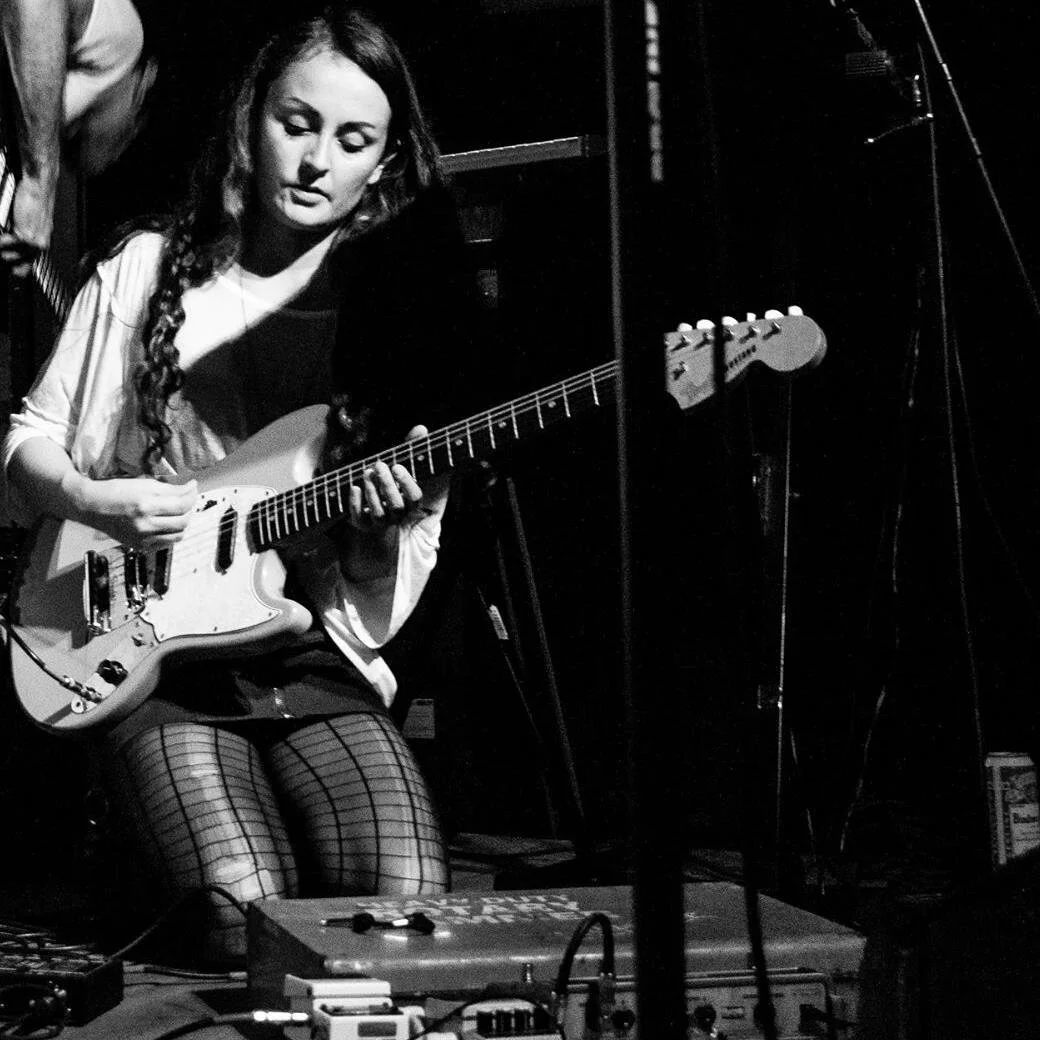
On Finding Joy in Sound, Space and Community: An Interview with Sonya M. Gonzales
Enjoy an interview and custom mix from bbatx resident artist Sonya M. Gonzales.
Every year, bbatx curates a monthly residency highlighting the work of 10 to 15, Texas-based women and nonbinary visual and musical artists that create work and perform in our programs. As we move to take our programs online, we’ve partnered with Bumble to launch a digital version of The Residency. From now through November 1, 2020, you can tune in for weekly mixes, visuals and workshops from 16 women and nonbinary artists and DJs.
To kick us off, we’ve got an interview and custom mix from Austin-based sound artist Sonya M. Gonzales. In conversation with bbatx committee member Liz Whitington, Sonya discusses her musical origins, collaboration and her experience as an artist during COVID-19.

ABOUT SONYA M. GONZALES:
Sonya M. Gonzales is a writer and sound artist from Austin, Texas, who just finished up a Masters in Music at Goldsmiths University, specializing in Sonic Arts. She has undergraduate degrees in English and Music and a graduate degree in Media Arts. Fascinated with self-organization and assemblage, she uses sound to research interactions within generative systems, utilizing media and technology.
Sonya has been published in literary journals, was a music writer for her college newspaper, followed music events and wrote about them for various music blogs and continues to write (for herself, mainly) out of necessity (both academically and creatively).
For her work at Goldsmiths, her sound pieces centered around ideas on improvisation and collage through various forms of media (video, radio, projections), utilizing various technologies (software/hardware). Her most recent focus centered around sounds and self-organization/assemblage, analyzing their interactions within generative systems, using Max MSP, Ableton and sensors.
Sonya has worked on various projects for Austin art group, Dadageek, and was awarded as a presenting artist for 2019’s South By Southwest UNESCO Media Arts Exhibition that was showcased in March for the conference. Sonya will be a Managing Director for local non-profit, Church of the Friendly Ghost (Austin, Texas) for 2020, helping to facilitate avant-garde & experimental events throughout the city.
Can you tell us a little about your background and how you got into your practice?
I get the music gene from my dad. He's a musician but it was always just a hobby to him. I definitely connect with it like him, but I've always wanted it be more present and consistent in my life. So I did music journalism for a while (which I even knew at the time wouldn't last) and then progressed to teaching myself guitar and playing in bands. But from that time I realized I wasn't too into performing and became more curious about the functionality of my instruments and effects pedals. From there I wanted to know more about sound processing and signal flow. I took a really great class on sound synthesis at ACC with Meason Wiley, and he introduced me more to Sound Art and really inspired me to think more about the application of sound and material. He also introduced me to Goldsmiths University (UK) and when I took one look at their Sound Art masters program, I knew that's what I wanted for myself. That program was the next shift in me when it came to music. I was introduced to Maryanne Amacher, Alvin Lucier, Pauline Oliveras, Daphne Oram, Pierre Schaeffer, LaMonte Young—all the big sound artists/composers from the last 50 years and it really pushed me towards this idea of creating art outside of something I'd thought I had known. Jazz is probably my favorite genre of music and to me, this was jazz. So, naturally, I'm now chasing that in conjunction with technology—another aspect of the Goldsmiths program that really influenced me.
Who or what are some inspirations that serve as a muse to your work?
MaryAnne Amacher is a big one. Her obsessions with patterns in sounds really inspired me to think more about the simplistic layering of frequencies. She was really into the placement of sound in a space. Being so considerate about the idea that the space could be an instrument really pulled me in. I'm really fascinated with how sound moves. It's a very natural occurrence but these days we think about sound in this really 2-D way—a sine wave on a computer screen. So I'm really into the more spatial aspects of sound and how it naturally progresses through certain materials and how it manifests our senses/perceptions.
In your various careers, you work on teams and have recently collaborated with a group of artists for this last EAST. How does collaboration impact your work?
I find so much joy in collaboration. I think a big part of my work is understanding sound through ideas that aren't in my perception, so paying attention to how sound affects others is a really important evolution in what I do. Art can be for yourself, but I find things hidden all the time when I share it with other people.
How important is it for you to see and work with other womxn artists working in sound art?
I had a few female tutors at Goldsmiths who are phenomenal artists (Iris Garrefls, Patricia Alessandrini and Jess Aslan), so knowing they had these amazing abilities really inspired me to have the confidence to aim for whatever I was curious about. And I feel like that's the area where I lack—just to have the confidence to say "I want to do this and I can." It's a really difficult place to arrive to for some in certain industries/environments, so seeing them doing the work they were doing was really essential in me finding my voice and confidence.
How do you see your practice and medium evolving with technology changing so rapidly? Will this play any role in your practice?
Technology is a way for me to extend myself beyond in music, so it's always been a big part of what I do, but it's more of a tool rather than the focus. I still appreciate the organic nature of sound and materials and creating work that questions our senses, which can be done without technology. But I feel now, more than ever, technology has a way of elevating a work into something more dimensional which can be found within a proper balance of non-technological ideas.
How has COVID impacted your work?
It's strange because I've been experiencing more art/music currently than I have in a long time. There has been this outpouring of work that has been moving around quickly since we're all hyper-connected. The convenience of it has overwhelmed me and I want to listen/watch/read everything now that I'm isolated. However, on the other hand, that convenience has also left me feeling stifled with my own personal work. I'm so interested in what others are doing now that I've run out of time to work on my own projects. But there's been such an outpouring of support for the arts that it has me excited and people are connecting in ways that wasn't happening before. For me, that has been the silver lining—having the space and community to collaborate with friends, which is what I've been doing.
LISTEN TO SONYA’S BABES FEST RADIO MIX
ABOUT THIS MIX: "Power Up"
A wide mix of genres from distorted RnB to bluesy-folk to lo-fi pop and even musique concrète, Power Up reveals the range of contributions women have had in music throughout history. Whether through innovative beats or lavish vocals, flawless mixing or original guitar playing, this mix captures each musician pushing their art through themselves and into an understanding of sound that could inspire us all.
TRACKLIST
1. Beatriz Ferrerya - "Echos" from Echos+
2. Polytrue - "Eight_28" [unreleased/untitled album]
3. Ana Jikia: "SZSS" from freezing of the universe, splitting of the sun
4. Klein - "B2K" from Tommy
5. Lucrecia Dalt - "Esotro" from Lucrecia Dalt
6. Ann McMillan - "Syrinx" from Gateway Summer Sound: Abstracted Animal and Other Sounds
7. Anisa Boukhlif & Sonya Gonzales - "Protractor" [unreleased/untitled album]
8. Annabel (lee) - "Breathe Us" from If Music Presents: By The Sea... and Other Solitary Places
9. Maassai - "MIND URS" from C0N$TRUCT!0N 002: The Caution Tape
10. Jasmine Guffond - "Post Human" from Traced
11. Pan Daijing - "A Loving Tongue" from Lack 惊蛰
12. Inga Copeland - "Advice to young girls" from Because I'm Worth It
13. Lealani - "Floating" from Fantastic Planet
14. Muzzy Fossa - "Florida Man" [untitled/unreleased album]
15. Françoise Guimbert - "Tantine Zaza" from Ote Maloya
16. Elizabeth Cotton - "Wilson Rag" from Freight Train and Other North Carolina Folk Songs and Tunes

On Professional Resilience And Bouncing Back: Evelyn from the Internets
To find some breathing room in the midst of global change, Evelyn From The Internets shared her thoughts on de-stressing, finding time for self-care and navigating the ebbs and flow of a creative career.
To find some breathing room in the midst of global change, we welcomed licensed therapist Davia Roberts and content creator Evelyn from the Internets (Evelyn Ngugi) in our virtual chatroom on May 30 to explore bouncing back. Throughout the talk, Evelyn shared her thoughts on de-stressing, finding time for self-care and navigating the ebbs and flow of a creative career.

ABOUT EVELYN FROM THE INTERNETS
Evelyn from the Internets is a video producer, digital storyteller and funny-girl based in Austin, Texas. On her Youtube channel, Evelyn has over 205,000 subscribers that she calls her #InternetCousins, all of which laugh with her and engage in numerous social justice conversations to water-cooler banter: from how to be a better ally for Youtube’s #CreatorsForChange to a passionate two-minute soliloquy on the excellence of Beyoncé’s “Lemonade” (which, by the way, Beyoncé loved so much she played it on every stop of her Formation World Tour). Currently, she co-hosts and writes “Say It Loud,” a PBS Digital Studios show about Black history and culture.
HERE ARE SIX TAKEAWAYS FROM EVELYN’S TALK ON BOUNCING BACK FROM PROFESSIONAL DISAPPOINTMENT AND BURNOUT:
1.) MAKE TIME TO FILL YOUR WELL.
“The things that I project to the world and give to people are like water, but I am the well. I am the source,” Evelyn says. Sometimes, it can feel like what we do is everywhere and anywhere—that in order to be good at our jobs and creative careers we must be ever-present. A key theme throughout Evelyn’s talk was remembering that you’re the source. You get to determine what you respond to and when. You get to give yourself breaks. You get to go offline. And when you’re feeling done, you deserve to fill your well.
2.) WE ARE HUMAN BEINGS, NOT HUMAN DOINGS.
As fulfilling as a creative career can be, we can often get a little lost (or consumed) in execution. How much time do we spend nurturing our creativity and curiosity? How much time do we spend meeting deadlines or trying produce as much as possible? For Evelyn, drawing her own lines around creativity, productivity and social media has been helpful.
“Inconsistency is now a little bit of my brand because it’s realistic. Not everyone is going to want to do everything all of the time, even if your job seems fun, cool or creative. After every video, I say ‘I’ll see you on the Internet somewhere’ just so that I know I’m always being honest. It might not be soon, but it’ll happen eventually,” Evelyn said. So, it’s okay to be bored, and it’s okay to feel like you’re not where you want to be. As Evelyn quoted, We are human beings, not human doings.
3.) RECLAIM YOUR TIME ON THE INTERNET.
So, how do we pull away from “the hustle” and find time to tune into our creative selves? For Evelyn, pulling back from her time online to determine what she wants has been paramount. “With the Internet, since it’s like endless almost, there is this feeling that we also need to be endless. And that’s just not true,” Evelyn said. Like a restaurant’s hours or a movie’s start and end time, you deserve to have on and off space, too.
4.) FIND A ROUTINE—AND ADAPT AS NEEDED.
Evelyn encouraged implementing a routine and centering what brings you joy, too. If you’re trying to figure out your career path or pivot out of a difficult work situation, a routine can help you start and finish the day, as well as get clear on what’s working and what isn’t. For Evelyn, this has become all the more important during a pandemic-induced quarantine.
“Everyday I have go outside, and it doesn’t mean exercise or anything other than having the sun touch my skin. I drink water throughout the day, wash my face, eat breakfast in the morning. If I don’t do certain habits, it makes it feel like one long day instead of seven separate days,” Evelyn said. Finding things that make you feel good are important for non-work hours, too. For Evelyn, this looks like everything from making Bon Appetit’s chocolate chip cookies to growing cucumbers in the community garden to binge-watching Avatar: The Last Airbender.

Evelyn also uses a hand-drawn bullet journal to stay motivated and organized. Photo via @evelynfromtheinternets
5.) TRACK YOUR FEELINGS AND CHECK IN.
Figuring out what we need and building those things into our day takes time, especially in a rapidly changing and volatile environment (like a pandemic). So, be patient with yourself, and take things a day at a time. The more you study yourself and your work, the more you’ll know when it’s time to quit or try something new.
“You can’t really pivot, unless you assess where you’re at. Realize what it is what you need or where you need to go. It took me a solid year to begin to understand that my worth was tied to my performance, and you can’t undo that in a month. It’s important to take that time to pause and understand that it’s about taking baby steps,” Evelyn shared.
6.) REMEMBER THAT CREATIVE CAREERS AREN’T LINEAR.
Our emotions, our goals and our careers are never linear. Sometimes, we might not feel good about where we are for a number of reasons. So, how do you know when it’s time to get a new job or make a change? These are a few of the things that Evelyn said pushed her to a pivoting point:
She didn’t want the position above hers.
Her full-time job schedule didn’t allow space for her passion projects.
She paid more attention to the things that made her feel motivated (or even jealous). She noticed that these things were signaling her next steps and interests.
She committed to setting goals and trying new things to explore her feelings.
She found that asking for help, brainstorming and taking breaks helped her look at her problems and negative emotions with a fresh pair of eyes—and eventually make decisions.
“Jealousy gives you a lot of information about what you’re feeling and why you’re feeling it. Use jealousy, or admiration, as a motivator,” Evelyn said. “And then, a little goes a long way. Think of some ideas to work on every day, even if it’s as you’re putting on lotion. It doesn’t have to take too long, but dedicate time to think about your business and prioritize those thoughts.”
Evelyn also recommended using an online organization tool (like Trello, for example) to break down your goals into realistic steps. Tackling a few things each day will make even the biggest of goals more tangible.


LOOKING FOR MORE?
If you’d like to keep up with Evelyn from the Internets, you can follow her on Instagram, check out her Youtube channel, sign up for her newsletter to become #InternetCousins, or go to her website to find out her upcoming events and what she’s currently doing, “somewhere on the Internet.”
Keep up with what we’re up to at bbatx—from virtual events to membership—here.
This blog post is by bbatx intern Divina Ceniceros Dominguez, a fourth-year Journalism and Entrepreneurship student at the University of Texas at Austin from Monterrey, Mexico. Currently, she's a happy Aquarius, plant mom and Texas-based writer. Click here to check out more of her writing and virtually connect.
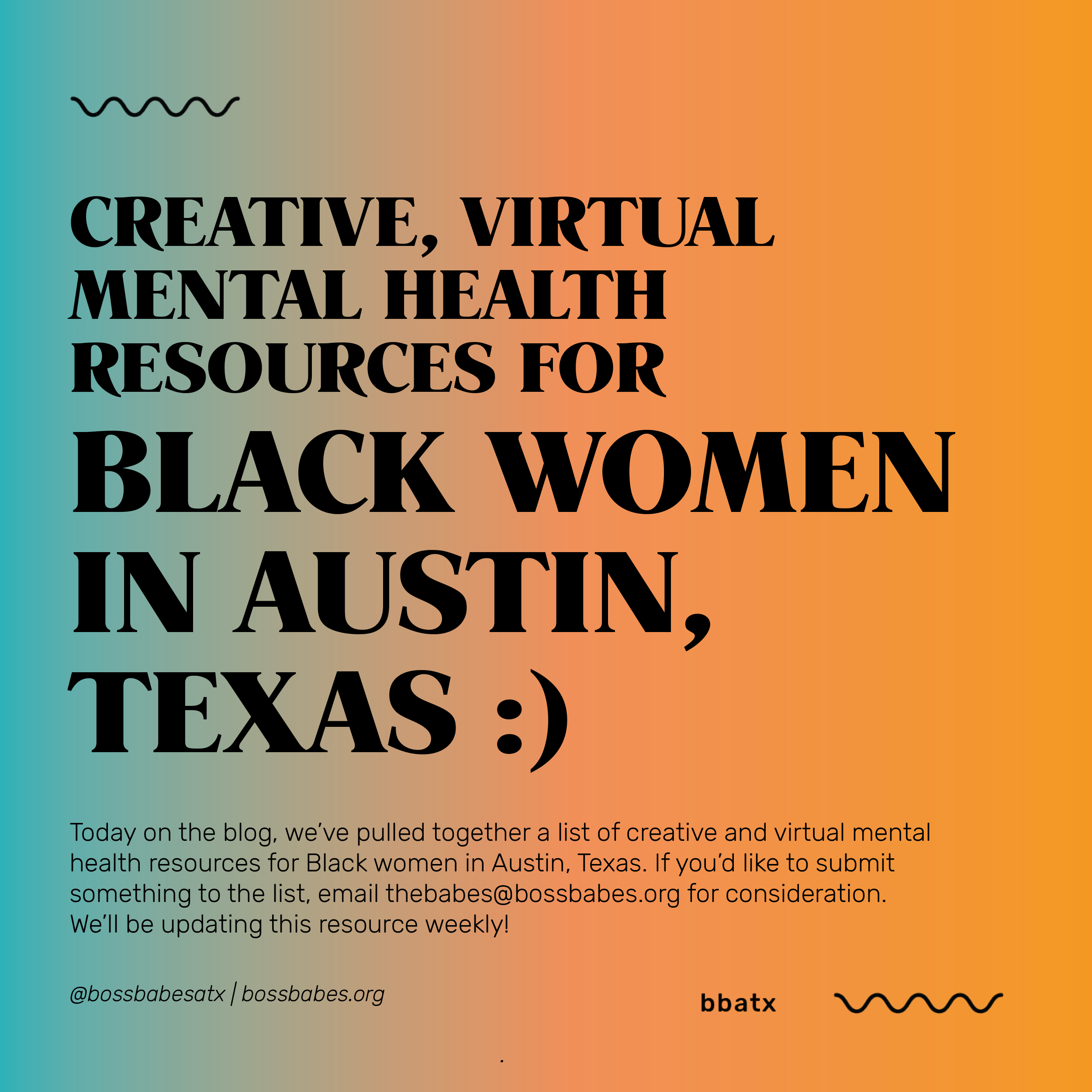
23 Creative, Virtual Mental Health Resources for Black Women in Austin, Texas
For Minority Mental Health Awareness Month, bbatx has compiled a working guide of creative, virtual mental health resources for Black women in Austin, Texas.

July is Minority Mental Health Awareness Month, and now is a particularly stressful time for BIPOC. Holding space to pause, heal, and (safely) connect with others in the community is essential to taking care of one's mental health. Today on the blog, we’ve pulled together a list of creative and virtual mental health resources for Black women in Austin, Texas.
If you’d like to submit something to the list, email thebabes@bossbabes.org for consideration. :) We’ll be updating this resource weekly.
THINGS TO READ FOR SPACE, HEALING AND NEW ROUTINES:
THINGS TO LISTEN TO AND WATCH:
A Guided Meditation For Stressed Out Girls by Evelyn From The Internets and Black Girl In Om (National + Texas)
In Bold Company podcast: a digital storytelling platform and community for women of color to explore, thrive, grow, and connect
Women Sound Off’s Allyship Workshop: A conversation with Dr. Akilah Cadet and Brittni Chicuata on true allyship and anti-racism (National)
The R.O.S.E. Project’s Notes to a Black Girl Series: live every Wednesday on their Instagram (Texas)
DJ Shani’s Social Justice Mix (Texas)
ORGANIZATIONS TO LEARN FROM AND CONNECT WITH:
The Nap Ministry: Rest As Resistance (National)
Inclusive Therapists (National)
Directories for Therapists of Color from Davia Roberts (National)
YWCA Austin: The YWCA holds regular convenings and weekly discussions to explore the impact of racism and sexism within our society. Beyond that, they offer therapy options. (Texas)
Community Advocacy and Healing Project: Self-care resources for Black women and women of color (Texas)
allgo QPOCTX: Cultural arts, wellness and social justice programming for queer people of color (Texas)
Rosa Rebellion: Creative activism for Black women and women of color (National + Texas)
Conscious Coven: Meditation and healing circles centering Black women and Black voices (Texas)
Self-Care Fund for Black Womxn (National)
THINGS TO READ and watch FOR CRITICAL SUPPORT + MOVEMENT WORK:
Deeds Not Words: Racial Justice Support and Education Guide (Texas)
Women Sound Off’s Allyship Workshop: A conversation with Dr. Akilah Cadet and Brittni Chicuata on true allyship and anti-racism (National)
RESOURCES FOR PROFESSIONAL AND FINANCIAL SUPPORT:
Self-Care Fund for Black Womxn: Apply if you are a Black womxn in need of a financial distribution for self-care (National)
BIPOC Central Texas Creative Network: Add your name to this list for gigs, creative work and other job-related things (Texas)
HAVE SOMETHING YOU WANT IN THE GUIDE?
Reach out: thebabes@bossbabes.org.
Curious about what we do? Explore here and become a member.
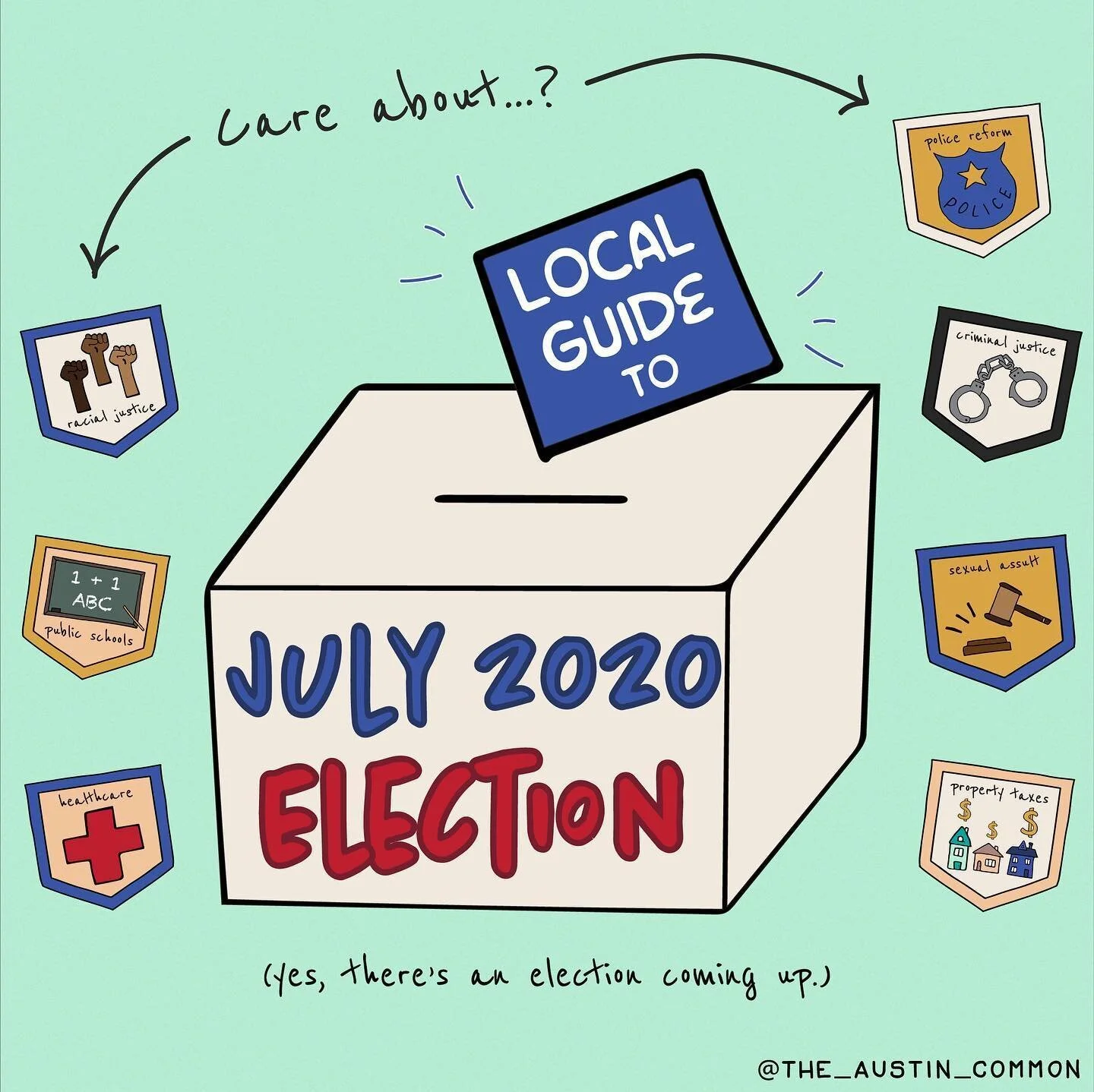
How To Show Up At The Polls During A Pandemic: A Texas Voting Guide
With July 14 right around the corner, we’ve got a pandemic-proof guide to voting with some tips from local organizations and groups, as well a breakdown of how this election impacts criminal justice from bbatx committee member Sabrina Sha. Read up!
Early voting has officially begun for the Primary Runoff and Special Election here in Texas, with Election Day coming up on July 14. Voting in local elections is always an important part of showing up and checking abuses of power in our communities. But, this year, our voting power has a bit more weight than usual. In the wake of publicized civil and racial injustices in Austin, a call for defunding APD, as well as the community’s demand for a redistribution of city budgets, your informed vote can change policy and create a different world for us to live in.
That being said, we’ve all been guilty of missing an election or walking into the voting booth with no idea who is on the ballot. So, with July 14 right around the corner, we’ve got a pandemic-proof guide to voting with some tips from local organizations and groups, as well as a breakdown of how this election impacts criminal justice from bbatx committee member Sabrina Sha. Read up!
OKAY, SO WHAT EXACTLY IS THE TEXAS PRIMARY RUNOFF? HERE’S A 101 ON EVERYTHING YOU NEED TO KNOW.
It’s important to know who’s who in the primary runoff and special election. If you’re showing up at the polls on July 14, here’s a rundown of what’s on the ballot and what you may need to consider courtesy of The Austin Common and Community Resilience Trust ATX.


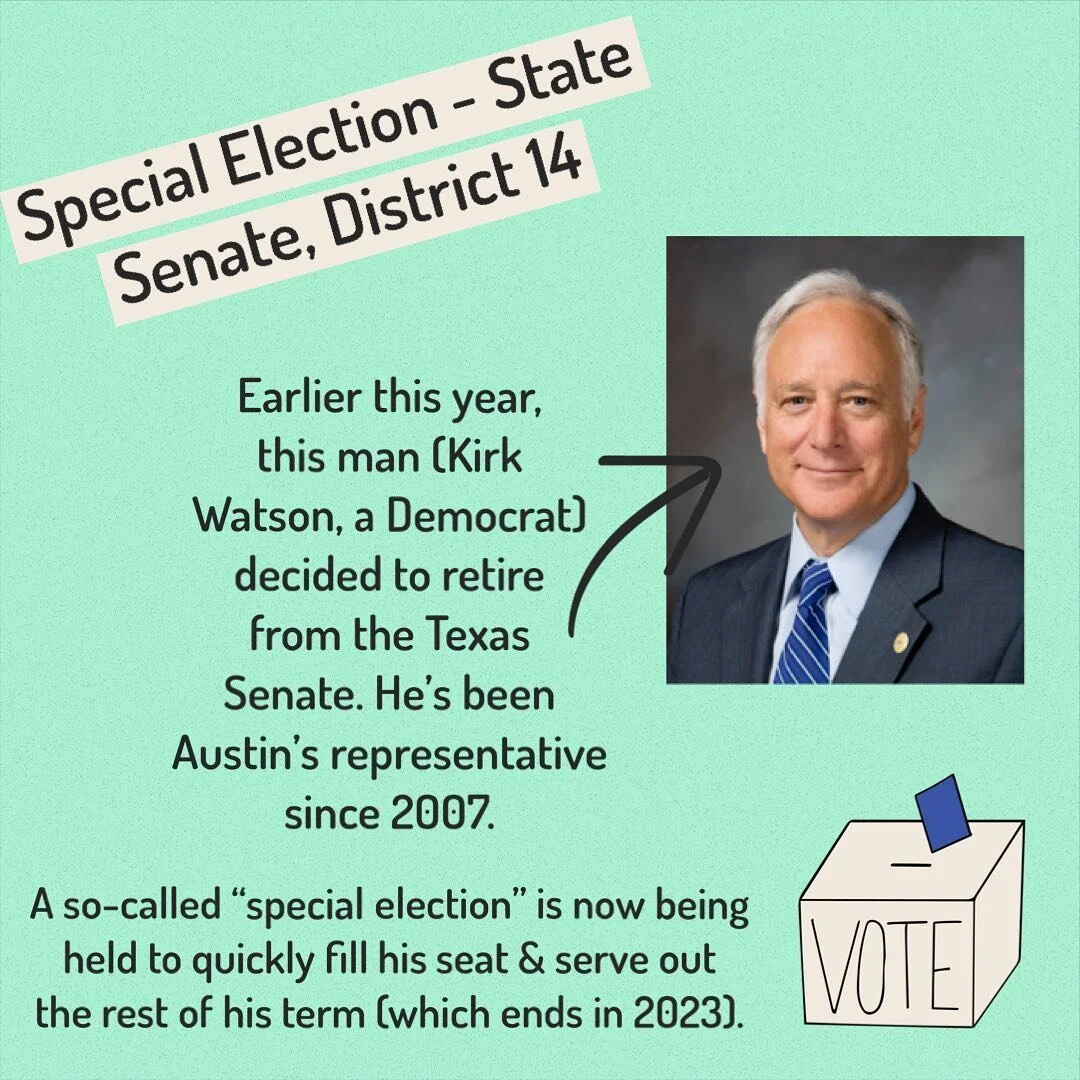


All images above have been created by The Austin Common.
HOW CAN I VOTE SAFELY?
If you plan on voting early ahead of or on July 10, here are some steps you should follow from the Travis County Clerk:
Download your personal sample ballot (you can do so at votetravis.com).
Download a list of Early Voting polling locations (see below for the list we’ve provided).
Bring an approved form of photo ID with you to your polling location.
Remember to wear your mask and bring an umbrella to shield yourself from the sun should you have to wait in line outside.
While it’s important to vote in local elections, the city of austin recommends continued safety practices during thE COVID-19 pandemic. Here are some essential health tips to follow while at the polls:
Maintain social distancing by six feet while waiting in line.
Wear your mask!
Bring your own pen.
Wash and/or sanitize your hands upon entry and exit of your polling location.
Poll workers will be equipped with PPE, such as face masks, hand sanitizer and finger covers.


The above graphics are courtesy of the Travis County Clerk.
so, WHY IS THIS ELECTION IMPORTANT FOR ISSUES OF SOCIAL AND CRIMINAL JUSTICE?
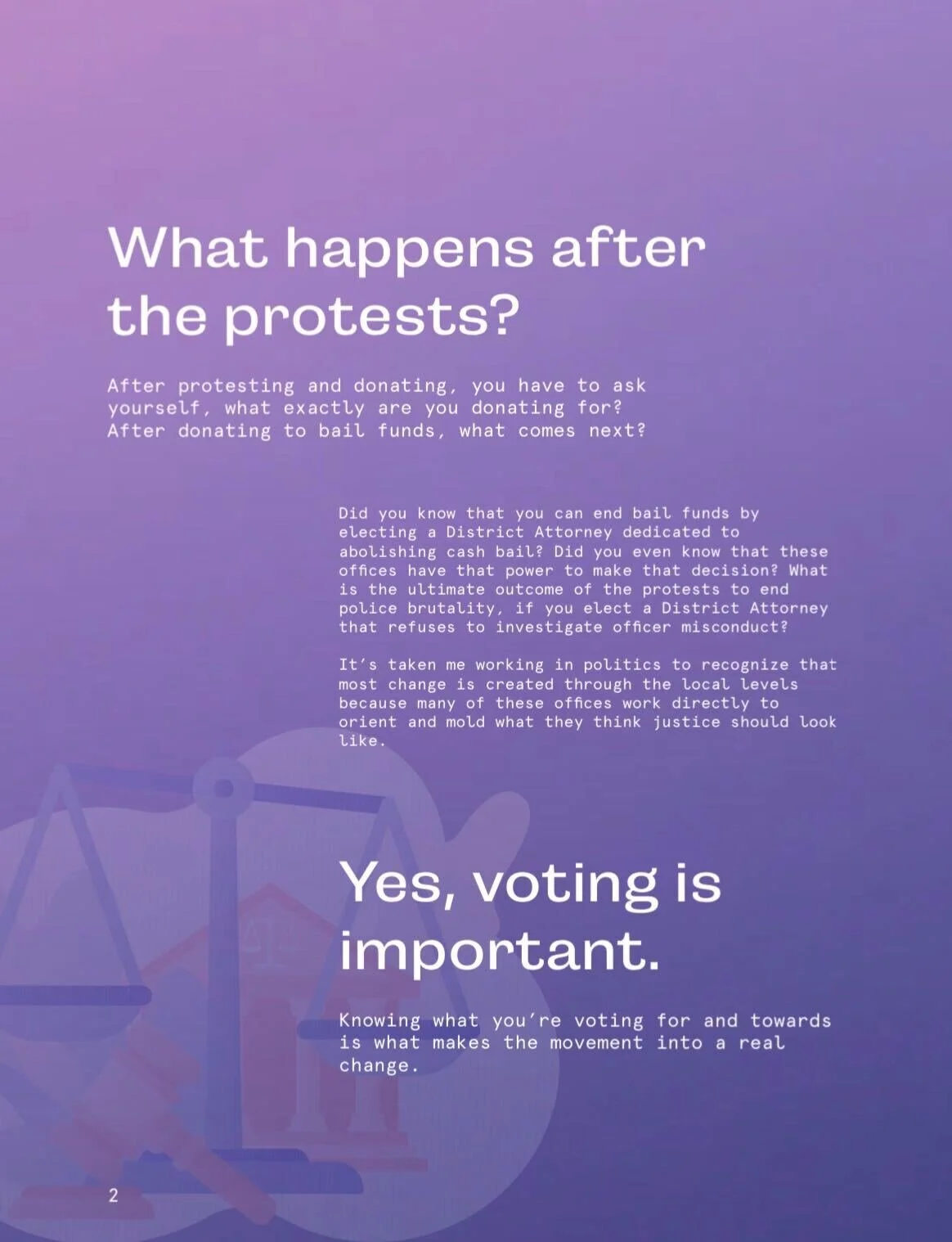
You’ve protested, you’ve signed petitions, you’ve donated, so you may be asking yourself—what happens next? What else can I do?
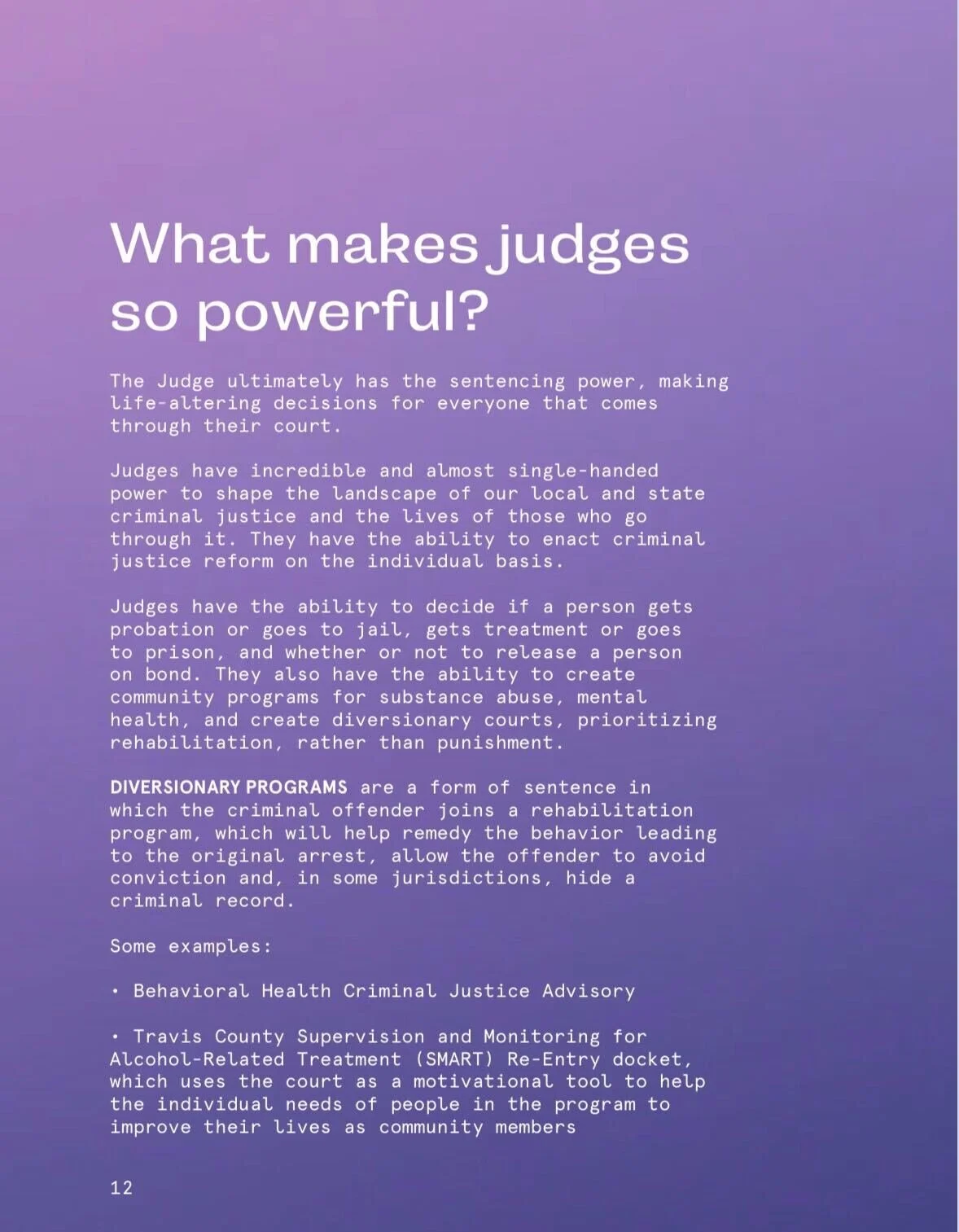
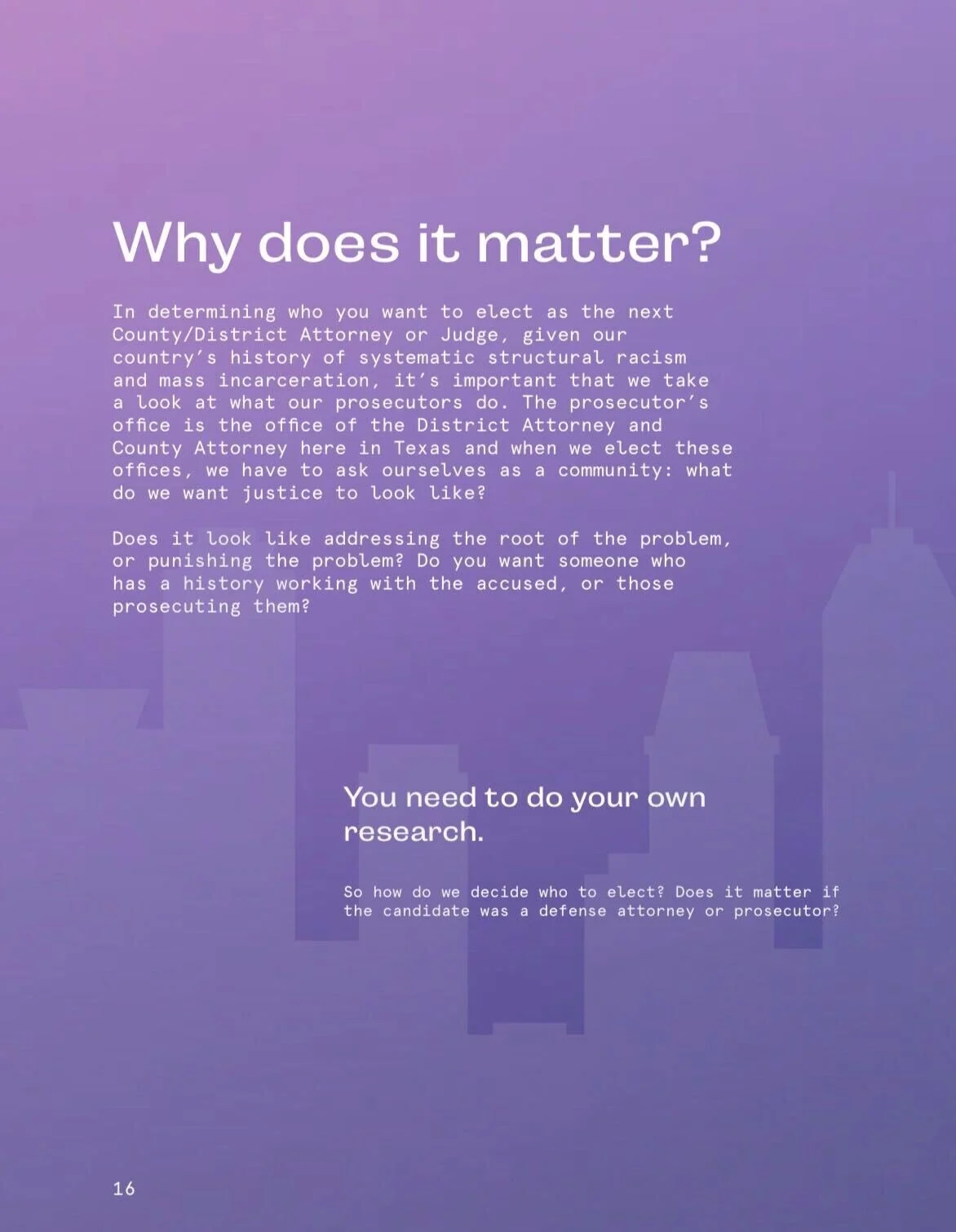
When it comes to challenging our criminal justice system, the officials you’ll be voting for in this primary hold the power to implement change regarding cash bail, officer misconduct investigations, and what these forms of justice should and will look like. Yes, the voter fatigue is real, but it’s important to know what you’re voting on and toward—and which issues matter most to you. To this end, bbatx committee member Sabrina Sha has drawn up an educational, nonpartisan guide, examining the role this election plays in local criminal justice (click to view).







HERE ARE SOME ADDITIONAL RESOURCES FROM ORGS WE LOVE AND COMMUNITY PARTNERS. :)
League of Women Voters Guide Austin: Non-partisan information on elections and voting in Austin, Texas
The Austin Common: A local nonpartisan news site dedicated to civic engagement and sustainability
Personal and Professional Resources for Anti-Racism Work: A list from bbatx with organizations to follow, civic education opportunities, mental health resources and more
This blog post has been edited and condensed since its original publication. It will be updated regularly with nonpartisan guides and tools as they are made available.
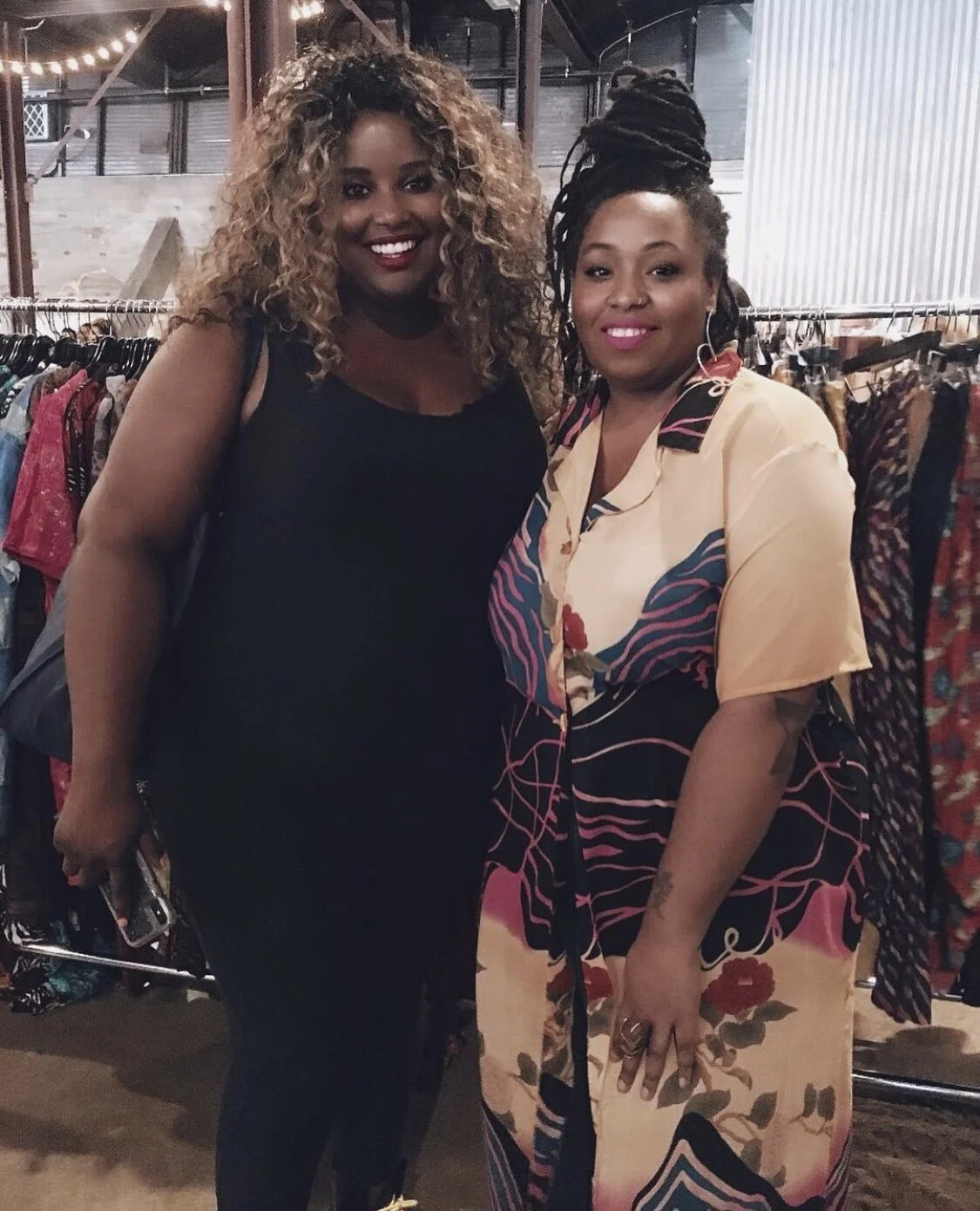
On Growing As You Go: An Interview with Ndi Jeru Of Tribe And Sol
Ndi explores her inspirations and the challenges she has faced as a side hustler and small business owner amid the pandemic.
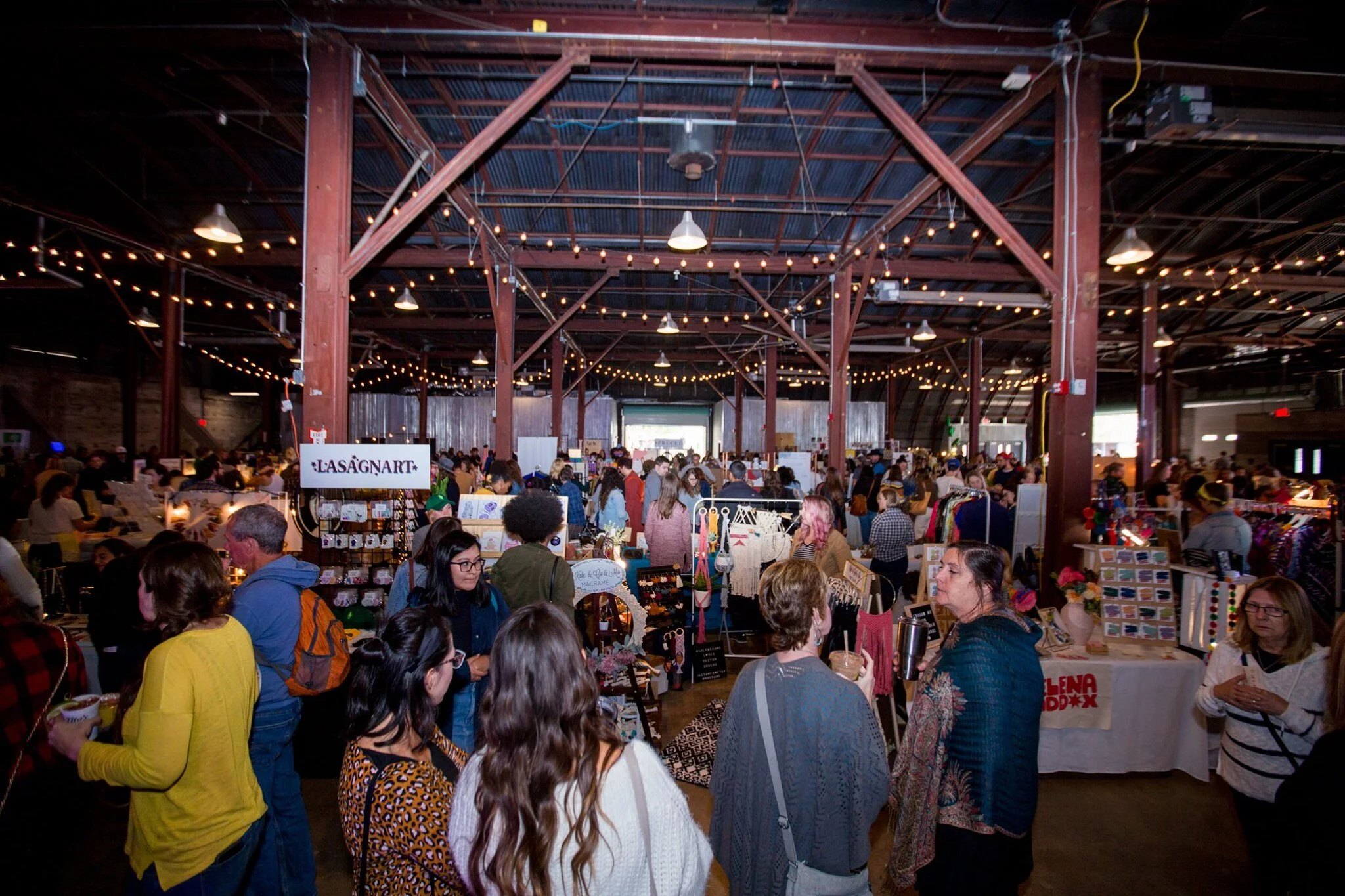
On June 20 and 21, we hosted craftHER Market (At Home), a virtual marketplace amplifying 60+ women and nonbinary small business owners impacted by COVID-19 closures. Throughout that weekend, we had more than 5,000 virtual guests show up and more than 50% of our vendors used their booths to fundraise for racial justice orgs, too. As we build off of that momentum and continue to navigate a global pandemic, we’re going to spend the next few months profiling some of the small business owners who joined us. This week, we’d like you to meet Ndi Jeru, a repeat vendor at craftHER Market (both online and off).
As the founder of the Tribe and Sol vintage, Ndi curates and creates a wide array of vintage goods—ranging from earrings to woven trays. In this interview with with bbatx committee member A’nysha Aileen, Ndi explores her inspirations and the challenges she has faced as a side hustler and small business owner amid the pandemic.

ABOUT NDI JERU AND TRIBE AND SOL:
Tribe and Sol is a curated brand of elevated loungewear and jewelry offerings that celebrate the traditions of powerful women. Embracing all cultures and curves to enhance the ease of life, Tribe and Sol engages in intimate moments as a ceremony to elevate luminaries who adorn their bodies with ever-evolving style.
Through Tribe and Sol, Ndi honors her mother, a vintage maven, and pulls from the methods of her youth by rebirthing size-inclusive silhouettes that carry the stories of her ancestors. Discovering the value in heirlooms, Tribe and Sol treasures the inheritance of material history as a legacy across generations.
Ndi also creates for the effortless woman drawn to color, texture, and culture—women that are artists, style influencers , and world travelers who live intentionally, love abundantly and walk in power, watering everything beneath their feet.
Can you tell me about the origins of Tribe and Sol?
Tribe and Sol was created to honor the women in my family and the legacy of my Ghanaian roots. From an early age, I’ve had a love for jewelry, invading my grandmother Mattie’s jewelry box of strung pearls, vintage pendants, and clip on jewels. Mattie would sit me on this brown dresser during the try-ons and compliment how beautiful I was. I watched as she crocheted these divine articles of clothing to adorn her daughters.
My mother was really into vintage and would take me to thrift stores and fire sales when I was young to help her merchandise her brick and mortar—and that set the stage for my future, too. I “have an eye for cool things,” as someone once told me. I love to feel the softness of fabric paired with the textures of jewelry. In remembrance, I curate vintage loungewear and create jewelry full of color, texture, and lyrical design. It connects me to home where I’m secure and can abide in my sanctuary as free as I want to be. It gives me a sense of wholeness and I can feel the presence of my beloved Mother with me always.
What drove you to make Tribe and Sol your side hustle?
It’s been a road of unraveling the layers of life, to find my purpose. One day, I went through a really rough patch in life. I had a financial struggle that led to homelessness and I lived in my car for about a year. I knew I had to do something so I prayed. I promised God that if He would restore my stability I would embark on this journey of using my gifts and abilities for His glory. During those times to myself I remembered that being a maker is in my lineage and in 2016, I took a leap of faith (after years of working in retail and being uninspired, not feeling creative at all). I did my first outdoor market in April 2016 and never looked back. I’m motivated by my passion for design and curation discovering different processes keeps my mind on learning and evolving.
In pushing Tribe and Sol forward over the past four years, what has kept you motivated—and what advice do you have for other up and coming Black makers?
Some sound advice for up and coming Black makers—and any artist, really—is be your authentic self. There are millions of people who do cool things. Don’t think you have to copy or mimic another brand just because it works for them. (I see it too often in the maker community.)
People will support who you really are, and who you are is necessary. Stay focused on what is in front of you. Use the resources that you have, and you will be led to the path that is for you. Don’t think you have to wait, either. Start with what you have and where you are, and things will fall into place. Grow as you go. Be confident, speak your truth be open to collaborating with people. Don’t let the fear of being the only one stop you. And for Black makers and small business owners in particular, go out and make your Black voice heard. We need you.
Speaking to resilience in our current moment, what kinds of barriers have you run into with the pandemic?
I was laid off my nine-to-five as a marketer in March due to Covid-19. I didn’t have income for over two months. I was extremely stressed out about the uncertainty of my business and livelihood, not wanting to have old circumstances resurface. On top of that, all of my sales events for Tribe and Sol were canceled. I also applied for small business loans and was denied. I’m trying to find ways to connect with my customers through social media, though. It’s been slow but steady, and I’m hopeful about that.
What exactly does that pivot look like?
The challenge of sustaining myself through the chaos of this world has allowed me to take better care of myself and brand at a pace that feels right. Everything has slowed way down and I don't have the same pressure to produce and meet deadlines. I have been able to take time to get to know the evolved me and understand what I give my audience in the most effective way. Lately, there’s also been an increase of visibility and online sales and activity, which I’m overwhelmingly grateful for.
What is the best way for the community to support you right now?
Right now, I’m investing in my business and taking my art full-time. I would love to have community support by donating to my GoFundMe or sharing in the event if they’re not able to give themselves. It’s not something I would normally ask, but in the last few weeks, I have seen the impact of what community can do. That is what I asked God for the most—support, engagement, connecting with my audience on all levels and those things are beginning to happen for me. I know it’s time to deepen the development of my brand.
Where can people learn more about Tribe and Sol?
To learn more about Tribe and Sol follow my Instagram. I post on my IG stories mostly, and in the highlights on my profile weekly. Subscribe to my monthly newsletter at the bottom of my store’s site to get updates about new products and happenings in the Tribe and Sol community.


How To Stay Present—And Go Slow—In A Noisy World
What does it look like to go slow, re-center and get a little breathing room?
It’s not easy to take it easy—the world is loud and that can make it difficult to tune into our own needs and feelings. So, we partnered with WORD Agency and International Day of Rest founder Zoila Darton during STAY HOME CLUB to host a talk on The Rituals of Life. What does it look like to go slow, re-center and get a little breathing room?
In Darton’s talk, she took us through four reminders that help her find routine—and ground herself when life requires a little resilience.

Photo by Morgan Pansing.
ABOUT ZOILA DARTON
Zoila Darton is a passionate innovator and skilled connector with 10+ years of success in the business of entertainment and entertaining; starting in the music industry where she was the Director of Marketing and Artist Relations at boutique Latin Music Publishing and Distribution company Mayimba Music. After delivering dynamic digital campaigns and events in music, she parlayed her knowledge of relationship-building, cultural trends and conceptual ideation into launching the boutique agency WORD, where she builds meaningful marketing campaigns and consumer experiences from the ground up. She prides herself on being a master connector and excels at fostering community both online and off.
HERE ARE ZOILA’S FOUR SIMPLE KEYS TO GOING SLOW AND GETTING INTO THE RITUAL OF LIVING:
1.) BREATHE AND BE IN YOUR BODY.
Finding time to breathe and be in your body is a great and easy grounding exercise if you’re struggling to remain present without responding to the world’s noise.
2.) MIND YOUR BUSINESS.
This is easy to say, but difficult in practice. If you’re struggling to remain present or find yourself losing ground, Zoila recommends redirecting your mind toward your own needs.
3.) DO ONE THING AT A TIME.
From making coffee to making your bed, anything can be a ritual—it all comes down to the way you do things, and the attention you give your routines. Zoila says that resisting the pressure to multi-task and focusing on one thing at a time, whether hanging out at home or at work, helps her slow down and get creative about the problem or task at-hand.
4.) SET MORNING AND EVENING ROUTINES.
To feel grounded—in just about anything—we need a clear start and finish. Instead of waking up or going to bed with a social media scroll or inbox check, Zoila recommends bookending your day with a morning and evening routine that provides time to clear your head and explore what brings you comfort. Eventually, if you stick to these routines long enough, you’ll establish daily rituals that prioritize rest and help you disconnect from a stressful day.
If you’re looking for new morning rituals, here are some things Zoila recommends giving a try:
Wake up at the same time everyday.
Meditate (or another exercise that clears your head).
Engage in some type of movement (yoga, stretching, running, dancing, etc.)
Do some breathwork.
Journal.
Read.
Pull cards, do some candle magic.
Set affirmations.
Have a beauty routine or some sort of get-ready routine.
If you’re looking to improve your evening-time routine, Zoila recommends the following:
Have a tea ceremony.
Engage in ritualistic cleansing (clean your house, light a candle—whatever that looks like for you!).
Moisturize—rub oils, cream and/or lotion into your skin.
Or dry brush!
Put on a face mask.
Take a bath.
Step away from your screens! Try to lessen time in front of the TV, on your computer and on your phone before going to bed.
You could also try grounding techniques mentioned in her morning ritual recs, like going to bed at the same time daily, breathwork, meditation, reading or journaling.
At the end of the day, Zoila says to “remember to enjoy the experience of life—don’t just look for the rewards.”
ZOILA ALSO RECOMMENDS:
Devi Brown’s Divine Timeout - great for deepening your inner work.
Melanie Santos Instagram account is great to follow for guidance!
Download the Calm App. Zoila especially loves and highly recommends the sleep stories. :)
Zoila’s a big fan of a new meditation app called Balance, and suggests to check it out.
Reading Atomic Habits: An Easy & Proven Way to Build Good Habits & Break Bad Ones by James Clear—the title speaks for itself. :)
LOOKING FOR MORE?
Keep up with what we’re up to at bbatx—from virtual events to membership—here.
If you’d like to keep up with Zoila, you can follow her on Instagram, check out her new editorial online destination Our House, and find out more about her WOC-owned LA-based creative house, WORD, here.
A Stay Home Guide To Hand-Sewing 101
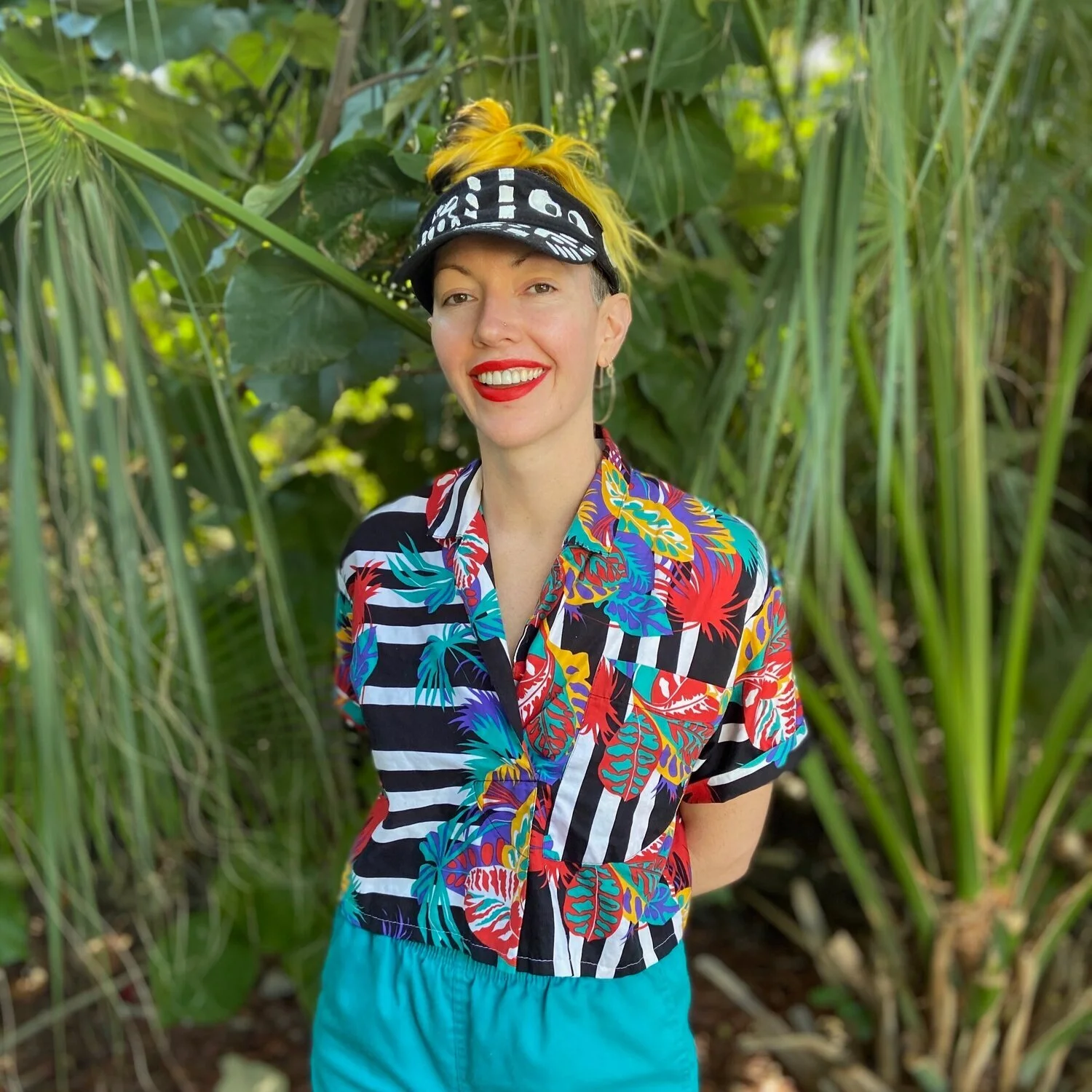
In this guide, bbatx committee member Stephanie Page demystifies sewing and beaks down the meditational aspects of mending one’s own clothing.
Spending ample amounts of time at home has definitely found us getting our creative juices flowing. From making music, to crafting, to even putting together a 1000-piece puzzle, hobbies have definitely made a strong comeback.
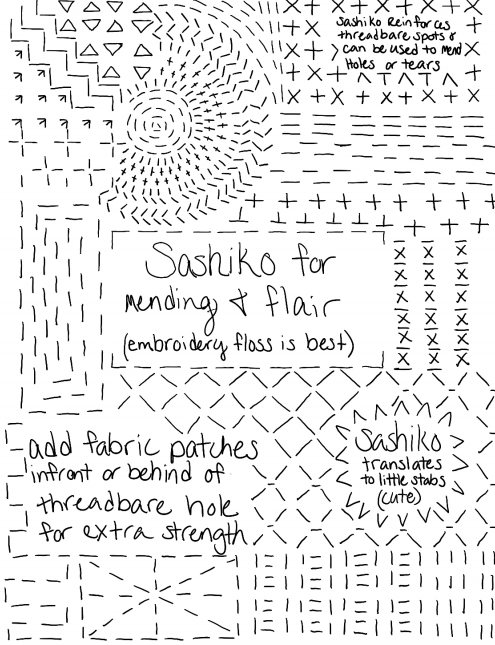
So, we recently collaborated with bbatx committee member and artist Stephanie Page for a virtual workshop on one of their favorite hobbies and creative practices: sewing. Focused on the creative use and reuse of materials, Stephanie’s workshop demystified the experience of sewing and broke down the meditational aspects of mending one’s own clothing. They discussed how inspiration can be found all around you—both online and off—and how revamping your own clothing not only adds new value to it, but helps to avoid the waste of another garment in a landfill.
Read on to learn their hand-sewing basics if you’re looking to get crafty during quarantine.

ABOUT STEPHANIE PAGE:
Stephanie Page is an artist who is curious about the ways our clothing choices shape the world and our interactions with others. Born in Houston, Stephanie’s relationship with fashion and clothing goes way back, being a lifelong fashion lover and eco-conscious artist, in addition to having a professional background as an international fashion model and buyer in NYC. Stephanie has without a doubt seen the in’s and out’s of the retail manufacturing world, and they often find joy in making the old new again. You can usually find Stephanie in the studio creating costumes for stage or everyday life, concocting kitchen magic, or scooting around town or to the greenbelt. You can also connect with them on Instagram at @vividvoltage.
here are stephanie’s 7 hand-sewing basics:
1.) Thread or Floss?
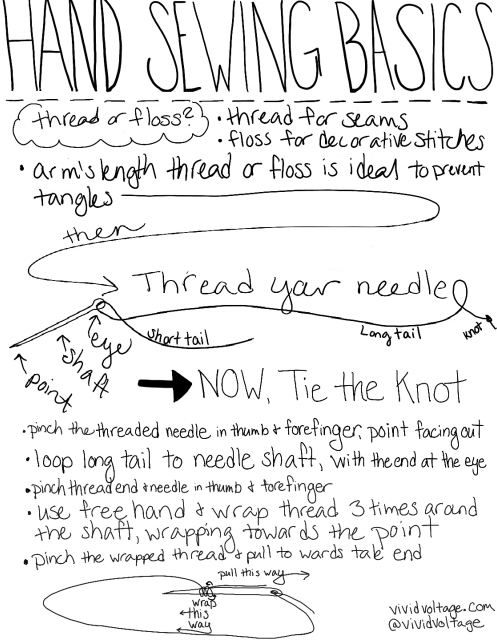
All you need to start hand-sewing are the basics, which you can easily score in the form of a beginner’s sewing kit during your next grocery store trip to HEB. Scissors, needles, and thread will do the trick. A good starting point is deciding which string of choice you’ll be using! Stephanie recommends polyester thread for seams, but you can easily use the dental floss in your bathroom for decorative stitches.
2.) Thread your needle and knot the thread.
To prevent tangles, get a piece of thread (or floss!) that’s the length of your arm, and then thread your needle through its eye (All parts of the thread and needle are labeled in Stephanie’s hand-drawn guide below).
Once you’ve threaded your needle, it’s time to tie the knot. Hold your threaded needle between your thumb and forefinger, with the needle’s point facing outward. Loop the long tail around the needle shaft, with the end at the eye of the needle.
Then, pinch the thread end and needle with your thumb and forefinger.
Use your free hand to wrap the thread three times around the shaft, wrapping towards the point.
Pinch the wrapped thread and pull towards the end of the needle, towards the eye. Voila! Your thread should now be knotted.
3.) HOW To: Make A RUNNING STITCH.
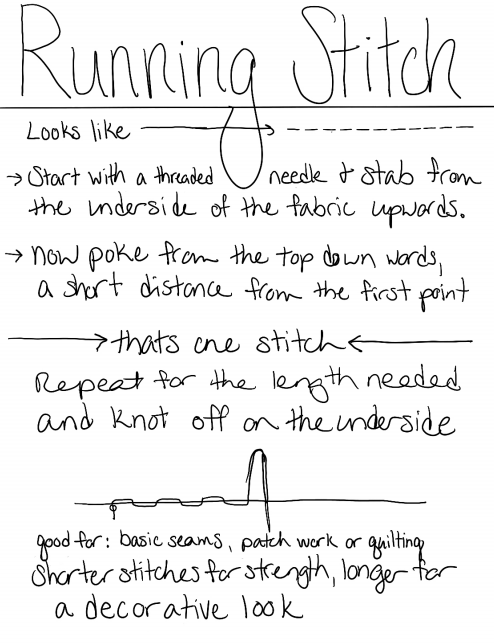
Running stitches are good for basic seams, patchwork, and quilting. You’ll want to use shorter stitches for strength and longer stitches for a decorative look. For a visual of what a running stitch looks like, see Stephanie’s hand-drawn guide below!
Start with a threaded needle and puncture your material from the underside of the fabric upwards.
Pull your thread through your material.
Next, from a short distance from that first point, poke from the top of your material downwards.
You’ve made your first stitch. :)
Repeat for the length needed and knot off on the underside.
4.) HOW TO: MAKE A BACK STITCH.
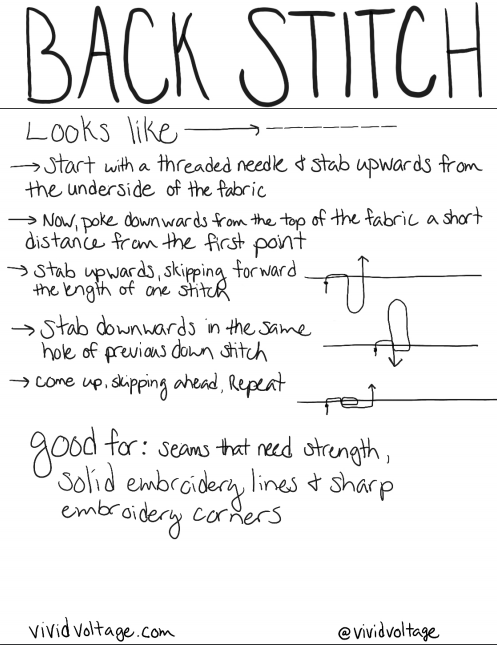
Back stitches are ideal for solid embroidery lines, embroidery corners, and seams that need more strength. To see what they look like, see Stephanie’s hand-drawn guide below.
Start with a threaded needle and stab upwards from the underside of the fabric.
Next, poke downwards from the top of the fabric a short distance from the first point.
Stab upwards with your needle, skipping forward the length of one stitch.
Then, stab downwards in the same hole of the previous down stitch.
Come up, skip ahead again, and repeat.
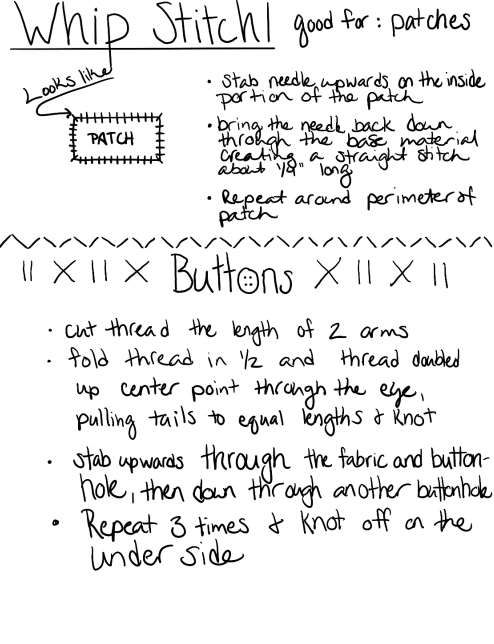
5.) HOW TO: MAKE A WHIP STITCH.
Whip stitches are good for patches when trying to secure one to your material around its edges. See Stephanie’s visuals in their guide below.
Stab your needle upwards on the inside portion of the patch.
Bring your needle back down through your base material, creating a straight stitch about 1/8” long.
Repeat around the perimeter of your patch.
6.) HOW TO: PUT ON A BUTTON.
Cut a piece of thread that’s about twice the length of your arm.
Fold your thread in half and take hold of the center folding point of your thread. Thread this point through the eye of your needle, pulling the thread tails to equal lengths and knot.
Stab upwards through the fabric and button-hole, then down through another button-hole.
Repeat three times and knot off on the underside.
7.) The Important finishing step: SECURing YOUR STITCHES!
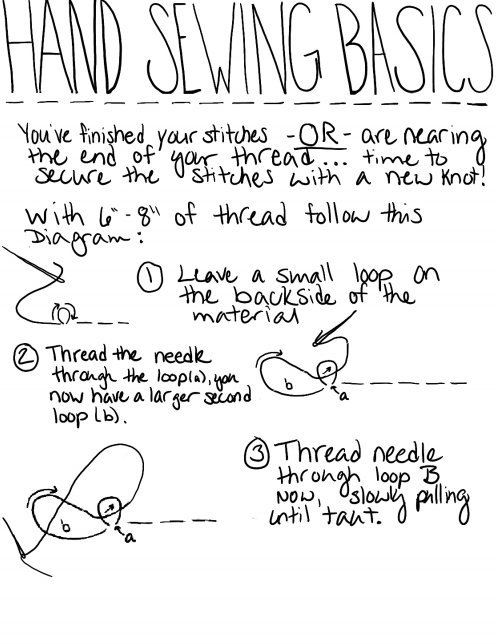
When you’ve finished your stitches or are nearing the end of your thread, it’s time to secure the stitches with a new knot. With 6-8” of thread or floss, follow these steps (and see Stephanie’s diagram below for a visual):
Leave a small loop on the backside of the material.
Thread your needle through this loop (loop A). You should now have a larger second loop (loop B).
Thread needle through your larger second loop (loop B), slowly pulling until taut.
You have successfully secured your stitches with a new knot. :)

Want more?
You can learn all of Stephanie’s helpful tips and tricks in their full art demo by gaining access to our STAY HOME CLUB Archive. If you previously RSVP’d for any of our April digital events, you should already have access to the password-protected archive page. If not, shoot us an email at thebabes@bosbabes.org. If you didn’t attend any of our STAY HOME CLUB e-vents, our complete archive is available for purchase for $10 at bossbabes.org/guides.
We Are Virtual Through September 1: BBATX's Response to COVID-19
We’re resisting the anxiety spiral and focusing on ways to give and get support. Join us?
Editor’s note: This post is being updated in realtime to reflect our response to the City of Austin’s rapidly changing policies and guidelines regarding use of public space and gatherings surrounding COVID-19 concerns. Currently, Austin residents are encouraged to socially distance and the City is exploring another shutdown.
It's been a difficult few months, but life's a spectrum, baby. We are hanging in there and we hope you are, too. We have made a few changes to our programs in light of coronavirus and we want you to have all the right information.
Here's everything you need to know:
1.) In an abundance of caution, all of our scheduled in-person events have been postponed through September 1—and we are now entirely virtual.
We're not closing down, and we're not going anywhere. We're just being abundantly cautious and want to do all we can to flatten the corona curve. Our contracted event staff are taking a stay-cation and our production volunteers are getting a well-deserved break.
In place of our in-person events, our teams have rallied and taken the org virtual. You can access all of our new programming, as it’s announced, here.
2.) We’re resilient and amazing (and so are you)—but navigating coronavirus closures poses a few unique challenges.
We sustained a $4000 organizational loss from the cancellation of our CYBERBABES showcase on Sunday, March 15.
craftHER Market was postponed to October 3 and 4 from April 11 and 12. We’re sustained a $15,000 loss due to this postponement, too, but we are grateful to have the resources to pivot. Our vendors, many of which are small businesses and organizations themselves have been offered the option to request a refund or participate in the market this summer. All of our vendors will be given digital opportunities leading up to August to support their work (we’ve already hosted the first of those initiatives, a digital craftHER Market on April 11 and June 20).
Our residency program, which amplifies the work of 10 to 15, Texas-based women and nonbinary visual and musical artists, has been through a few shifts. All of our spring and summer showcases have been indefinitely postponed—and we're gearing up for this program’s hopeful return in Fall 2020. We are currently finding ways to virtually celebrate the work of women and nonbinary artists in our residency.
Our annual convening of minds, BABES FEST, has been postponed, too.. Having hosted more than 7500 guests and 280 artists in the last four years, we’ll now be returning for our fifth year on November 6 and 7 (either in person or digitally). To stay in the loop, you can sign up for updates at babesfest.com.
3.) With that, we are focused on resisting the anxiety spiral. Join us?
Beyond regularly checking who.int and cdc.gov, there are ways for you to give and get support through bbatx during this time.
ATTEND OUR VIRTUAL PROGRAMS: Since the COVID-19 closures began, we have taken our programs online. We've connected hundreds of creatives, entrepreneurs and leaders in our networks to resources and we've put on digital events that have been visited by the thousands in support of our community. <3 You can keep up with what we have planned here.
GET SUPPORT: Over the last few months, we’ve created a COVID-19 Resource Guide, Anti-Racism Work Resource Guide, as well as published interviews and reminders for resilience from our community. Click here to read and catch up.
SIGN UP FOR OUR MEMBERSHIP LAUNCH: We’ve been working on membership program for well over a year and this unexpected public event hiatus has made its launch paramount. Click here to get updates and join our membership when it’s live.
SUPPORT OUR RECOVERY EFFORTS: Over the next few months, we’ll be engaged in recovery efforts across our programs. This looks like asking for donations, but it also looks like promoting the hell out of our events and community. Subscribe to our bimonthly newsletter to stay in the loop or keep up with us on social media (@bossbabesatx on Instagram, Facebook and Twitter). That’s the best way to stay in the loop..
WHEN IT’S SAFE TO HUG, COME SAY HI. OK? We’ll need you!
We have been able to keep our staff employed and honor our contracts with community members, small business owners, creatives and participants in our programs. And that’s a real win. In the event anything changes, our community will be the first to know.
Please be mindful of your health and stay home. If you have any questions around coronavirus, feel free to email our production team directly at thebabes@bossbabes.org. We want you to be safe and healthy always!
Thanks for riding with us,
Jane Hervey, Founding Executive Director at bbatx
NEED SUPPORT?
On our blog, we’ve curated lists with mental health resources, community aid networks, as well as funding and job opportunities. Click here to access the resource guides.