
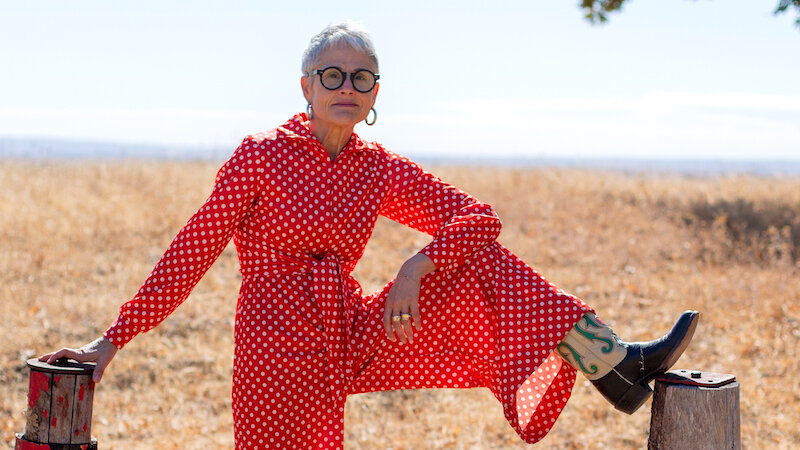
On Style, Activism And Launching A Business At 65 Years Old: Judith Rizzio
Based in Portland, Oregon, Rizzio is a seasoned activist (with her hands in reproductive health, LGBTIA+ rights, AIDs advocacy and prison reform), long-time creative and now 65-year-old small business owner.

In anticipation for The Elephant Table’s collaborative dinner party—A Real Good Time with Judith Rizzio and Jim Dixon—later this month, we hopped on the phone with stylist Judith Rizzio to talk about the growth of her business, Out of Our Closet.
Based in Portland, Oregon, Rizzio is a seasoned activist (with her hands in reproductive health, LGBTIA+ rights, AIDs advocacy and prison reform), long-time creative and now 65-year-old small business owner. In the summer of 2019, she launched “Out of Our Closet,” an affordable alternative to styling services for older women, because as Rizzio puts it, we “have the right to not disappear.”
Over the last few months, the project has gone viral multiple times (like this piece on the Today Show) and Rizzio’s client base has steadily grown, taking Rizzio from what she describes as a “semi-retired” life to a whirlwind of opportunity and possibilities.
This interview was written and conducted by Jane Claire Hervey.
Here are 5 takeaways from our chat with Rizzio on starting a business—and putting your purpose first.
1.) Do your research.
In the beginning stages of any passion-driven project, it’s easy to jump ahead and skip the difficult parts, like creating a business plan, researching product-market fit and imagining what things may look like at scale. For Rizzio, turning her styling hobby into Out Of Our Closet was a researched decision, considering the value of her time and the kinds of customers she wanted to serve.
“I had to figure out the business model,” Rizzio says. “And I came up with an accessible plan, so that women who normally don’t get the ability to hire a stylist or access fashion can do that if they choose—a price point of $45 per hour… that slides and scales.”
2.) Relationships make magic happen.
Some of Rizzio’s best moments with Out of Our Closet have come from the relationships she’s built. For example, Rizzio’s first viral article was written by a friend who had been documenting her journey for a while and decided to pitch the story to a publication. She also gets a lot of stuff done through trade—whether she’s bartering her services for marketing help or to get her landscaping done. And if she’s feeling burnt out, she reaches out to the people around her for support.
3.) Set boundaries, stick to your mission and pivot when needed.
Whether it’s justifying long hours or attempting to tackle too much at once, those first few years of a new business are a blurry, steep learning curve. Daily overwhelm and overwork easily lead to burnout. So, when Rizzio feels like she’s spinning out, she sticks to some of her core working rules: Never give up workouts, You don’t have to respond to everyone right away, and You are in control of this—don’t let this control you.
4.) Stay creative.
Problem-solving takes a lot of brainpower, creativity and play. It calls us to imagine solutions and experiment until those solutions are a reality. For Rizzio, honoring the creative side of her brain is all part of the process.
“When I want to do something creative, I do it,” Rizzio says. “Even if it’s at night after nine o’clock, I’ll just sit down and do it. I really try to keep that part of my brain.”
5.) That voice in your head is a liar. You are not an impostor.
Imposter syndrome—you’ve probably experienced it when you’ve stepped out to try something new or found yourself doing things you never thought you could. It’s that little voice in your head that says this is not for you, you will not be good enough or you’re about to fail. Rizzio says you’ve got to keep that voice quiet.
“You are not a fake,” Rizzio adds. “You have to decide you are going to do it. So many people, especially women, say ‘You know, someday,’ or ‘I would really like to,’ and they work their entire life on something outside of their passions. I’m going to do it and I might fall on my face. You’ve got to do your homework it’s not magic. You’ve got to put the work behind it… It doesn’t mean that it’ll completely work or become the thing that you would like it to be, but you have to stop that loop in your head. Take that step, whatever it takes.”
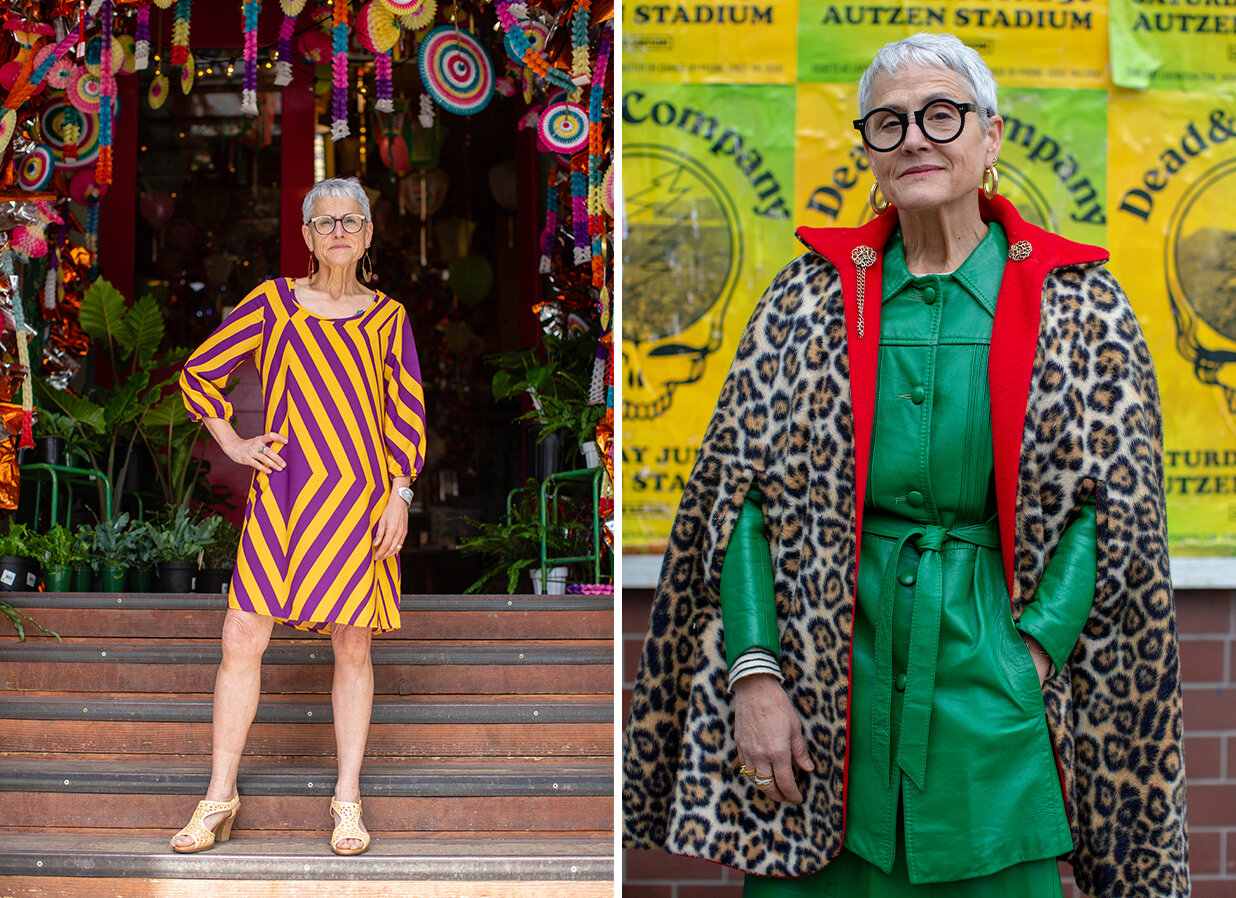
Want to meet Rizzio in-person?
Rizzio will be hosting an intimate dinner with our friends at The Elephant Table on February 18, 2020. You can learn more about the event and how to get tickets for the 6-course meal here.
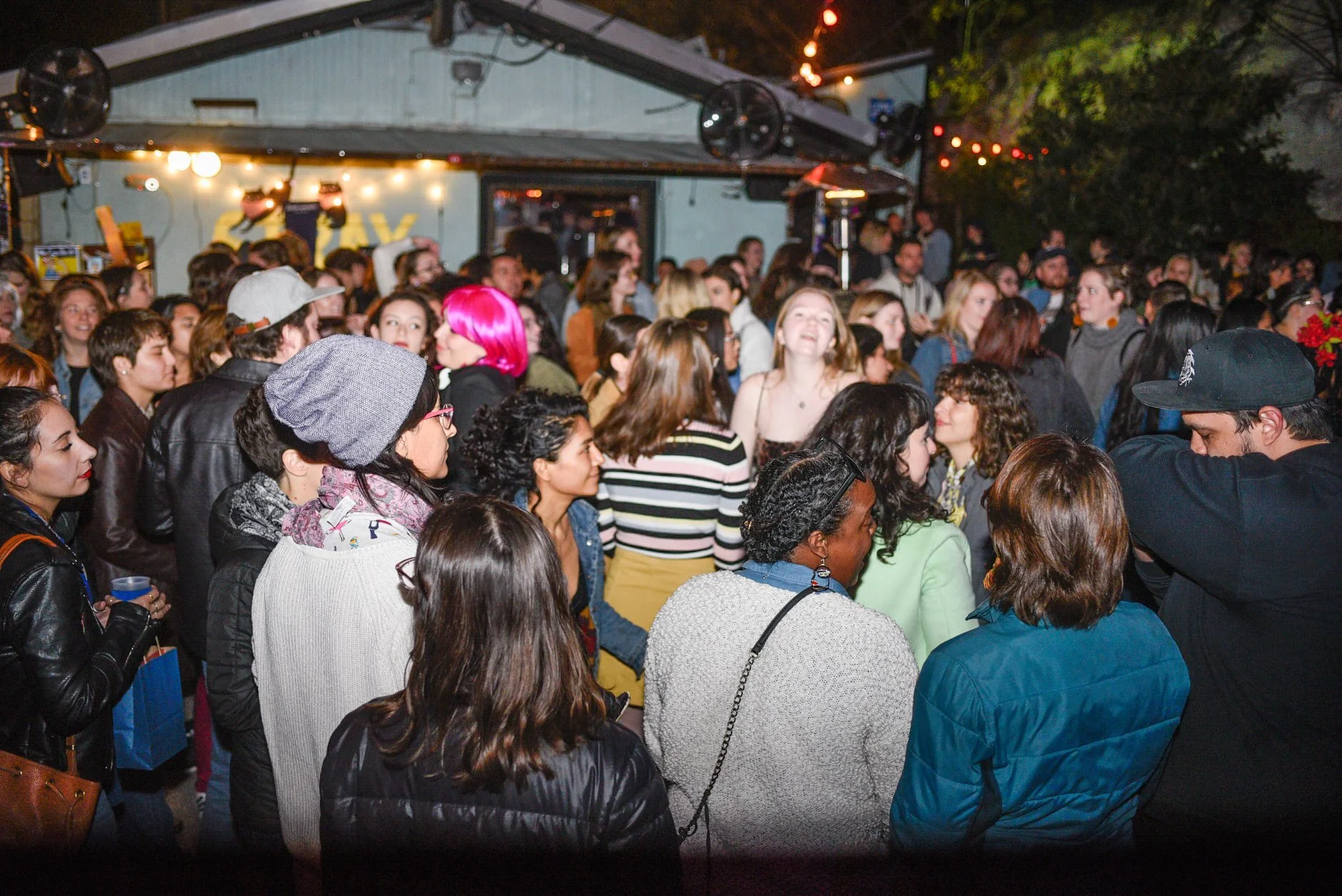
Texas Artists And Creatives Raise $11,000 For Reproductive Justice In 24 Hours
On Friday, January 24, 2020, more than 1,000 people joined Texas-based artists and creatives to raise $11,000 for grassroots nonprofits and national organizations invested in reproductive health access.


On Friday night, we hosted our fourth STATE OF THE UTERUS, an annual party for progress raising funds for reproductive justice, community health and gender equality initiatives. This year, we broke our fundraising record and brought in more than $11,000 in donations over 24 hours for the Afiya Center, Deeds Not Words, Casa Marianella, Planned Parenthood of Greater Texas and us!
Joined by artists, makers, small business owners, entrepreneurs, community thought leaders and fellow nonprofits, we did more than fundraise—the night was a testament to the power of showing up for the things we care about.
here were some of this year’s SOTU highlights:
In collaboration with SOTU’s nonprofit beneficiaries and reproductive health friends, we created a 12-month action plan, pledging us all to a more feminist 2020. Click here to download the SOTU guide and take the pledge.
More than 1,000 guests joined us to fundraise and advocate for reproductive health access.
Through ticket sales, donations and our arts and activism market, we fundraised more than $11,000 for our nonprofit beneficiaries.
At SOTU, Flo Code and our guests packed more than 1,000 period kits for displaced and homeless communities in Austin, Texas.
Our friends at Texas Freedom Network collected more than 100 post cards addressed to the Texas government, advocating for sexual health education reform.
Deeds Not Words registered voters for the upcoming 2020 elections, while Whole Woman’s Health Alliance collected thank-you cards for abortion providers.
We put out our first batch of SOTU-official merch, including this sticker and this tote. (Every purchase directly donates to the SOTU fund.)
13 thought leaders from across Austin, Texas joined us to share (or perform) their thoughts on reproductive health access.
We danced our asses off to six hours of live sets by Chulita Vinyl Club, DJ Pos Guau and DJ Eye Q, emceed by body-positive activist Erica Nix and artist Belladonna. ~
Our friends at The Rabble showed up to record a new episode of their podcast, featuring Planned Parenthood’s Amna Dermish.
We collected plenty of donations at the bar, thanks to STILL Austin. With every SOTU cocktail purchased (aptly named A Texan Feminist Situation and Life’s A Spectrum, Baby), they donated a $1 to the fund.
One of our 2019 resident artists, Tsz Kam, painted a custom, juicy macaroni backdrop for SOTU.
Alex Perez-Puelles, a reproductive health activist and board member at bbatx, wrote this blog post on how to show up right now for reproductive rights in Austin, Texas.
Thank you to everybody who joined us and made this record-breaking year of SOTU a reality—there’s something truly something beautiful about giving a damn. We’re also grateful to the people and partners who gave their time, money and support, including Cheer Up Charlies, BBATX's staff, committee and volunteer network, Kind Clinic, Still Austin Whiskey Co. and the Austin Chronicle.
WANT TO GET INVOLVED WITH STATE OF THE UTERUS 2021?
Since 2017, SOTU has raised more than $31,000 for progressive grassroots nonprofits and organizations led by women and nonbinary folks. Our beneficiary list includes bbatx, Planned Parenthood of Greater Texas, The Afiya Center, Deeds Not Words, Casa Marianella, the KIND Clinic, Collegiate Mom Coalition, the Abortion Care Network, the Lilith Fund, Counterbalance: ATX, the Survive2Thrive Foundation, Flo Code, the National Latina Institute for Reproductive Health, We Are Happy Period and Annie’s List. Head to stateoftheuterus.com to download our guide and sign up for updates on the 2021 party. In the meantime, learn more about everything we do at bbatx here.
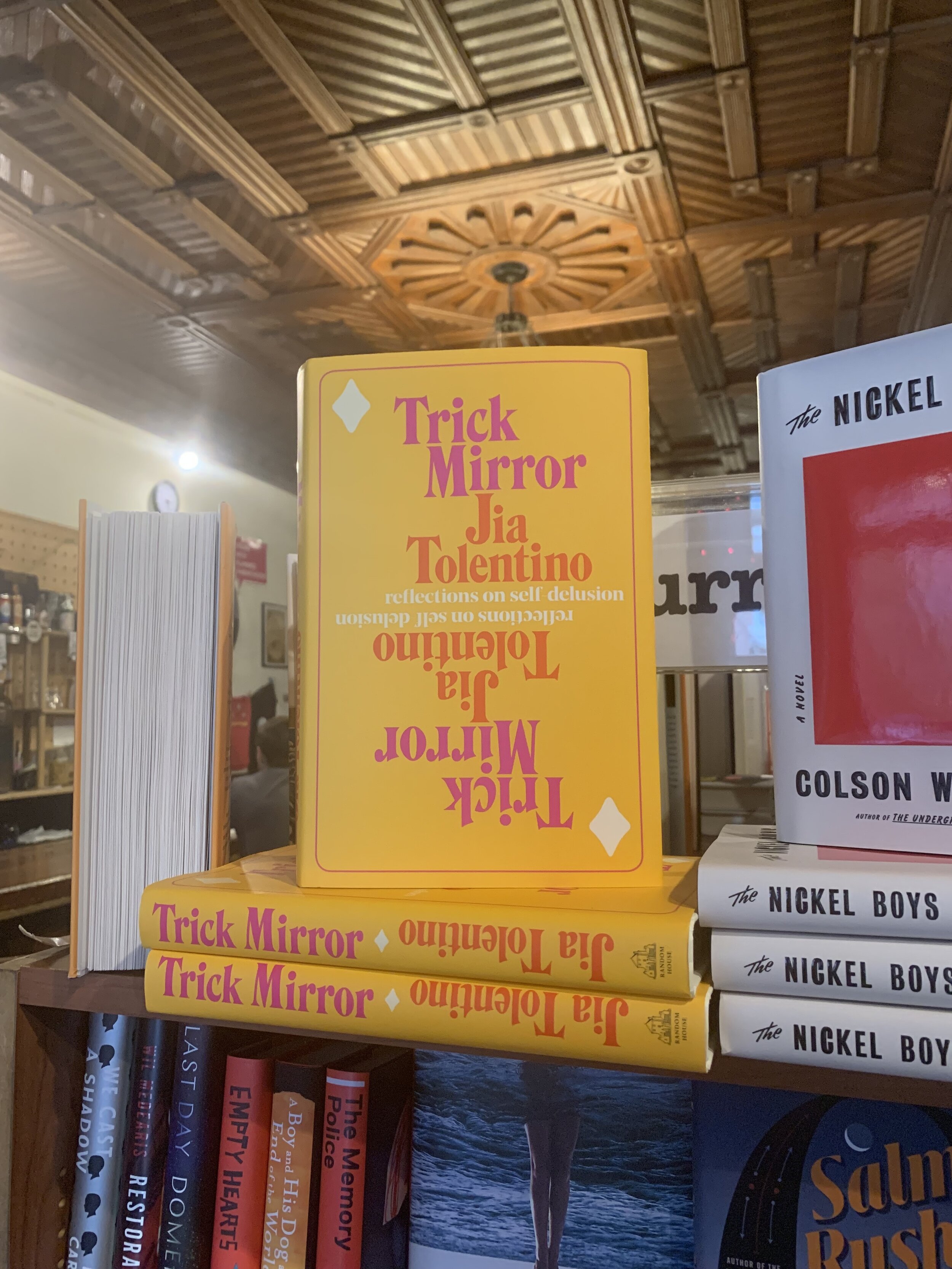
15 Books We're Reading For Personal and Professional Pleasure In 2020
If you’re looking for something to read this year that’ll provide you a little space from the 24/7 trash fire erupting on our social media timelines, you’ve come to the right place.

As we step into 2020, our team is reflecting on the 15 books (and blogs) that got us through 2019. If you’re looking for something to read this year that’ll provide you a little space from the 24/7 trash fire erupting on our social media timelines, you’ve come to the right place. Below is a collection of books that taught us something new, brought us joy, pushed us to think deeper or encouraged us to try again. Enjoy!
Here Are 15 Books and Things We’re Reading Again in 2020:
1.) Trick Mirror by Jia Tolentino
As a collection of essays analyzing modern-day social justice and social media consumption, Jia Tolentino’s Trick Mirror is a provocative and self-reflective read. Each chapter presents a take on the fine lines between social performance and practice, the difficulties of critiquing a culture that consumes critique for capital and the ironies of striving for professional success as a form of feminism. (This book pairs well with a few hours in the tub and time to think.)
2.) Mixed feelings BY NAOMI SHIMADA AND SARAH RAPHAEL
Penned by model and influencer Naomi Shimada and editor Sarah Raphael, Mixed Feelings combines personal essays and interviews in an attempt to explore the nuances of being a human online. Examining influencer culture and social media’s lack of context, the book puts into words the ambivalence many of us share when it comes to sharing digital selves.
3.) Pleasure Activism BY ADRIENNE MAREE BROWN (AMB)
Penned by activist and community organizer Adrienne Maree Brown, Pleasure Activism is a reminder to do the things that make you feel good, unlearn the things that lock you out of pleasure and challenge the systems that attempt to rob us of our joy.
4.) Her Body and Other Parties by carmen marie machado
Horrific, wild and compelling, Her Body and Other Parties is a series of short stories by Carmen Marie Machado, combining queer theory and science fiction to challenge what we know of contemporary literature.
5.) How To Do Nothing by jenny odell
In How To Do Nothing, Jenny O’Dell uses data, storytelling, history and nature to remind us that what we pay attention to grows. In today’s media consumption economy, choosing our focus and paying mind to what matters is a radical act.
6.) Tales of Two Americas, edited by John Freeman
Examining systemic injustice and classist divides, Tales of Two Americas weaves stories from 36 writers to articulate the polarities of America’s perceives cultures, opportunities and histories.
7.) Emergent Strategy by adrienne maree brown (AMB)
One of our team’s favorites in 2019, this book presents new ways of looking at leadership, healing and collaboration. It also contains helpful self-questioning guides, group exercises and all sorts of flourishes from AMB herself on the beauty of life and making things with other people.
8.) Becoming by Michelle Obama
As a memoir, Becoming provides a compassionate look into Michelle Obama’s experience as an aspiring career-woman, activist and First Lady. The book doubles as both autobiography and guide, roadmapping the values-driven and life-changing decisions that brought the Obamas to the White House.
9.) Anything You Want: 40 Lessons For A New Kind of Entrepreneur by derek sivers
Short and sweet, this book is a one- to two-hour read, compiling some of CD Baby’s former founder and CEO Derek Sivers’ best advice. From self-funding to staffing, Anything You Want contains 40 bite-sized lessons in leadership.
10.) Homegoing by Yaa Gyasi
A work of fiction, Homegoing is equal parts inspirational and devastating, following the journey of two half-sisters through eight generations—from the Gold Coast to the plantations of Mississippi, from the American Civil War to Jazz Age Harlem.
11.) All About Love by bell hooks
What is love? Cultural critic, feminist theorist and writer bell hooks is on a mission to find out.
12.) On Earth We’re Briefly Gorgeous by ocean vuong
An award-winning novel from writer Ocean Vuong, On Earth We’re Briefly Gorgeous is a family portrait told through a son’s letter to a mother who cannot read. Exploring America’s relationship to violence, racism and trauma, Vuong examines masculinity, healing, joy and survival.
13.) My Sister, the Serial Killer by Oyinkan Braithwaite
As humorous as it is murderous, Braithwaite’s debut novel My Sister, The Serial Killer is a fictitious tale of two siblings, navigating life’s expectations, family obligations, dating, marriage and death.
14.) My Year Of Rest and Relaxation by Ottessa Moshfegh
Morbid, grotesque and clever, My Year of Rest and Relaxation is a cutting critique of privilege, addiction and the human desire to be numb to life’s pains and pleasures. Documenting a young woman’s determination to sleep for a year, the author somehow makes the art of doing nothing as scandalous as it is boring.
15.) GAY Mag from medium and roxane gay
Although not a book, Medium’s newest blog-zine, Gay Mag, is edited and curated by Bad Feminist’s Roxane Gay. Featuring emerging and established writers, from personal essays to short fiction, each read is thoughtful and interesting.
WANT TO KNOW MORE ABOUT WHAT WE DO AT BBATX?
Explore upcoming events with BBATX on our calendar and learn more about what we do at bossbabes.org/programming.
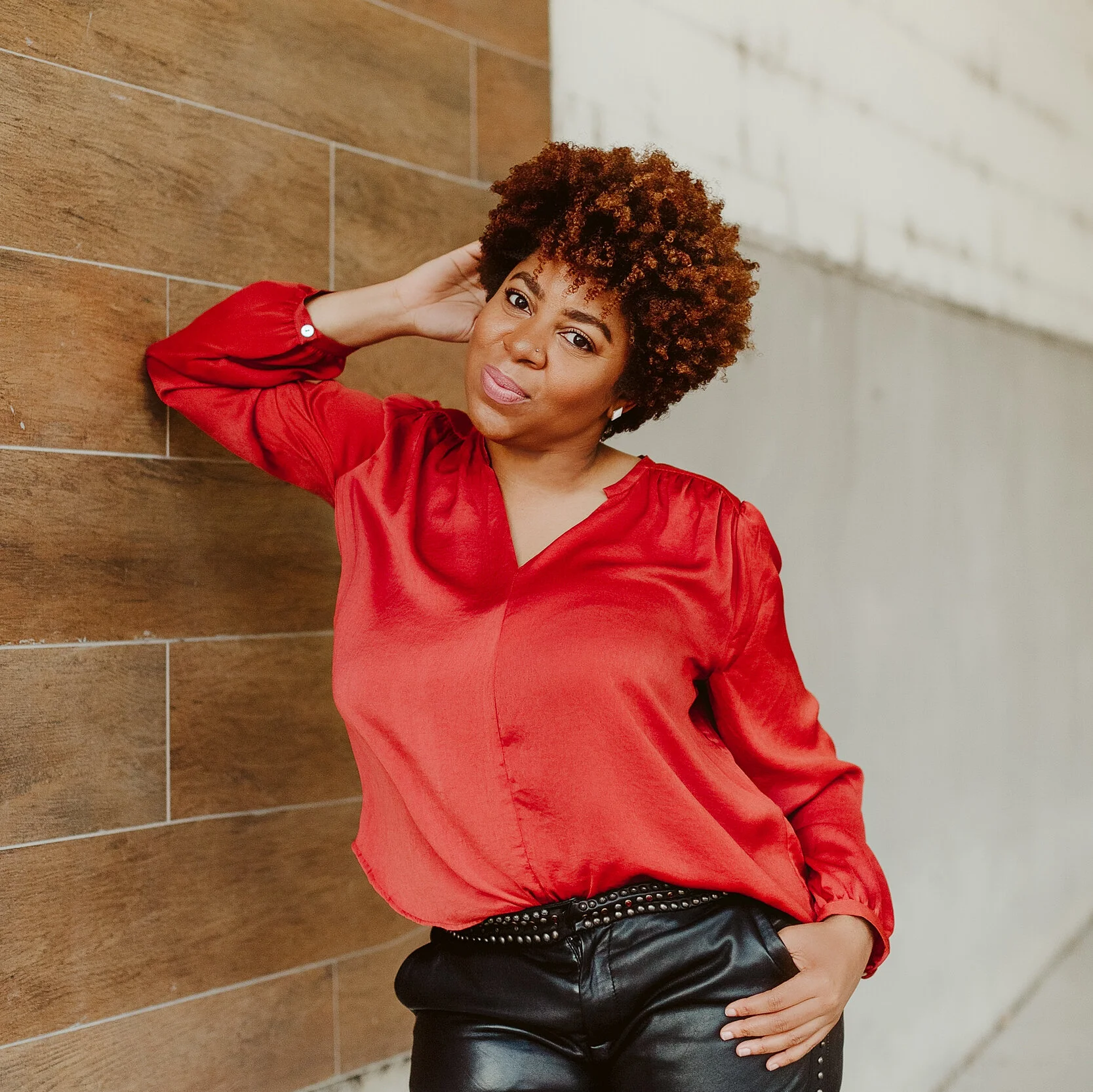
On Getting Out Of A Career Rut: A Goal-Mapping Guide By Donnet Bruce
Work through these questions and dream up the next phase of your professional pursuits.
At our biannual WORK conference this weekend, we’re exploring revitalization. What do we do when we recognize we need a change? How can we breathe new life into our work? What does it look like to revitalize our perspectives, mindsets and approaches to work, collaboration and creativity?
In preparation for this year’s theme, creative entrepreneur and consultant Donnet Bruce put together six, little questions for those of us struggling with career ruts. Work through your answers to the questions below and dream up the next phase of your professional pursuits.
HERE ARE SIX QUESTIONS TO ASK YOURSELF WHEN FACING A CAREER RUT:
1. In your childhood, did you have a dream job/business in mind? What did you always picture yourself doing as an adult?
2. If you can close your eyes and think of how you want to feel daily in your career or business, what would those core desired feelings be?
3. What are the top three activities/tasks that always set your soul on fire you feel good doing at work?
4. Based on your answers to the above questions, how does the ultimate vision for your career/business impact society/your community for the next 10 to 25 years?
5. Time to plant the seed! What are the first three steps you will take in the next 90 days that will get your vision up and running?
6. How will you hold yourself accountable in the next 90 days? Who can you check in with to stay on top of your goals? How will you keep track of your deadlines?

About donnet bruce:
Donnet Bruce is a result-driven entrepreneur and connector. Working hands-on with brands to facilitate each to break through to the next level through integrative marketing, Donnet focuses her services on branding, integrated marketing, and impactful experiential strategy. With a Master’s Degree in Integrated Marketing Communications and a background in Sociology, Donnet has both the experience as well as the educational foundation necessary to connect brands to the right influencers to catapult them into success. She has worked on brand transformation projects and events such as BlackTech Week, SoFlo Brunch Series, Blogalicious, InfluencerCon, and Social Media Week. She has also applied her brand-building skills in her own hair care business, Nubian Oasis, established in 2014.
Looking for more work inspiration?
Consider attending our annual WORK conference, which explores ideas and approaches to creative, collaborative and entrepreneurial work. Hosting 300 guests every summer and winter, this biannual, one-day event's panels, workshops and speaker sessions touch on personal and professional development, marketing, wellness, business management and entrepreneurship. ✨The next WORK conference will pop up in July 2020 at the University of Texas at Austin’s Rowling Hall.

How To Set Money Goals And Reach Them: A 7-Step Guide By Future Front
Seven tips on challenging your money fears.

Whether you’re a leader, small business owner, independent artist or side hustling creative, your career pathway will take resilience and strategic decision-making—especially when it comes to money.
So, how can we prepare ourselves to flourish financially? Over a three-part series of discussions in partnership with Capital One in November and December 2019, we met with different Texas-based creatives and entrepreneurs—chef and entrepreneur Sharon Mays, Moontower Rentals CEO Christie Zangrilli, No Good Tattoo founder Emily Ng, eleMINT Skin owner Shauntavia Ward and finance nerd Kate Herrmann—to talk tackling money setbacks, leveling up and staying financially informed. Keep reading for seven takeaways from our speakers on challenging your money fears and changing your relationship to your finances.
Editor’s Note: We’d like to thank Capital One for their commitment to supporting women in entrepreneurship and small business owners and their interest in making our Money Mindsets series possible last fall. Although this guide’s content has in no way been influenced by their sponsorship, we were able to produce it with their support.
HERE ARE 7 WAYS TO SET MONEY GOALS AND REACHING THEM:
1.) Figure out what you spend—and you’ll find out where you stand.
According to Kate Herrmann, a self-professed finance nerd, her goal budget looks like a 50/30/20 model. Ideally, she’s spending 50% of her income each month on her core needs, 30% of her income on nonessentials and 20% of her income on savings and paying off any debts. With this budget model, she’s set up to start building wealth and making investments month over month. So, if you started to separate out your expenses into core needs, nonessentials and savings/debt repayment, what would that breakdown look like for you?
Finding out where your money goes and how you spend it will help you determine what kind of financial goals are feasible for your circumstances. It’ll help you determine if you need to make more money to cover your core needs or if you’re in a good place to start making investments.
(Need help tracking your expenses and getting started? Use an accounting software like FreshBooks, Quickbooks or Mint to start figuring out how much you’re spending. If you don’t want to use a software, just start reviewing your bank statements and categorizing how you spend your income each month.)
2.) Work backward from your goal.
Herrmann also shared that one of the key components of budgeting is figuring out what you want and designing your budget around those goals. After you know what your income looks like and where you’re spending it, take a minute to think about what you want. Do you just want to have more money to spend on vacations each year? Are you looking to open a retirement account within the next three years? Do you want to try your hand at investing? Do you want to repay debt faster? Or perhaps your first goal is simply get more comfortable with recording and tracking your expenses and income—no matter where you start, it’s easier to work backward from a goal and break down the things you need to do day over day and week over week to reach it.
3.) Figure out what you need to know and start to research.
Once you’ve identified your goal, map out what you do and don’t know about getting there. What do you need to research? What makes you uncomfortable? What part of the process makes you curious? Lean into these unknowns and practice getting more familiar with the world of finance. Herrmann recommended two books, “All Your Worth” by Elizabeth Warren and “Big Magic” by Elizabeth Gilbert, to dip your toes in.
4.) Read the fine print and and don’t be afraid to ask questions.
We are not taught how to manage our finances or budget growing up, so prepare for the discomfort that comes with being outside of your circle of competence. You may not have a solid financial vocabulary yet, but that doesn’t mean you can’t learn or ask questions. Christine Zangrilli, co-owner and CEO of Moontower Rentals, recommended chatting with an accountant or CPA while you research. Beyond helping you with your taxes, they can also be a good resource for better understanding your financial options.
5.) Know your floor and your ceiling before you take a big financial risk.
Perhaps your financial goal is a little risky. Maybe you’re looking to open a business or take out a loan, and you’re not confident in the return. When faced with those kinds of money decisions, chef and entrepreneur Sharon Mays suggested determining your floor and your ceiling. How much can you truly afford to lose if nothing goes according to plan? How much do you need to make back to justify the investment and how long will that take? Will other aspects of your finances or life be in jeopardy if you choose to take that risk and will it be worth it? For eleMINT Skin founder Shauntavia Ward, choosing to keep a part-time job during the first six months of her business was part of her strategy. She knew she was going to need that income to reduce her anxiety and make clear-headed decisions about the business’ expenses and needs.
6.) Build relationships with your money choices.
Whether you’re opening a bank account, choosing an accountant or working with a financial planner to determine your options, look at each of these relationships as investments. Mays said she only works with planners, business partners, credit card providers and financial institutions that will sit down with her, define terms and talk things through.
7.) Everything has its cycle—it is never the end of the world if things don’t go as planned.
Life happens and life changes. Sometimes, we make poor investments. Sometimes, we have financial emergencies. Sometimes, we procrastinate, because money fears are real. For No Good Tattoo founder Emily Ng, said that the hardest part of figuring out her personal and business finances was challenging herself to even deal with them. “If you're waiting on someone more experienced to give you an answer, it might never happen. Do the research, and then just go for it! Your goals aren’t final, and you can always change them later,” she said.
So, in summary, commit to learning more about money and be mindful of the risks you take with your finances. Set measurable goals and pivot as your life changes. Money is something you deserve to understand—and if you practice, it’s also something you can be good at.
LOOKING FOR MORE MONEY RESOURCES?
Stay tuned for more workshops with BBATX on our calendar and learn more about what we do at bossbabes.org/programming.
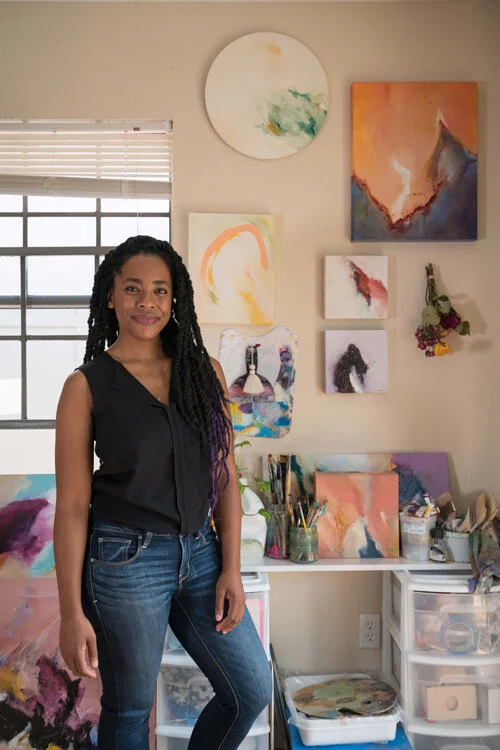
On Spirituality And Creating Boundaries: Arielle Austin
On December 14, we hosted artist Arielle Austin at the BBATX Headquarters for a Q&A with artist and educator Tammie Rubin.
This past week, BBATX (#bossbabesATX) and visual artist and creative entrepreneur, Mercy Emelike, wrapped up their three-part event, CHATROOM, an art conversation series for Black non-binary and women artists located in Austin.
We ended the series with educator and artist, Tammie Rubin, to interview abstract painter Arielle Austin. Keep reading for a summary of their conversations.

ABOUT THE ARTIST, ARIELLE AUSTIN:
Originally from Los Angeles, Arielle Austin is an abstract painter located in Austin, Texas. She creates her work by using acrylic, oil paint, and paper to produce abstract works on canvas while expressing the emotional scape of our transitory existence. Initially used as a tool for personal therapy and spiritual connectedness, Austin’s process-based work explores the intimate relationship between subject and viewer with layers, texture, and details. In experimenting with this process, Austin compels the viewer to take a closer look by becoming more intimate with the art, resembling our very own human nature and desire.

ABOUT THE FACILITATOR, TAMMIE RUBIN:
Tammie Rubin is a Chicago native who currently lives in Austin, Texas. She is both an artist and educator at St. Edward’s University where she is an Associate Professor of Ceramics & Sculpture. Her artwork explores the gaps between the readymade and handcrafted object, opening up dream-like spaces of unexpected associations and dislocations. Her work has been featured in online and printed publications such as Artforum, Art in America, Glasstire, Sightlines, fields, Conflict of Interest, Arts and Culture Texas, Ceramics: Art & Perception, and Ceramics Monthly.
HERE ARE THREE TAKEAWAYS FROM THEIR DISCUSSION:
ON CREATING BOUNDARIES
Losing yourself in your work is a common thing for an artist to do, and for Arielle Austin, this was a habit she noticed during the earlier stages of her career. Throughout the years she learned how to create boundaries between her and art so that she continues to keep in touch with reality. A prime example of this is when she has a studio day, she “knows [she’ll] need to see somebody at the end of the day,” so she’ll find a way to keep in touch with friends by either having a phone conversation or spending time with them after the studio.
on recreation
Austin draws inspiration for her artwork by using elements that pertain to her personal life. In her Abstract Memories (2019) series, Austin uses photographs from her childhood to recapture the essence of a memory. While creating these pieces, she interprets the way she is now, and how that moment made her who she is. In her Soul Food (2017) collection, she shows how “people can be soul food for each other.” Soul food is typically associated with one’s home or community, and in this series, she captures what it means for someone to feed their soul with love, truth and new beginnings.
ON SPIRITUALITY
During their talk, Rubin recalls back to when Austin refers to her practice as “a way of freedom and peace,” and when she enters “[her] space of making, [she’s] having a conversation with God.” As a believer of the Christian faith, Austin uses these moments of art-making as a way to connect with God. She refers to these moments as therapy, because it’s a space where she is allowed to “quiet [her] mind” and feed her soul spiritually, but there are business components to her work, such as deadlines and certain expectations, that can sometimes make these conversations difficult. During those times she reminds herself of the original purpose of wanting to create, along with the help of her supporters, and uses that as motivation to continue her craft. When asked how she knows when she’s finished with a piece, Austin shared that she knows she’s done when the conversation with God feels over, and she can exhale around her piece with a feeling of completion. She explained that “if you can see any sense of God in [her] work, then [she’s] done what [she] needed to do.”

moodboard inspired by Arielle Austin’s work, curated and complied by Helen Oyeniyi.
want to attend future BBATX events with our friends and partners?
Check out all of the events on our upcoming calendar here.
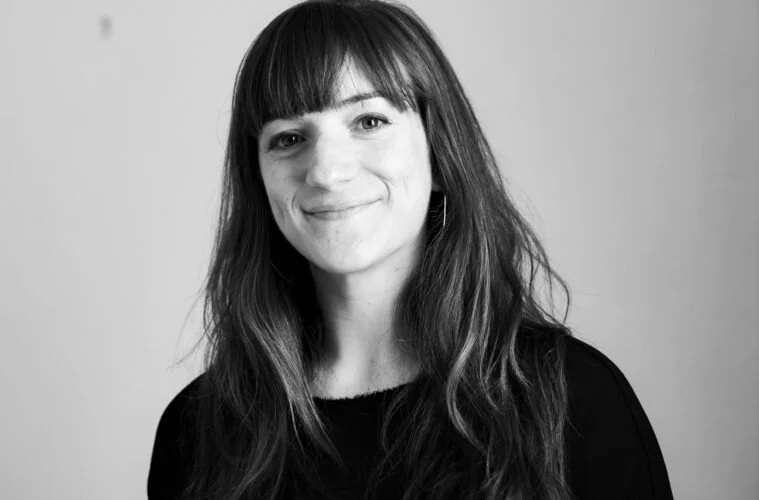
On Tracking Expenses And Side Hustles: Kate Herrmann
Today, we’re publishing an interview with Kate Herrmann about her work with Money Positive and her personal budgeting tips.
This week, we’re preparing for the second conversation in our Money Mindsets series, a three-part conversation with local Austin leaders at the Capital One Café downtown on November 21, December 7 and December 19 exploring money setbacks, leveling up and staying financially informed.
Today, we’re publishing an interview with Kate Herrmann about her work with Money Positive and her personal budgeting tips.

ABOUT KATE HERRMANN:
Kate Herrmann is a board member of Texas’s first worker-owned financial planning cooperative, Money Positive, addressing a gap in the industry for middle-income individuals and households to access custom financial guidance with a personal advisor. In her free time, she is dog shopping at the local animal shelter, teaching Pilates, and learning how to cook (with an Instant Pot). She holds a BA in International Development from McGill University and an MBA from Presidio Graduate School.
Describe the way your business and projects have grown and/or changed within the last three to five years.
I don't own a business outright, but getting involved as a worker-owner of the Money Positive has been one of the most gratifying initiatives I've taken on in the past year. I've had side hustles in the past, but this represents a shift in the sense that Money Positive (being a cooperative) is inherently very collaborative, which is an environment where I really thrive. Working with a team of diverse personalities means new ideas are constantly being surfaced, which is really stimulating and gratifying for me. I think solo side projects are wonderful, but if you're the kind of person who works independently during the day, or just generally craves a collaborative, creative environment I think cooperative structures are an awesome way to build a business.
What's a money tip or trick that you've learned recently?
Setting up account balance updates on my phone every time I make a discretionary purchase. The consistent, immediate feedback keeps me honest about my spending and lets me make impulsive purchases without guilt.
What advice or lesson would you share with someone who’s at the start of doing their own thing?
If "doing your own thing" means starting to turn your passion or hobby into a personal revenue source, start setting aside 30% of your income for taxes and make your payments on a quarterly basis. As an independent contractor, I think 1099 tax rates take a lot of people by surprise, and making those quarterly payments helps to avoid overspending throughout the year. Also, get an app for capturing receipts (something like Shoeboxed Receipt Tracker) so you don't literally have to sift through a shoebox when you are declaring your deduction.

Design by Danni Wright
want more?
Join us at Money Moves and Mindsets this Thursday, December 19 from 6:30 to 8:30 PM at the Capital One Café to hear Herrmann’s story. Thanks to Capital One’s commitment to supporting women in entrepreneurship and small business owners, this event is free and open to the public with RSVP.
Can’t make it? We highly suggest learning more about our biannual conference WORK, a one-day event that presents new ideas and approaches to creative and entrepreneurial work. Hosting 300 guests every summer and winter, this biannual, one-day event's panels, workshops and speaker sessions touch on personal and professional development, marketing, wellness, business management and entrepreneurship. ✨The next WORK conference will be held on January 11, 2020 at the University of Texas at Austin’s Rowling Hall.
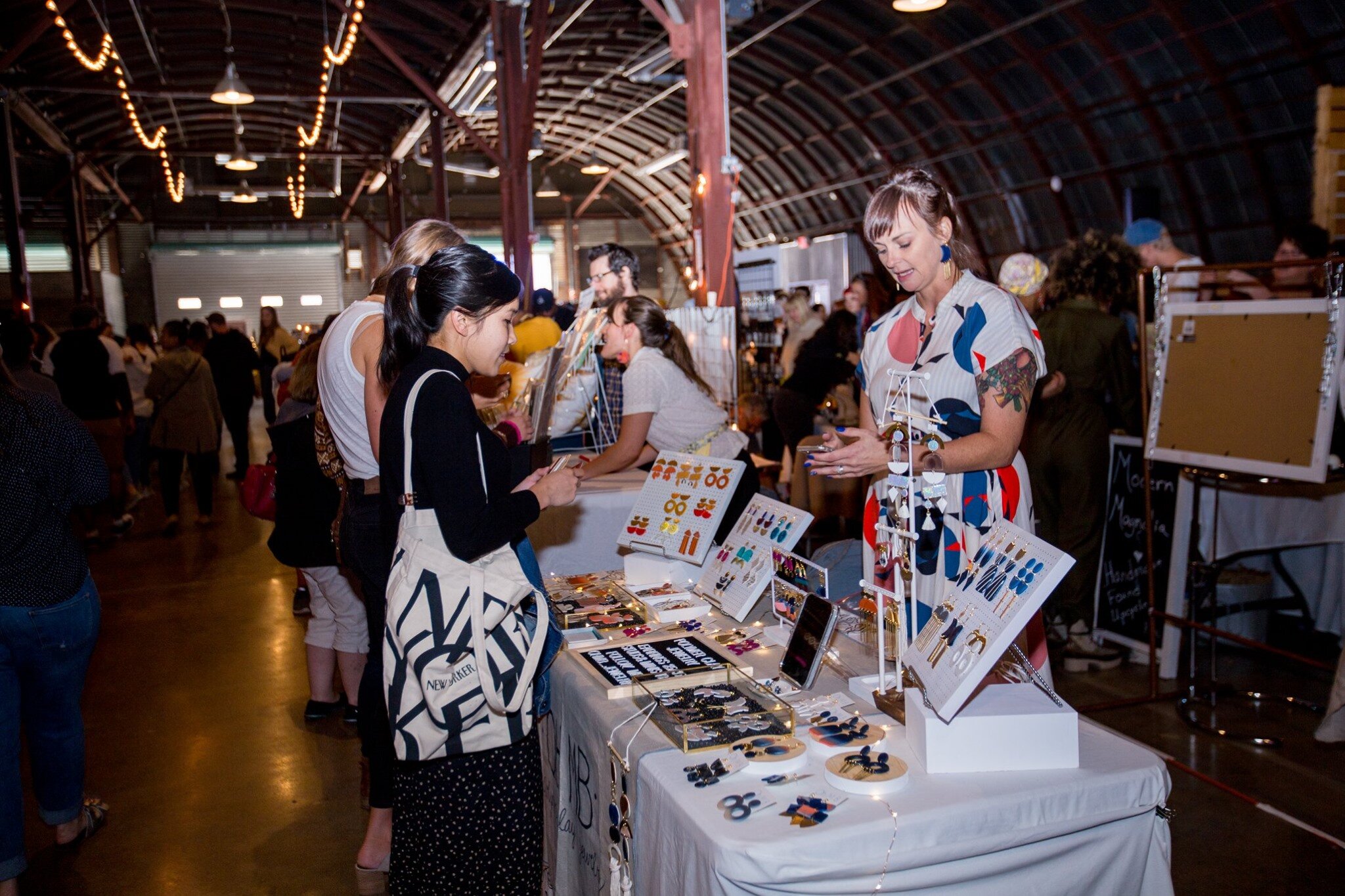
Looking Back On craftHER Market 2019: How To Flourish As A Creative And Entrepreneur
With craftHER Market Spring 2020 applications now open, we wanted to take a few moments to recap some of the gems that were dropped during our craftHER Market Fall 2019 panels.
In case you missed it, we just published our 2019 Impact Report, where we shared some record-breaking stats. Over the last 12 months, we hosted more than 20,000 attendees through our programs, and it was truly our biggest year yet.
And craftHER Market, our biannual marketplace, was a huge part of that growth. Clocking in at 5300 attendees, October’s craftHER market was the biggest market in our organization’s history and by far the LARGEST event we’ve ever hosted. From the 140+ vendors we hosted to the inspiring panels held throughout the day, the love and energy we felt was off the charts.
With craftHER Market Spring 2020 applications now open, we wanted to take a few moments to recap some of the gems that were dropped during our craftHER Market Fall 2019 panels. Each discussion centered on what we need to flourish: How do we create and sustain environments that let ourselves (and others) grow? Here are a few answers to that question.
This article was written and compiled by BBATX committee member Sydney Greene. All photos by BBATX committee member Jinni J.


here are 13 takeaways from craftHER Market fall 2019:
On Contemporary Craft and Cultural Appropriation
Curated by #BBATX committee member and multidisciplinary artist Coelina Edwards, arts organizer Mercy Emelike, founder of La Wixarika Denise Rosales and cultural cartographer Jennifer Steverson did a deep dive into the lines (and relationships) between appreciation, appropriation and plagiarism.
Jennifer Steverson’s advice on advice referencing culture in craft: “Think about access. Who has access to materials and markets? How do you price art vs. craft? What is the value of something modern vs. traditional?” Steverson said. “Name and give credit to your influences. Sourcing is an important part of any craft practice.”
Denise Rosales on defining craft: “[It’s] what you can do with your hands—it’s intimate moments that encompass community, stories and cultural techniques.”
“Craft is overtaken by marketing which can be harmful to economies and people's livelihoods,” said Mercy Emelike on what’s at stake when cultural appropriation goes unchecked.
On Self-Doubt And Starting A Business
Curated by #BBATX board member Alexandra Perez-Puelles, health coach Abbi Miller, ceramicist Sequoyah Johnson and photographer-entrepreneur Riley Blanks we become our own best cheerleaders when the world of entrepreneurship gets lonely and mentally challenging.
“It’s a lifelong journey, and it’s important to have rituals that serve you. Self-doubt for me presents anxiety, which would produce more anxiety,” Riley Banks said on overcoming emotional barriers when making things. “I heard a saying: ‘Anxiety is like a hurricane, but in the center of every hurricane ,there’s an eye and the eye represents calm.’ Everything i do has to bring me to that eye.”
“Ask for what you need—that’s when magic happens,” Abbi Miller, on advice she’d give to people in the early stages of their business. “You don’t need a person to be your end-all-be-all but have that person who can help you make the next step.”
“Getting comfortable with saying no is No. 1. Working 24/7 is something I choose not to do,” Sequoyah Johnson said about tempering the guilt of not working all the time. “Using a ritual or a trip and something you enjoy—use that as the thing to refill the tank.”
On Art-Making AND ACTIVISM
In conversation with artist and #BBATX board member Xochi Solis, craftHER Market’s artist-in-residence Edith Valle will discuss her inspirations and creative career.
Edith Valle said she’s gained a lot of experience in client management through her role as an art teacher. “My students are my clients. We start with mood boards because I can’t read their minds. What is your intention? What reaches you?,” Valle said. “One student wanted to communicate that UT is a safe space for LGBTQ community so she helped create a banner for her community.”
Valle also said she has learned how to convey political messages without being partisan in her activism-oriented art through her role as Deeds Not Words’ Art Director. “Working with people who care about the issues will make you learn and make your work more authentic,” said Valle.
On Making A Living On Multiple Incomes
In conversation with creative entrepreneur Mélissa Peng, Cristina Martinez of Very That, Jasmine Robinson of Collegiate Mom Coalition and Monica Ceniceros of ATX Gals, we heard about how these women pursue multiple projects and streams of income to make a living.
Mélissa Peng said she’s diversified her brand by meeting other business owners. Building community has helped leverage her expertise and consider new ways to make money.
Monica Ceniceros has learned that maintaining a consistent brand for her art and businesses has come down to focus. “Don’t dilute your brand. Make sure you’re saying no to things that don’t represent your brand,” Ceniceros said.
Jasmine Robinson said she’s evolved her brand, Collegiate Mom Coalition, by rebranding her message to embody womanhood—not just motherhood—and her engagement went up.
On Making The Most Of Your Time Online
Curated by #BBATX committee member Cynthia Munoz, co-founder of The Juggle Sarah Overmyer, founder of Oddball Vintage Lauren Mahoney and model and musician Sydni Adams explore establishing healthy relationships to technology, productivity hacks and simplifying our time on social media.
Sarah Overmyer said she manages her time by setting boundaries, including not having more than four ways to be contacted by clients, customers, co-workers and the general public.
Sydni Adams on tackling the crossroads between mental health and social media: “Be mindful—scrolling takes you away from yourself,” said Adams. “Be patient and acknowledge your feelings. Talk to someone about how it’s affecting your brain and your relationships.”
Lauren Mahoney said she keeps herself accountable in her personal and professional life by establishing a routine to relieve the weight of the next day.
Want to join us at craftHER Market in 2020?
Whether you participate in the market as a vendor or attend, craftHER Market will be back on April 11 and 12 at Fair Market in Austin, Texas. Applications for interested artists, makers, vendors and small business owners are open now through January 31, 2020 at crafthermarket.com. Email us with any and all questions about vending and partnerships: thebabes@bossbabes.org
See y’all in April 2020 and thank you for shopping local, shopping small and showing up. 🎈
On Navigating The Art World And Visual Activism: Deborah Roberts
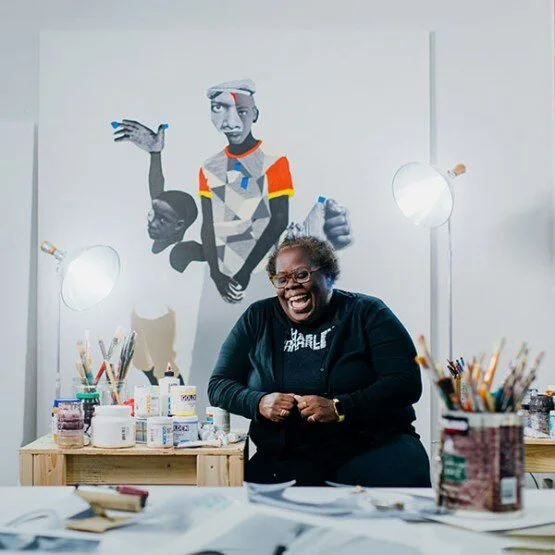
On December 2, we hosted artist Deborah Roberts at the BBATX Headquarters for an inspirational conversation with Rosa Rebellion founder and activist Virginia Cumberbatch.
A few weeks ago, BBATX (#bossbabesATX) and creative entrepreneur and visual artist, Mercy Emelike, continued with the second installment of CHATROOM, an art discussion series centered around Black women and non-binary artists in the Austin area.
On December 2, we hosted artist Deborah Roberts at the BBATX Headquarters for an inspirational with Rosa Rebellion founder and activist Virginia Cumberbatch.

Image courtesy of Deborah Roberts
ABOUT THE ARTIST, DEBORAH ROBERTS:
Deborah Roberts is a mixed media artist and Austin native and local who received her MFA from Syracuse University in New York. Her artistry aims to critique the notions of body, race, beauty, and identity in present-day society through the perspective of African-American children. Her work is presented on paper or canvas, and consist of materials from literature, photographs, magazines, and the internet, along with hand painted, intricate details that allow the viewer to gain a deeper outlook on the different layers. She focuses on African-American children, and how American racism plays a significant role in conditioning their experience growing up in the United States, as well as how they are perceived by others.

Image courtesy of Virginia Cumberbatch
ABOUT THE FACILITATOR, VIRGINIA CUMBERBATCH:
Virginia Cumberbatch is a director for the Community Engagement Center, a part of The University of Texas at Austin (UT) Division of Diversity and Communication Engagement (DDCE). She has used both her academic and professional years to facilitate discussions about diversity, inclusion, and equity in the Austin area. For her current work, Virginia ensures that the center continues to develop new and sustain mutually beneficial partnerships between the University of Texas and diverse communities, improving systems to be more accessible and equitable for historically underserved communities.
HERE ARE THREE TAKEAWAYS FROM THEIR DISCUSSION:
ON EMBRACING DIFFERENCES
Of the many topics discussed, Roberts touched on the importance of representation when sharing details about the subjects of her artwork. In the United States, there is a specific generalization of African-American characteristics and physical appearance that is constantly shown in the media. Roberts explains that “the people that [she] was creating and drawing were not the same people that were being projected into the world, because they had a different idea of Blackness that [she] could not see.” Everyone’s Black experience is not the same, and it was important to Roberts that she captured her own version to “dismantle the idea that [African Americans] are all grotesque, and also the idea that [they] all act the same.”
ON BREAKING THROUGH IN THE ART WORLD
Emerging into the art world can be extremely difficult for Black artists. Robert states that “whoever can get attention without an MFA, without education, is not Black. Black artists can do the work for years, but if they don’t have scholarship, no one will listen.” Every artist aims to have their stories shared and understood by many, but without the art world’s attention, they will struggle. There are many artists showcasing their ideal image of Blackness through visual storytelling, but if the story isn’t being told in a way that the art world will care for, then it will be overlooked.
The art world is constantly shifting its focus to new themes and ideas, and it’s important for artists to stay with the times if they want to continue to be relevant in this particular society. “The people who are going to survive are the ones who are working really hard, and that’s why it’s important to be in museum collections.” Robert also noted that “[she] was in school when [the art world] shifted to Black art” and that she thinks it has started to move “toward African art.”
ON ACTIVISM AND COMMUNITY-BUILDING
As Cumberbatch noted, art and activism are often intertwined because they both require imagination. When asked if she considers herself an activist, Roberts expressed that “artists have to be artists, and you can’t ask [them] to be more political in their work.” Being able to create art that isn’t aiming for a social change is a privilege, but it’s a privilege that Roberts can not relate to, because “[she] is in the school where you have to stand up for yourself, and if you don’t, no one will.” The disappearance of Black women is often overlooked and disregarded in our society, so making artwork that focuses on Black women who go missing is Roberts’ personal form of activism.
Roberts also admits that she is currently not that involved in community-building like she was in the past. She spent her “twenties and thirties changing the way people look at Black artists in Austin,” and she now wants to channel that energy into a different direction. It’s a personal goal of hers to create a foundation where she can give money to the artists who want to do this work.
WANT TO ATTEND THE LAST CHATROOM SESSION?
Join us at our next discussion on December 14, featuring painter, Arielle Austin, interviewed by artist and educator, Tammie Rubin.
Three Reminders For Creative Revitalization In 2020
Throughout Winter 2020, our programs will amplify women and nonbinary creatives, business owners and leaders who are resetting their approaches to stress and success. As you move through our events from December to February to hear their stories, we encourage you to keep the following reminders in mind.
revitalize (v.): to imbue something with new life and vitality.
At work and in our lives, we all face seasons of renewal and restoration—and in turn, we all have moments that redefine who we are and where we want to go.
Whether we’re facing changes in our career paths, pushing ourselves out of a rut or revisiting old projects, adjusting to life’s pivots can be equal parts difficult and rewarding. So, what do we do when we recognize we need a change? How can we breathe new life into our work? What does it look like to revitalize our perspectives, mindsets and approaches to work, collaboration and creativity?
Throughout Winter 2020, our programs will amplify women and nonbinary creatives, business owners and leaders who are resetting their approaches to stress and success. As you move through our events from December to February to hear their stories, we encourage you to keep the following reminders in mind.
This post has been written by BBATX Founding Executive and Creative Director, Jane Hervey.
REMINDER NO. 1: YOUR FUTURE IS NOT DETERMINED BY THE LIMITED SCOPE OF OTHER PEOPLE’S OPINIONS.
We sometimes reject trying something new or giving up things that no longer serve us, because we’re worried about what others may think. You don’t need permission from your past self or your peers to experiment, fail or succeed.


REMINDER NO. 2: IF IT FEELS BAD, LISTEN. TUNING INTO YOUR EMOTIONS TRAINS YOUR INTUITION.
When we do something we’ve never done before, we’re outside of our circle of competence, which means we’ve stepped into a space of uncertainty. Uncertainty is exciting, but it can bring about a whole range of emotions, too. Sometimes, it’s enough to shut us down. So, get familiar with your feelings as you break old habits and give new methods and routines a shot. What’s anxiety? What’s fear? What’s your intuition?
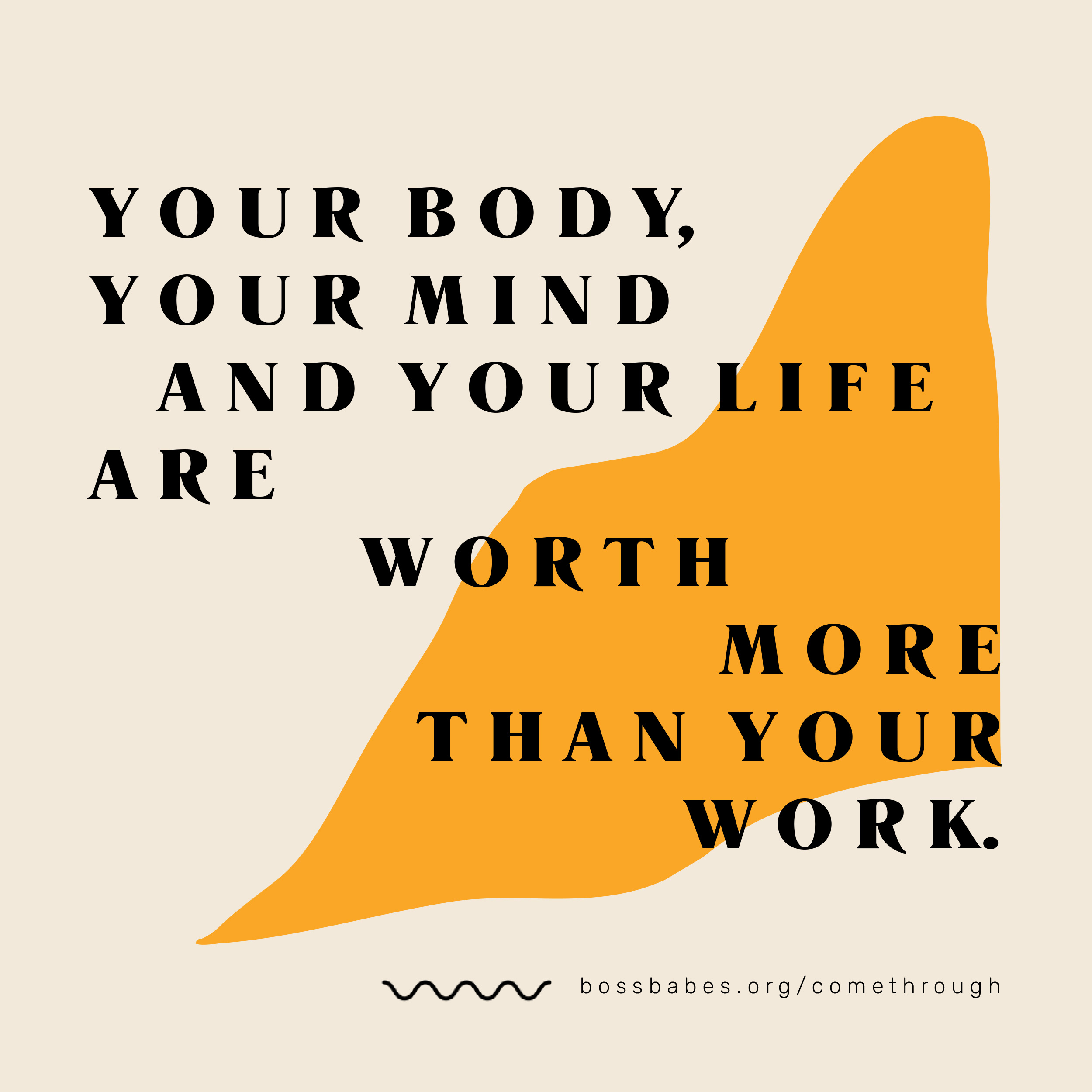
REMINDER NO. 3: YOUR BODY, YOUR MIND AND YOUR LIFE ARE WORTH MORE THAN YOUR WORK.
A fresh start might be intimidating, but it gives us the chance to do things differently. You know more than you did last year. So, what can you change about your approach to stress and success? What can you rewrite or reset when it comes to your personal and professional goals? It’s always OK to begin again.
