

How To Set Money Goals And Reach Them: A 7-Step Guide By Future Front
Seven tips on challenging your money fears.

Whether you’re a leader, small business owner, independent artist or side hustling creative, your career pathway will take resilience and strategic decision-making—especially when it comes to money.
So, how can we prepare ourselves to flourish financially? Over a three-part series of discussions in partnership with Capital One in November and December 2019, we met with different Texas-based creatives and entrepreneurs—chef and entrepreneur Sharon Mays, Moontower Rentals CEO Christie Zangrilli, No Good Tattoo founder Emily Ng, eleMINT Skin owner Shauntavia Ward and finance nerd Kate Herrmann—to talk tackling money setbacks, leveling up and staying financially informed. Keep reading for seven takeaways from our speakers on challenging your money fears and changing your relationship to your finances.
Editor’s Note: We’d like to thank Capital One for their commitment to supporting women in entrepreneurship and small business owners and their interest in making our Money Mindsets series possible last fall. Although this guide’s content has in no way been influenced by their sponsorship, we were able to produce it with their support.
HERE ARE 7 WAYS TO SET MONEY GOALS AND REACHING THEM:
1.) Figure out what you spend—and you’ll find out where you stand.
According to Kate Herrmann, a self-professed finance nerd, her goal budget looks like a 50/30/20 model. Ideally, she’s spending 50% of her income each month on her core needs, 30% of her income on nonessentials and 20% of her income on savings and paying off any debts. With this budget model, she’s set up to start building wealth and making investments month over month. So, if you started to separate out your expenses into core needs, nonessentials and savings/debt repayment, what would that breakdown look like for you?
Finding out where your money goes and how you spend it will help you determine what kind of financial goals are feasible for your circumstances. It’ll help you determine if you need to make more money to cover your core needs or if you’re in a good place to start making investments.
(Need help tracking your expenses and getting started? Use an accounting software like FreshBooks, Quickbooks or Mint to start figuring out how much you’re spending. If you don’t want to use a software, just start reviewing your bank statements and categorizing how you spend your income each month.)
2.) Work backward from your goal.
Herrmann also shared that one of the key components of budgeting is figuring out what you want and designing your budget around those goals. After you know what your income looks like and where you’re spending it, take a minute to think about what you want. Do you just want to have more money to spend on vacations each year? Are you looking to open a retirement account within the next three years? Do you want to try your hand at investing? Do you want to repay debt faster? Or perhaps your first goal is simply get more comfortable with recording and tracking your expenses and income—no matter where you start, it’s easier to work backward from a goal and break down the things you need to do day over day and week over week to reach it.
3.) Figure out what you need to know and start to research.
Once you’ve identified your goal, map out what you do and don’t know about getting there. What do you need to research? What makes you uncomfortable? What part of the process makes you curious? Lean into these unknowns and practice getting more familiar with the world of finance. Herrmann recommended two books, “All Your Worth” by Elizabeth Warren and “Big Magic” by Elizabeth Gilbert, to dip your toes in.
4.) Read the fine print and and don’t be afraid to ask questions.
We are not taught how to manage our finances or budget growing up, so prepare for the discomfort that comes with being outside of your circle of competence. You may not have a solid financial vocabulary yet, but that doesn’t mean you can’t learn or ask questions. Christine Zangrilli, co-owner and CEO of Moontower Rentals, recommended chatting with an accountant or CPA while you research. Beyond helping you with your taxes, they can also be a good resource for better understanding your financial options.
5.) Know your floor and your ceiling before you take a big financial risk.
Perhaps your financial goal is a little risky. Maybe you’re looking to open a business or take out a loan, and you’re not confident in the return. When faced with those kinds of money decisions, chef and entrepreneur Sharon Mays suggested determining your floor and your ceiling. How much can you truly afford to lose if nothing goes according to plan? How much do you need to make back to justify the investment and how long will that take? Will other aspects of your finances or life be in jeopardy if you choose to take that risk and will it be worth it? For eleMINT Skin founder Shauntavia Ward, choosing to keep a part-time job during the first six months of her business was part of her strategy. She knew she was going to need that income to reduce her anxiety and make clear-headed decisions about the business’ expenses and needs.
6.) Build relationships with your money choices.
Whether you’re opening a bank account, choosing an accountant or working with a financial planner to determine your options, look at each of these relationships as investments. Mays said she only works with planners, business partners, credit card providers and financial institutions that will sit down with her, define terms and talk things through.
7.) Everything has its cycle—it is never the end of the world if things don’t go as planned.
Life happens and life changes. Sometimes, we make poor investments. Sometimes, we have financial emergencies. Sometimes, we procrastinate, because money fears are real. For No Good Tattoo founder Emily Ng, said that the hardest part of figuring out her personal and business finances was challenging herself to even deal with them. “If you're waiting on someone more experienced to give you an answer, it might never happen. Do the research, and then just go for it! Your goals aren’t final, and you can always change them later,” she said.
So, in summary, commit to learning more about money and be mindful of the risks you take with your finances. Set measurable goals and pivot as your life changes. Money is something you deserve to understand—and if you practice, it’s also something you can be good at.
LOOKING FOR MORE MONEY RESOURCES?
Stay tuned for more workshops with BBATX on our calendar and learn more about what we do at bossbabes.org/programming.
On Spirituality And Creating Boundaries: Arielle Austin
On December 14, we hosted artist Arielle Austin at the BBATX Headquarters for a Q&A with artist and educator Tammie Rubin.
This past week, BBATX (#bossbabesATX) and visual artist and creative entrepreneur, Mercy Emelike, wrapped up their three-part event, CHATROOM, an art conversation series for Black non-binary and women artists located in Austin.
We ended the series with educator and artist, Tammie Rubin, to interview abstract painter Arielle Austin. Keep reading for a summary of their conversations.

ABOUT THE ARTIST, ARIELLE AUSTIN:
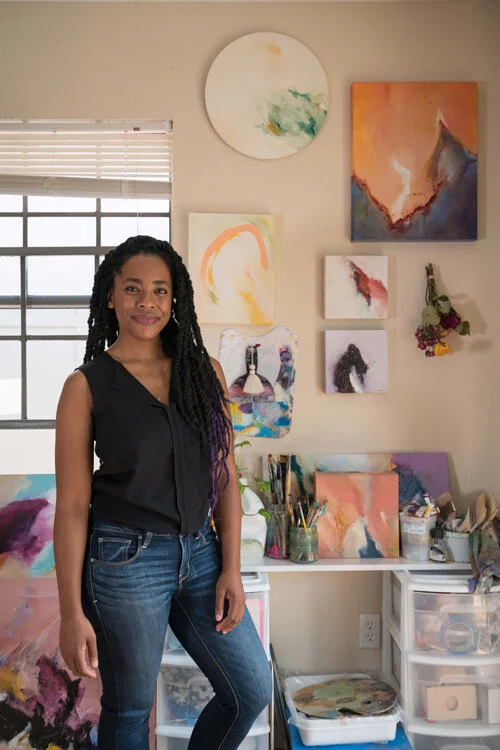
Originally from Los Angeles, Arielle Austin is an abstract painter located in Austin, Texas. She creates her work by using acrylic, oil paint, and paper to produce abstract works on canvas while expressing the emotional scape of our transitory existence. Initially used as a tool for personal therapy and spiritual connectedness, Austin’s process-based work explores the intimate relationship between subject and viewer with layers, texture, and details. In experimenting with this process, Austin compels the viewer to take a closer look by becoming more intimate with the art, resembling our very own human nature and desire.

ABOUT THE FACILITATOR, TAMMIE RUBIN:
Tammie Rubin is a Chicago native who currently lives in Austin, Texas. She is both an artist and educator at St. Edward’s University where she is an Associate Professor of Ceramics & Sculpture. Her artwork explores the gaps between the readymade and handcrafted object, opening up dream-like spaces of unexpected associations and dislocations. Her work has been featured in online and printed publications such as Artforum, Art in America, Glasstire, Sightlines, fields, Conflict of Interest, Arts and Culture Texas, Ceramics: Art & Perception, and Ceramics Monthly.
HERE ARE THREE TAKEAWAYS FROM THEIR DISCUSSION:
ON CREATING BOUNDARIES
Losing yourself in your work is a common thing for an artist to do, and for Arielle Austin, this was a habit she noticed during the earlier stages of her career. Throughout the years she learned how to create boundaries between her and art so that she continues to keep in touch with reality. A prime example of this is when she has a studio day, she “knows [she’ll] need to see somebody at the end of the day,” so she’ll find a way to keep in touch with friends by either having a phone conversation or spending time with them after the studio.
on recreation
Austin draws inspiration for her artwork by using elements that pertain to her personal life. In her Abstract Memories (2019) series, Austin uses photographs from her childhood to recapture the essence of a memory. While creating these pieces, she interprets the way she is now, and how that moment made her who she is. In her Soul Food (2017) collection, she shows how “people can be soul food for each other.” Soul food is typically associated with one’s home or community, and in this series, she captures what it means for someone to feed their soul with love, truth and new beginnings.
ON SPIRITUALITY
During their talk, Rubin recalls back to when Austin refers to her practice as “a way of freedom and peace,” and when she enters “[her] space of making, [she’s] having a conversation with God.” As a believer of the Christian faith, Austin uses these moments of art-making as a way to connect with God. She refers to these moments as therapy, because it’s a space where she is allowed to “quiet [her] mind” and feed her soul spiritually, but there are business components to her work, such as deadlines and certain expectations, that can sometimes make these conversations difficult. During those times she reminds herself of the original purpose of wanting to create, along with the help of her supporters, and uses that as motivation to continue her craft. When asked how she knows when she’s finished with a piece, Austin shared that she knows she’s done when the conversation with God feels over, and she can exhale around her piece with a feeling of completion. She explained that “if you can see any sense of God in [her] work, then [she’s] done what [she] needed to do.”

moodboard inspired by Arielle Austin’s work, curated and complied by Helen Oyeniyi.
want to attend future BBATX events with our friends and partners?
Check out all of the events on our upcoming calendar here.
On Tracking Expenses And Side Hustles: Kate Herrmann
Today, we’re publishing an interview with Kate Herrmann about her work with Money Positive and her personal budgeting tips.
This week, we’re preparing for the second conversation in our Money Mindsets series, a three-part conversation with local Austin leaders at the Capital One Café downtown on November 21, December 7 and December 19 exploring money setbacks, leveling up and staying financially informed.
Today, we’re publishing an interview with Kate Herrmann about her work with Money Positive and her personal budgeting tips.

ABOUT KATE HERRMANN:
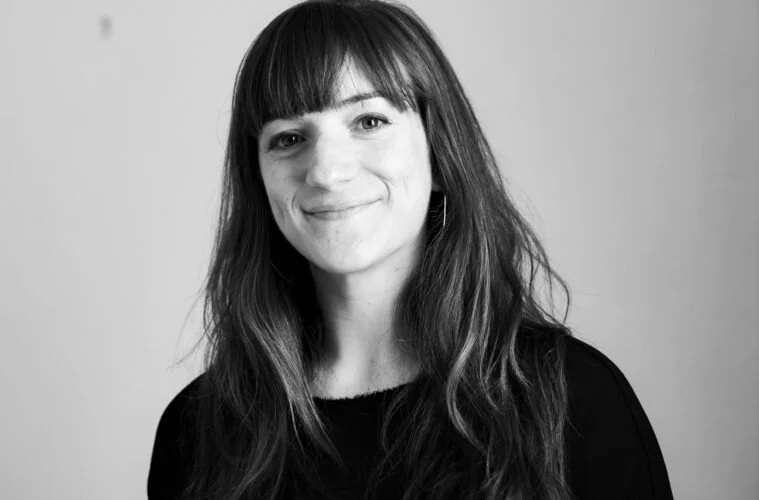
Kate Herrmann is a board member of Texas’s first worker-owned financial planning cooperative, Money Positive, addressing a gap in the industry for middle-income individuals and households to access custom financial guidance with a personal advisor. In her free time, she is dog shopping at the local animal shelter, teaching Pilates, and learning how to cook (with an Instant Pot). She holds a BA in International Development from McGill University and an MBA from Presidio Graduate School.
Describe the way your business and projects have grown and/or changed within the last three to five years.
I don't own a business outright, but getting involved as a worker-owner of the Money Positive has been one of the most gratifying initiatives I've taken on in the past year. I've had side hustles in the past, but this represents a shift in the sense that Money Positive (being a cooperative) is inherently very collaborative, which is an environment where I really thrive. Working with a team of diverse personalities means new ideas are constantly being surfaced, which is really stimulating and gratifying for me. I think solo side projects are wonderful, but if you're the kind of person who works independently during the day, or just generally craves a collaborative, creative environment I think cooperative structures are an awesome way to build a business.
What's a money tip or trick that you've learned recently?
Setting up account balance updates on my phone every time I make a discretionary purchase. The consistent, immediate feedback keeps me honest about my spending and lets me make impulsive purchases without guilt.
What advice or lesson would you share with someone who’s at the start of doing their own thing?
If "doing your own thing" means starting to turn your passion or hobby into a personal revenue source, start setting aside 30% of your income for taxes and make your payments on a quarterly basis. As an independent contractor, I think 1099 tax rates take a lot of people by surprise, and making those quarterly payments helps to avoid overspending throughout the year. Also, get an app for capturing receipts (something like Shoeboxed Receipt Tracker) so you don't literally have to sift through a shoebox when you are declaring your deduction.

Design by Danni Wright
want more?
Join us at Money Moves and Mindsets this Thursday, December 19 from 6:30 to 8:30 PM at the Capital One Café to hear Herrmann’s story. Thanks to Capital One’s commitment to supporting women in entrepreneurship and small business owners, this event is free and open to the public with RSVP.
Can’t make it? We highly suggest learning more about our biannual conference WORK, a one-day event that presents new ideas and approaches to creative and entrepreneurial work. Hosting 300 guests every summer and winter, this biannual, one-day event's panels, workshops and speaker sessions touch on personal and professional development, marketing, wellness, business management and entrepreneurship. ✨The next WORK conference will be held on January 11, 2020 at the University of Texas at Austin’s Rowling Hall.
Looking Back On craftHER Market 2019: How To Flourish As A Creative And Entrepreneur
With craftHER Market Spring 2020 applications now open, we wanted to take a few moments to recap some of the gems that were dropped during our craftHER Market Fall 2019 panels.
In case you missed it, we just published our 2019 Impact Report, where we shared some record-breaking stats. Over the last 12 months, we hosted more than 20,000 attendees through our programs, and it was truly our biggest year yet.
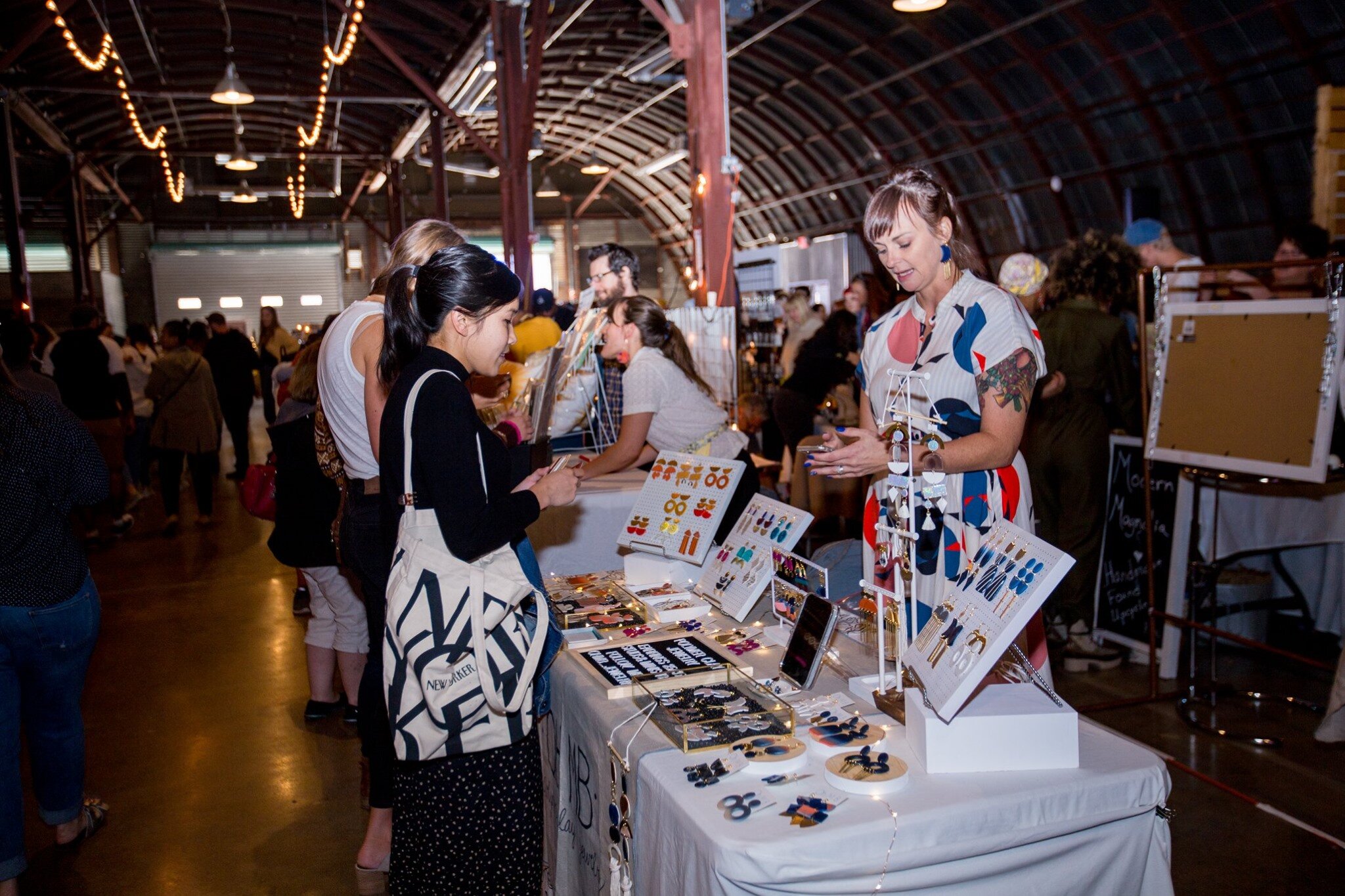
And craftHER Market, our biannual marketplace, was a huge part of that growth. Clocking in at 5300 attendees, October’s craftHER market was the biggest market in our organization’s history and by far the LARGEST event we’ve ever hosted. From the 140+ vendors we hosted to the inspiring panels held throughout the day, the love and energy we felt was off the charts.
With craftHER Market Spring 2020 applications now open, we wanted to take a few moments to recap some of the gems that were dropped during our craftHER Market Fall 2019 panels. Each discussion centered on what we need to flourish: How do we create and sustain environments that let ourselves (and others) grow? Here are a few answers to that question.
This article was written and compiled by BBATX committee member Sydney Greene. All photos by BBATX committee member Jinni J.


here are 13 takeaways from craftHER Market fall 2019:
On Contemporary Craft and Cultural Appropriation
Curated by #BBATX committee member and multidisciplinary artist Coelina Edwards, arts organizer Mercy Emelike, founder of La Wixarika Denise Rosales and cultural cartographer Jennifer Steverson did a deep dive into the lines (and relationships) between appreciation, appropriation and plagiarism.
Jennifer Steverson’s advice on advice referencing culture in craft: “Think about access. Who has access to materials and markets? How do you price art vs. craft? What is the value of something modern vs. traditional?” Steverson said. “Name and give credit to your influences. Sourcing is an important part of any craft practice.”
Denise Rosales on defining craft: “[It’s] what you can do with your hands—it’s intimate moments that encompass community, stories and cultural techniques.”
“Craft is overtaken by marketing which can be harmful to economies and people's livelihoods,” said Mercy Emelike on what’s at stake when cultural appropriation goes unchecked.
On Self-Doubt And Starting A Business
Curated by #BBATX board member Alexandra Perez-Puelles, health coach Abbi Miller, ceramicist Sequoyah Johnson and photographer-entrepreneur Riley Blanks we become our own best cheerleaders when the world of entrepreneurship gets lonely and mentally challenging.
“It’s a lifelong journey, and it’s important to have rituals that serve you. Self-doubt for me presents anxiety, which would produce more anxiety,” Riley Banks said on overcoming emotional barriers when making things. “I heard a saying: ‘Anxiety is like a hurricane, but in the center of every hurricane ,there’s an eye and the eye represents calm.’ Everything i do has to bring me to that eye.”
“Ask for what you need—that’s when magic happens,” Abbi Miller, on advice she’d give to people in the early stages of their business. “You don’t need a person to be your end-all-be-all but have that person who can help you make the next step.”
“Getting comfortable with saying no is No. 1. Working 24/7 is something I choose not to do,” Sequoyah Johnson said about tempering the guilt of not working all the time. “Using a ritual or a trip and something you enjoy—use that as the thing to refill the tank.”
On Art-Making AND ACTIVISM
In conversation with artist and #BBATX board member Xochi Solis, craftHER Market’s artist-in-residence Edith Valle will discuss her inspirations and creative career.
Edith Valle said she’s gained a lot of experience in client management through her role as an art teacher. “My students are my clients. We start with mood boards because I can’t read their minds. What is your intention? What reaches you?,” Valle said. “One student wanted to communicate that UT is a safe space for LGBTQ community so she helped create a banner for her community.”
Valle also said she has learned how to convey political messages without being partisan in her activism-oriented art through her role as Deeds Not Words’ Art Director. “Working with people who care about the issues will make you learn and make your work more authentic,” said Valle.
On Making A Living On Multiple Incomes
In conversation with creative entrepreneur Mélissa Peng, Cristina Martinez of Very That, Jasmine Robinson of Collegiate Mom Coalition and Monica Ceniceros of ATX Gals, we heard about how these women pursue multiple projects and streams of income to make a living.
Mélissa Peng said she’s diversified her brand by meeting other business owners. Building community has helped leverage her expertise and consider new ways to make money.
Monica Ceniceros has learned that maintaining a consistent brand for her art and businesses has come down to focus. “Don’t dilute your brand. Make sure you’re saying no to things that don’t represent your brand,” Ceniceros said.
Jasmine Robinson said she’s evolved her brand, Collegiate Mom Coalition, by rebranding her message to embody womanhood—not just motherhood—and her engagement went up.
On Making The Most Of Your Time Online
Curated by #BBATX committee member Cynthia Munoz, co-founder of The Juggle Sarah Overmyer, founder of Oddball Vintage Lauren Mahoney and model and musician Sydni Adams explore establishing healthy relationships to technology, productivity hacks and simplifying our time on social media.
Sarah Overmyer said she manages her time by setting boundaries, including not having more than four ways to be contacted by clients, customers, co-workers and the general public.
Sydni Adams on tackling the crossroads between mental health and social media: “Be mindful—scrolling takes you away from yourself,” said Adams. “Be patient and acknowledge your feelings. Talk to someone about how it’s affecting your brain and your relationships.”
Lauren Mahoney said she keeps herself accountable in her personal and professional life by establishing a routine to relieve the weight of the next day.
Want to join us at craftHER Market in 2020?
Whether you participate in the market as a vendor or attend, craftHER Market will be back on April 11 and 12 at Fair Market in Austin, Texas. Applications for interested artists, makers, vendors and small business owners are open now through January 31, 2020 at crafthermarket.com. Email us with any and all questions about vending and partnerships: thebabes@bossbabes.org
See y’all in April 2020 and thank you for shopping local, shopping small and showing up. 🎈
On Navigating The Art World And Visual Activism: Deborah Roberts
On December 2, we hosted artist Deborah Roberts at the BBATX Headquarters for an inspirational conversation with Rosa Rebellion founder and activist Virginia Cumberbatch.
A few weeks ago, BBATX (#bossbabesATX) and creative entrepreneur and visual artist, Mercy Emelike, continued with the second installment of CHATROOM, an art discussion series centered around Black women and non-binary artists in the Austin area.
On December 2, we hosted artist Deborah Roberts at the BBATX Headquarters for an inspirational with Rosa Rebellion founder and activist Virginia Cumberbatch.

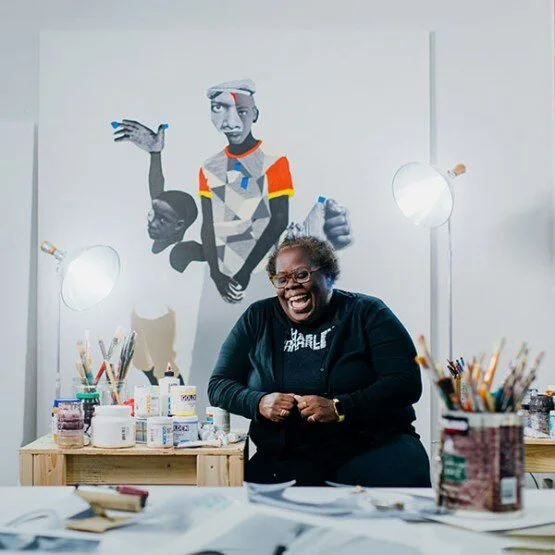
Image courtesy of Deborah Roberts
ABOUT THE ARTIST, DEBORAH ROBERTS:
Deborah Roberts is a mixed media artist and Austin native and local who received her MFA from Syracuse University in New York. Her artistry aims to critique the notions of body, race, beauty, and identity in present-day society through the perspective of African-American children. Her work is presented on paper or canvas, and consist of materials from literature, photographs, magazines, and the internet, along with hand painted, intricate details that allow the viewer to gain a deeper outlook on the different layers. She focuses on African-American children, and how American racism plays a significant role in conditioning their experience growing up in the United States, as well as how they are perceived by others.

Image courtesy of Virginia Cumberbatch
ABOUT THE FACILITATOR, VIRGINIA CUMBERBATCH:
Virginia Cumberbatch is a director for the Community Engagement Center, a part of The University of Texas at Austin (UT) Division of Diversity and Communication Engagement (DDCE). She has used both her academic and professional years to facilitate discussions about diversity, inclusion, and equity in the Austin area. For her current work, Virginia ensures that the center continues to develop new and sustain mutually beneficial partnerships between the University of Texas and diverse communities, improving systems to be more accessible and equitable for historically underserved communities.
HERE ARE THREE TAKEAWAYS FROM THEIR DISCUSSION:
ON EMBRACING DIFFERENCES
Of the many topics discussed, Roberts touched on the importance of representation when sharing details about the subjects of her artwork. In the United States, there is a specific generalization of African-American characteristics and physical appearance that is constantly shown in the media. Roberts explains that “the people that [she] was creating and drawing were not the same people that were being projected into the world, because they had a different idea of Blackness that [she] could not see.” Everyone’s Black experience is not the same, and it was important to Roberts that she captured her own version to “dismantle the idea that [African Americans] are all grotesque, and also the idea that [they] all act the same.”
ON BREAKING THROUGH IN THE ART WORLD
Emerging into the art world can be extremely difficult for Black artists. Robert states that “whoever can get attention without an MFA, without education, is not Black. Black artists can do the work for years, but if they don’t have scholarship, no one will listen.” Every artist aims to have their stories shared and understood by many, but without the art world’s attention, they will struggle. There are many artists showcasing their ideal image of Blackness through visual storytelling, but if the story isn’t being told in a way that the art world will care for, then it will be overlooked.
The art world is constantly shifting its focus to new themes and ideas, and it’s important for artists to stay with the times if they want to continue to be relevant in this particular society. “The people who are going to survive are the ones who are working really hard, and that’s why it’s important to be in museum collections.” Robert also noted that “[she] was in school when [the art world] shifted to Black art” and that she thinks it has started to move “toward African art.”
ON ACTIVISM AND COMMUNITY-BUILDING
As Cumberbatch noted, art and activism are often intertwined because they both require imagination. When asked if she considers herself an activist, Roberts expressed that “artists have to be artists, and you can’t ask [them] to be more political in their work.” Being able to create art that isn’t aiming for a social change is a privilege, but it’s a privilege that Roberts can not relate to, because “[she] is in the school where you have to stand up for yourself, and if you don’t, no one will.” The disappearance of Black women is often overlooked and disregarded in our society, so making artwork that focuses on Black women who go missing is Roberts’ personal form of activism.
Roberts also admits that she is currently not that involved in community-building like she was in the past. She spent her “twenties and thirties changing the way people look at Black artists in Austin,” and she now wants to channel that energy into a different direction. It’s a personal goal of hers to create a foundation where she can give money to the artists who want to do this work.
WANT TO ATTEND THE LAST CHATROOM SESSION?
Join us at our next discussion on December 14, featuring painter, Arielle Austin, interviewed by artist and educator, Tammie Rubin.
Three Reminders For Creative Revitalization In 2020
Throughout Winter 2020, our programs will amplify women and nonbinary creatives, business owners and leaders who are resetting their approaches to stress and success. As you move through our events from December to February to hear their stories, we encourage you to keep the following reminders in mind.
revitalize (v.): to imbue something with new life and vitality.
At work and in our lives, we all face seasons of renewal and restoration—and in turn, we all have moments that redefine who we are and where we want to go.
Whether we’re facing changes in our career paths, pushing ourselves out of a rut or revisiting old projects, adjusting to life’s pivots can be equal parts difficult and rewarding. So, what do we do when we recognize we need a change? How can we breathe new life into our work? What does it look like to revitalize our perspectives, mindsets and approaches to work, collaboration and creativity?
Throughout Winter 2020, our programs will amplify women and nonbinary creatives, business owners and leaders who are resetting their approaches to stress and success. As you move through our events from December to February to hear their stories, we encourage you to keep the following reminders in mind.
This post has been written by BBATX Founding Executive and Creative Director, Jane Hervey.
REMINDER NO. 1: YOUR FUTURE IS NOT DETERMINED BY THE LIMITED SCOPE OF OTHER PEOPLE’S OPINIONS.
We sometimes reject trying something new or giving up things that no longer serve us, because we’re worried about what others may think. You don’t need permission from your past self or your peers to experiment, fail or succeed.


REMINDER NO. 2: IF IT FEELS BAD, LISTEN. TUNING INTO YOUR EMOTIONS TRAINS YOUR INTUITION.
When we do something we’ve never done before, we’re outside of our circle of competence, which means we’ve stepped into a space of uncertainty. Uncertainty is exciting, but it can bring about a whole range of emotions, too. Sometimes, it’s enough to shut us down. So, get familiar with your feelings as you break old habits and give new methods and routines a shot. What’s anxiety? What’s fear? What’s your intuition?
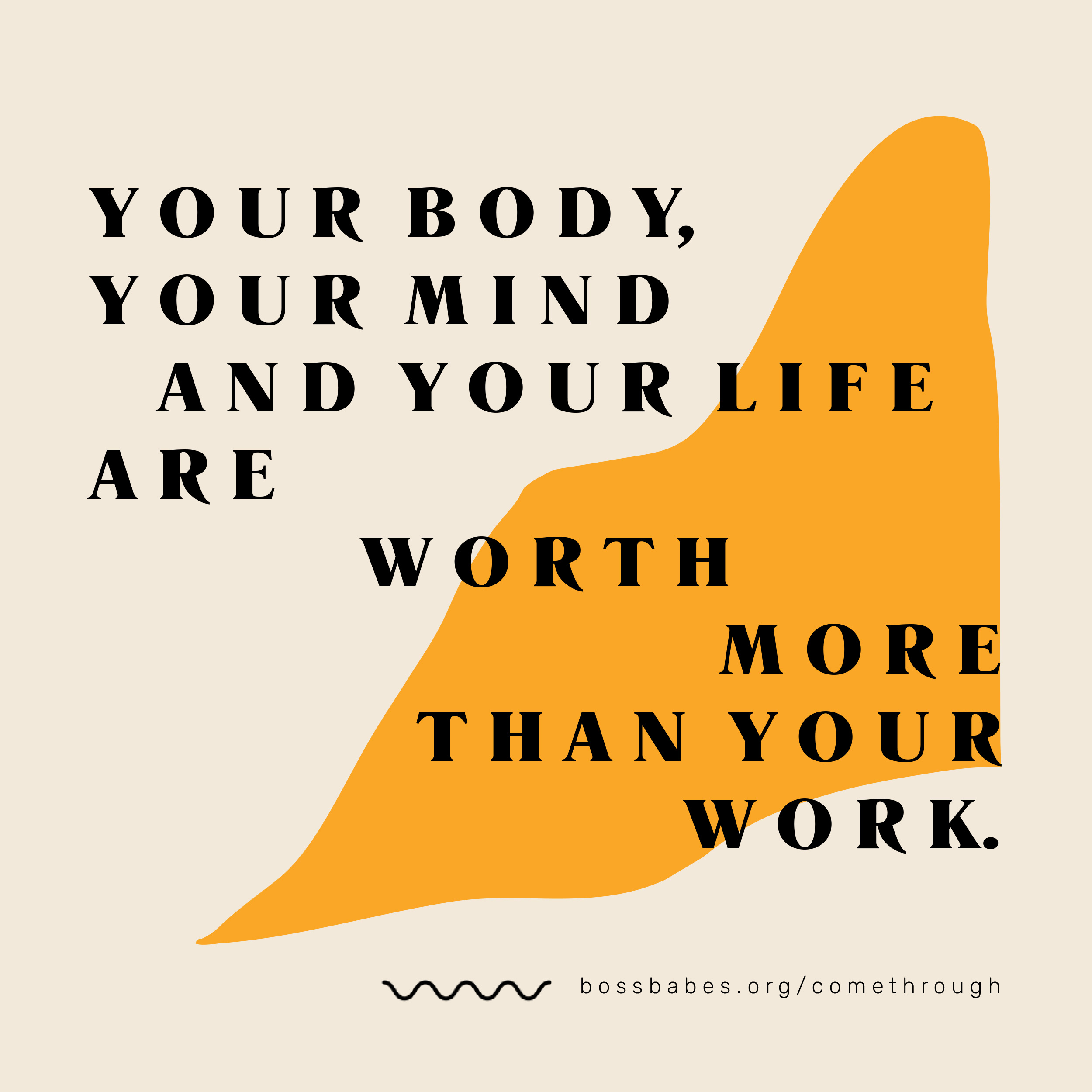
REMINDER NO. 3: YOUR BODY, YOUR MIND AND YOUR LIFE ARE WORTH MORE THAN YOUR WORK.
A fresh start might be intimidating, but it gives us the chance to do things differently. You know more than you did last year. So, what can you change about your approach to stress and success? What can you rewrite or reset when it comes to your personal and professional goals? It’s always OK to begin again.

CURIOUS ABOUT OUR PROGRAMS AND THIS THEME?
On Experimentation And Making Space For Your Ideas: Emily Ng
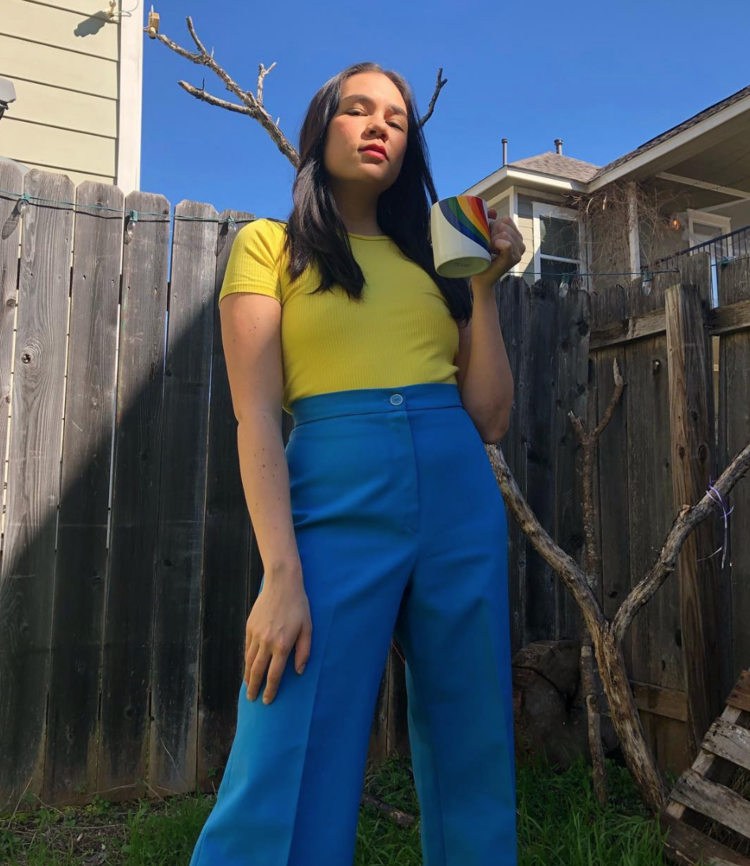
Emily Ng chats with us about her award-winning stick-and-poke shop, newly opened in East Austin.
This week, we’re preparing for the second conversation in our Money Mindsets series, a three-part conversation with local Austin leaders at the Capital One Café downtown on November 21, December 7 and December 19 exploring money setbacks, leveling up and staying financially informed.
Today, we’re publishing an interview with Emily Ng about her award-winning stick-and-poke shop, newly opened in East Austin.

ABOUT EMILY NG:
Emily Ng is a tattoo artist, musician and the owner of No Good Tattoo, a female-driven contemporary studio in Springdale General.
Describe the way your business and projects have grown and/or changed within the last three to five years.
No Good Tattoo has only been open for about six months, but a lot has changed since I decided to open the studio. It was originally going to be a private studio with just one other artist and I. The studio now hosts six full time artists and a constant stream of guests from around the US. This decision was based on the needs and wants I was constantly observing from my community. It was clear to me that there was a demand for more variety in the tattooing scene in Austin. It was also clear that many women, LGBTQ+ and non-binary folx and people of color were not being given chances to work in traditional shops. The decision to grow took all that into account. I started with three artists, including myself, and we have hired three more since. The shop is now full for the most part, and after putting some finishing touches on it early next year, I'll be working on opening a second location.
What's a money tip or trick that you've learned recently?
Don't fall trap to the "if you build it, they will come" mindset. Make sure people want to buy what you're selling before investing a lot of your own money or going into debt! You can do this by doing preorders or making an "MVP" (minimum viable product) that gives just enough of what you're trying to sell. If you can get a lot of people to commit to that, then you can feel confident making bigger financial investments.
What advice or lesson would you share with someone who’s at the start of doing their own thing?
Don't let yourself become paralyzed by big decisions. If you're waiting on someone more experienced to give you an answer, it might never happen. Do the research and then just go for it! Nothing is final; you can always change it later.

Design by Danni Wright
want more?
Join us at Money Moves and Mindsets this Saturday, December 7 from 10 AM to noon at the Capital One Café to hear Ng’s story. Thanks to Capital One’s commitment to supporting women in entrepreneurship and small business owners, this event is free and open to the public with RSVP.
Can’t make it? We highly suggest learning more about our biannual conference WORK, a one-day event that presents new ideas and approaches to creative and entrepreneurial work. Hosting 300 guests every summer and winter, this biannual, one-day event's panels, workshops and speaker sessions touch on personal and professional development, marketing, wellness, business management and entrepreneurship. ✨The next WORK conference will be held in January 2020 at the University of Texas at Austin’s Rowling Hall.
On Letting Your Business Grow and Evolve: Christie Zangrilli
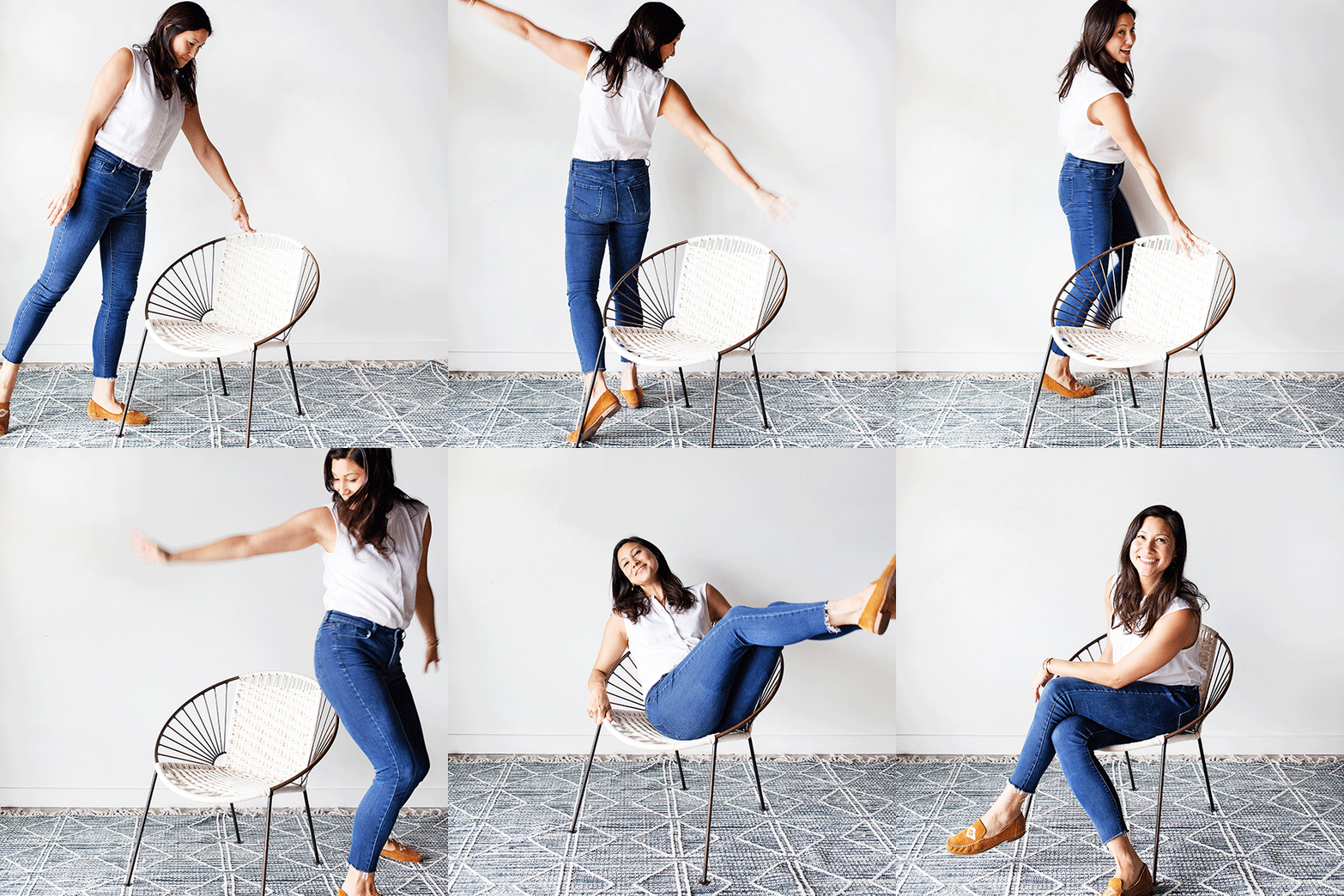
Today, we’re publishing an interview with Christie Zangrilli about the growth and expansion of a business she co-founded three years ago, Party at the Moontower Rentals.
This week, we’re preparing for the second conversation in our Money Mindsets series, a three-part conversation with local Austin leaders at the Capital One Café downtown on November 21, December 7 and December 19 exploring money setbacks, leveling up and staying financially informed.
Today, we’re publishing an interview with Christie Zangrilli about the growth and expansion of a business she co-founded three years ago, Party at the Moontower Rentals.
GIF by Heather Gallagher Photography
ABOUT CHRISTIE ZANGRILLI:
Christie is the co-owner of Party at the Moontower Event Rentals. She’s a brand-builder, pattern-lover, can-doer, child-wrangling type geek who likes to party.
Describe the way your business and projects have grown and/or changed within the last three to five years.
My current business is only three years old, so it has been all growth! When you first launch—because your business is all you’ve been thinking about—you expect people to start buying from you immediately. But it takes people a while to discover you and then be willing or have the opportunity to give you a try. It was almost a year before we saw any real traction. We’ve also seen an evolution in the type of clients we serve. Initially we expected 50/50 wedding and corporate clients, but now it’s clear that we corporate clients are our bread and butter. The reason, which is obvious looking back, is because our Austin-modern style much better fits corporate events versus romantic weddings.
What's a money tip or trick that you've learned recently?
Make an appointment with your CPA at the end of each quarter and have them build out a "progressive budget” and cash flow. The progressive budget looks at your budget versus actuals for that quarter (or if you don’t have prior history, then just look at what what you made/spent that quarter—this will then be the basis for your budget in the future). The cash flow will tell you the other stuff you spent on and should match up with your bank account. Based off this info you can easily see into the future and answer a lot of the questions we all struggle with. Send these questions to your CPA ahead of your meeting as well. For example:
How much can I afford to spend on additional inventory?
Does it look like I can afford to hire another person on within the next X months and if so, how much can I afford to pay?
What advice or lesson would you share with someone who’s at the start of doing their own thing?
Be somewhat prepared but don’t worry about knowing everything or having all the answers. There’s a point where you simply have to jump and figure it out on the way down.
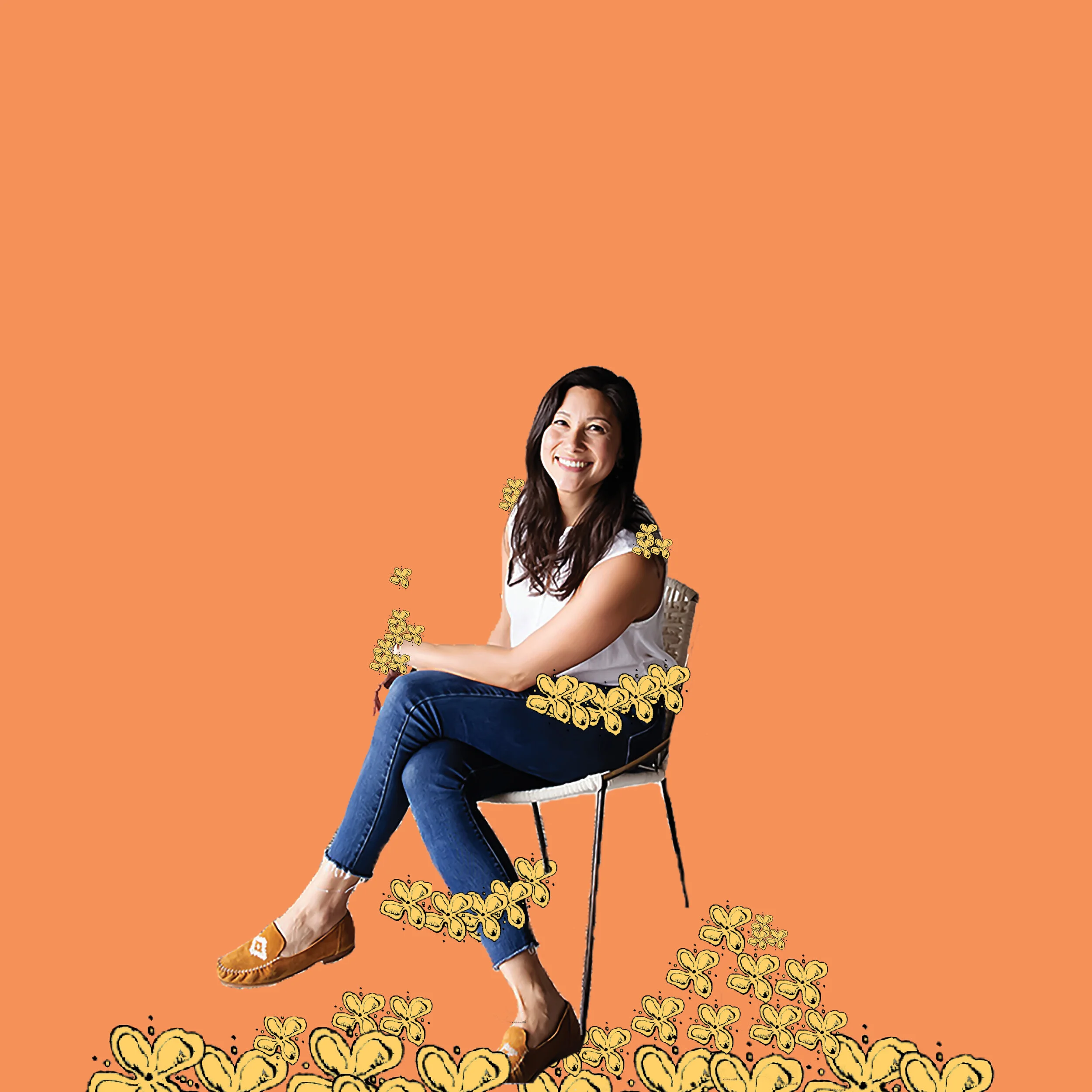
Designed by Danni Wright
want more?
Join us at Money Moves and Mindsets this Saturday, December 7 from 10 AM to noon at the Capital One Café to hear Zangrilli’s story. Thanks to Capital One’s commitment to supporting women in entrepreneurship and small business owners, this event is free and open to the public with RSVP.
Can’t make it? We highly suggest learning more about our biannual conference WORK, a one-day event that presents new ideas and approaches to creative and entrepreneurial work. Hosting 300 guests every summer and winter, this biannual, one-day event's panels, workshops and speaker sessions touch on personal and professional development, marketing, wellness, business management and entrepreneurship. ✨The next WORK conference will be held in January 2020 at the University of Texas at Austin’s Rowling Hall.
On Investing In Yourself: A Conversation With Shauntavia Ward
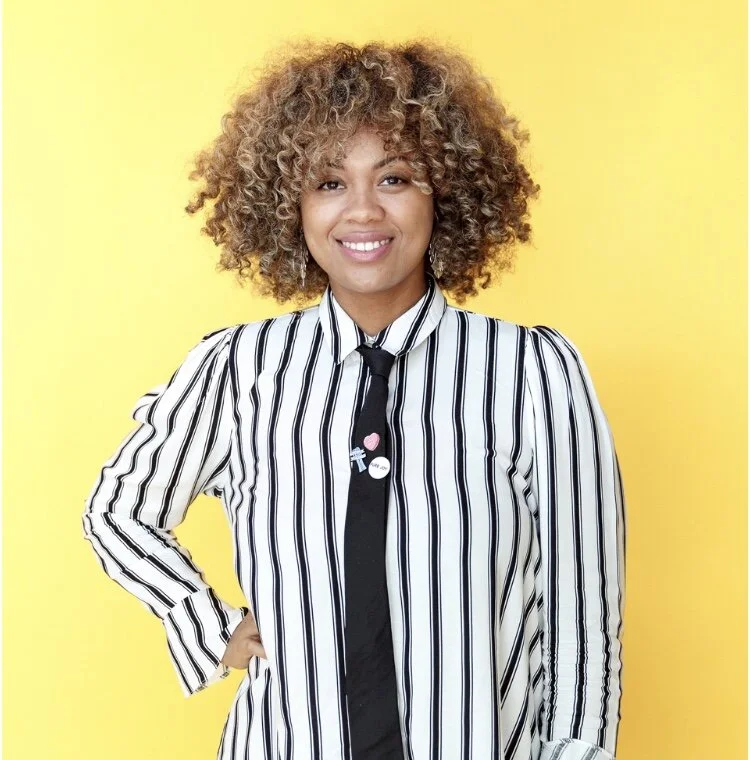
In this Q&A, first-time entrepreneur and eleMINT Skin founder Shauntavia Ward reminds us to invest in ourselves.
This week, we’re preparing for the second conversation in our Money Mindsets series, a three-part conversation with local Austin leaders at the Capital One Café downtown on November 21, December 7 and December 19 exploring money setbacks, leveling up and staying financially informed.
Today, we’re publishing an interview with Shauntavia Ward about her experience launching her own facial studio within the last six month. In this Q&A, Ward reminds us to invest in ourselves.

ABOUT SHAUNTAVIA WARD:
A nurse practitioner, licensed esthetician and business savvy new founder, Shauntavia Ward is trailblazing for skincare, entrepreneurship and women's empowerment. Shauntavia is the creative mind behind eleMINT Skin, a modern facial studio that aims to bridge the gap between beauty and wellness, while inspiring people to love the skin they're in. eleMINT is redefining the facial experience through services that are inclusive, accessible, affordable and impactful.
Describe the way your business and projects have grown and/or changed within the last three to five years.
What started as an idea on paper three years ago has grown into a disruptive skincare business with a chic physical space and cult clientele in-real-life. After years of dreaming, I put my plan into action and opened eleMINT, a modern facial studio six months ago. We've not only grown our clientele from zero, but we've diversified our revenue streams through events and strategic partnerships. It's been fast growth, but we're taking notes, making changes as necessary and excited about the future.
What's a money tip or trick that you've learned recently?
Everything can be negotiated—EVERYTHING. Each dollar made within your business has to positively impact your financial bottom line. Simple negotiations involving costs of supplies and shipping fees for example, can impact your profit margin. Small savings now give you the flexibility to choose to splurge later.
What advice or lesson would you share with someone who’s at the start of doing their own thing?
Get your personal finances in check. For your first few years in business, your personal credit is your business credit. Keep it in good standing, so when an opportunity knocks, you're ready.

Designed by Danni Wright
want more?
Join us at Money Moves and Mindsets this Saturday, December 7 from 10 AM to noon at the Capital One Café to hear Ward’s story. Thanks to Capital One’s commitment to supporting women in entrepreneurship and small business owners, this event is free and open to the public with RSVP.
Can’t make it? We highly suggest learning more about our biannual conference WORK, a one-day event that presents new ideas and approaches to creative and entrepreneurial work. Hosting 300 guests every summer and winter, this biannual, one-day event's panels, workshops and speaker sessions touch on personal and professional development, marketing, wellness, business management and entrepreneurship. ✨The next WORK conference will be held in January 2020 at the University of Texas at Austin’s Rowling Hall.

On Managing Day Jobs And Finding Inspiration: Dawn Okoro
To launch CHATROOM on November 18, filmmaker and artist B. B. Araya interviewed groundbreaking artist, Dawn Okoro. Keep reading for some takeaways from the talk.
This fall, BBATX (#bossbabesATX) is partnering with creative entrepreneur and visual artist, Mercy Emelike, to host CHATROOM, an art conversation series highlighting Black women and non-binary artists. This event series serves as an opportunity to provide space for artists to have a healthy dialogue with members in their community.
To launch the series on November 18, filmmaker and artist B. B. Araya interviewed groundbreaking artist, Dawn Okoro. Keep reading for some takeaways from the talk.

ABOUT THE ARTIST, DAWN OKORO:
Dawn Okoro is a Nigerian-American artist who settled down in Austin after receiving her bachelor’s degree from the University of Texas, and her law degree from Texas Southern University. Her passion to become an artist was inspired by her love of photography, design, and fashion illustration. Using acrylic, oil, and pencil, she incorporates photography, ideas, and collage from popular culture. Her artwork embodies space, movement, pattern, design, texture, and color; as well as lived experiences and self reflexivity. Okoro’s work has been featured in Forbes, Drawing Magazine, and The Austin Chronicle. Her work has also been shown at the Texas Biennial, New York University, Notre Dame University, Rice University Museum, George Washington Carver Museum, and MoCADA Museum in Brooklyn.

about the facilitator, B. B. Araya:
B.B. Araya is a Texas-based filmmaker. After interning for director Richard Linklater, she created and directed the short film series, We Are, which was was picked up for distribution by Issa Rae Productions. Her latest short film, Yirga, had its world premiere at SXSW 2019 and she’s currently penning her feature film debut.
HERE ARE THREE TAKEAWAYS FROM THEIR DISCUSSION:
“The greatest threat to my success is myself.” — DAWN OKORO
During this conversation, Okoro addressed many components of her life that influenced her personal journey through art. She opened up about her reluctant move back to Texas from New York, which resulted in her taking a five year pause from being an artist after facing rejection of her artwork. She confesses that “looking back [she] had unrealistic expectations and was impatient” when it came to settling back into her artistic groove.
“I don’t want to do this, I just want to do art.” — DAWN OKORO
Work-life balance was another important topic that was touched during this session with Okoro. When asked how her day job feeds into her creativity, she shares how she originally struggled with maintaining a job while also preparing for shows and building her art career. There was a period of time where she decided to solely focus on art, but eventually she found a manageable occupation that would support her artistry as well as providing a steady income.
“I wanted to create a space where the community I’m targeting feels like it’s a place where they belong.” — DAWN OKORO
Although Okoro was mainly exposed to American culture throughout her childhood, she traveled to Nigeria as an adult to learn more about her father’s side of the family. She expresses West African culture by incorporating patterns from fabrics she saw while visiting Nigeria, and also using Nigerian-American models dressed in traditional wardrobe and fabric. A prime example can be seen in her exhibition, Punk Noir, in which she features multimedia creative and friend, Moyo Oyeola. Okoro also draws inspiration from notable artists such as Barkley Hendricks, who creates vivid images of people of color against a solid background, and Andy Warhol who uses bright colors and bold aesthetics.
Want to attend THE NEXT CHATROOM?
Join us at the next discussion on December 2, feature mixed media artist, Deborah Roberts interviewed by writer and activist Virginia Cumberbatch.