
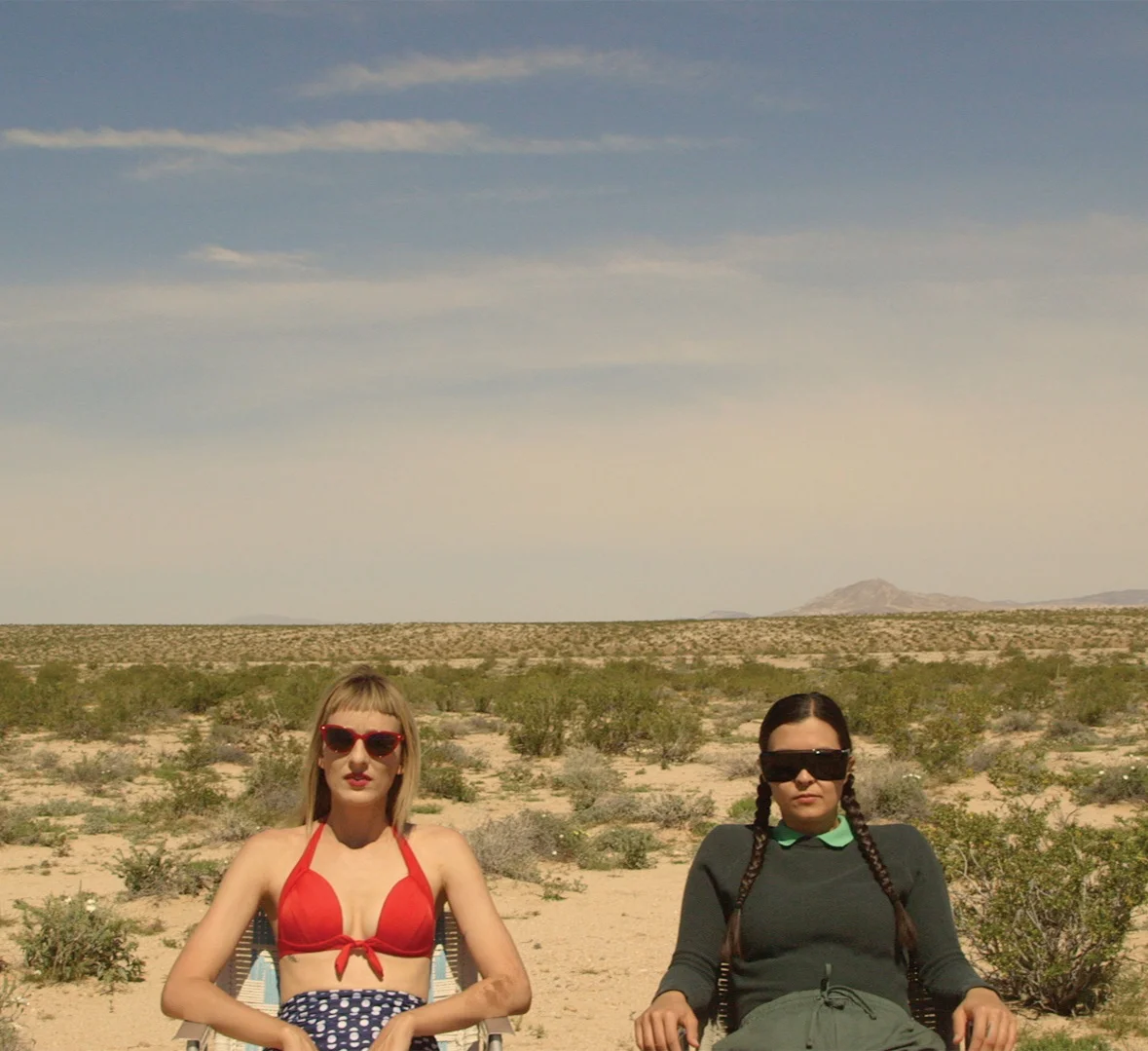
Meet the Dynamic Female Filmmaking Duo Behind Award-Winning Indie Film 'The Planters'
In this interview, Margeaux talks to Alexandra Kotcheff and Hannah Leder, the two women filmmakers that wrote, directed, crewed and starred in the award-winning indie film The Planters.


It might not be known on a worldwide scale quite yet, but filmmakers Alexandra Kotcheff and Hannah Leder are powerful forces to be reckoned with. The filmmaking pair directed, wrote and starred in their recent film The Planters (which swept the awards at this year’s Austin Film Festival).
The film itself is a dark comedy centered around Martha Plant, an air conditioner salesperson who lives a solitary existence planting buried treasure in the desert when she takes in and forms an unlikely friendship with Sadi— and all of her multiple personalities. Recently, Kotcheff and Leder were asked, “What changes when a woman sits in the directors chair?” And having had two directors in the case of The Planters, they answered: “We want to live in a world where people from all backgrounds, all genders and all identities are able to freely share and express their art. Every time a woman sits in the director’s chair, we get one step closer to a more honest representation of the society and culture in which we live.”
We were proud to be a partner and support a few of The Planters screenings the Austin Film Festival—and we were lucky enough to interview the duo about the film, their history working together and their creative insight.
This Q&A was conducted by BBATX communications assistant Margeaux Labat and is answered by Kotcheff and Leder as a pair.
You two single-handedly wrote, directed, starred in , and crewed this film, and were pretty much in charge of all aspects of the film’s production. was taking on the feat that was making the planters all by yourselves a deliberate choice? or something that just happened to be the way things turned out?
Making The Planters without an on-set crew was always how we intended to shoot. It was a wild-hair idea that also came with the peculiar and truly delusional belief that we could shoot the entire film in six weeks. We ended up clocking a total of 127 shooting days.
You two met when you were 8 years old, and made your first film together when you were only 12 years old! would you mind describing your early collaborative film projects together?
Our first film was about a suicidal pre-teen who was grieving the recent death of her parents… not unlike Alexandra’s character in The Planters. It was all parts emo. The next short was about a very intoxicated fortune teller. Though only one was intended to be funny, both are a riot and star Alexandra.
What was the most challenging aspect of making the planters?
It was a test of endurance we hadn’t anticipated. We signed up for a six-week sprint and ended up doing a two-year marathon.
If you could, what advice (or warnings) would you give yourselves before making the film?
Despite how you’re feeling right now (exhausted, over-heated, like you want to give up, etc.), there will come a time when you would do anything just to go back to experience the pure joy of being able to create with your best friend all alone in the desert again.
Can you tell us anything about your next film project, Peachville?
It’s a dark comedy about a bipolar Korean mother who takes her adult care-taking daughter to the tiny, quirky town of Peachville to open a nail salon. When a mining company threatens to take over, the mother-daughter team become integral in the fight to save the town. Peachville was a finalist for the 2016 Sundance Institute Screenwriters Lab.
What advice would you give to aspiring women filmmakers that wish to make films with perhaps a limited crew, training or resources?
For better or worse, we live in a time where access to all kinds of information is just click away. Use this and see where you can fill in the pieces yourself. We couldn’t afford to hire an editor so Hannah had a couple hours with an editor to pick his brain about Avid and then got online and taught herself the rest. Also, find people you admire and want to work with, and collaborate.
When and where else will audiences be able to see The Planters? Will it be in theaters anytime soon?
We are having our Los Angeles premiere this month at AFI Fest and we’re currently looking for the best distribution fit. In the meantime, you can keep tabs on our whereabouts on theplantersfilm.com and our joint Instagram account (@lederkotcheff).
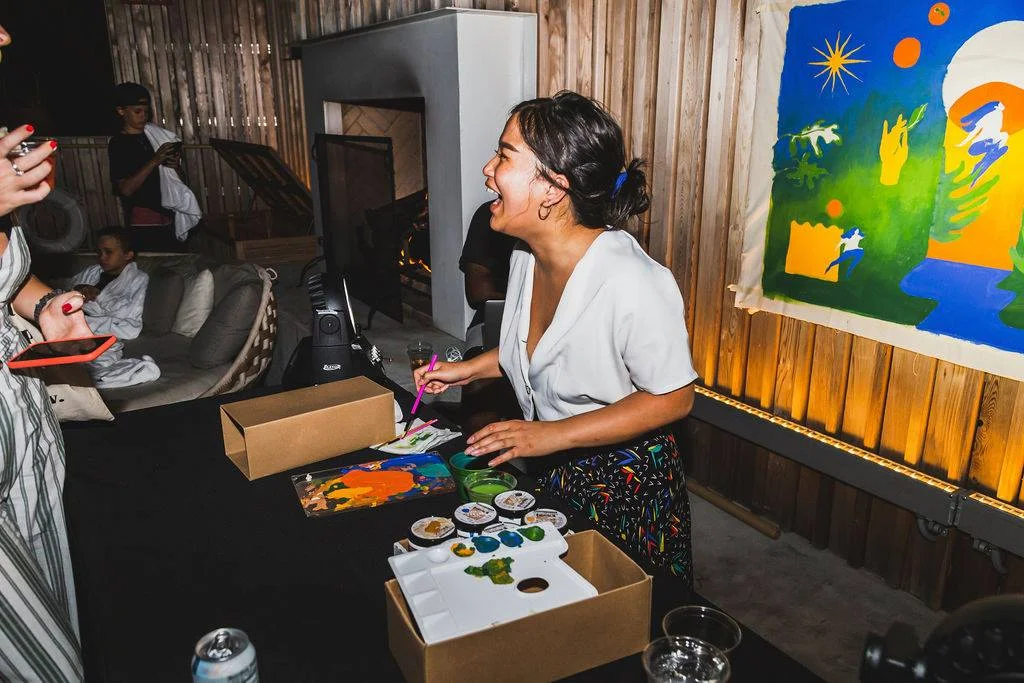
Making Space For Us: Behind Our 2019 Residency
In this blog post, #BBATX 2019 committee member and board member Xochi Solis looks back on our 2019 residency and her contributions as the program’s lead curator.
From March to September each year, BBATX curates a monthly residency highlighting the work of 10 to 15, Texas-based women and nonbinary visual and musical artists. Beyond the monthly features from March to September, resident artists work with the BBATX team and its collaborators to produce site-specific commissions and exhibitions within our programming. Throughout their residency year, artists are challenged to apply their skills and expertise towards community issues, too. And by design, each of the public programs, developed by our residents, also serve as a resource for their audience to learn about a range of artistic processes, approaches and sustainable methods.
~ In this blog post, #BBATX 2019 committee member and board member Xochi Solis looks back on our 2019 residency and her contributions as the program’s lead curator.
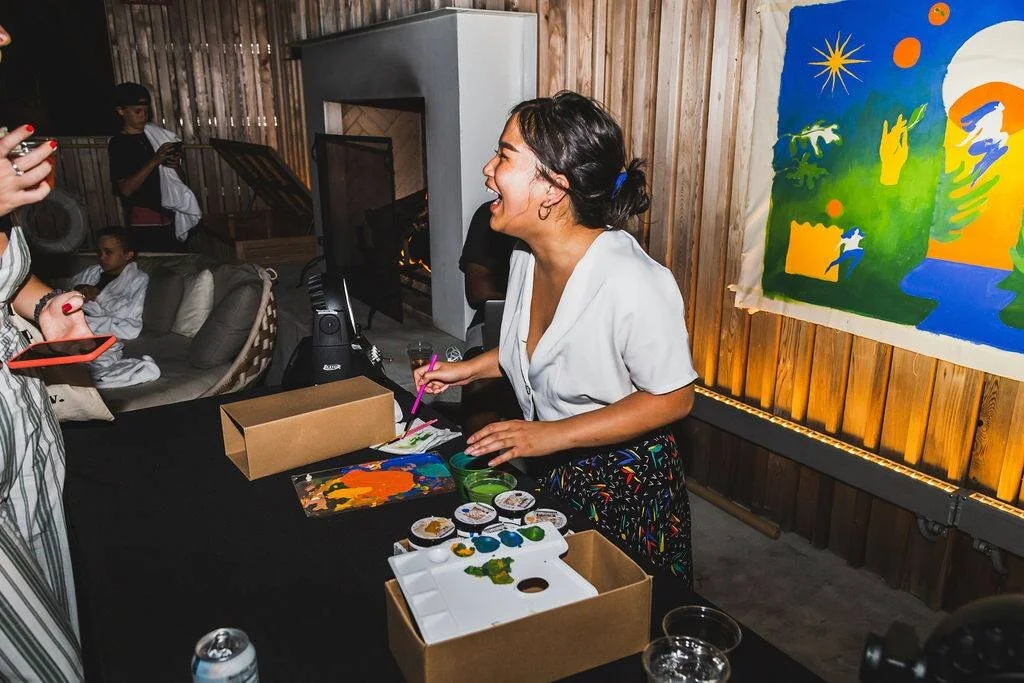
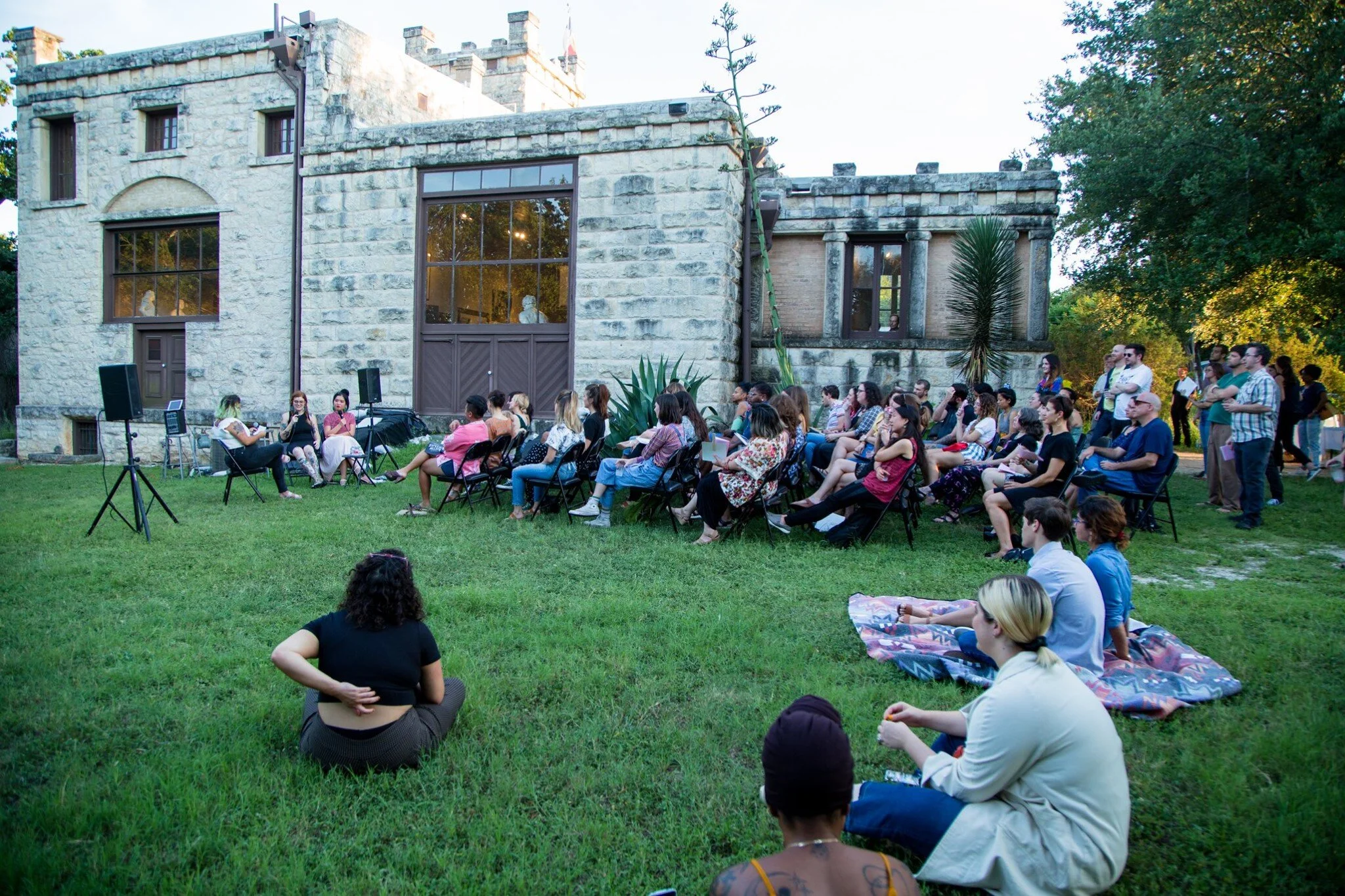
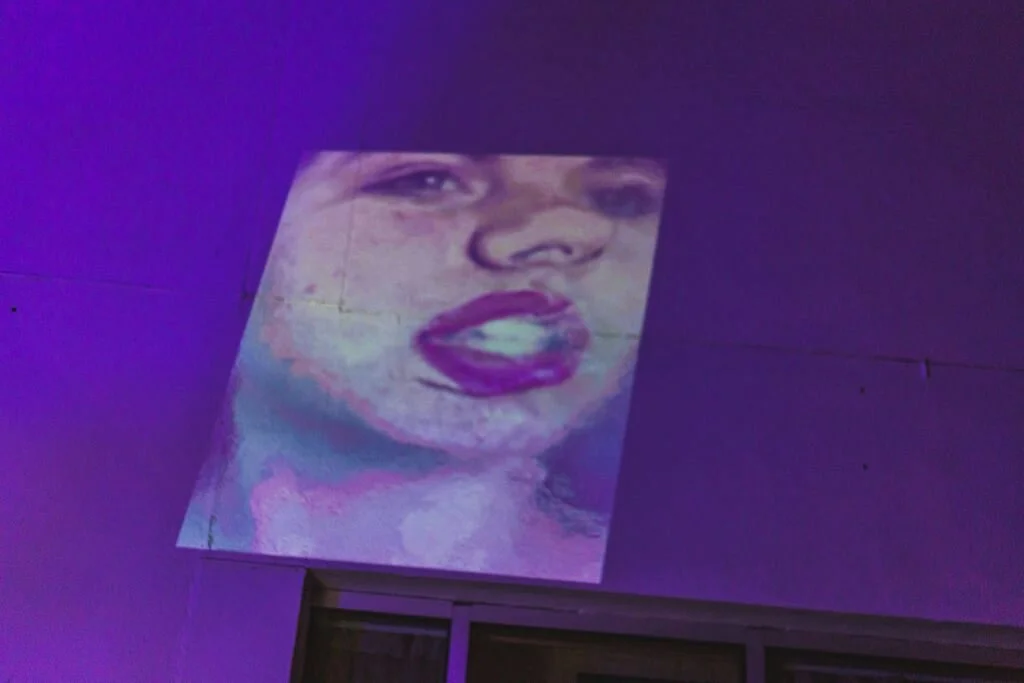

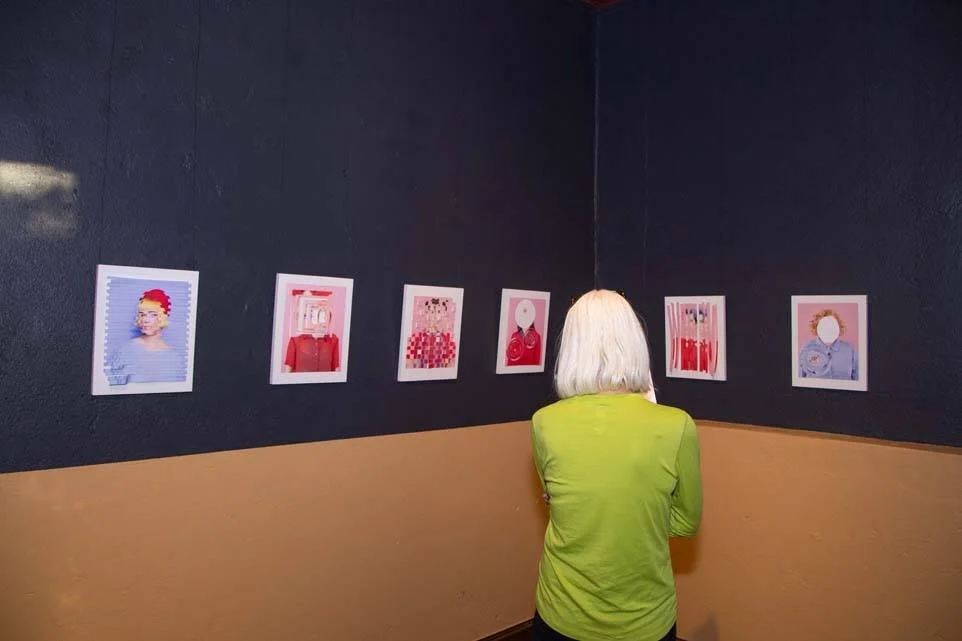
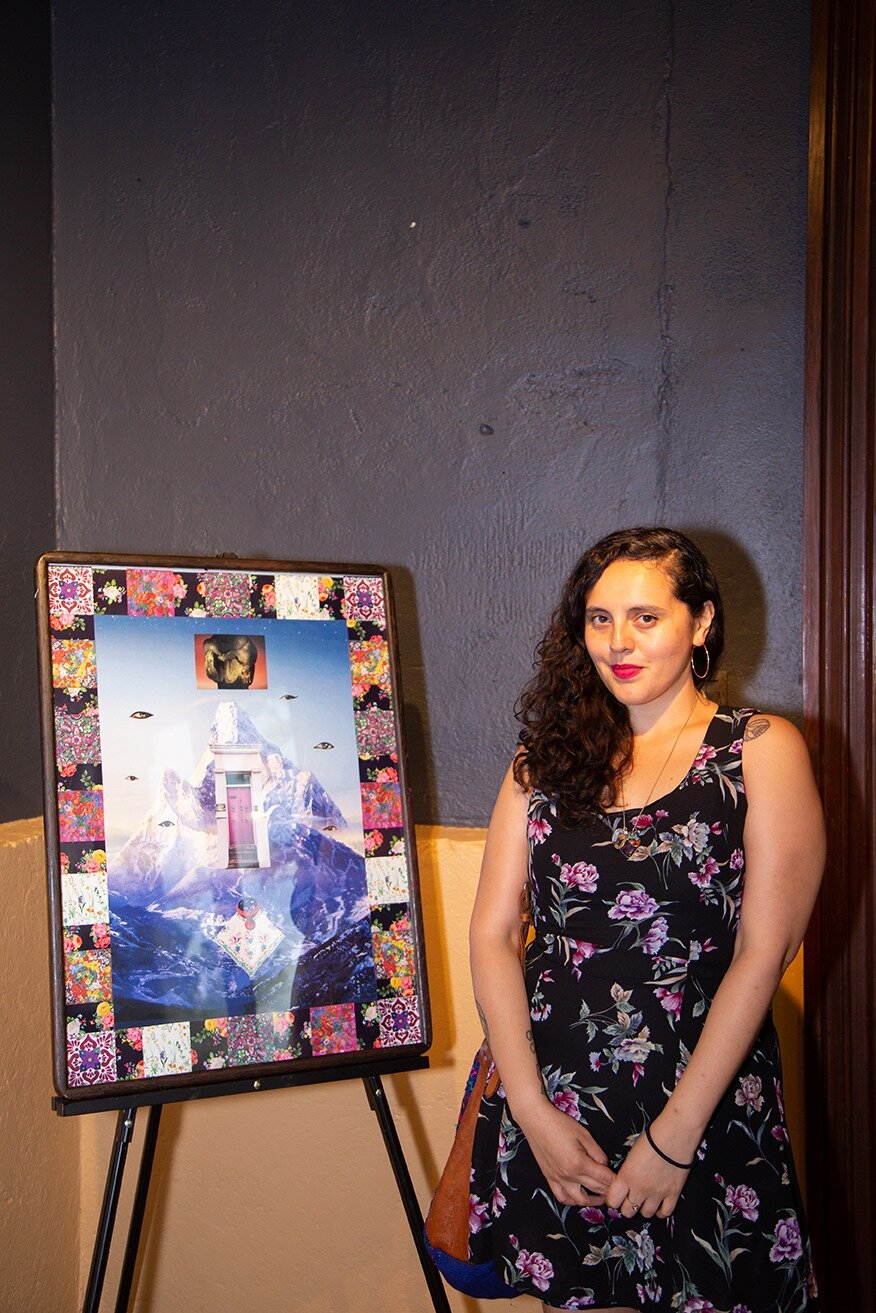
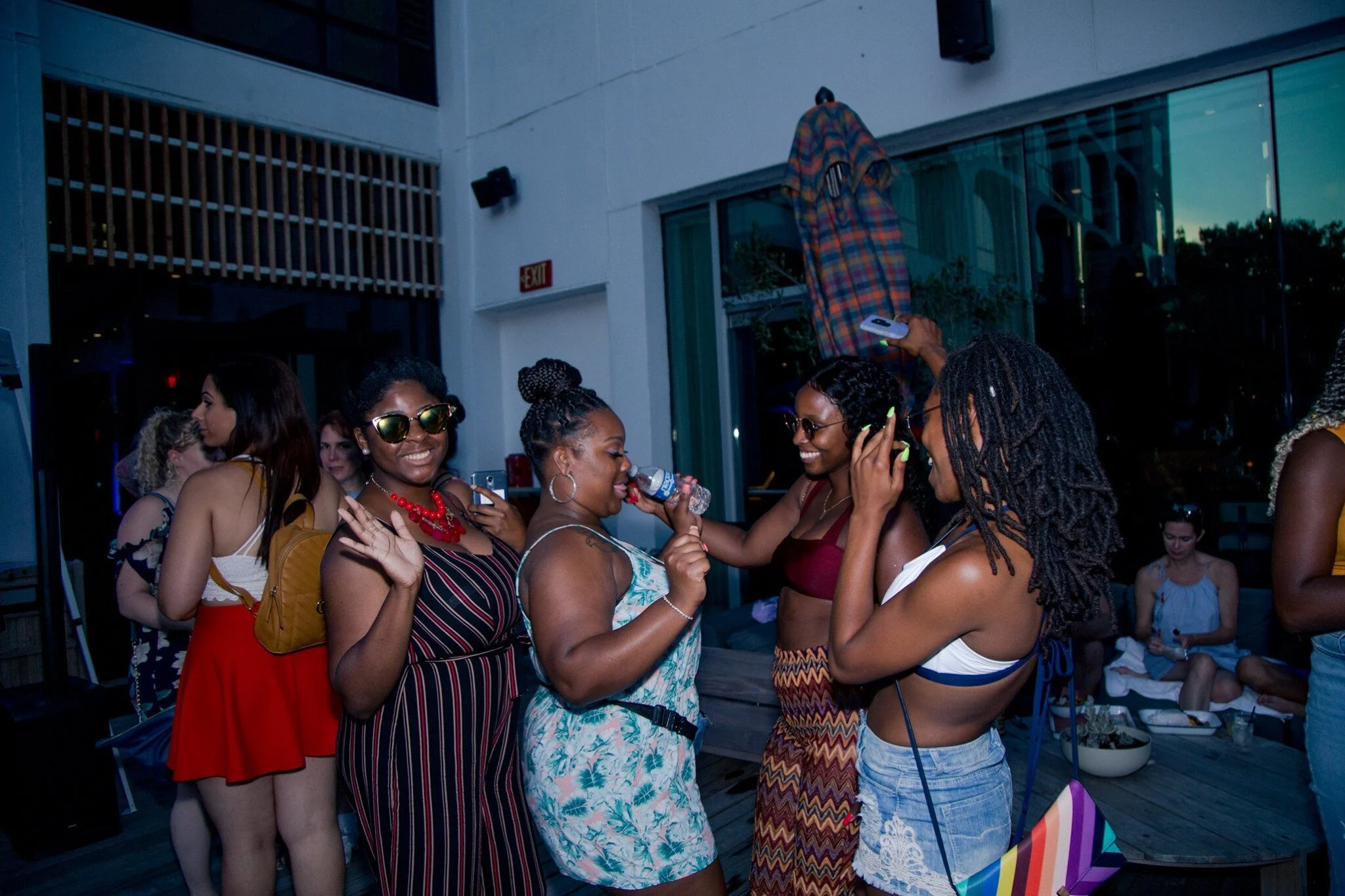
HOW IS THE RESIDENCY CURATED?
Actively seeking artists and artist duos who work visually—with sound, or some combination of both—The Residency program is curated internally by the #BBATX volunteer programming committee. Our committee steers the selection process focusing on Central Texas artists whose creative vision aligns with the values of our organization and who we believe are positioned for advancement in their field.
This year, as part of our dedication to create a more impactful year together, we began curating in February with an in-person studio visit. We met with resident artists to discuss their aspirations for the year and their practice as a whole. Some artists were shifting gears from one career into a new one—others wanted a more public space to showcase specific aspects of their craft. Each artist’s ambition was considered carefully and our committee members tracked their progress to make sure we were doing what we could to help share their work and process with our community. (Throughout the year the #BBATX blog has featured written interviews between committee members and resident artists that dive deeper into their practice. These blog posts remain as a permanent archive of our engagement with, and work done by, our chosen artists during their time with us.)
WHAT DID THE 2019 RESIDENCY LOOK LIKE?
In 2019, More than 3000 people attended our monthly residency series, and we funded $8,000 in commissions and performances.
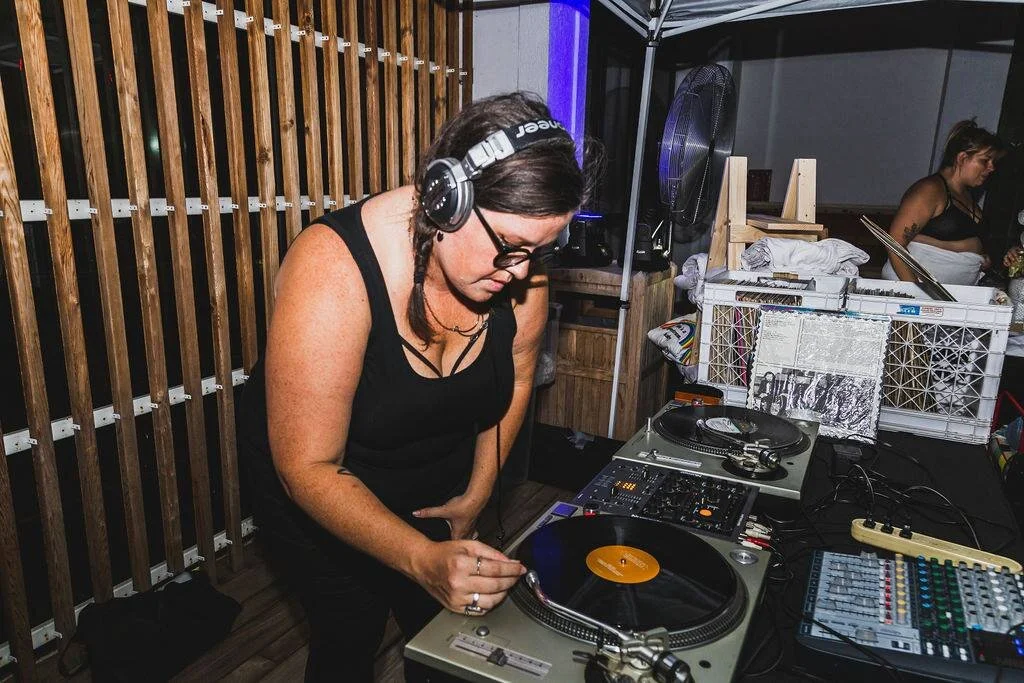
This was our second year ever producing The Residency, and it was the first time we were able to invest more time and money into helping each resident artist meet their annual goals. We continued what we started in 2018—a monthly party celebrating the work of women and nonbinary artists and DJs—by setting up each of our artists with featured performances at the LINE Hotel, but we also made a commitment to go further. We wanted to create more opportunities for financial gain and public exposure, while also giving our resident artists access to our vast and varied network.
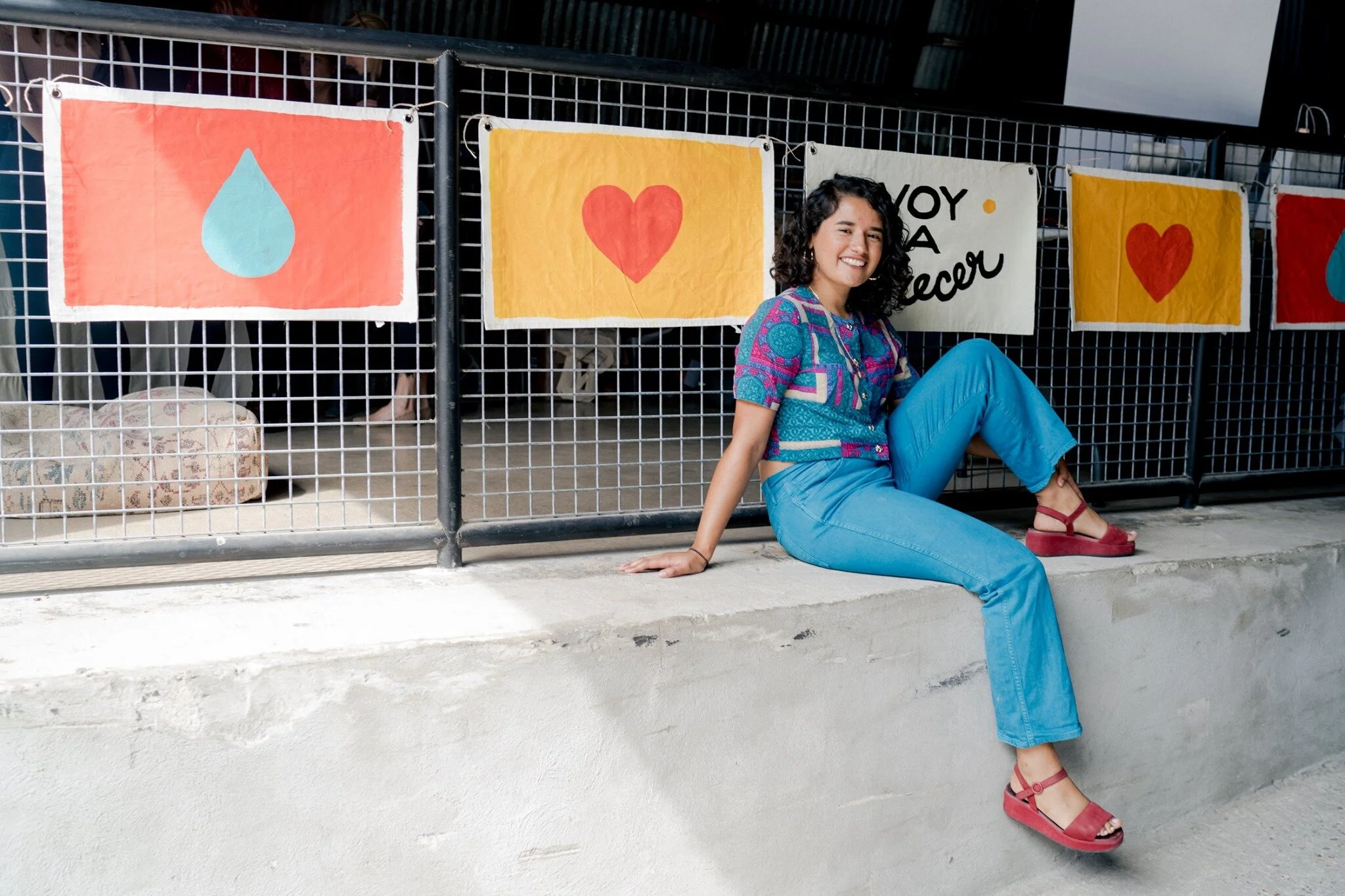
So, this year, our approach was different. We kept each artist in the loop with monthly updates and opportunities to learn alongside us at any of our educational programs, like our quarterly community meet-ups, workshops and panel series. And our 2019 cohort were also given first dibs to artistic commissions for our shop, BABES FEST and craftHER Market. Funded by our organization, these commissions included the creation of soundtracks and mixes, unique and helpful way-finding signage, poster artwork, stage designs that beautifully hung behind panelists and performers alike and limited edition prints to celebrate milestones in the organization’s development. Beyond these paid opportunities, three of our artists also had the chance to debut and exhibit their work within Austin’s Elisabet Ney Museum.
On a personal level, it has been a joy to witness how much they have learned about themselves and the essential place they have within our ever-changing city. The development of The Residency program reflects the organization’s growth to better serve and connect women and nonbinary creatives in Austin, Texas and we look forward to nurturing the next year’s cohort in 2020.
MEET OUR 2019 ARTIST COHORT.
Working with #BBATX has given me the confidence to put myself out there professionally and begin to offer my DJ stylings to a much wider audience!
— Amanda Vaughn, DJ and researcher
Through the residency, I learned more about the women and nonbinary community here in Austin. Through craftHER Market, I discovered that there is a very supportive community for women and nonbinary makers’ work. I also learned about the historical Elisabet Ney Museum through the Meet Her Hands series. The residency has been a very interesting and educational experience of discovering what’s always been and what the future can hold.
— Tsz Kam, multidisciplinary studio artist
Being part of the DJ residency program with #BBATX truly helped me not only grow as an artist, but as a business this year. I am so grateful for the multiple opportunities they provided for me and the community they have fostered that comes out and supports these events! I grew my audience, played in venues I've always wanted to play in (the pool at the Line Hotel), pushed my boundaries with what I could do DJing-wise, met incredible people, and have some awesome collaborations in the works! Through this program I had and (will have) gotten booked out for multiple gigs (weddings, parties, openings). I also met incredible artists who I not only bought works from, but are also now my friends (Jinni J and Indigleaux).
— Cassandra Shankman AKA DJ CASS&RA, DJ and composer
I was so honored to participate in the #BBATX 2019 Residency I had heard about the organization’s events and had always wanted to be involved. My premier as a resident artist at the LINE Hotel was FANTASTIC, too. There's nothing more special than community dancing to my beats! It was another nod to my purpose to spread Deep House to Austin, Texas. DJing at BABES FEST was the cherry on top, and I'm so thankful that I recorded to share my set with the people. Thank you again for letting me be part of the team and I hope to contribute to future events!
— Shani Hebert, DJ and house music curator
The residency was a great experience for Double Trouble! We loved meeting the fellow residents and really appreciated the financial support and exposure that being residents gave us through the gigs we played. (This coming week we are playing the Austin Central Library Annual fundraiser, and we were discovered through being featured on the residency website!)
— Erin Gentry & Lynn Metcalf, DJ duo Double Trouble
I am beyond appreciative of having all the opportunities that have come from being part of the residency. I feel like I have gained more confidence in my abilities, and I have loved getting to know more local artists.
— Leika
Learn more about all of 14 artists in our 2019 Residency here.
GET INVOLVED WITH THE RESIDENCY.
The Residency 2020 will be announced on International Women’s Day (March 8, 2020). The monthly series will return in April 2020 at the LINE Hotel. Click here to sign up for email updates and notifications or you can always check back at bossbabes.org/residency.
Want to become a Residency partner? Head to bossbabes.org/partners and learn more.
Here Are 9 Ways To Get Involved With #BBATX
Whether you’ve been to an event before or have never heard of us, we want you to join us to make our mission a reality. We’re two years into officially becoming a nonprofit, and we need all the support we can get.

We’re a Texas-based nonprofit that amplifies and connects women and nonbinary creatives, entrepreneurs and organizers. We create spaces to share our crafts, find collaborators, learn new skills, seek guidance and provide each other with practical and emotional resources. We believe that representation, education and intersectionality make for more resilient leaders and communities.
So, whether you’ve been to an event before or have never heard of us, we want you to join us to make our mission a reality. We’re two years into officially becoming a nonprofit, and we need all the support we can get.
Here Are 9 Ways To Get Involved With #BBATX:
NO. 1: Attend an event.
Seriously—every time you attend an event of ours, you’re putting your dollar, attention and time toward women and non-binary creatives, entrepreneurs and leaders. Showing up counts.
NO. 2: Join a program.
Applying to participate in BABES FEST or craftHER Market is a great way to get involved with #BBATX and benefit from the community we cultivate. (You can also become more embedded in the community by attending our intimate workshops and smaller meet-ups.)
NO. 3: Become a partner.
Partners donate between $500 to $20,000+ to our programs. They give us the foundational, financial strength we need to employ our staff, hire artists, book venues and invest in community outreach.
NO. 4: Donate to our programs.
We love cold, hard cash. :) It takes $250,000 per year to what we do, and every dollar toward those expenses helps us survive.
NO. 5: Buy from our shop.
Everything in our store benefits our programs, by directly contributing to our staffing and administration costs. (Plus, it's all cute and for the most part eco-friendly and sustainable.)
NO. 6: Subscribe to our bimonthly newsletter.
Opening our emails and tuning into what we do beyond social media helps us become less dependent on Instagram’s and Facebook’s biased algorithms, while ensuring you stay in the loop.
NO. 7: Read our blog.
Knowing more about our community and our values helps you become a better advocate for #BBATX’s values and ideas.
NO. 8: Contribute to #BBATX’s Fall / Winter 2019 Creative Leadership Survey.
By putting your thoughts in this survey, you help us collect accurate data on the barriers that women and nonbinary leaders face in Texas, which helps us fight back decision-makers in our communities and governments who don’t prioritize our needs.
NO. 9: Volunteer with us.
When you donate your time to #BBATX by volunteering at an event, you help us reduce the cost of our programs and keep both ticket prices, booth fees and other things that our community pays for more affordable.
GOT QUESTIONS?
We’ve got answers. Email us whenever at thebabes@bossbabes.org, and a member of our team will get in touch.
The Largest Event In #BBATX History: craftHER Market Weekend Fall 2019
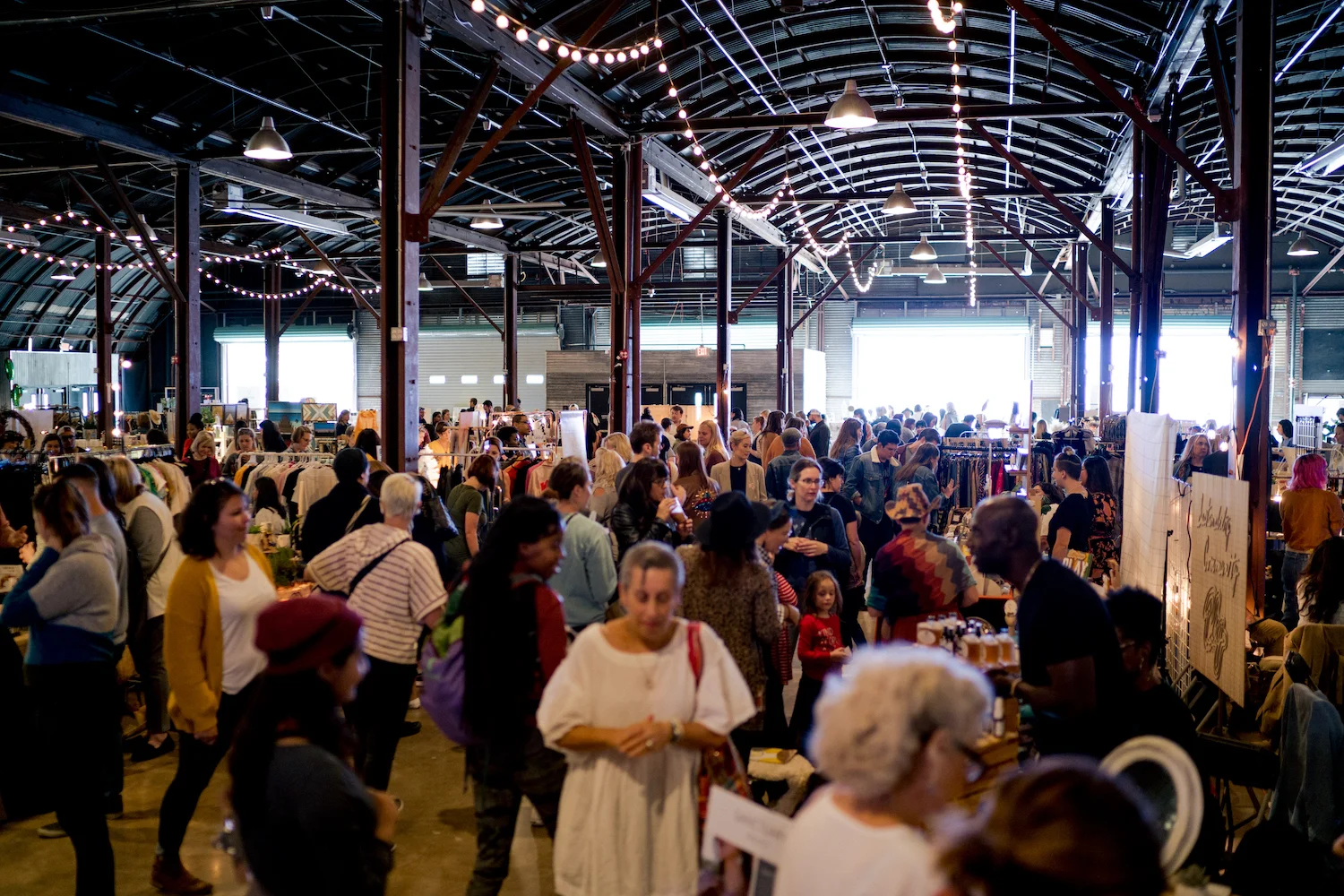
From 11 AM to 5 PM on October 12 and 13, 2019, we hosted our seventh installment of craftHER Market. 5300+ attendees filled the space to shop local and support women and nonbinary makers, creatives, artists and small business owners.


From 11 AM to 5 PM on October 12 and 13, 2019, we hosted our seventh installment of craftHER Market. 5300+ attendees filled the space to shop local and support women and nonbinary makers, creatives, artists and small business owners.
HERE’S WHAT HAPPENED.
craftHER Market Fall ‘19 was momentous. It was our first time attempting to host the pop-up for two days, and we successfully broke every one of our event records. Over the weekend, we hosted 5300+ guests, 140+ booths, including makers, bakers, chefs, artists and Austin-local community groups.
in summary:
We beat our attendance record and largest number of exhibiting artists record by a longshot. Prior to craftHER Market Fall 2019, our attendance record was 3500 and our largest number of exhibiting artists record was 125.
Our vendors BROUGHT IT. You can still shop from their stores and learn more about their work here.
This year’s panels stage discussions centered on what we need to flourish. How do we create and sustain environments that let ourselves (and others) grow? We were joined by 24 speakers from the community, and our panels stage looked better than ever thanks to our friends at Party at the Moontower Event Rentals.
Our featured artist, Edith Valle, created two installations for the craftHER Market entrance and panels stage, respectively titled “Ingredients to Flourish” and “Electric Papaya.” They were divine.
For the first time ever, we began each day with craft demonstrations (cuttlefish casting courtesy of Coelina Edwards and a community loom by Zanny Adornments) and closed out each day with performances by some of our resident DJs, DJ Dama Nilz and DJ CASS&RA. #vibes
Between our panels, performances and demonstrations, we bumped a mix by DJ Shani (another resident DJ at #BBATX) that had been recorded at our sister program, BABES FEST, earlier this fall. Click here to listen.
This fall’s record-breaking market was a village-effort. Shouts are in order for our vendor lineup, our staff, our committee, our volunteers and our partners at Fair Market, Tito’s Vodka, Resplendent Hospitality and the City of Austin’s Cultural Arts Division. THANK YOU.

Photo by Jinni J

Photo by Jinni J

Photo by Jinni J

Photo by Jinni J
WANT TO GET INVOLVED?
craftHER Market is produced by a team of staff and volunteer committee members at #bossbabesATX. #bbatx is a nonprofit organization that amplifies women and nonbinary creatives, entrepreneurs and community organizers. Our event series, showcases, strategic collaborations and professional development programs provide a platform of visibility, outreach and financial opportunity to 1000+ emerging women and nonbinary creatives, entrepreneurs and organizers per year. On top of that goodness, the public-at-large is invited to participate and learn more about how gender inequality affects their daily lives. More than 10,000+ community members annually attend our showcases, markets and dialogues—and in the last three years, our programs generated an additional $1million for the Austin economy.
This year's market is supported in part by our partners at Tito’s Handmade Vodka, the City of Austin’s Cultural Arts Division and Fair Market. This year's in-kind contributors and supportive brands include Party at the Moontower Rentals, MY EVENT IS THE BOMB and Austin Woman Magazine.
Would you like to partner on craftHER Market Spring and Fall 2020? Please email thebabes@bossbabes.org.
Would you like to apply to craftHER Market Spring and Fall 2020? Applications will reopen later this year. You can stay in the loop by subscribing for email updates at crafthermarket.com or following @crafthermarket on all social media platforms.
On Making Space To Flourish: Three Reminders For Embracing Growth
Throughout Fall 2019, our events and programs will amplify women and nonbinary creatives, business owners and leaders who are creating the best conditions for their work, projects, causes and collaborations.
flourish (n.): to grow or develop in a healthy or vigorous way, especially as the result of a particularly favorable environment.
When we make work under our best conditions, we do more than survive—we thrive. And what grow toward (or say no to) has a lot do with it. Whether you’re a small business owner, independent artist or creative leader, your career pathway will take resilience and strategic decision-making. Where do you choose to go? What makes something a yes? Which environments are best for your growth?
Throughout Fall 2019, our events and programs will amplify women and nonbinary creatives, business owners and leaders who are creating the best conditions for their work, projects, causes and collaborations. As you move through our events for the next three months and hear their stories, we encourage you to keep the following reminders in mind.
This post has been written by #BBATX Founding Executive and Creative Director, Jane Hervey.
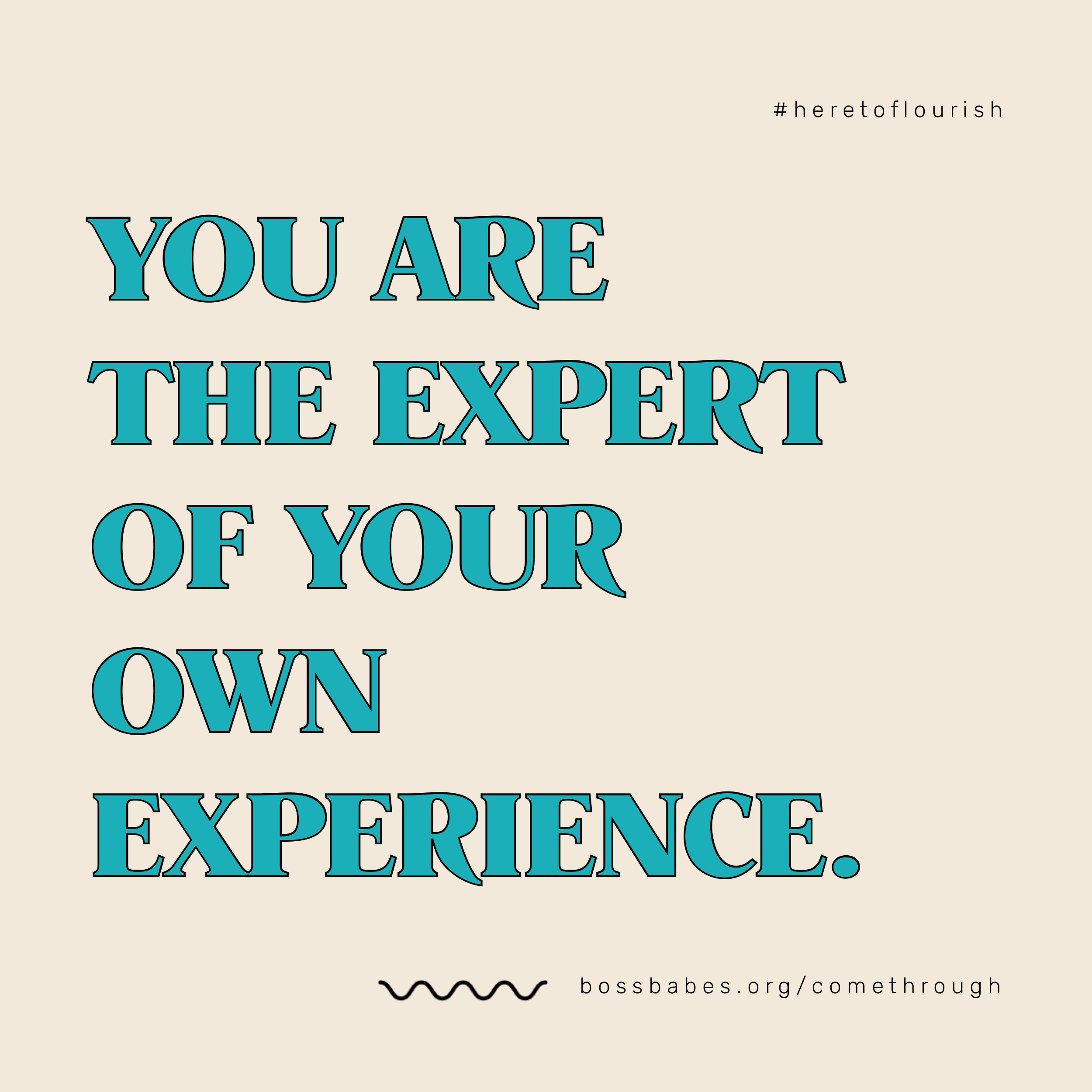
reminder no. 1: you are the expert of your own experience.
With new growth comes new opportunities and decisions, oftentimes requiring a step outside of your comfort zone or circle of competence. When you’re in these new environments and feeling uncertain, it’s good to remember that you are the expert of your own experience. You know when something feels good—or when something feels bad, scary and intimidating. Train your intuition by tuning into those feelings. What conditions do you need to do your best work, no matter where you are?

reminder no. 2: be kind to the parts of you that are still learning.
When we’re on top of our game, we have a hard time slowing down. We push ourselves to find more and more ways to improve and optimize. Instead, create and cultivate environments that acknowledge what’s working and approach growth areas with respect and patience.

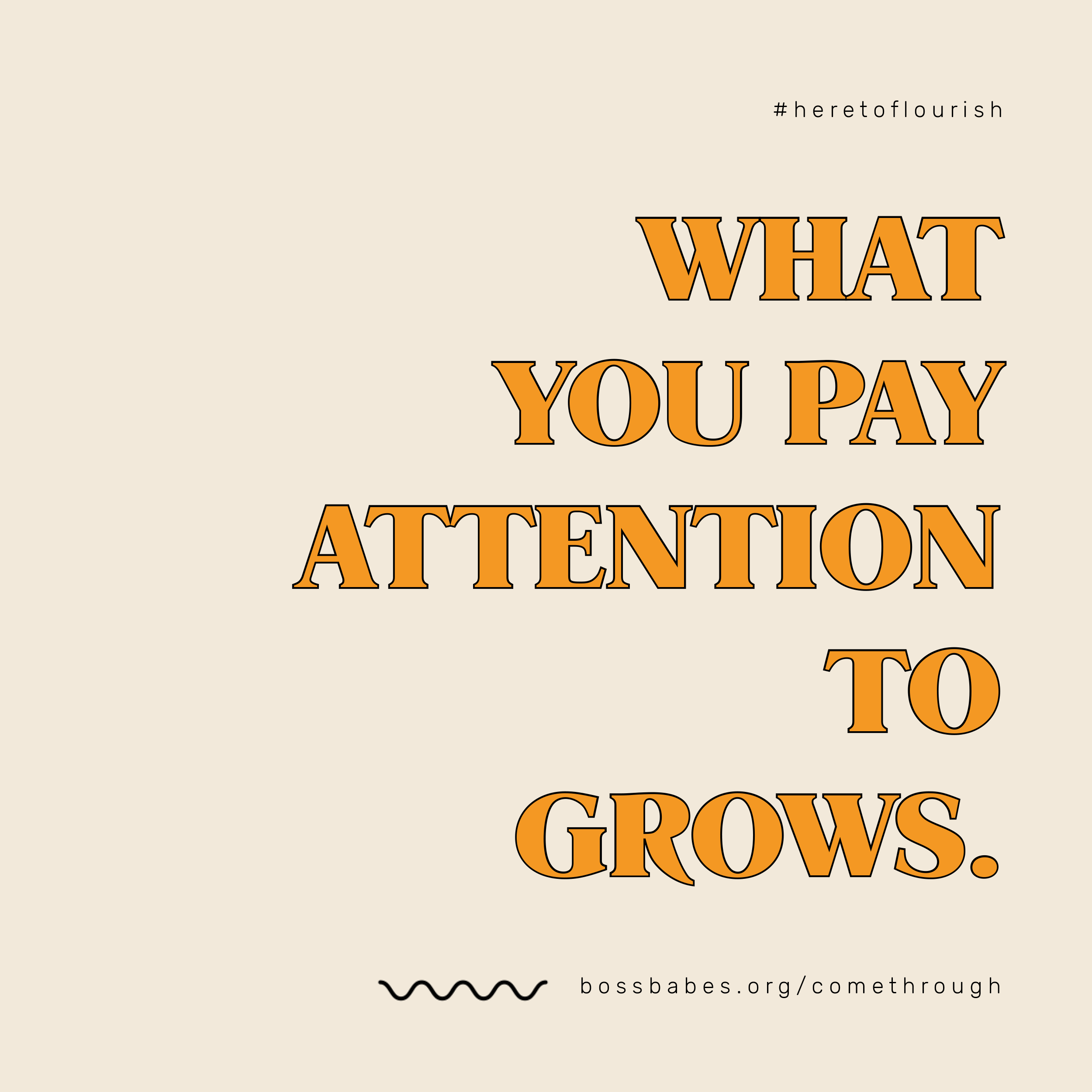
reminder no. 3: what you pay attention to grows.
Your time is valuable, and the way you spend your day-to-day informs the opportunities you have access to, the people you meet and the things you choose to focus on. So, spend your attention wisely. Focus on people, places and things that are designed to help you flourish. Be the energy you want to attract.
CURIOUS ABOUT OUR PROGRAMS AND THIS THEME?
Meet The Three Entrepreneurs Receiving Grants From #BBATX In 2019
From April 23 to July 12, 175 women and nonbinary leaders across Texas applied for three $500 to $1,000 micro-grants, each funded by businesses in our community who wanted to offer others the opportunity to come up.
Today, we are proud to share the badass recipients of those grants with you.
Beyond our events, in 2019 #bossbabesATX introduced its first-ever micro-grants program, providing funding opportunities to businesses that uplift our core tenets of arts empowerment, diversity and equality, creative entrepreneurship, professional and personal curiosity and collaboration.
From April 23 to July 12, 175 women and nonbinary leaders across Texas applied for three $500 to $1,000 micro-grants, each funded by businesses in our community who wanted to offer others the opportunity to come up.
Today, we are proud to share the badass recipients of those grants with you. (Major shouts to our grant funders/advisors, Mélissa Peng of The Curly Executive and Richelle Ouellette, as well as our committee members, for making this possible!)
MEET OUR 2019 GRANT RECIPIENTS.

MYRRIAH GOSSETT RECEIVED THE GET IT, GIRL GRANT.
Myrriah is a freelance producer specializing in audio production for radio and podcasts. She offers consulting, tape syncs, producing and editing services. You can hear her on mic as a co-host of the Star Trek Discovery Pod, and her name in the credits for the Founding Media Podcast Network, the new relaunch of the Bedpost Confessions Podcast, Creative Queso Podcast, Seen with Miranda Podcast, FOGO: Fear of Going Outside Podcast, and more. You can learn more about Myrriah and her production business at myrriahgossett.com.
MEET THE GRANT’S FUNDER, RICHELLE OUELLETTE.
With a background in corporate events, Richelle dove into freelance work after simultaneously breaking up with her boyfriend, quitting her job, voiding her lease, and selling the majority of her belongings in one particularly rash summer. With literally nothing to lose and a heart full of hustle, Richelle grew Alchemy Events into a six-figure business that less than three years later produces national events and employs dozens of contractors. She has an obvious passion for entrepreneurship and once started 30 businesses in 30 days just for the fun of it. Learn more at richelle.loan.
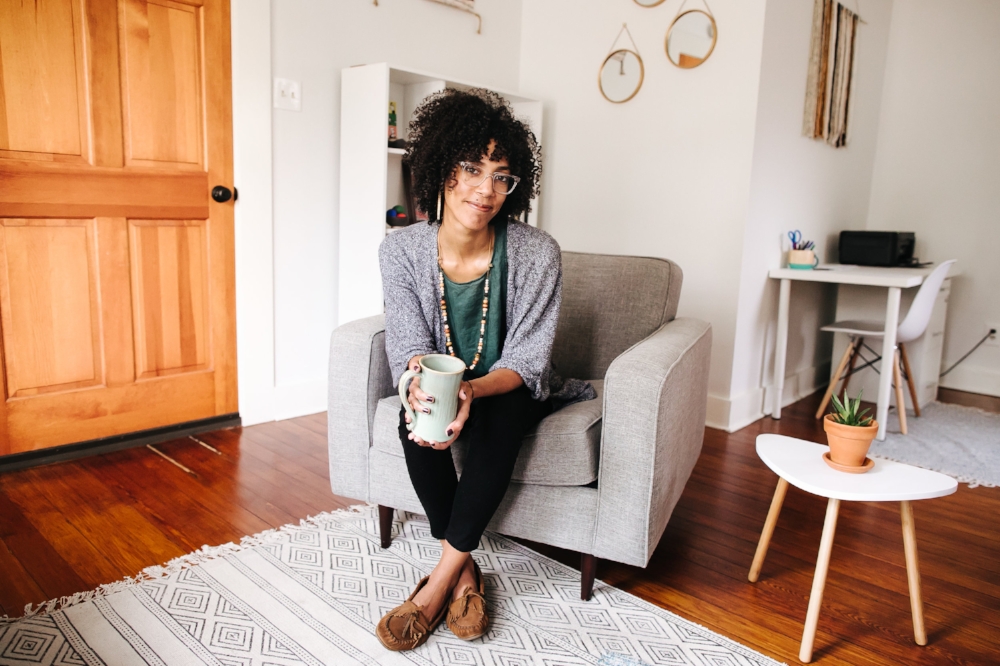
DANIELLE LOCKLEAR RECEIVED THE #BBATX X CURLY EXECUTIVE GRANT FOR WOMEN OF COLOR ENTREPRENEURS.
A native Austinite, Danielle founded her own practice specializing in culturally responsive counseling services. Utilizing mindfulness, somatic work and self-compassion into her collaborative approach to therapy, Danielle has carved a nichè serving some of Austin's most underrepresented populations creating a safe space for clients to explore how issues of “otherness" impact their ability to show up authentically in their many relationships. Her practice offers individual, family, couples and group therapy, treating a variety of issues, but with a particular interest in the trauma of systemic oppression, cultural identity and intergenerational trauma. Learn more at daniellelocklearcounseling.com.
MEET THE GRANT’S FUNDER: CURLY EXECUTIVE.
The Curly Executive Grants are supported by Mélissa Peng aka Curly Executive a Texas-based Serial Entrepreneur, Business Coach, and YouTuber. Mélissa earned her MBA from the MIT Sloan School of Management and held roles with marketing behemoths including Procter & Gamble, Macy’s, and NBC Universal. After 10 years of successfully climbing the corporate ladder and earning the title of Director of Marketing at the age of 30, she left corporate and her six-figure salary to build a lifestyle focused on pursuing her many passions and her newfound purpose of helping others do the same. Mélissa is a woman of color and the daughter of a lifelong entrepreneur, this grant’s purpose is to support fellow women of color entrepreneurs in pursuing their passions and taking strategic risks in business.

CATIE LEWIS RECEIVED THE CURLY EXECUTIVE GRANT FOR CRAFTHER ENTREPRENEURS.
Catie Lewis is a self-taught artist living in Austin, Texas. Inspired by her travels, life experiences and the various people she has met along the way, Catie explores an array of styles and mediums as she expands her portfolio. She believes creativity has no limits. Learn more at catielewis.com.
MEET THE GRANT’S FUNDER: CURLY EXECUTIVE.
The Curly Executive Grants are supported by Mélissa Peng aka Curly Executive a Texas-based Serial Entrepreneur, Business Coach, and YouTuber. Mélissa earned her MBA from the MIT Sloan School of Management and held roles with marketing behemoths including Proctor & Gamble, Macy’s, and NBC Universal. After 10 years of successfully climbing the corporate and earning the title of Director of Marketing at the age of 30, she left corporate and her six-figure salary to build a lifestyle focused on pursuing her many passions and her newfound purpose of helping others do the same.
In addition to founding Curly Executive Mélissa is the artist behind Camellias and Curls, a handmade flower hair accessories brand, and the creator of Pon Di Beat, a Dance Hall and Afrobeat dance masterclass series in Austin and Houston, Texas. This grant’s purpose is to support fellow makers, artists, and performing artists in pursuing their passions and taking strategic risks in business.
LEARN MORE ABOUT #BBATX’S GRANTS.
Applications for #BBATX grants will re-open in 2020. Click here to learn more.
Click here to get email updates on #BBATX’s grants.
Learn more about our programs.
Attend an upcoming event.
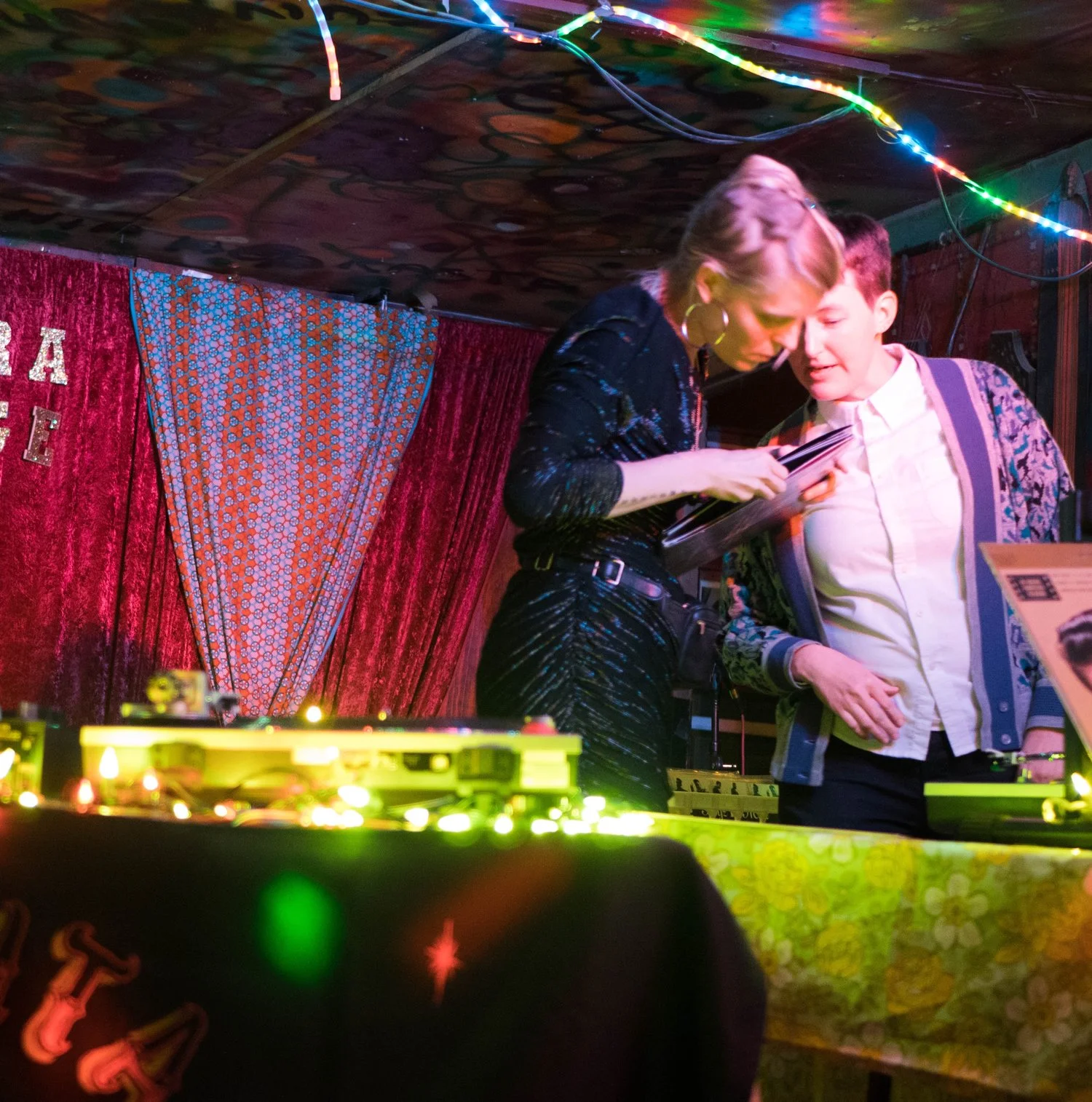
On Working As A Duo: Double Trouble
Double Trouble is a DJ duo comprised of Lynn Metcalf and Erin Gentry in #BBATX’s 2019 Residency. In this interview, they talk about working as a duo, the art of improvisation in their performances, and what the future holds for them.
Double Trouble is a DJ duo comprised of Lynn Metcalf and Erin Gentry in #BBATX’s 2019 Residency. In this interview, they talk about working as a duo, the art of improvisation in their performances, and what the future holds for them.
This interview has been condensed from a conversation with #BBATX staff member Natalia Rocafuerte.

MEET THE ARTISTS
Lynn Metcalf & Erin Gentry are queer DJ duo Double Trouble. Hosts of “Raw Sugar” a slow jams residency at Sahara Lounge, the duo started as a chance to publicly perform their combined collection of vinyl. Their process includes one partner picking a vibe to challenge the other and build sets that way together, a battle style performances, separate crates in competition.
How did you start DJing as a duo? Pick your name?
Erin: Lynn picked our name - she’s a naming things master.
Lynn: The start of our djing was an accident. We agreed to make a “dueling mix tape” for our fist Valentine’s Day date. I really thought it was going to be more making out than mixing music, but Erin put on the first song (she was working off her laptop, me out of my record collection and recording onto an actual tape cassette) and looked up and said, “Better get ready; you have 2 minutes and 46 seconds.”, and I was immediately addicted to the energy of working together to challenge and impress each other. Our first gig was shortly after, through a friend, at the Salvage Vanguard Anniversary Party, where we destroyed the dance floor, but we didn’t DJ again together for years. But it was always on our minds b/c it had been such joyous expression of our attraction to each other.
How do you build your crates?
When building a crate we usually think about the event: what’s the mood; who’s the audience; what is it our job to facilitate? Then we usually have one song that acts a keystone; perfectly capturing the vibe we are looking for which we will use to edit the rest of our selections by. The continuity we are seeking is largely emotional…does it have that feeling we want to capture? This selection is somewhat collaborative, but still mostly autonomous.

Erin & Lynn Photo By Erica Nix
What excites you about a festival that celebrates and amplifies women and nonbinary artists so intentionally like BABES FEST?
BABES FEST is RAD! We love the diversity in breadth of work that BABES FEST brings to the table (3 days of festivities!). It’s so awesome that women and non-binary folks are the focus, not the side project, because you can see really the depth and breadth of expression that is happening out there. Also, specifically that these people are being celebrated and promoted as professional and successful, aspects of queer and female identity that are often imbued with tinges of shame and inaccessibility.
Do you work with an element of improvisation ?
It’s all improvisation! We DJ battle-style, meaning that each of takes a turntable and puts on a song, then the other has only the time that that song plays to go through her stack and find the next tune. This way, the set is a conversation/collaboration/challenge between the two of us, in music.
How did you arrive to Austin and what made you continue making work here?
Erin: I was born in, and my family is originally from, Mexico City, but I grew up outside of Houston. I came to Austin in the late 1990s to study at St. Edwards University, and moved away several times after graduating, moving to a new place every year of my 20s, but Austin always had its pull back. I came back to Austin after grad school, in 2008, and have been here ever since. I came back to Austin because it was an easy place to live, though I think that has changed a lot since I first moved here, but I love the life that Lynn and I have built here.
Lynn: I moved to Austin when I was 11. My parents and I were living in the Valley, and my father violated his probation. He was given one day to put his affairs in order, and ordered to return the next day and submit himself to the authorities. Instead; he purchased the ID cards of his friend Smiley’s dead brother (whose death had not been reported in the states) and came to Austin on the lam. My mother and I followed suit a couple months later (lol..to Austin…not evading arrest) and lived in a friend’s living room till we found a rental house in South Austin. I moved into that house the day before I started 6th grade. Arriving in this town, out of the Valley, was a massive culture shock, but I’m so grateful to have spent my “coming of age” years here. I was old enough to appreciate the differences in culture and opportunity here (I thought Austin was a metropolis), and young enough to claim Austin as my home. I have stayed and made work here because this is where I am and nothing has compelled me to leave. Austin has been very good to me, and I know how hard living can be in a place with little opportunity for advancement and freedom for identity exploration. I identify as a survivor, and Austin has definitely acted as a life raft.
How to you see your work in the future? Is there something you would like to explore?
DT’s future is wide open! We are such different individuals, sharing such a strong passion that the room for growth is limitless. We would love to develop our individual voices so that we can bring more to our work together and create a richer collaboration and to lessen the pressure on our shared space to be our opportunity for expression. For example, Erin is getting really into recording and mixing ambient sound and field recordings these days, and Lynn is excited to explore genre blending and technical mixing skills. In this freedom we could offer so much more to our audience by expanding the definitions of where our separate identities can mingle and play. Most of all, we crave to make space for queer people to come together and feel seen and safe and important.

Photo by Erica Nix
How to you see your work in the future? Is there something you would like to explore?
DT’s future is wide open! We are such different individuals, sharing such a strong passion that the room for growth is limitless. We would love to develop our individual voices so that we can bring more to our work together and create a richer collaboration and to lessen the pressure on our shared space to be our opportunity for expression. For example, Erin is getting really into recording and mixing ambient sound and field recordings these days, and Lynn is excited to explore genre blending and technical mixing skills. In this freedom we could offer so much more to our audience by expanding the definitions of where our separate identities can mingle and play. Most of all, we crave to make space for queer people to come together and feel seen and safe and important.
About #bbatx's The Residency: We annually work with 10 to 15, Texas-based women-identifying and nonbinary visual and musical artists to produce site-specific work, commissions and exhibitions throughout our programming and events. Through these residencies, we invite the public to learn more about their process, approach and sustainability of their practice. Click here to meet this year's artists.
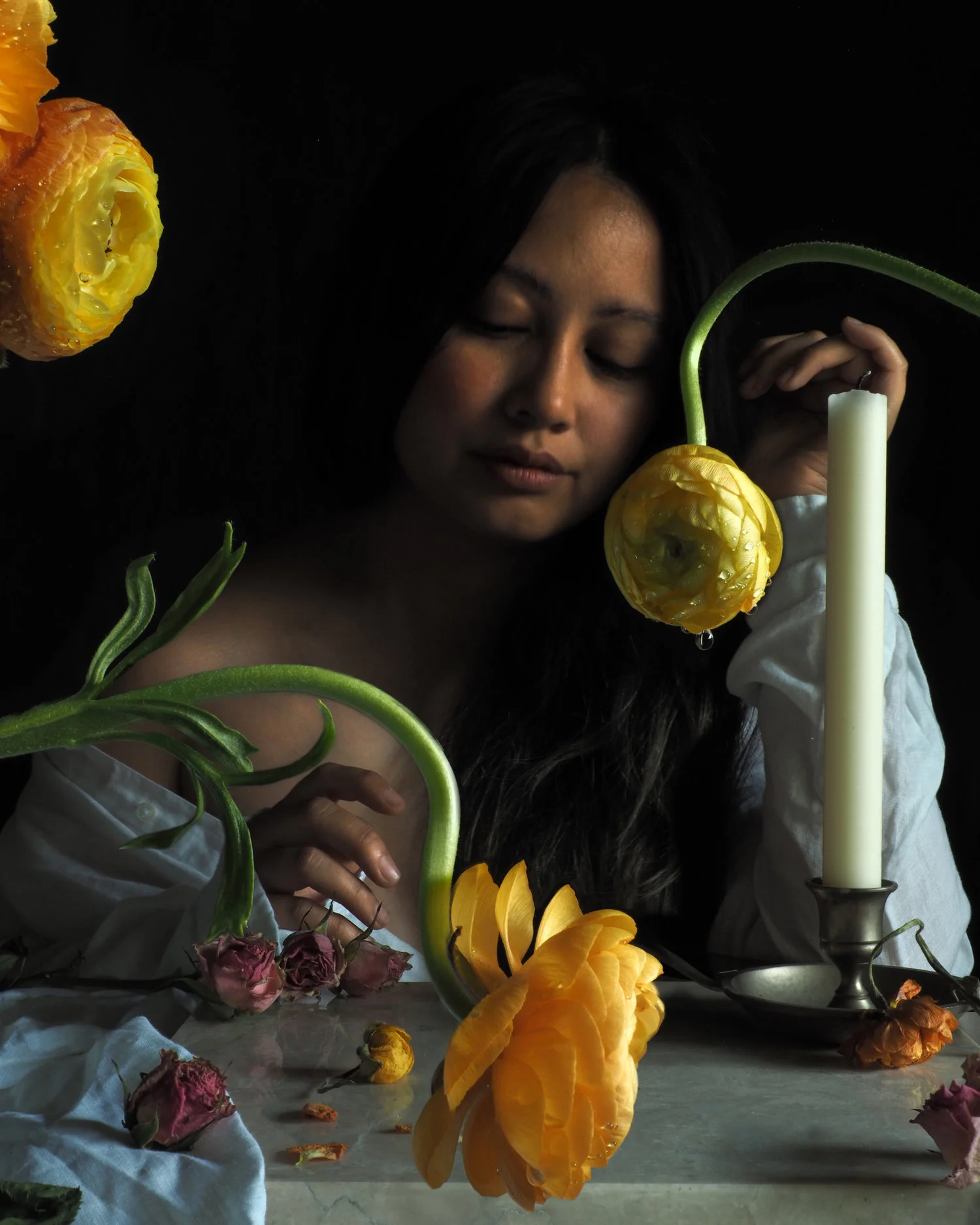
On Allowing Flow to Find You: 2019 Resident Artist Leika
Leika is a photographer in #BBATX’s 2019 Residency. In this interview, she talks about how to tell diverse stories through art, allowing flow to find her when she creates, and helping people find comfort in front of her camera.
Leika is a photographer in #BBATX’s 2019 Residency. In this interview, she talks about how to tell diverse stories through art, allowing flow to find her when she creates, and helping people find comfort in front of her camera.
This interview has been condensed from a conversation with #BBATX committee member Tess Cagle.

MEET THE ARTIST
Leika is an Austin, Texas, based photographer whose collegiate studies in French and Literature inspire the philosophy, romanticism, and spirit of rebellion within her work. A modern romantic, her photographs explore the the gentle and chaotic wildness of nature both terrestrial and human, alongside the harmonious dichotomy of proverbial and literal darkness and light. Self taught in digital photography, Leika creates a classical feel with anachronistic details in her still life and portraits, inspired by painters such as Artemisia Gentileschi. Through her work, she seeks to embolden her audience to create, to share their unique perspectives and stories, and to answer the call to close the gap between the privileged elite and the systemically oppressed.
Cagle: Tell us about your background. How did you get into photography? How did you get to where you are now?
Leika: I’m a Texan born and raised, though the “raised” portion has to come with an asterisk to clarify that as much as Texas raised me, I was also raised simultaneously within the Filipino culture. I actually did not get into photography as an art form until the last few years of my life, my formal eduction being a major in French studies with minors in literature and chemistry.
I mostly saw photography as a hobby, documenting fun times with friends in the pre-smartphone era with a hand-me-down point-and-shoot. I graduated to a borrowed DSLR in college for a now defunct style blog I ran, and eventually learned to shoot manual on a secondhand DSLR I bought from a friend of a friend.
I think the big turning point for me was a photography workshop in Iceland. Up until that point I was mostly documenting moments with the twins I was nannying at the time, along with some shots of nature around town, and then bam! I’m in a magical land with magical instructors who basically told me what I never thought of myself: that I’m an artist and that I’m more than capable to pursue photography if that’s what I really want. And that’s basically how I got to where I am today: by people who I respect believing in me more than I had believed in myself. If I didn’t have a community that lifted me up as an artist and photographer, I would more than likely have placed photography on the back-burner.

Photo by Leika
Cagle: How do you use your photography to collect and tell diverse stories?
Leika: This is something on which I’m still actively working. I am naturally fearful of human interaction, yet I crave to make space in the world for marginalized voices. I’m still looking for the right infrastructure in which to make this dream a sustainable, ongoing reality, but I’m fortunate enough to have worked with organizations that have allowed me to capture a beautiful array of diverse humans. Verbalizing that I actively want to highlight diverse peoples and perspectives, and working with organizations who also value diversity has been a great starting place.
Cagle: What kinds of themes do your photo projects explore?
Leika: The overarching themes of my photographs mostly fall under the umbrella of Romanticism. The ability to find the beauty and light within hardship and darkness; the rejection of religion and discovering the divine in nature and man; the exploration of the self and individualism; the dichotomy or fragmentation working together to create a whole; all these themes I loved in romantic literature have really informed the themes in my visual projects.

Photo by Leika
Cagle: You are also a maker, right? Do you still find time to craft and use your hands to make art? How does that art form differ from your art as a photographer? (Does it explore different themes? Have a different purpose for you?)
Leika: I am! I’ve always loved textile art, and when the wind blows just right, I get swept up in watercolor. If photography is first, then knitting is a close second. A few years ago I would have classified myself as, ‘knitter who dabbled in photography,’ and now the roles are reversed.
I haven’t picked up wool and needles too much after the 2016 presidential election; I have a belief that each stitch absorbs some of the maker’s energy, and there was no way I could infuse my knits with all the negative energy that was oozing from me. However, I’m starting to carve out more time for knitting, especially as I transition from my day job into freelancing.
When I create a knit, it is quite different from my photography. Whereas my photography takes on the darker and more serious themes, my knits are meant to be joyful and lighthearted. Knitting allows me to step outside the seriousness of being a socially aware, depressed, anxious adult, and to simply focus on cuteness.

Photo by Leika
Cagle: This season at BossBabesATX, we’re exploring flow. How do you find your flow and how do you know you’ve found your flow when you’re making art?
Leika: I find it very difficult to find flow. I feel like I don’t so much find flow, flow finds me when the stars, planets, and chemicals in my brain align. For me life is a Sisyphean feat in which I’m unendingly battling entropy and the dwindling will to live, so when I’m finally in the flow, it feels like having that proverbial boulder actually make it over the proverbial hill. I know I’m in it when I lose time. I set up a still life in the afternoon and suddenly I realize it is well past dinnertime, or I’ll turn on a series for background noise while editing and suddenly I’m at the season finale. I recognize that waiting for flow to find me is not a sound practice when wanting to create, so if ever I need to artificially generate some flow to start or complete an art project, music and chai tea are usually my launching point.
Cagle: How do you make your subject feel comfortable and authentic in front of your camera?
Leika: I have no idea how or why people can feel comfortable in front of any camera, much less mine, because I am always petrified. I think being open about my nerves helps to ease the nerves of others. Since I know from experience that if one is not confident in front of a camera, hyperawareness of the camera is a killer, I will oftentimes stop shooting and have a small conversation to shift and reset the focus. Because I shoot digitally, the knowledge that there is essentially an unlimited number of frames can take some of the edge off as well.

Photo by Leika
Cagle: What other photographers/muses inform or inspire your work?
Leika: I’m woefully lacking in my knowledge of the photography world, not because I think I’m above it, but because I would drive myself insane by comparing my work against others, driving my self-worth and desire to create down into a never-ending abyss.
That being said, I do know and respect the heavy-hitters Annie Leibovitz and Platon. Leibovitz for her use of color and light; Platon for his ability to take his simple set-up and draw us into his subject. I’m also inspired by Jamie Beck of Ann Street Studio and her work in Provence, along with Nadia Dole who has the incredible ability to make an iPhone photo look like a painting with her use of light and composition.
Cagle: What are some mini or monumental objects or opportunities that you consider a key part of who you are today?
Leika: Who I am today is so different from the human I was before, but the things that seemed to have stuck are:
The Redwall series by Brian Jacques
The Lord of the Rings by J.R.R. Tolkien
The works of William Blake
So much science fiction from Bradbury to Okorafor
So much music from Enya to Kendrick Lamar
The French language & philosophy
Iceland
Mike Brown and the Black Lives Matter Movement
The No DAPL water protectors
Bernie Sanders
About #bbatx's The Residency: We annually work with 10 to 15, Texas-based women-identifying and nonbinary visual and musical artists to produce site-specific work, commissions and exhibitions throughout our programming and events. Through these residencies, we invite the public to learn more about their process, approach and sustainability of their practice. Click here to meet this year's artists.
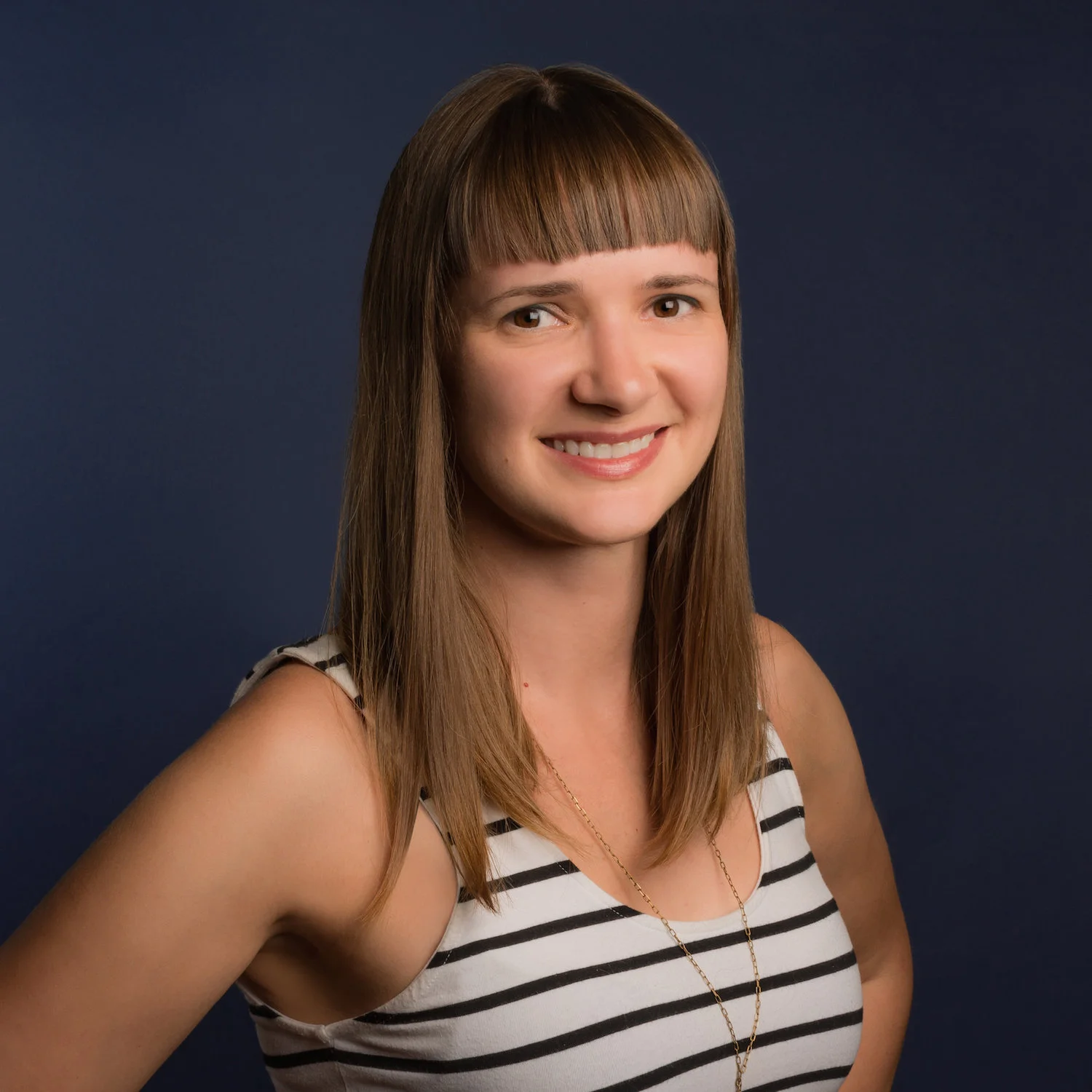
On Creating Inclusion Riders: An Interview with Cultural Producer Sarah Rucker
What’s an inclusion rider clause? Essentially, it’s a piece of language for artists and creatives to add to their contracts with producers, bookers and clients that holds them culturally accountable. Rucker argues that artists and creatives have the right to demand diverse and inclusive workspaces—just like anyone else.
What does it look like to make creative work inclusively?
Today on the blog, A’nysha Fortenberry interviews Austin-based cultural producer Sarah Rucker about her development of an inclusion rider clause.
What’s an inclusion rider clause? Essentially, it’s a piece of language for artists and creatives to add to their contracts with producers, bookers and clients that holds them culturally accountable. Rucker argues that artists and creatives have the right to demand diverse and inclusive workspaces—just like anyone else.
Keep reading to learn more about Rucker’s work and how to create an inclusion rider for yourself.

Sarah Rucker (pictured)
who:
Sarah is a lifelong arts lover and advocate with 13 years of experience in arts research, programming and presenting. She is the founder of Full Gallop, which offers creative event production and community outreach and engagement services. Full Gallop strives to bridge cultures and connect communities through creative collaborations and programs. She has a personal mission to help increase equity in the arts, especially in Austin, where she recently started the Inclusion Riders Initiative ATX. She was also a founding board member of Austin Emerging Arts Leaders from 2012-2019.
Can you tell us a bit more about your work and what you currently do?
Rucker: My work is predominantly in the field of event production with a specialty in arts programming and community engagement. For over 12 years my career has been in both the music business and the nonprofit arts sector while also building skills in corporate and private event production. I love helping with events and programs from concept to completion.
How would you define an inclusion rider? What is it and how can people use it?
Rucker: An inclusion rider is an addendum or clause added to a contract with a content creator that stipulates the contractor’s need to work in a well-represented team. It first came about in the film industry to try and achieve a storyline and cast that more closely resembles the audience and population it was serving and depicting. It’s now been proven as a versatile tool in letting any employer or collaborator know inclusion and equity are vital to your work as a contractor.
How did you come across the concept? Where have you seen it implemented?
Rucker: I first heard about it like many others , while watching the 2018 Oscars when Frances McDormand said “I’ve got two words for you: inclusion riders.” Before that night, the legal language was being perfected by lawyer Kalpana Kotagal and writer/actor Fanshen Cox DiGiovanni after years of studies at the Annenberg Inclusion Initiative at USC with Dr. Stacy Smith. Since then, it has been implemented by Pearl Street Films, with Olympic swimmer Simone Manuel and Michael B. Jordan with Warner Brothers Media.
How did you arrive at the inclusion rider you’ve created?
Rucker: I would looking for a version that my colleagues in the arts and music business could use in any contract with any situation be it music festival, arts nonprofit, or other creative endeavor. Austin attorney, Alyce Zawacki approached me after BABES FEST 2018 and helped write this version that I feel works for a wide variety of contracts.
How can artists in the #BBATX network implement the inclusion rider? How can it be used as a tool?
Rucker: Any artist can now access the rider at bit.ly/FullGallopEquityClause. I recommend letting your employer or collaborator know by email or conversation that you have an additional clause you’d like to include in your contract to allow a dialogue and chance for questions if they don’t understand the concept. You can modify it for your own use to work out a process for discussing inequitable situations should they arise and what the “satisfactory outcome” would be on behalf the hiring party to reconcile any inequitable practices.
What sorts of conversations have arisen out of creating this Inclusion Rider and attempting to implement it / create community buy-in?
Rucker: The panel discussion at last year’s BABES FEST brought some great realizations for me, that there are many creatives in Austin looking for tools to better represent themselves and their communities. Since then, I’ve spoken at two other national conferences about the concept and have seen other versions used in the arts. I’ve used the clause twice myself with my contracted projects and have heard from other Austin freelancers that they also used it and feel empowered after getting it added to their contracts. The City of Austin Arts Commission started a working group on Cultural Equity as a result of my presentation and has now hired a consultant to evaluate all of their grant practices to further their work to become more accessible and more inclusive to all Austin arts communities.
What sorts of road blocks have you run into with this concept? Where are the ethical gray areas and difficult conversations around what an Inclusion Rider means for artists’ rights and the arts industry’s evolution?
Rucker: The most common road block for myself and likely others in using an equity clause or inclusion rider is that amending contracts and invoking legal rights to do so can make some nervous. However, the process in going over a contract sent to you and making recommendations to enhance and cater to one’s liking can be very empowering and can break a cycle of saying yes to entering situations without expressing your ethical beliefs and needs.
I’ve read that you think this concept is more effective than a quota system—can you describe where you think the quota system is lacking?
Rucker: Yes, the question of the difference between inclusion riders and quota systems has been asked of me as well as many others trying to implement the concept and from the perspective of the women who wrote the inclusion rider “something is perpetuating invisible quotas to type cast,” in the film industry for instance, and inclusion riders are a tool to slow down the process, be more thoughtful and counter the biases that are already in place. The goal of inclusion riders is to create a work environment that more closely resembles the community that organization or project is serving, however, quota systems often miss the outreach element of connecting with community and instead get hyper-focused on hitting the mark, I find.
What changes in the industry are you seeking from a better and more widespread use of Inclusion Riders?
Rucker: I started this conversation specifically with the Austin arts industries with the hope to see more of our arts communities represented in a variety of ways: arts funding, music fest lineups, nonprofit boards and staff hirings, etc to make public programming accessible to all Austinites and make access to funding and bookings for all artists more inclusive.
Bonus Q — What does personal and professional synergy look like for you?
Rucker: Synergy and collaboration are essential to the work I do and what I believe in personally. Without input from others and collaboration between individuals and organizations, the arts become less relatable and negate what I believe to be their sole purpose, to enhance the quality of life. Inclusion Riders ATX is a perfect example of synergy for me and I thank my close friends and colleagues that have helped promote the concept and to #BBATX for their support.
Curious about #BBATX’s personal and professional development programs?
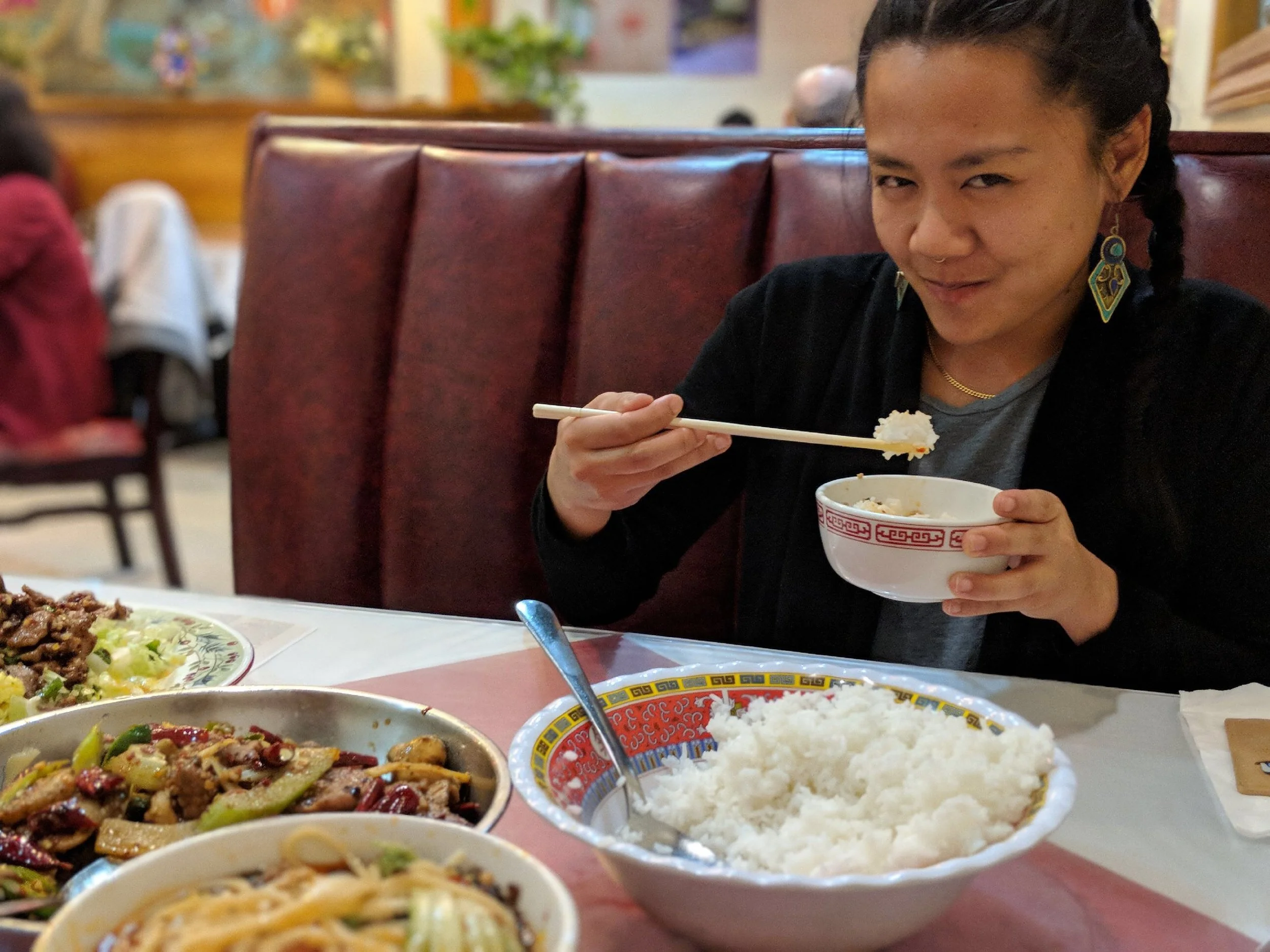
On Teaching Social Justice: An Interview With Minh Ha
For our second feature with Brown State of Mind, Vittoria Criss spoke with Minh Ha, Vietnamese-American community organizer and instructor of Brown State University’s class Counterculture America and the Vietnam War.
Local organization Brown State of Mind is fully committed to creating space in Austin for people of color, by people of color. In the second installment of its award winning Brown State University, Brown State of Mind is bringing together local artists, business owners, scientists and activists to provide accessible education to the Austin community. In partnership with Brown State of Mind, we are highlighting two of their members to explore the themes of culture and diversity, and dig deep into their creative process and personal motivations.
For our second feature I spoke with Minh Ha, Vietnamese-American community organizer and instructor of Brown State University’s class Counterculture America and the Vietnam War.
This post was written by #BBATX committee member Vittoria Criss.

Photo of: Minh Ha
You’ve moved around quite a bit, what originally brought you to Austin?
Mihn Ha: I grew up in Denver born and raised, then I went to school just outside of Boston, then moved to Portland, Oregon, and I moved here in early 2015. I was working in politics and just got burned out and wanted to try something new. I have a really short attention span! So I ended up getting a software job here like every other yuppie. Austin was a pretty strategic choice. I knew that I wanted to be here to watch Texas turn blue. I knew the demographics were changing, and there was a cultural shift that was happening here. I just wanted to reconnect with my identity, and experience new things. Portland is really really really white. That mindset was not healthy.
How did you make the switch from working in software to a nonprofit?
Ha: I worked at a nonprofit when I was in Portland, so I kind of knew that life. Working in politics and working at a nonprofit are the two places that experience burnout faster than any other industry. So when you combine those two when you’re 23, they’re going to work you to the bone. I wanted to see what it was like to get paid a living wage for once, and I learned so much. But I wanted to be more community-oriented, and I wanted to find something that brought me back to a more intentionally socially oriented space.
Did You see a lot of similarities in the cities you’ve lived in?
Ha: Like Denver, Boston and Portland, Oregon, Austin definitely makes me feel like I stand out. I joke that I'm on my hipster tour of America, living in yet another city where the population is still predominantly full of fair-skinned folks and rapidly gentrifying. They're also all extremely proud of their liberalism, so much so that sometimes I feel like it stands in the way of the true potential of progress—where communities can come together to solve some of those bigger challenges like families getting pushed out of their homes—because we're too busy reminding new transients that "Austin is blue." Austin is also home to the capitol building where some of the strangest policies pull us back and is the most racially segregated city in the country. It's also the convergence of where hella brown communities from San Antonio, Dallas, Houston and beyond across Texas can come together. It can be all those things, but I think we have to acknowledge all of those aspects rather than be selective.

Photo of: Minh Ha
What does being Brown mean to you? How has the Brown experience shaped you?
Ha: For me, being brown is how I choose to acknowledge all the labels that the world has put on me. It's really interesting from a Vietnamese perspective, because my parents always talked about us having yellow skin when I was a kid, which I don't identify with at all. I get mistaken for Filipinx a lot, and in a way that I don't quite understand, I feel really connected to my Flip homies. While brown means one thing to me, it means something completely different to my college best friends who are South Asian, and the same goes for others in Brown State of Mind. I like that "brown" can mean all those things all at once.
What kind of impact do you envision Brown State of Mind having on communities of color in Austin in the future?
Ha: When I talk about Brown State of Mind's impact, I always go back to our founder Adrian's words: "I just wanted to create a safe space for PoC." That's at the heart of what I want to see us achieve, and everything else that we accomplish in addition is icing on the cake for me. In Portland, I have a chosen family that I miss and think about every single day, but it was so isolating to walk around that city and not just feel like I stand out but isolated and alone. At least because of Brown State of Mind, navigating Austin has made me run into fellow homies that are brown and/or down with brown that make me feel like I belong. Isn't that what everyone ultimately wants? To feel like they belong?
What can people expect from your class?
Ha: A lot of social justice language. But that’s just one piece of it. For me it’s more about tying history to movement and art specifically. I think that artistic expression is so related to whatever turbulent time we’re experiencing in our communities and our societies. I think one of the most beautiful things being a child of immigrants from a Communist country, the thing that you learn to appreciate so much about the United States, for all of its faults, is that freedom of expression. And out of that freedom, and that basic inalienable right, it has allowed for so much beauty to come to light and so many avenues for people to come together. I want everyone who comes to that class to be able to understand how tied that is to what we are experiencing on a political, historical and sociological level—to feel those connections to what’s happening today. People can probably expect a lot of inner turmoil, to feel personally connected, to feel something passionate enough to express themselves however they choose to.
You work in a really emotionally charged field. Do you have any routines or rituals you do to combat that feeling of burnout?
Ha: I’m naturally a person who will take care of everyone in my life before I take care of myself. And the thing that I naturally do is watch out for other people. When I got hired where I work now, the CEO asked me “Why are you doing this? Where do you want to be in 10 years?” And I don’t ever have an answer to that question. Mostly because I grew up in political rebellion. But also the only thing I’ve ever cared about is making it easier for other brown women to break down the barriers of whatever it is that we’re trying to do. So my only goal in life is to make it easier for whomever looks like me that comes after me. A lot of what I do to take care of myself is to make sure that I’m taking care of that community. Because that is what nourishes me. That is what replenishes me.

Photo of: Minh Ha. Instagram: @guan_minh
Curious about Minh Ha? Keep up with her work here.
Curious about Brown State of Mind? Keep up with their community events and learn more about the organization here.