
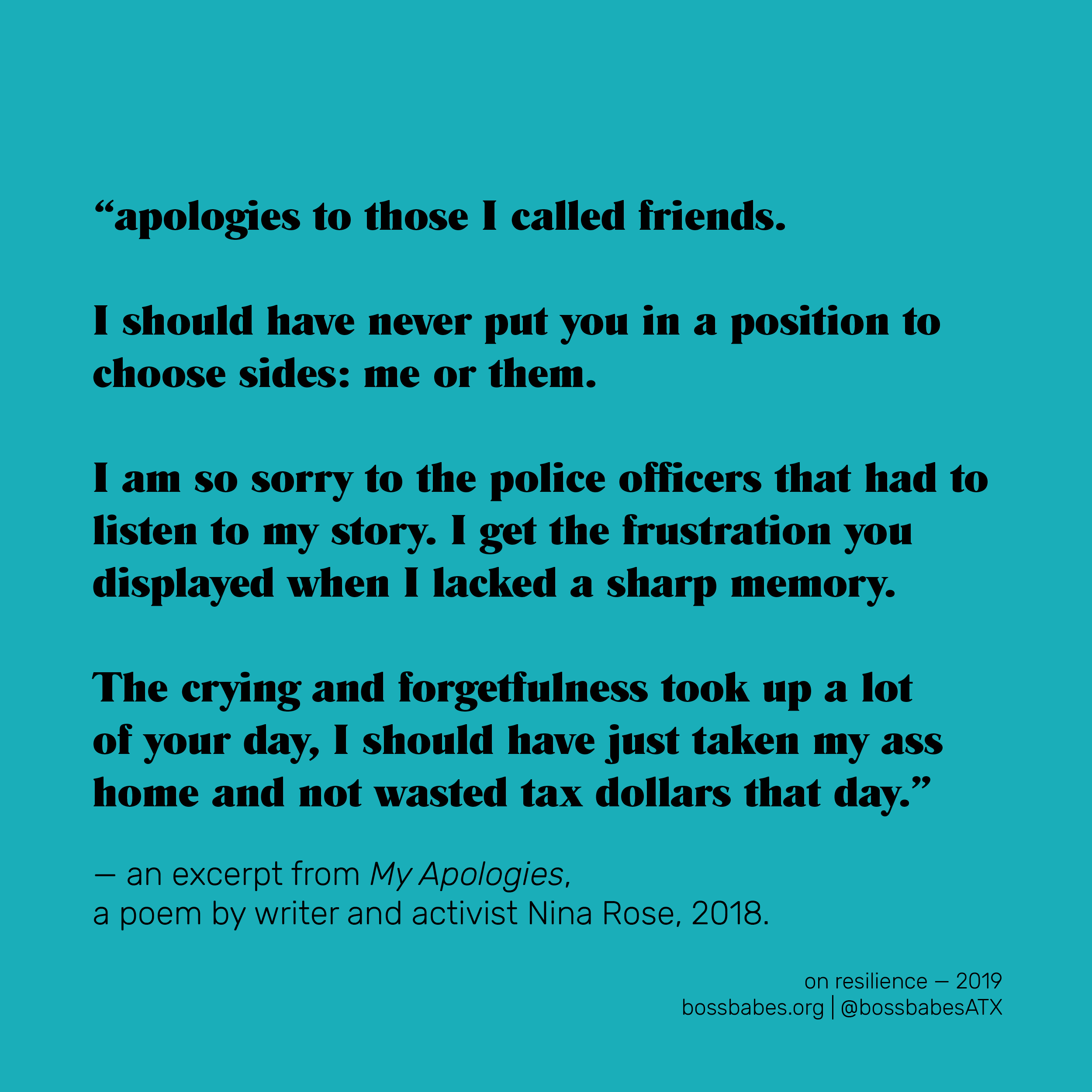
On Society's Treatment of Survivors: A Not So Sorry Poem By Nina Rose
Today and every day, we have the choice to speak up, and we must do so even when it’s unpopular or risky. We have nothing to be sorry for. In that spirit, we’d like to share a piece of writing by one of our committee members, Nina Rose Bailey.
In light of this weekend’s not-so-new news surrounding recording artist R. Kelly’s unchecked pedophilia in the documentary “Surviving R. Kelly,” our team’s feeling a little frustrated (perhaps you do, too).
In 2000, recording artist R. Kelly was exposed for abusing multiple women by the Chicago Sun-Times. It’s 2019 and the survivors of his pedophilia still don’t have their due. Over the last two decades, despite the presentation of factual evidence and the email chain whispers, he has been supported and applauded by an industry who claims to separate the “art” from the “artist.” 💡There have been many activists (including members of our team) who have criticized him and the people who have continued to book him for years. There have been many people who have stood up both publicly and privately to hold him accountable, but no reckoning came. There are many Black women whose lives were threatened and demeaned as a result of this willful ignorance and system of protection around one abuser.
We are ultimately not surprised when society (i.e. ourselves) works to preserve abuse of power, instead of challenge it. Today and every day, we have the choice to speak up, and we must do so even when it’s unpopular or risky. We have nothing to be sorry for. In that spirit, we’d like to share a piece of writing by one of our committee members, Nina Rose Bailey.
A note from Nina on the motivation behind this poem: “I wrote this poem after being pissed off by comments on sexual assault and sexual abuse towards young women, especially during this fucked up R. Kelly documentary. Current Mood: SOCIETY IS TRASH.”
My Apologies (An Apology From A Victim)
I want to apologize to my babysitter who was responsible for my care,
You were doing a favor for my parents, so it was only fair.To that family member that I trusted, it wasn’t your fault.
You were a victim, too, shit was bound to happen by default.I want to apologize to the two men on the day I skipped school.
Who was I to be acting fast, like I was above following rules.To my high school “friend” who’s home I went to for comfort.
That was my fault not telling you “no” in a drunken slumber.
Who was I to call you out on your shit, after you took time out your day to bring me ginger ale,
because you had a “feeling” I was sick.My bad to the boy I dated in high school, who I confided in about my sexuality.
You were a top ranking ball player, I should have known to be fragile with your masculinityApologies to those I called friends.
I should have never put you in a position to choose sides: me or them.I am so sorry to the police officers that had to listen to my story. I get the frustration you
displayed when I lacked a sharp memory.
The crying and forgetfulness took up a lot of your day, I should have just taken my ass home
and not wasted tax dollars that day.Last, I want to say I am so fucking sorry to society.
Who the fuck do I think I am learning love through trauma and debauchery.I get it… I’m the problem. I’m the issue. So please accept my apology as I genuinely give you this big “FUCK YOU.”
— writer and activist Nina Rose, 2018.
About the author, Nina Rose Bailey: Originally from Detroit, MI, Nina moved to Austin four years ago from New Jersey after realizing she had a strong dislike for snow. Nina previously received her degrees in Psychology and Criminal Justice. She has been in the field of working with underserved youth and families for in her free time, and started her own program named The R.O.S.E. Project (Recognizing Our Strength and Excellence) while also working at The National Domestic Violence Hotline as an advocate.
Behind VOLUME: A Collection Of Influences On Texan Women And Nonbinary Artists
In 2018, #bossbabesATX and Chulita Vinyl Club collaborated to present VOLUME, a collectively built library of vinyl, zines and prints from the communities intersecting women and nonbinary artists.
written by Jane Hervey and Xochi Solis, all photos (unless otherwise indicated) by Illyana Bocanegra
You give your hand to me
And then you say hello
And I can hardly speak
My heart is beating so
And anyone can tell
You think you know me well
But you don't know me (no you don't know me)
― Cindy Walker, Lyrics to You Don’t Know Me. Monument Records, 1964.
In 2018, #bossbabesATX and Chulita Vinyl Club collaborated to present VOLUME, a collectively built library of vinyl, zines and prints from the communities intersecting women and nonbinary artists.
Hosted within the Center for the Study of the Southwest (CSSW) and the Center for Texas Music History (CTMH) at Texas State University, VOUME originated as a way to contribute to the preservation of regional women's histories in Texas.


view the VOLUME collection
From September to December 2018, the exhibit’s curators Xochi Solis (of Chulita Vinyl Club) and Jane Hervey (of #bossbabesATX) gathered vinyl, zines, books, and artist prints from the intersecting communities of women artists and Texas music. Filled with native Texas plants, bright furniture and stacked books and vinyl records, Solis and Hervey turned the Texas State University Brazos Hall gallery into a space prompted by queer Chicana poet, writer, and feminist theorist Gloria E. Anzaldúa's essay "Geographies of Selves.”
Our bodies are geographies of selves made up of diverse, bordering, and overlapping “countries.” We’re each composed of information, billions of bits of cultural knowledge superimposing many different categories of experience . . . As our bodies interact with internal and external, real and virtual, past and present environments, people, and objects around us, we weave (tejemos), and are woven into, our identities.
― Gloria E. Anzaldúa, Excerpt from essay Geographies of Selves, 2015.
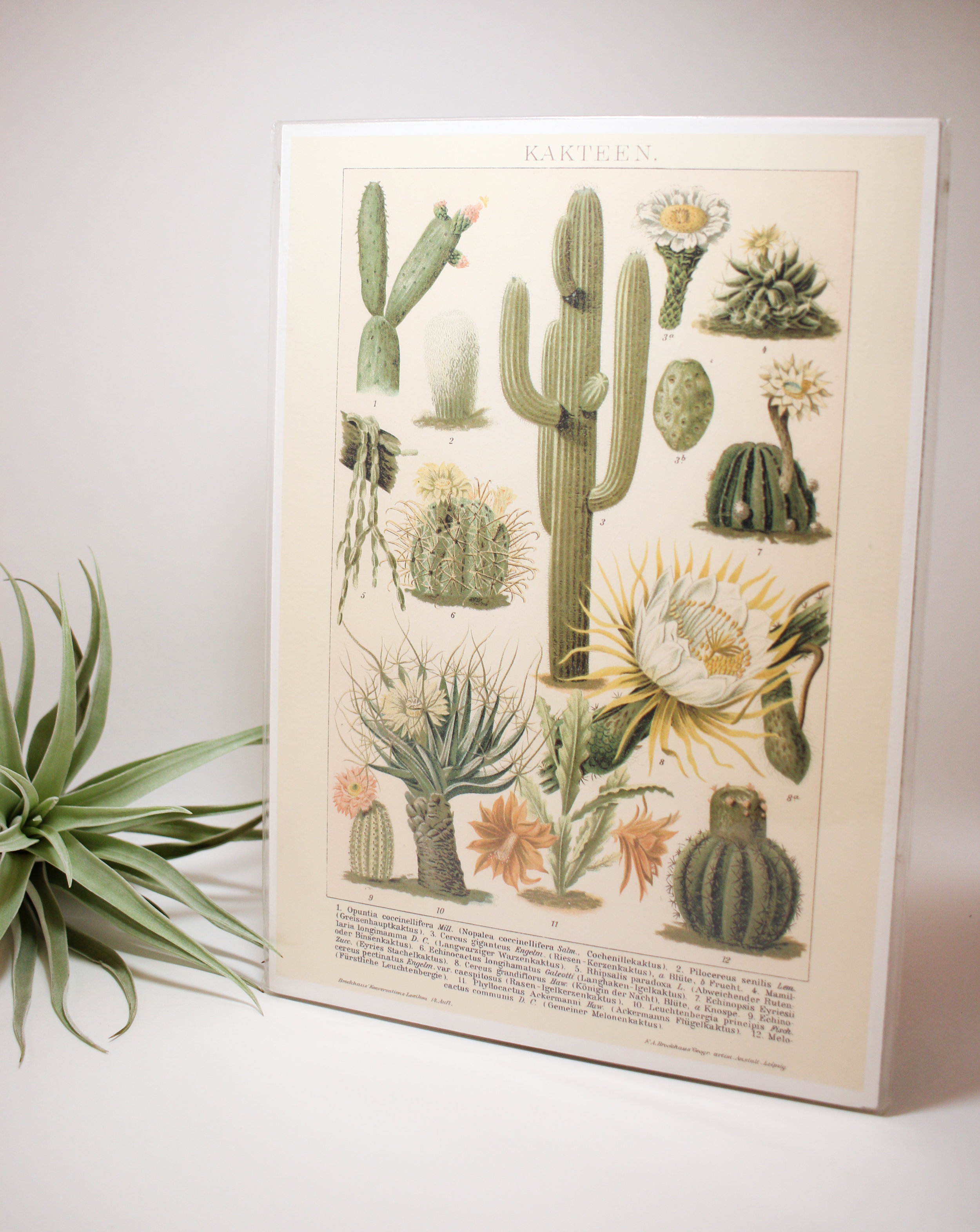
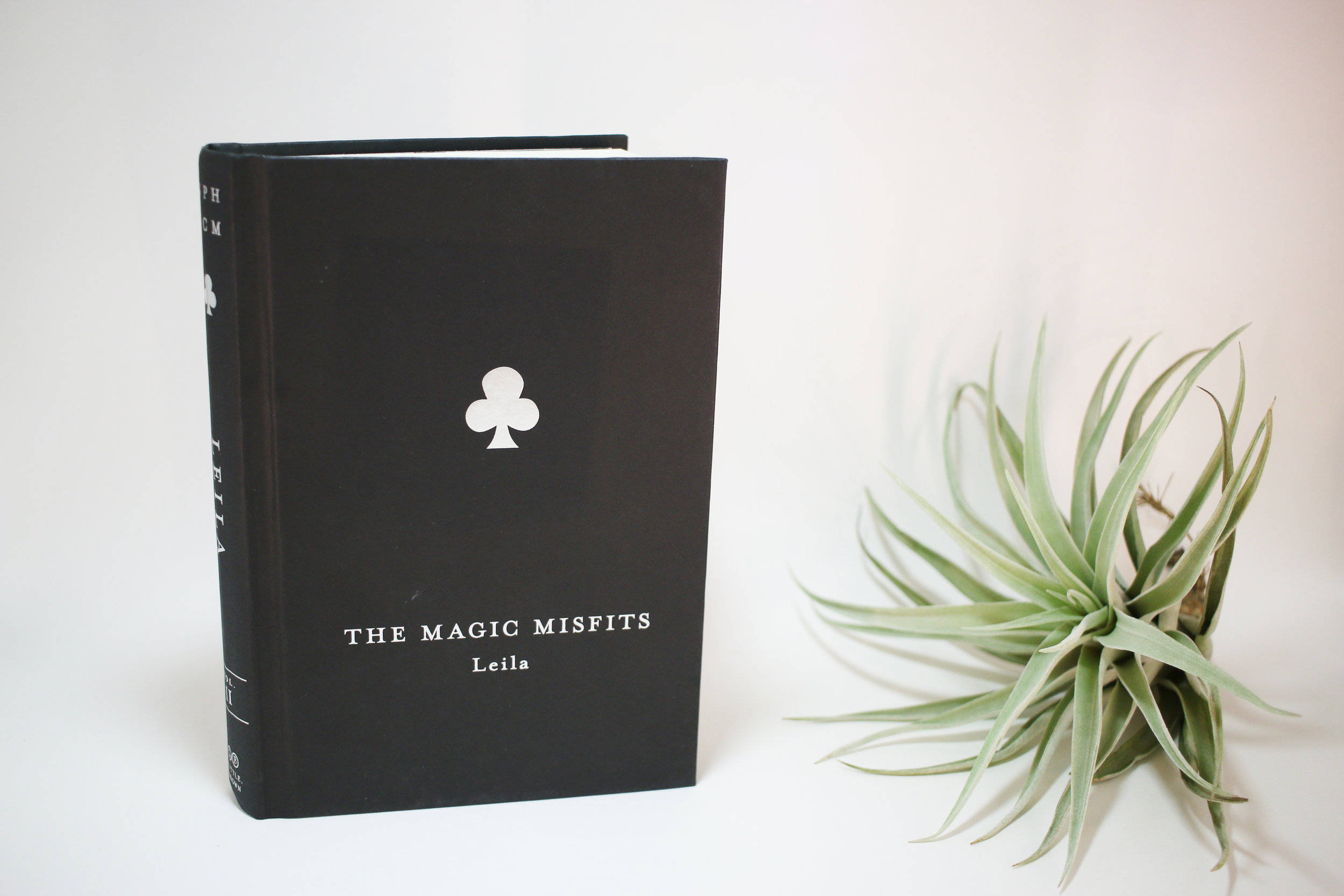
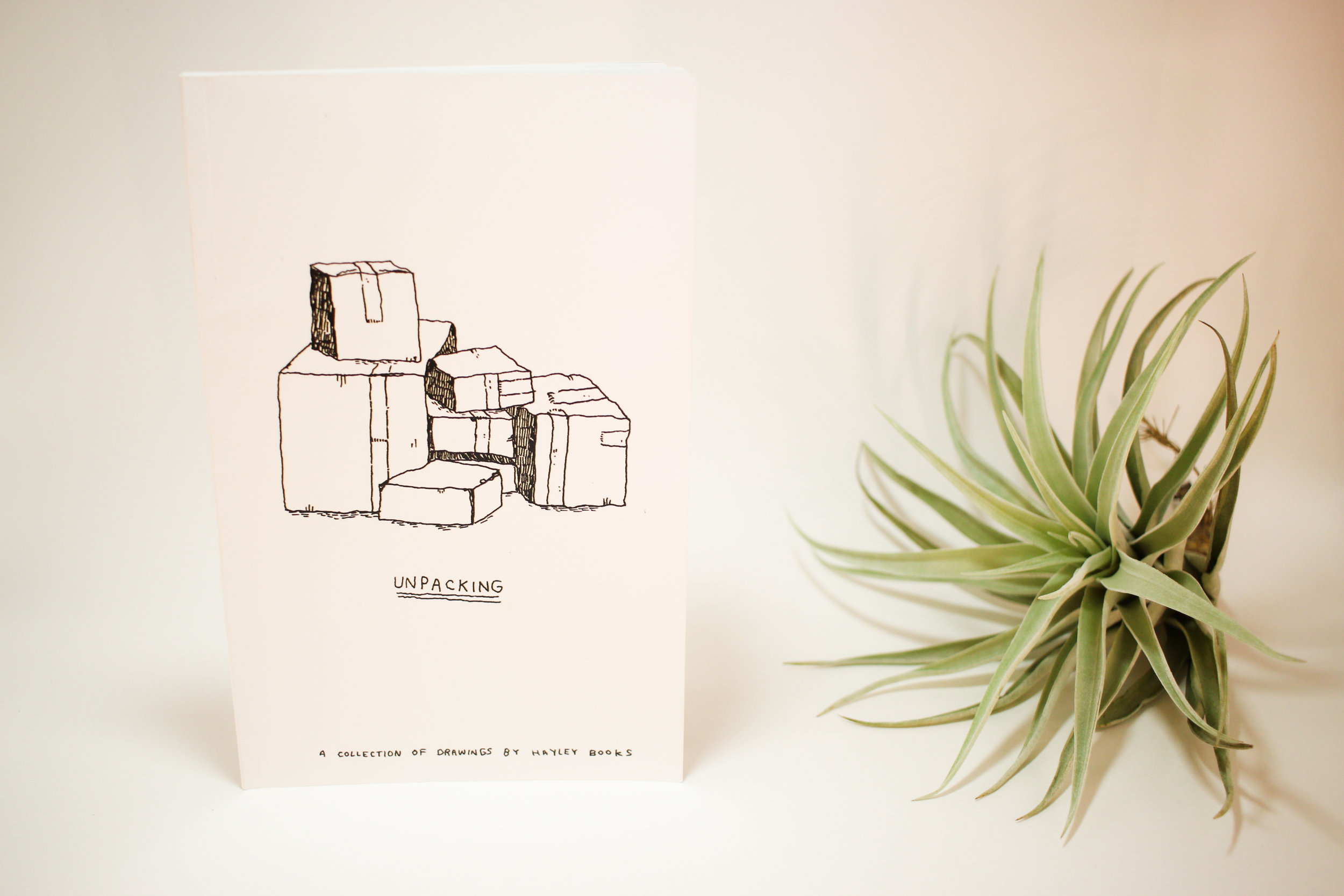
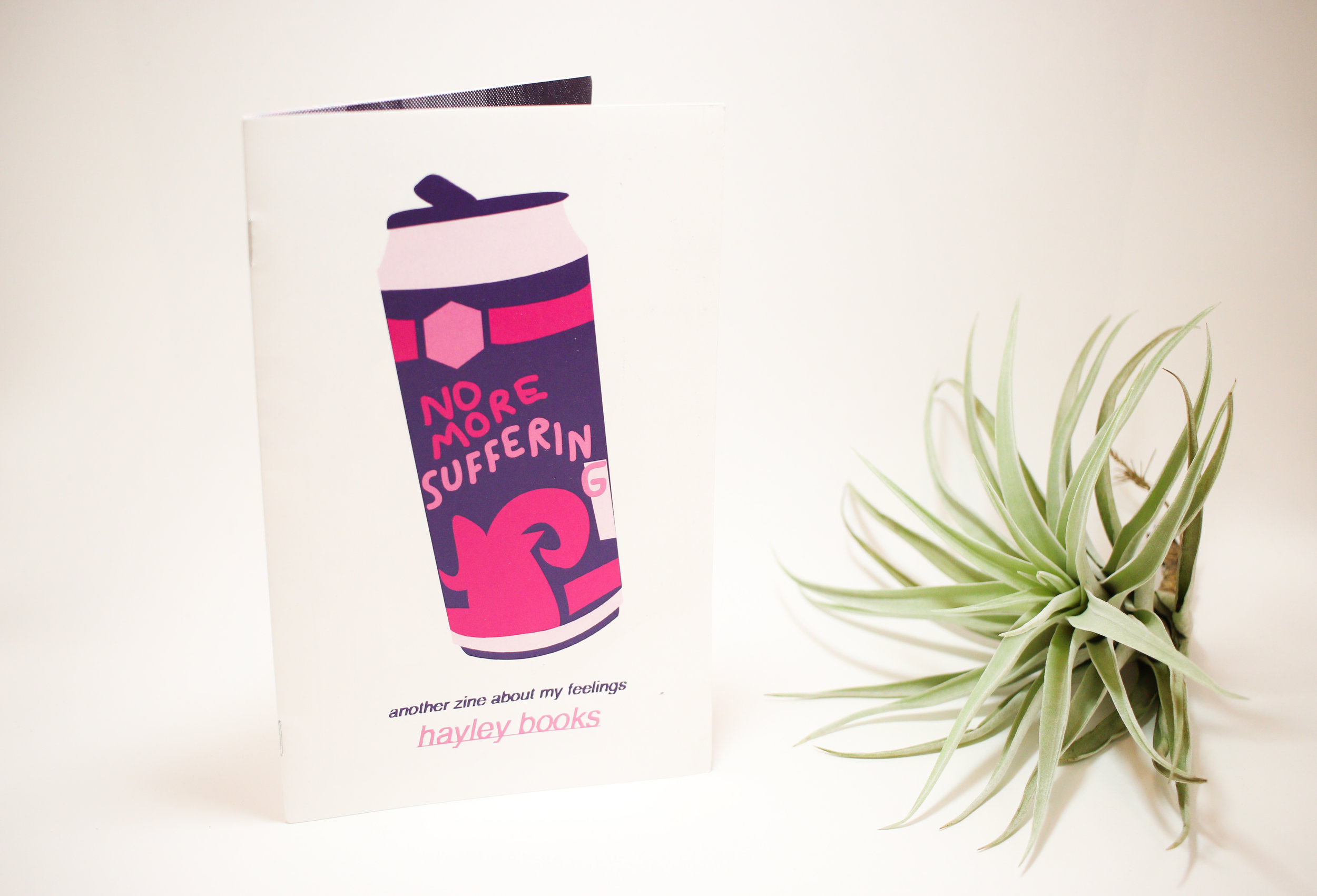
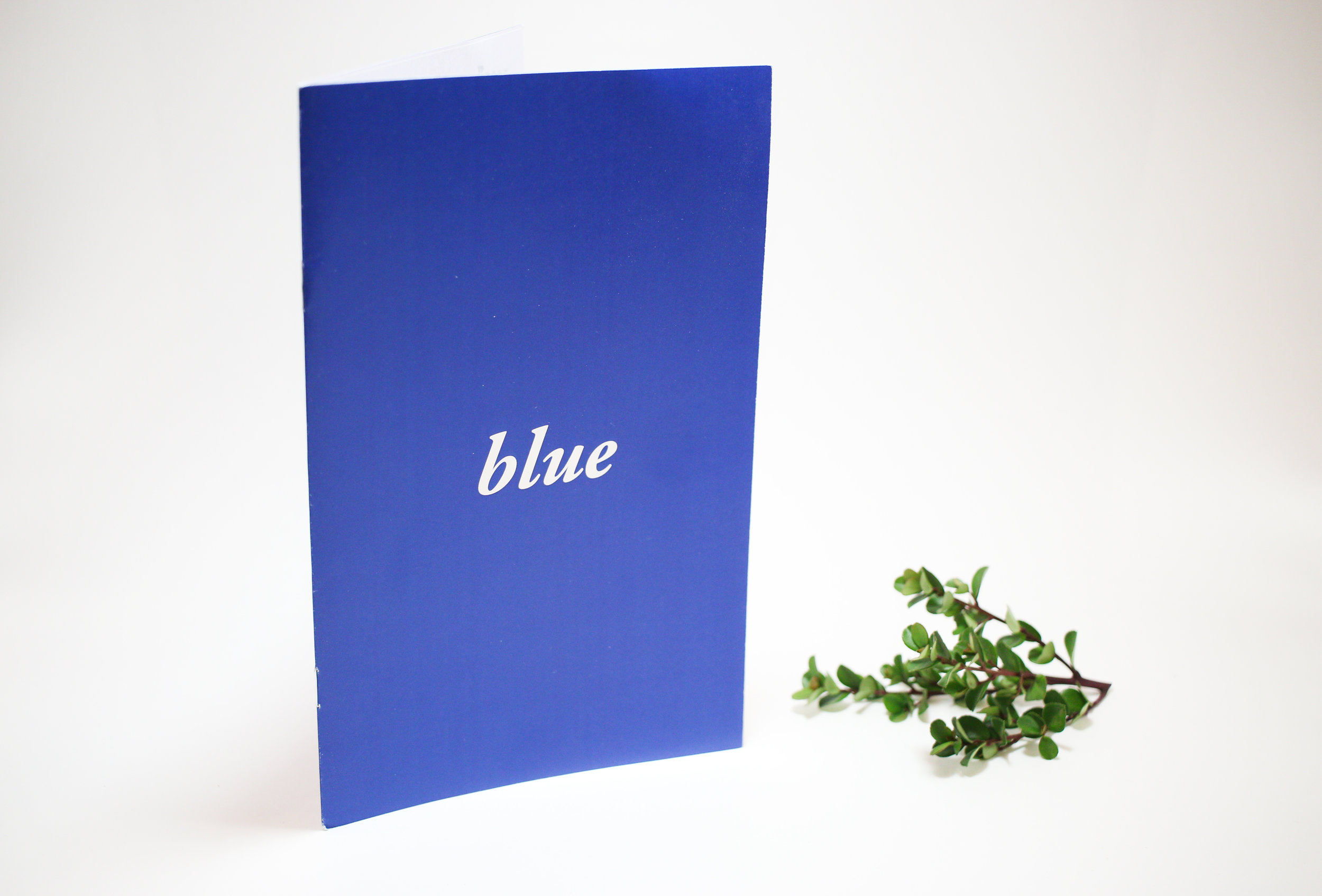
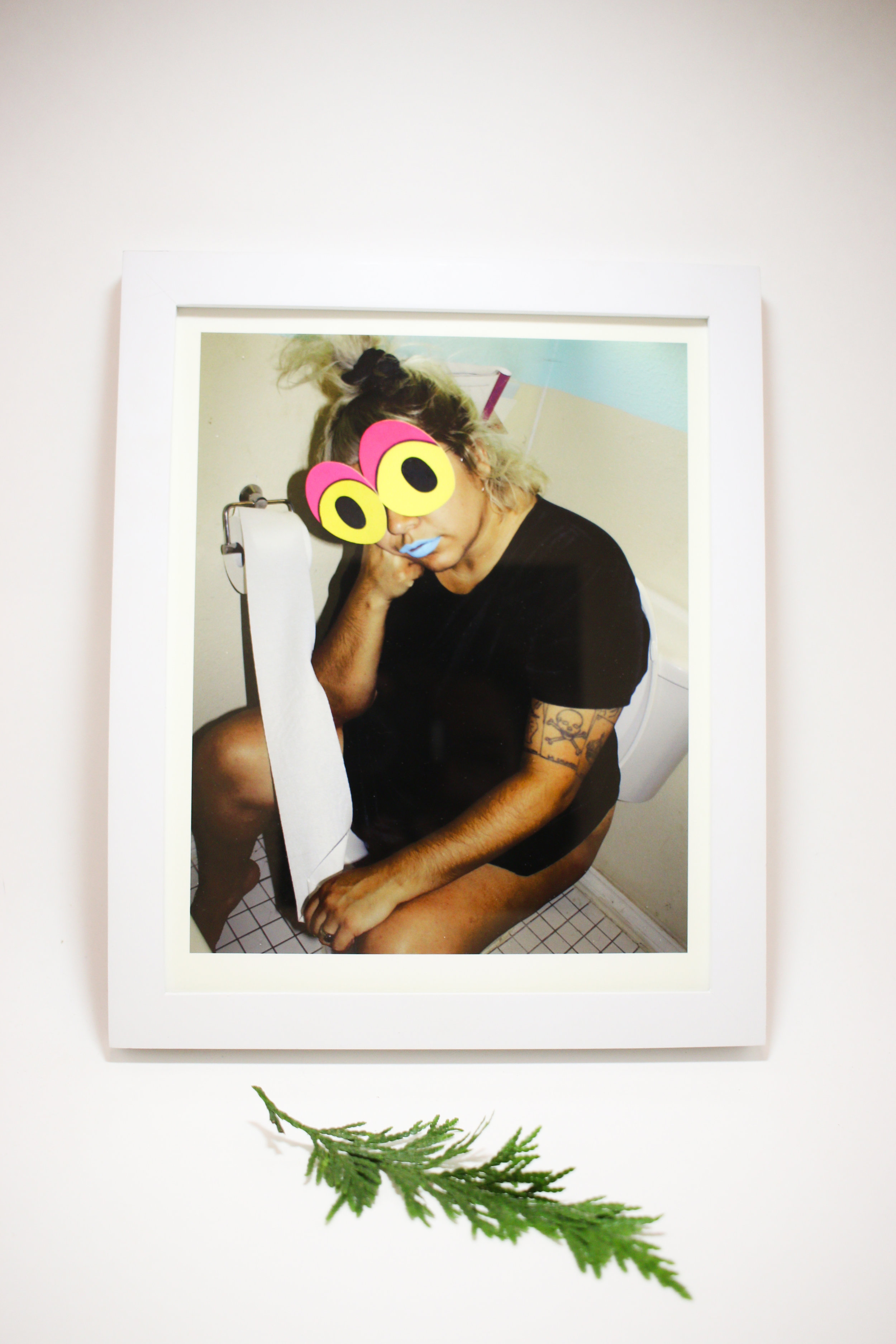
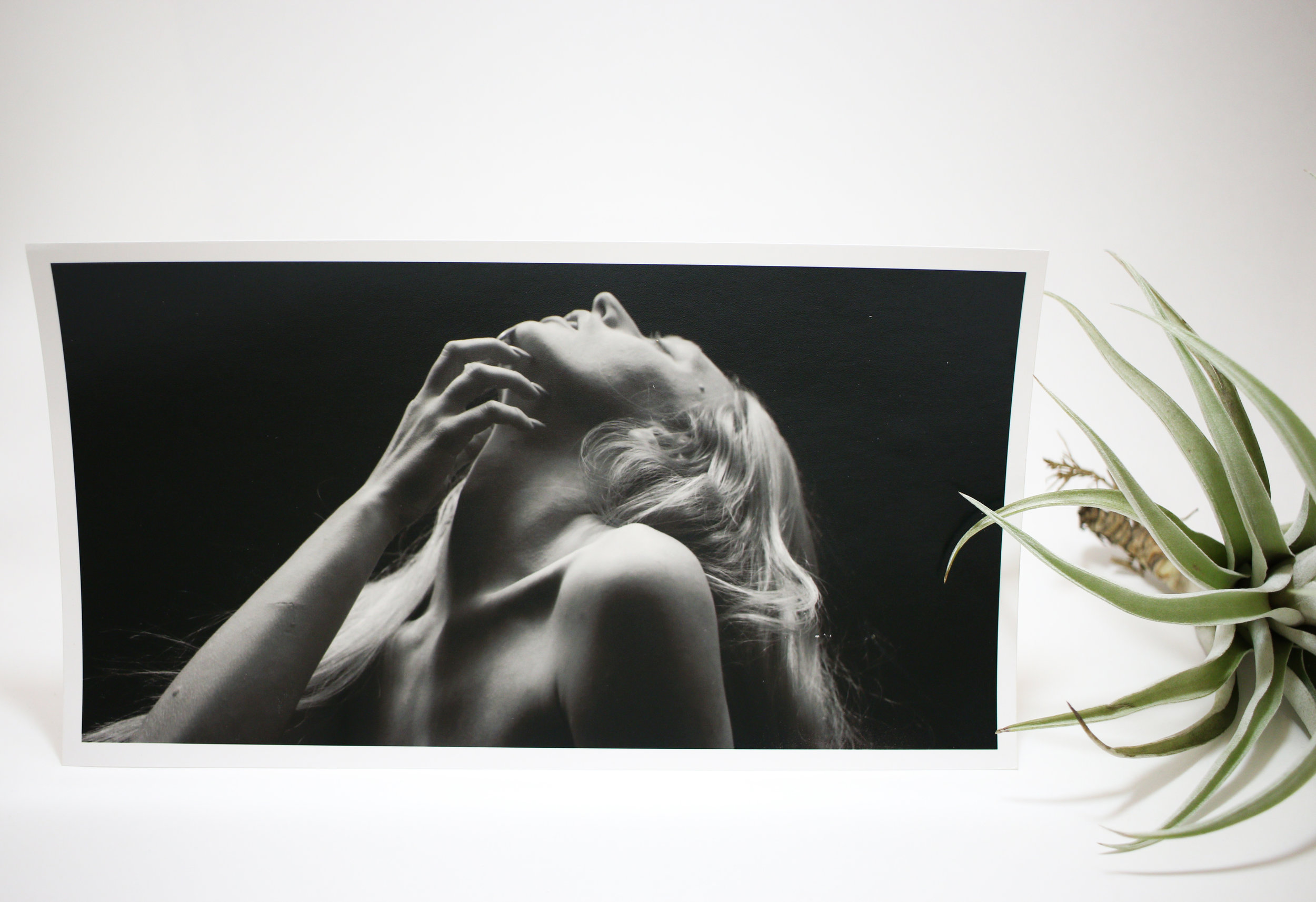
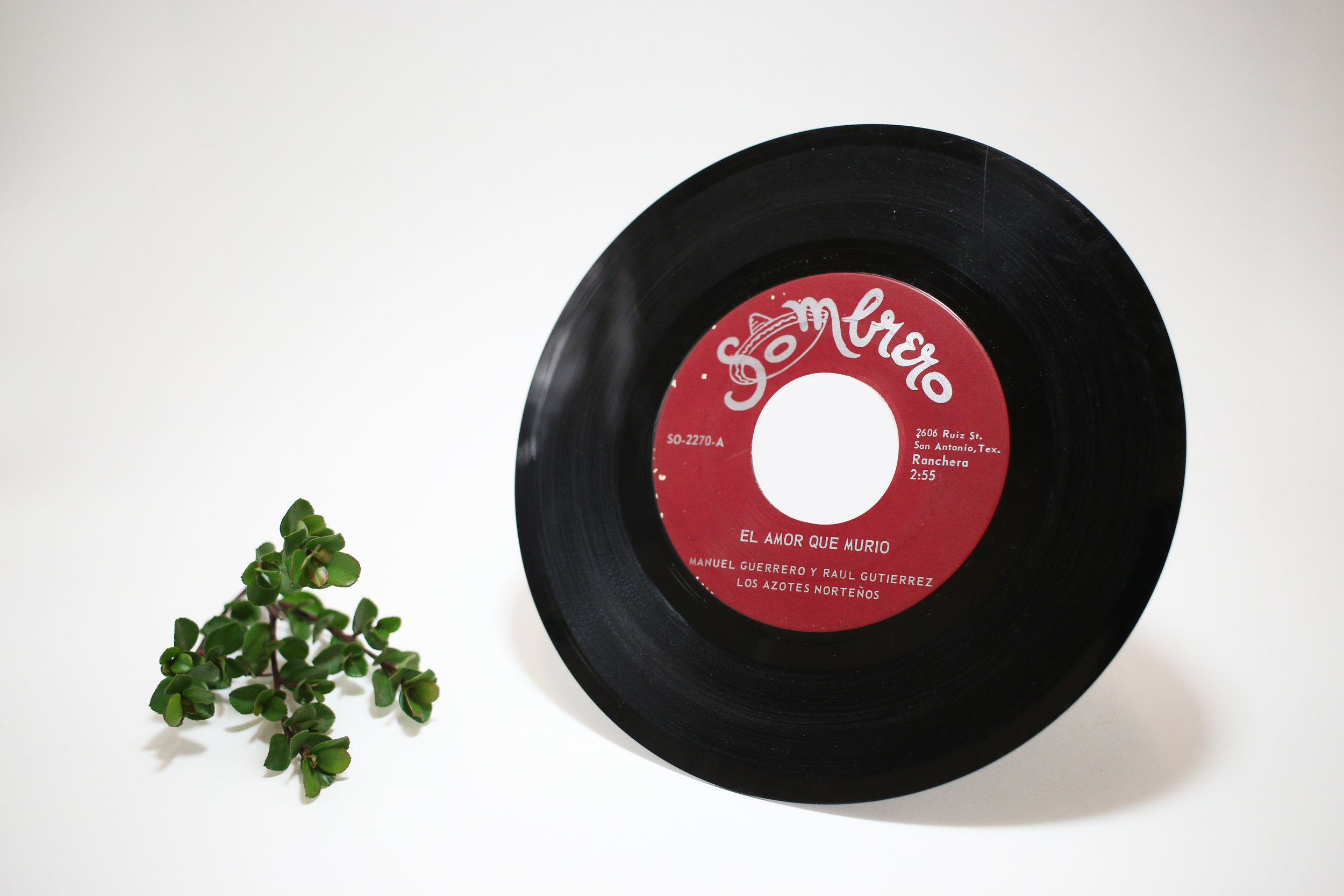
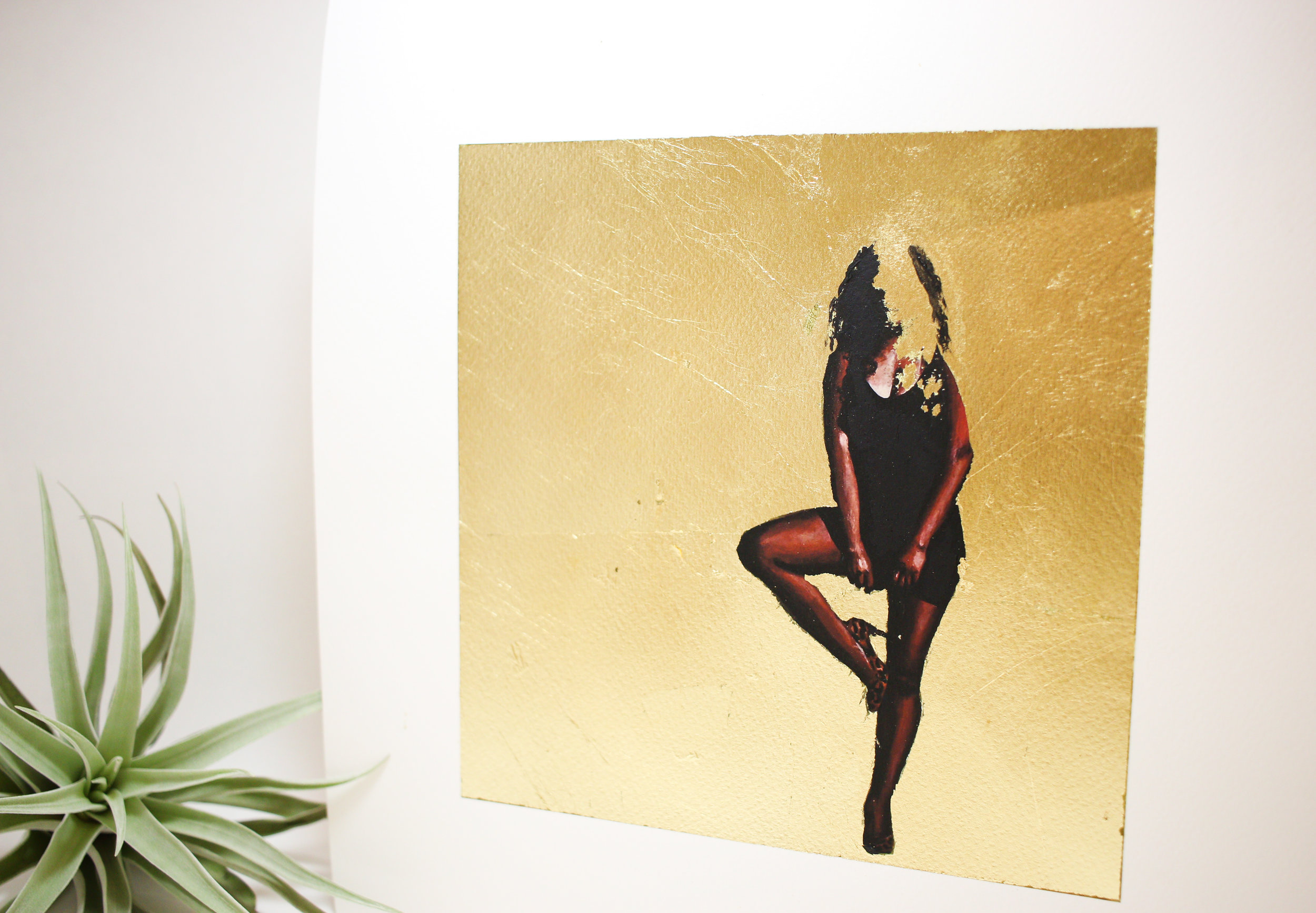
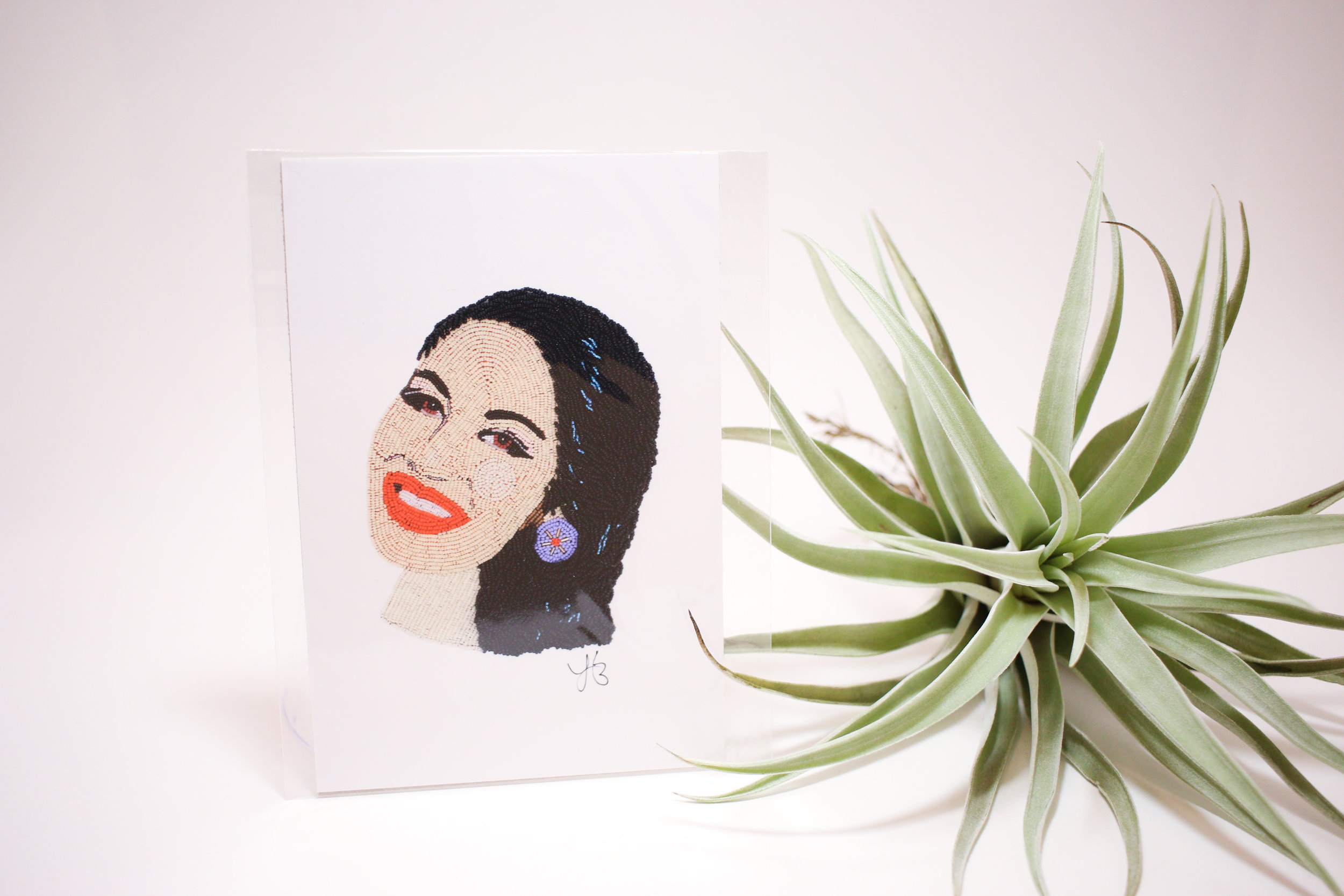
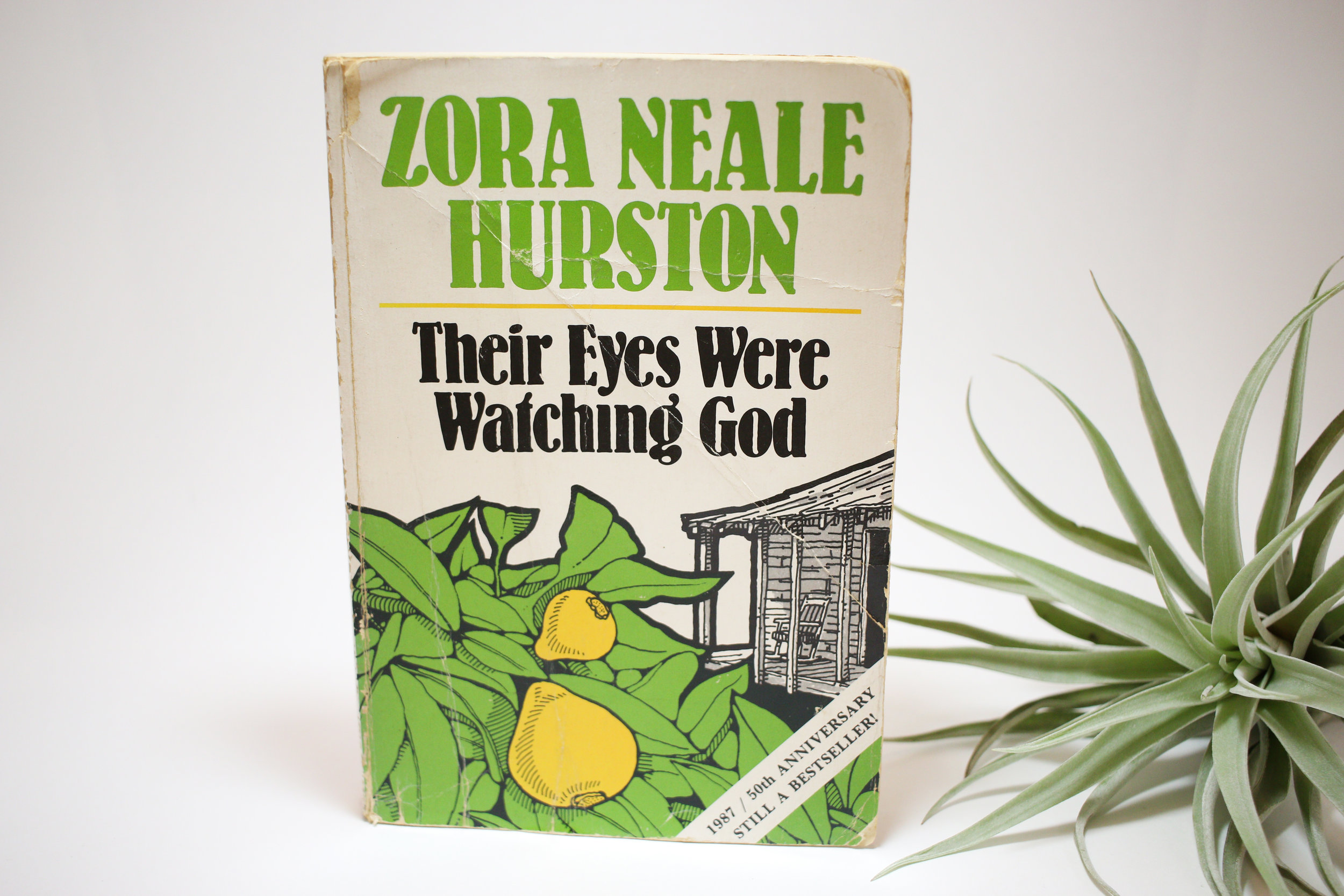
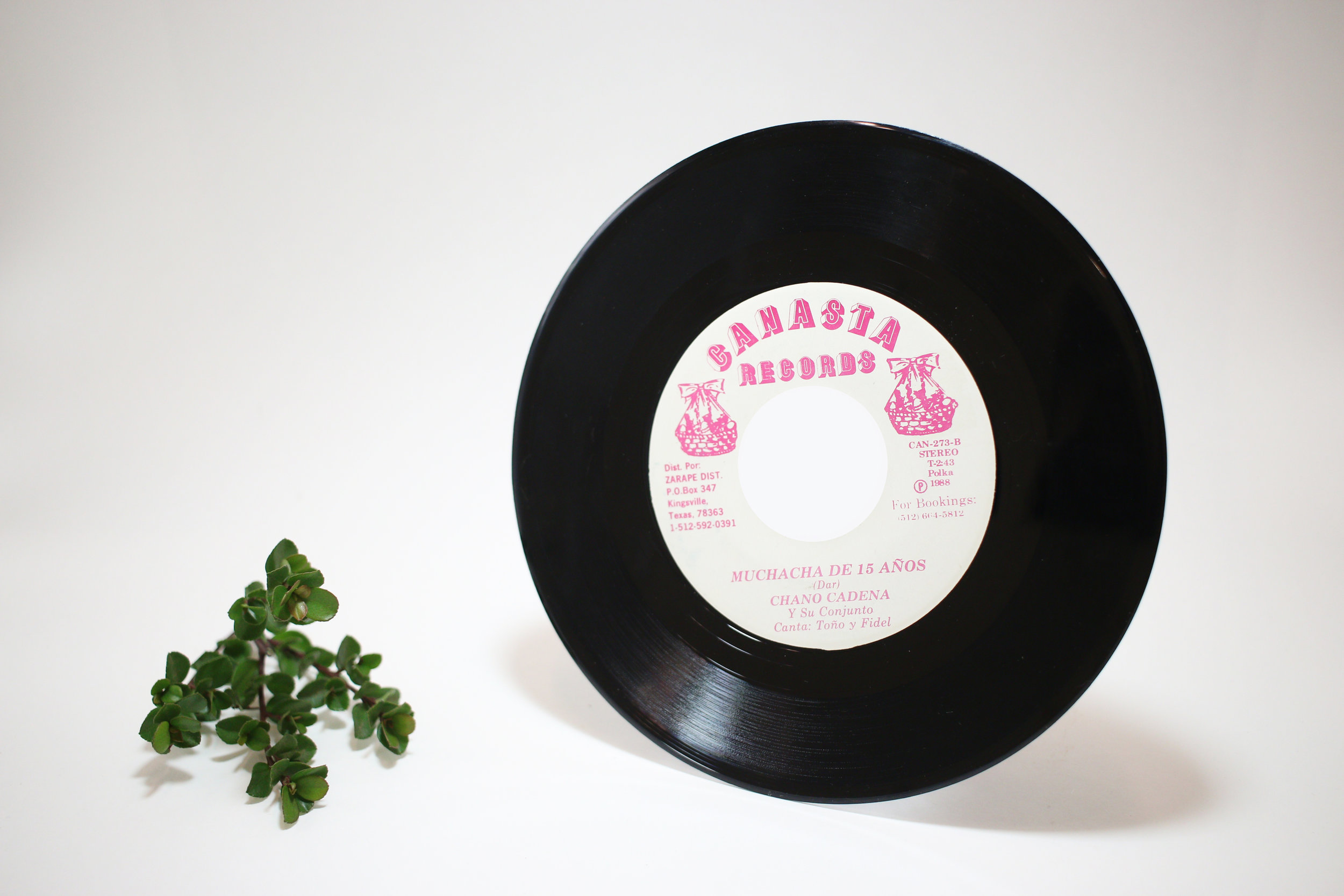
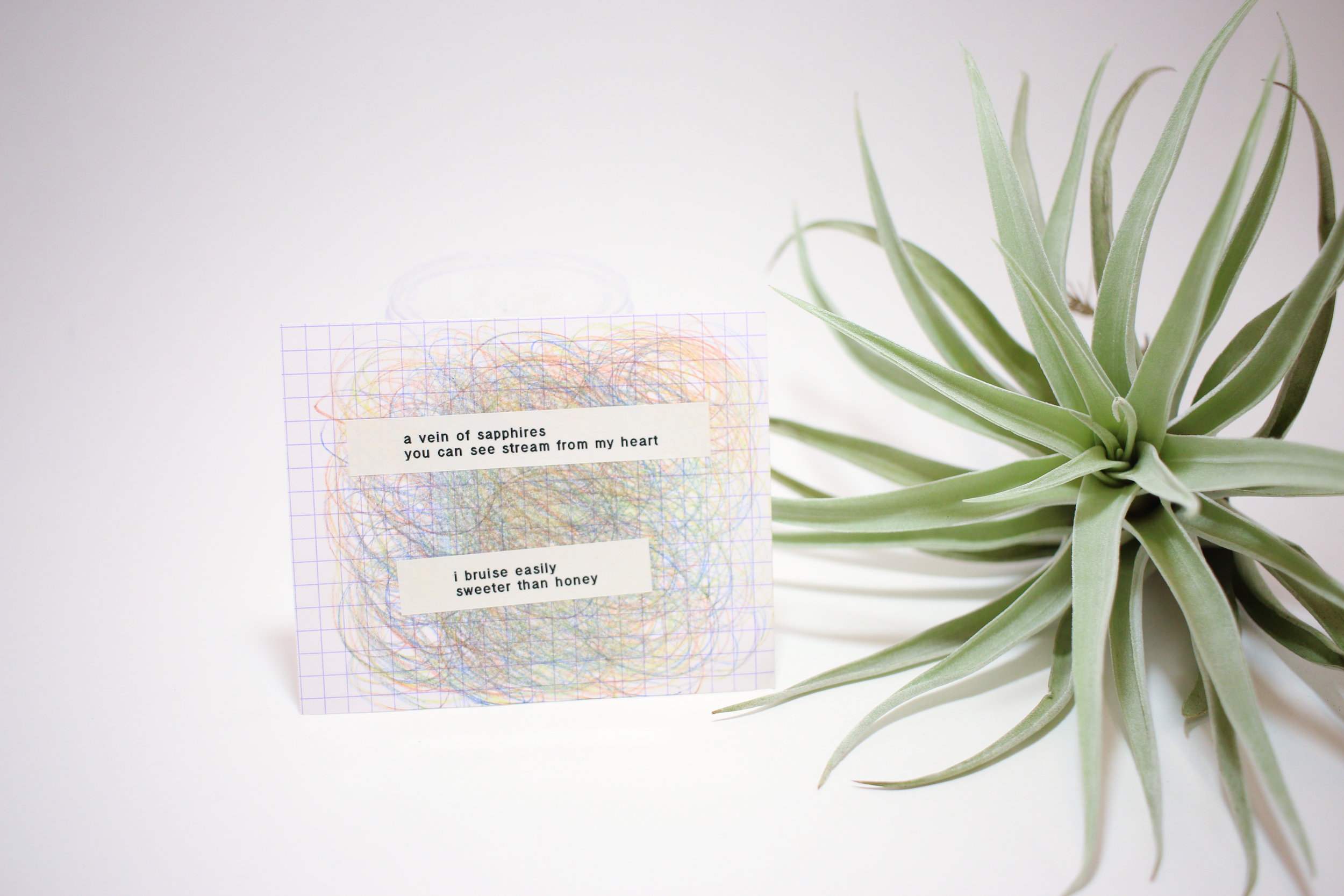
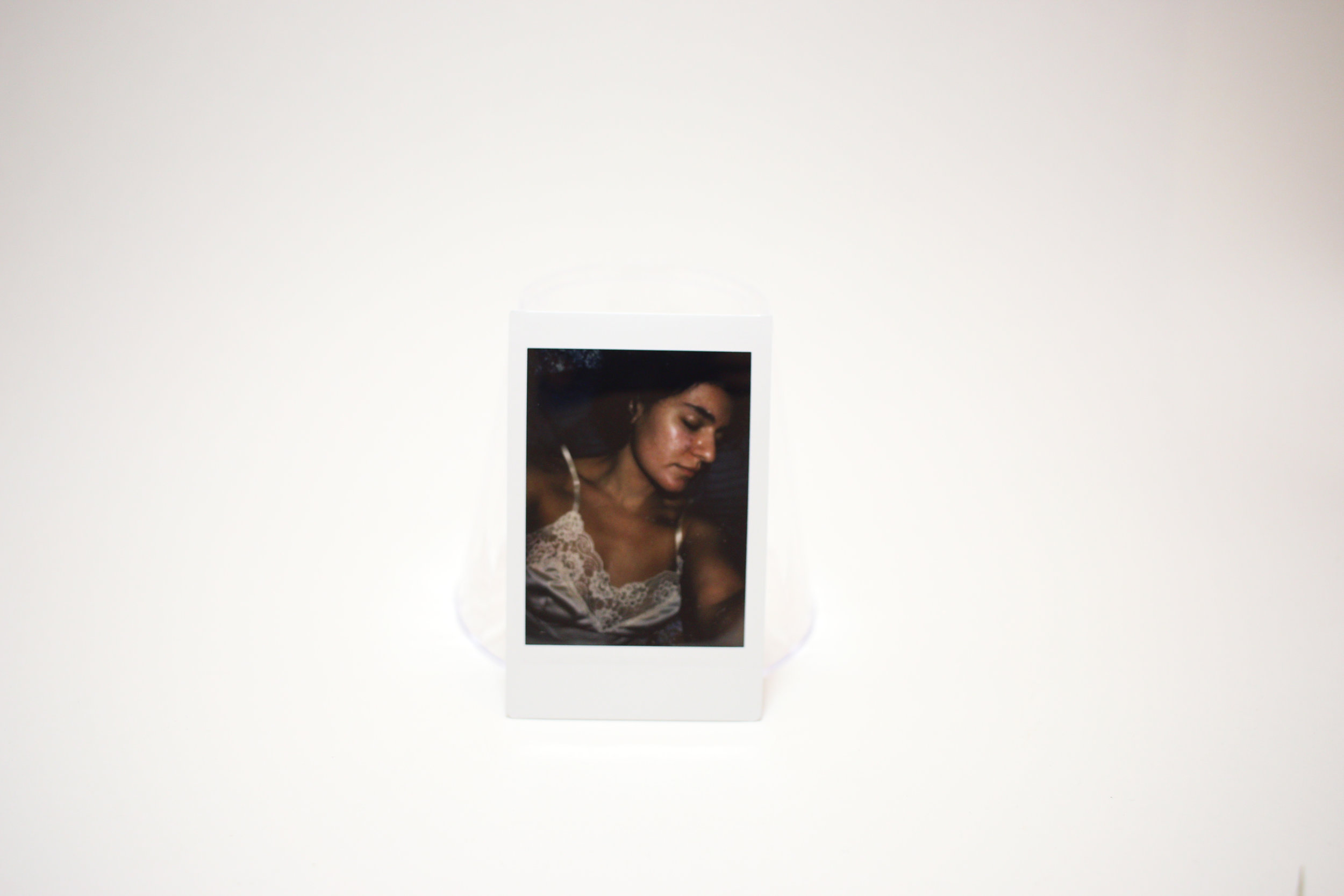
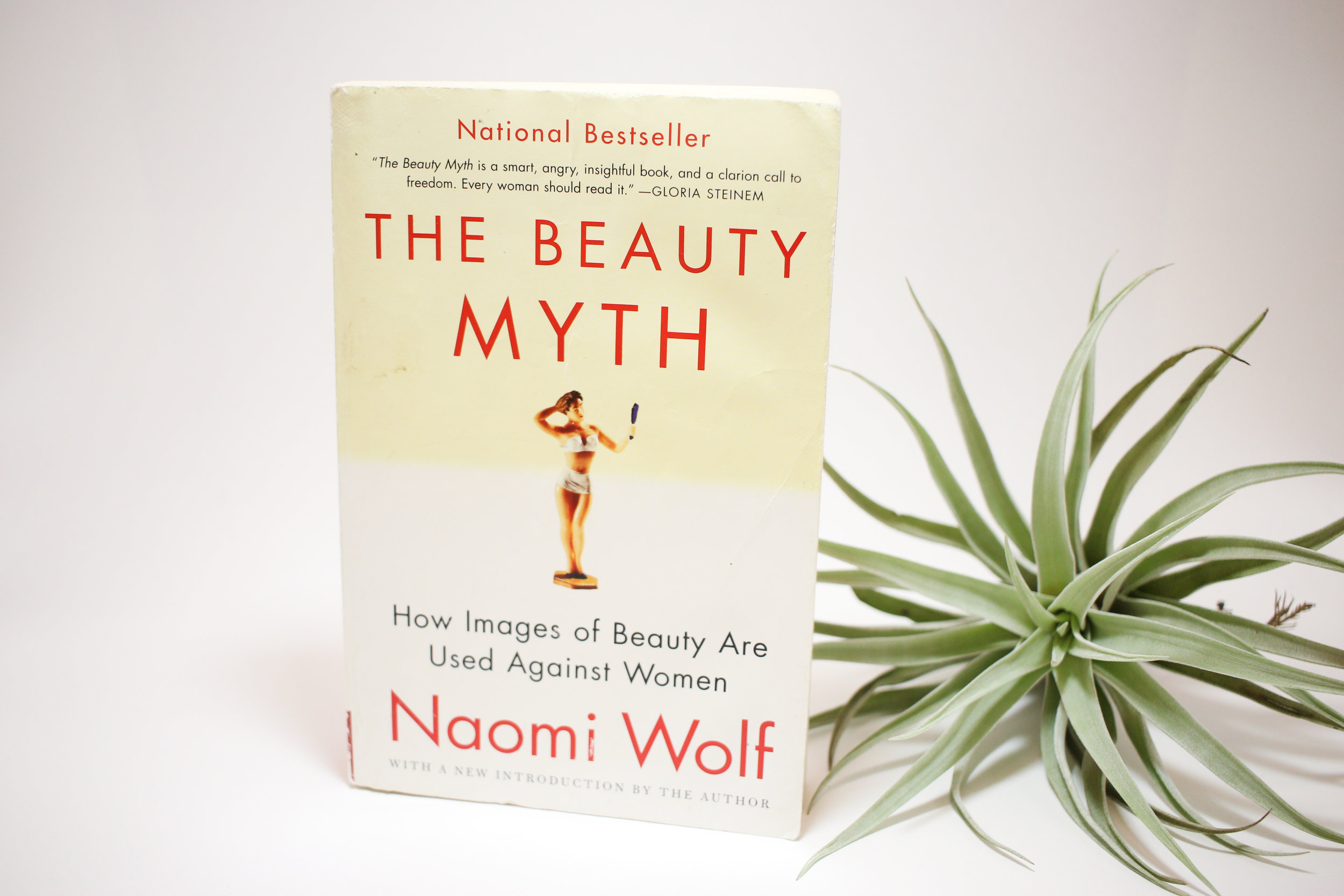
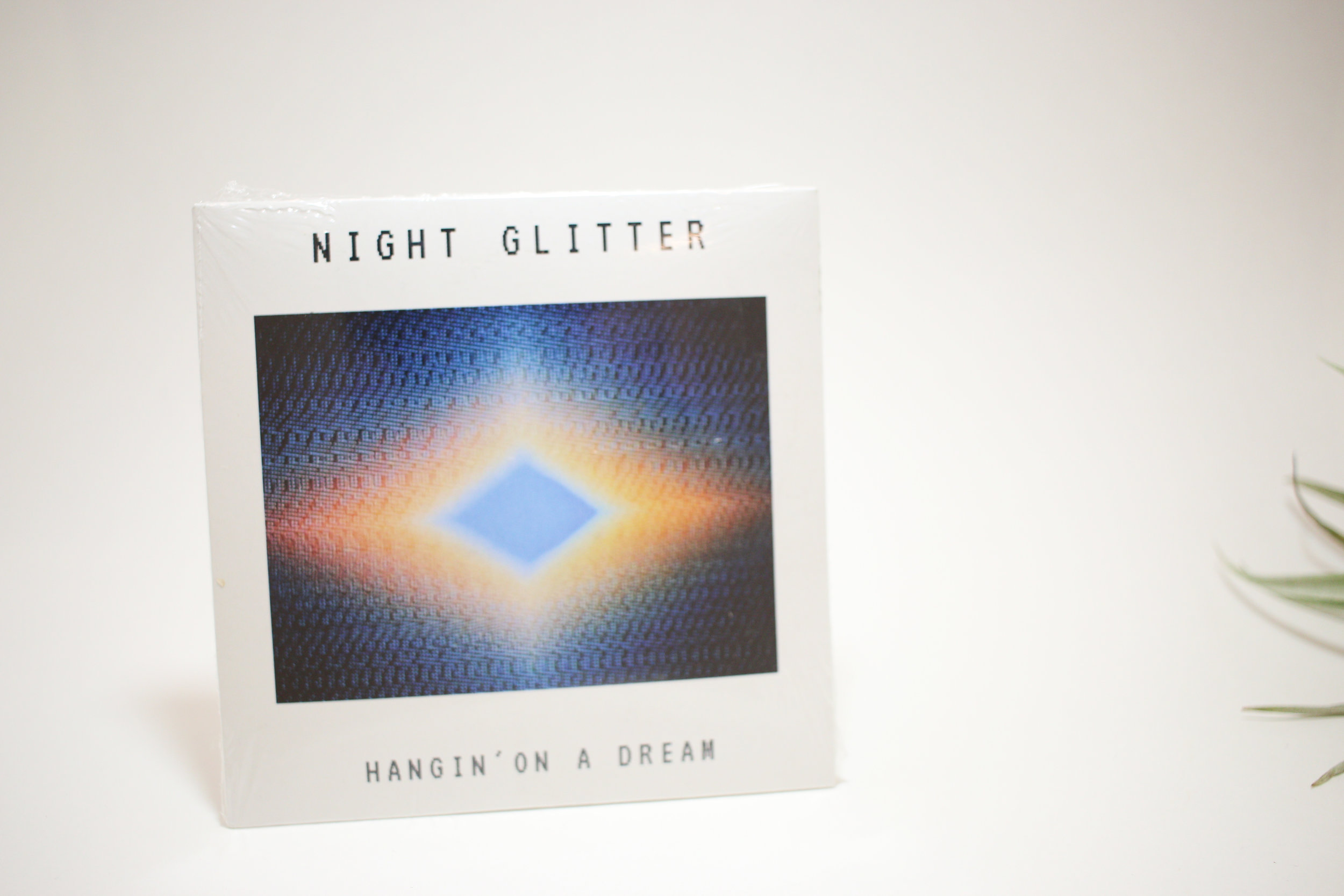
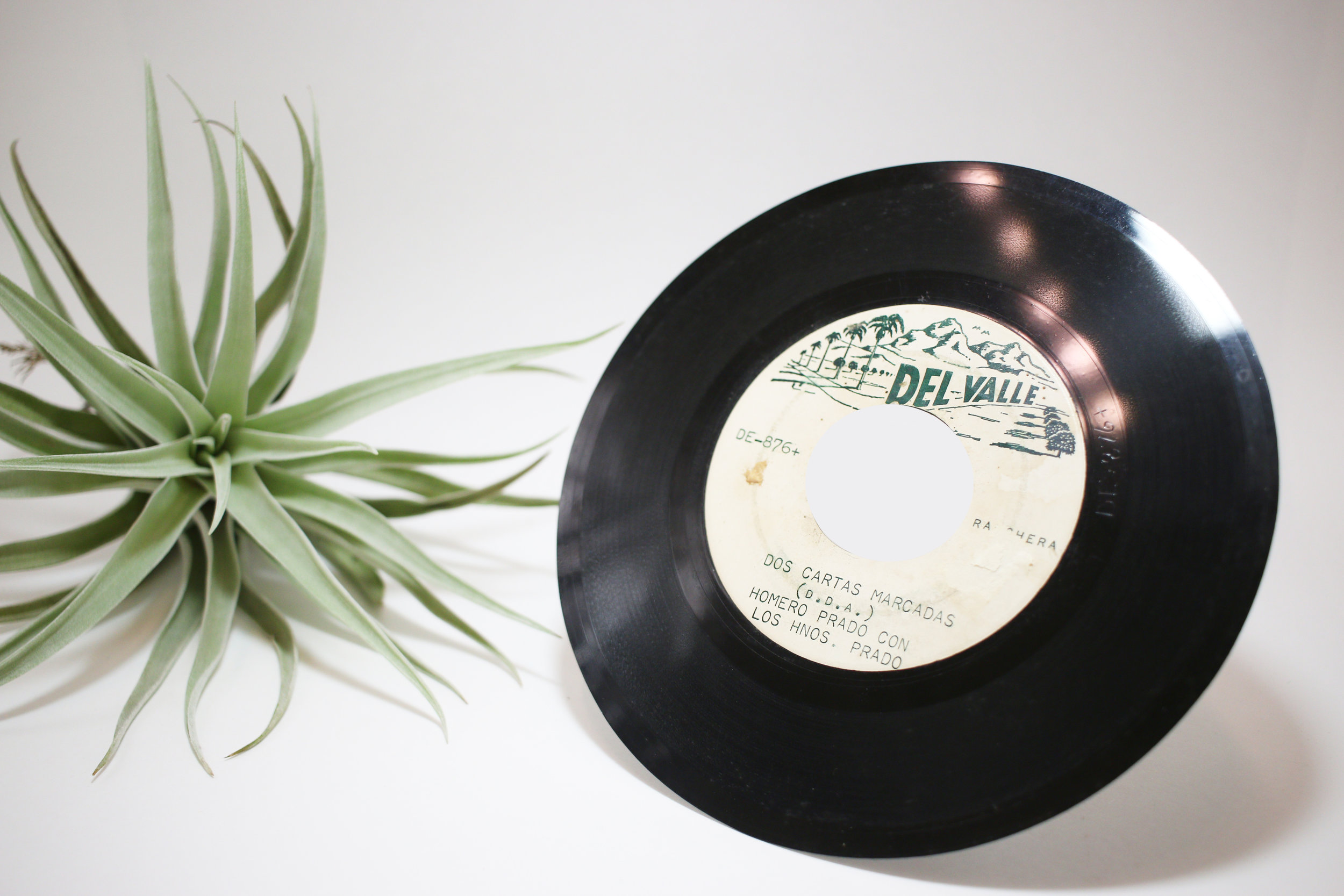
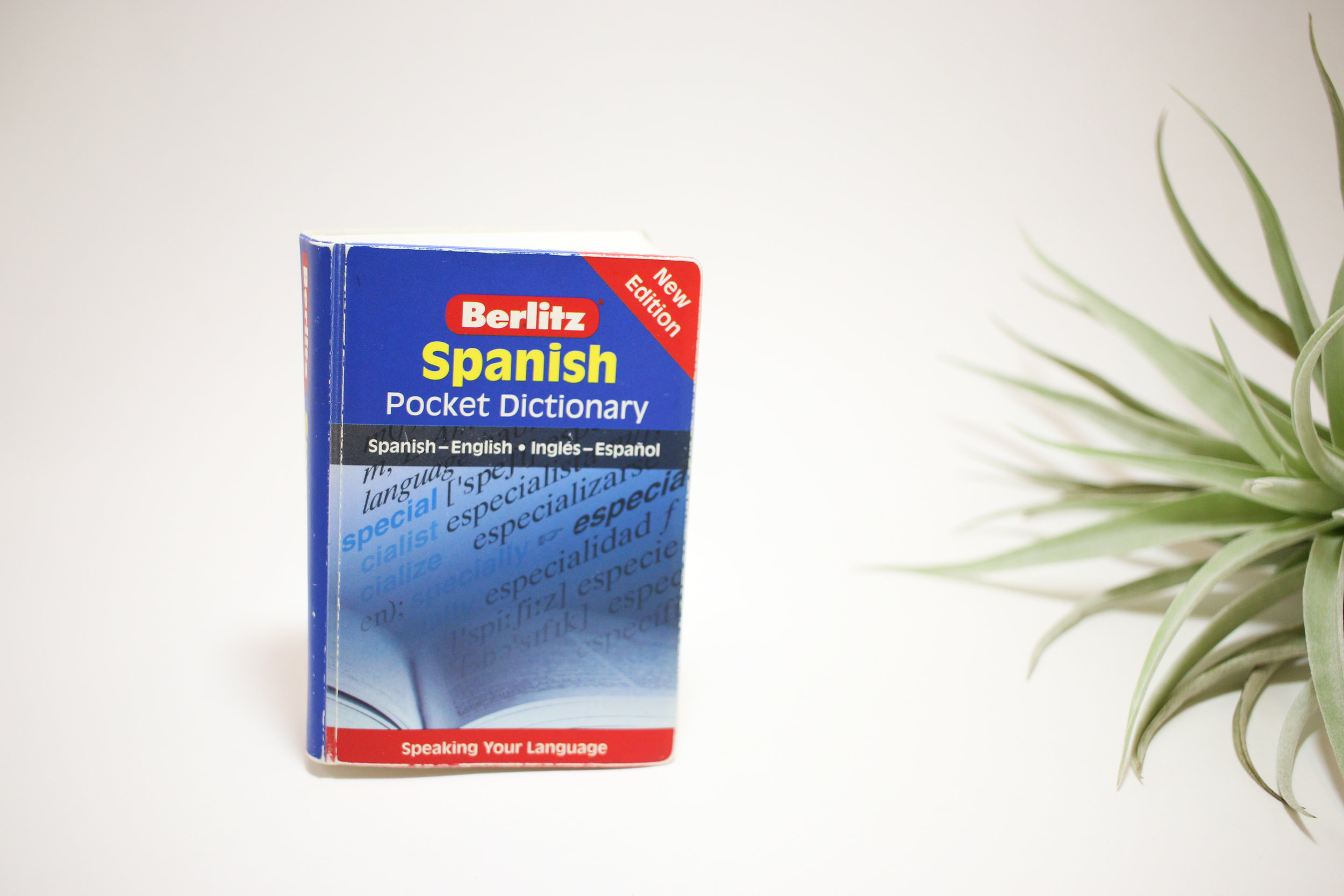
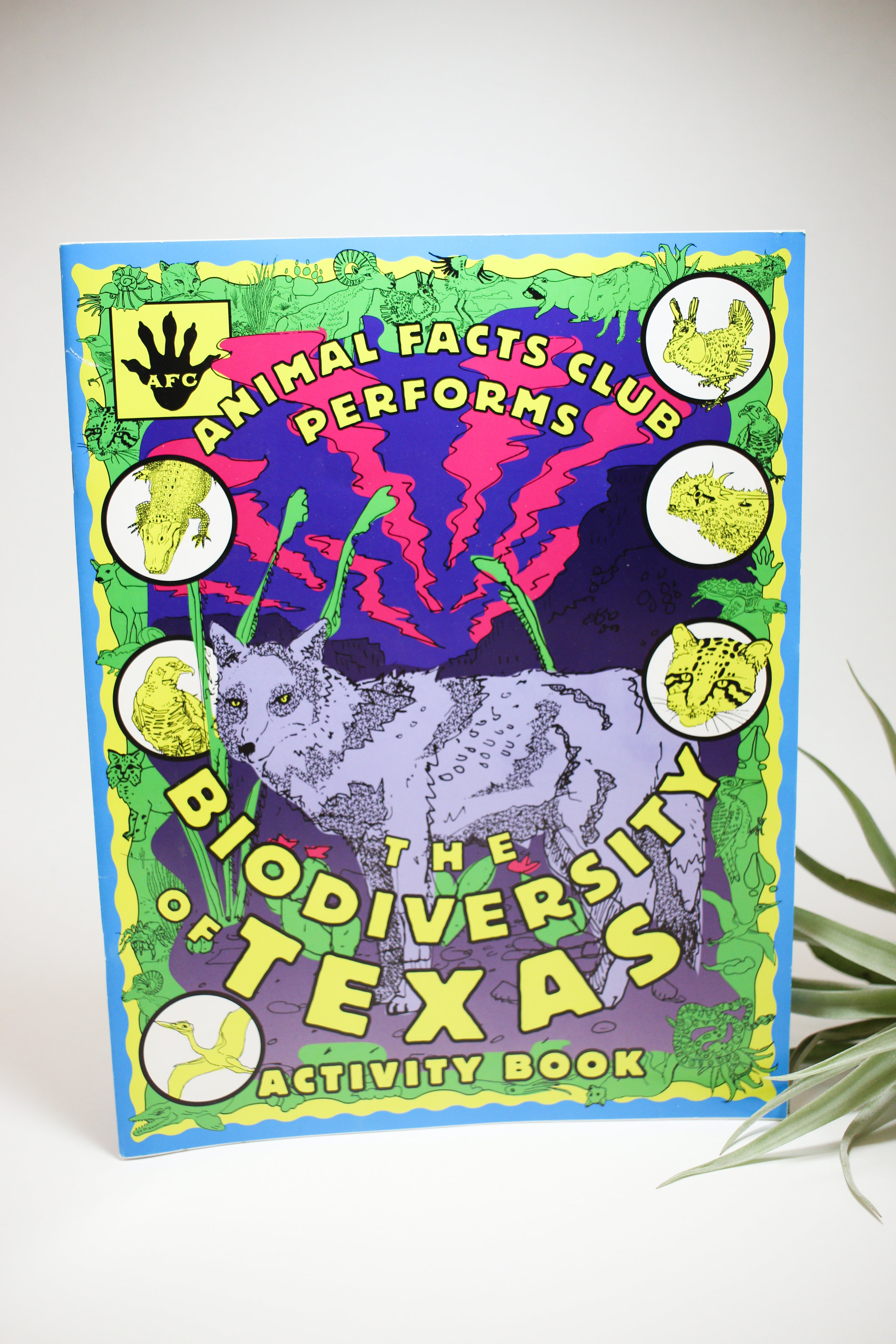
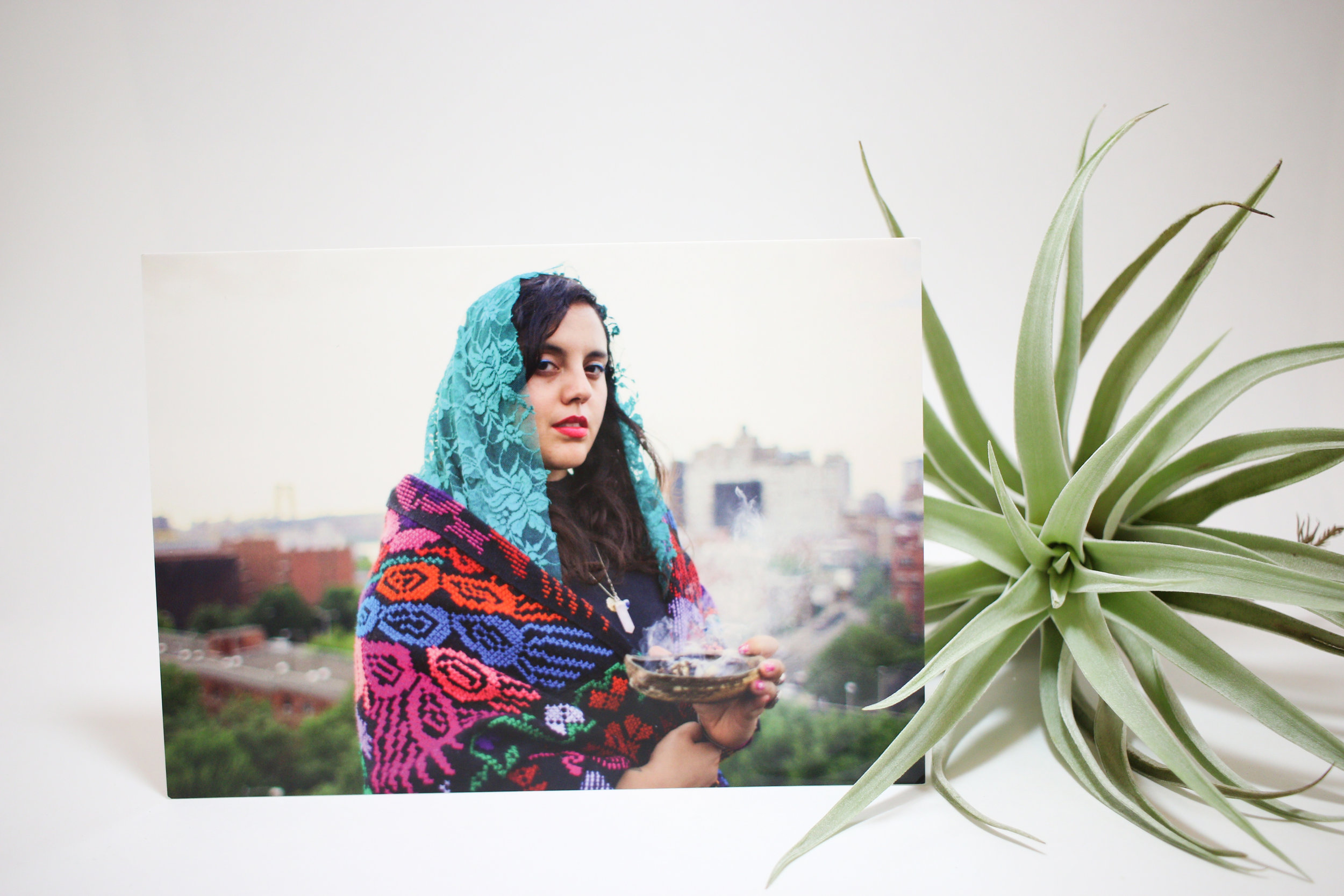
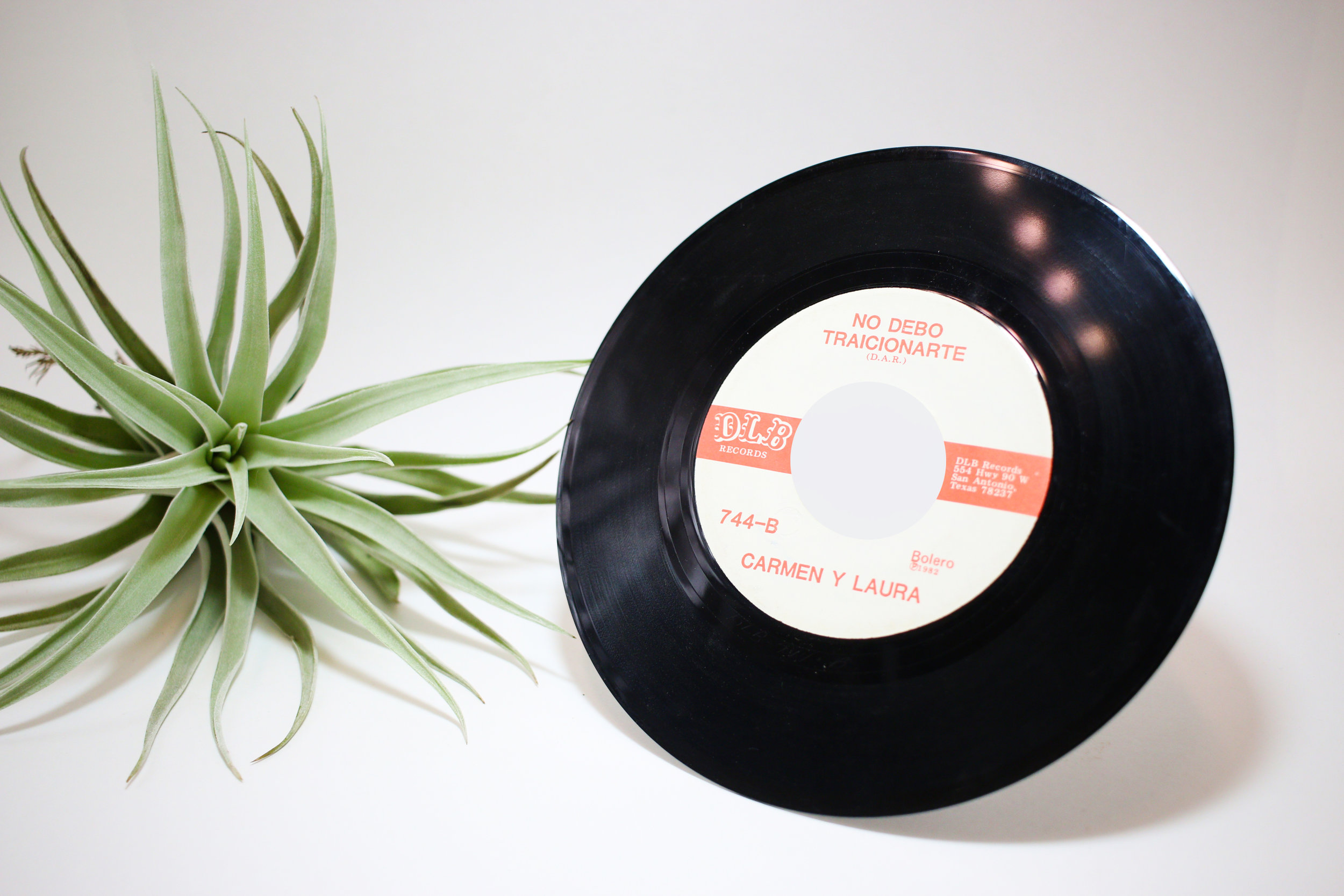
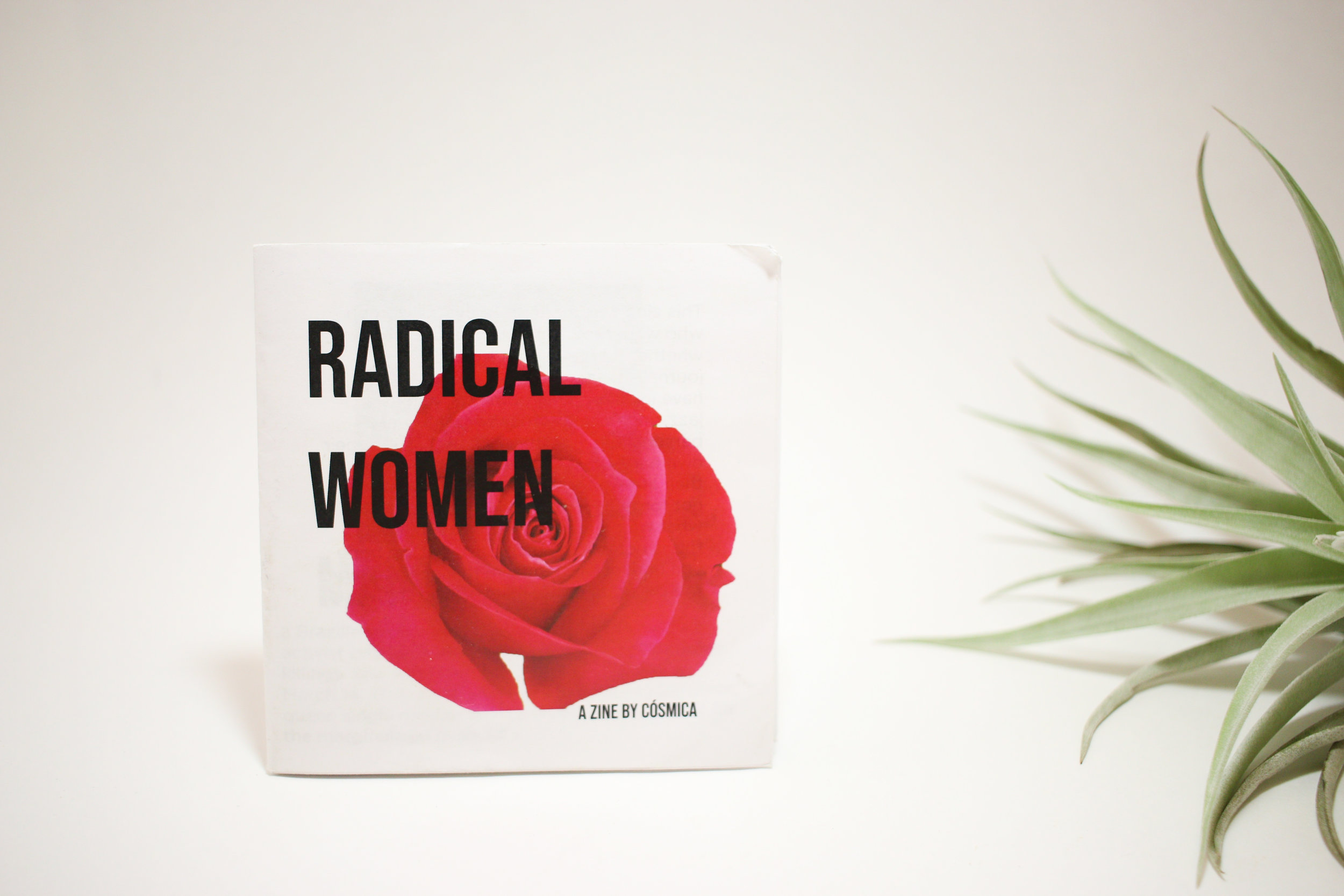
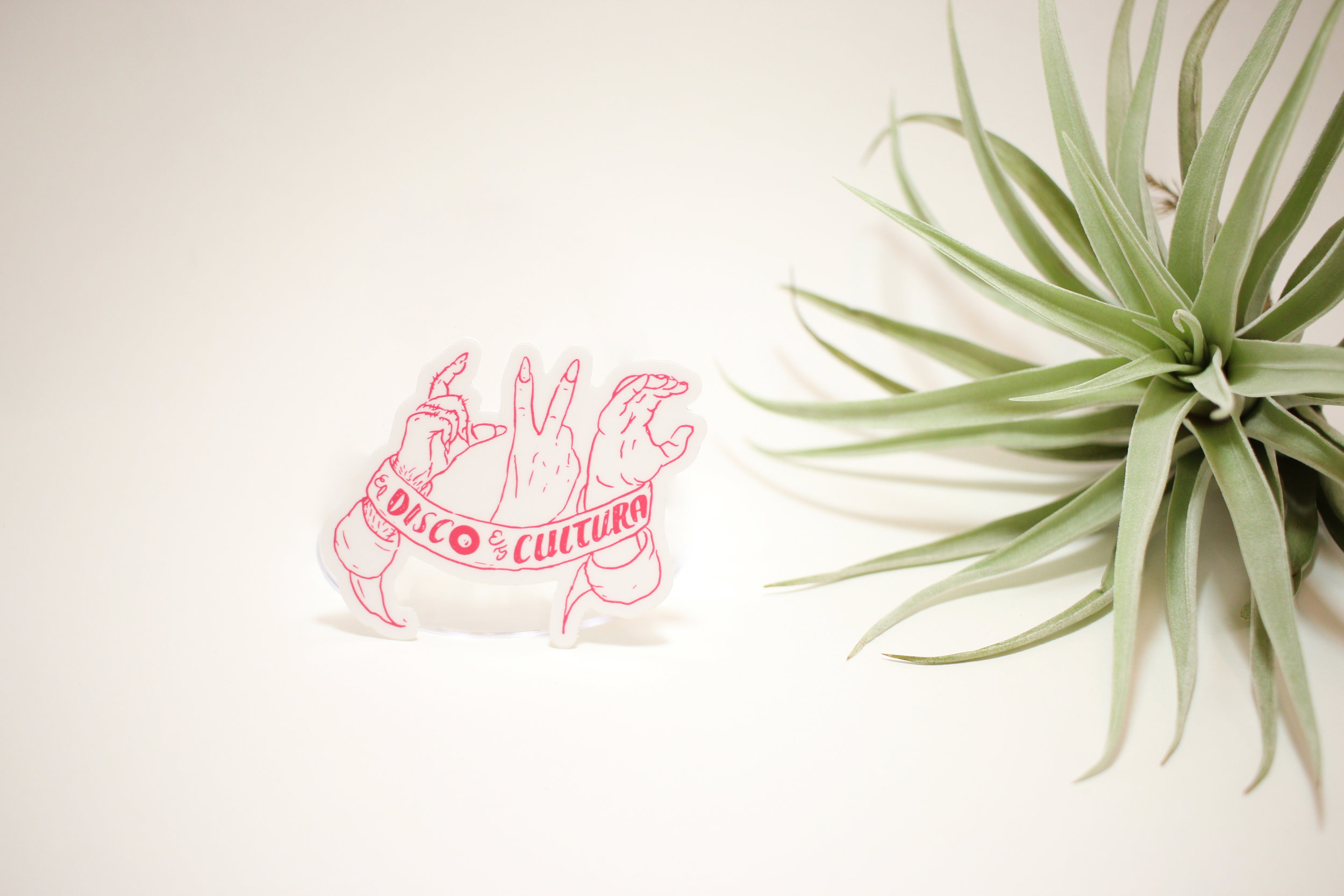
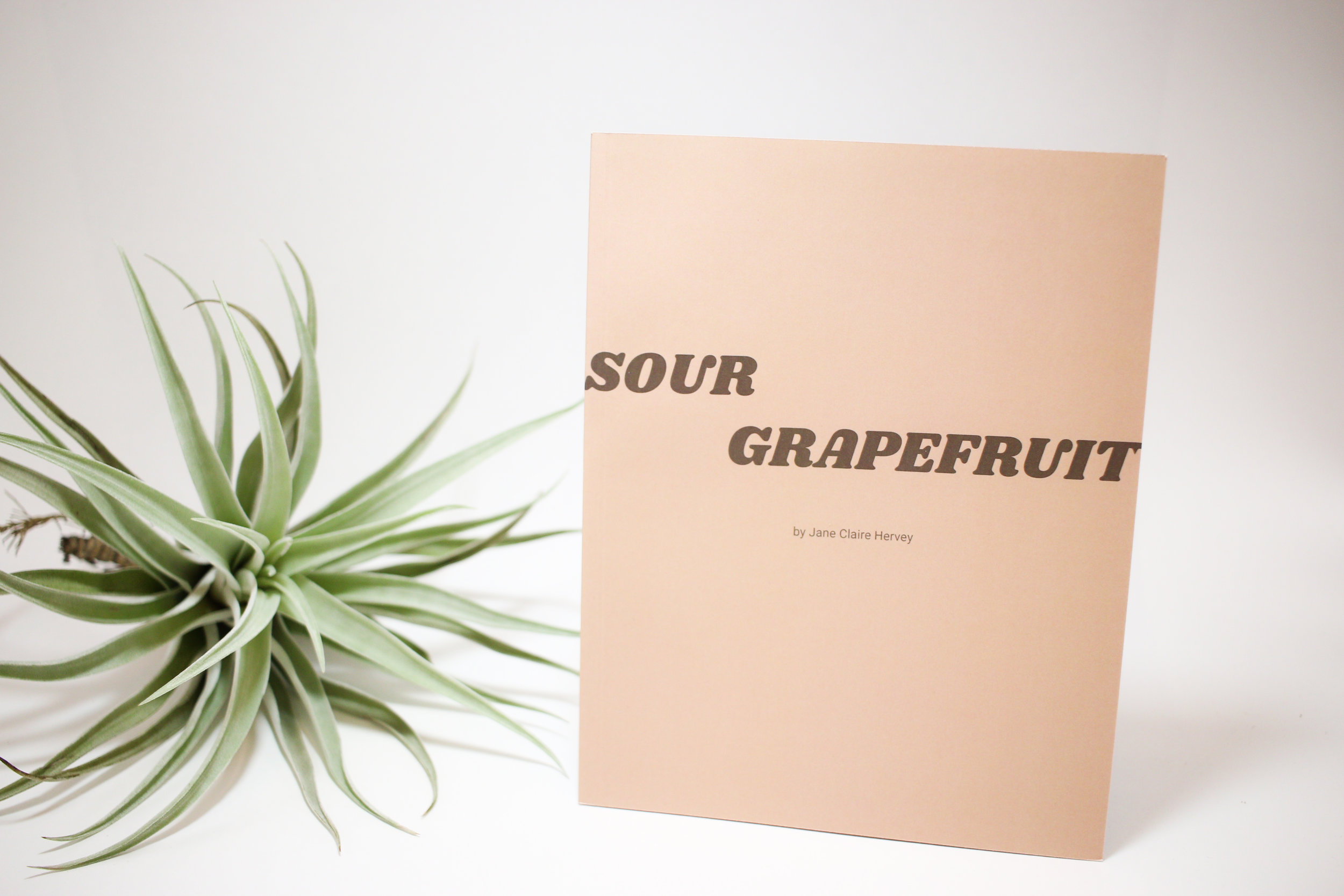
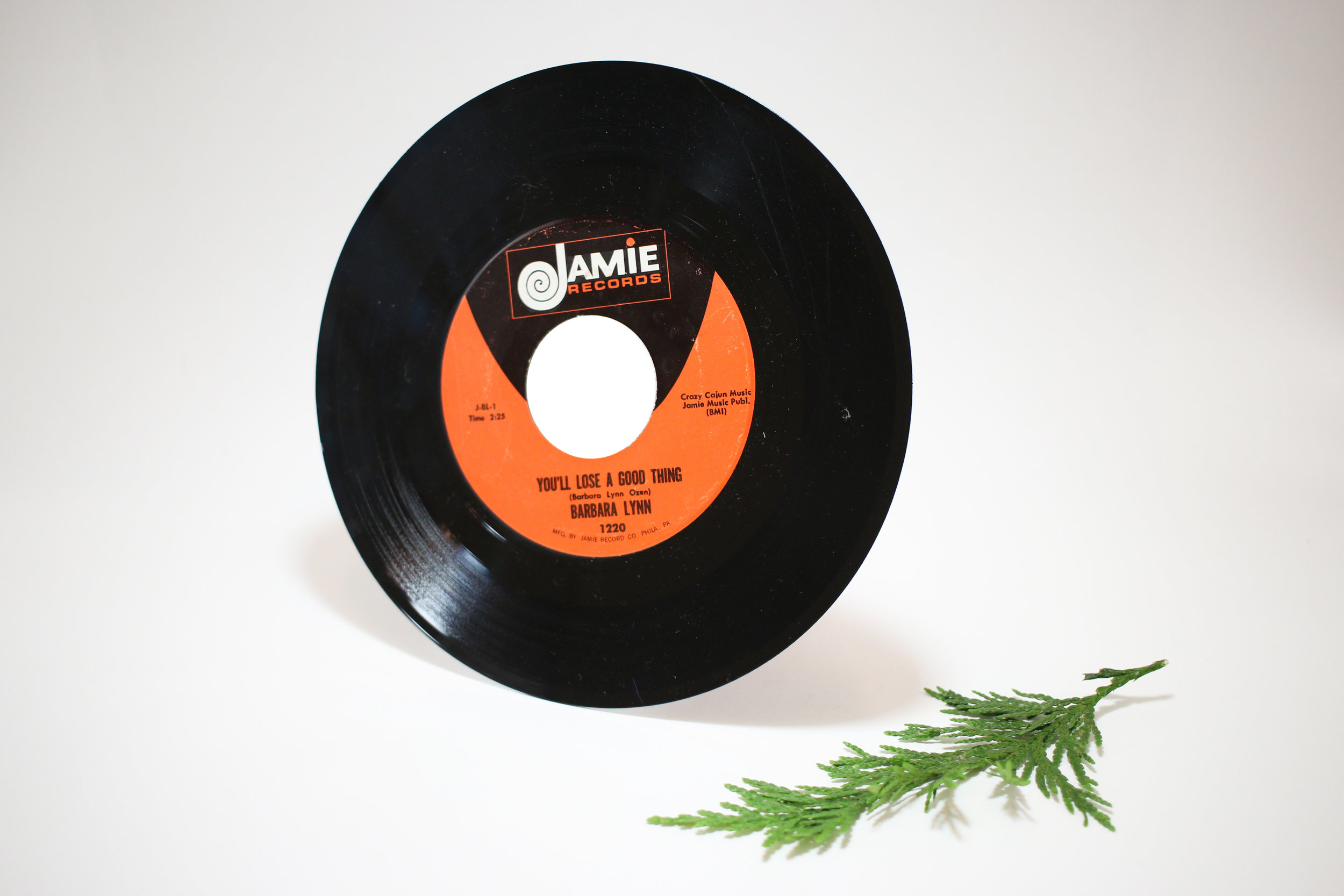
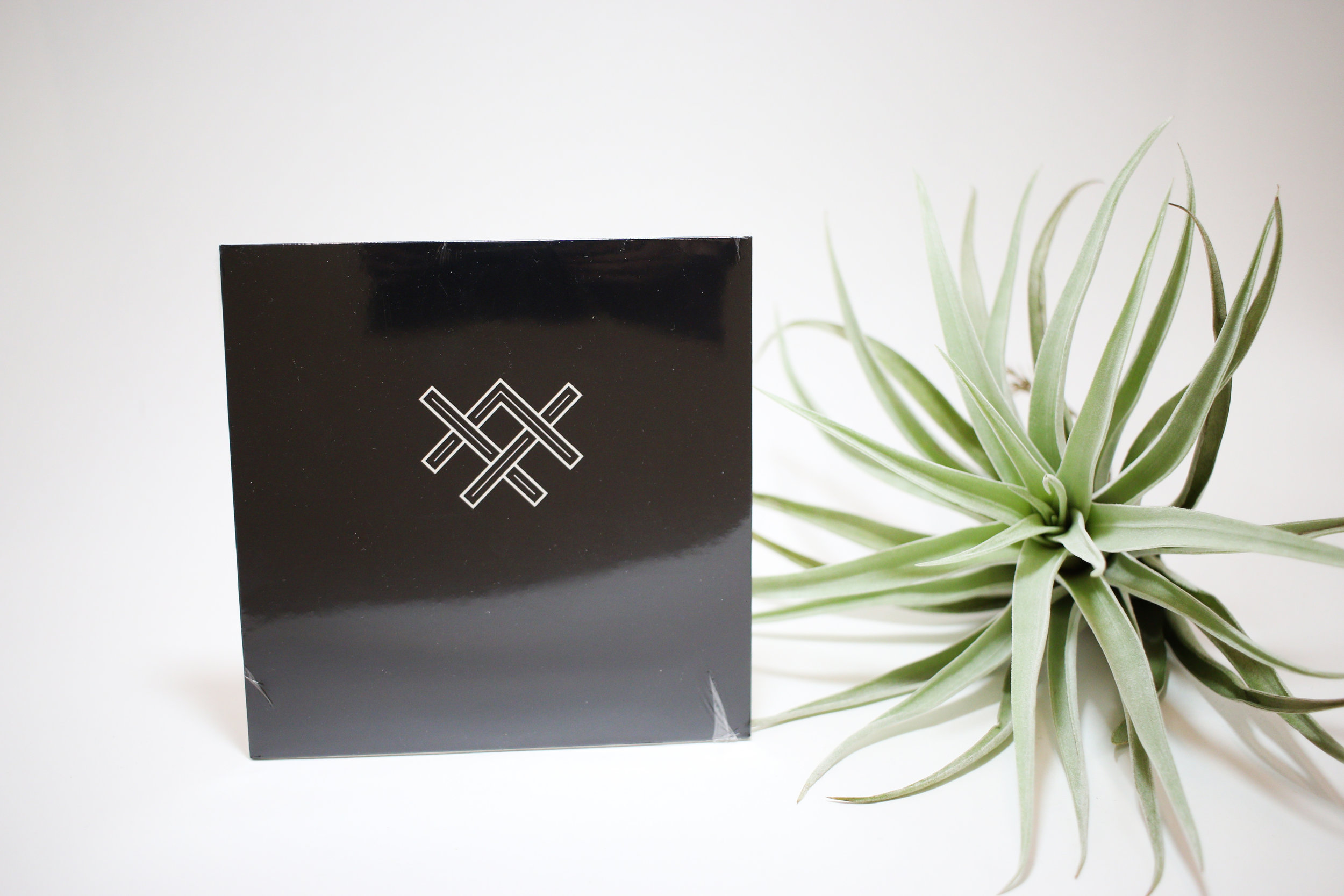
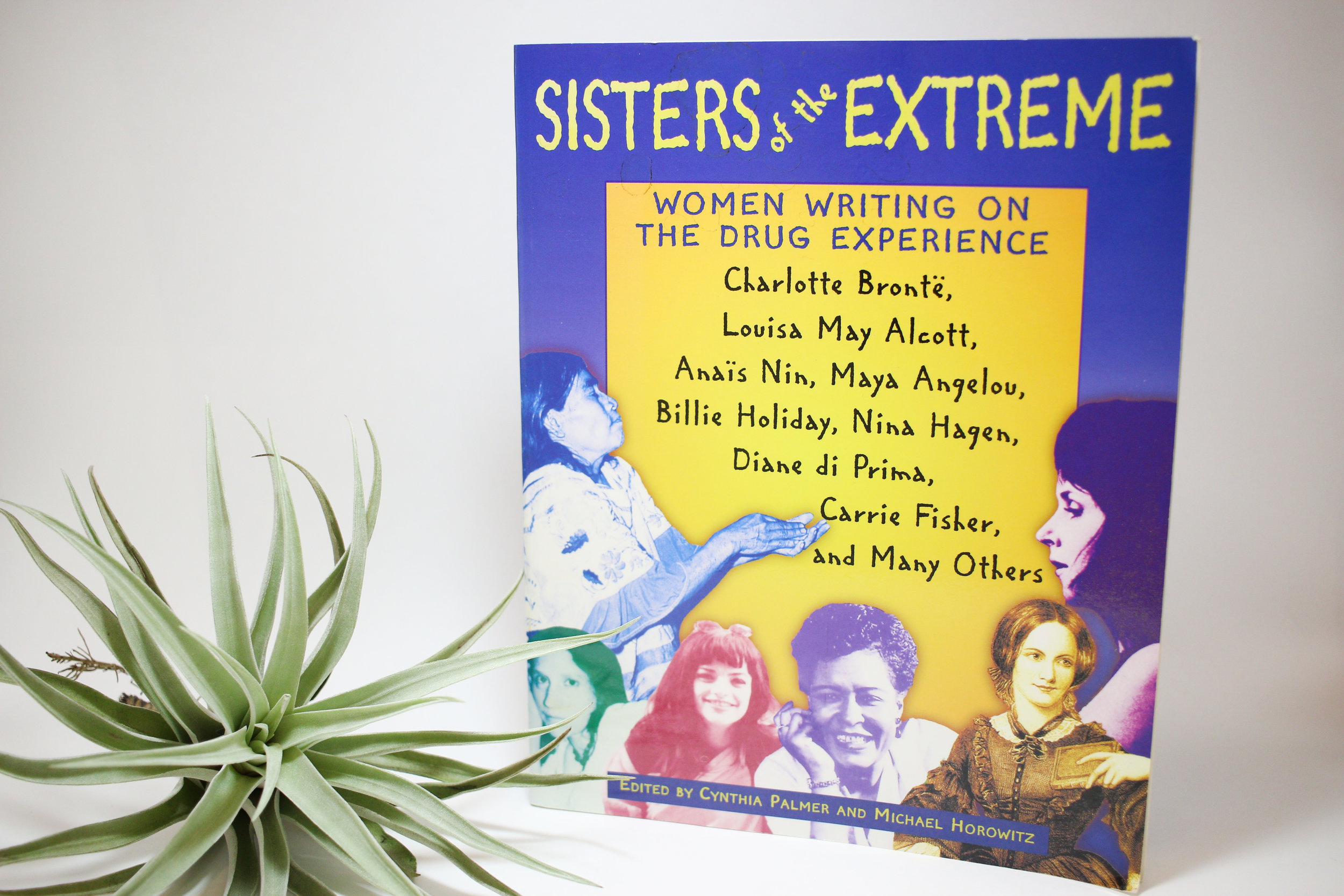

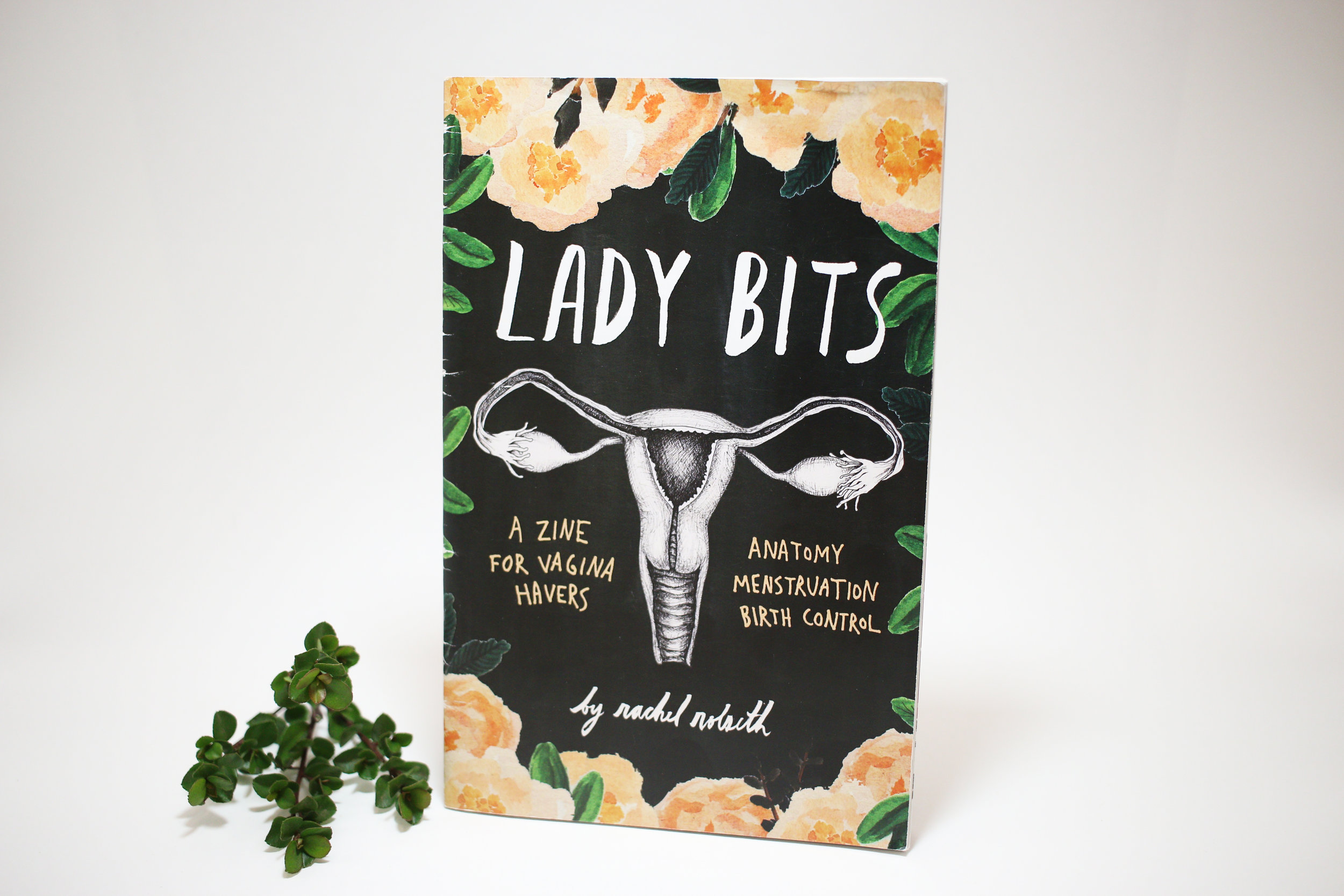
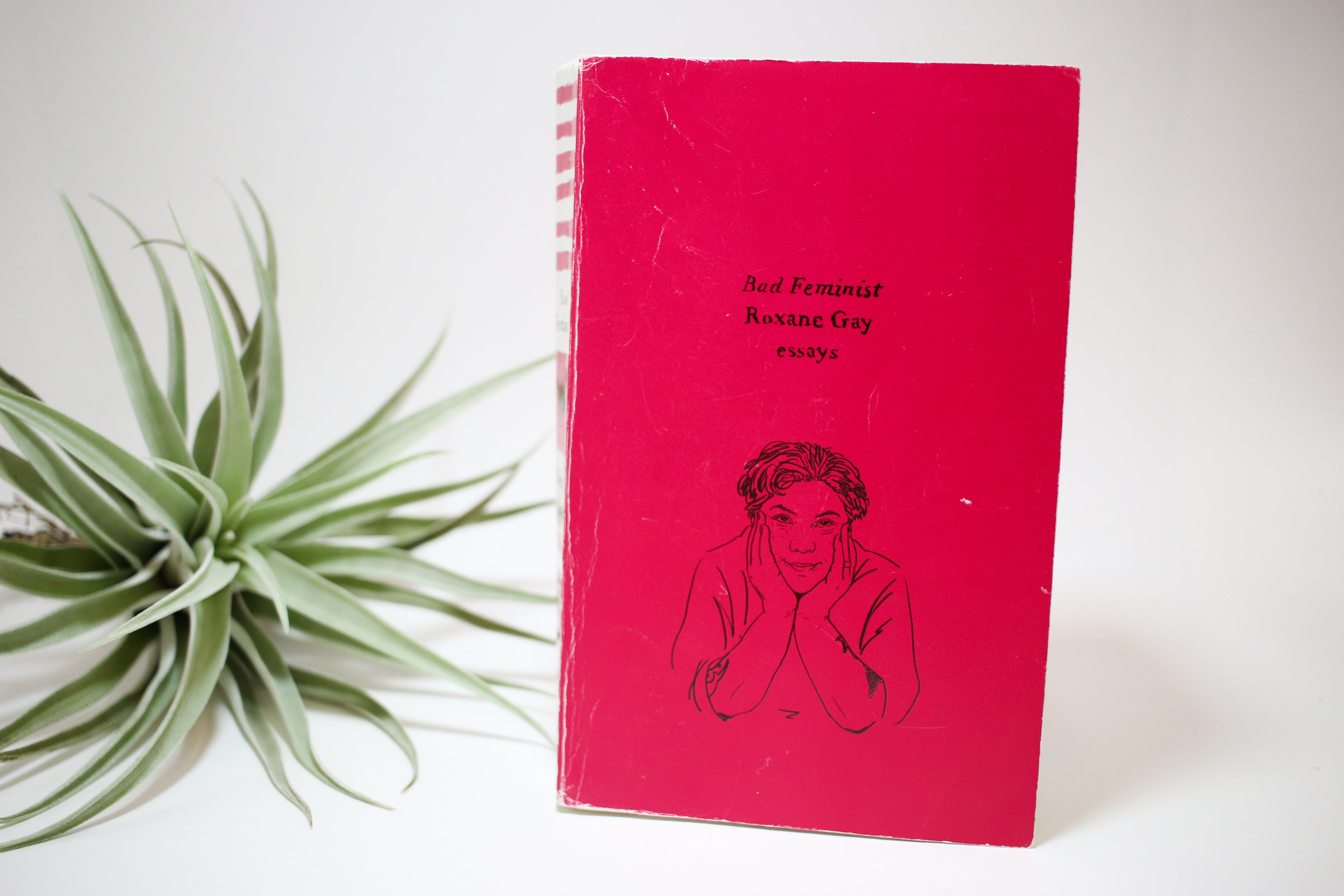
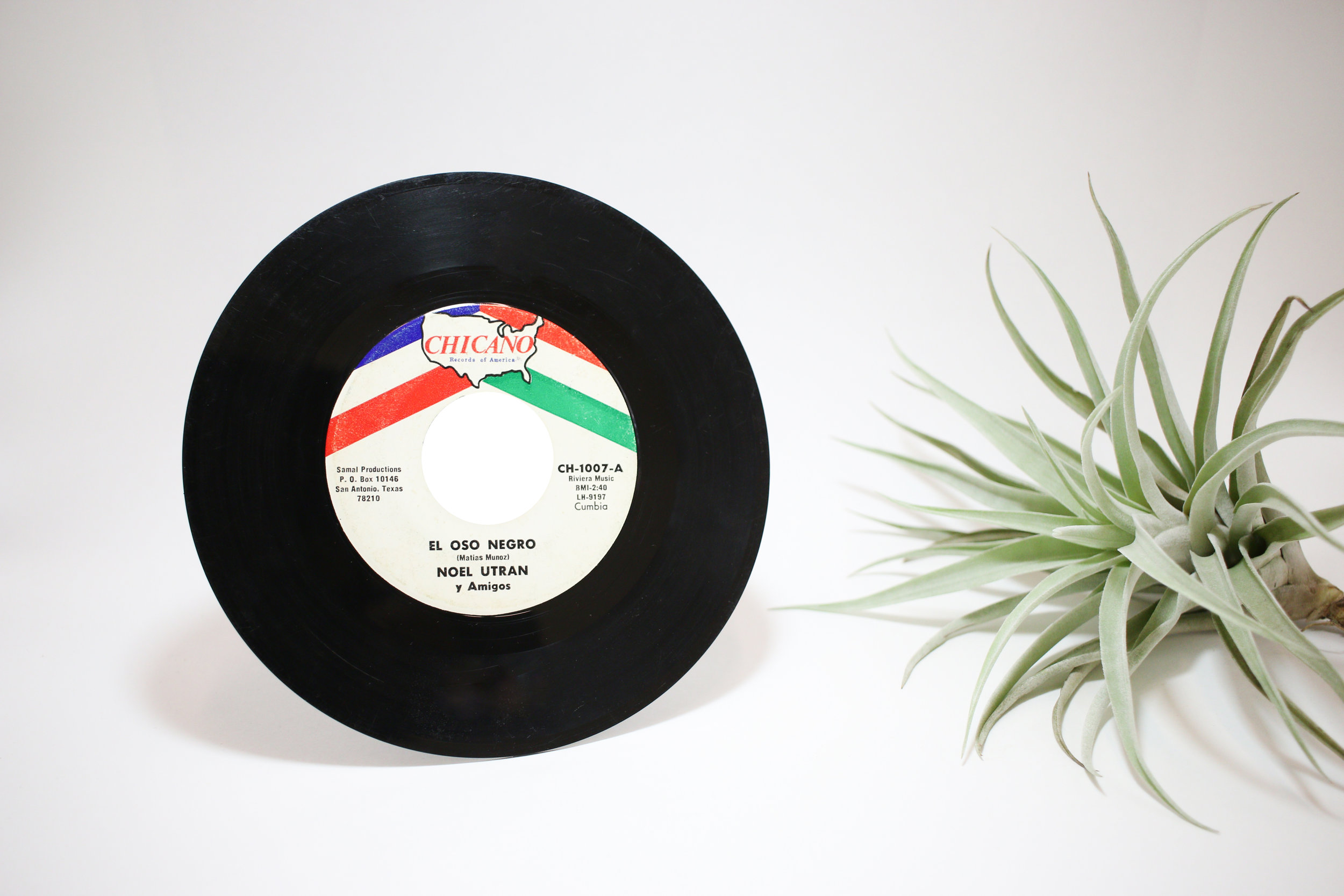
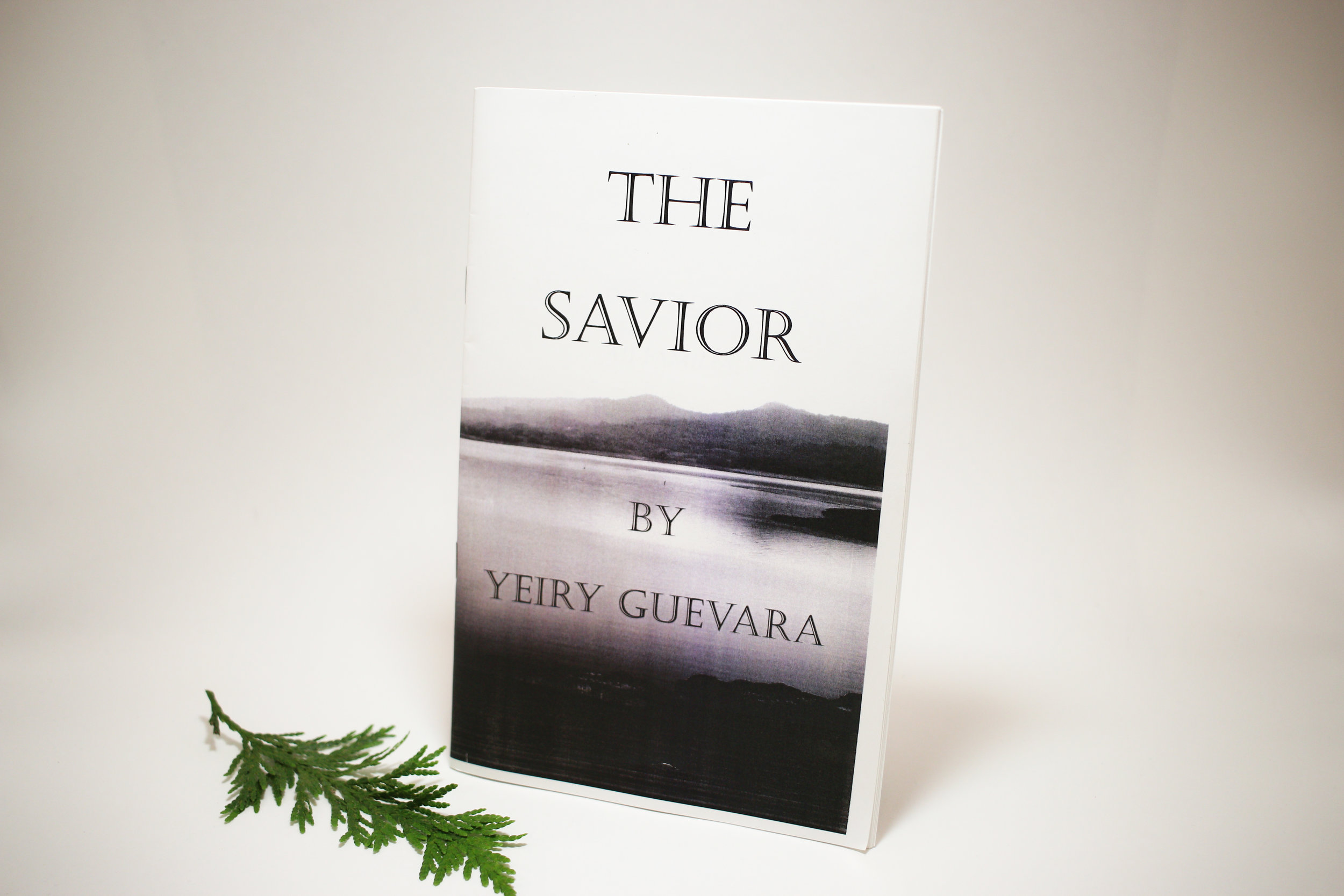

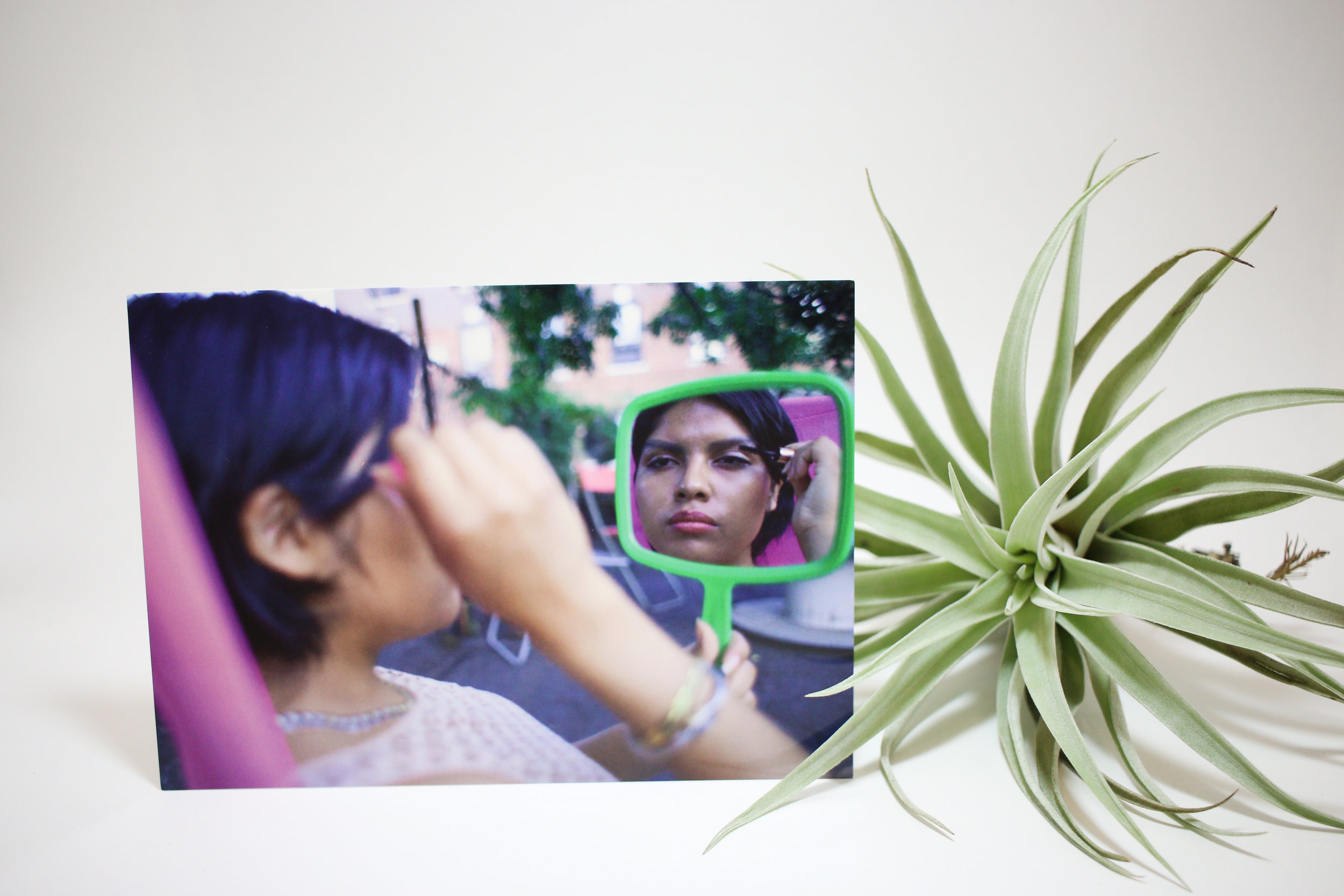
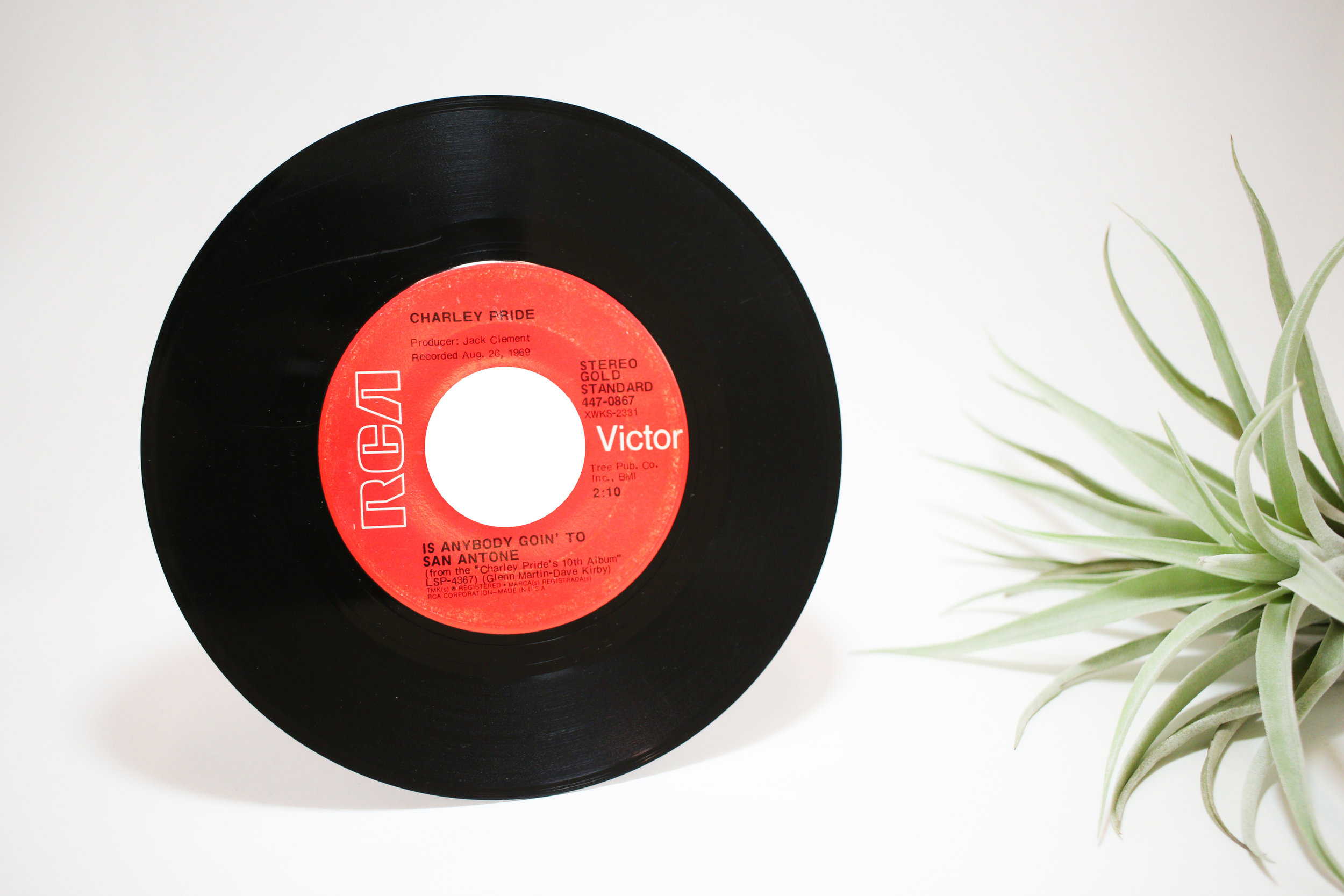
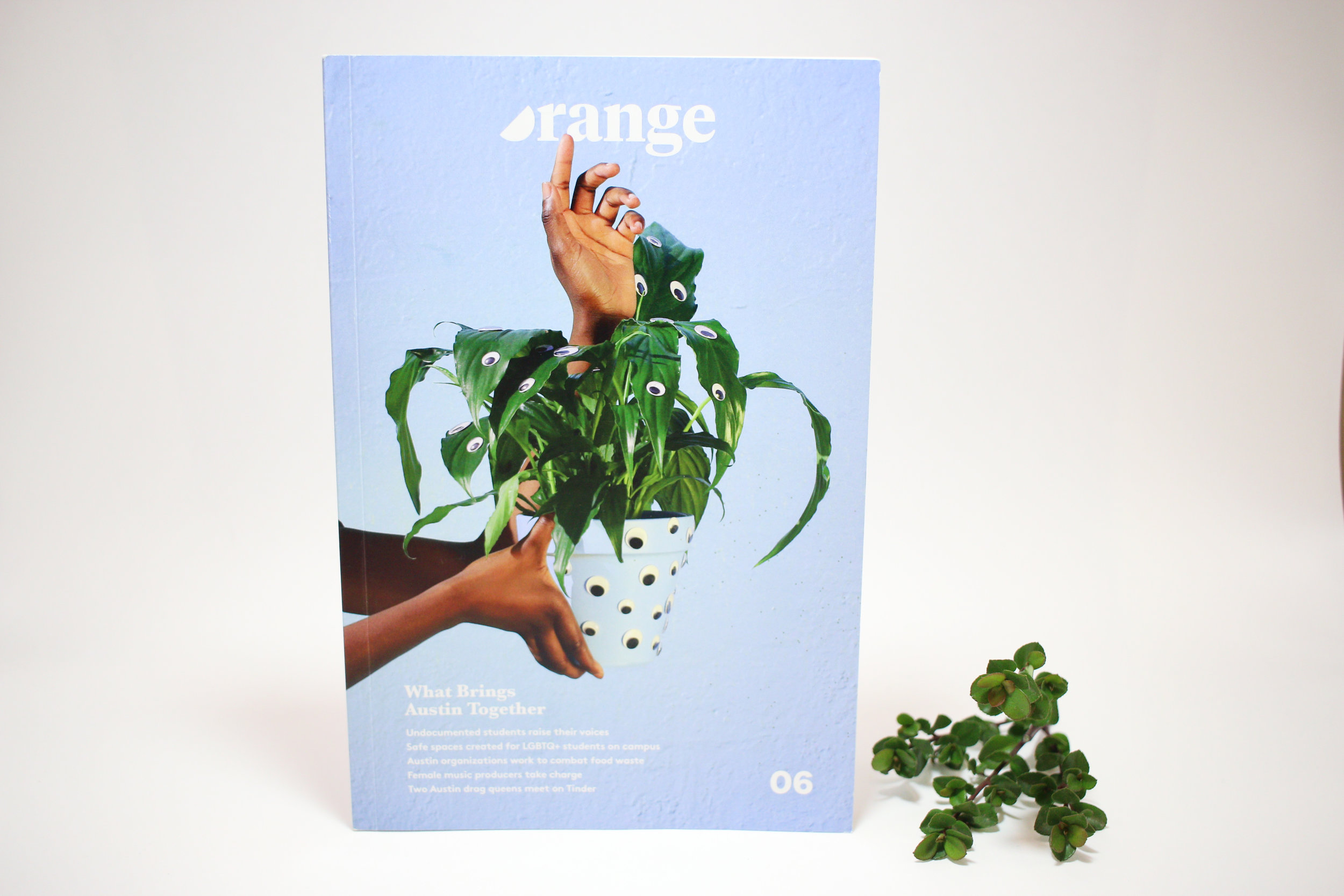
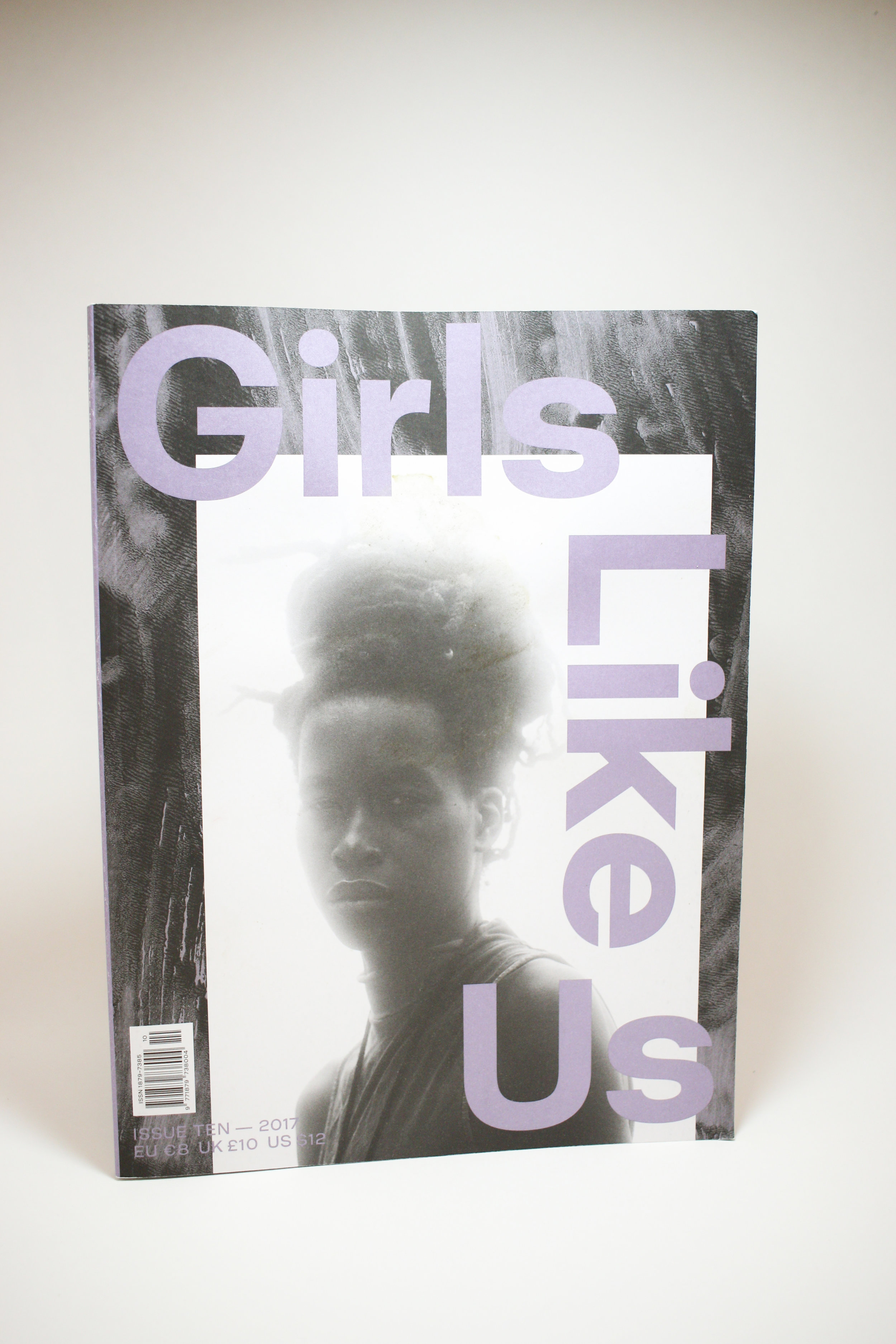

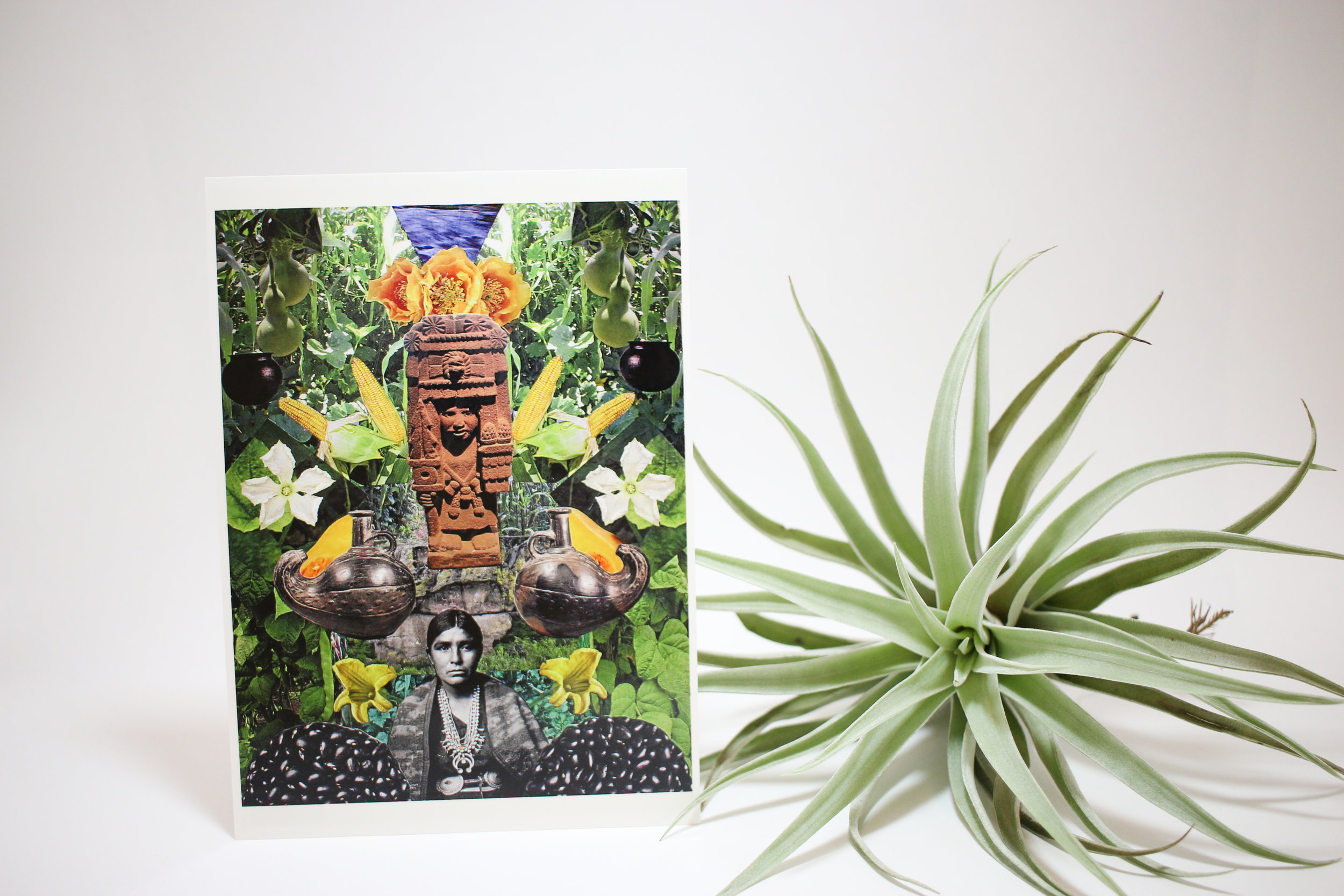
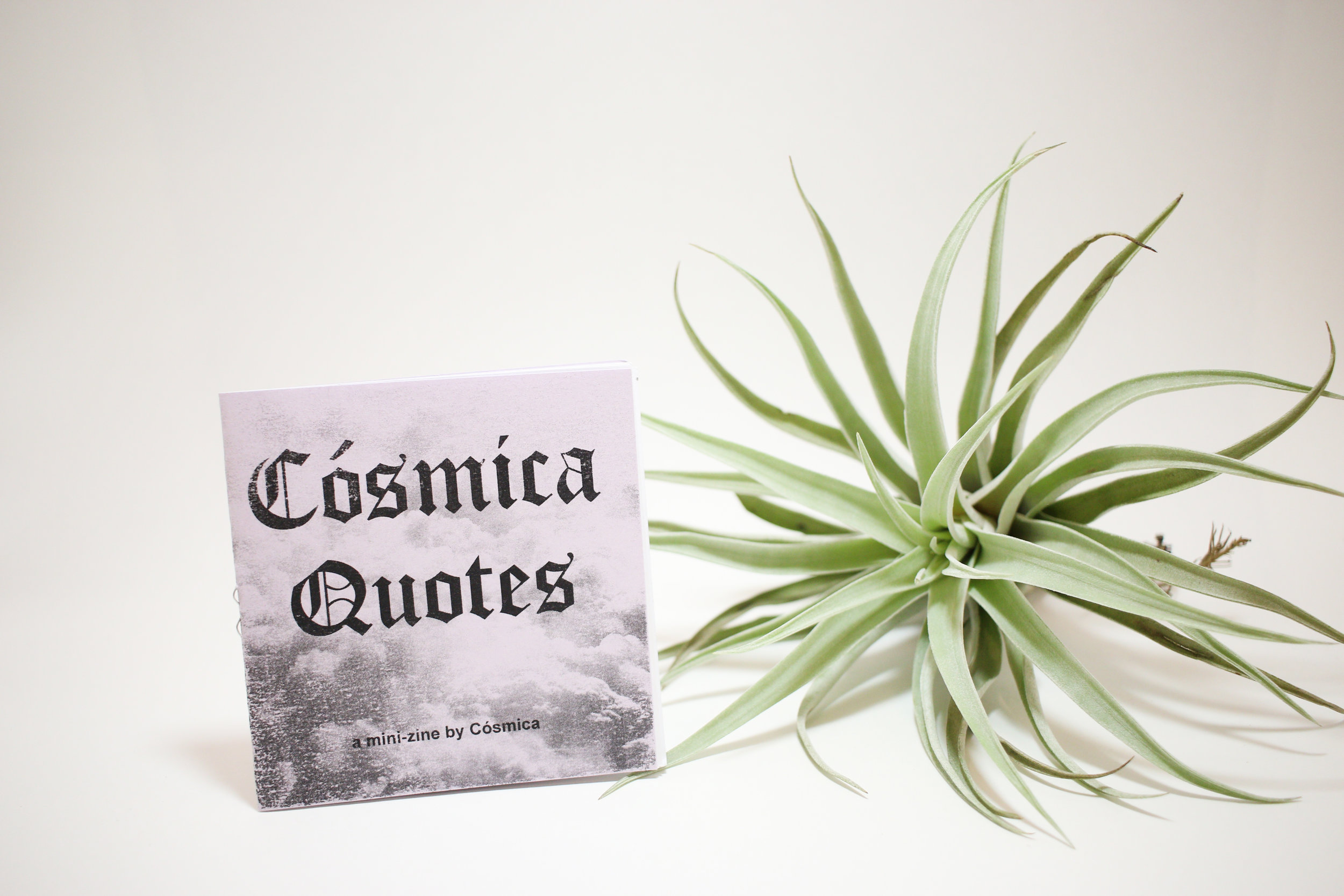
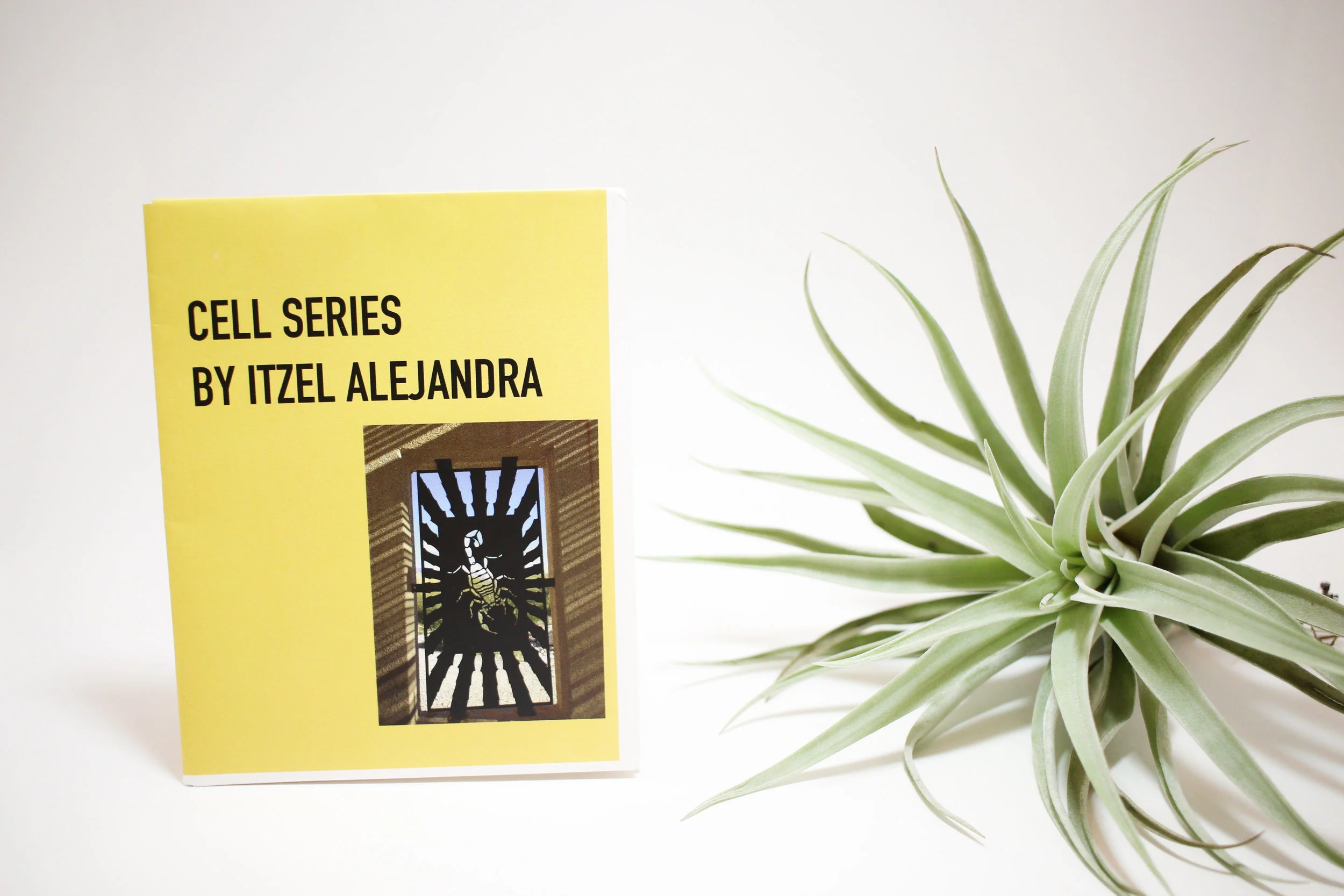

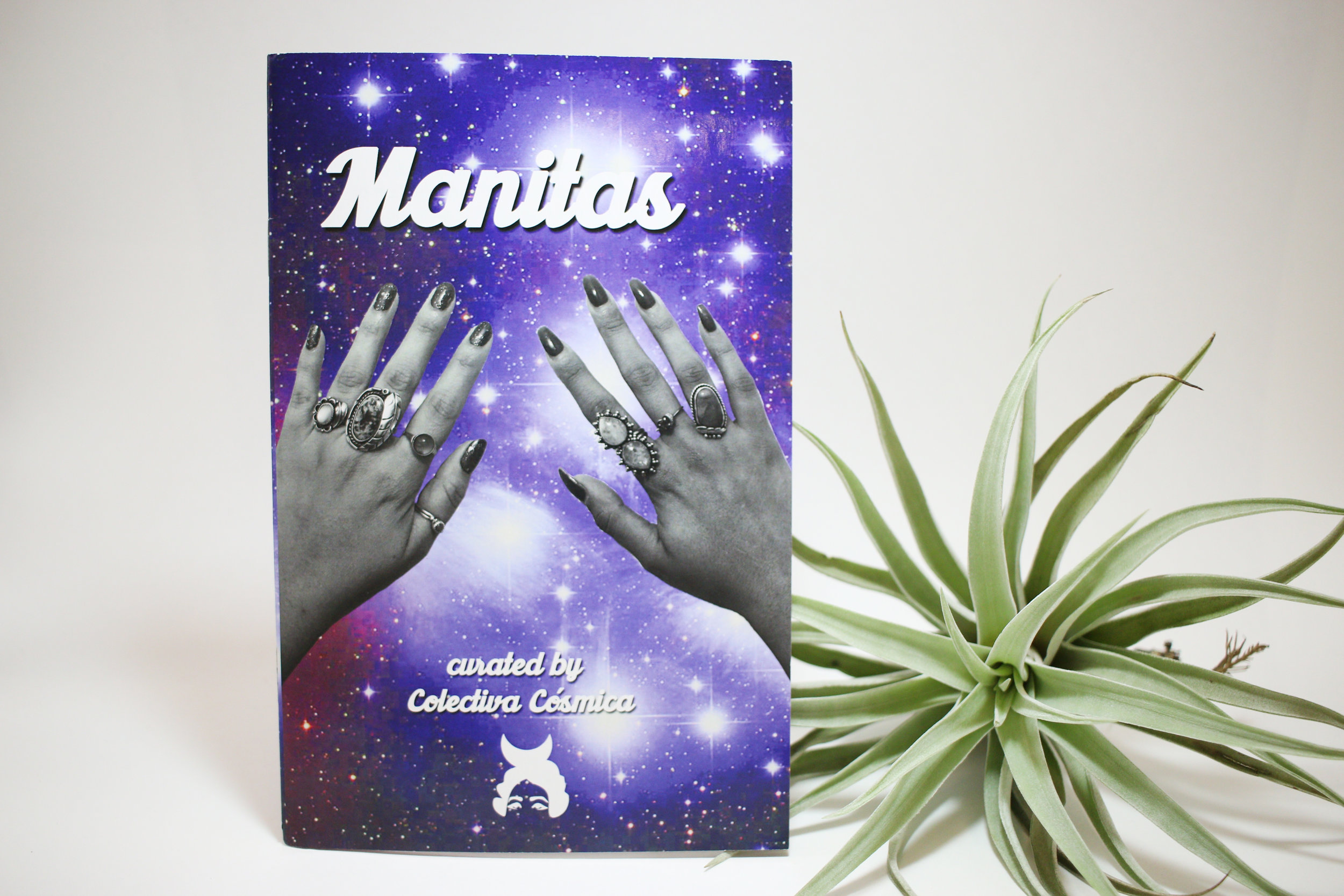
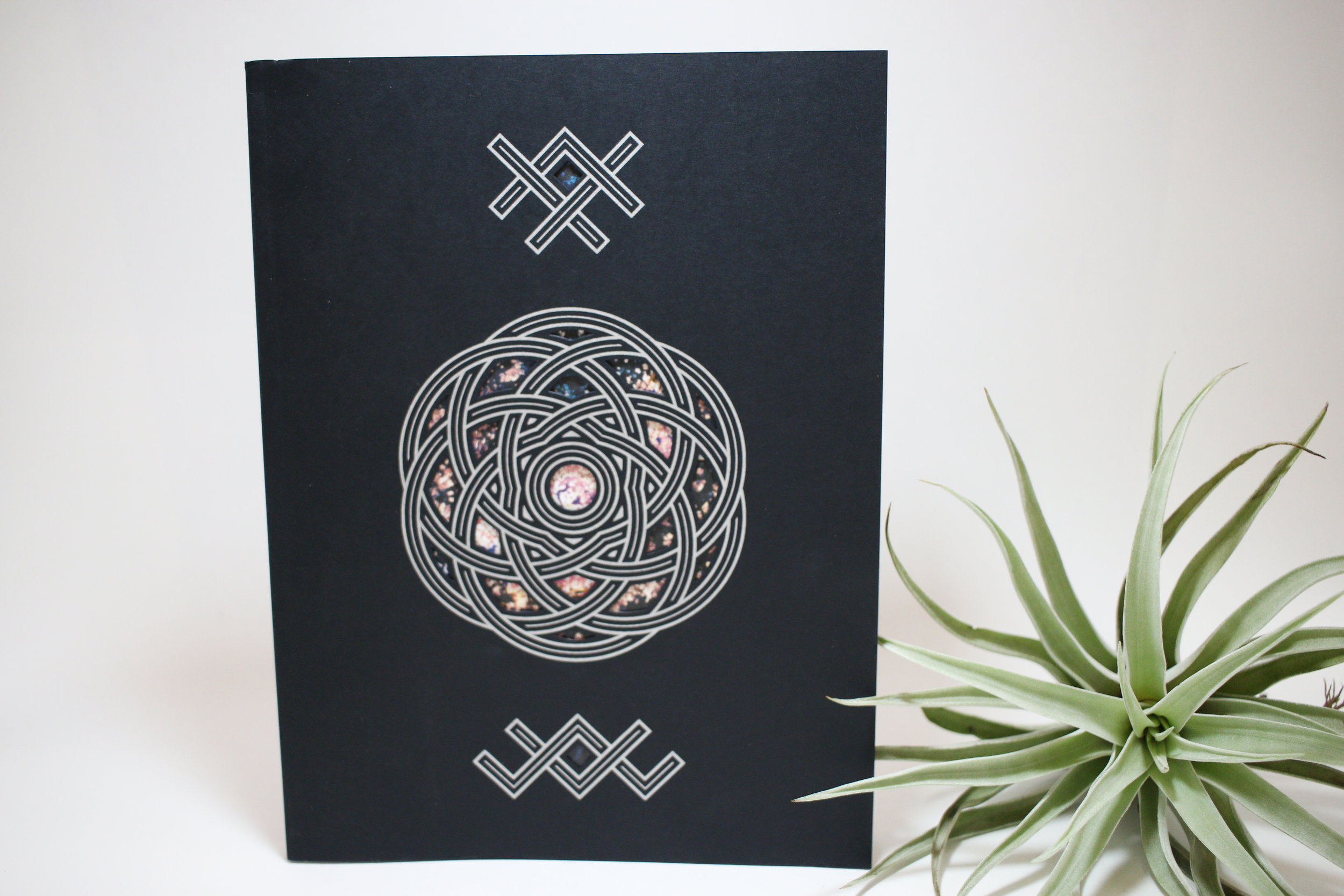

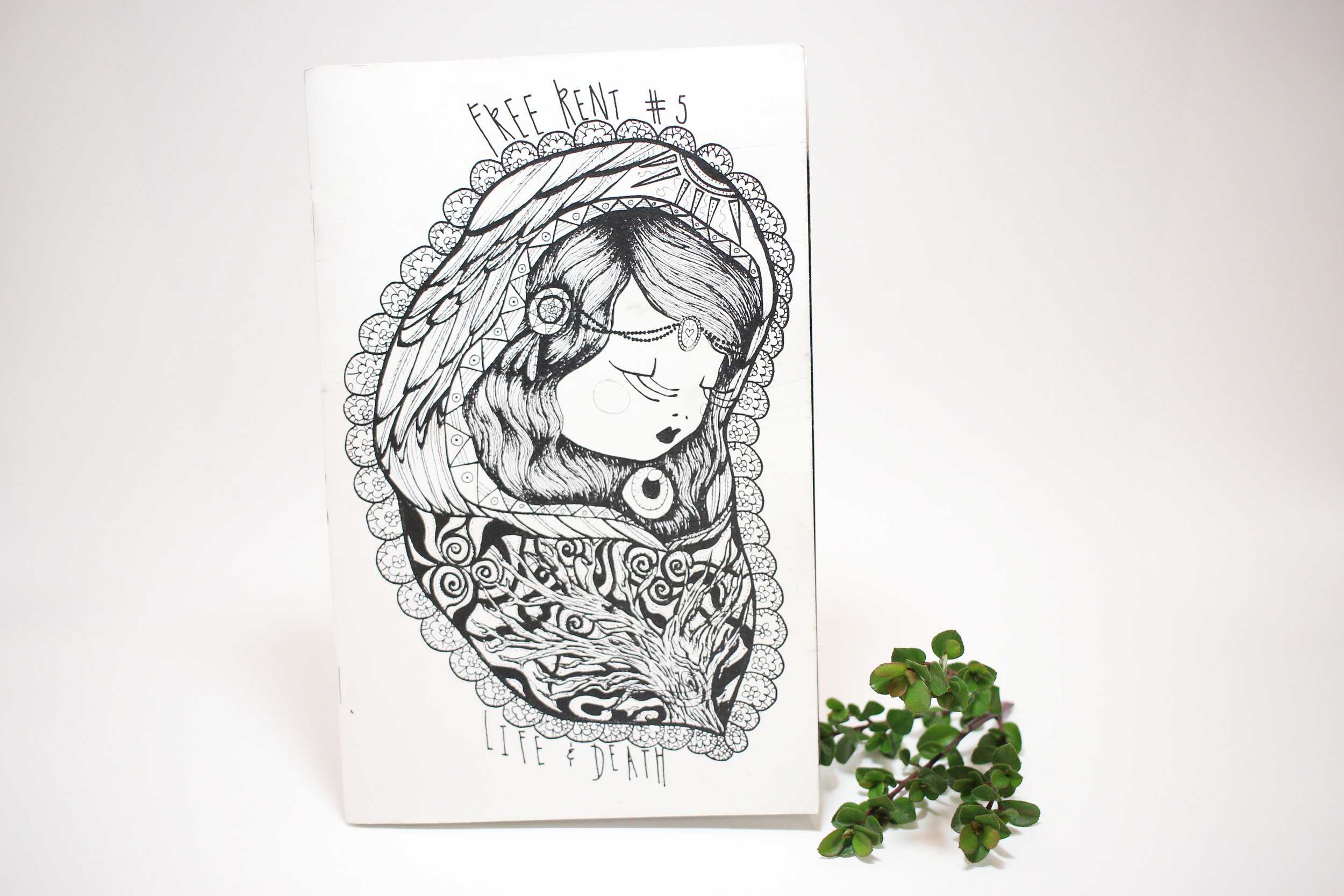
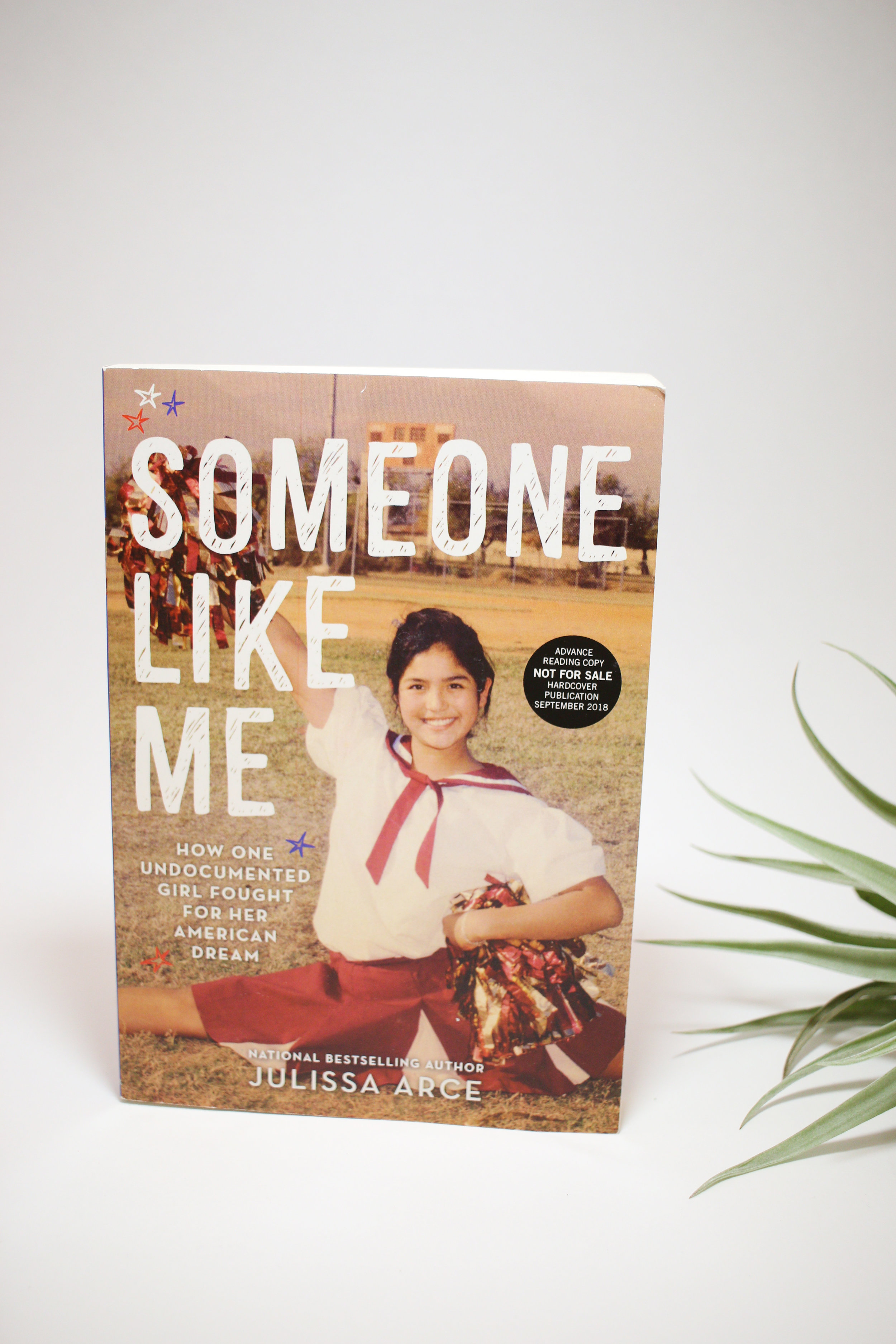
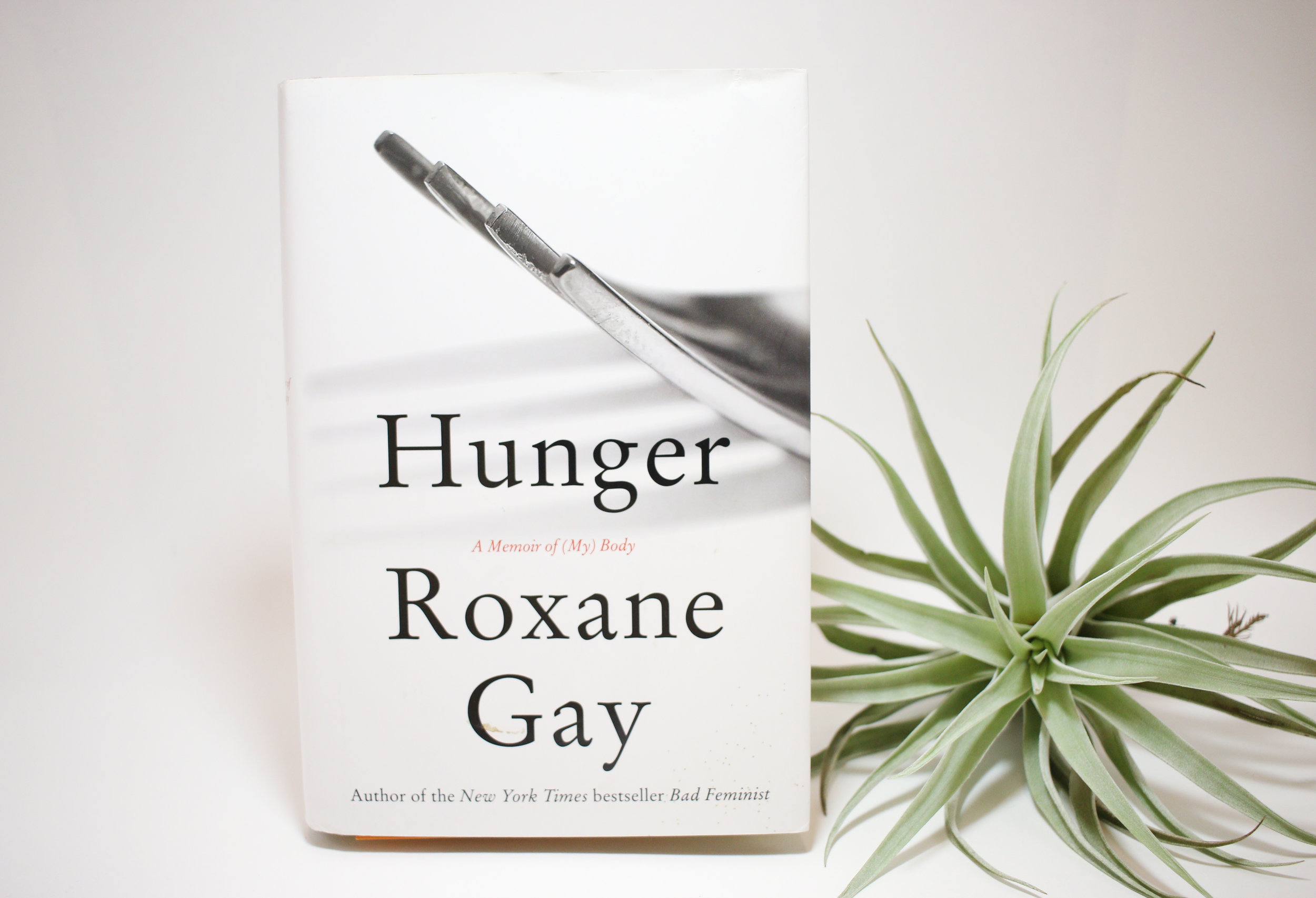
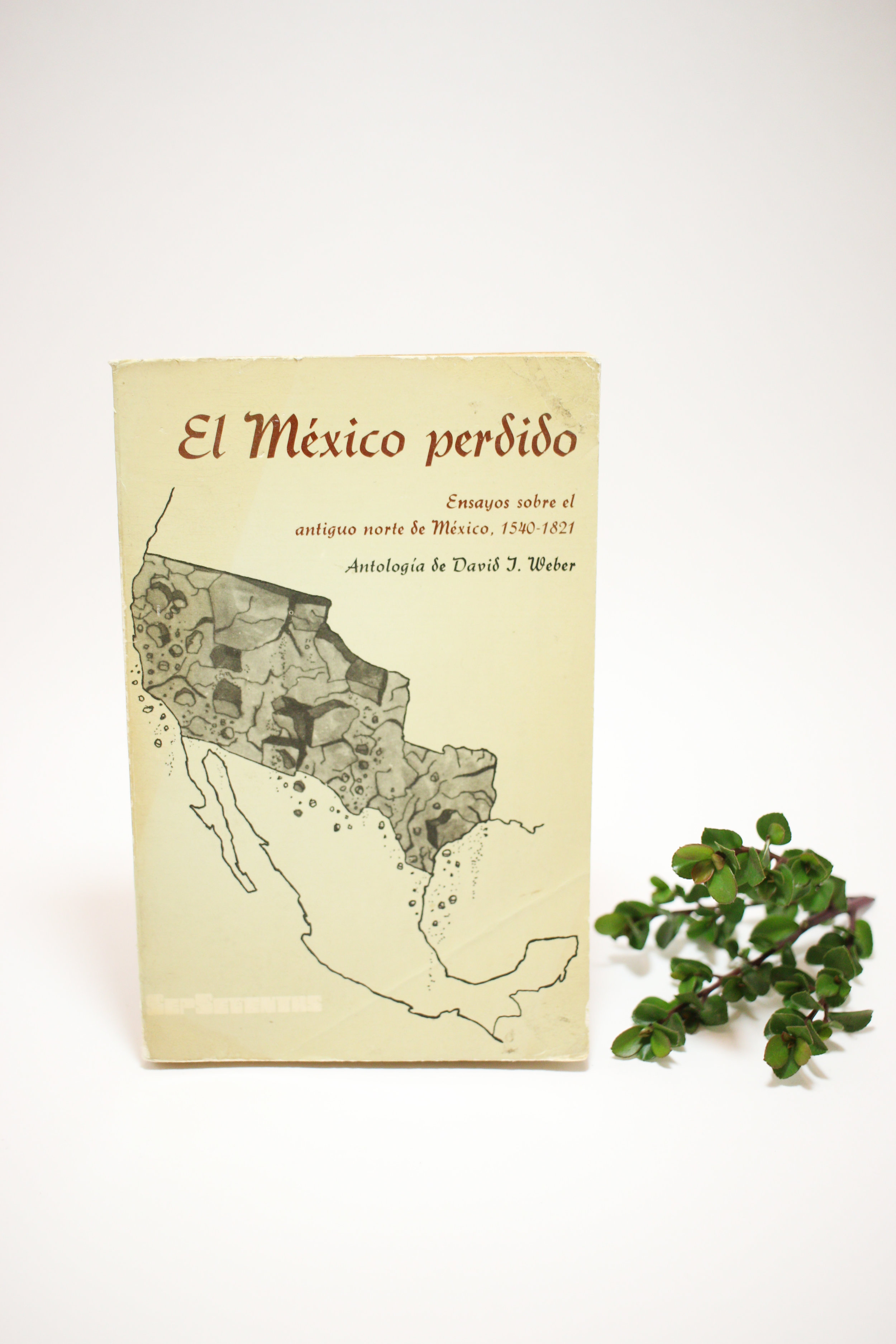
From Solis and Hervey: “Beyond collecting prints, zines and vinyl, this evolving collection recognized the power of choice and the reward of reciprocity. We are motivated by the possibility of coming to know ourselves, our many identities, and the worlds we occupy deep within the heart of Texas. Through this collection of materials, we encourage a new generation to become their own agents of cultural awareness. We hope to openly share the tools, tracts, sounds and visions accessed from our current and future ancestors with each other while building this library.”
meet volume’s exhibiting print artists
On the walls of the “VOLUME” exhibit, Solis and Hervey also installed works by eight Texan visual artists, including: Bodega Visual (Austin, Texas), Jasmine Brooks (Austin, Texas), Elizabeth Chiles (Austin, Texas), Anne-Lise Emig (Austin, Texas), Good Snake (Austin, Texas), Katy Horan (Austin, Texas), Ashley Elaine Thomas (Corpus Christi, Texas), Whitney Noel Devin (Austin, Texas).
Read on for a few words from those artists on the pieces they chose to contribute, as well as their own collections and practices.

Pelt, 2014. Gouache and flashe on paper (original). Katy Horan.
Katy Horan is an illustrator and fine artist with a BFA in Illustration from the Rhode Island School of Design (2003). Her work has exhibited throughout the United States and in Canada. It has been published in a number of books including Fantagraphic's Beasts! and The Exquisite Book (Chronicle Books) and Dark Inspiration II (Victionary), as well as in numerous publications such as Juxtapoz Magazine and New American Paintings (no. 90 & 120). She has completed two painting residencies at The Vermont Studio Center and was a finalist for the 2015 Hunting Art Prize. She is also the illustrator of Literary Witches: A Celebration of Magical Women Writers , written by Taisia Kitaiskaia and published by Seal Press. Katy is represented by Adriann Ranta Zurhellen at Foundry Literary and Media. She lives in Austin, Texas with her husband, daughter and two dogs.
Q: What do you want future generations to know about and why?
I am really interested in folklore, particularly that of the Appalachian and Ozark regions. Folklore isn't just little stores, it encompasses the home remedies, superstitions and magic of a region, and Appalachia has so many strange and rich traditions and beliefs. Those areas are so isolated by hills, mountains and culture that their lore is already little known. It would be nice to see it kept alive in the future, if even a small amount
Q: Do you collect anything personally? If so, what and why?
I collect several things: old paperback about witchcraft and the Occult, old photographs called cabinet cards and art when I can afford or trade for it.

Untitled Form In Space, 2018. Digital Illustration. Jasmine Brooks.
Jasmine Brooks (Jas) is a Graphic Designer and Visual Artist based in Austin, Texas, by way of Oakland, California. She specializes in Branding, Illustration, and Photography that she enjoys fusing together whenever she can. Jas creates illustrations that encapsulate vivid colors and dynamic shapes. Her photography skills and eye for portraiture help set the scene and often serve as the initial inspiration she builds off of to create composition that doesn't typically exist in reality. As an artist that is still growing and learning each day, Jas is constantly thinking of ways to improve her practices, better her skills and continue to be creatively engaged while exploring new art forms that help her best express herself and/or execute a project. Her inspirations include Keith Heiring, Mike Perry, and Paula Sher whose styles all tend to be reflected in her work and creative thinking.

Pick Three, 2018. Digital Illustration. Good Snake.
Good Snake is Kayla Fritz and Hannah Epelbaum. While Kayla is genetically predisposed to sign painting (thanks, Grandma!), she also has a practical background in typography, illustration, and design. Hannah's expertise is information design, with a background in intercultural communication. With their powers combined, they apply modern design tools and classical techniques to promote accessibility of spaces for everyone, to use their work to enhance the sense of place within physical spaces, and to help their favorite businesses get their message across through good design.
Q: What do you want future generations to know about and why?
Not sure about how much this'll interest future generations, but our minds are currently being blown by the book "Everybody Lies: Big Data, and What the Internet Can Tell Us About Who We Really Are" by Seth Stephens. We're inspired by artists who are able to continually produce rich and diverse types of work that appear unrelated, but somehow make perfect sense both on their own and combined, like Lizzo, who is a master flautist, an amazing dancer, and a powerful poet, or Sammus, who is a rapper, activist, and also a PhD student.
Q: Do you collect anything personally? If so, what and why?
Kayla has held onto some of her late grandmother's artwork, she keeps some good vintage lettering brushes, and she also always appreciates a nice sticker to slap onto her ladder.

La Familia Es Primero, 2018. Bodega Visual. Bodega Visual is the creative studio of Claudia Gizell Aparicio Gamundi. Why Bodega Visual…The word is a cognate, which works great because she was born and raised in Monterrey, NL, Mexico and now resides in Austin, Tejas, USA. A bodega is basically a place where you can find anything, she feels that plays well with what she does. You can also catch her curating sounds with Chulita Vinyl Club and Mosaico X, art making with Puro Chingøn Collective, on the board of directors for Design Ranch or creating programs & content for Nepantla, USA, a gallery and DIY space she co-founded.

Night Palm, 2017. Photographic collage. Elizabeth Chiles.
Elizabeth Chiles graduated from Columbia University with a BA in Art History. She then worked as a registrar at Barbara Krakow Gallery in Boston and after moving to San Francisco earned an MFA in Photography from San Francisco Art Institute and worked as associate director at Fraenkel Gallery. In 2007 she returned to her home state of Texas, moving to Austin to pursue her work as an artist. She works primarily in photography, and also in video, installation, drawing, and language. Her work lies at the intersection of immaterial aspects like time, light, consciousness and perception, and the materials that hold them. She has had numerous solo exhibitions and been a part of various group shows, including, Over Time, a solo exhibition at Pump Project nominated for best solo show in Austin 2015/16, 15 to Watch at the Austin Museum of Art in 2011, The Texas Biennial in 2011 and in 2013 with the collective she helped found, Lakes Were Rivers, and The Collector’s Guide to New Art Photography, put together by Humble Arts in New York at the Chelsea Art Museum.
Q: What do you want future generations to know about and why?
I think future generations will have their own voices to pay attention to. As I see it, the people I love now, for example Rebecca Solnit, may not be as broadly read in 50 years, but the authors that will be, will be reading her and so her voice will continue to influence for many, many generations. There are chains and dialogues that spread like rhizomes and that is important to me.
Q: Do you collect anything personally? If so, what and why?
I haven't thought of myself as a collector but I guess when you have more clothes than fit in your closet, more art that can go on your walls and more books that can fit on your shelves, you might be a collector of these things. In books, art and clothes, I find inspiration and personal expressions. Words, color, texture and pattern come together in my work. I also have hundreds of plants, but most of them have found their home my garden.

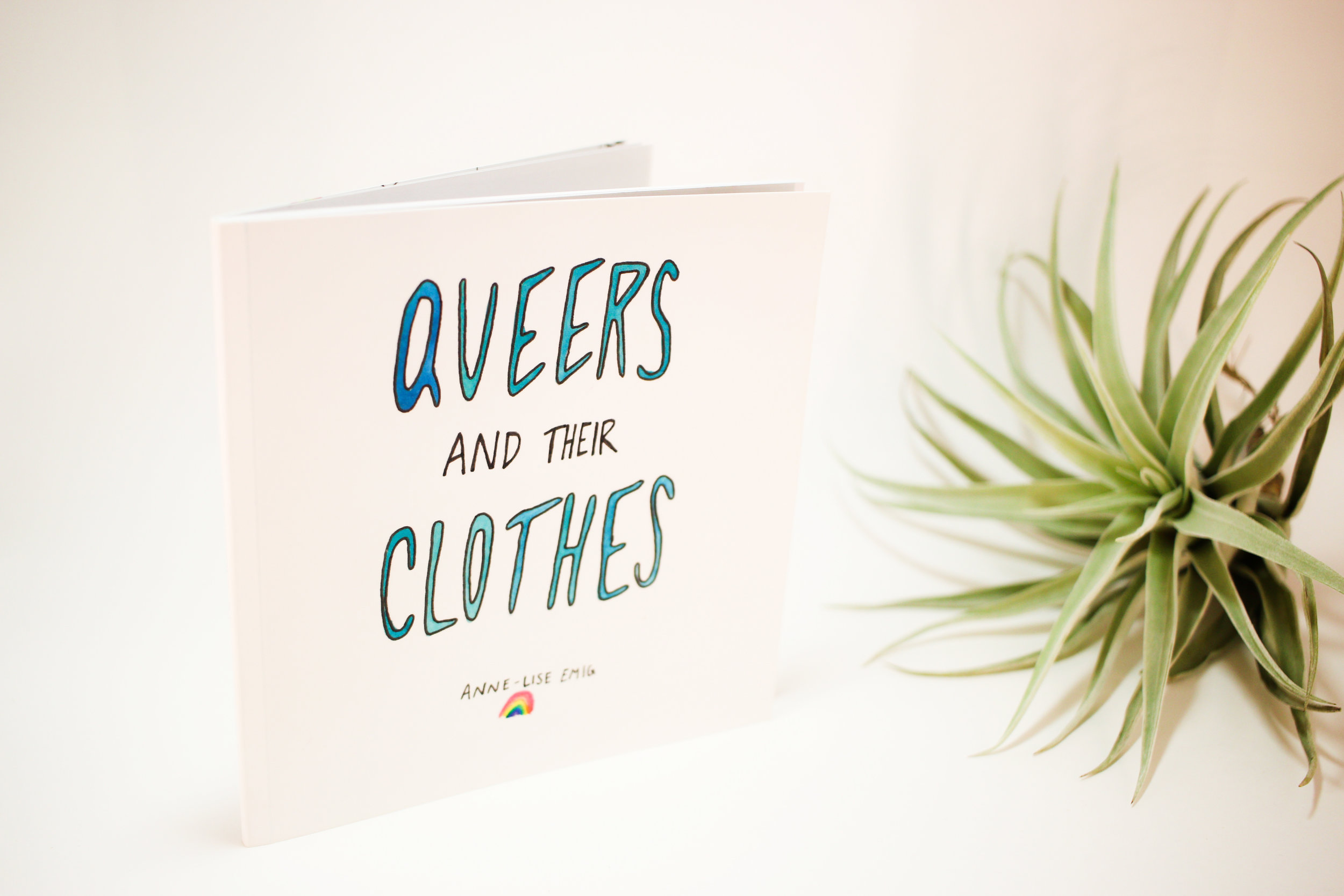
Queers and Their Clothes, 2018. Digitized watercolor painting. Anne-Lise Emig. Anne-Lise Emig is a lesbian artist, chemist, and educator living in Austin. Her work explores the experiences of queer communities and the beauty of the natural world. Queers and Their Clothes is a collection of drawings of LGBTQIA+ people’s clothes, along with their words on what makes the items significant. The work celebrates the diversity of expression and experience in queer communities, and shows that there are infinite ways to look and be queer.

Tulia, Texas. July, 2016. Whitney Noel Devin. (Through her project Tulia, Whitney explores identity, privilege, and belonging in her father’s hometown.)
Photographer Whitney Noel Devin creates visual narratives in her personal, editorial, and commercial work with an intuitive approach that results in simple yet insightful moments. She is inspired by finding the familiar in the unfamiliar and invites viewers to consider new perspectives. Whitney has a foundation in documentary storytelling, community advocacy and marketing. She holds a B.A. in Latin American Studies and is based in Austin, Texas.
Q: What do you want future generations to know about and why?
I hope future generations are able to enjoy the environment like we can now. I'm not a really outdoorsy person but I find so much clarity and inspiration while in natural spaces. It would be so unfortunate if folks didn't have the same kind of access in the future. There’s obviously work to be done.
Q: Do you collect anything personally? If so, what and why?
Old postcards that were never written on (especially photo-based cards from the Southwest and Mexico) and vintage vacation photographs. I love seeing how landscapes and vacation scenes are captured, the color palettes, the surprise of what the caption says, and the idea that something intended to be personalized and sent away has survived in its original form.

Sconce, 2018. Graphite on paper (original). Ashley Elaine Thomas. Ashley Elaine Thomas is a visual artist whose work memorializes everyday overlooked objects through large-scale graphite drawings on paper. She received an MFA from the School of the Art Institute of Chicago in 2011, and currently teaches drawing and design at Del Mar College and Texas A&M University-Corpus Christi.
meet the collaborators
#bossbabesATX (Austin, TX) amplifies and connects women and nonbinary creatives, entrepreneurs and organizers through nonprofit event series, showcases and personal/professional development programs. They create intersectional, interdisciplinary programs and initiatives that catalyze multi-industry coalitions, share crafts and provide the community with practical and emotional resources. Currently their programs provide a platform of visibility, outreach and financial opportunity to 1000+ emerging women and nonbinary creatives, entrepreneurs and organizers per year. On top of that goodness, more than 10,000+ community members per year attend their showcases, markets and dialogues—and in the last three years, their programs generated an additional $1million for the Austin economy. @bossbabesATX / bossbabes.org
Chulita Vinyl Club (TX & CA) launched in 2014 out of Austin, TX with the context of providing a space for empowerment and togetherness as an all-girl, all-vinyl club for self-identifying women of color. Now a national movement, they believe identity markers can sometimes be limiting, and while their priority is maintaining the mission of fostering a safe space for self-identifying women of color, they also aim their focus on highlighting those of mixed-heritage and those that identify as part of a marginalized community combining narratives to speak crucially about intersectional identities. Each Chulita identifies with their own identity. They are not to be classified as one nationality or culture; they can present as brown, black or white and all shades in between, and come in a wonderful variety of shapes and sizes. Within CVC they individually identify with the following: Latinas, Tejanas, Chicanas, Xicana, Afro-Latina and many more. The unifying denominator is that they come together over the belief that EL DISCO ES CULTURA and they believe that is worth preserving and perpetuating. Through their performances nationwide, they have established a strong coalition deliberately choosing to only play vinyl with the goal of activating a musical archive that might not otherwise be shared in the age of digital DJs. @chulitavinylclub / chulitavinylclub.com
The Center for the Study of the Southwest at Texas State University (San Marcos, TX) engages faculty and students in the richness and diversity of Texas, the Southwestern United States, and Northern Mexico via curriculum development, public outreach, and research that give focus to intercultural studies through examining the region's people, institutions, history, art, and physical and cultural ecology. txstate.edu/cssw
The Center for Texas Music History at Texas State University (San Marcos, TX) is a unique program focusing on the preservation and study of Texas and Southwestern music history. With an emphasis on how Texas music reflects the rich history and tremendous cultural diversity of the Southwest, the Center for Texas Music History offers graduate and undergraduate courses, along with a variety of research and publishing projects all aimed at helping Americans better understand our unique and diverse cultural heritage through music. @ctrtxmusichistory / txstate.edu/ctmh
Interested in future #bbatx installations and exhibitions? Keep up with our program The Residency, and its projects, here.
On Resilience: Three Affirmations For 2019
As we step into 2019, our team has three affirmations of resilience in mind. Feel free to hold yourself accountable to these mantras, too (and if you attend any of our upcoming programs, share your musings on them with us in-person!).
As we step into 2019, our team has three affirmations of resilience, each inspired by this community. Feel free to hold yourself accountable to these mantras, too (and if you attend any of our upcoming programs, share your musings on them with us in-person!).
affirmation no. 1: you are doing big work.
We often convince ourselves to be small. We let the world tell us we are not enough. We let the world tell us we are too big, too much and too soon. We reject this notion.
Our smallest works are grand gestures. Our tiniest cries are worth hearing. Our mere existence is resistance.

Image designed by Jane Hervey
affirmation no. 2: you are not required to be all of yourself at once.
Some parts of us may flourish this year, while other sides lie dormant. We will not shame our seasons of growth, repair, retrospection, anger and discovery. We will give things that need time, time. We will challenge and explore the parts of us that scare of us most. We will give others the space to be who they need to be, too.
We will be proud of who we are now and who we have yet to become.

Image designed by Jane Hervey
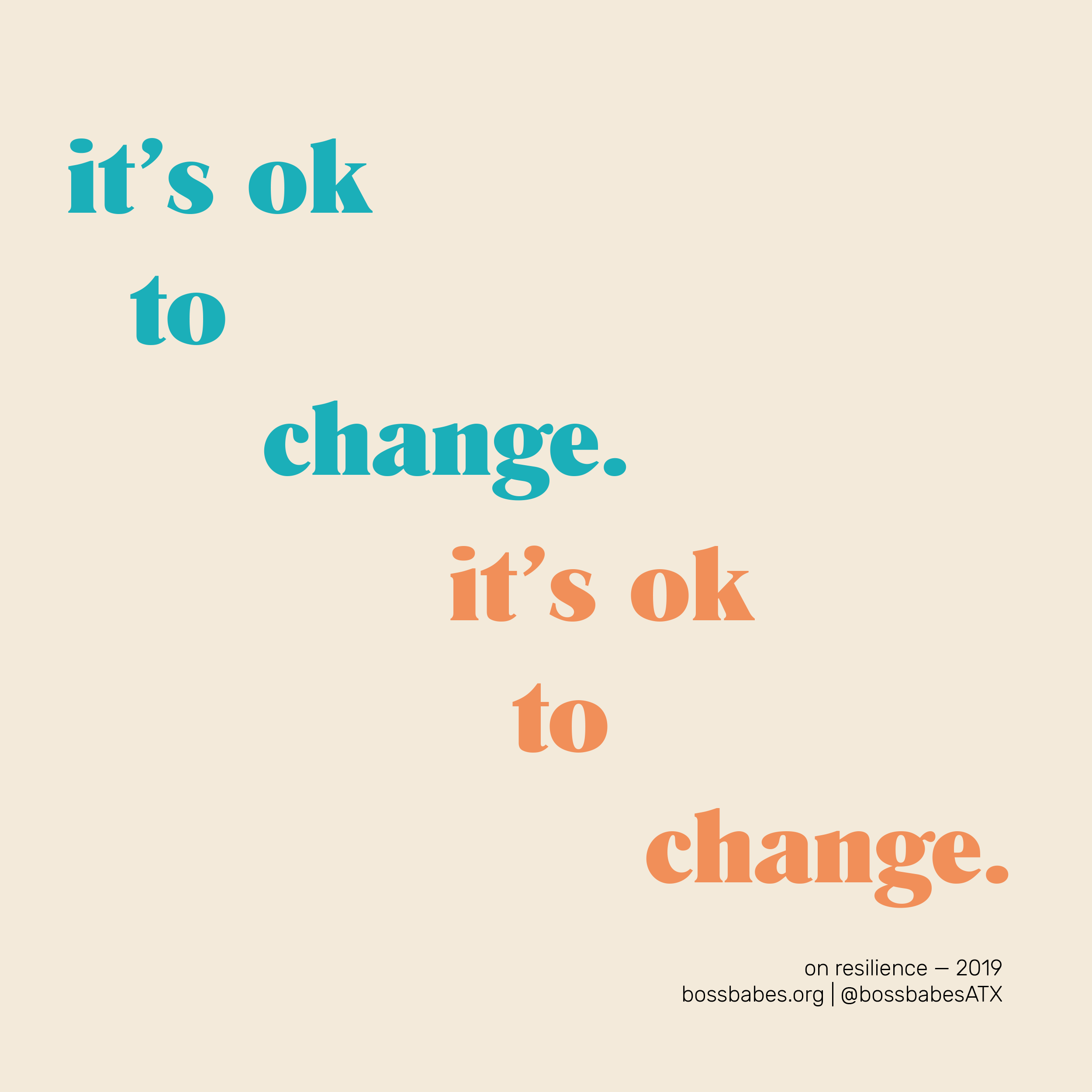
affirmation no. 3: it’s ok to change.
We are not our yesterday. We are curious, thoughtful and learning.
We are allowed to change. We are allowed to adjust. We are here to adapt.
It is OK to do something new. It is OK to try something you have never tried before. It is OK to fail. It is OK to change.

Image designed by Jane Hervey
behind our winter ‘19 theme: resilience
resilience (n.): the capacity to recover quickly from difficulties; toughness.
We are creative risk-takers. Strong and capable decision-makers. Bold and powerful makers. Which means we bounce back. We push forward. And when we fail, we try again.
Through February 2019, our programs will center women and nonbinary thought leaders, artists, creatives and business-owners who demonstrate a soft power—an unmatched toughness—in both their failures and successes. Together, we’ll learn from their stories and redefine what it means to recover, reclaim and remain standing.
On Making Africa: A Continent Of Contemporary Design
Exclusively for women of color, this look at “Making Africa” featured a guided, private tour from the exhibit’s Associate Curator, Claire Howard, as well as an intimate discussion between Doyin Oyeniyi, journalist for the Texas Monthly and co-creator of Austin While Black, and Mercy Emelike (a #bbatx volunteer and community member).
This post was written and compiled by Natalia Rocafuerte, with photos by Whitney Devin.
In Winter 2018, we partnered with the Blanton Museum to preview and tour “Making Africa,” their newest multidisciplinary exhibit exploring the complexities of African design (spanning a massive collection of photography, furniture, sculpture, clothing, videos and more).
Led by and for women of color, this look at “Making Africa” featured a guided, private tour from the exhibit’s Associate Curator, Claire Howard, as well as an intimate discussion between Doyin Oyeniyi, Texas Monthly journalist, and Mercy Emelike, a Future Front curator and collaborator.

Photo by Whitney Devin.
Behind the Exhibit
Curated by Amelie Klein, Curator at the Vitra Design Museum, with Consulting Curator Okwui Enwezor and the Guggenheim Museum Bilbao, the exhibit took two years to curate. In its entirety, the collection showcases a mix of 120 designers, artists, researchers, architects, gallerists and art curators and exhibits functional artwork to video installations.
Hosting interviews in various major African cities, and consulting over 70 working art, research and design professionals, the exhibition is also accompanied by a 352-page publication, which offers ”a first-ever comprehensive overview of African contemporary design.” This narrative behind “Making Africa” is meant to challenge the myth of Africa’s homogeny and the common stereotypes of antiquity and tradition associated with African culture, exports and technology.
To articulate this vision of Africa current, the exhibit is divided into four different sections, Prologue, I and We, Space and Object and Origin and Future. Each section explores a different visual language around the continent and its cultures, aiming to exemplify the diversity in African design and thought. The exhibit also hosts its own website where you can find interviews of artists and major voices in the project and where it has also traveled to across the world. (Click here to view the site.)
Behind Our Tour
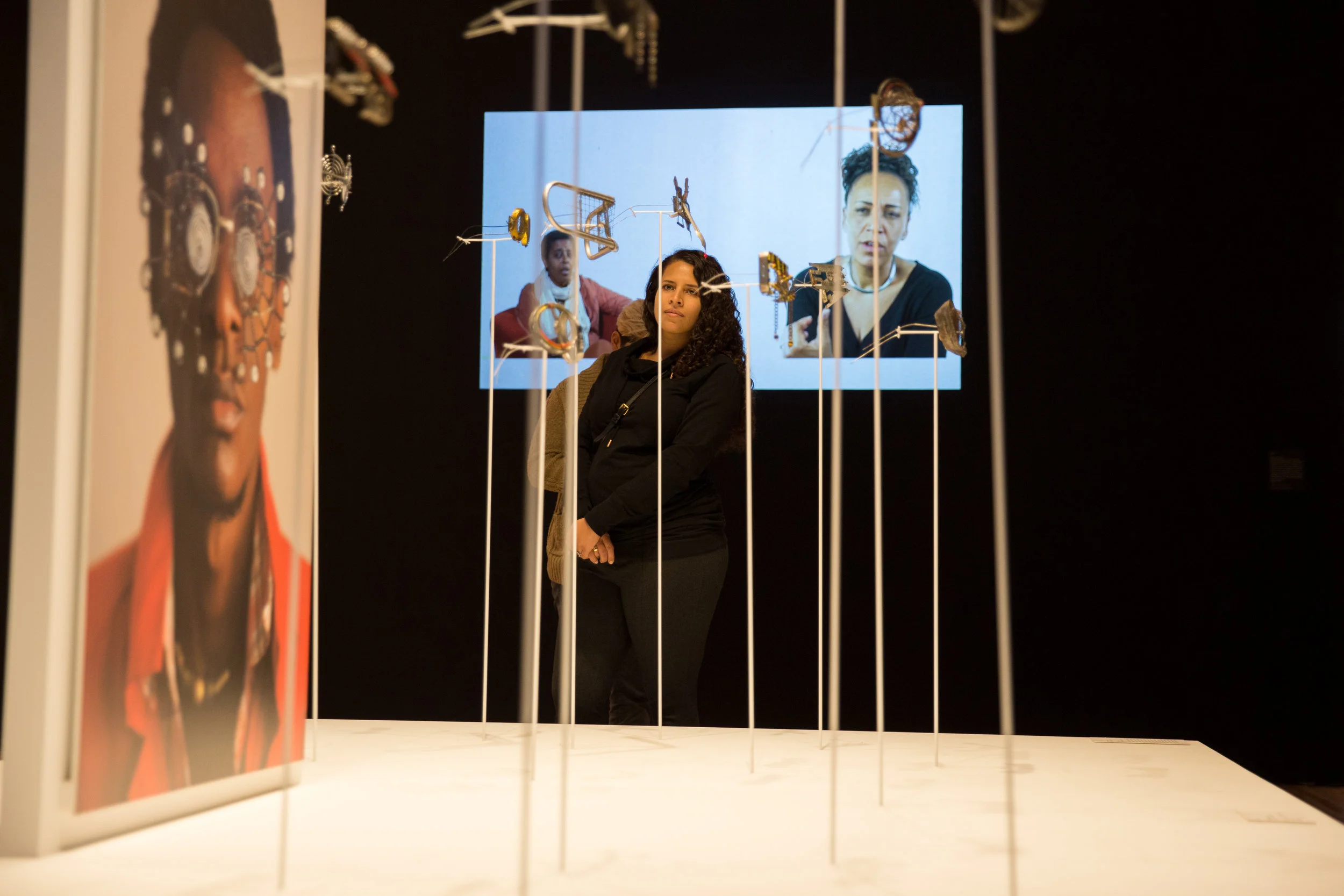
First, Howard walked us through Prologue, which examines the limited (and often Western) views of Africa. When walking into the exhibit you’re fittingly greeted by Cyrus Kabiru The C-Stunners series, a pair of art-glasses that filter attention to a “restrictive perspective.”
Next, we ventured into I and We, which evidences that design is an effective tool for artists and designers to communicate and portray social and cultural developments in Africa. Captivating photography works by Mário Macilau, Omar Victor Diop and vintage DRUM magazine covers fill the room, while a wearable garment with the popular wax print, entitled Waxology by MISWudé and photographer Fabrice Monteiro, stands entirely self-aware. (Wax print fabric, often associated with African designers, is actually a Dutch import to Africa and merely another symbol mistaken for African origin. Several pieces in the exhibit use wax fabric as a material to challenge this myth).
The third section of the exhibit entitled Space and Object focuses heavily on the immediate environment, technology and sculpture, mostly focusing on cities and the use of materials. The exhibit then ends with Origin and Future, a contemporary collection of objects and artifacts displaying the now of Africa.

Associate Curator Claire Howard and visitors discuss Fabrice Monteiro and MISWudé, Waxology, No. 1, 2014.
Photo by Whitney Devin.

Photo by Whitney Devin.

Doyin Oyeniyi (middle) and Mercy Emelike (far right) lead the discussion. Photo by Whitney Devin.
Exhibit & Tour Takeaways
After the tour, Mercy Emelike opened the floor: ”The exhibit recognizes the impossibility of talking about Africa with one voice and the danger of a single story, while it also grapples with how to show the diversity within Africa while being a cohesive show. The questions the exhibit raises for me is: Can we 'design' an identity? And if so, how? And who has the power to do so?“
With that prompt in mind, we launched into a discussion of our own identities within the context of “Making Africa,” as well as the exhibit’s limitations and triumphs. How do we frame Africa without using the West as an anchor? How do we frame ourselves without colonization as an anchor? What do we unlearn and what do we need to learn as we create images of ourselves and each other?
Jasmine Sudarkasa, a attendee of the tour and discussion, mentioned that the show included forward-thinking works that imagined a future for Africa/African in Western terms. Jasmine Robinson, a Future Front committee member, also highlighted that Western society is not necessarily aspirational for Africa, and we need to be able to see a future for Africa without reference to the West.
With these comments in mind, we’ve determined it’s always time to reflect on how art and design play a vital role in the visual language we use to communicate our identities—especially in their authenticity. We must always ask: Whose stories do we choose to tell? Whose stories do we preserve? Whose stories do we keep? What images do we use? Who determines the future?
Our hope is that intersectional & curious minds resiliently lead the way.
We’re excited to create more spaces for discussions and collaborations highlighting women and non-binary folk creatives’ needs and ideas.
Many thanks to Mercy Emelike (for scheming up this discussion), Doyin Oyeniyi for her wisdom, The Blanton Museum for their generosity and all those who attended to explore with us.
Opening at the Blanton in 2018, “Making Africa: A Continent of Contemporary Design” is on view through January 6, 2019.
Stay tuned for more collaborations with the Blanton Museum, as our community explores this exhibit in different capacities here.
On Deviant Undertones, Creating Queer Spaces For Expression And Drag: An Interview With Ruby Knight
Meet Austin-based creative and drag artist, Ruby Knight.
In December 2018, #BBATX is partnering with Unbounded Agency, Thank You For Sweating and Red Bull Music to highlight some of the incredible performers in their upcoming showcase, Equal Axis.
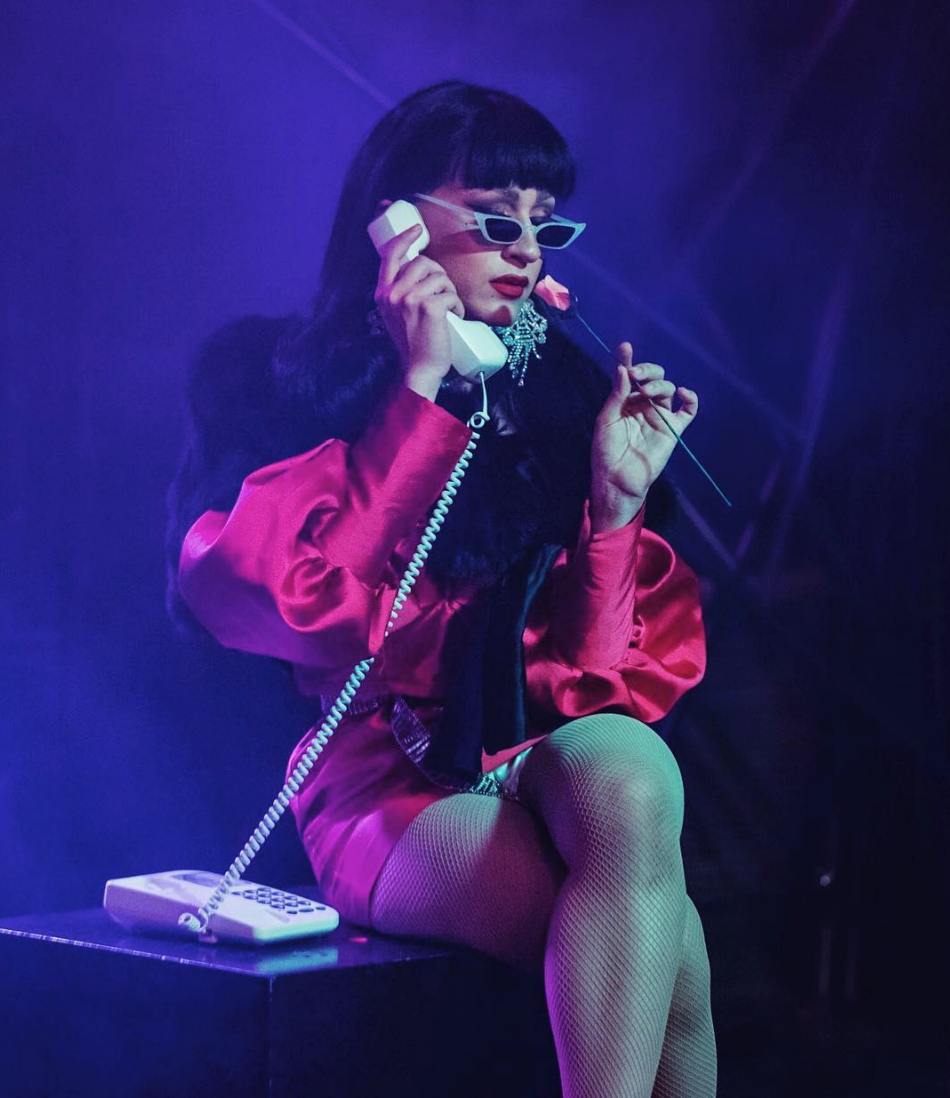
Today, we’re happy to introduce you to one of the evening’s artists, Austin-based creative and drag artist Ruby Knight. Knight is a drag performer and creative in Austin, Texas, who currently co-hosts the show SAD GIRLS ONLY (which pops up next at Sahara Lounge on December 17—you can find Ruby Knight on Instagram , and Twitter.)
This interview was conducted by #BBATX Projects and Operations Coordinator, Natalia Rocafuerte.

Q: How would you define your creative practice and approach to drag as a performance?
Ruby Knight: It’s an opportunity to connect with the audience—share a little piece of myself. I often focus on portraying myself as young and playful, but with a dark side, as well. Usually with a deviant undertone, I perform with as much energy as I can, to get a reaction from the crowd and hope they feel something. Whether it’s joy, fear or sorrow, I want to create such a sensation onstage that it translates to the spectator.
Q: What do you look for in creative collaborators?
Ruby Knight: Someone else who understands the importance of details. Of course the big picture will always be important, but I’m a die-hard perfectionist. If you can keep up with not only the vision but making sure all the pieces are just as refined, then we can find a way to blend our ideas. It’s important to come across as mindful and intentional as creatives. So I enjoy fine-tuning the creative process, so the result is even stronger. I work with people who are trying to be as fully realized as I’m trying to be.
Q: What are you looking forward to? in your own career? or perhaps in the industry, at large?
Ruby Knight: I’m looking forward to pushing my own desires deeper into my practice. I’ve only scratched the surface with my love for makeup and fashion. Getting to incorporate music that I love is a great part of drag, too! But I’m realizing that drag is now my medium and I want it to embody all of my obsessions and interests. I think that’s how I can push the boundaries of my drag and drag, in general. I’m thinking of creating new ways to interact with people’s lives. Drag is really limited to a handful of spaces (i.e. bars, clubs), but I’d love to see it in new spaces. Or even become part of our daily spaces, which I’m actually working on hatching right now.
Q: How do you set goals and boundaries for yourself as an artist?
Ruby Knight: Well I’m not the best at setting boundaries, but my goals are usually driven by what’s inspiring me. Sometimes the goal is just the next show I’m performing at. Sometimes the goal is bringing to life a vision and breaking it down into pieces. Like when me and my drag sister, Hentaii, started Violent Fem. That began as us wanting to create a show we had not seen before, but wished was part of the Austin drag scene. Learning how you work is important, too, with others or by yourself. I work best slow and steady and once I figured that out, it became easier to create realistic goals and timelines for myself.
Q: What currently inspires you (could be people, places, things, Instagram accounts—you name it)?
Ruby Knight: Right now, I’m really inspired by @makeupbymario and @gordgeorge on Instagram, Poppy’s new album ‘Am I A Girl?,’ Robyn’s new album ‘Honey,’ Marc Jacobs’ Spring 2019 collection, all things Rihanna and just badass women, in general.
Want to dance all night with Ruby Knight? Head over to Redbull Presents: Equal Axis on Saturday Dec. 15 from 10 PM to 4 AM at 607 Neches St. Austin, Texas. Austin collectives, Unbounded Agency and Thank You For Sweating, have teamed up to create this incomparably unique event featuring local multidisciplinary DJs, performance and visual artists, running the spectrum of humanness. Equal Axis will be host to artistic contributions from POC, queer, gender non-conforming and non-binary creatives as well as allies, using the event as a platform for visibility around queerness through expression, performance, activations and installations, as well as Maya Jane Coles' Texas debut. ALL ARE WELCOME, just be yourself, bring yourself, and your dancing shoes. Tickets are only $10 and available now. Click here.

On Creative Entrepreneurship: A Guide For Side Hustlers From Two Women Artists
Understand your work and its value, as well as your own expectations, resources and needs.

Whether you’re a side hustler, solo artist, freelancer or small business-owner, you’re always a full-time creative. No matter where your revenue comes from, it’s good to understand your work, its value and your own expectations, resources and needs.
In this little guide, artists Xochi Solis and Alie Jackson share some tips, strategies and tools for side-hustling creatives and entrepreneurs looking to make a sustainable income from their work. (For context, Solis is an Austin-based painter DJ and cultural producer, and Jackson is a full-time Art Director and freelance illustrator, animator and augmented reality designer.)
ON FUNDING AND FINDING CUSTOMERS FOR YOUR WORK
You should bring the same energy and individuality to creating funding strategies as you do to creating your work, keeping in mind striking a balance that works best for you (i.e. you are your own model.) There are countless ways to fund one’s work in the creative industry and continuous changes in the field. Part of our job as an artist is to understand the climate in which we work.
ON NAVIGATING YOUR NEW INDUSTRY AND NETWORKING
When it comes to navigating your industry, determining where to find resources and fostering successful collaborations, building relationships is key.
Be generous with what you have, things have a way of coming back to you
Be gracious and acknowledge credit where credit is due.
SAY THANK YOU! A small note, text, phone message helps foster healthy giving relationships
Ask for feedback and be open to criticism
ON INVESTING IN YOURSELF AND YOUR NEW SKILLS
Take it upon yourself learn new skills even if they have nothing to do with your current practicE. If you are strapped for cash and find a class or workshop you really want to attend, contact the organizer and see if they offer payment plans, scholarships or work/trade. The public library and free, online blogs (start googling!) are also great resources.
Don’t be afraid to learn on the job. Offer discounted work or trade with clients and be transparent with them about your intentions and the stage of expertise you feel you’ve reached.
ON DETERMINING YOUR INITIAL FEES/PRICES
Creatives, artists, service-based business-owners and freelancers, etc. are not always paid a traditional fee, but it is important to predetermine what your time is worth and how that can be clearing communicated to your funder, client, etc. Expressing your worth and expectations at the start of any professional relationship, sets the groundwork for a more enjoyable working scenario. Whether or not you are asked for a budget by your client, MAKE ONE! Never generate one that leaves your artist fee out.
Here are a few methods to determine your fees:
By the cost of your labor per hour and your cost of materials (WAGE is an excellent resource for determining your cost per hour.)
By the month. (Say you have a one-month project coming up with 10 hours a week. You know you need $4K to live on monthly and you are marking 25% of your total work hours to the project. Voila! The project needs to pay you at least $1K a month.)
By the budget. If you really want to work with a client or offer a particular service or product (or even offer something discounted for friends, collaborators and nonprofits), figure out how much you need from other sources to justify the time or resources you spend doing free/discounted labor. If you can’t justify it, it may be good to say no for now.
ON BALANCING CLIENT WORK, EXPERIMENTATION AND PERSONAL WORK
When you’re just starting out as a new entrepreneur/side hustler, it can be difficult to determine where to spend all of your time (especially when you’re creative and have a million and one ideas). Here are some suggested strategies to make balancing your interests a little more feasible:
Figure out your own workflow to to prevent creative burnout/fatigue
Know when to take or turn down a project based on personal beliefs/morals
Don’t feel guilt for taking on client work that pays really well. You have to pick your battles to pay the bills
When looking for work or customers, seek out companies/audiences that align with your personal beliefs and interests to keep the feeling of “selling out” to a minimum
ON FINDING DIFFERENT SOURCES OF SUPPORT
Self-Subsidy: As a creative, you are often your own biggest financial supporter. It’s OK to have a “day job,” or take out loans, live off of investments, etc. to get your dream off of the ground. Whatever method you pursue that funds your ability to work creatively and autonomously is best.
Fellowships: There are many entrepreneurial and creative fellowships, as well as artist residencies, out there that offer financial support and opportunities to take time to focus on a specific project, travel to conduct research. Do some research around what fellowships exist in your industry and explore where you might apply.
Project Grants: If you’re launching a project, business or artistic endeavor, seek out grants that may be able to fund your work! These may be offered locally through your city or through the state, or even through other businesses, organizations and institutions. Head to your local grants library or start researching / talking to people about grants at networking events. (They’re out there, y’all.)
Corporate Support: Depending on your business or project, you may be able to strike a partnership/sponsorship with a corporation that could be looking for advertisment/visibility through your work.
In-Kind Goods and Services: Ask for donations, barter, trade—just go for it. There may be many resources at your fingertips.
Earned Income for Services: Find different ways to sell your services to different target markets. (For example, if you’ve launched a small accounting firm and you need to find new clients around tax season, perhaps you also begin marketing Intro to Accounting workshops, etc.)
Earned Income for Goods: This goes without saying, but spend time honing in on what you provide, make and sell. Identify your mission, target customer and start marketing those products, honey!
ON BUDGETING AND CREATING POSITIVE CASH FLOW
To create products and services that actually generate revenue, you should be designing your business with a budget in mind (more on how to design budgets here). If you want to have a sustainable cash flow (i.e. your bank account never hits zero and you cover all of your expenses each month), Xochi and Alie say to:
Be realistic about your expenses
Diversify your portfolio so your income streams are varied and you are not solely relying on one way of making money.
Remember that your worth is not measured by how much is in your bank account. There are going to be floods and droughts—know that.
Be open to exploring something new. If boundaries and expectations are expressed early on, you can navigate these new projects with grace.
Prioritize building an operational toolkit for your business. Create templates for invoicing, build a website that you can easily update (or if you hate doing that type of stuff budget to hire someone). Utilize professionals to support your craft (i.e. photographers, lawyers, CPAs) this will make you more grounded.
Make friends and mentors in your field. Join organizations for artists or art organizers that strengthen your connection to the creative community.
Remain curious about yourself and how you can grow your business and your investment in yourself.
Looking for additional creative entrepreneurial resources? Try out #BBATX’s biannual WORK Conference on Jan. 19, 2019.
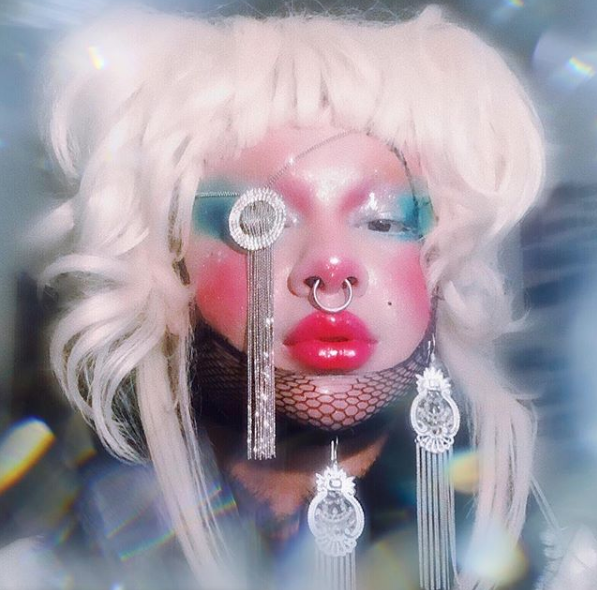
On Ambition, Vibin' Performances and Unconventional Beauty: An interview with Belladonna
Today, we’re happy to introduce you to one of the evening’s artists, Austin-based creative Belladona.
In December 2018, #BBATX is partnering with Unbounded Agency, Thank You For Sweating and Red Bull Music to highlight some of the incredible performers in their upcoming showcase, Equal Axis.
Today, we’re happy to introduce you to one of the evening’s artists, Austin-based creative Belladonna. “Belladonna is a gender-fluid performer and artist from Austin, Texas known for high-energy, conceptual looks, and artistic ability. Her work is multifaceted, always combining visuals through fashion and makeup, combined with dance, rap, and DJing when on stage. Her most notable opportunities of 2018 would be performing, at GayCL as well as at Charli XCX's "Femmebot Fantasy" show in Dallas.” (You can find Belladona on Instagram , Soundcloud and Twitter.)
This interview was conducted by #BBATX Projects and Operations Coordinator, Natalia Rocafuerte.

Q: Could you guide us through your creative process and work?
Belladonna: My creativity comes fairly naturally and effortlessly. I constantly have a desire to create whether it be writing, painting, music, or design. I pretty much just wake up ready and needing to produce something.
Q: How do you feel empowered before a performance?
Belladonna: I feel so much adrenaline and excitement before a performance. There's nothing quite like connecting with a crowd and the exchange that occurs between an entertainer and their audience.
Q: What do you look for in creative collaborators?
Belladonna: I like to consider all my creative collaborators as my friends and people I have put trust in. The most important part about collaborating for me is that there is a genuine chemistry and connection between both parties. It's all about vibin’.
Q: How do you set goals and boundaries for yourself as an artist?
Belladonna: As an ambitious new artist on the scene, my goals are vast and there aren't any boundaries I intend to set for myself. I dream big and I refuse to limit myself.
Q: What currently inspires you (could be people, places, things, instagram accounts—you name it)?
Belladonna: Recently I've taken a lot of inspiration from aliens! I adore unconventional beauty and beings that look otherworldly.
Want to dance all night with Belladonna? Head over to Redbull Presents: Equal Axis on Saturday Dec. 15 from 10 PM to 4 AM at 607 Neches St. Austin, Texas. Austin collectives, Unbounded Agency and Thank You For Sweating, have teamed up to create this incomparably unique event featuring local multidisciplinary DJs, performance and visual artists, running the spectrum of humanness. Equal Axis will be host to artistic contributions from POC, queer, gender non-conforming and non-binary creatives as well as allies, using the event as a platform for visibility around queerness through expression, performance, activations and installations, as well as Maya Jane Coles' Texas debut. ALL ARE WELCOME, just be yourself, bring yourself, and your dancing shoes. Tickets are only $10 and available now. Click here.
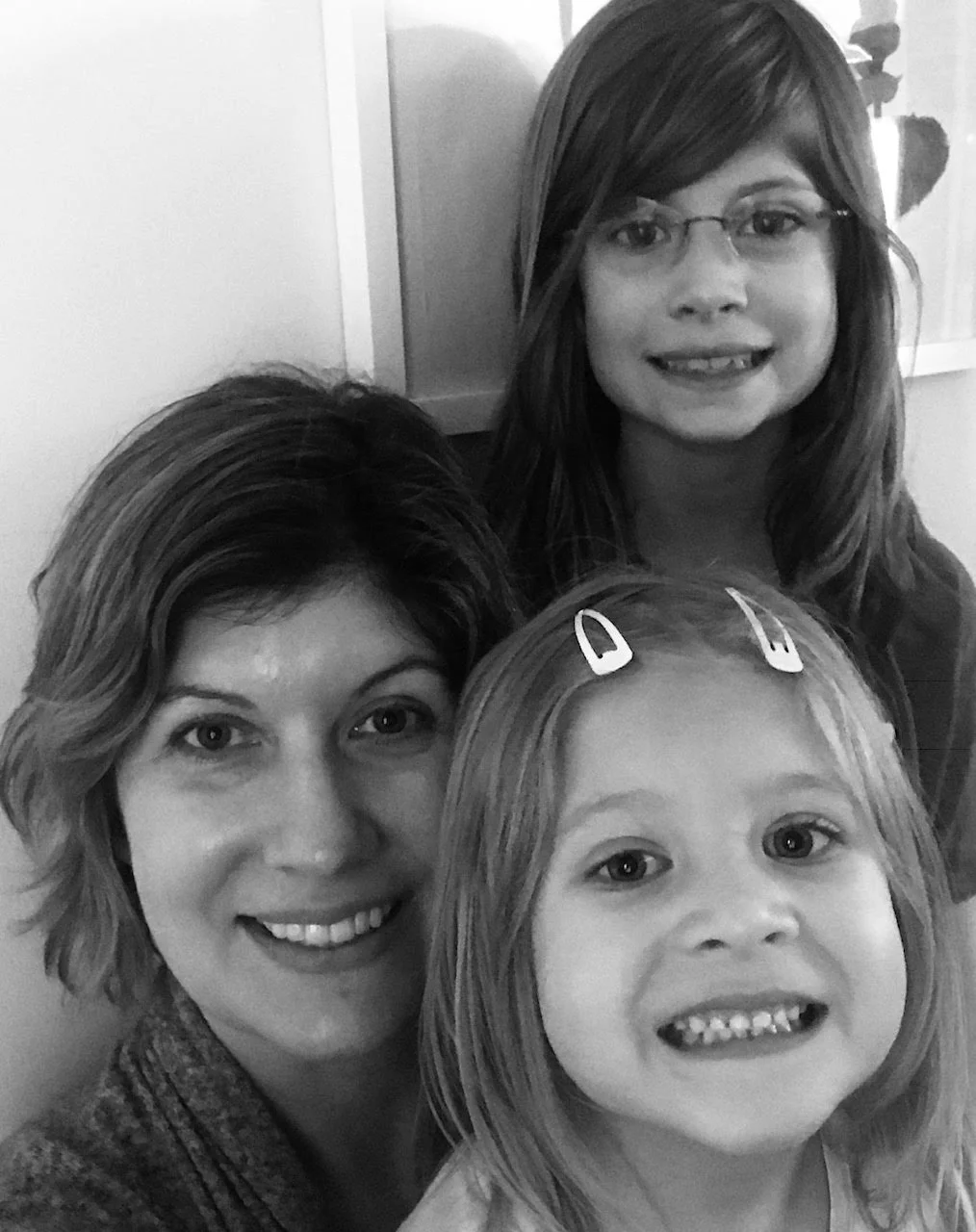
On Care-taking, Creativity and Self-Care: An Essay on Parenthood and Gender Bias
For our Winter ‘18/’19 programming theme at #BBATX, we’re exploring resilience. We could not think of anyone more resilient than our parents, mothers, fathers, caretakers and caregivers.
A note from team #BBATX: We are creative risk-takers. Strong and capable decision-makers. Bold and powerful makers. Which means we bounce back. We push forward. And when we fail, we try again.
So, for our Winter ‘18/’19 programming theme at #BBATX, we’re exploring resilience. We could not think of anyone more resilient than our parents, caretakers and caregivers.
According to the US Department of Labor, as of 2017, 70 percent of mothers are part of the workforce and 40 percent are both the primary caregivers and breadwinners of their household. And despite spending more time at work, mothers are also spending more time than ever on childcare. Even still, care-taking parents report that they feel pressured to be even more involved with their children than they already are.
Moreover, sexism, racism, homophobia and other discriminatory beliefs can make parenting even more difficult. Our education systems are often biased and don’t offer full reproductive health education—and our medical system is just as influenced by discriminatory biases as the rest of society.
It’s time we care of our caretakers.
So, today, on the blog, BBATX community member, Emily Laughlin, has penned an essay on parenthood, identity and self-care. Read on for her op-ed.

Emily Niksich Laughlin is a mom. She could never have predicted the crazy experiences, shocking cultural messages, and major identity shifts that becoming a parent entails and wants to spread the word in order to help new parents transition and integrate the reality of our very young into a visible and regular part of society. She does other things too, like: architecture, interior design, real estate, fine art photography (eanl.co), and is currently working on a series of large format photography. Besides time in New York, and Houston she has mostly lived in Austin since the late nineties.
“So… parenthood.
You’ve discovered you have the powerful ability of actual life-giving and are making a go at child-rearing. Let’s acknowledge how powerful that is! Yet still, many who are transitioning into the role of a parent are easily robbed of discovering that power by way of traditional role definitions, internal and external guilt, general judgement and assumptions and new cultural expectations (largely driven by sexism, racism and other identity biases) as soon as they go about bringing a baby home.
Like most things in our image-based culture, what you see online largely differs from the truth—and so it goes for pregnancy, childbirth and parenting. Conflicting messages between media’s representation of parenthood and the reality of parenthood can leave new parents with feelings of guilt and inadequacy (just like body image issues exasperated over time and cultural expectations). This is why we have to talk about this life stage in an open public forum.
Our society defines success by monetary and intellectual achievements, and we devalue and dismiss the important role of parenting to our society. We miss out on the importance of getting down to our child’s level, spending time exploring in the present moments with and deeply connecting to our children. This takes time. Children are being brought up in a world with continuously improving standards for healthcare, cleaner living, basic safety, and a clearer understanding to approach mental health. Parenting is a daily physical and mental challenge. Parents are constantly juggling the now-ness and needs of children and their own adult goals. As we create higher standards for parents we must assign more value to the role and provide more support accordingly as a society. We should all be caring in some way for our collective young and their parents.
Many of us know all too well, though, that once one becomes a mother (or the primary parent expected to care-give), there is a sudden and unhealthy cultural expectation set upon balancing children and life—and no real support to navigate the change. All too often people tune out mothers’ and caregiving parents’ needs as complaining—and the labor of parenthood largely remains hidden behind closed doors.
There is also the narrative of maternal bliss—that you must appreciate every moment because it goes by so quickly. And, yes, some of that exists and is amazing, but parenthood can also be like riding on the back of a raging elephant through the aisles in a porcelain shop. It’s hard to be told to not only grin and bear it, but to do it gracefully and happily since it will be over soon (and you’ll simply miss the good parts).
There are vast contrasts between the messages society tells you—the luring imagery of social media families and highly designed baby gear—versus the actual intense physicality of having children—the emotional heavy lifting of parenting, all while trying not to mess your children up. That contrast, paired with the fact that so much of the work of caring for young children happens behind closed doors, can leave any parent with periodic feelings of isolation, insecurity, shame and inadequacy.
The attention and presence required to be there for young children does not mesh with a productivity-based, overly-scheduled society. And it’s strange that one of the most crucial and human and roles in our society remains deeply under valued and sorely hidden. Although many of us are caretakers, parenting labor is not readily respected, understood or validated, and this plays in line with other gendered Catch-22s.
Despite the taboo, parenting, care-taking and mothering are all natural parts of our existence, which is exactly why we absolutely have to talk about this life-stage in a public forum and parents (and their supporters) have to start advocating for themselves. As a society, if we are going to continue to throw new expectations upon young families, we have to begin to expand the parenting description. We have to recognize the gender bias of care-taking. We have to address the negative ways gender roles impacts the role of care-taking, too. We must acknowledge that parenting young children is both a stressful and meaningful time, which sets the stage for future development. We must see that the emotional work of raising young children is a valuable investment to a stronger society and support caregivers accordingly. It will serve to make stronger bonds, more resilient children, and ultimately a stronger society.
So, to parents, expecting parents and future parents: Your children are ALL of our children and you must speak up—not just to each other but to have relationships and understanding from those in others life stages to find support. We must advocate for ourselves. We must advocate for parents whose experiences we may not share. We must tell it like it is. We must schedule in our own self-care. We must find out what truly gives back to our energy banks, get some help and make that part of our REGULAR parenting duties. Don’t shoulder all the burden, nor judge others when they do it differently. It will look different. Also, remember that all the services in the world won’t replace human connection. We need friends. We have to actualize love and ask ourselves how to create more of it.”
PS: You can join us in Austin, Texas for a candid conversation around parenthood on Dec. 1, 2018 from 1 to 3 PM at BBATX’s new headquarters. Click here for more details. Curious about all of the programs we have scheduled during this season of resilience? Head here.
On Music, Gothic Reggaeton And Caribbean Identity: An Interview With JEVA
In December 2018, #BBATX is partnering with Unbounded Agency, Thank You For Sweating and Red Bull Music to highlight some of the incredible performers in their upcoming showcase, Equal Axis. Today, we’re happy to introduce you to one of the evening’s artists, Austin-based creative JEVA.
In December 2018, #BBATX is partnering with Unbounded Agency, Thank You For Sweating and Red Bull Music to highlight some of the incredible performers in their upcoming showcase, Equal Axis.
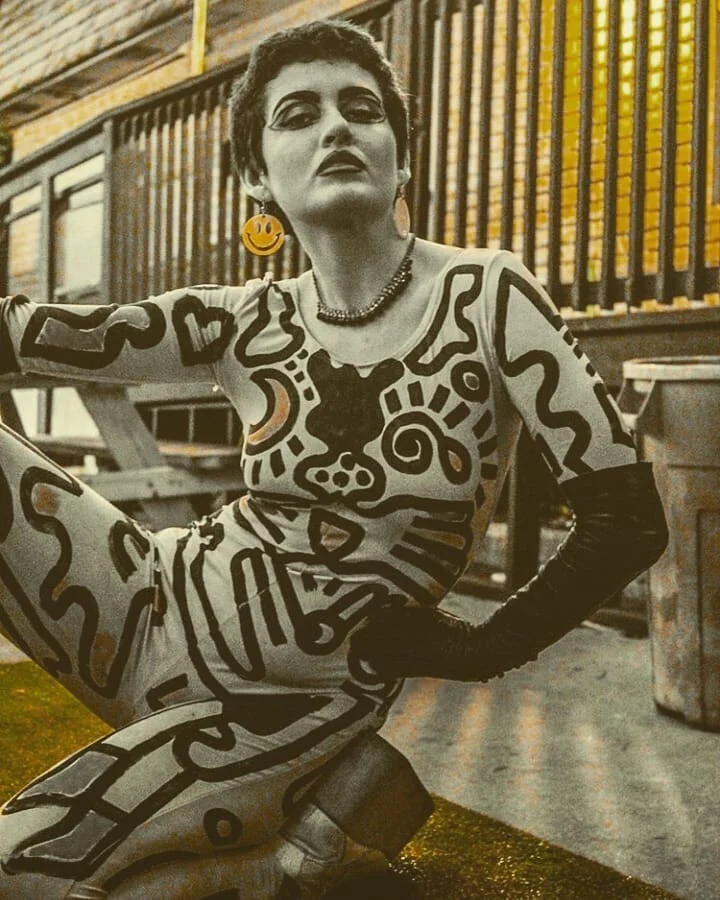
Today, we’re happy to introduce you to one of the evening’s artists, Austin-based creative JEVA. “JEVA is a musician, DJ, performance artist and organizer with a flair for reinvention and rebirth. Originally hailing from the gritty queer performance punk scene of San Juan, Puerto Rico, JEVA uses their sets to invoke late nights of dirty dancing outside of a dive bar in Santurce after an underground rave.” (You can find JEVA on Instagram and Soundcloud.)
This interview was conducted by #BBATX Projects and Operations Coordinator, Natalia Rocafuerte.
Photo by @rickygetsweird
Q: How would you define your creative practice and approach to music?
JEVA: I like to dive deep into "holes,” i.e. YouTube Holes, Wikipedia Holes, Spotify Holes, Google Holes, etc. I get lost in the information and start visualizing how I can mix all these elements to create something authentically stupid. So say, I started reading a lot about Mary Toft, I'm watching "Dancing Queen,” and I’m think about making a performance in which I birth a bunch of pink rabbit pieces while "(You Make Me Feel Like) A Natural Woman" by Aretha Franklin plays in the background. The same can be applied to music. On one hand I love to listen to real goth stuff like “Alien Sex Fiend” or “Christian Death,” and on the other hand I love underground and reggaeton like La Nana and La Goony Chonga. I mix that up in my music and create a gothic reggaeton song. As for DJ sets, it's all about how I can make the most clashing things compatible, I try to get away with a lot of stuff that may or may not backfire. It's all a leap of faith.
Q: When did music become more than a hobby for you? what did that shift look like?
JEVA: I guess it would be when I started training as a classical singer when I was 15. I wanted to be a part of the creative process and see music as more than just this magical thing. I wanted to see the technicality behind it. It was an intense shift—conservatory training is intense, it's filled with a lot of critique to the point that it feels like nitpicking. Movies like "Black Swan" and "Whiplash" exaggerate what that type of life is (for example, that professor in "Whiplash" would so be fired), however it kind of does feel like that in one's head. Professors will find every flaw and one kind of gets obsessed with reaching perfection.
Q: How do you set goals and boundaries for yourself as an artist?
JEVA: A friend once said: "Done is better than perfect,” and that really stuck with me. I apply that to myself in my craft, let that be in my performance art, DJing, or music. As for goals, I can get way into my head and think: "I want to make an event that 500 people will go to and I will get on a pole and start doing CIRCUS TRICKS!" Of course, at my current state of capacity, that is impossible. So I try to boil down this fantasy into core concepts: "I want a group of people—realistically, let's say 100—and I want to dance like a serpent. OK, let me stretch and practice every few days and make it as beautiful as I can." I try to make everything as real as possible and not beat myself up when things don't go as planned. It's all a learning experience.
Q: What are you looking forward to? in your own career? or perhaps in the industry, at large?
JEVA: I am aspiring to eventually be a master of my craft, to be able to live off doing this. I would like to be in a nice circle of people where I can be a kooky, old person. Keep in mind, I don't want fame. That's too much work and misery.
Q: What currently inspires you (could be people, places, things, Instagram accounts—you name it)?
JEVA: I am very inspired by Caribbean identity. I try to explore in my work different aspects of what living in the Caribbean is like, let it be from my own lived experiences or how foreigners perceive us. I also like to satirize colonial perceptions of tropical life in my imagery (artificial flowers, Hawaiian prints and oversaturated colors).
Q: Could you explain your artistic name and why you chose it?
JEVA: JEVA is Puerto Rican slang for girlfriend (I've heard it used mostly for casual dating, though I've also heard it used with serious partners as a cutesy term) but it also refers to someone who is a total babe. One can also use "jeva" as an adjective. "Ella está bien jeva” equals “she is such a babe.”
Want to dance all night with JEVA? Head over to Redbull Presents: Equal Axis on Saturday Dec. 15 from 10 PM to 4 AM at 607 Neches St. Austin, Texas. Austin collectives, Unbounded Agency and Thank You For Sweating, have teamed up to create this incomparably unique event featuring local multidisciplinary DJs, performance and visual artists, running the spectrum of humanness. Equal Axis will be host to artistic contributions from POC, queer, gender non-conforming and non-binary creatives as well as allies, using the event as a platform for visibility around queerness through expression, performance, activations and installations, as well as Maya Jane Coles' Texas debut. ALL ARE WELCOME, just be yourself, bring yourself, and your dancing shoes. Tickets are only $10 and available now.
On Ethical, Sustainable Budgeting: What You Spend Is What You Value
In this post, we explore some of the practical and emotional barriers that keep us from making money moves as creatives, professionals and small-business owners—and offer solutions.
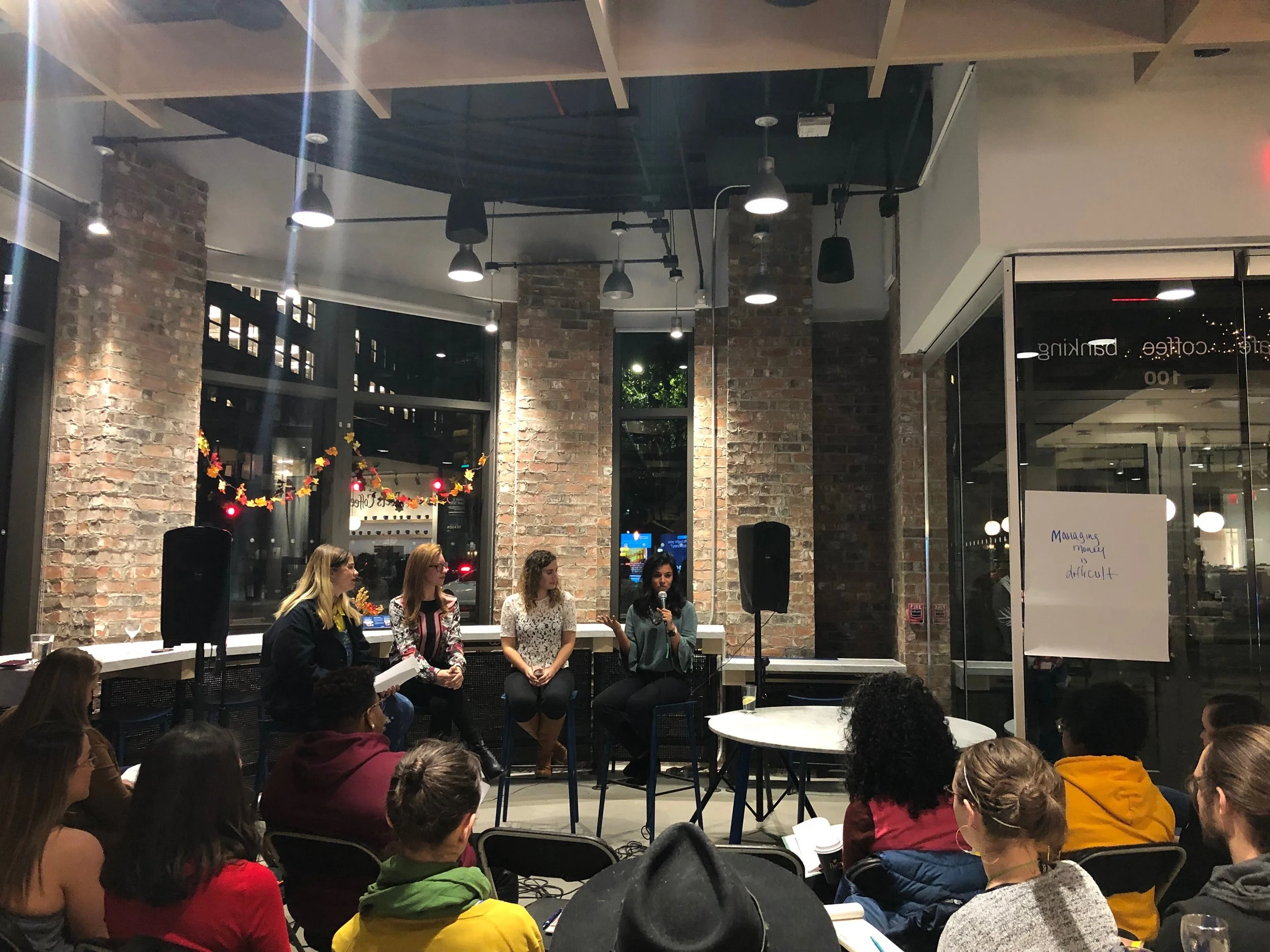
Panel of women at SHE TALKS conference
Produced by #bossbabesATX, SHE TALKS is an ongoing discussion-based personal and professional development series, tackling topics from finances to intersectional feminism. Our SHE TALKS feature the perspectives of women and non-binary folks. All genders are welcome to attend.
On November 15 from 7 to 9 PM at the Capital One Café, we gathered for SHE TALKS: Bootstrapped Budgeting, a candid discussion about some of the practical and emotional barriers that keep us from making money moves as creatives, professionals and small-business owners.
MEET THE EVENING'S SPEAKERS:
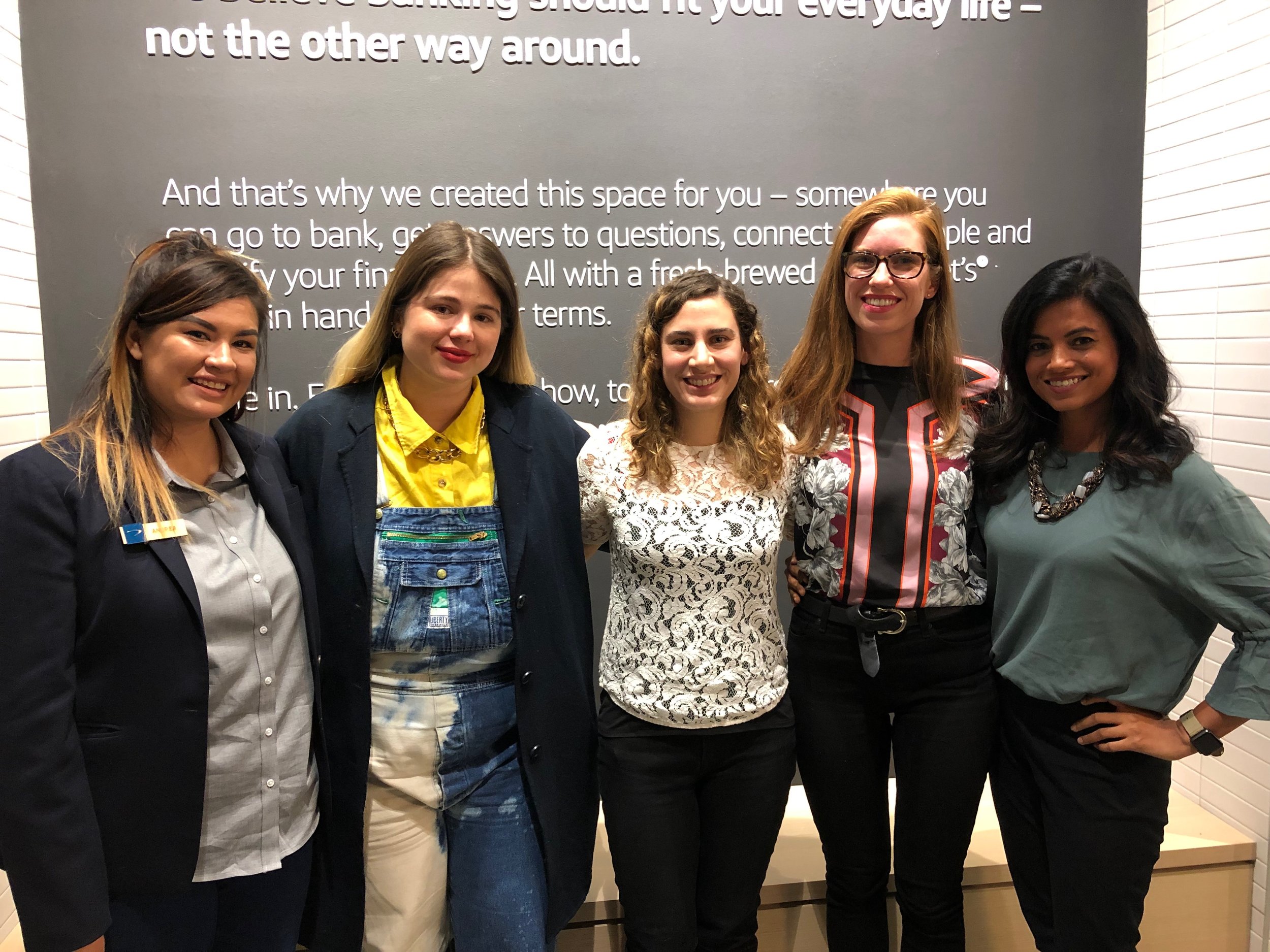
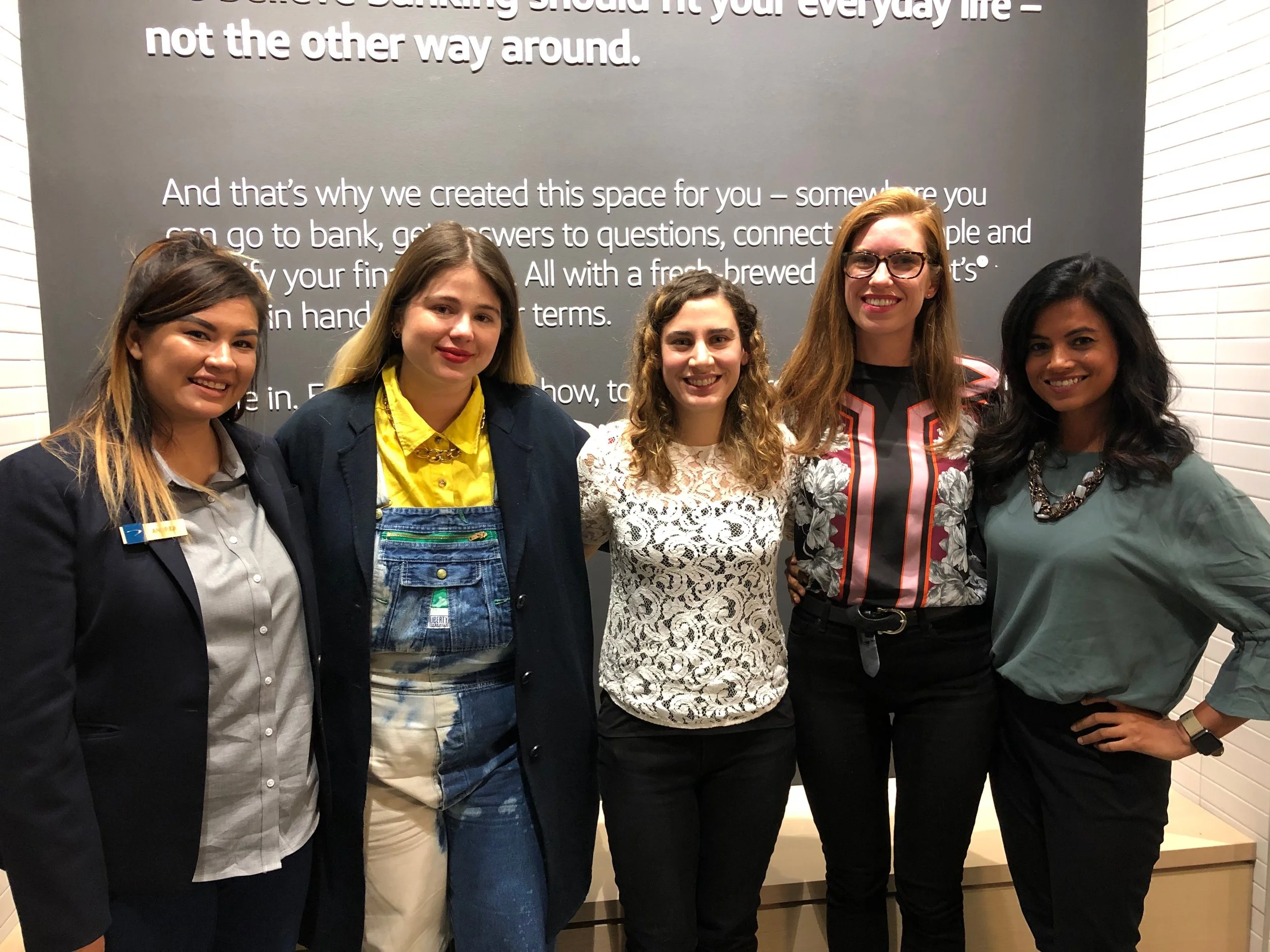
Photo by Illyana Bocanegra
Allegra Moet Brantly (founder of The ElleFactor & Ladies Get Paid ATX), panelist
Allegra Moet Brantly’s personal “why” is to help 100,000 women achieve early financial freedom. She is the founder of The ElleFactor, a female financial society empowering women to get active with their money and ElleFactor Circles, a new wealth-building accountability concept. She founded the ATX chapter of Ladies Get Paid and is their Texas-based salary negotiation coach working to close the gender wage gap and advance women.
Kara Perez (founder of We Bravely Go), panelist
Kara Perez is the founder of Bravely, a pop-up financial literacy event company. Kara works as a financial coach and writer, and Bravely has hosted events across the US. Bravely's mission is to give women practical and actionable financial advice to take control of their lives. Find Kara and learn more about Bravely at bravelygo.co or @webravelygo on Instagram.
Kaysha Patel (founder of Stretch Yoga ATX), panelist
Kaysha Patel is the founder of Stretch Yoga ATX; she recently led a session on business growth and bootstrapped budgeting during our summer WORK conference, particularly exploring her story as a self-funded entrepreneur. You can learn more at stretchyogatx.com.
Jane Hervey (founder of #bossbabesATX and group work), moderator
Jane Hervey is a multidisciplinary artist and writer. Her work is informed by history, wildlife, politics of space, romance and being a bad woman. She is the founder and Executive Director of #bossbabesATX, an organization that works to amplify women and nonbinary creatives, entrepreneurs and community organizers. In addition to her work at #BBATX, and her creative practice as a musician and writer, Hervey is a communications and experience designer, specializing in community-building and messaging for nonprofit, arts and entertainment organizations. You can learn more about her work as a designer here: groupworkcreative.com
Amanda Dewoody, ACC, Money Coach with Capital One
Amanda Dewoody launched the Austin Money Coaching program at Capital One where she has helped 100's of clients improve their relationship with money. She pulls from her training as a life coach, years of self-employment and experience with startups to help clients gain clarity and achieve their goals.
here are 8 budgeting tips and takeaways from this SHE TALKS session:
1.) Before you begin to design your budget, sit down and assess your mindset. We all have different relationships to money, and many of them are related to our identities. You may have positive or negative thoughts when you discuss money, and that’s OK. It’s good to know how you feel, though. Ask yourself what you would do with your money if you felt good at it. Ask yourself what you would do differently if you thought money were easy. Ask yourself how you would feel about money if you had more of it. Write down these answers, then think a little on where those answers may be stemming from. Did you have trouble with money growing up? Are you currently struggling with debt? Get those fears and concerns out in the open.
2.) Once you know where you stand, write your whole budget down. Your expenses are simply a reflection of what you’ve got and how you spend it. So, take an hour to write down (and categorize) everything you’ve spent and earned over the last three months. (Try not to judge what you write, while you’re doing it, or it’ll make the process really tough.) Here’s a sample template to get you started.
3.) Now, identify what you value. We use money to prescribe value to things, so your expenses are also a financial representation of what you find important. So, once you’ve written down your budget, it’s time to write down what you value and what you need. What’s important to you? Is it family? Is it your employees/staff? Is it financial preparedness? Is it a big house? Is it philanthropy?
4.) Next, pinpoint your goals around these values. What are you looking to accomplish within the next three months or the next few hours? Are you trying to launch a business? Are you looking to save more? Do you need to buy a new computer? Write out your goals and identify some of the things you may need to buy and/or spend your money on to get there. (It’s OK if you don’t have all of the answers to these questions at first, too. Our panelists suggest revisiting them ever month and adding/updating as you go along.)
5.) Once you’ve identified your values and goals, it’s time to design a new lifestyle (and budget) for yourself that better aligns with your aspirations and needs. And this is where things get fun. Now that you have your expenses and income labeled in categories, you’ll be able to determine where your money actually goes—and whether or not your values are reflected in your spending habits. (For example, if you say you’re invested in your personal development, but the majority of your income has gone toward new clothes instead of leadership workshops, where’s your heart at?) As you measure things up, determine what you can slash, what you can keep and what you may need to make more room for (even if you’re not sure how).
6.) Design a new lifestyle (and budget) for yourself based on your goals, aspirations and needs. Once you’ve written all of these things down, start figuring out a timeline and accountability plan. What are some things you can do today, tomorrow, next week, this month and next month to get closer to your goals? How are you going to check in on yourself? Do you need to find an accountability partner or money coach? Do you need to start using a budgeting app? Determine what your next steps are and stick to a plan for a few months. (Then, update your plan as needed, of course.)
7.) Remember that money is a tool, and what works for someone else might not work for you. Your budget is your budget. What you value is what you value. It’s OK to be overwhelmed by money talk, and it’s certainly OK to feel like a work in progress. Your money journey is your own, and you’ll learn as you go along. So, hold yourself accountable, do what makes sense for your goals and your needs and research. You won’t become a financial master overnight, and you certainly aren’t expected to. Be gentle on yourself as you learn.
8.) The best thing you can do for your budget is focus—not compare. Here are four tips from our panelists on how they prepare for big financial goals:
Kara Perez: Start with the end in mind. Find out how much money it takes to meet your goals, then break it down from there. It’s easier to smart with smaller steps, and this will also make larger financial goals (that take long periods of time to accomplish) more feasible.
Allegra Moet Brantly: Find out what you want before you go for it, then set your intentions and go at them full force. If you can visualize yourself doing/getting what you want, you’ll start doing the things you need to do to get what you want.
Kaysha Patel: Translate your thoughts and financial goals into a visual board and timeline. Break down your bigger numbers into smaller numbers and chip away at your goals a little at a time. And if you’re stuck—ask for help and get creative. Where can you achieve parts of your goals through partnerships or bartering? Where might you be able to hire someone that would really go a long way?
Jane Hervey: Don’t get frustrated when you can’t figure out every step you’ll need to take toward your goal. Remember that it’s a work in progress and that things may change based on your life. Whenever you get stuck, write down your needs and assign a dollar value to them. What are you missing? What are you not accounting for? What is it not working? Your rent/mortgage has a specific dollar value, but something like stress can also cost you time and money, so try and assign all forms of needs—and find out where you income needs to be to meet all of your needs.

PS: Want more? here are some next steps from our panelists and partners.
This Sunday, Dec. 2, you can attend Allegra’s Coffee and Coin talk. From 11:30 AM to 1:00 PM, Allegra will be interviewing a woman on her money story—the good, the bad, and the ugly. You can RSVP here).
Get some free money coaching! Money coaching with Capital One is a complimentary, three-session program available to anyone (not just Capital One customers) designed to connect your values to your money, get your money under control, plan a path for your future financial goals, and the confidence to make it happen. You can learn more, see client testimonials and sign up for a session on our website or email Amanda DeWoody, Capital One’s Money Coach, directly at Amanda.Dewoody@CapitalOne.com.
Explore becoming a part of one of Allegra’s ElleFactor Circle. ElleFactor Circles help you learn how to build out a wealth-plan (with new earnings, savings and investing skills). If you’re interested, you can take this $ fundamentals questionnaire. Anyone is welcome to take it and it's actually 25 questions that starts to dig into your money mindset. :)
Join Ladies Get Paid ATX! Led by Allegra, Ladies Get Paid ATX is a local chapter of Ladies Get Paid that provides monthly money talk sessions and coaching. Click here to join.
If you’re based in Austin, Texas attend the 2019 Bravely Go retreat. On January 5, 2019 in Austin TX, Bravely is hosting a day long retreat devoted to all things MONEY. This retreat will talk everything from debt payoff to investing, to negotiation to freelancing and business development.
Attend Capital One’s Your Money, Your Values workshop on Tuesday, January 8 from 5 to 7 PM at the Downtown Capital One Cafe. During this conversational, hands-on workshop, attendees will be asked to examine the relationship between money and values, and how our financial habits can influence (or impede) our goals. You will see how your individual values are connected to how you spend your resources (time, money and energy) so that you can spend and save in ways that feel purposeful—and in line with what you care about most. Click here to register.
Attend #BBATX’s next WORK Conference! WORK is a biannual conference, exploring new ideas and approaches to creative and entrepreneurial work. Hosting 300 guests every summer and winter, this biannual, one-day event's panels, workshops and speaker sessions touch on personal and professional development, marketing, wellness, business management and entrepreneurship. ✨The next WORK conference is on January 19, 2019 from 10 AM to 5 PM at the University of Texas at Austin’s Rowling Hall. Click here for more information.
MEET THE PRODUCERS, PARTNERS AND VENUE
About #bossbabesATX: #bossbabesATX (#bbatx) is an online and offline space for women-identifying and nonbinary creatives, entrepreneurs and community organizers. Through event series, showcases and personal/professional development programs, we've provided a platform of visibility, outreach and financial opportunity to 1500+ Texas-based women and nonbinary creatives, entrepreneurs and community organizers. We make space to catalyze multi-industry coalitions, share our crafts, seek help and provide each other with practical and emotional resources. There is power in our shared experiences. We were named "Best Bossy Babes" of 2015 by The Austin Chronicle, were selected by The White House to attend the United State of Women Summit in June 2016 and inducted into the City of Austin's Hall of Fame in 2017. Learn more at bossbabes.org/bossbabesatx
Our events prioritize the voices of self-identifying women and nonbinary folks. We are not gender-discriminant; all are welcome to attend. This production has been made possible in part by presenting partners Resplendent Hospitality.
About Capital One Café: Capital One Cafés are places where you can bank, plan your financial journey, engage with your community, and enjoy some coffee. The café and its resources are open to the community (whether or not you’re a Capital One customer).
This recap was compiled by #bbatx Executive Director Jane Hervey, with notes from #BBATX volunteer Cara Cates. To stay in the loop with our SHE TALKS, check out our upcoming events at bossbabes.org/events or sign up for the BBATX email list.