
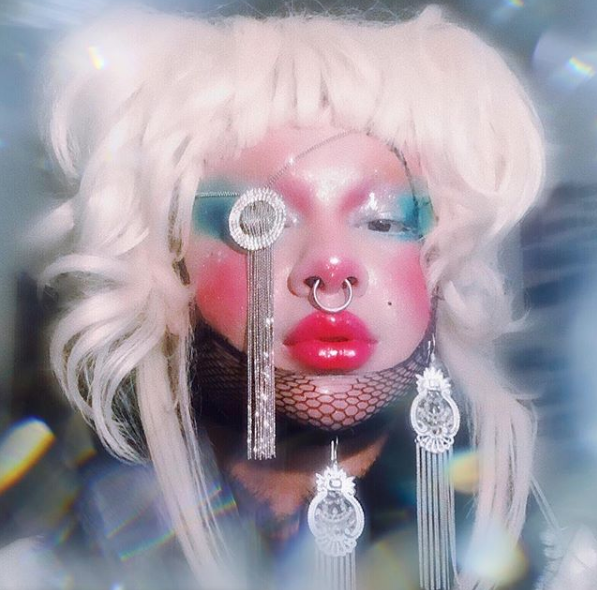
On Ambition, Vibin' Performances and Unconventional Beauty: An interview with Belladonna
Today, we’re happy to introduce you to one of the evening’s artists, Austin-based creative Belladona.
In December 2018, #BBATX is partnering with Unbounded Agency, Thank You For Sweating and Red Bull Music to highlight some of the incredible performers in their upcoming showcase, Equal Axis.
Today, we’re happy to introduce you to one of the evening’s artists, Austin-based creative Belladonna. “Belladonna is a gender-fluid performer and artist from Austin, Texas known for high-energy, conceptual looks, and artistic ability. Her work is multifaceted, always combining visuals through fashion and makeup, combined with dance, rap, and DJing when on stage. Her most notable opportunities of 2018 would be performing, at GayCL as well as at Charli XCX's "Femmebot Fantasy" show in Dallas.” (You can find Belladona on Instagram , Soundcloud and Twitter.)
This interview was conducted by #BBATX Projects and Operations Coordinator, Natalia Rocafuerte.

Q: Could you guide us through your creative process and work?
Belladonna: My creativity comes fairly naturally and effortlessly. I constantly have a desire to create whether it be writing, painting, music, or design. I pretty much just wake up ready and needing to produce something.
Q: How do you feel empowered before a performance?
Belladonna: I feel so much adrenaline and excitement before a performance. There's nothing quite like connecting with a crowd and the exchange that occurs between an entertainer and their audience.
Q: What do you look for in creative collaborators?
Belladonna: I like to consider all my creative collaborators as my friends and people I have put trust in. The most important part about collaborating for me is that there is a genuine chemistry and connection between both parties. It's all about vibin’.
Q: How do you set goals and boundaries for yourself as an artist?
Belladonna: As an ambitious new artist on the scene, my goals are vast and there aren't any boundaries I intend to set for myself. I dream big and I refuse to limit myself.
Q: What currently inspires you (could be people, places, things, instagram accounts—you name it)?
Belladonna: Recently I've taken a lot of inspiration from aliens! I adore unconventional beauty and beings that look otherworldly.
Want to dance all night with Belladonna? Head over to Redbull Presents: Equal Axis on Saturday Dec. 15 from 10 PM to 4 AM at 607 Neches St. Austin, Texas. Austin collectives, Unbounded Agency and Thank You For Sweating, have teamed up to create this incomparably unique event featuring local multidisciplinary DJs, performance and visual artists, running the spectrum of humanness. Equal Axis will be host to artistic contributions from POC, queer, gender non-conforming and non-binary creatives as well as allies, using the event as a platform for visibility around queerness through expression, performance, activations and installations, as well as Maya Jane Coles' Texas debut. ALL ARE WELCOME, just be yourself, bring yourself, and your dancing shoes. Tickets are only $10 and available now. Click here.
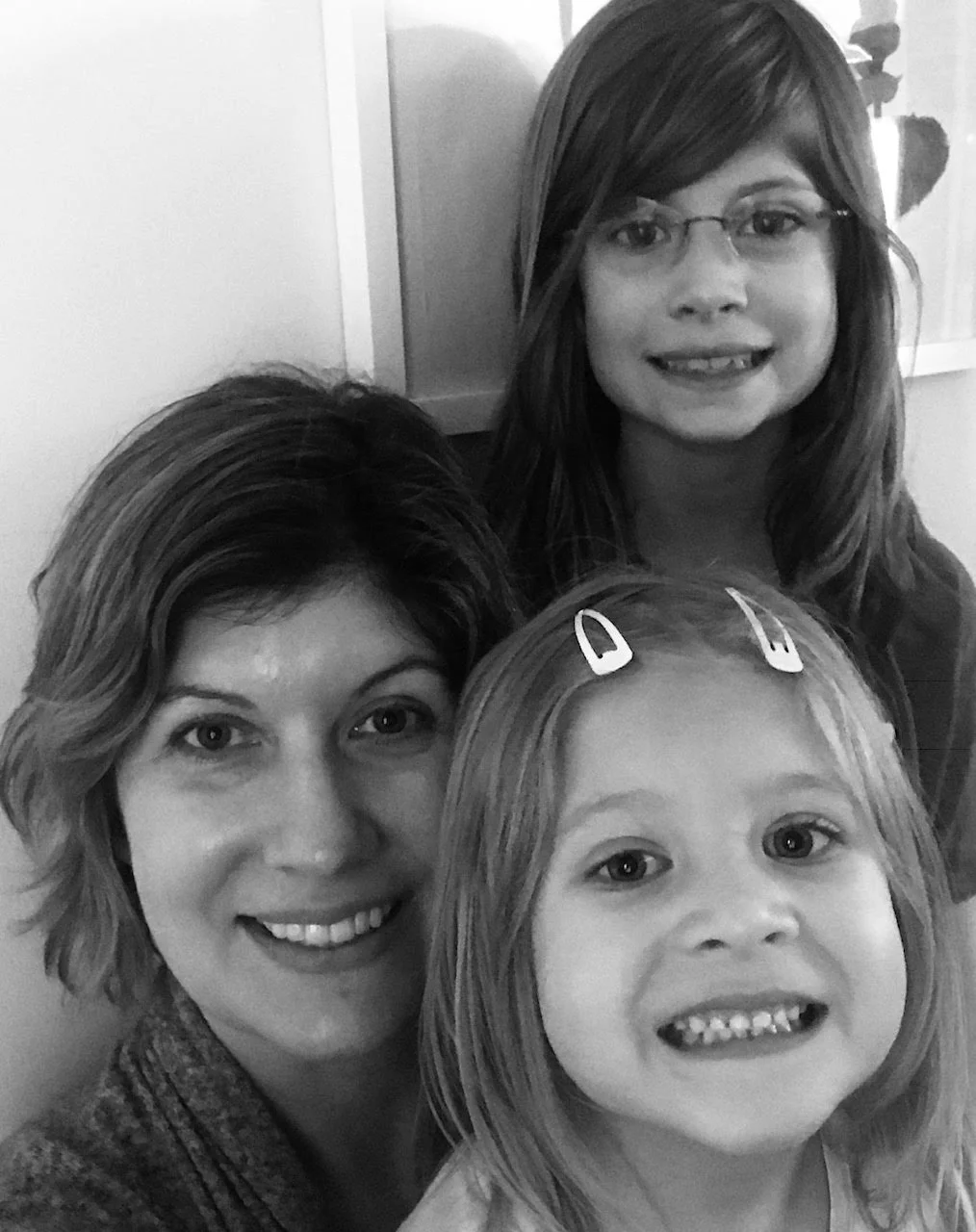
On Care-taking, Creativity and Self-Care: An Essay on Parenthood and Gender Bias
For our Winter ‘18/’19 programming theme at #BBATX, we’re exploring resilience. We could not think of anyone more resilient than our parents, mothers, fathers, caretakers and caregivers.
A note from team #BBATX: We are creative risk-takers. Strong and capable decision-makers. Bold and powerful makers. Which means we bounce back. We push forward. And when we fail, we try again.
So, for our Winter ‘18/’19 programming theme at #BBATX, we’re exploring resilience. We could not think of anyone more resilient than our parents, caretakers and caregivers.
According to the US Department of Labor, as of 2017, 70 percent of mothers are part of the workforce and 40 percent are both the primary caregivers and breadwinners of their household. And despite spending more time at work, mothers are also spending more time than ever on childcare. Even still, care-taking parents report that they feel pressured to be even more involved with their children than they already are.
Moreover, sexism, racism, homophobia and other discriminatory beliefs can make parenting even more difficult. Our education systems are often biased and don’t offer full reproductive health education—and our medical system is just as influenced by discriminatory biases as the rest of society.
It’s time we care of our caretakers.
So, today, on the blog, BBATX community member, Emily Laughlin, has penned an essay on parenthood, identity and self-care. Read on for her op-ed.

Emily Niksich Laughlin is a mom. She could never have predicted the crazy experiences, shocking cultural messages, and major identity shifts that becoming a parent entails and wants to spread the word in order to help new parents transition and integrate the reality of our very young into a visible and regular part of society. She does other things too, like: architecture, interior design, real estate, fine art photography (eanl.co), and is currently working on a series of large format photography. Besides time in New York, and Houston she has mostly lived in Austin since the late nineties.
“So… parenthood.
You’ve discovered you have the powerful ability of actual life-giving and are making a go at child-rearing. Let’s acknowledge how powerful that is! Yet still, many who are transitioning into the role of a parent are easily robbed of discovering that power by way of traditional role definitions, internal and external guilt, general judgement and assumptions and new cultural expectations (largely driven by sexism, racism and other identity biases) as soon as they go about bringing a baby home.
Like most things in our image-based culture, what you see online largely differs from the truth—and so it goes for pregnancy, childbirth and parenting. Conflicting messages between media’s representation of parenthood and the reality of parenthood can leave new parents with feelings of guilt and inadequacy (just like body image issues exasperated over time and cultural expectations). This is why we have to talk about this life stage in an open public forum.
Our society defines success by monetary and intellectual achievements, and we devalue and dismiss the important role of parenting to our society. We miss out on the importance of getting down to our child’s level, spending time exploring in the present moments with and deeply connecting to our children. This takes time. Children are being brought up in a world with continuously improving standards for healthcare, cleaner living, basic safety, and a clearer understanding to approach mental health. Parenting is a daily physical and mental challenge. Parents are constantly juggling the now-ness and needs of children and their own adult goals. As we create higher standards for parents we must assign more value to the role and provide more support accordingly as a society. We should all be caring in some way for our collective young and their parents.
Many of us know all too well, though, that once one becomes a mother (or the primary parent expected to care-give), there is a sudden and unhealthy cultural expectation set upon balancing children and life—and no real support to navigate the change. All too often people tune out mothers’ and caregiving parents’ needs as complaining—and the labor of parenthood largely remains hidden behind closed doors.
There is also the narrative of maternal bliss—that you must appreciate every moment because it goes by so quickly. And, yes, some of that exists and is amazing, but parenthood can also be like riding on the back of a raging elephant through the aisles in a porcelain shop. It’s hard to be told to not only grin and bear it, but to do it gracefully and happily since it will be over soon (and you’ll simply miss the good parts).
There are vast contrasts between the messages society tells you—the luring imagery of social media families and highly designed baby gear—versus the actual intense physicality of having children—the emotional heavy lifting of parenting, all while trying not to mess your children up. That contrast, paired with the fact that so much of the work of caring for young children happens behind closed doors, can leave any parent with periodic feelings of isolation, insecurity, shame and inadequacy.
The attention and presence required to be there for young children does not mesh with a productivity-based, overly-scheduled society. And it’s strange that one of the most crucial and human and roles in our society remains deeply under valued and sorely hidden. Although many of us are caretakers, parenting labor is not readily respected, understood or validated, and this plays in line with other gendered Catch-22s.
Despite the taboo, parenting, care-taking and mothering are all natural parts of our existence, which is exactly why we absolutely have to talk about this life-stage in a public forum and parents (and their supporters) have to start advocating for themselves. As a society, if we are going to continue to throw new expectations upon young families, we have to begin to expand the parenting description. We have to recognize the gender bias of care-taking. We have to address the negative ways gender roles impacts the role of care-taking, too. We must acknowledge that parenting young children is both a stressful and meaningful time, which sets the stage for future development. We must see that the emotional work of raising young children is a valuable investment to a stronger society and support caregivers accordingly. It will serve to make stronger bonds, more resilient children, and ultimately a stronger society.
So, to parents, expecting parents and future parents: Your children are ALL of our children and you must speak up—not just to each other but to have relationships and understanding from those in others life stages to find support. We must advocate for ourselves. We must advocate for parents whose experiences we may not share. We must tell it like it is. We must schedule in our own self-care. We must find out what truly gives back to our energy banks, get some help and make that part of our REGULAR parenting duties. Don’t shoulder all the burden, nor judge others when they do it differently. It will look different. Also, remember that all the services in the world won’t replace human connection. We need friends. We have to actualize love and ask ourselves how to create more of it.”
PS: You can join us in Austin, Texas for a candid conversation around parenthood on Dec. 1, 2018 from 1 to 3 PM at BBATX’s new headquarters. Click here for more details. Curious about all of the programs we have scheduled during this season of resilience? Head here.
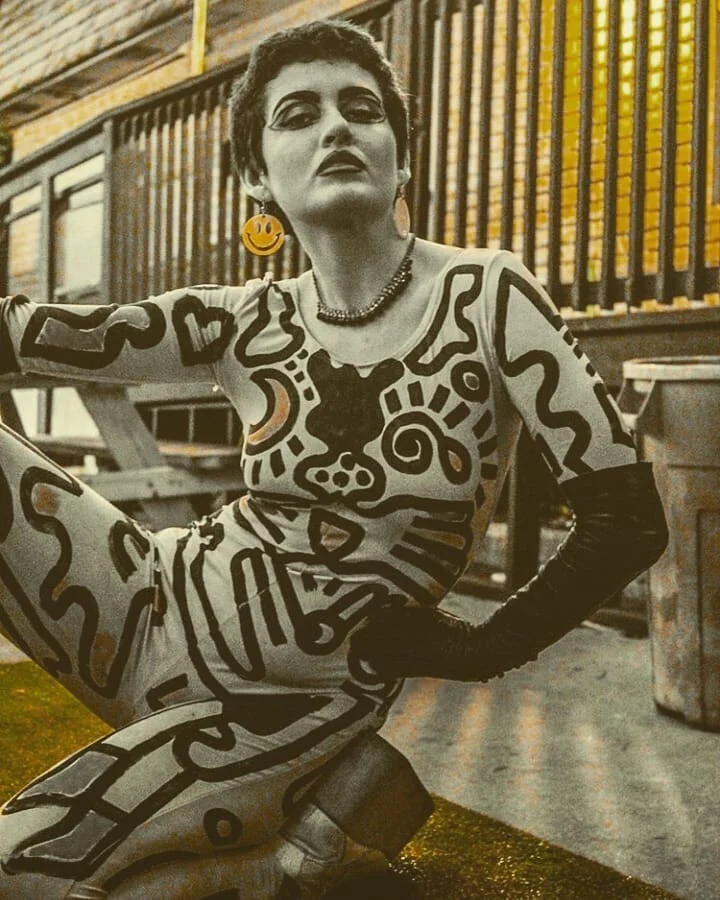
On Music, Gothic Reggaeton And Caribbean Identity: An Interview With JEVA
In December 2018, #BBATX is partnering with Unbounded Agency, Thank You For Sweating and Red Bull Music to highlight some of the incredible performers in their upcoming showcase, Equal Axis. Today, we’re happy to introduce you to one of the evening’s artists, Austin-based creative JEVA.
In December 2018, #BBATX is partnering with Unbounded Agency, Thank You For Sweating and Red Bull Music to highlight some of the incredible performers in their upcoming showcase, Equal Axis.
Today, we’re happy to introduce you to one of the evening’s artists, Austin-based creative JEVA. “JEVA is a musician, DJ, performance artist and organizer with a flair for reinvention and rebirth. Originally hailing from the gritty queer performance punk scene of San Juan, Puerto Rico, JEVA uses their sets to invoke late nights of dirty dancing outside of a dive bar in Santurce after an underground rave.” (You can find JEVA on Instagram and Soundcloud.)
This interview was conducted by #BBATX Projects and Operations Coordinator, Natalia Rocafuerte.
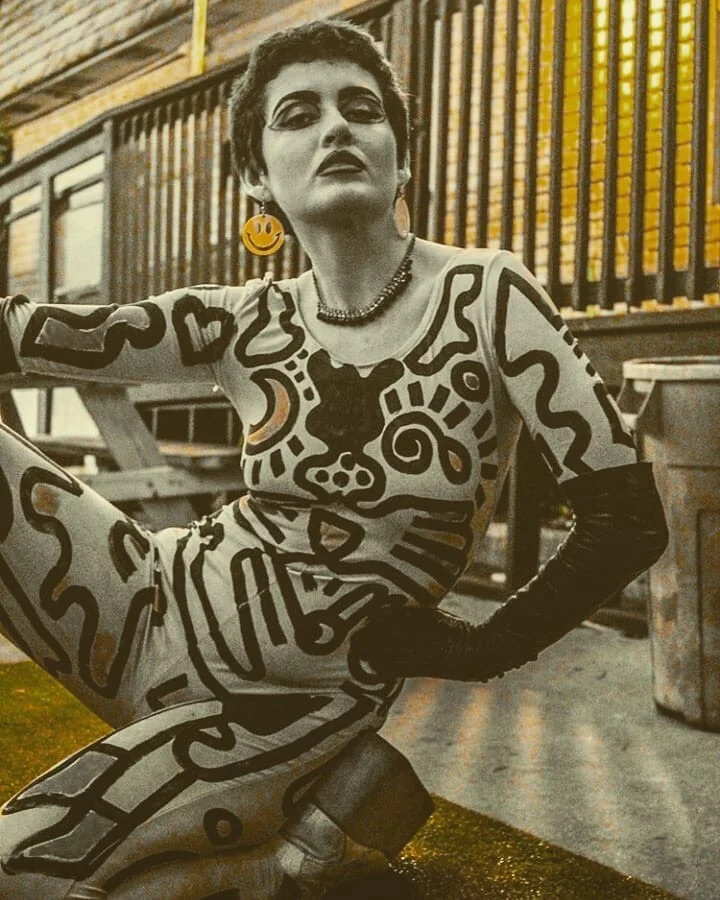
Photo by @rickygetsweird
Q: How would you define your creative practice and approach to music?
JEVA: I like to dive deep into "holes,” i.e. YouTube Holes, Wikipedia Holes, Spotify Holes, Google Holes, etc. I get lost in the information and start visualizing how I can mix all these elements to create something authentically stupid. So say, I started reading a lot about Mary Toft, I'm watching "Dancing Queen,” and I’m think about making a performance in which I birth a bunch of pink rabbit pieces while "(You Make Me Feel Like) A Natural Woman" by Aretha Franklin plays in the background. The same can be applied to music. On one hand I love to listen to real goth stuff like “Alien Sex Fiend” or “Christian Death,” and on the other hand I love underground and reggaeton like La Nana and La Goony Chonga. I mix that up in my music and create a gothic reggaeton song. As for DJ sets, it's all about how I can make the most clashing things compatible, I try to get away with a lot of stuff that may or may not backfire. It's all a leap of faith.
Q: When did music become more than a hobby for you? what did that shift look like?
JEVA: I guess it would be when I started training as a classical singer when I was 15. I wanted to be a part of the creative process and see music as more than just this magical thing. I wanted to see the technicality behind it. It was an intense shift—conservatory training is intense, it's filled with a lot of critique to the point that it feels like nitpicking. Movies like "Black Swan" and "Whiplash" exaggerate what that type of life is (for example, that professor in "Whiplash" would so be fired), however it kind of does feel like that in one's head. Professors will find every flaw and one kind of gets obsessed with reaching perfection.
Q: How do you set goals and boundaries for yourself as an artist?
JEVA: A friend once said: "Done is better than perfect,” and that really stuck with me. I apply that to myself in my craft, let that be in my performance art, DJing, or music. As for goals, I can get way into my head and think: "I want to make an event that 500 people will go to and I will get on a pole and start doing CIRCUS TRICKS!" Of course, at my current state of capacity, that is impossible. So I try to boil down this fantasy into core concepts: "I want a group of people—realistically, let's say 100—and I want to dance like a serpent. OK, let me stretch and practice every few days and make it as beautiful as I can." I try to make everything as real as possible and not beat myself up when things don't go as planned. It's all a learning experience.
Q: What are you looking forward to? in your own career? or perhaps in the industry, at large?
JEVA: I am aspiring to eventually be a master of my craft, to be able to live off doing this. I would like to be in a nice circle of people where I can be a kooky, old person. Keep in mind, I don't want fame. That's too much work and misery.
Q: What currently inspires you (could be people, places, things, Instagram accounts—you name it)?
JEVA: I am very inspired by Caribbean identity. I try to explore in my work different aspects of what living in the Caribbean is like, let it be from my own lived experiences or how foreigners perceive us. I also like to satirize colonial perceptions of tropical life in my imagery (artificial flowers, Hawaiian prints and oversaturated colors).
Q: Could you explain your artistic name and why you chose it?
JEVA: JEVA is Puerto Rican slang for girlfriend (I've heard it used mostly for casual dating, though I've also heard it used with serious partners as a cutesy term) but it also refers to someone who is a total babe. One can also use "jeva" as an adjective. "Ella está bien jeva” equals “she is such a babe.”
Want to dance all night with JEVA? Head over to Redbull Presents: Equal Axis on Saturday Dec. 15 from 10 PM to 4 AM at 607 Neches St. Austin, Texas. Austin collectives, Unbounded Agency and Thank You For Sweating, have teamed up to create this incomparably unique event featuring local multidisciplinary DJs, performance and visual artists, running the spectrum of humanness. Equal Axis will be host to artistic contributions from POC, queer, gender non-conforming and non-binary creatives as well as allies, using the event as a platform for visibility around queerness through expression, performance, activations and installations, as well as Maya Jane Coles' Texas debut. ALL ARE WELCOME, just be yourself, bring yourself, and your dancing shoes. Tickets are only $10 and available now.
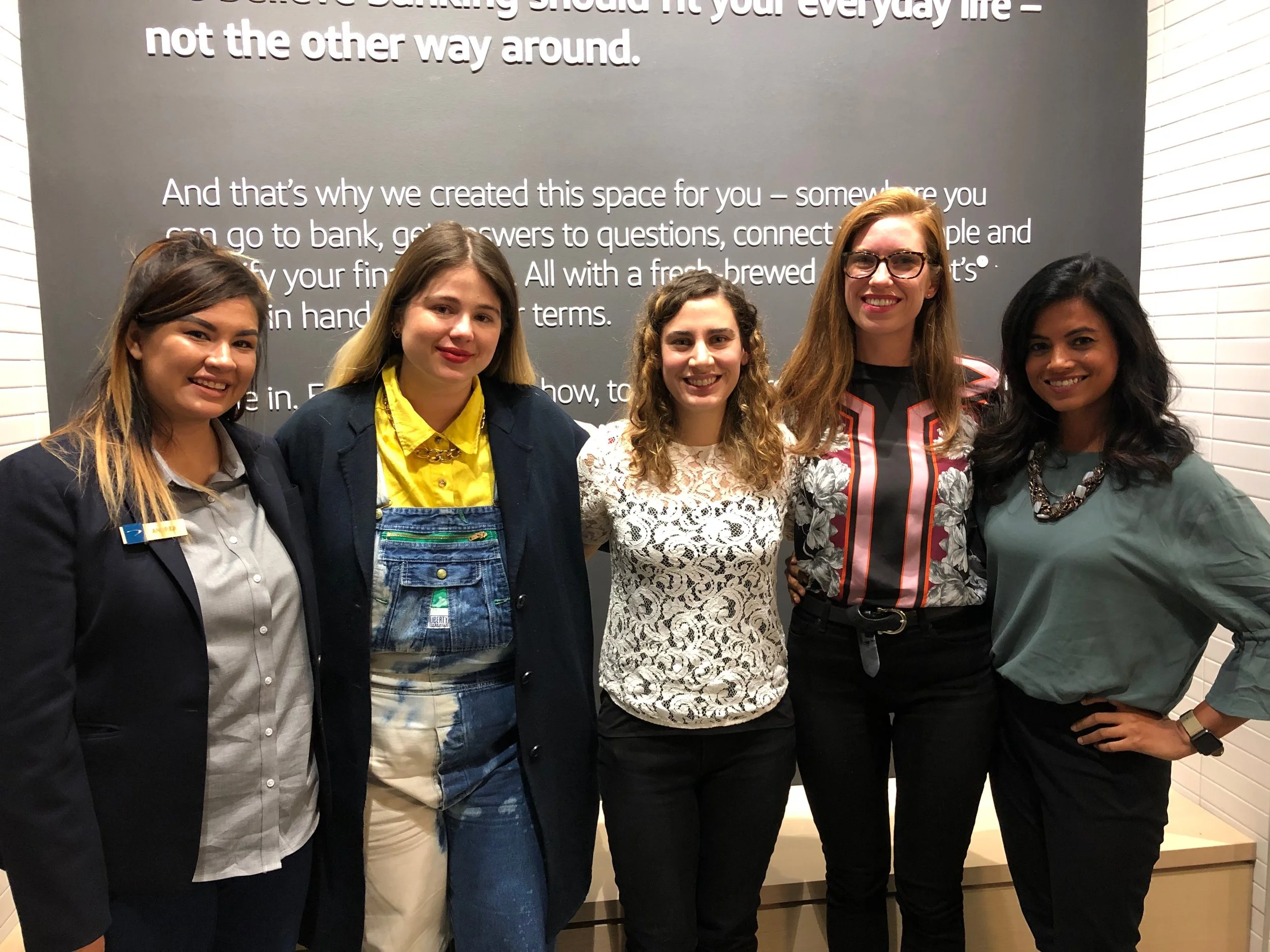
On Ethical, Sustainable Budgeting: What You Spend Is What You Value
In this post, we explore some of the practical and emotional barriers that keep us from making money moves as creatives, professionals and small-business owners—and offer solutions.
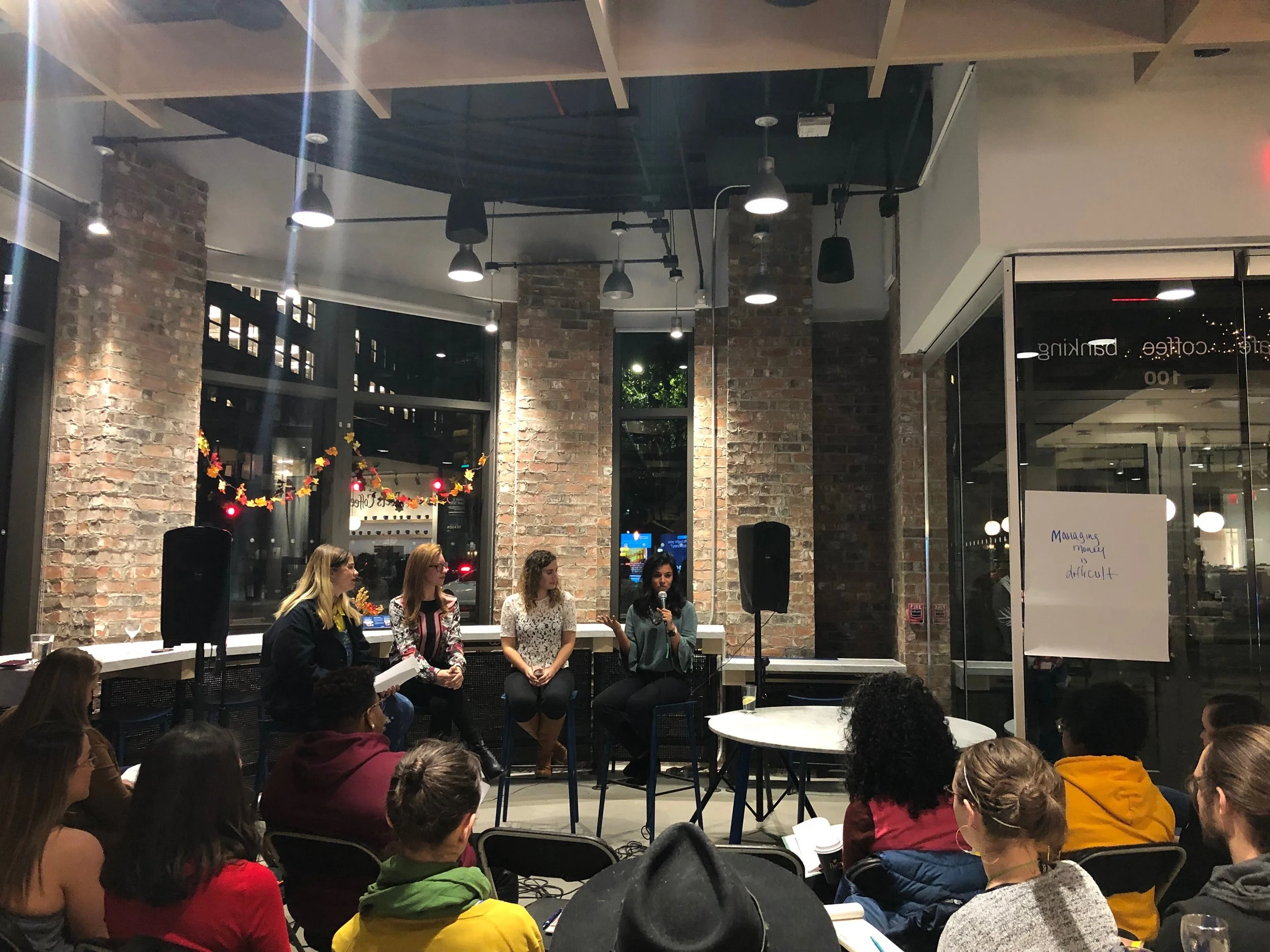
Panel of women at SHE TALKS conference
Produced by #bossbabesATX, SHE TALKS is an ongoing discussion-based personal and professional development series, tackling topics from finances to intersectional feminism. Our SHE TALKS feature the perspectives of women and non-binary folks. All genders are welcome to attend.
On November 15 from 7 to 9 PM at the Capital One Café, we gathered for SHE TALKS: Bootstrapped Budgeting, a candid discussion about some of the practical and emotional barriers that keep us from making money moves as creatives, professionals and small-business owners.
MEET THE EVENING'S SPEAKERS:
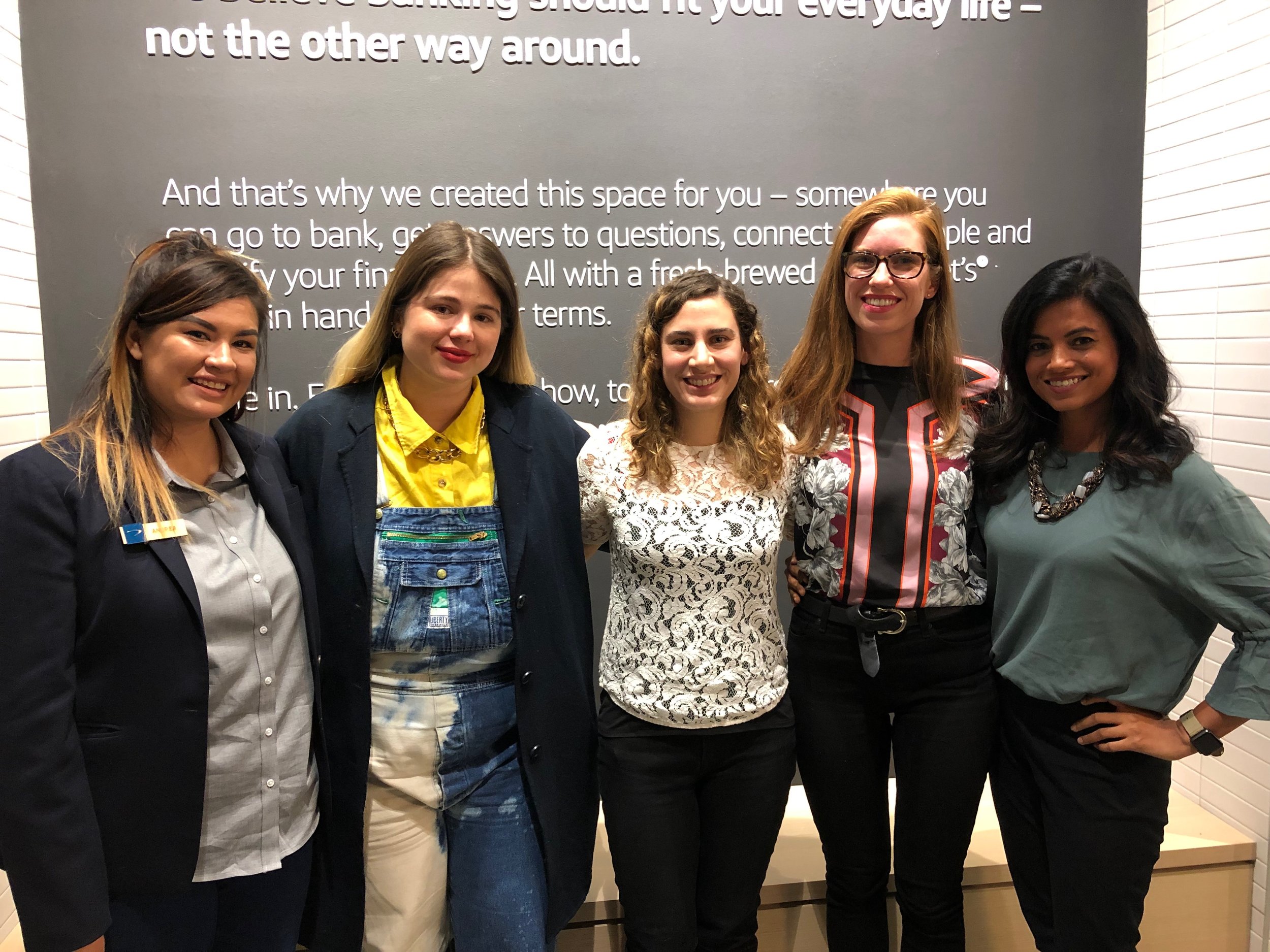
Photo by Illyana Bocanegra
Allegra Moet Brantly (founder of The ElleFactor & Ladies Get Paid ATX), panelist
Allegra Moet Brantly’s personal “why” is to help 100,000 women achieve early financial freedom. She is the founder of The ElleFactor, a female financial society empowering women to get active with their money and ElleFactor Circles, a new wealth-building accountability concept. She founded the ATX chapter of Ladies Get Paid and is their Texas-based salary negotiation coach working to close the gender wage gap and advance women.
Kara Perez (founder of We Bravely Go), panelist
Kara Perez is the founder of Bravely, a pop-up financial literacy event company. Kara works as a financial coach and writer, and Bravely has hosted events across the US. Bravely's mission is to give women practical and actionable financial advice to take control of their lives. Find Kara and learn more about Bravely at bravelygo.co or @webravelygo on Instagram.
Kaysha Patel (founder of Stretch Yoga ATX), panelist
Kaysha Patel is the founder of Stretch Yoga ATX; she recently led a session on business growth and bootstrapped budgeting during our summer WORK conference, particularly exploring her story as a self-funded entrepreneur. You can learn more at stretchyogatx.com.
Jane Hervey (founder of #bossbabesATX and group work), moderator
Jane Hervey is a multidisciplinary artist and writer. Her work is informed by history, wildlife, politics of space, romance and being a bad woman. She is the founder and Executive Director of #bossbabesATX, an organization that works to amplify women and nonbinary creatives, entrepreneurs and community organizers. In addition to her work at #BBATX, and her creative practice as a musician and writer, Hervey is a communications and experience designer, specializing in community-building and messaging for nonprofit, arts and entertainment organizations. You can learn more about her work as a designer here: groupworkcreative.com
Amanda Dewoody, ACC, Money Coach with Capital One
Amanda Dewoody launched the Austin Money Coaching program at Capital One where she has helped 100's of clients improve their relationship with money. She pulls from her training as a life coach, years of self-employment and experience with startups to help clients gain clarity and achieve their goals.
here are 8 budgeting tips and takeaways from this SHE TALKS session:
1.) Before you begin to design your budget, sit down and assess your mindset. We all have different relationships to money, and many of them are related to our identities. You may have positive or negative thoughts when you discuss money, and that’s OK. It’s good to know how you feel, though. Ask yourself what you would do with your money if you felt good at it. Ask yourself what you would do differently if you thought money were easy. Ask yourself how you would feel about money if you had more of it. Write down these answers, then think a little on where those answers may be stemming from. Did you have trouble with money growing up? Are you currently struggling with debt? Get those fears and concerns out in the open.
2.) Once you know where you stand, write your whole budget down. Your expenses are simply a reflection of what you’ve got and how you spend it. So, take an hour to write down (and categorize) everything you’ve spent and earned over the last three months. (Try not to judge what you write, while you’re doing it, or it’ll make the process really tough.) Here’s a sample template to get you started.
3.) Now, identify what you value. We use money to prescribe value to things, so your expenses are also a financial representation of what you find important. So, once you’ve written down your budget, it’s time to write down what you value and what you need. What’s important to you? Is it family? Is it your employees/staff? Is it financial preparedness? Is it a big house? Is it philanthropy?
4.) Next, pinpoint your goals around these values. What are you looking to accomplish within the next three months or the next few hours? Are you trying to launch a business? Are you looking to save more? Do you need to buy a new computer? Write out your goals and identify some of the things you may need to buy and/or spend your money on to get there. (It’s OK if you don’t have all of the answers to these questions at first, too. Our panelists suggest revisiting them ever month and adding/updating as you go along.)
5.) Once you’ve identified your values and goals, it’s time to design a new lifestyle (and budget) for yourself that better aligns with your aspirations and needs. And this is where things get fun. Now that you have your expenses and income labeled in categories, you’ll be able to determine where your money actually goes—and whether or not your values are reflected in your spending habits. (For example, if you say you’re invested in your personal development, but the majority of your income has gone toward new clothes instead of leadership workshops, where’s your heart at?) As you measure things up, determine what you can slash, what you can keep and what you may need to make more room for (even if you’re not sure how).
6.) Design a new lifestyle (and budget) for yourself based on your goals, aspirations and needs. Once you’ve written all of these things down, start figuring out a timeline and accountability plan. What are some things you can do today, tomorrow, next week, this month and next month to get closer to your goals? How are you going to check in on yourself? Do you need to find an accountability partner or money coach? Do you need to start using a budgeting app? Determine what your next steps are and stick to a plan for a few months. (Then, update your plan as needed, of course.)
7.) Remember that money is a tool, and what works for someone else might not work for you. Your budget is your budget. What you value is what you value. It’s OK to be overwhelmed by money talk, and it’s certainly OK to feel like a work in progress. Your money journey is your own, and you’ll learn as you go along. So, hold yourself accountable, do what makes sense for your goals and your needs and research. You won’t become a financial master overnight, and you certainly aren’t expected to. Be gentle on yourself as you learn.
8.) The best thing you can do for your budget is focus—not compare. Here are four tips from our panelists on how they prepare for big financial goals:
Kara Perez: Start with the end in mind. Find out how much money it takes to meet your goals, then break it down from there. It’s easier to smart with smaller steps, and this will also make larger financial goals (that take long periods of time to accomplish) more feasible.
Allegra Moet Brantly: Find out what you want before you go for it, then set your intentions and go at them full force. If you can visualize yourself doing/getting what you want, you’ll start doing the things you need to do to get what you want.
Kaysha Patel: Translate your thoughts and financial goals into a visual board and timeline. Break down your bigger numbers into smaller numbers and chip away at your goals a little at a time. And if you’re stuck—ask for help and get creative. Where can you achieve parts of your goals through partnerships or bartering? Where might you be able to hire someone that would really go a long way?
Jane Hervey: Don’t get frustrated when you can’t figure out every step you’ll need to take toward your goal. Remember that it’s a work in progress and that things may change based on your life. Whenever you get stuck, write down your needs and assign a dollar value to them. What are you missing? What are you not accounting for? What is it not working? Your rent/mortgage has a specific dollar value, but something like stress can also cost you time and money, so try and assign all forms of needs—and find out where you income needs to be to meet all of your needs.

PS: Want more? here are some next steps from our panelists and partners.
This Sunday, Dec. 2, you can attend Allegra’s Coffee and Coin talk. From 11:30 AM to 1:00 PM, Allegra will be interviewing a woman on her money story—the good, the bad, and the ugly. You can RSVP here).
Get some free money coaching! Money coaching with Capital One is a complimentary, three-session program available to anyone (not just Capital One customers) designed to connect your values to your money, get your money under control, plan a path for your future financial goals, and the confidence to make it happen. You can learn more, see client testimonials and sign up for a session on our website or email Amanda DeWoody, Capital One’s Money Coach, directly at Amanda.Dewoody@CapitalOne.com.
Explore becoming a part of one of Allegra’s ElleFactor Circle. ElleFactor Circles help you learn how to build out a wealth-plan (with new earnings, savings and investing skills). If you’re interested, you can take this $ fundamentals questionnaire. Anyone is welcome to take it and it's actually 25 questions that starts to dig into your money mindset. :)
Join Ladies Get Paid ATX! Led by Allegra, Ladies Get Paid ATX is a local chapter of Ladies Get Paid that provides monthly money talk sessions and coaching. Click here to join.
If you’re based in Austin, Texas attend the 2019 Bravely Go retreat. On January 5, 2019 in Austin TX, Bravely is hosting a day long retreat devoted to all things MONEY. This retreat will talk everything from debt payoff to investing, to negotiation to freelancing and business development.
Attend Capital One’s Your Money, Your Values workshop on Tuesday, January 8 from 5 to 7 PM at the Downtown Capital One Cafe. During this conversational, hands-on workshop, attendees will be asked to examine the relationship between money and values, and how our financial habits can influence (or impede) our goals. You will see how your individual values are connected to how you spend your resources (time, money and energy) so that you can spend and save in ways that feel purposeful—and in line with what you care about most. Click here to register.
Attend #BBATX’s next WORK Conference! WORK is a biannual conference, exploring new ideas and approaches to creative and entrepreneurial work. Hosting 300 guests every summer and winter, this biannual, one-day event's panels, workshops and speaker sessions touch on personal and professional development, marketing, wellness, business management and entrepreneurship. ✨The next WORK conference is on January 19, 2019 from 10 AM to 5 PM at the University of Texas at Austin’s Rowling Hall. Click here for more information.
MEET THE PRODUCERS, PARTNERS AND VENUE
About #bossbabesATX: #bossbabesATX (#bbatx) is an online and offline space for women-identifying and nonbinary creatives, entrepreneurs and community organizers. Through event series, showcases and personal/professional development programs, we've provided a platform of visibility, outreach and financial opportunity to 1500+ Texas-based women and nonbinary creatives, entrepreneurs and community organizers. We make space to catalyze multi-industry coalitions, share our crafts, seek help and provide each other with practical and emotional resources. There is power in our shared experiences. We were named "Best Bossy Babes" of 2015 by The Austin Chronicle, were selected by The White House to attend the United State of Women Summit in June 2016 and inducted into the City of Austin's Hall of Fame in 2017. Learn more at bossbabes.org/bossbabesatx
Our events prioritize the voices of self-identifying women and nonbinary folks. We are not gender-discriminant; all are welcome to attend. This production has been made possible in part by presenting partners Resplendent Hospitality.
About Capital One Café: Capital One Cafés are places where you can bank, plan your financial journey, engage with your community, and enjoy some coffee. The café and its resources are open to the community (whether or not you’re a Capital One customer).
This recap was compiled by #bbatx Executive Director Jane Hervey, with notes from #BBATX volunteer Cara Cates. To stay in the loop with our SHE TALKS, check out our upcoming events at bossbabes.org/events or sign up for the BBATX email list.
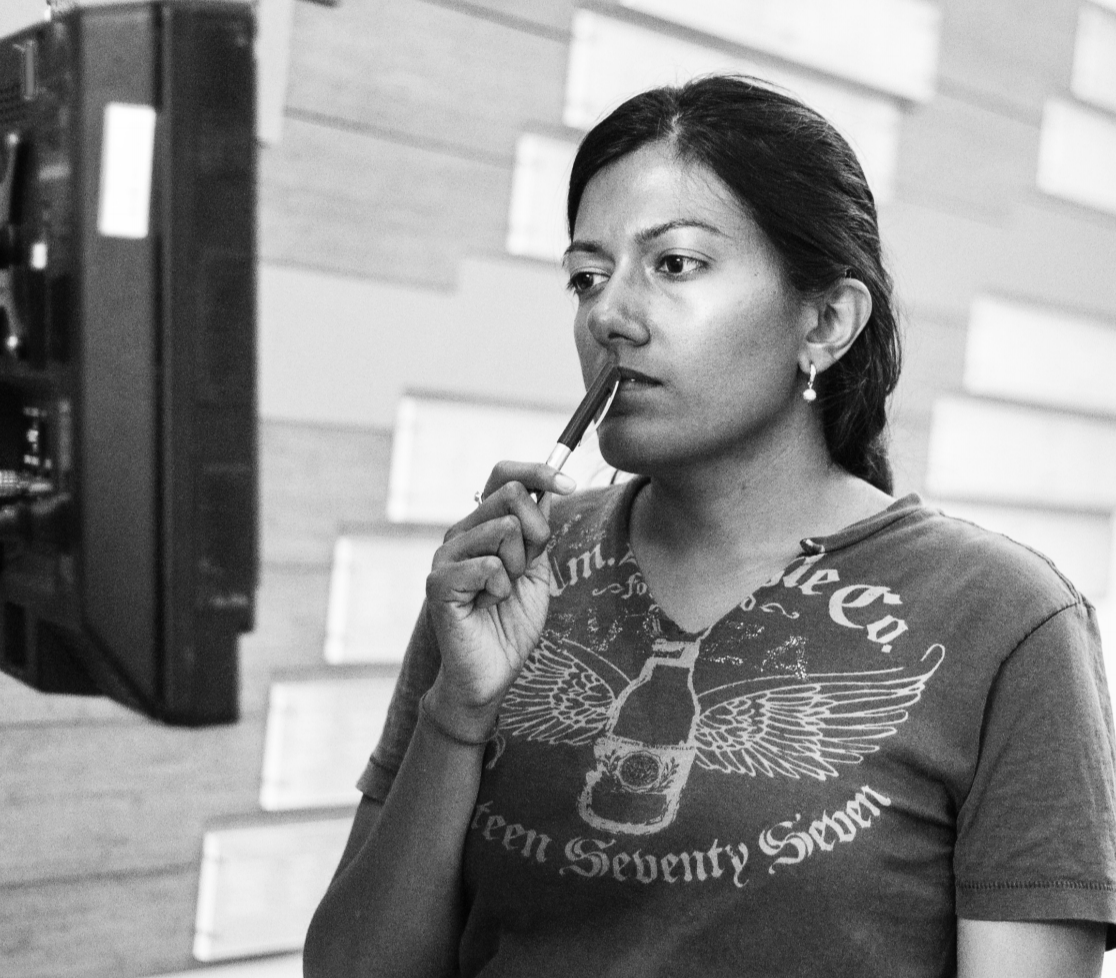
On ‘Love Goes Through Your Mind:’ An Interview With Filmmaker Ronak Shah
In this Q&A with Shah, we dig into self-funding, bringing awareness toward mental illness and her intentions with filmmaking.

Ronak Shah, courtesy of Ronak Shah
Written by: A’nysha Fortenberry
This weekend, #bossbabesATX is supporting a few screenings at the Austin Film Festival, including indie flick “Love Goes Through Your Mind,” directed by Ronak Shah, an independent storyteller based in the United States, with roots in Mumbai, India and New Jersey. In her film, Love Goes Through Your Mind, she explores mental illness, and immigrant family structures, through a story about “a first-generation Indian-American family that is forced to come to terms with the denial of mental illness when their son is diagnosed with bipolar disorder.” With the film, she hopes to break the stigma surrounding mental illness within the Asian American community and provide encouragement to step beyond shame to seek help.
In this Q&A with Shah, we dig into self-funding, bringing awareness toward mental illness and her intentions with filmmaking.
Q: You launched "Love Goes Through Your Mind" on Kickstarter. What led you toward the self-funding route?
Shah: Love Goes Through Your Mind is my first feature and there was definitely some doubt. I wondered how it would all get done, what the final film would be like (I had done shorts, but I knew this was a different kind of beast). Kickstarter was actually a way to gauge if there could be interest in this project. If people would support the film even before it was made, then I knew I had an audience that would want to watch it. I felt encouraged and blessed when IndieWire decided to write about our Kickstarter campaign and even more when we met our goal.
Q: Can you talk about getting a team together? How did you incentivize them to join the project, and how did you keep them motivated during rough filming days?
Shah: During my time at UCLA, I helped out on many of my classmates’ projects in various different roles. We have a great community there, you develop a network and people support each other—I like to think of it kind of like a barter system. So when it came time to shoot Love Goes Through Your Mind, I reached out to my friends and they came through! This was more of the crew side - like in production, etc. Key department heads were paid (albeit low), but feature credit helped with that as they were all starting out as well. What also helped was that a lot of them enjoyed the script/story. It always starts from there. I would tell them right off the bat, “Hey, I don’t have much money, but please consider reading the script before making a decision”. I think it spoke to people at a deeper level. And that’s what helped during rough filming days—that everyone was on board with the story. We made a point to try and not go past 12-hour days. There were times when it got really hot (as we shot during summertime in LA) or were in cramped spaces in the house. Four words, cold water and popsicles.
Q: Walk us through some of your inspirations for "Love Goes Through Your Mind." What are you encouraging the viewer to explore?
Shah: My parents moved from Mumbai, India to New Jersey when I was 14 years old and it was as if time froze for them once we moved. I grew up in a time capsule of 1990s India. In retrospect, I understand what was underneath it—the fear of being so far away from home. This led to my parents trying even harder to preserve the culture after we moved here. Not only me, this was very common amongst my American-born Indian friends as well, whose parents were stuck even further back, in 1980s, sometimes 1970s India. Regrettably, this led to the immigrant generation taking the stance that physical illnesses are legit because that’s something that can be seen. But a mental illness isn't possible. Accepting one would mean that they did something wrong/failed their child somehow. And since they sacrificed so much—left behind their lives in India to come here and secure a better future for us, failure wasn’t an option. Hence, many mental illnesses go untreated or are brushed underneath the rug in hopes that it is just a phase that will pass. Love Goes Through Your Mind was made to challenge this stigma in the Asian American community and provide encouragement to step beyond the shame/denial and seek help before it’s too late.
Q: What is the biggest change you’ve noticed in yourself, and your filmmaking style, between your first film, and "Love Goes Through Your Mind”?
Shah: Great question. I would have to say confidence. The first film was a short made to see if filmmaking is really what I want to do. I’ve always told people that if you can picture yourself doing anything else besides filmmaking, do it. If not, then go ahead and make movies. So I made one to see if I could picture myself doing anything else. I couldn’t.
Q: What’s your advice for fellow indie filmmakers?
Shah: A lot of patience. Especially when one doesn’t have a ton of money and is juggling a lot of different roles. It’s easy to simply write something off during the process, justify to yourself and say, “Oh, it’ll just work.” Even when that little voice called your gut/intuition is saying, no, screaming—something’s off! I’d say take a breath and pay attention, listen to it. If you can’t while you’re at your desk, step outside, go for a walk, smell a rose. I don’t know, do your laundry. Just make sure to say hello to it. It has saved me multiple times during writing, during casting, during editing. I try to make a point not to live without it.
Q: Any self-care routines or things you live by to share?
Shah: Oh yes, these are so important. I’m a meditator, hiker and painter. I think this goes back to the gut/intuition point from the previous answer. It’s so important to have that pause, a moment when needed, through the process. There is so much going on during all the different stages while making a movie that it can easily clutter the mind and create a lot of mind noise. This makes it harder to hear what it is you want to tell—what is the core of your story? Those are the times, take that break, create that pause. Ironically, it might seem like the hardest thing to do in the moment because all you want to do is figure out the answer. But the self-care routines will help it come naturally. Organically. Also, get in touch with what is going on underneath—what is your subtext? What is your truth? After all, what we are doing through storytelling is conveying emotions and it’s harder to effectively do so if you don’t allow your own to breathe. Try to make space and hold all of them, the positive alongside the more difficult ones because one cannot exist without the other.
Want to see Shah’s film? Head to the Austin Film Festival this weekend and catch a screening on Friday, Oct. 26 at 6:30 PM at the Alamo Drafthouse Village. You can also hear Shah speak at the Austin Film Festival on Saturday, Oct. 27.
About Ronak Shah: Ronak moved between Mumbai, India, and New Jersey, USA, until she was fourteen years old. Because of this, she considers herself as much of an immigrant as American. While pursuing an art degree at Parsons School of Design, Ronak unexpectedly discovered her love for storytelling, so she proceeded to work in the film industry in New York City before moving to Los Angeles to get her MFA in Writing/Directing at UCLA. As a labor of love over a period of five years, Ronak wrote and directed her first feature film, ‘Love Goes Through Your Mind’, which is about an Indian-American family and its implosion under the pressures of one of their member's untreated mental illness. With this film, she aims to challenge the stigma toward mental illnesses in the Asian American community while providing encouragement to step beyond the shame and seek help before it's too late. Ronak is ecstatic to have its world premiere at the 25th Austin Film Festival 2018. Amongst many other things, the film made Ronak realize her passion to tell character-driven stories about the psychological struggles of immigrants and their children as they survive in a land far away from home. Staying true to that, she is currently in production on her second feature, 'Fountain of Youth', a dramedy about a brilliant Korean-American lesbian post-doctoral researcher's journey through a human clinical trial to find a cure for Alzheimer's. When one of the patients turns out to be her estranged mother who now doesn't remember her, she has to choose between curing her while reliving their past and the possibility of losing her mom all over again. This film has been made possible by partial funding from the Sloan Foundation. As a minority, female independent storyteller, Ronak is proud to make poignant films that move, challenge and inspire audiences to reflect on their unyielding beliefs. When she isn’t spending time making movies, Ronak lives to hike, meditate and paint.
Breaking Records And Showing Up: A CraftHER Fall '18 Recap
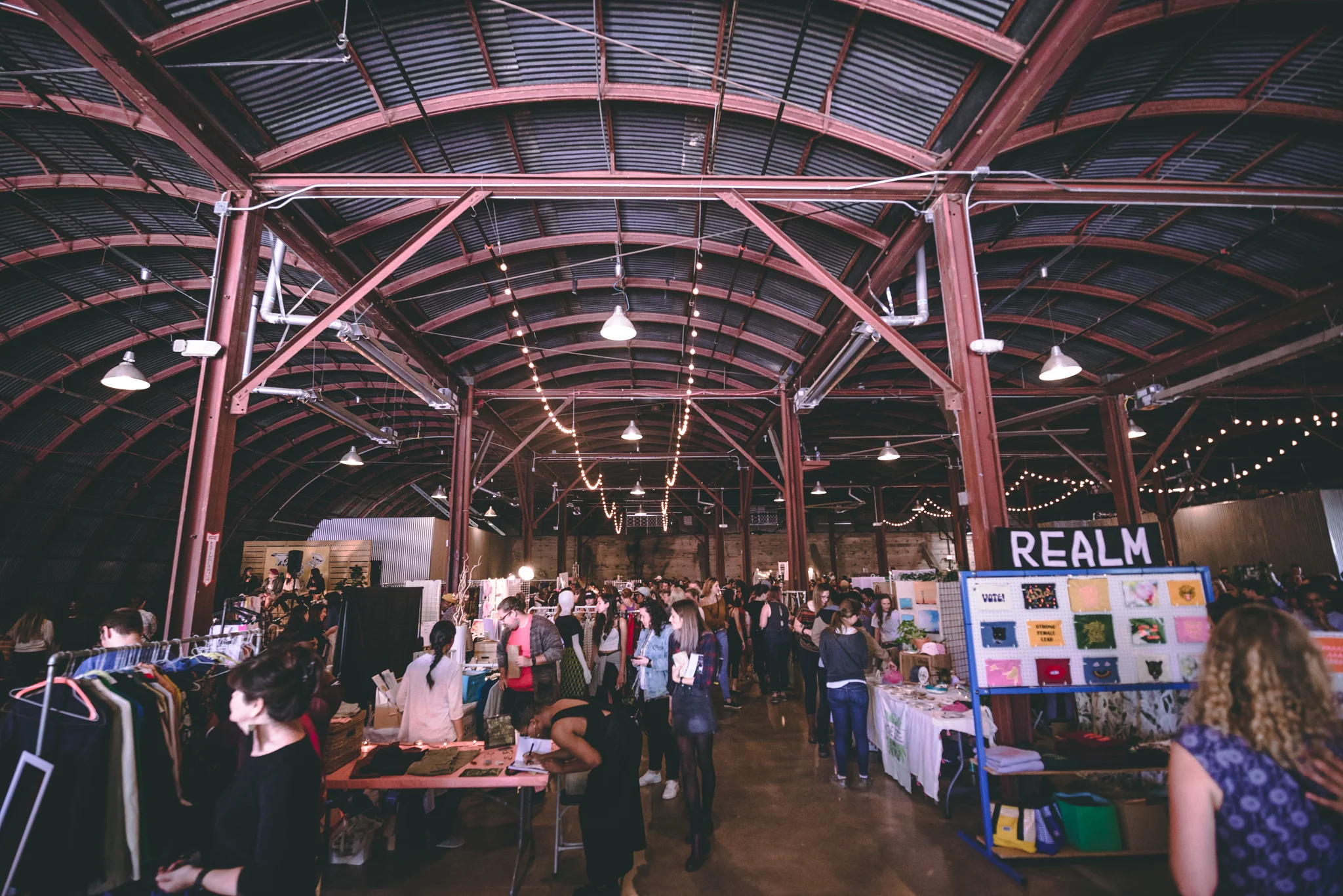
WE ARE PRESENT. 🔥From 11 AM to 5 PM on Sunday, October 21, we hosted our fifth installment of craftHER Market. 3800+ attendees filled the space to shop local and support women and nonbinary artists.

Photo by Renee Dominguez
From 11 AM to 5 PM on Sunday, October 21, we hosted our fifth installment of craftHER Market. 3800+ attendees (record-breaking!) filled the space to shop local and support women and nonbinary makers, creatives, artists and small business owners. Read on for a few takeaways from this fall’s pop-up:
THE VIBE
For craftHER Fall ‘18, we hosted 115 booths, including 100 makers, bakers, chefs and artists and 10 Austin-local community groups. Here are a few key takeaways:
3800+ attendees were greeted with hand-painted signage and windows by our featured artists, Good Snake, as well as a paper installation by the badass Amanda Witucki. On the sidewalk outside the venue, our friends at Chalk Riot produced an augmented reality installation, too.
Our community tables on the lawn hosted a range of activities for kids, from mask-painting to zine-making to coloring sessions.
On top of the pop-up marketplace, we produced five panels, curated by members of our programming committee, spanning topics of networking, healthy social media use, sustainable production, navigating creative industry and maintaining originality. (More info on these below!)
Through this year's raffle, we also fundraised more than $500 for Casa Travis.
Already missing the market? Recapture some of the day's energy by listening to #bbatx founder Jane Hervey’s craftHER playlist. We played this all day!
Our friends at MY EVENT IS THE BOMB captured GIF portraits all day long of attendees. Check ‘em out here.

Photo by Renee Dominguez

Photo by Renee Dominguez


Photo by Renee Dominguez

Photo by Renee Dominguez

Photo by Renee Dominguez
THE PANELS
featuring five discussions between local community members and the #bbatx committee, emceed by Jane Hervey
This spring, our craftHER panels explored networking, healthy social media use, sustainable production, navigating creative industry and maintaining originality. Curated by #bbatx founder Jane Hervey and three of our committee members (Keisha Gillis, Kristina Gonzalez and Alex Perez-Puelles), each panel was an intentional and presented a candid conversation between creatives and entrepreneurs at various stages of their careers. With stage design by Party at the Moontower, the backdrop for these discussions featured a commissioned piece by the market’s featured artists, Good Snake.
We'd also like to thank this spring's stage partners, Volusion, as well as our moderators and speakers, for making these panels possible!
Photo by Renee Dominguez

Photo by Renee Dominguez
THIS MARKET'S PRODUCERS AND PARTNERS
craftHER Market is produced by a team of staff and volunteer committee members at #bossbabesATX. #bbatx is a nonprofit organization that amplifies women and nonbinary creatives, entrepreneurs and community organizers. Our event series, showcases, strategic collaborations and professional development programs provide a platform of visibility, outreach and financial opportunity to 1000+ emerging women and nonbinary creatives, entrepreneurs and organizers per year. On top of that goodness, the public-at-large is invited to participate and learn more about how gender inequality affects their daily lives. More than 10,000+ community members annually attend our showcases, markets and dialogues—and in the last three years, our programs generated an additional $1million for the Austin economy.
This year's market was supported in part by our partners at Volusion and Fair Market. This year's in-kind contributors and supportive brands included Capital One, Party at the Moontower Rentals, MY EVENT IS THE BOMB and Austin Woman Magazine. This project was also supported in part by the Cultural Arts Division of the City of Austin Economic Development Department.
Would you like to partner on craftHER Market 2019? Please email thebabes@bossbabes.org.
Want to get involved in the next craftHER Market? Our next one is on April 14, 2019 at Fair Market in Austin, Texas. Sign up for email updates at the bottom of crafthermarket.com and stay tuned for our applications reopening on January 2019.
We Are Present: On Fall 2018's Programming Theme
Over the next couple of months, from our meet-ups to SHE TALKS to craftHER Market, we’ll explore what it means to show up for our goals day-in and day-out. We’ll share the stories of historical icons and present-day leaders who motivate us to do the work—even when it’s tough. And we’ll deep dive into the creative spaces, communities and people that are working hard to make the City of Austin as vibrant as possible. Hope to see you soon.

Boils like power, bubbles like mother and bumps hips like sister. Sounds like Steinem and sings like Ma Rainey. Thrums and pulses with the clacks of heels the taps of flats the stomp of work boots the patter of bare feet. Feeds tamales, fried chicken, grilled cheese, pot roast, rice and beans. Works like CEO, like teacher, like coder, like firewoman, like designer, like entrepreneur.
She is providence. She is home. She is healer. And when she bleeds, she bleeds her woman,
And it burns. And it flows.
— MY WOMB TOLD ME WE WOULD, sour grapefruit
by Jane Hervey
I wrote this poem two years ago, at a time when I wasn’t sure I could continue. I was one year in to building #BBATX’s programs. I was working a full-time job, so when all was said and done I was pulling 90-hour weeks to keep my bills paid and the nonprofit alive. Trump had just been elected, and the world was in a frenzy. So believe me when I say that when I wrote this poem, I was this close to giving up. I kept thinking, If what I’m doing really matters, there’s no way I’d be feeling this hopeless, right?
So, I decided to do what I always do when I feel anxious—write. I called upon all of the people, moments, memories and stories that inspired me to continue. I thought about simple things, like long conversations with my mother, the first time I heard about Gloria Steinem, all of my friends who have ever fed me and the time I read about Ma Rainey when I was a freshman in college.
If you’re not familiar with Ma Rainey, she’s in our history books as one of the first Black women to become a professional blues singer in the 1930s. In the 1990s (decades after her death), she was inducted into multiple American halls of fame, from the Rock ‘n’ Roll Hall of Fame to the Grammys’.
What I have always found most interesting about her, though, are all of the little side stories. When she retired in 1935, she ran three arts theaters (three!) until she died of a heart attack in 1939. She’s credited by many feminist thought groups as one of the first female singers to openly write about being attracted to women. And she even reportedly kidnapped Bessie Smith to play in one of her minstrel shows once, although this was discounted by Smith’s sister years later. (It looks like none of our faves have ever been perfect—even back in the 30s).
All of these little stories have been recorded, then told and retold for future generations to learn lessons from and to find inspiration in. They’re for people like me to come across at 18 years old—fresh out of a small town in South Texas, drowning in the complexity of my new worldview—to make sense of and to hold onto. They’re for us to remember who we are and where we come from—to understand our ancestors, to recognize our privileges, to call things by their names.
So, who tells and writes our stories matters. And that’s where the inspiration for #bossbabesATX’s programming theme, We Are Present, comes from. It’s a reminder that we are here, and that we are all serving as witnesses for each other’s hard work. We are the ones who will tell future generations of people, art, communities, spaces and movements that are driving forward our culture and country today. Because when we tell our stories, we give others permission to do the same.
So, over the next couple of months, from our meet-ups to SHE TALKS to craftHER Market, we’ll explore what it means to show up for our goals day-in and day-out. We’ll share the stories of historical icons and present-day leaders who motivate us to do the work—even when it’s tough. And we’ll deep dive into the creative spaces, communities and people that are working hard to make the City of Austin as vibrant as possible. Hope to see you soon.
— Jane Hervey
#bossbabesATX Executive Director and founder
Meet Her Hands: Cindy Popp
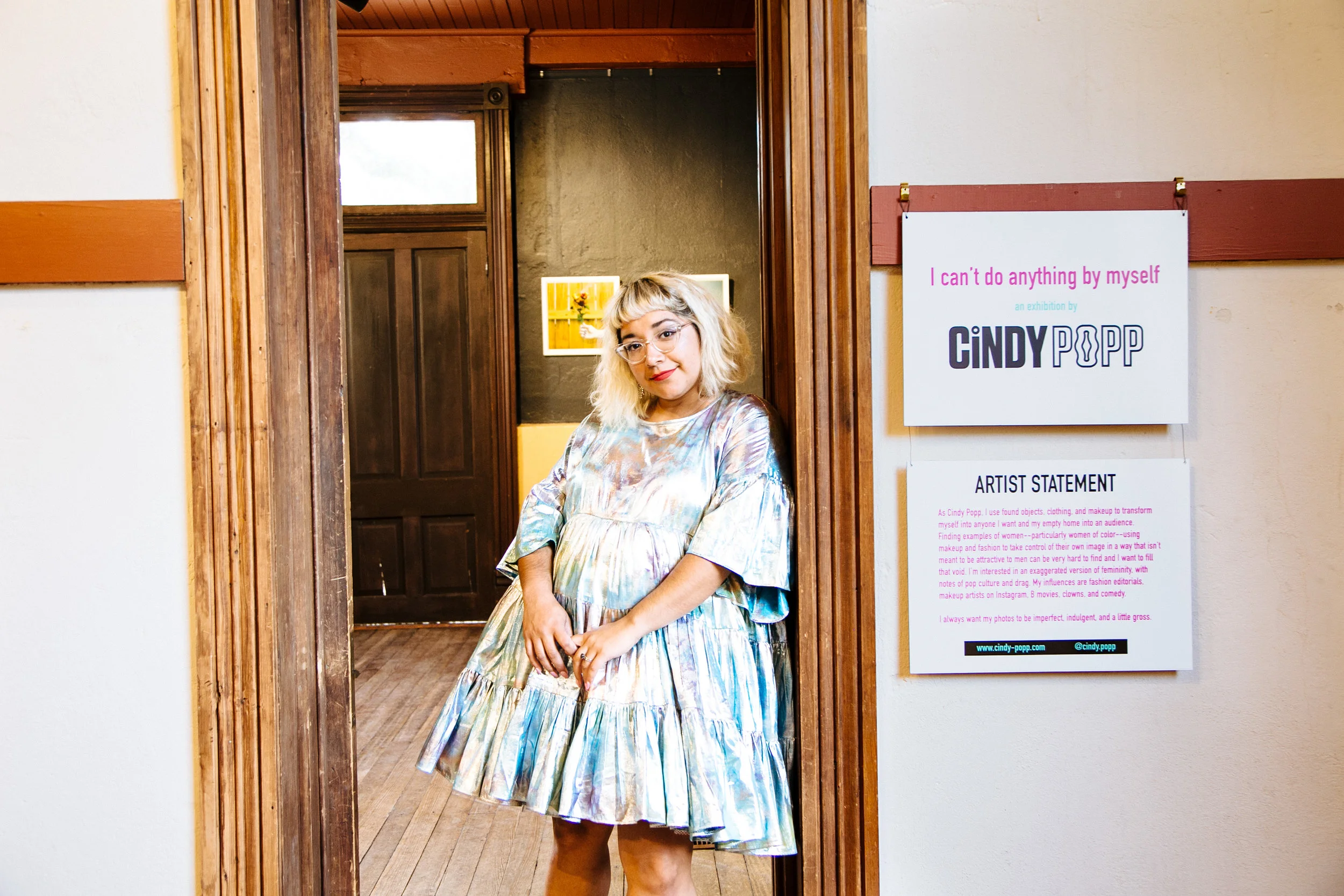
The second exhibition in Meet Her Hands, "I Can’t Do Anything By Myself" by artist Cindy Popp, opened on August 9. Thank you to our collaborators at the Elisabet Ney Museum, our drink sponsors Austin Cocktails, our volunteers and partners for making this show possible.

Photo by Diana Ascarrunz
Meet Her Hands is a collaborative exhibition series, produced by #bbatx and the Elisabet Ney Museum every summer, featuring three Texan women artists. This season, we're proud to host animator and illustrator Alie Jackson, documentary photographer Deborah Valcin and conceptual artist Cindy Popp. Each artist will showcase work within the Elisabet Ney's collection for two weeks, and throughout the summer we'll explore sculptor Elisabet Ney's legacy, while writing a new history of women in the arts.
The second exhibition in Meet Her Hands, "I Can’t Do Anything By Myself" by artist Cindy Popp, opened on August 9. Thank you to our collaborators at the Elisabet Ney Museum, our drink sponsors Austin Cocktails, our volunteers and partners for making this show possible.
MEET THE ARTIST BEHIND EXHIBIT THREE, "I CAN'T DO ANYTHING BY MYSELF:"
"As Cindy Popp, I use found objects, clothing and makeup to transform myself into anyone I want and my empty home into an audience. Finding examples of women—particularly women of color—using makeup and fashion to take control of their own image in a way that isn’t meant to be attractive to men can be very hard to find and I want to fill that void. I’m interested in an exaggerated version of femininity, with notes of pop culture and drag. My influences are fashion editorials, makeup artists on Instagram, B movies, clowns, and comedy. I always want my photos to be imperfect, indulgent, and a little gross." — Cindy Popp
ABOUT THE SHOW:
Hosted within the guest artist space at the Elisabet Ney Museum, I Can't Do Anything By Myself by Cindy Popp is a study of self-portraiture and a playful celebration of the unconventionally grotesque. Here are a few notes from Cindy Popp's opening reception artist talk:
On Cindy Popp as an alter-ego
"She has to exist in a space where she’s alone. She never sees the light of day—she’s only out inside my home."
On creating space for emerging talent in the art world
"I’d tell curators the same thing I’d tell anyone with a position of power—use it better. Let people without a voice, have a voice and be recognized."
On her inspirations
"My art came from me feeling restless with the scene here [in Austin]. It doesn’t mesh well with my personal style. Dressing up as a clown is fun and liberating. It has a clear aesthetic. So I just keep going and the rest is history... I also love Nickelodeon. My favorite show is Ren and Stimpy. Very fun, gross and interesting visual style. It was so funny, I love it."
On childhood
"As a kid, I was super small and shy and scared, always reading a book. Three older siblings raised by a single mom who was a trucker. I was home schooled. I was into Greek mythology and Stephen king. I was a creep and super sheltered! I had a very small view of the world. I think younger me would be super psyched about this [her work]. "
On her process
"I have a list and a photo collection as inspiration. But then an idea will just happen one day and I’ll go with it. They are also really spontaneous—I have these big dreams, but all these factors apply, so I have to scale things down. I do have some plan but I usually go with what’s available."

Photo by Jinni J
COMING UP NEXT:
You can view Cindy Popp's "I Can't Do Anything By Myself" through August 2018 at the Elisabet Ney Museum during museum hours. This is the final exhibition in our summer series. See y'all in 2019!
MEET THE PRODUCERS, PARTNERS AND VENUE:
About #bossbabesATX, the producers: We exist to build educated and empowered creative communities at the intersections of sisterhood and space. Through event series, showcases and personal/professional development programs, we amplify and connect women-identifying artists, creatives and entrepreneurs. Since we've been in operation, we've provided a platform of visibility, outreach and financial opportunity to 300+ Texas-based women artists, 400+ women-owned businesses and women activists. We were selected by The White House to attend the United State of Women Summit in June 2016 and inducted into the City of Austin Hall of Fame in 2017. This production has been made possible in part by 2018 presenting partners Resplendent Hospitality.
About the Elisabet Ney Museum: In 1892, European portrait sculptress Elisabet Ney (1833-1907) purchased property in Austin, established a studio named Formosa and resumed her career as a noted sculptor of notables. At Formosa, Ney sculpted legendary Texans, among them Stephen F. Austin and Sam Houston. Ney also assembled at her American studio portraits of European notables, including King Ludwig II of Bavaria, Otto von Bismarck, Arthur Schopenhauer and Jacob Grimm rendered from life as a young artist in Europe. At the turn of the 19th century, Elisabet Ney’s studio became a gathering place for influential Texans drawn to “Miss Ney” and to the stimulating discussions of politics, art and philosophy that took place there. Following Ney’s death in 1907, her friends preserved the studio and its contents as the Elisabet Ney Museum and established the Texas Fine Arts Association dedicated to her memory.
Here, Queer and Babe AF: Our August '18 Portraits of Pride
A collaboration between #BBATX, Unbounded Agency and Space 24 Twenty, Portraits of Pride was an open happy hour on August 8 meant to capture visual expressions and celebrate queer history.

Photo by Cristina Fisher
A collaboration between #BBATX, Unbounded Agency and Space 24 Twenty, Portraits of Pride was an open happy hour on August 8 meant to capture visual expressions and celebrate queer history.
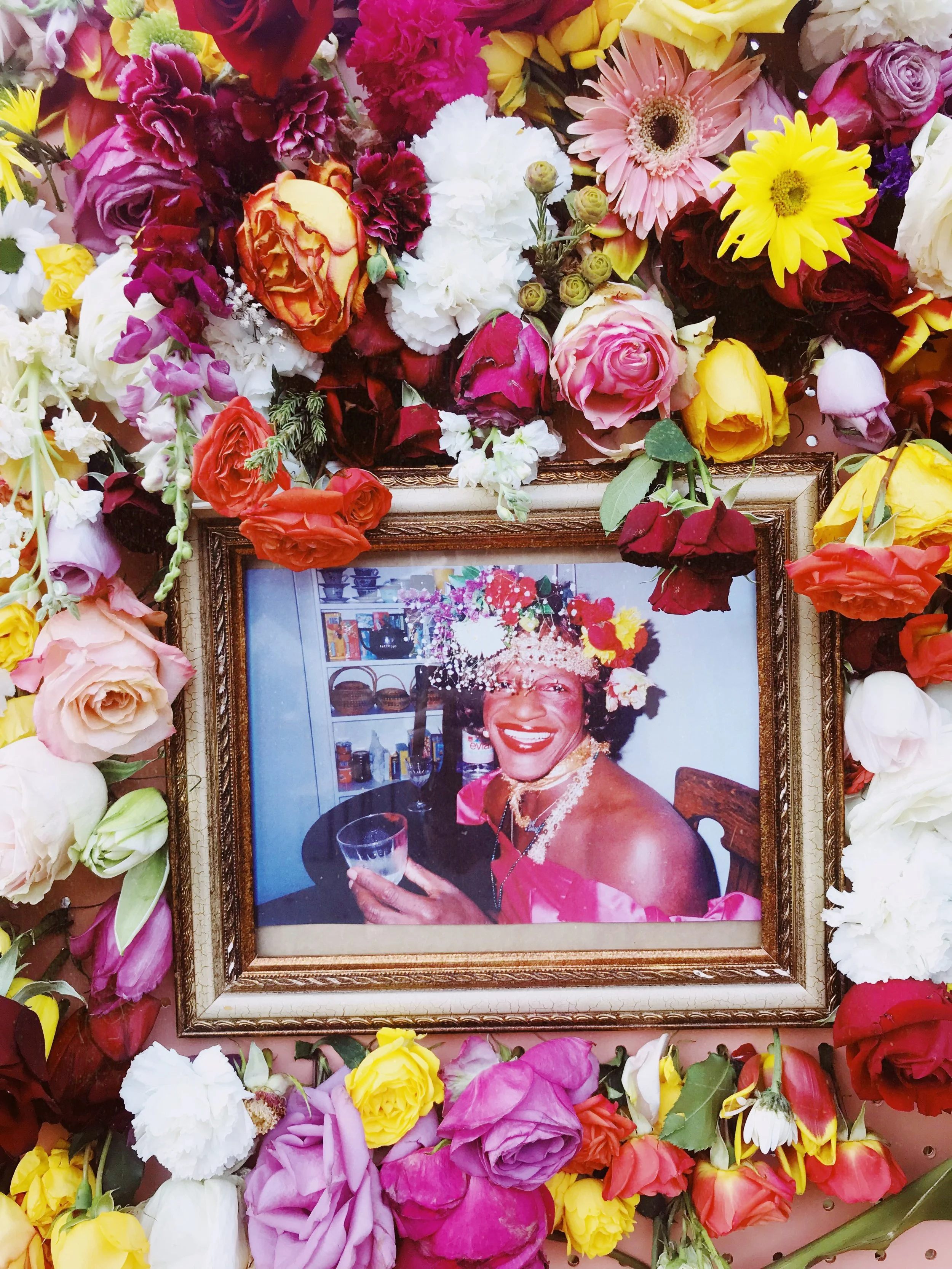
This event honored activist Marsha P. Johnson, a trailblazing queer trans woman of color who set into motion the gay liberation movement and also affected a generation of social change. Captured on Fujifilm Instax, filmmaker and #bbatx Project and Ops Lead Illyana Bocanegra captured portraits taken behind the scenes on two installations constructed by Anita Obasi of Unbounded Agency—each meant to provoke commentary around the politics of queerness. Developing photos were then hung on clothespins inside a structure painted and designed by Good Snake to create a collective piece of solidarity with and visibility for ourselves and the fellow LGBTQIA+ community.
We are present. We are here.
Portraits of Pride was a celebration of queer history—and a documentation of our community today.
We'd like to thank all who joined us for a memorable night honoring the legacy of Marsha P. Johnson. Major thank-yous to our event's sponsors, FujiFilm Instax and Space 24 Twenty, for providing us with the creative liberty to make this shit happen on our terms. We'd also like to thank our in-kind sponsors, Tito's Vodka, Richard's Rainwater and Topo Chico for keeping the bar open, as well as Charlotte's Fiesta Flowers and Ben White Florist for ensuring our flower wall installation was a hit. Here are a few takeaways:
Show up. There is power in our shared experiences. When you live your authentic truth, you give others the opportunity and permission to live theirs.
Know your roots. We can learn from those who came before us. We can seek healing, education, inspiration and resilience from exploring our histories. If you haven't had a chance, we recommend familiarizing yourself with the story and legacy of Marsha P. Johnson. We have much to learn from her bravery.
We are present. You are tomorrow's ancestor. Live like one.

Photo by Cristina Fisher

Photo by Cristina Fisher
MEET THE EVENING'S ARTISTS:
Illyana Bocanegra, portrait photographer
Illyana Bocanegra is a queer latinx artist working in austin, tx as the project and ops lead for #bossbabesatx and a documentary video maker. Her involvement in the queer community comes with providing visibility and a space for self-expression.

Illyana Bocanegra, captured by Tori Reynolds, in front of the Marsha P. Johnson memorial booth. Illyana is wearing a flower crown, hand-crafted by artist and organizer Las Ofrendas.
Anita Obasi, installation artist
Obasi is the founder and Principal of Unbounded Agency, a firm in Texas that specializes in creative strategy and event curation. The agency takes special consideration towards projects that create visibility around traditionally underrepresented demographics, including LGBTQ and POC communities.

Anita Obasi, captured by Tori Reynolds, in the resulting portrait installation (booth painted and designed by Good Snake).
Good Snake, booth/sign painters and designers
Comprised of Kayla Fritz and Hannah Epelbaum, Good Snake specializes in design and hand painting, with heavy emphasis on typography and illustration

Portrait Installation booth, hand-painted and designed by Good Snake, captured by Cristina Fisher.
Mosaico Experiencia, performance artists
Mosaico Experiencia is an intersectional, transcultural instillation for body memory, ancestral activation, and cathartic release AKA a party.

Mosaico Experiencia, captured by Tori Reynolds.
Keep up with this event's PRODUCERS, PARTNERS AND VENUE.
About #bossbabesATX, the producers: We exist to build educated and empowered creative communities at the intersections of sisterhood and space. Through event series, showcases and personal/professional development programs, we amplify and connect women-identifying artists, creatives and entrepreneurs. Since we've been in operation, we've provided a platform of visibility, outreach and financial opportunity to 300+ Texas-based women artists, 400+ women-owned businesses and women activists. We were selected by The White House to attend the United State of Women Summit in June 2016 and inducted into the City of Austin Hall of Fame in 2017. This production has been made possible in part by 2018 presenting partners Resplendent Hospitality.
About Unbounded Agency: Unbounded is an agency based in Austin, TX specializing in creative strategy and event curation. The agency takes special consideration towards projects that create visibility around traditionally underrepresented demographics, including LGBTQ and POC communities.
About Space 24 Twenty: Space 24 Twenty is a shared center for retail, local pop-up marketplaces, live music, events and dining in the heart of the Drag on Guadalupe Street in Austin, Texas. Rooted in celebrating what’s unique about the local community, it’s a space for bringing together Austin artists, creatives, musicians and designers.
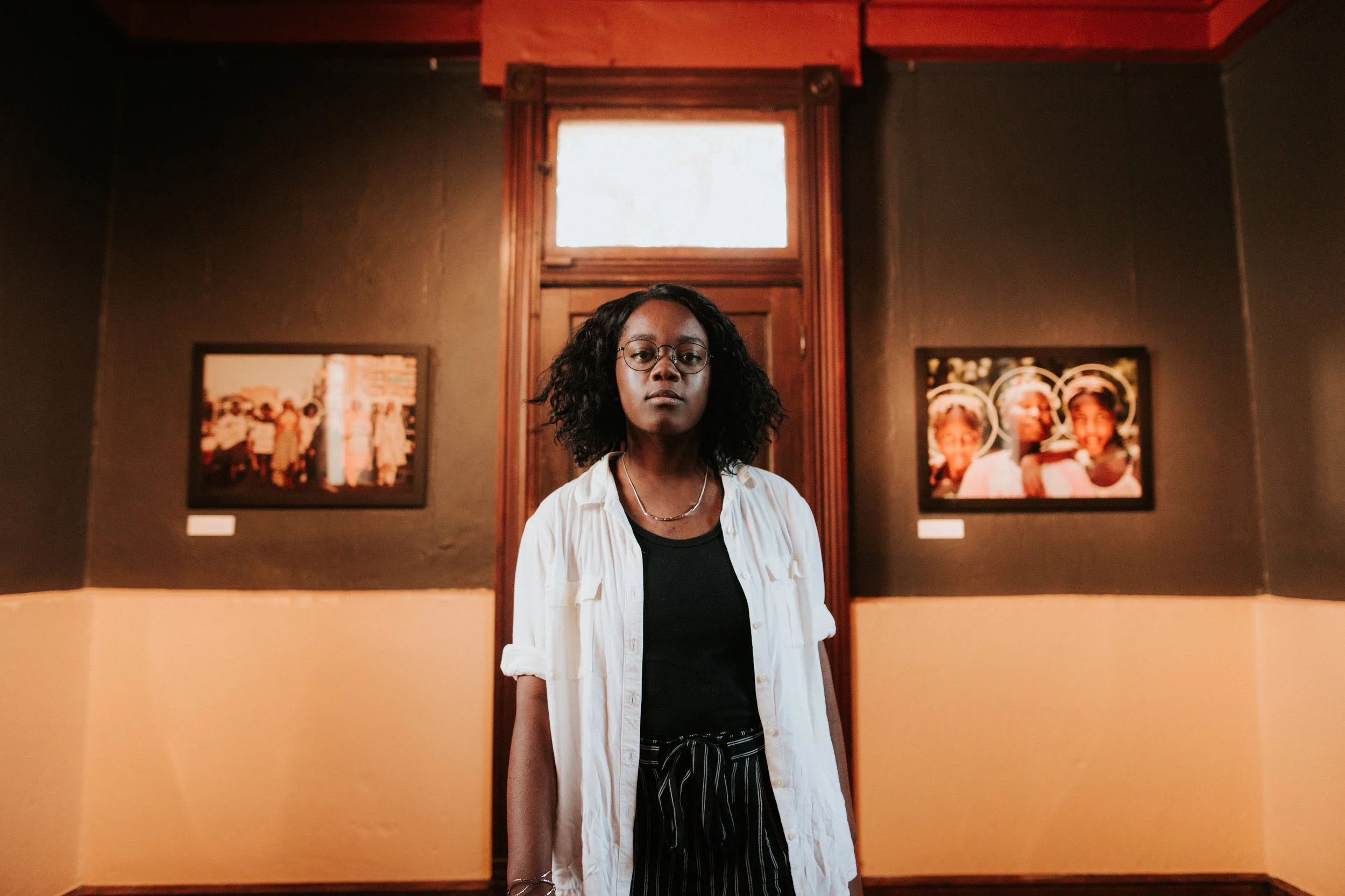
Meet Her Hands: Deborah Valcin
The second exhibition in Meet Her Hands, "Black Angels" by artist Deborah Valcin, opened on Thursday, July 19. Thank you to our collaborators at the Elisabet Ney Museum, our drink sponsors Austin Cocktails, our volunteers and partners for making this show possible.

Photo by Diana Ascarrunz
Meet Her Hands is a collaborative exhibition series, produced by #bbatx and the Elisabet Ney Museum every summer, featuring three Texan women artists. This season, we're proud to host animator and illustrator Alie Jackson, documentary photographer Deborah Valcin and conceptual artist Cindy Popp. Each artist will showcase work within the Elisabet Ney's collection for two weeks, and throughout the summer we'll explore sculptor Elisabet Ney's legacy, while writing a new history of women in the arts.
The second exhibition in Meet Her Hands, "Black Angels" by artist Deborah Valcin, opened on Thursday, July 19. Thank you to our collaborators at the Elisabet Ney Museum, our drink sponsors Austin Cocktails, our volunteers and partners for making this show possible.
MEET THE ARTIST BEHIND EXHIBIT TWO, "BLACK ANGELS:"
Deborah is a Haitian filmmaker based in Austin, Texas with five years of videography under her belt. She has a strong passion for screenwriting and has written multiple scripts, two of which became short films. Her passion for her home country of Haiti drives her to constantly come up with new story ideas and a strong desire to bring to light unique stories centered around the Haitian narrative and the Haitian Diaspora. Deborah's lifelong passion is to explore the fluidity of human condition, the complexity of the Haitian narrative, and the curious nature of emotion and how it manifests itself in art, in others, and in nature. Deborah Valcin also exhibited work at #bbatx's electronic music and digital arts residency at Native Hostels in May 2018.
ABOUT THE SHOW:
Hosted within the guest artist space at the Elisabet Ney Museum, Black Angels by Deborah Valcin repositions subjects of her documentary work as heavenly beings. "Black bodies in spaces—we belong. We have every right to exist. Ever since Sandra Bland, Trayvon Martin, and more, it’s been tiring. They demonize Black people. We aren’t demons and we deserve to not be seen as such. We are normal people who do everyday things, we deserve to be seen as people who are worthy of existing. My use of the halo is to say to the viewer that this person is worthy to be seen as a beautiful person. We shouldn’t be looked down upon. We are perfect in our imperfection." — Deborah Valcin

Photo by Diana Ascarrunz
COMING UP NEXT:
You can view "Black Angels" through August 3 at the Elisabet Ney Museum during museum hours. Our next exhibition in this series will present a series of works by conceptual artist Cindy Popp, opening August 9. You can get more details on the opening reception here.
MEET THE PRODUCERS, PARTNERS AND VENUE:
About #bossbabesATX, the producers: We exist to build educated and empowered creative communities at the intersections of sisterhood and space. Through event series, showcases and personal/professional development programs, we amplify and connect women-identifying artists, creatives and entrepreneurs. Since we've been in operation, we've provided a platform of visibility, outreach and financial opportunity to 300+ Texas-based women artists, 400+ women-owned businesses and women activists. We were selected by The White House to attend the United State of Women Summit in June 2016 and inducted into the City of Austin Hall of Fame in 2017. This production has been made possible in part by 2018 presenting partners Resplendent Hospitality.
About the Elisabet Ney Museum: In 1892, European portrait sculptress Elisabet Ney (1833-1907) purchased property in Austin, established a studio named Formosa and resumed her career as a noted sculptor of notables. At Formosa, Ney sculpted legendary Texans, among them Stephen F. Austin and Sam Houston. Ney also assembled at her American studio portraits of European notables, including King Ludwig II of Bavaria, Otto von Bismarck, Arthur Schopenhauer and Jacob Grimm rendered from life as a young artist in Europe. At the turn of the 19th century, Elisabet Ney’s studio became a gathering place for influential Texans drawn to “Miss Ney” and to the stimulating discussions of politics, art and philosophy that took place there. Following Ney’s death in 1907, her friends preserved the studio and its contents as the Elisabet Ney Museum and established the Texas Fine Arts Association dedicated to her memory.