
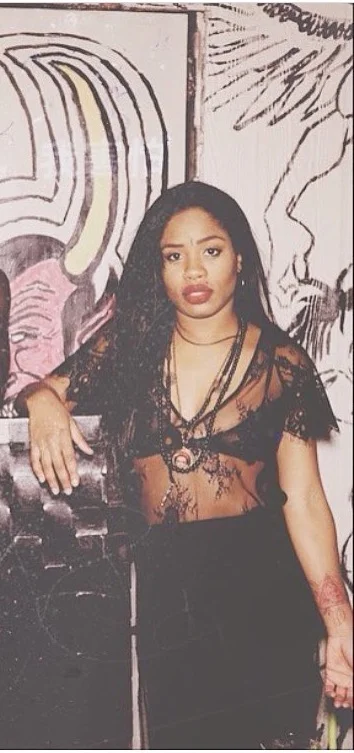
One of the Babes: Davonna Corzine
From a young age, Davonna Corzine has been interested in the metaphysical realm, learning the practice of tarot card reading — what she likens metaphysical therapy — in high school.
From a young age, Davonna Corzine has been interested in the metaphysical realm, learning the practice of tarot card reading — what she likens metaphysical therapy — in high school. She now shares that tradition with other babes throughout the city, helping them to find closure or to put their mind at ease, and reminding them to always reinvent themselves.
Learn more about Davonna's passion for her craft below.

What inspired you to start working in the field/Industry? Did you have any role models or learn from someone, in particular?
Coming from a Creole background I've always been intrigued by the metaphysical realm and practices. My uncle introduced me to palm reading at a very young age. Throughout high school I began to further my research in tarot/palm reading and different forms of holistic healing.
Do you have any tidbits of advice for people with passions, in general?
Be fearless and stay open-minded and innovative. Always reinvent yourself and remember your greatest attributes can always be improved upon.
What have been your favorite moments of creativity (possibly a time when a burst of creative energy produced something you could have never expected, etc.)?
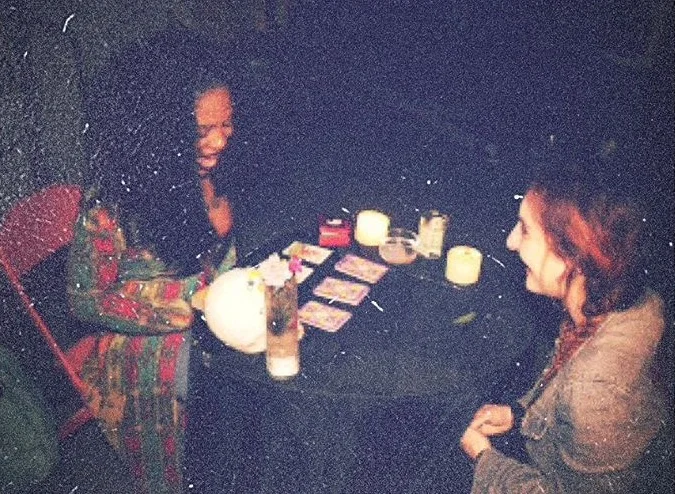
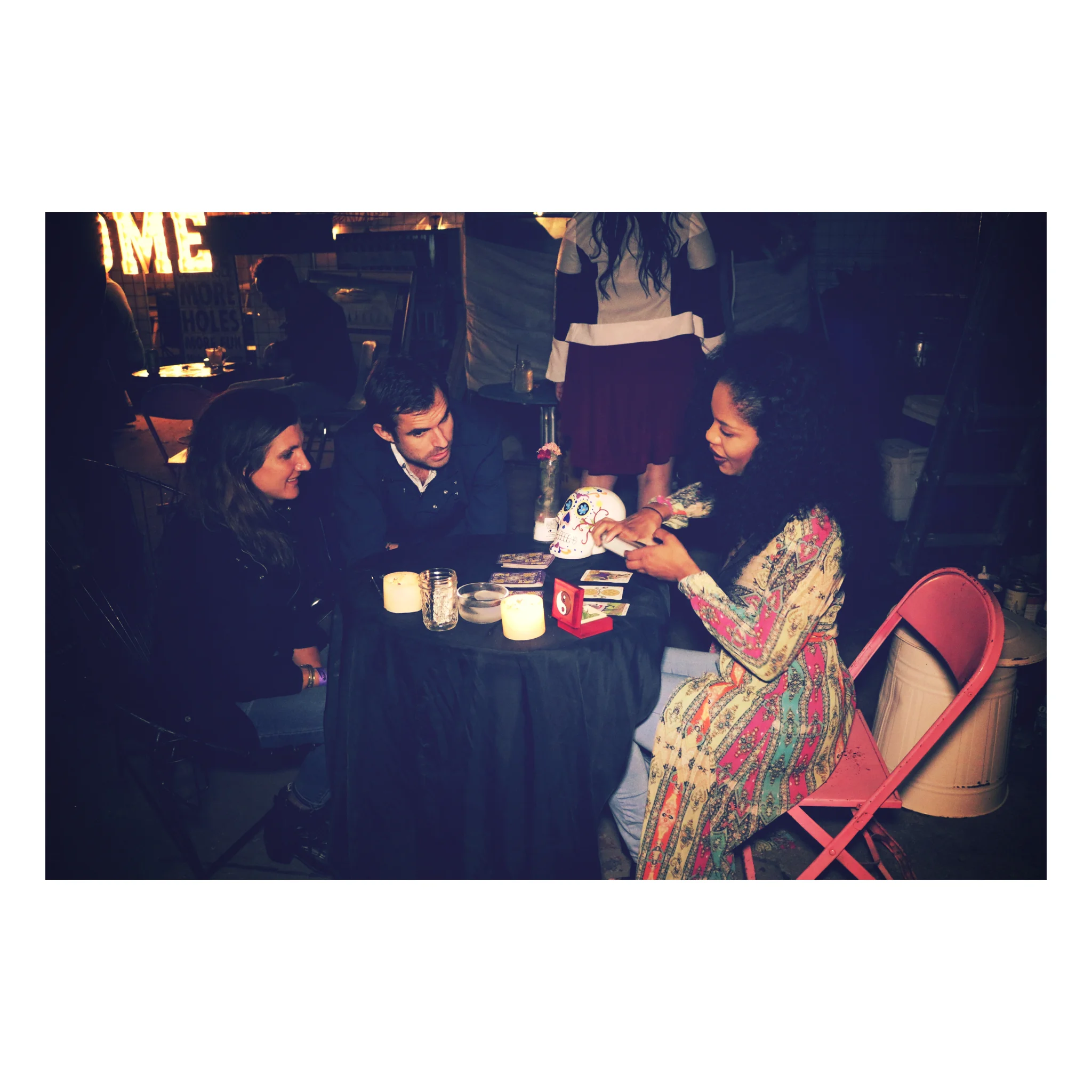
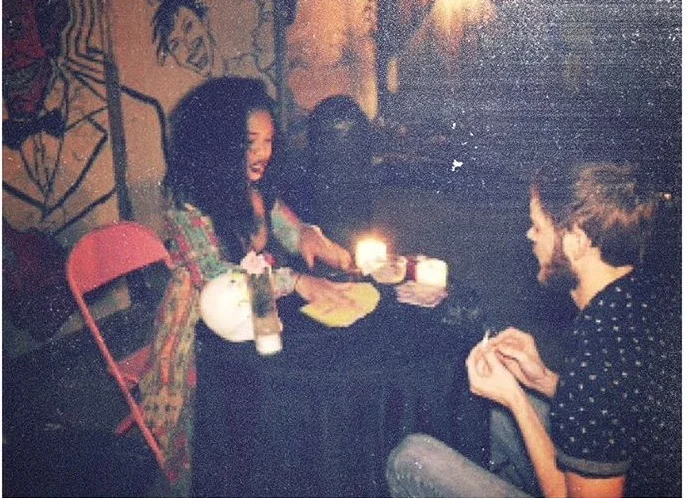
When I can give someone a sense of closure or put their mind at ease with a simple pull of a card.
What have been your most challenging moments in your career, thus far?
Trying to get people to understand the true meaning, purpose and history of tarot reading. Getting people to understand that it isn't “black magic” or “witchcraft” — more like metaphysical therapy.
What's your day job (if this business isn't your day job)?
Teacher.
When you're discouraged, what do you run to or away from?
I run away from social media. Being able to see the whole world in my hands makes it easy to compare and create unrealistic expectations based on others reality.
Your favorite band at the moment:
Beyoncé.
Your favorite book at the moment:
Kama Sutra.
Your local Austin gem (can be a product, place, etc.):
Nature's Treasures.
Your social media handles:
Instagram: @womanifesto
Online store: solarisHolistics.bigcartel.com
Email: solarisreadstarot@gmail.com
Sarah Eckett of Daisy Natives Talks Feminism, Commerce
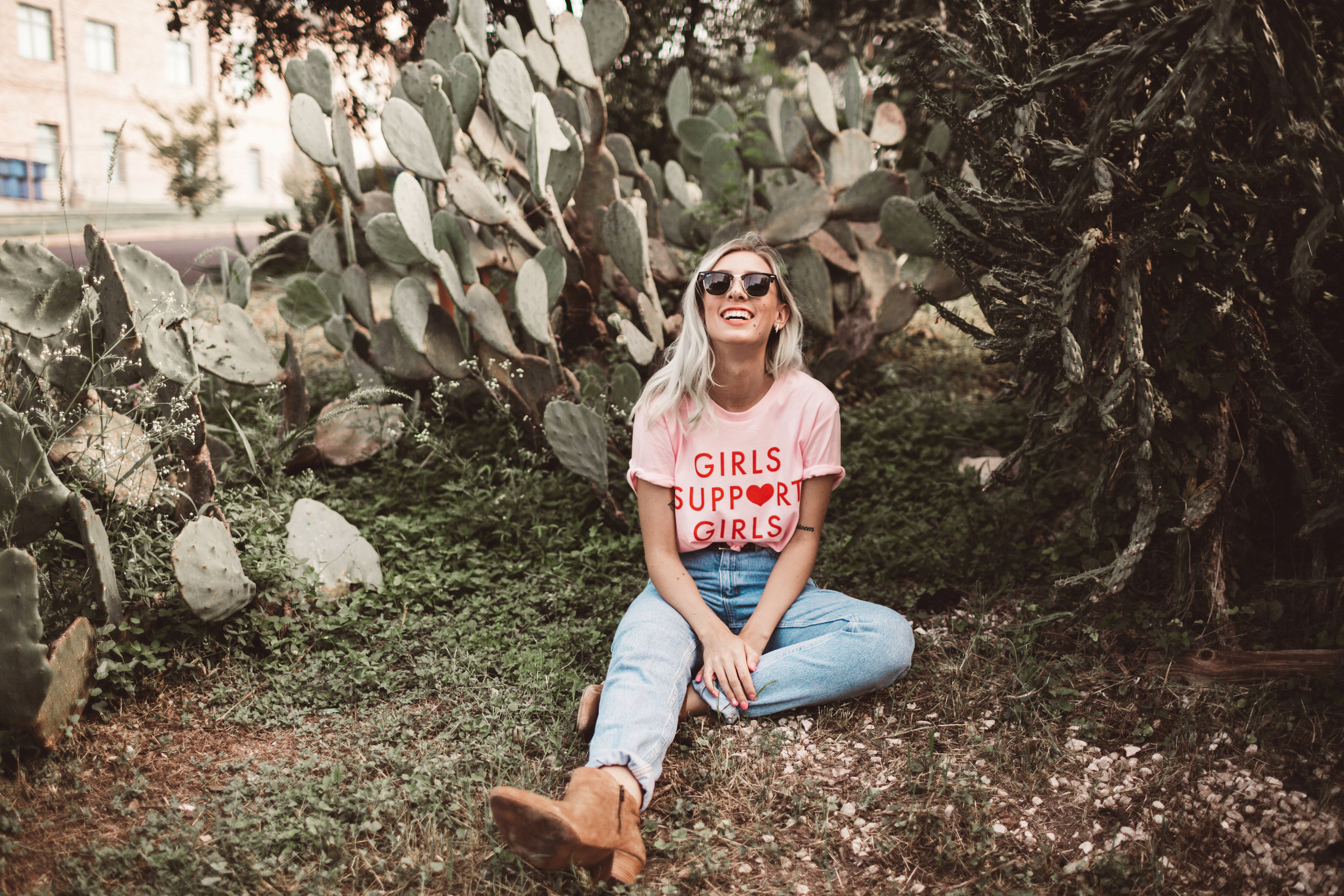
Available in a wide array of colors, Daisy Native's "Girls Support Girls" shirt could be seen across women's marches in January, worn as a sign of solidarity for all women.
Even if you're not familiar with Austin-based brand "Daisy Natives," a line of simple, but adorable, quip-heavy shirts, you'd probably recognize some of its designs from across your Instagram feed — specifically the "Girls Support Girls" tee likely sported by your favorite girls. Available in a wide array of colors, the shirt could be seen across women's marches in January, worn as a sign of solidarity for all women.
Sarah Eckett, the brand's owner, says the tee was never meant to be political, but became so in the wake of the marches and the current political climate.
"It became a statement that says: I’ll march with you, I’ll cry with you, I’ll protest with you, I’ll get angry with you, I’ll help you fight the patriarchy."
Likewise, politicizing brands has become en vogue, with more girls supporting girl-owned businesses and opting out of purchases from businesses they don't believe in.
Below, Eckett discusses merging commerce with her beliefs, plus tells us where she finds the inspiration for all of shirts' delightful sayings.

The Daisy Natives brand seems fun and playful, but it also has a commitment to creating products for “the ones who have too many revolutionary ideas keeping them up at night.” How do you feel that’s incorporated into the brand? Has it always been a part of the brand or is it a recent addition?
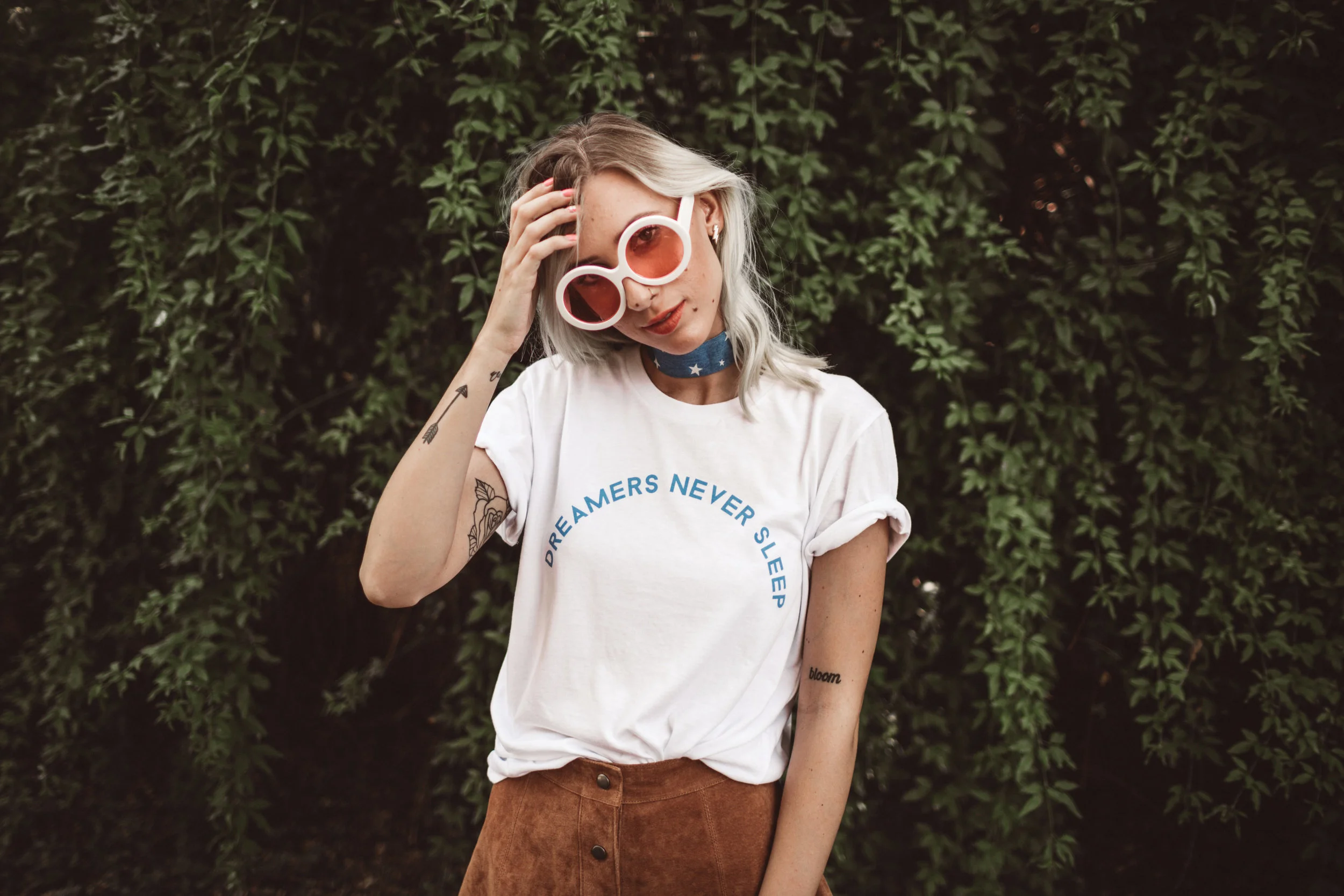
“Dreamers Never Sleep” was actually my first tee shirt idea and I think that has sculpted the mindset I have in everything I do. “What’s my next bestseller?”, “How about this color scheme?”, “I wonder if she’d be down to collaborate?” are questions that constantly keep me up at night. I’m always trying to better myself and my brand and the future of this world because why not?
How do you approach the intersection of commerce (obviously, Daisy Natives is a business) and your belief set (from your blog, it seems like you also want Daisy Natives to stand for freak flag-flying and something more than just retail)?
It’s always been incredibly important to me to be my unapologetic, colorful, silly, weird self. I think that’s helped grow my brand organically. People find comfort in weirdness and imperfectness.
In the past few years, and especially since the election, it seems that people are more cognizant about where they spend their dollars (people boycotting Uber following the travel ban, businesses dropping Ivanka Trump’s clothing line, etc. ). As a business owner, how do you feel about this shift and do you feel a responsibility to let your viewpoint/your brand’s viewpoint be known?
I absolutely agree. Thankfully it’s becoming more normalized for brands to be so open about political standpoints (Teen Vogue is killin’ it) and I think that’s really important. It’s a breath of fresh air to know that there are actual people with beliefs behind these brands and businesses.
How do you choose which phrases to use on your tees? What’s the process like?
I find inspiration everywhere (late night phone dates with long distance friends, weird things my husband says, boutiques around Austin, of course Instagram and Pinterest, and yes, even food). There’s an ongoing list of ideas in my phone, but don’t get me wrong, there are A LOT that I look at today and think “What the hell?!”. Designing is definitely my favorite part, though.
We saw a lot of your shirts across women’s marches in January. Why do you think your particular brand became so popular?
That weekend was the craziest thing. I think it just comes down to solidarity. After the women’s march, “Girls Support Girls” evolved into something more. It became a statement that says: I’ll march with you, I’ll cry with you, I’ll protest with you, I’ll get angry with you, I’ll help you fight the patriarchy. Although I never intended this shirt to be political, I am thankful that it has found its voice.
One common critique of the current feminist movement is that it prioritizes a kind of aesthetic over real action. (In some ways, I think this has changed since the election). What are your thoughts on that critique? Do you think it’s valid/invalid?
Feminism has always been about action over aesthetic, but due to recent political events it has turned into a necessity. Seeing so many women take action through protesting and donating and vocalizing their beliefs through social media just goes to show you that feminism is not just “cool”, it’s a movement that is here to stay.
2016 Babe of the Year: Adrienne Dawes
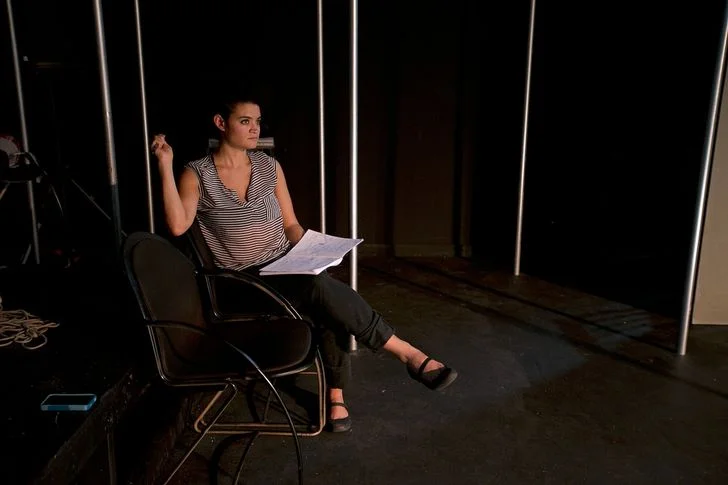
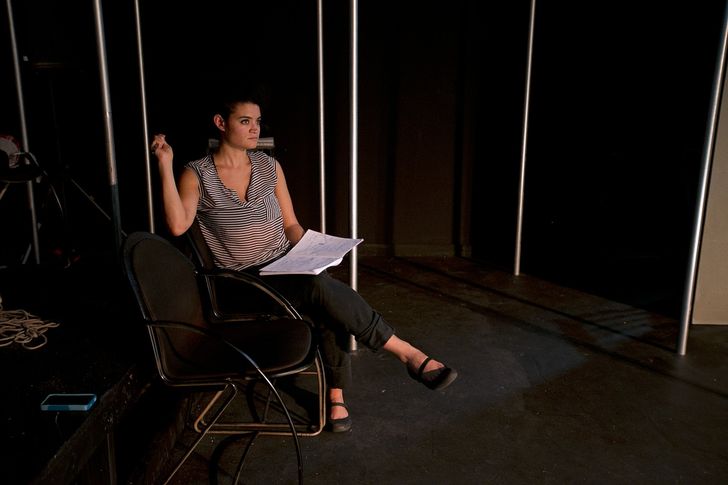
As Adrienne Dawes tells it, 2016 was a super crazy year for the multi-hyphenate playwright, director, producer, and all around creative force. In addition to writing and/or producing three sold out productions last year — Denim Doves, Love Me Tinder, and Doper than Dope — Dawes also ran the show at Heckle Her, an Austin-based production company committed to original comedies featuring people of color.
In the first few months of the new year, we're celebrating the babes who helped buoy our community in 2016 with their inspiring ambition, work and success.
As Adrienne Dawes tells it, 2016 was a super crazy year for the multi-hyphenate playwright, director, producer, and all around creative force. In addition to writing and/or producing three sold out productions last year — Denim Doves, Love Me Tinder, and Doper than Dope — Dawes also ran the show at Heckle Her, an Austin-based production company committed to original comedies featuring people of color.
Though Dawes is currently in Oklahoma as part of the 2017 class of the Tulsa Artist Fellowship, she hopes that 2016 won't be the last that Austin sees of her and her production company — we hope so as well.
Where does the drive to do what you do — even when the struggle bus pulls up — come from?
I think a lot of what drives my hustle is that I've had an opportunity to meet and work with so many incredible performers. I love watching them work and I love watching an audience watch them perform. So even though my job requires me to do some really unpleasant, uncomfortable, and often tedious things, it's all about that magic moment when I can see the audience fall a little bit in love with a performer or a performance for the first time. It is a pretty powerful moment of connection that hits me really hard, whether I'm the writer, director or producer. I hustle for those moments.
What have been your favorite moments of creative energy this past year?
This year has been super crazy for me . . . I think each and every month had a favorite moment (or two) of creative energy. I was very full — my plate overfloweth. I think my absolute favorite moment happened very early on in February when I had 2 sold out performances of 2 totally different shows (Denim Doves; Love Me Tinder) that I worked on in 2 totally different capacities (playwright; director-producer) play in the same venue at the same time (Salvage Vanguard mainstage and studio theater). I stood in the lobby in a specific place so I could hear both audiences' reactions during the shows. It was so crazy to be able to hear the laughter of one room crossfade into the laughter of another room. That's my happy place. You can bury me right there.
What have been the most challenging moments throughout your career and perhaps in this year in particular?
I repeat: This year has been super crazy for me . . . every happy creative moment this year was matched with some sort of personal tragedy or loss. Usually those feelings have some distance or time between them . . . so to feel that overlap or overlay of big emotions all the time felt really, really weird.
I think that with my career overall, it will always be a challenge for me to keep focused on making the work and not let myself get too distracted by responses to the work. I say that about both rejection/failure AND recognition/success. While the latter is WAY friendlier than the former (yes I will take a trophy over a template rejection letter ANY DAY), I want to keep focused on what is most important to me: making new and interesting work with the people I love.
What's the one thing you're most proud of accomplishing this past year?
Hopefully 2016 is not my final year of creating work under Heckle Her here in Austin . . . but if it is, I will definitely look back and feel extremely proud of what we created. Our shows were made and received with so much love. I continue to feel really grateful that I got to have these experiences and the great company I got to share it with.

Ask a Babe: How Do I Save for Retirement As An Entrepreneur?
Investment advisor Sara Glakas of Black Barn Financial talks retirement savings for entrepreneurs and the self-employed.
Introducing "Ask A Babe," the #bossbabesATX advice column. We're kicking this off with valuable wisdom from investment advisor Sara Glakas on retirement savings for entrepreneurs and the self-employed. For those seeking future advice or for those looking to dispense it, please email blog@bossbabes.org.

Dear Babe,
One of the biggest hurdles to finally taking the plunge and starting that business or going full-time freelance is an uncertain future—specifically an uncertain financial future.
The common wisdom is to save, save, save to both get through the lean times and to be prepared for any unforeseen circumstances that may arise.
But if we’re tucking away dollar bills for some future rainy day, how are we supposed to save enough for retirement, as well?
And while we’re on the subject, what should we be doing about retirement? Is there an option that’s ideal for entrepreneurs and the self-employed?
With gratitude,
#bossbabesATX
Dear #bossbabesATX,
One of the best retirement options for entrepreneurs and self-employed freelancers is the Roth IRA.
From my experience, entrepreneurs tend to prioritize their emergency fund over their retirement account, especially when they are just starting out. Makes sense, right? If your business hits a slow patch, you need money available to ride it out.
But in finance, time is very valuable. If you put a dollar in the stock market today, it could be worth over $4 in fifteen years and it could be worth over $17 in thirty years. You need to start as many dollars as possible on their thirty-year journey.
For me, the Roth IRA is a great way to save for retirement while maintaining access to funds. The Roth has a special feature that allows you to put money aside for retirement, but with additional flexibility to withdraw your contributions if you really need to.
If you need to dip into your Roth before the official IRS retirement age of 59 ½ -- whether for an emergency, to pay expenses or to expand your business -- you have the option to take out your contributions (the money you put into the account) with no penalties or taxes. If you don’t ever need the money, you can keep it invested for retirement.
Individuals with annual income of less than $118,000 and married couples with annual income of less than $184,000 qualify to put up to $5,500 a year into a Roth IRA. If you’re over age 50, congrats, you can put in $6,500 a year.
It only takes about 15 minutes to open a Roth IRA and pick your investments. I recommend Vanguard as a great place to start. They do not charge account opening fees and their mutual funds have very low expenses. They’ll also pick up the phone if you need to call them.
If you don’t want to do it yourself, you need to hire an investment advisor to do it for you, just like you outsource other professional services for your business. Look for an advisor who is a fiduciary (someone who has the legal obligation to put your interests in front of their own).
The absolute, number one most important thing is to start. Don’t put it off another year. Every year that you lose is gone forever, and your future self could end up with much less money in retirement. Whether you DIY or outsource it to a professional, start your retirement preparation today.
Sincerely,
Sara Glakas, of Black Barn Financial
[P.S. A Note from the #bossbabesATX: In addition to being a Registered Investment Advisor and fiduciary, Sara also runs Austin Women’s Investing Group, a Meet-up group for women who want to learn more about investing, stocks, and financial literacy. You can find her practice at blackbarnfinancial.com, or learn more about Austin Women’s Investing Group here.]
2016 Babe of the Year: Candice Digby
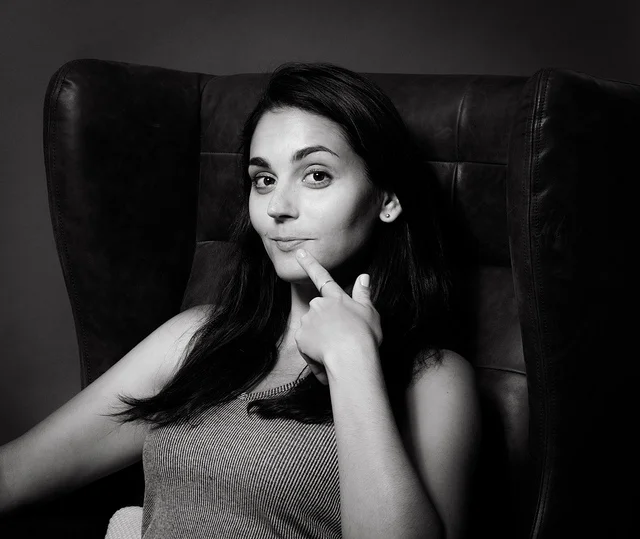
Even if at times it may seem like it, not everyone in Austin is an aspiring musician, painter, maker, creator, etc. Knowing that, Candice Digby has focused her own talents — creative thinking and a penchant for community building — to help those who are creating art in this city (as well as those who want to be) thrive.
In the first few months of the new year, we're celebrating the babes who helped buoy our community in 2016 with their inspiring ambition, work and success.
Even if at times it may seem like it, not everyone in Austin is an aspiring musician, painter, maker, creator, etc. Knowing that, Candice Digby has focused her own talents — creative thinking and a penchant for community building — to help those who are creating art in this city (as well as those who want to be) thrive.
In 2016, she helped orchestrate the city's first Design Week, continuing the theme of arts education that began with her position as an event organizer and marketing producer at General Assembly. Whether through workshops, events or community engagement, Digby will continue to help to sustain the Austin arts scene in 2017 and for that we're proud to have her as one of the babes.

Photo by Dylan O'Connor
Where does the drive to do what you do — even when the struggle bus pulls up — come from?
My drive is to help build creative communities and to create platforms for artists to succeed. Purpose makes work fulfilling and keeps you trucking. We're not all incredible musicians, painters, architects, etc., but the arts are what I value in life — they are what make it interesting. I'm a creative thinker, that's what I've got — so I use it to create resources for artists and to help foster community.
What have been your favorite moments of creative energy this past year?
Design Week! I had the great fortune of helping bring Design Week to Austin for the first time with two other women I respect a great deal. Bringing design and artist communities together across the city was a new challenge. I'd also say, working with my Partner Lead (Katy Stover) in 2016 was so energizing. She gets me, and she's a verbal processor like I am, so when we rift on an idea, it goes from 0 to 60 in minutes, and I love that ability to build off each other. I think when you have to find the other Boss Babes and people who help you thrive, they push you to be better and together you're capable of so much more.
What have been the most challenging moments throughout your career and perhaps in this year in particular?
Feeling without direction in transition. I came from a background in music and corporate events before that. I didn't think I ever wanted to leave the music industry once I landed there, but I realized quickly at General Assembly that education is an even better platform for providing skills and resources to help sustain the arts. You've gotta keep your mind open and look for direction when it comes — even though it may seem like a tangent. If you have purpose in mind, it'll take you full circle. I've also learned there is great value in those periods of "lost."
What's the one thing you're most proud of accomplishing this past year?
Design Week for sure. It's one of those things we hope is just the start of something bigger for the design community and our city, and I can't wait to see how it evolves in the future.
Meet February's URL Resident Artist: Dawn Okoro
Boss Babes ATX Resident Artist Dawn Okoro talks with us about self-reflexivity, what inspires her, and her process (lots of "A Seat at the Table" on repeat).

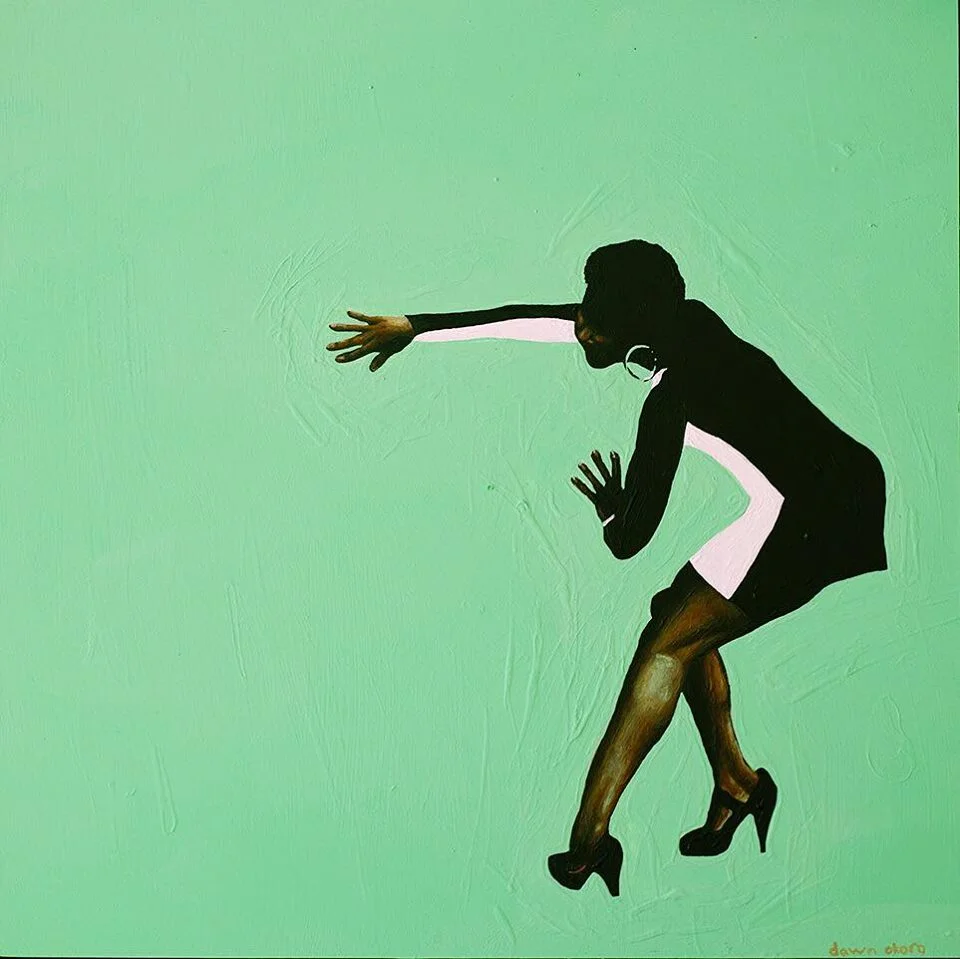
"Embrace The Power," acrylic on wood, 12x12 inches
At the February #bossbabesATX meet, framing our consistent, affirmative refrain ("Stop! You are smart. You are strong. You are independent. Carry on!") printed across specially made posters was a black woman posed in heels and hoops, a figure created by Dawn Okoro, an evocative painter and our first-ever resident artist.
The black female figure (taken from Okoro's piece "Embrace the Power," featured above) and her proximity to a message of power are constants throughout Okoro’s entire body of work — in part because her subjects are posed incredibly powerfully, and in part because of the way Okoro has taken control of, and made her own, the homogenous, imposed aesthetic of fashion photography.

"Misogynoir/Resistance," oil and acrylic on canvas, 36x36 inches
When she first started incorporating fashion photography into her work, Okoro would recreate the images that inspired her by painting the white models black.
Now, she controls her own imagery from the top to bottom, taking her own photographs of black models, rendering them in paint and full color, and redefining the “aspiration” she believes fashion photography sells.
It’s that aspect of her work that makes it feel incredibly current and relevant at a time when women as a group are taking a larger role in the shape of their own narrative.
This year, she'll expand on her constant themes of power, pop culture, and fashion imagery using video, a medium that will allow her to play with both movement and sound, in addition to the visual.
You can view more of Dawn's work by visiting her website or by following her on Instagram. Below she talks with Boss Babes ATX about self-reflexivity, what inspires her, and her process (lots of "A Seat at the Table" on repeat).

How do you know you're an artist?
I have wanted to be an artist since I was a child. When I was younger I thought that I had to reach a certain achievement or milestone to be considered an artist. But eventually, I realized that aside from creating, for me to be an artist, I needed to declare that I was an artist. From then on, when people asked me what I did, I said “I am an artist.” That helped give me the confidence to back up what I was declaring.
Your work is heavily influenced by pop culture. What works were formative for you and/or continue to influence your work today?
One of my biggest influences is Andy Warhol. His work not only commented on popular culture, but it became a part of pop culture. Another influence is Richard Avedon for his iconic fashion photography. I also draw inspiration from Barkley Hendricks; he makes bold, colorful portraits.
What is it about fashion and fashion photography that appeals to you as a source of inspiration? What about the black female body?
I love fashion in general as a means of self expression. Fashion photography is not just about showing clothes, but selling an aspiration. I am interested in questioning those aspirations and how they are presented. I would lose myself in fashion magazines as a child. But I remember seeing few models that looked like me. That is what drew me into focusing on the black female body.

"Calm," acrylic on canvas, 24x24 inches
Tell us about your process: you photograph models and then paint those photographs. Where does the inspiration for your photos come from? Are you just playing when you step behind the camera or do you have an idea of the look and feel you want for your next piece or series?
I usually have an idea of the look and feel of the paintings before I step behind the camera. During the photoshoots I will capture something that I hadn’t planned, and that will end up in a painting. After the photoshoot, I will look through the photos several times trying to figure out which ones would be best manipulated into a painting.
Do you listen to music while working? What kind? What is your studio space like?
I do listen to music while working. For one of my new paintings I pretty much had Solange’s “A Seat at the Table” on repeat. When I need more space, I work in my home studio (my 2.5 car garage). That is where my photoshoots take place. Other times I just set up my easel in my living room and paint there.

"Erasure," oil and acrylic on canvas, 36x48
Tell us about self-reflexivity and how it informs your work.
I am interested in the circular relationship between cause and effect. Our environment helps shape us, but at the same time, we have the ability to impact the world around us. Through my work I hope to challenge the aspirational images that are often used in fashion photography and other advertisements. But that goal is complicated by how those images have affected me over the years.
You’ve mentioned that your work is influenced by magazine covers and fashion. Black bodies are not as often on magazine covers as white ones. Do you see your work at all as a response to that? Is it intentional or less conscious and more like a survival instinct?
When I first started using fashion photography in my artwork, I would often recreate a photo I saw — by painting — but I would make the white model black. This was something I did initially as a gut reaction. Now it is something that I do intentionally because it feels right, especially if my work is to be a reflection of myself.
So much of being a creative these days is also about making sure that your work is seen. How have you approached the current art landscape on social media/the Internet? Are you appreciative of that outlet? Or how do you feel about it?
Honestly, the internet is my main outlet for displaying my work, and has been since the Myspace days. Social media platforms have been the catalyst for me meeting other artists and collectors and even getting shows. I like being able to post a new work and having it immediately seen by people (even if it’s just a few dozen, lol).

"Free," oil and acrylic on canvas, 20x20 inches
On your social channels, you've announced that you’re introducing new work with video elements. What interests you about video and what will you be able to accomplish with it that you have not been able to with 2D work?
I have been interested in finding a way to make my paintings sort of come to life. My next project includes a video, as well as paintings based off that video. Video gives me more elements to work with — I have sound and motion.
How has your work evolved since your first began to the present? How do you foresee it evolving in the next few years? Are there any constant themes?
My work has evolved a lot since I first began. I started off painting images from other photographers’ fashion editorials and tweaking them. Now I take my own photographs and therefore have more control over the source images I work from. One constant theme in my work is woman being powerful.
2016 Babe of the Year: Ezra Edwards
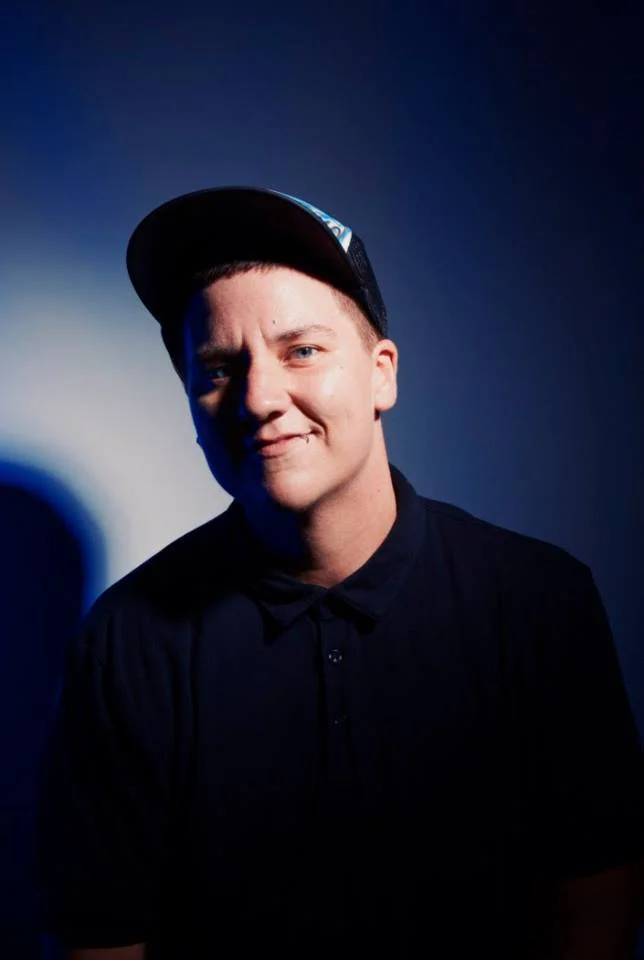
Driven by a genuine need to help people and a commitment to the non-9-to-5 lifestyle, Ezra Edwards — perhaps better known as DJ GirlFriend — has been creating spaces for the Austin queer community since 2011.
In the first few months of the new year, we're celebrating the babes who helped buoy our community in 2016 with their inspiring ambition, work and success.
Driven by a genuine need to help people and a commitment to the non-9-to-5 lifestyle, Ezra Edwards — perhaps better known as DJ GirlFriend — has been creating spaces for the Austin queer community since 2011. Responsible for events from Neon Rainbows to Middle School Dance Party to gAyCL, Edwards has leveraged an ability to throw a damn, good party into opportunities to raise funds for organizations including SafePlace, Out Youth, Equality TX, and Planned Parenthood.
For that (and maybe also for the Beyonce vs. Rihanna dance party we can credit GirlFriend for), we're proud to have Edwards as part of our community on into 2017.

Photo by Celesta Danger
Where does the drive to do what you do — even when the struggle bus pulls up — come from?
My drive comes from the desire to be my own boss. I realized a few years ago that I'm a "non-9 to 5'er."
Being able to set my own hours and have has much creative freedom as possible keeps me going. There's just no other way for me. The idea of self-actualization pushes me as well. To be able to live out my full potential as a human being is my ultimate goal. Also, I just feel the need to help people.
What have been your favorite moments of creative energy this past year?
I can usually fly solo when it comes to creativity however I've learned that collaborating and opening up my ideas to others (as well as staying open to their ideas) seems to fuel the fire and paves the way for great things to happen. Collaborating with the Boss Babes and Equality Texas this past year on the Peaceful Pulse event was a big turn. Not only were we sharing ideas and making them happen, a lot of people in the community (and not just the queer community) really stepped out and showed up. It's the moment when you see your ideas playing out in front of you that are the most rewarding, especially when you see how they help people come together.
What have been the most challenging moments throughout your career and perhaps in this year in particular?
Honestly, a challenge this year for me was being distracted by things and people that tried to detour me from my goals. When you can shake those distractions, that's when things really start to happen and come together. Focus is key.
What's the one thing you're most proud of accomplishing this past year?
Well aside from being one of the Boss Babes Babes of the Year (!), I would say being nominated for Best DJ in the Chronicle's Best of Austin alongside two of the best DJs in town was quite an honor, even though I didn't win. It felt good to be considered among their ranks. Also, I would say maintaining a consistency in the events that I produce. People know when they come to a GirlFriend event they're going to have a good time!
2016 Babe of the Year: Rebecca Ruiz Acosta
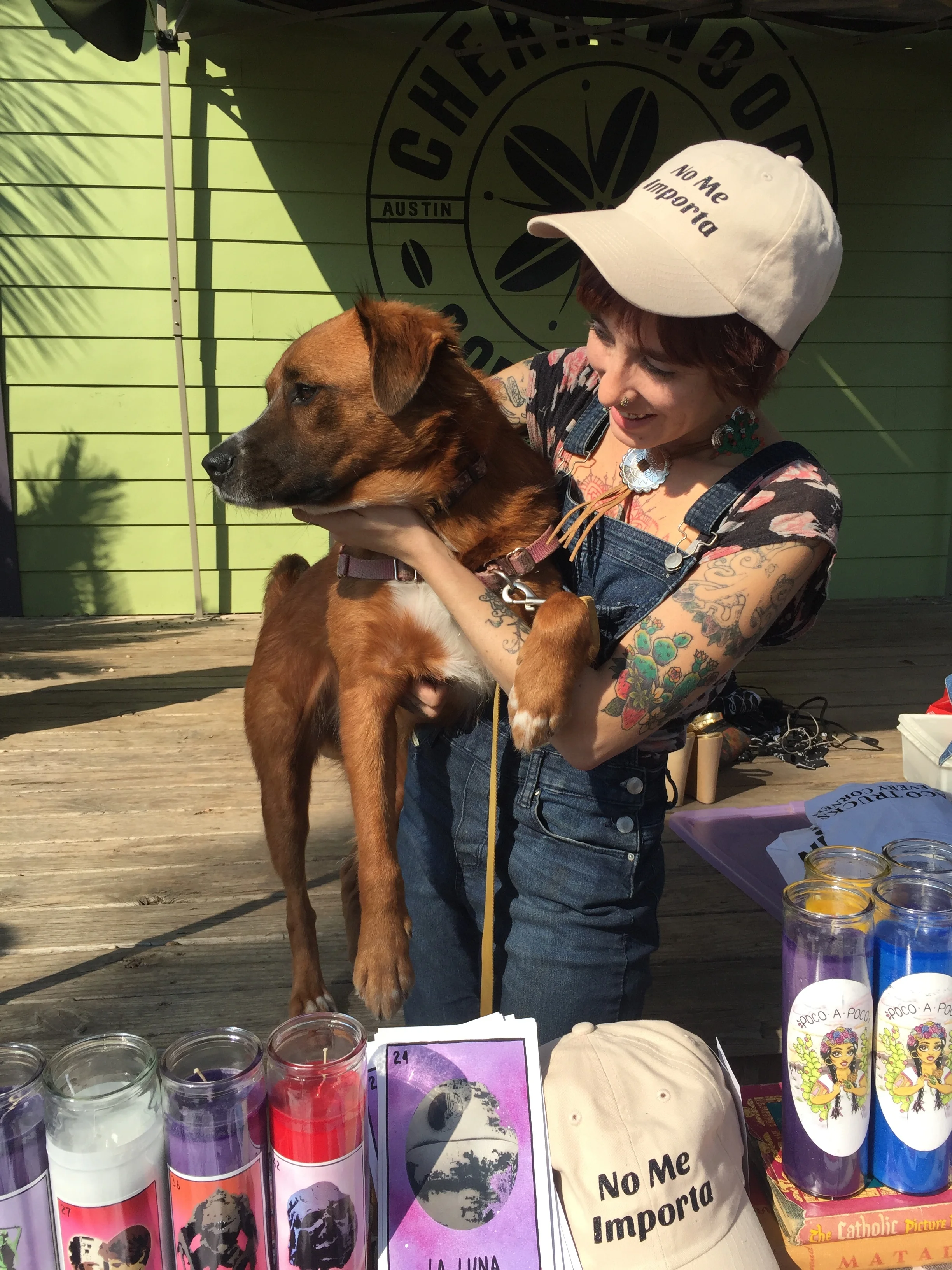
Taking her business' name — "Poco A Poco," or little by little, in Spanish — to heart, Rebecca Ruiz Acosta has built the project into so much more than her original vision, working step by step to create a space for the misfits and the marginalized, the revolutionarias and rebeldes
In the first few months of the new year, we're celebrating the babes who helped buoy our community in 2016 with their inspiring ambition, work and success.
A little more than a year ago, Rebecca Ruiz Acosta was only dreaming of the business she would come to create — one that would combine her diverse interests while also exhibiting the pride she has for her culture and heritage.
Taking the business' name — "Poco A Poco," or little by little, in Spanish — to heart, Rebecca spent 2016 building the project into so much more than that original vision, working step by step to create a community for Latinx makers and creators through a series of pop-up markets.
In 2017, may she continue to inspire us to tackle the big things, little by little.

Where does the drive to do what you do — even when the struggle bus pulls up — come from?
The ultimate drive is my culture, home, and heritage. I'm a second generation Mexican American from the border, and there's this pressure to be "Latinx enough" — a feeling of not looking or acting Latina enough, not speaking fluent Spanish. Being both Mexican and American is a complicated thing, but a lot of people experience it. I'm so white passing that I could just exist as white and leave all my culture at home in El Paso, but I can't do that: A) Because I'm very proud of who I am and B) because most people of color don't have that luxury. I do what I do to support women-owned and minority-owned businesses, to reconnect to my culture, and to speak to and curate for young people who experience the same cultural struggles I do.
The ultimate struggle bus we are all dealing with right now obviously is our President Elect, his supporters, and what they represent in this country. But I am super driven to show that we as immigrants, children of immigrants, and grandchildren of immigrants are not going anywhere, and we're going to continue to celebrate our culture as loudly and vibrantly as we want.
What have been your favorite moments of creative energy this past year?
I always get so excited to find new collaborators to work with! But the most exciting thing is seeing their art, or holding their products for the first time. This time last year, I had NO IDEA I'd be collaborating with such amazing artists and makers! I figured maybe one or two people that I looked up to would let me carry their stuff, but now I've got a great lineup of wonderful people that I stock. Salsa for President, Gilded Nopal, Roman Martinez, Muneca Mia Mundo, & Nalgona Positivity Pride are some that I'm particularly thrilled to bring to Austin for our local Latinx community.
That would be the most exciting thing about building the Poco A Poco store — curating and planning markets is a little different. Having a successful market is the world to me! Finding awesome local businesses to invite to markets, seeing them succeed and make new friends, growing those relationships, giving back to the community and causes I care about — that's like having a birthday every month!
What have been the most challenging moments throughout your career and perhaps in this year in particular?
It's super difficult to feel like you've failed people — when a market doesn't succeed, when your vendors don't make money, when you have to compromise your own money to make up for it. It can be tough, discouraging, and flat out exhausting.
For the most part, I can keep my chin up and figure out a way to make it up to vendors, which might be irresponsible of me as a business owner — I'm not sure. My business is only a year old and I'm still figuring it out, but keeping a happy community is my passion, and it's way more fun.
I've also discovered that I can be way more trusting of people than I should be. You know, we want to give everyone the benefit of the doubt, and sometimes you've got to confront people when they've hurt you to protect yourself and your business. But for every person that's caused me grief in this little venture, there are dozens and dozens of amazing inspirational Chingonas around me to lift me back up.
What's the one thing you're most proud of accomplishing this past year?
My business is just under a year old. Last year over Christmas I sat in my sisters apartment and told my favorite cousin about my dream of creating a business fusing riot grrrl feminism, witchy punk aesthetics, and brown pride for young Latinxs. At that time I had no idea I'd be doing all of these pop ups — much less running my own! I figured I'd barely be making my debut sometime around now, actually.
I named the business Poco A Poco (little by little in Spanish) because I have chronic anxiety and depression and it can make even the smallest things like brushing your teeth and doing laundry seem impossible to accomplish. But my head thinks in Spanglish, and when I'd feel discouraged or overwhelmed, I'd tell myself "poco a poco, ok."
I'm proud of myself for getting started! And for realizing I don't need to be perfect or to get it all done at once. One day I started the Instagram, the next week I dabbled on the website, took some selfies in some products, contacted suppliers, contacted markets, and so on. It was all little by little and then it grew week by week until it is where it is now, and where we're heading. Having the realization that everything is done one step at a time, that self care is essential, and that I can grow this one step at a time is my proudest accomplishment.

Celebrate Black Herstory: A Salute To Our Icons

written by Jasmine Brooks
graphic design by Jasmine Brooks
February is Black History Month, and we've got plenty of reasons to celebrate! Today, meet some of our favorite icons in Black Herstory, each renowned and respected for blazing a trail in their fields—whether they're politicians, athletes, artists or activists.
Mae Jemison
“Don’t let anyone rob you of your imagination, your creativity, or your curiosity. It's your place in the world; it's your life. Go on and do all you can with it, and make it the life you want to live.”
On June 4, 1987, Mae Jemison became the first African-American woman to be admitted into the American astronaut training program. On September 12, 1992, Jemison finally flew into space with six other astronauts aboard the Endeavour on mission STS47, becoming the first African-American woman in space. During her eight days in space, she conducted experiments on weightlessness and motion sickness on the crew and on herself. In all, she spent more than 190 hours in space before returning to Earth on September 20, 1992.
Following her historic flight, Jemison noted that society should recognize how much both women and members of other minority groups can contribute if given the opportunity.
In recognition of her accomplishments, Jemison has received several awards and honorary doctorates.
Serena Williams
“The success of every woman should be the inspiration to another. We should raise each other up. Make sure you're very courageous: be strong, be extremely kind, and above all be humble.”
Serena Williams began intensive tennis training at the age of three. She won her first major championship in 1999 and completed the career Grand Slam in 2003. Along with her record-breaking individual success, Williams has teamed with sister Venus to win a series of doubles titles. In 2017, she won her 23rd Grand Slam title at Wimbledon, defeating her older sister Venus in the Australian Open. With her 23rd win, the tennis superstar surpassed Steffi Graf's record and captured the world's No. 1 ranking in single tennis play.
Proving to be much more than just a tennis star, Serena expanded her brand into film, television, and fashion. She developed her own "Aneres" line of clothing, and in 2002 was named one of People magazine's 25 Most Intriguing People. Essence magazine later called her one of the country's 50 Most Inspiring African-Americans.
Seeking to provide educational opportunities for underprivileged youth around the world, the tennis star formed the Serena Williams Foundation and built schools for children in Africa. In 2009, Serena and Venus purchased shares of the Miami Dolphins to become the first African-American women to own part of an NFL team.
Shonda Rhimes
“This moment right here, me standing up here all brown with my boobs and my Thursday night of network television full of women of color, competitive women, strong women, women who own their bodies and whose lives revolve around their work instead of their men, women who are big dogs — that could only be happening right now.”
Shonda Rhimes is the first African-American woman to create and executively produce a Top 10 network series—the medical drama Grey's Anatomy. She is also the creator of its spin-off, Private Practice, the political thriller Scandal and the legal whodunit How to Get Away With Murder. Before creating several award-winning series, Rhimes penned such film screenplays as Crossroads and HBO's Introducing Dorothy Dandridge.
Angela Davis
“It is no longer possible for various groups to live and function and struggle in isolation…While we may specifically be involved in our own particular struggles, our vision has to be that we understand how our own issues relate to the issues of others. My consciousness has grown so that when I speak and write, I make a point of discussing the need for understanding how Native Americans, Latinos, and other people of color are marginalized in this society.”
Socialist and former communist political activist and intellectual Angela Davis has addressed civil and women’s rights, poverty and peace, health care and prison reform since she first came dramatically into the public eye in 1970, when her activism in prisoners’ rights led to her arrest and trial on charges of kidnapping, conspiracy and murder. Davis’ imprisonment for over a year inspired the international “Free Angela” movement and her case became a symbol of the abusive power of the criminal justice system against minorities. Acquitted in 1972, Davis has had a long career as a popular lecturer and professor, writing and fighting for revolutionary social and political reform in the interests of the repressed.
Maya Angelou
“My mission in life is not merely to survive, but to thrive; and to do so with some passion, some compassion, some humor, and some style.”
Maya Angelou was a writer and civil rights activist, known for her 1969 memoir, "I Know Why the Caged Bird Sings," the first nonfiction best-seller by an African-American woman. In 1971, Angelou published the Pulitzer Prize-nominated poetry collection "Just Give Me a Cool Drink of Water 'Fore I Die." She later wrote the poem "On the Pulse of Morning"—one of her most famous works—which she recited at President Bill Clinton's inauguration in 1993. Angelou received several honors throughout her career, including two NAACP Image Awards in the outstanding literary work nonfiction category, in 2005 and 2009. She died on May 28, 2014.
Michelle Obama
“You see, our glorious diversity—our diversity of faiths, and colors and creeds. That is not a threat to who we are; it makes us who we are.”
Michelle Obama attended Princeton University, graduating cum laude in 1985, and went on to earn a degree from Harvard Law School in 1988. Following her graduation from Harvard, she worked at a Chicago law firm, where she met her husband, future U.S. president Barack Obama. As first lady, Obama became a role model for women as she focused her attention on current social issues, such as poverty, healthy living, and education.
Michelle is one of only three first ladies with a graduate degree. You can read her dissertation titled "Princeton-Educated Blacks and the Black Community" here.
Laverne Cox
“It is revolutionary for any trans person to choose to be seen and visible in a world that tells us we should not exist.”
Laverne Cox is an Emmy-nominated actress who can be seen in the Netflix original series "Orange is The New Black" where she plays the ground-breaking role of trans inmate Sophia Burset.
Laverne’s work as an actress and advocate landed her on the cover of TIME Magazine as well as an Emmy nomination for “Outstanding Guest Actress in a Comedy Series.” Laverne continues to break boundaries and make history with accolades including a SAG Award for “Outstanding Performance by an Ensemble in a Comedy Series,” a Critic’s Choice nomination for “Best Supporting Actress,” and a NAACP Image Awards nomination for “Outstanding Supporting Actress in a Comedy Series.”
Laverne is also currently producing a documentary titled "Free CeCe" in order to heighten visibility and awareness for CeCe McDonald, a transgender woman who was controversially sentenced to 41 months in prison for second-degree manslaughter after allegedly defending herself against a racist and transphobic attack. The documentary will focus on McDonald’s case, her experiences while incarcerated in a men’s prison and the larger implications of her case for the transgender community.
Rosa Parks
“The only tired I was, was tired of giving in.”
Civil rights activist Rosa Parks refusal to surrender her seat to a white passenger on a Montgomery, Alabama bus spurred a city-wide boycott. Following the boycott, the city of Montgomery had no choice but to lift the law requiring segregation on public buses. Rosa Parks received many accolades during her lifetime, including the NAACP's highest award, the Spingarn Medal.
Although she had become a symbol of the Civil Rights Movement, Rosa Parks suffered hardship in the months following her arrest in Montgomery and the subsequent boycott. She lost her department store job and her husband was fired after his boss forbade him to talk about his wife or their legal case. Unable to find work, they eventually left Montgomery; the couple, along with Rosa's mother, moved to Detroit, Michigan. There, Rosa made a new life for herself, working as a secretary and receptionist in U.S. Representative John Conyer's congressional office. She also served on the board of the Planned Parenthood Federation of America.
In 1987, with longtime friend Elaine Eason Steele, Rosa founded the Rosa and Raymond Parks Institute for Self-Development. The organization runs "Pathways to Freedom" bus tours, introducing young people to important civil rights and Underground Railroad sites throughout the country.
We salute these women today and always. Happy Black Herstory Month!
2016 Babe of the Year: Miriam Conner
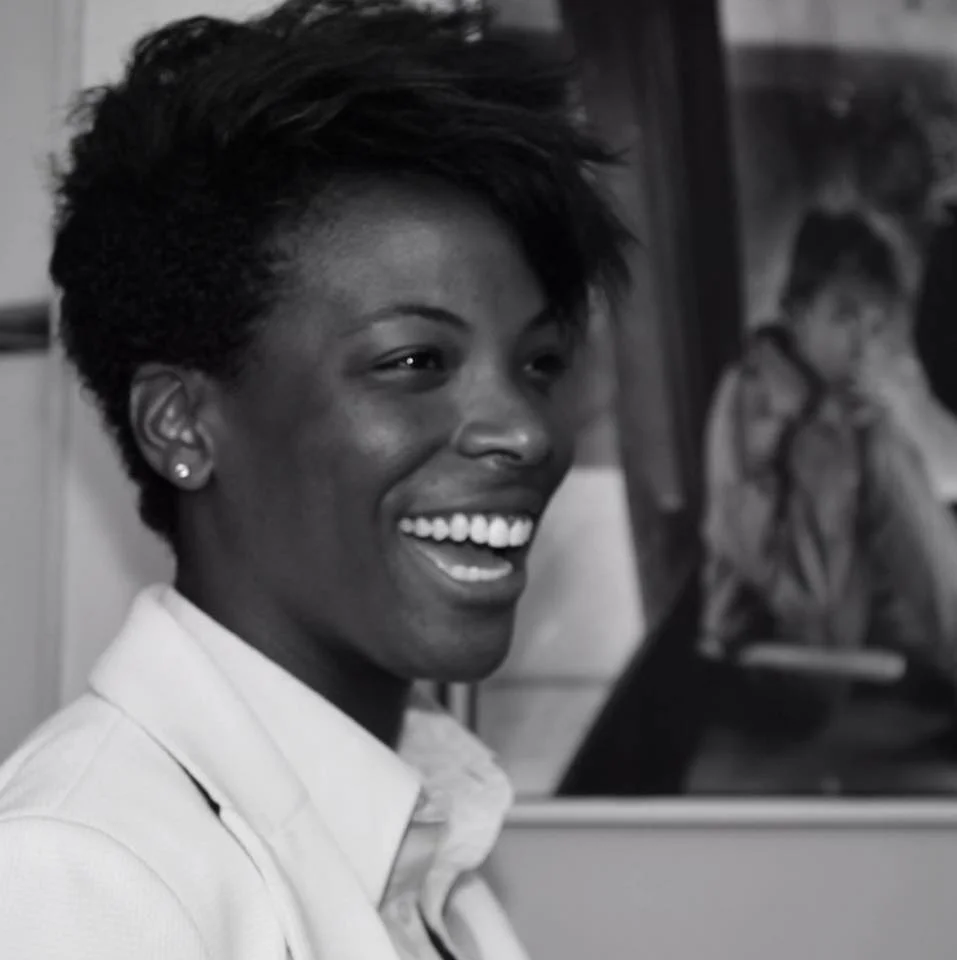
After visiting her mother in Austin for what was supposed to be a two week stay, 2016 Babe of the Year Miriam Conner was transfixed by a tangible sense of the city's soulfulness and creativity.
So she stayed — and has committed herself to carving out room for that soulfulness and creativity since.
In the first few months of the new year, we're celebrating the babes who helped buoy our community in 2016 with their inspiring ambition, work and success.
After visiting her mother in Austin for what was supposed to be a two week stay, 2016 Babe of the Year Miriam Conner was transfixed by a tangible sense of the city's soulfulness and creativity.
So she stayed — and has committed herself to carving out room for that soulfulness and creativity by helping lift up the artists that make Austin what it is. In addition to Topology, an artist-run gallery and studio space, Conner also helps to foster creative talent through LOCALmotive, an artist management, event consulting, and production company.
Keep up with what she's got planned in 2017 by following along with Topology on Instagram.

Where does the drive to do what you do — even when the struggle bus pulls up — come from?
At the age of 15, I discovered what I want to do for the rest of my life. I am very grateful to have found that particular passion that wakes me up in the morning and tucks me in at night.
My life, liberty, and pursuit of happiness lies within art.
I learned everything from my mother, as she raised me with her soul. She taught me how to cook, the trades of being an entrepreneur, how to be a strong woman, and how to never give up doing what you love.
When I fall down or when shit hits the fan, I remember that she is the one to pick me up or protect me. My drive and resilience is fueled by the understanding that I want to — and need to — do the same for her.
What have been your favorite moments of creative energy this past year? What have been the most challenging? And what are you most proud of accomplishing this past year?
After receiving my BFA from the California Institute of the Arts, I came back to visit my mother in Austin for two weeks. Within those two weeks, I realized that the city that I would marry was changing. Austin’s soul and heart were in flux.
The heartbeat of Austin exists in the efforts of the artist and service industry community. They work hard, often in tandem, to pump energy, inspiration, and community back into the soul of this unique city.
I left all of my books and clothes in Los Angeles and decided to stay. I wanted to be a part of and help direct the inevitable change a rapidly growing city such as Austin is experiencing.
“It's been a long time, a long time coming — But I know a change gonna come.”
One day, I stumbled upon an artist’s studio and warehouse called Pine Street Station. I immediately fell in love. I helped Reji Thomas and others run and manage the building for two years. Artists had a place to call home. Shortly after, the city came and took the warehouse as eminent domain.
What happened to Pine Street is a minor detail in a greater conversation that the city needs to start having. We are losing artist spaces just as quickly as condos are rising. How is the soul of Austin supposed to thrive without providing its heartbeat the proper resources to survive?
Two years after the demise of Pine Street Station, I am co-owner of Topology (along with Anita Obasi, Dom Davis, and Ian Seyer). Topology is an artist-run warehouse that we converted with our bare hands from an empty warehouse to an art gallery and affordable studio spaces.
I am also co-founder of a company called LOCALmotive. We are an artist management, event consulting and production company. My business partner, Anita Obasi, and I aim to connect creatives on a local level by mobilizing resources and solutions around artistic visions.
We strive to thoughtfully connect creatives with resources that will nourish their development, curate spaces where people can showcase and celebrate their talents, and cultivate a tight-knit artistic community that is contributing to the growth of Austin's culture.
Since the city has neglected to provide our communities with the proper tools to survive, we’ve gone ahead and done it ourselves. We shouldn't work under the framework of following existing precedents like sheep. We need to find that one particular passion within ourselves, pursue it, and be great at it — for our own fulfillment and on behalf of the community at large.