
How To Navigate Public Art Opportunities In Austin, Texas and Beyond
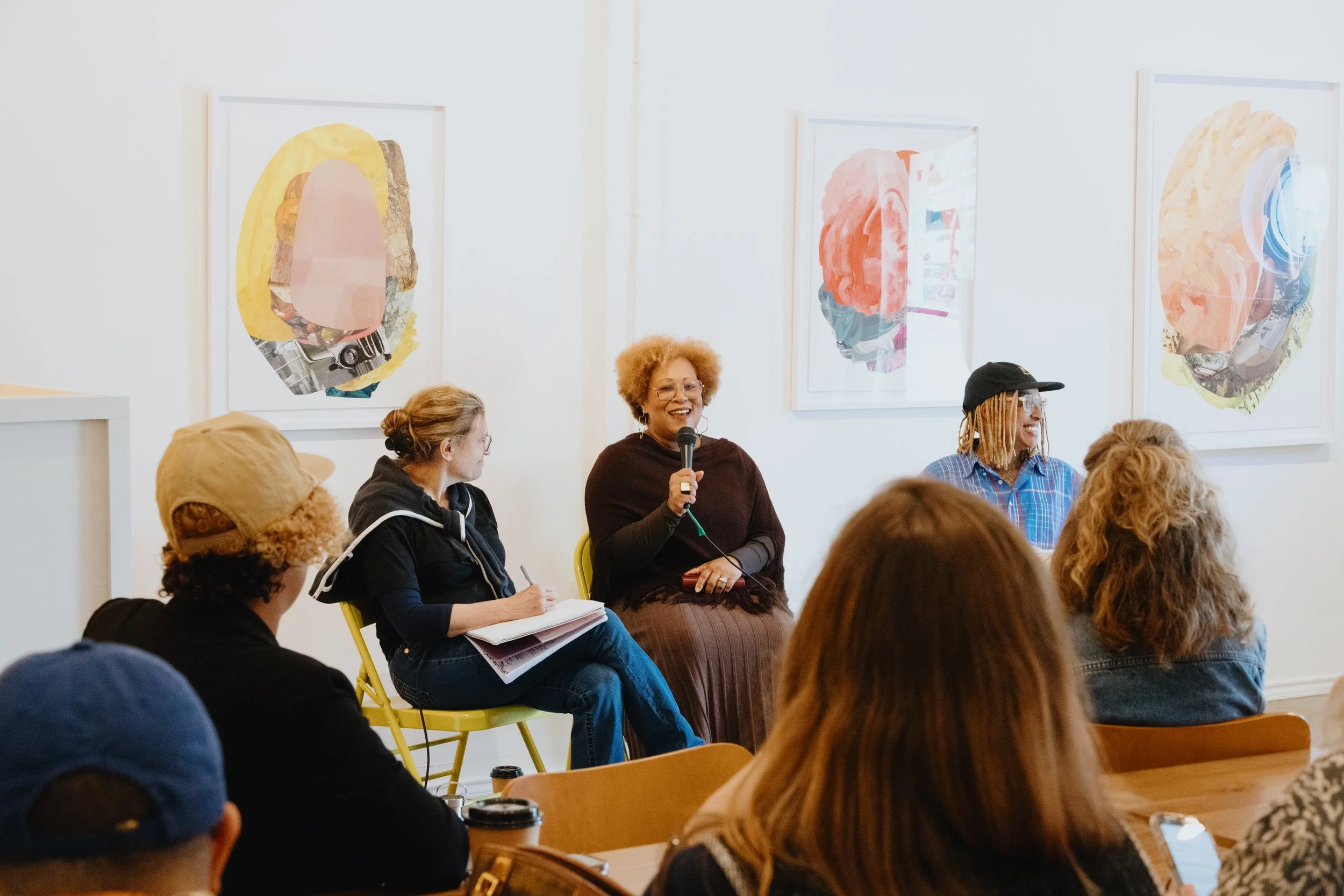
Sharon Louden (Left), Constance Y. White (Middle), and Raasin McIntosh (Right), Photos by Yvonne Uwah
In April 2026, we welcomed a conversation between public artist Sharon Louden, public arts administrator Constance Y. White and public arts nonprofit founder Raasin McIntosh.
Together, we explored how creative work shapes public life—from large-scale installations at our city’s airports to grassroots initiatives and everyday sidewalks.
Below, you’ll find some key takeaways from the conversation and things to consider when navigating public art opportunities as a working artist, cultural producer or administrator.
Are you applying to (or creating for) public art opportunities?
Here are our top 10 tips for determining where public art fits in your career:
Start with a clear definition of “public art,” and identify what public art means to you. Public art refers to art of any medium created for or exhibited outside of traditional museum/gallery settings—often site-specific, experiential and meant for multiple “publics.” Public art is more than permanent murals and sculptures. Public art can extend to public programming, public performance, public practices and temporary artworks.
“Everyone is your public,” said Constance Y. White. “Different visitors want different things. Locals may want regional stories, while travelers may want national and international perspectives.”When it comes to public art, the site is an active collaborator. Strong proposals for public art and public programming demonstrate site specificity, considering who uses the space (locals, tourists, workers, travelers), what the space is for (infrastructure, safety, flow), and what stories/history/belonging are embedded there. The best proposals show how the work fits the site physically and socially (movement patterns, community context, local narratives, daily users, future change).
Treat “the public” as plural—and plan for competing needs. When creating public art or public programming—especially in civic or high-traffic environments (e.g., airports, public cultural centers, etc.)—there are many stakeholders and audiences. Determine how you can create public art and public programming that acknowledges different kinds of visitors and their needs, as well as their navigation of the site. When applying for major public art commissions and grants, strong proposals actively demonstrate how your work can hold that complexity.
Make public engagement more than a checkbox. Show how community voice influences your project and concept. Funders and administrators look for evidence that public input informs your artwork, your creative practice and the conceptual development of your public programming/art. Spell out how you’ll listen, what you’ll do with feedback as it comes and where it will visibly land in the final work.
Think of your public art as construction projects, with safety considerations, fabrication and production needs, collaborative timelines, trusted partners and frameworked approaches for logistics. Public art requires coordination, fabrication/installation planning, maintenance realities, and often multiple vendors. Demonstrate you can deliver this kind of work professionally—not just beautifully.
Make your deliverables specific. In public settings, compensation often gets justified through measurable outputs: engagement plans, design milestones, production steps, documentation (like photos and videos), educational components, etc. Translate your value into concrete deliverables, without flattening the artistry and design process.
Understand the budget constraints early. When it comes to public art and public programming, you’re often working backward from a fixed budget but you may be able to shift what is allocated toward different line items (from lighting to fabrication, installation support or project management) that better support your project’s needs and distinct costs.
Read and apply the contract like it’s your bible (and know where to requested support). Learn the terms, conditions, deliverables and personal risk you take on with each public project. Pay attention to intellectual property clauses and rights waivers, too. When legal review is needed, use arts-legal resources and consult with professionals.
Plan for feedback, negotiation and collaboration. Public art and public programming opens your work, your creative ideas and your intellectual property to public feedback. Build in design rounds. Prepare to present and articulate your ideas. Provide context on your expertise, public engagement processes and plans. Sometimes, conversations about design, the site or the process can get heated! Stay calm, engage in good faith and keep the work’s values intact.
“You should be prepared to explain your work,” said Sharon Louden. “Artist statements help with this.”Don’t get discouraged with the proposal and application process. Keep applying, follow up and protect the relationships you build along the way—because art communities are tiny. Submitting public art proposals and developing a network of collaborators in public programming takes times. Your application might be rejected, but a reviewer could reach out later. Ask for feedback when it’s useful and actively do what you can to build skill and show up fully prepared to deliver. Remember—the people you work alongside last longer than any project itself.
PS — Want to get involved with Future Front?
Our programs model the value of local art and creativity in our everyday lives and dreams for the future.
Become a member or donate. You can also explore all of the other ways to join us here.
